Delayed October and November Nonfarm Payrolls in USA


Posted Posted originally on on Dec 17, 2025 by Martin Armstrong |  

Jobs

Payrolls in the US declined by 105,000 in October, followed by a 64,000 uptick in November, according to the delayed nonfarm payrolls report by the Bureau of Labor Statistics. Unemployment now sits at 4.6%–a four-year high.

The November jobs data was delayed because a 43-day federal government shutdown disrupted the normal collection of labor market surveys. That alone introduces uncertainty, yet it also amplifies the significance of the patterns we do observe.

Naturally, a portion of lost jobs in October were due to the government shutdown, but the downward trend has emerged. Around 162,000 government positions were shed in October, followed by an additional 6,000 in November. These jobs are inconsequential as they do not add to the economy. October was the third time in the past six months that payrolls went into negative territory. Per usual, previous reports were revised downward. August’s report was revised to show a decline of 26,000 jobs compared to the initially reported 26,000, with 11,000 more jobs lost in September.

The 64,000 additional jobs in November may have beaten expectations, but averaged around 35,000 net jobs per month based on recent readings, which indicated stagnation rather than expansion.

Health care was responsible for 70% of new hires last month, or 46,000 positions. Construction also experienced a notable gain of 28,000. Transportation and warehousing decreased by 18,000 as AI takes over those positions. Leisure and hospitality shed 12,000.

The number of people holding more than one job increased, as did the number of discouraged workers and those adding part-time jobs to make ends meet to 8.7%. This high has not been seen since August 2021 when the US economy was slowly recovering from lockdowns.

December’s report will be released ahead of the Federal Open Market Committee’s meeting in January, but the Fed cannot change the labor market through rates. The central bank cut rates three times this year and nothing changed. Expect slower growth, rising unemployment, and a re-evaluation of rate policy in early 2026.

Layoffs Continue – UPS and Amazon Switch to AI


Posted originally on Oct 30, 2025 by Martin Armstrong |  

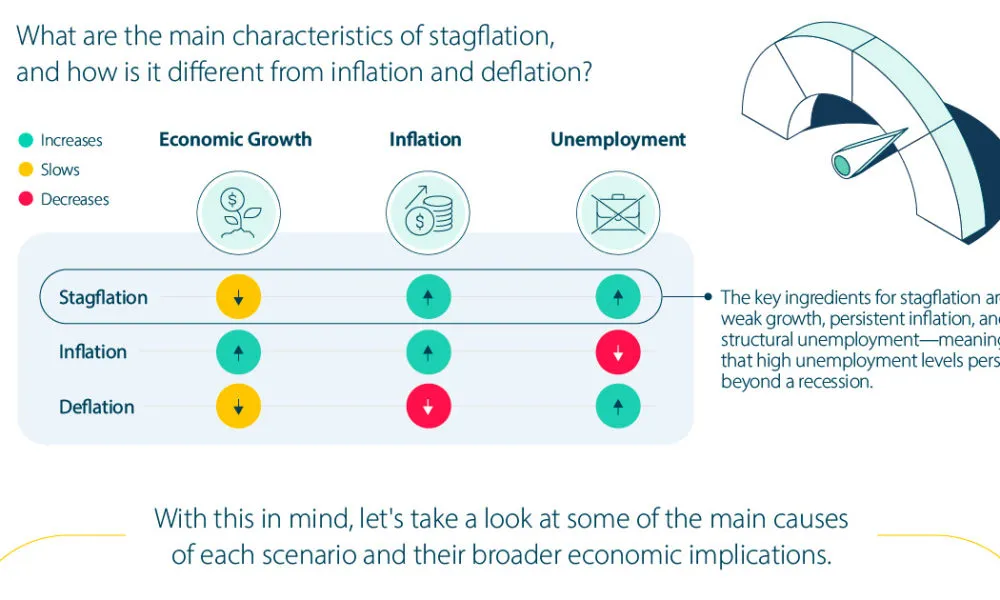
New and seasonal hires are typically announced during Q4. The opposite is unfolding amid stagflation. UPS announced that, despite favorable earnings, it has cut its operational workforce by 34,000 positions, greater than the initial estimate of 20,000, and an additional 14,000 positions from management. Shrinking a package delivery service ahead of the holiday season signals a broader trend.

Artificial intelligence has been employed in operations to meet growing customer demand. The service has loosened its ties with Amazon, delivering 21.2% fewer packages than last quarter while demand during the first half of the year declined by 13%.

Amazon itself will cut its workforce by 14,000 in the short term. Similar to UPS, the reduction in workforce is not a result of reduced earnings. A leaked memo also detailed that Amazon will need 600,000 fewer employees in the years to come. Careful rhetoric will surround the shift as people fear AI technology.

As Amazon detailed in a blog post:

“Some may ask why we’re reducing roles when the company is performing well. Across our businesses, we’re delivering great customer experiences every day, innovating at a rapid rate, and producing strong business results. What we need to remember is that the world is changing quickly. This generation of AI is the most transformative technology we’ve seen since the Internet, and it’s enabling companies to innovate much faster than ever before (in existing market segments and altogether new ones). We’re convinced that we need to be organized more leanly, with fewer layers and more ownership, to move as quickly as possible for our customers and business.”

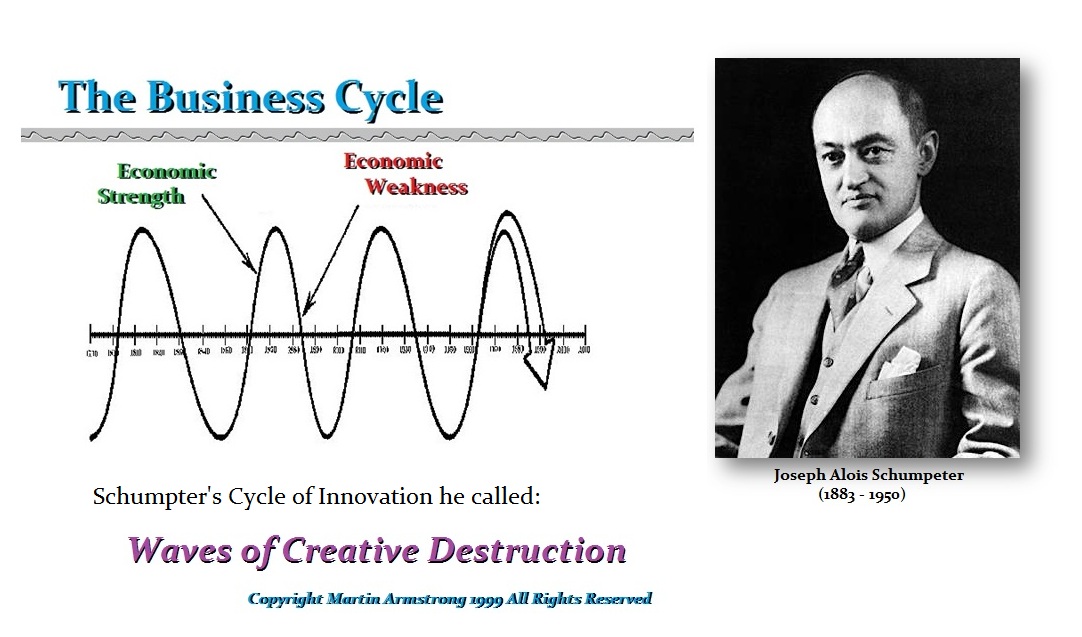
Schumpeter BusinessCycle Waves of Creative Destruction

This is Joseph Schumpeter’s theory of creative destruction at play. Innovation is paving the way for new technology while leaving the past behind.

Amazon itself and online shopping paved the way for the destruction of the brick-and-mortar stores. By 2020, when the world shut down, consumers relied on the internet for most of their shopping. Amazon expanded by 625% from 2010 to 2020 and continues to grow.

The Industrial Revolution expanded, and the Industrialists, led by the auto stocks, drove the 1929 bull market. The invention of the combustion engine led to tractors for farmers, disproving the theories of Malthus that humanity would starve as the population increased. He never understood the cycles of technology, yet he influenced Gates and the Rockefellers. As farmers had tractors, production increased while employment declined.

Horse Carriage

The horse and buggy were replaced with automobiles. As they expanded, the suburbs came alive. Suddenly, people could live in places without trains. The town I grew up in flourished because we had a train station, which enabled people to buy land and move out of the cities. The town I grew up in expanded further from the train station with the automobile.

Creative Destruction Waves cause unemployment to rise, but commerce expands. The shift from humans to AI is happening now. This will disrupt the system, but the world will adapt as it always does.

\