originally on Posted Aug 18, 2025 by Martin Armstrong |
You are the carbon that they wish to eliminate. “You will eat bugs,” as the infamous Klaus Schwab line goes, was merely the beginning of what the globalists intent on ushering in the Great Reset have planned for the masses. Food production is bad for the environment, therefore, the people must resort to lab-created synthetic products.
All of this may sound like it is coming from a dystopian novel but the plans have been enacted. I reported on lab-grown meat facilities that are growing in number and popularity. The latest synthetic product is carbon butter—a butter-like substance made using carbon dioxide, hydrogen, and oxygen to synthesize fat molecules without animals, oils, or plants.
Savor, the startup company in Batavia, Illinois that is creating this product is backed by none other than Bill Gates. “So you’re using this gas right now to cook your food and we’re proposing that we would like to first make your food with— with that gas,” said Kathleen Alexander, co-founder and CEO of Savor.
“This is pretty novel, to be able to make food that looks and tastes and feels exactly like dairy butter, but with no agriculture whatsoever,” said Jordan Beiden-Charles, food scientist for Savor. “It’s really just our fat, some water, a little bit of lecithin as an emulsifier, and some natural flavor and color,” Beiden-Charles said.
“Traditional agriculture” leaves too large of a carbon footprint for these globalists who wish to control the food supply. Savor claims that synthetic butter will taste exactly like traditional dairy butter, and no one will know whether they’re eating the real deal or a lab-grown product. The company plans to release chocolates created with carbon butter ahead of the 2025 Christmas season, with retail stores expected to carry the product by 2027.
“Our plan can’t be to simply hope that people give up foods they crave. After all, humans are wired to want animal fats for a reason—because they’re the most nutrient-rich and calorie-dense macronutrient—in the same way we’re wired to crave sugar for an instant energy kick. What we need are new ways of generating the same fat molecules found in animal products, but without greenhouse gas emissions, animal suffering, or dangerous chemicals. And they have to be affordable for everyone.”
Gates goes on to say that palm oil is destroying the planet. “If animal fat is the superstar of some meals, then palm oil is the team player that can work to make almost all foods—and non-edible goods—even better,” he noted. A separate company funded by Gates called C16 is focused on lab-produced palm oils.
What impact will these synthetic products have on human health? No one knows. No one cares. Agriculture is taboo in their eyes and must come to an end.
Posted originally on Jul 23, 2025 by Martin Armstrong
Ground beef is the new egg as the media has turned its attention to a new grocery item impacted by inflation. The average price for a pound hit $6.12 in June, up 12% YoY, and the highest price recorded since the government began collecting data in the 1980s.
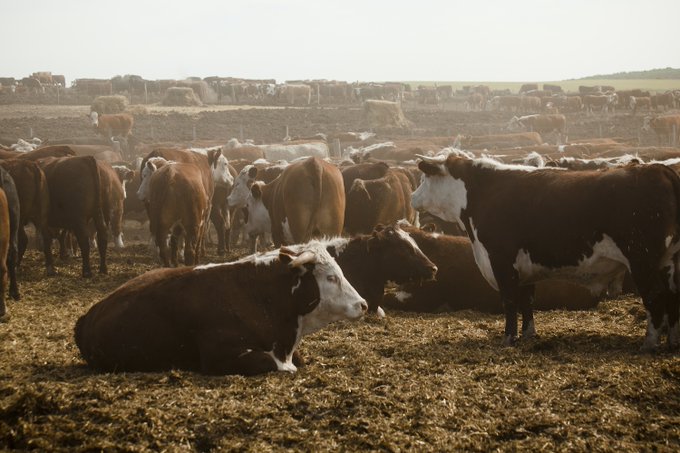
Some news outlets blame tariffs on Brazil that have not yet gone into effect, but Brazil only imports 5-7% of the overall supply. The United States chiefly supplies itself with ground beef, with domestic production accounting for 75-80% of the overall supply. The problem is that the US has had six consecutive years of herd contraction, and the current supply is unable to meet demand. As of January 2025, cattle inventory reached 86.7 million head, 1% down YoY, and the smallest inventory since 1951.
One must recall how the previous administration was pushing forth the net-zero emission agenda. Farmers willingly reduced herd size to avoid threats of taxation. From 2021 to 2022, the EPA touted a 2% drop in methane from enteric fermentation, but that was primarily due to shrinking beef cattle populations.
Weather was also a main driver as droughts that began around 2020 in abundant farm areas cut down cattle size. Overall inflation has caused the cost of food to soar for farmers as well, with feeder cattle prices up 9% YoY.
The US increased beef imports by 24% from 2023 to 2024 to offset domestic constraints. Australia supplies around 7% to 10% of all beef, followed by Brazil, with New Zealand accounting for 3% to 4% of the supply, Uruguay for 2% to 3%, and Argentina with 1% to 2% of the total supply. Still, America is largely self-sufficient in supplying ground beef.
Now this is simply the ground beef supply as live cattle is a different trade. Naturally, the US looks to its neighbors, Mexico and Canada, for live imports, with Canada supplying 15% to 20% of live cattle and Mexico supplying up to 15%. Even though the US has the lowest head inventory on record since 1951, the majority of live cattle used to create ground beef is domestic. Now, Mexico has a massive screwworm outbreak from late 2024 to the present day. The US suspended all live cattle imports from Mexico in May to prevent the disease from spreading, which lasted into July and impacted peak seasons.
Ground beef prices are up due to an imbalance in supply and demand. The headlines are blaming Trump tariffs for this inflation without understanding that prices naturally rise when demand outweighs supply.
Announcement from Secretary of Agriculture, Brooke Rollins: “I have ordered an immediate shutdown of live cattle, bison, and horse trade through the southern U.S.–Mexico border. This decisive action comes after Mexico confirmed another case of New World Screwworm in Veracruz.”
(Washington, D.C., July 9, 2025)– Yesterday, Mexico’s National Service of Agro-Alimentary Health, Safety, and Quality (SENASICA) reported a new case of New World Screwworm (NWS) in Ixhuatlan de Madero, Veracruz in Mexico, which is approximately 160 miles northward of the current sterile fly dispersal grid, on the eastern side of the country and 370 miles south of the U.S./Mexico border.
This new northward detection comes approximately two months after northern detections were reported in Oaxaca and Veracruz, less than 700 miles away from the U.S. border, which triggered the closure of our ports to Mexican cattle, bison, and horses on May 11, 2025.
[…] Therefore, in order to protect American livestock and our nation’s food supply, Secretary Rollins has ordered the closure of livestock trade through southern ports of entry effective immediately. (read more)
Posted originally on Jun 11, 2025 by Martin Armstrong
The world’s bread basket is facing significant food inflation. Prices on groceries in Ukraine rose 22.1% in May compared to the same time period last year. Overall, CPI rose 15.9% on an annual basis as well. Fruit prices alone have soared by 17.6%, with authorities claiming it is primarily due to poor weather conditions that reduced harvests.
Ukraine and Russia are both relying on imports to offset the uptick in food prices. Ukraine exported around 10.6% of the nation’s food supply last year. The European aggregate came in at an estimated $5 billion in food exports for the year, with Poland, Germany, and France becoming top suppliers. In fact, 51.3% of all food imported to Ukraine came from the EU.
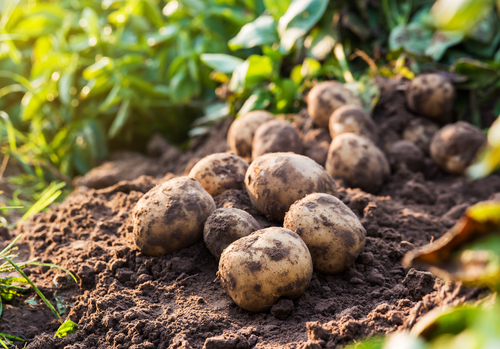
Food inflation for Russia, as of April, hit 12.66%, with general inflation resting at 10.2%. This does not account for the soaring prices of staple food products like potatoes, which have tripled in price over the past year. “On a daily basis, people are not buying smartphones and television sets,” Central bank governor Elvira Nabiullina said. “They are buying food. If prices there are growing faster, it forms high inflationary expectations.” This is precisely why I note that issues like the Japanese rice crisis are causing overall confidence to erode.
The average Russian household spent around 35% of its income on food this past April, a five-year high, as reported by the Romir think-tank. Russia is seeking exports from its remaining trade partners. Egypt exported 274,000 tonnes of potatoes to Russia this May, a 4.5X increase from the same period one year prior. Egypt also provided Russia with 13,000 tons of onions and has become a major supplier of nuts, fruits, and vegetables. Other meal staples such as carrots, beets, and cabbage have seen a surge in prices.
China has also been working to solve the potato shortage by sending Russia 65,000 tons throughout the first six months of the year. Georgia, Pakistan, Kazakhstan, and Armenia have also begun to ramp up food exports to Russia.
Both China and Egypt have profited heavily from this war from an agricultural standpoint, as each is providing both sides with much-needed food imports.
Russia’s agriculture minister believes prices will begin stabilizing in July. As RCB Governor Elvira Nabiullina explained, the average person will first notice surging prices at the grocery store. It becomes a daily reminder that there are breaks in the system. The Russians and Ukrainians lost confidence long ago, but the situation is not improving for them. We see it everywhere with food prices leading to unrest. The reasons contributing to rising prices do not matter as the people will immediately blame the government. We saw it in the US, for example, with people outraged over the price of eggs. The Japanese are livid that the price of rice has multiplied.
The French Revolution began when bread prices surged beyond what the people could afford. The Arab Spring ignited not because of political ideology, but because food became unaffordable. Socrates picked up a shift in food inflation in 2019 before the COVID lockdowns and I have warned that it would be wise to stockpile food as that inflationary cycle did not end with COVID. While we are not at a point of revolution just yet, food prices have a major impact on overall confidence and high prices correlate with high unrest. The people will not obey when they are hungry.
Posted originally on Jun 11, 2025 by Martin Armstrong
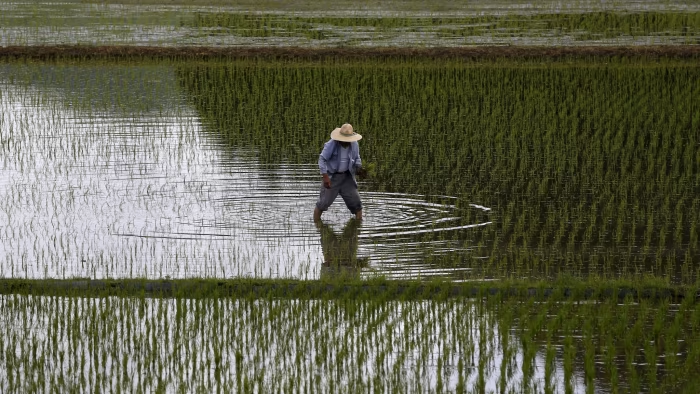
The Japanese government announced that it has been forced to release 200,000 metric tons of reserves from its rice stockpile once again, as the nation has been unable to reverse shortages. The government last released over 300,000 metric tons of rice from its emergency reserves, that was intended to last through July, in addition to the 310,000 tons released since March, but this is not sufficient to meet demand, and consumers are highly dissatisfied with the government’s response.
Retailers and local rice sellers with milling capacity will receive the first 100,000 tons of rice from the 2021 harvest. “We want to continue responding without slowing down so that the stockpiled rice can reach consumers quickly and at a low cost,” Agriculture Minister Shinjiro Koizumi said during a press conference. “We must never allow the virtuous cycle of prices and wages in the Japanese economy as a whole to break down. If the cause lies with rice, then I believe we must address such issues promptly.”
Poor weather conditions in 2023 led to a significant decline in crop yields. The Japanese government placed high tariffs on imported rice, and Japanese consumers strongly prefer domestic varieties. Japan reluctantly began importing rice to meet demand. In February alone, Japan imported roughly 40% of what it imported in FY2023. Japan was self-sufficient in rice production, but was forced to purchase rice from South Korea for the first time in 25 years. Japan has also turned to the United States to fill the gap. Panic buying remains prevalent despite the high cost of rice, as it is a staple in the Japanese diet. A mass uptick in tourism following the end of COVID has also been blamed for increased demand, with foreigners increasing by a record 342,000 in 2024.
The Ministry of Internal Affairs and Communications noted that rice prices rose 92.1% year-on-year in March, and despite releasing reserves, prices continued to rise. In mid-April, a 5kg bag of rice reached ¥4,220 (about $29–$30), over an 80% YoY increase. Rice prices hit a record high of ¥4,285 yen ($29.97) for 5kg of rice during the week ending on May 18, with some premium brands like Koshihikari exceeding ¥5,000 yen ($35). As of June 1, the average 5k bag of rice cost about ¥4,223 yen, a 50% annual increase.
This is an extremely serious issue in Japan. The rice crisis controversy is causing the public to lose confidence in the government at large. Prime Minister Shigeru Ishiba’s Administration approval rating sunk to an all-time low of 27.4%. Japanese Minister Taku Etō was forced to resign after stating that he personally has no concern for the rising price of rice. The Upper House election takes place in July, which is certainly unfavorable for the Liberal Democratic Party (LPD) who has been in power since 1955.
The next major rice harvest will be in August. The situation is pessimistic as only 1.458 million hectares were harvested, the lowest on record since at least 1900.
Farmers have been protesting against the government’s policy of rationing harvests. The EU and US allow farmers to produce as much as possible, and the government subsidizes any losses, while Japan has taken an opposite approach. The Japanese government believes it would lose $2.65 billion per year if it were to subsidize harvests, but it is already paying farmers $2.32 billion to ration production. Rice paddies are increasingly abandoned as the next generation has no desire to enter a low-paying industry that they believe has been stifled by government regulation. The Mi/OP: Ministry of Agriculture, Forestry and Fisheries (MAFF) has asked many farmers to focus on rice instead of other crops, but it will take years to replenish the reserves.
Japan has a much more serious issue on its hands as the nation is at risk of an outright default on its outstanding debt. For now, the rice crisis has caused the average person to become disgruntled with the leadership. They say the public is quiet and content when everyone is fat and happy, but now, every meal is a reminder of government mismanagement.
I have created this site to help people have fun in the kitchen. I write about enjoying life both in and out of my kitchen. Life is short! Make the most of it and enjoy!
This is a library of News Events not reported by the Main Stream Media documenting & connecting the dots on How the Obama Marxist Liberal agenda is destroying America








 Centinel2012