
Posted originally on CTH on December 28, 2025 | Sundance
Prior to the 2012 Republican presidential primary, many conservative Americans -including myself- were confused by the consistent illusion of choice offered in republican presidential candidates. The Republican party’s successful installation of Mitt Romney was the final straw.
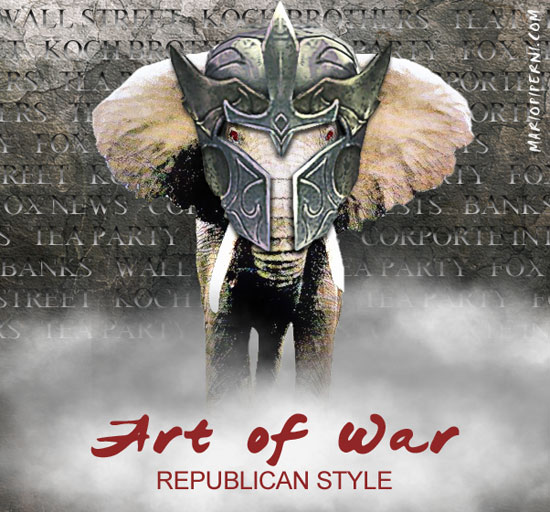
Going into the 2016 Republican presidential primary, we became more attune to how the illusion of choice is created. By closely following the Republican party’s assemblies, tracking the participants, researching the networks and looking at how the Republican party professionals modified their election rules at a state level, revealed the closed system used to create the illusion of choice.
The GOP winter meeting in Washington DC, December of 2014, outlined the playbook. The sequencing of state elections, the distribution of delegates (proportional or winner-take-all) and various internal mechanisms all play a part. This led to our first breakthrough – we began to understand the “splitter strategy”.
A small group of internal party officers in combination with powerful established politicians and major donors could coordinate a party objective to support the “acceptable candidate.”
The outcome of the GOP 2014 winter meeting was a pathway for Jeb Bush in 2016. The outcome of the DNC construct was a pathway for Hillary Clinton. Regardless of which wing of the UniParty system won the election, the actionable outcome in policy would be the same; the institutions of DC maintained, and network affluence apportioned according to the victor.
In this form of party democracy voting is an outcome of the illusion of choice. The real decisions were/are not being made by voters. The party system determines the candidate. DNC or RNC the policy outcome is a few degrees different, but the direction is the same.
In 2016 the left-wing of the Uniparty would diminish any challenger to Hillary, Bernie Sanders would be controlled. The right-wing of the Uniparty would diminish any challenger to Jeb, divide the voting base and use party rules to clear his path.
The opaque nature of this party control system became clearer when the last GOP candidate entered the race. In the clearest exhibition of controlled politics in modern history, Donald Trump was the wildcard.
Mainstream “conservative” voices, what a later vernacular would describe as “influencers,” began exposing their ideological special interest in this political control system through opposition to Trump, the popular people’s choice candidate.
You know the history thereafter. However, the problem for the GOP wing in 2016 was not Donald Trump per se’, their biggest problem was that American ‘conservatives‘ had discovered their playbook. The illusion of choice was now becoming very well understood by a subset of voters later named MAGA voters, the original “silent majority” was silent no more.
This review is simply context; however, it is important context if we are to understand exactly where we are in late 2025 going into the midterm election in 2026. [Star Wars (2016), the Empire Strikes Back (2020), the Return of the Jedi (2024)]
The fourth chapter of this conflict is now upon us. It is a battlefield that has been unfolding all year.
When you understand the larger objectives behind what is happening, you can clearly see -even predict- each of the moves.
 Centinel2012