
Posted originally on CTH on March 17, 2026 | Sundance
CTH has said to watch the U.S.-Japan trade relationship closely because the outlines of multiple geopolitical shifts can be referenced from a new strategic relationship surrounding multiple sectors, including energy.
The U.S, relationship with Japan is both leverage and a hedge against old alliances that may seek to disrupt the global reset currently underway through President Trump policy. The issues with the European Union, U.K, USMCA and other tenuous allies, look entirely different when President Trump has alternative partnerships for massive energy exports.
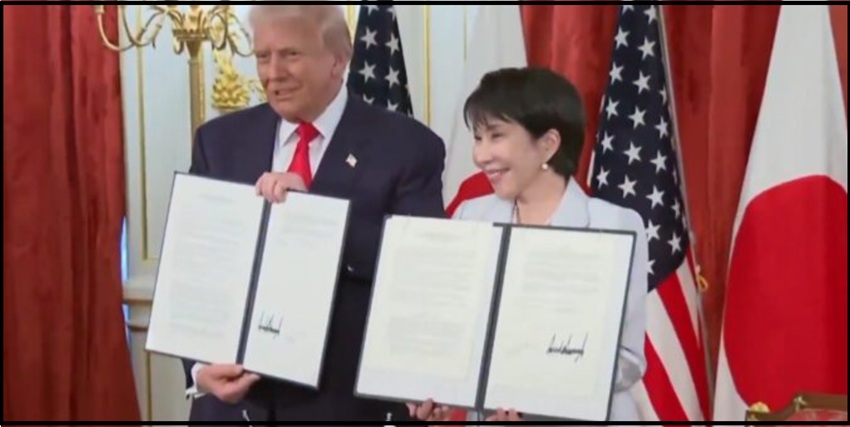
ENERGY NEWS – In a major move to secure stable energy supplies amid escalating geopolitical tensions, Japan has inked deals worth up to $56 billion with the United States for oil, natural gas, and liquefied natural gas (LNG) purchases and investments.
This agreement, finalized at the Asia-Pacific Energy Security Forum in Tokyo on March 14, 2026, underscores Japan’s push to diversify its energy imports and deepen economic ties with the US under Prime Minister Sanae Takaichi’s administration.
The deals come as part of a broader framework stemming from the 2025 US-Japan trade agreement, where Japan pledged $550 billion in US investments over several years, with energy as a key pillar.
The $56 billion package represents a significant escalation in Japan’s commitment to American energy, building on an initial $36 billion tranche announced earlier in 2026.
This latest round emphasizes immediate purchases and long-term infrastructure projects, responding to global market volatility driven by conflicts in the Middle East and disruptions in key shipping routes like the Strait of Hormuz.
[…] The agreements encompass a mix of direct energy purchases, joint ventures, and infrastructure investments. (read more)
As a nation that needs energy partnerships, Japan seeks stability and predictability. Japanese Prime Minister Sanae Takaichi has gone all-in on a strategic energy partnership with the United States.
As the tectonic plates are shaken:

♦ If Canada wants to try and leverage the energy trade infrastructure against a USMCA reset, President Trump has Venezuela production as an offset.
Japanese automakers have already told Canadian trade ministers that if Canada loses the USMCA, there’s no value in maintaining auto manufacturing north of the border – because the target customers are all in the USA. Japan would move all production out of Canada. I doubt China could replace at scale.
♦ If Europe, who is now dependent on LNG from Norway and the USA, wants to create geopolitical friction, President Trump now has Japan as a replacement customer. More behavioral leverage.
U.S. firms are making a lot of money selling LNG to Europe, but Trump has just created a customer base that is more reliable and politically consistent.
♦ Then, as the short-term lifting of LNG and oil sanctions on Russia is proving (petrodollars used), think about the potential for India and Southeast Asia to be supported by Russian exports. Who holds that distribution key, again Trump.
It is not accidental that India is sending support vessels to the Strait of Hormuz as requested by President Trump. Here’s the kicker… With oil and gas from Russia, India doesn’t need the Iranian oil and gas; yet, they are sending support. Why? Because Prime Minister Modi wants Trump to keep their Russian purchase exemptions in place.
We can see how a strong collaborative relationship with Japan can negate any negative economic impact the mask wearing Europeans and Canadians might want to try and leverage. In actuality, Canada, the U.K and Europe don’t have any leverage at all in the new world of trade.
One way to look at this is to say the primary “Build Back Better” nations, those most entrenched in the selling of climate change as a tool for manipulation and control, are being positioned to have the least amount of input into a new, tiered set of established nations for global energy development.
Take a look at that Russian Sanctions map again. The nations in yellow created the sanctions:
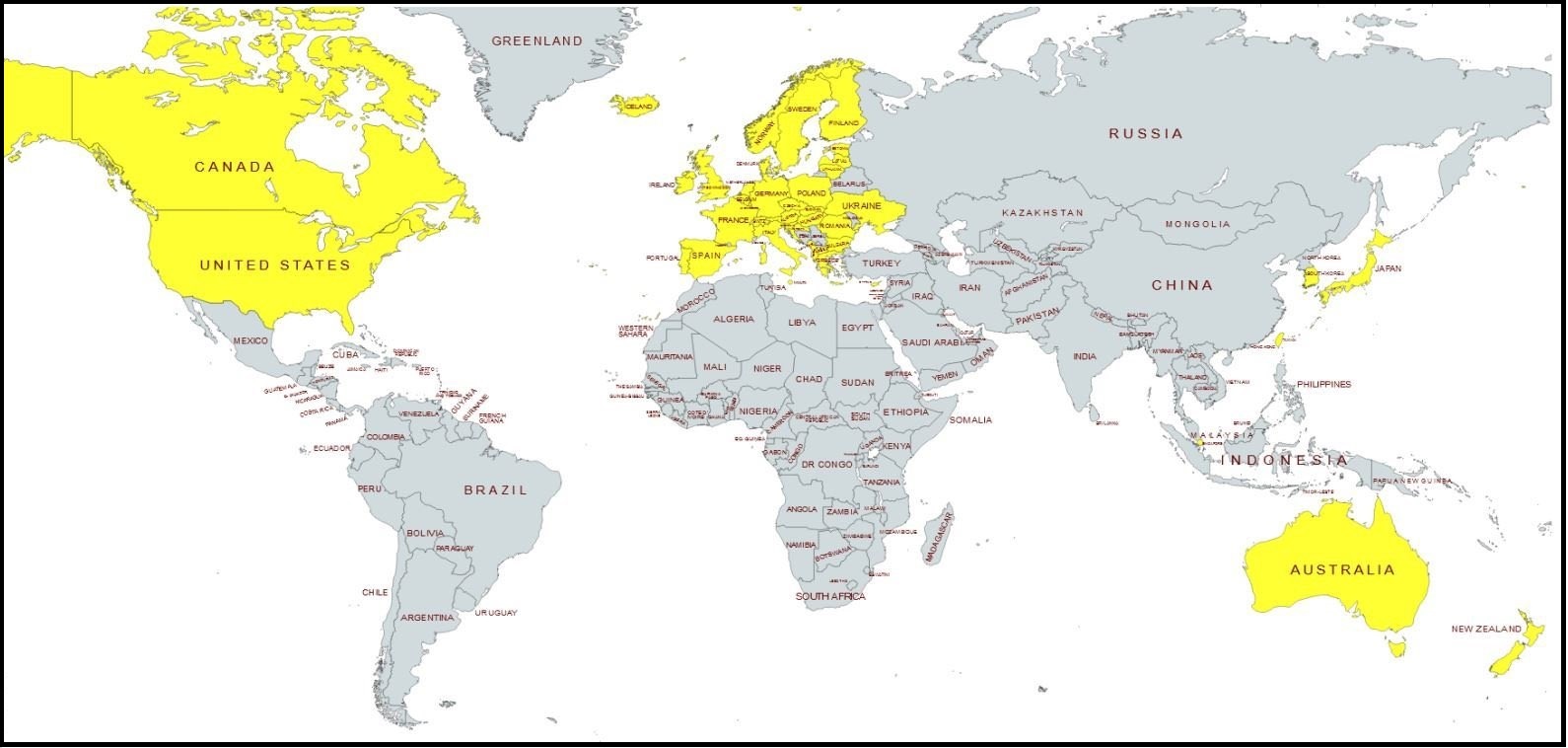
Now, overlay the new energy trade relationships that are forming.
The USA fuels the Western Hemisphere.
Russia fuels the Eastern Hemisphere.
Europe is reliant on the Middle East.
China loses geopolitical power, Russia gains power.
Europe loses geopolitical power, India gains power.
Deal with Iran and most conflict is resolved in the Middle East.
The USA controls the Western Hemisphere. And with India and Japan as allies, the Indo-Pacific outline is realized.

 Centinel2012