
Posted originally on May 25, 2026 by Martin Armstrong |
The Armstrong Code – Available on Amazon
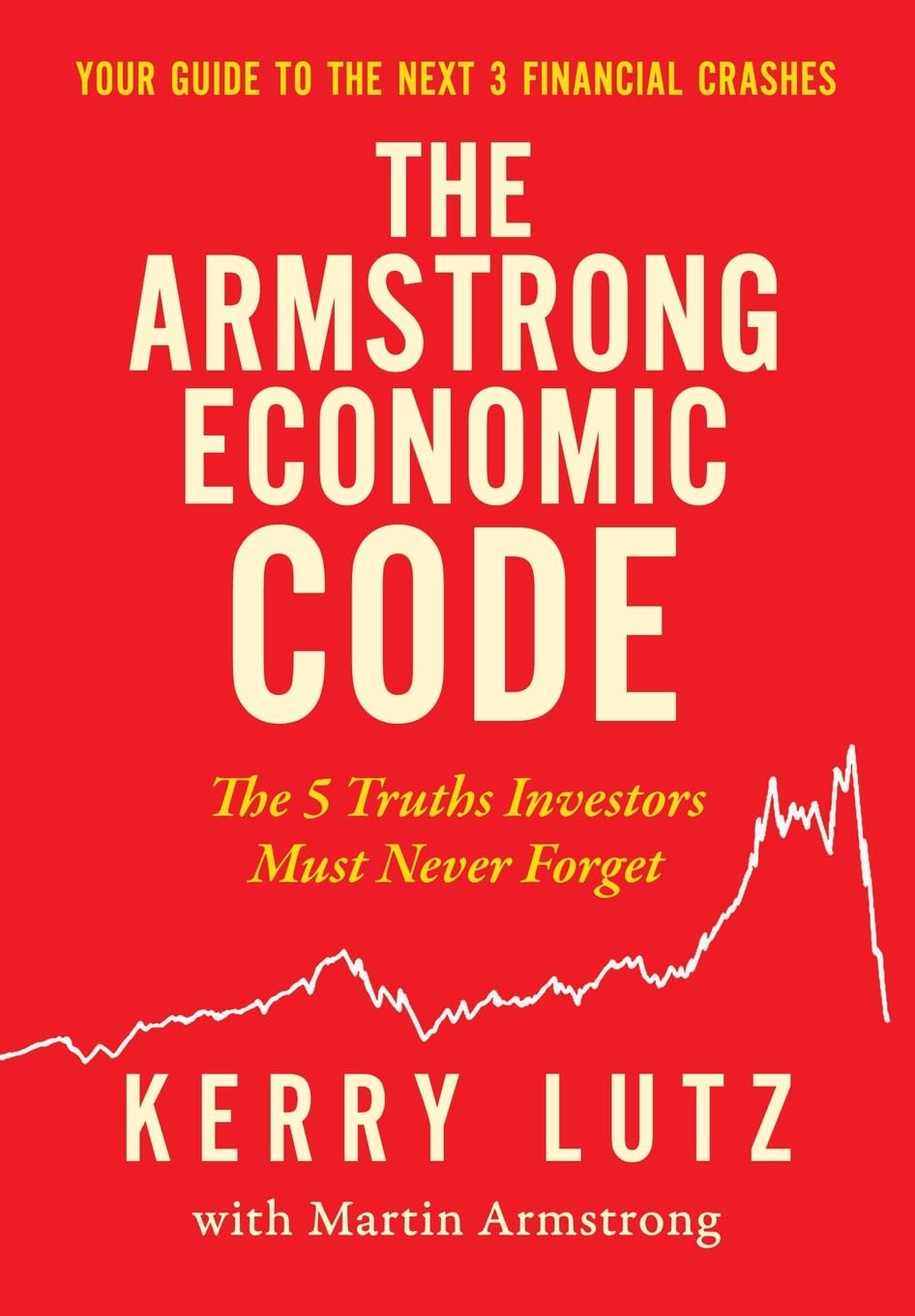
What if the economy wasn’t chaotic at all—but followed a hidden code?
The Armstrong Economic Code reveals the powerful cyclical patterns discovered by legendary forecaster Martin A. Armstrong, whose Economic Confidence Model (ECM) has predicted every major boom, bust, and geopolitical shift for more than four decades.
Compiled and expanded by Kerry Lutz, host of the Financial Survival Network and longtime student of Armstrong’s work, this definitive edition connects the dots between history, markets, and the rhythm of human behavior. From the rise and fall of empires to the digital age of algorithmic finance, the Code shows how every crisis—and every recovery—follows a pattern few understand but everyone feels.
Whether you’re an investor, policymaker, or simply trying to navigate a world of chaos, The Armstrong Economic Code gives you the tools to see what’s coming next—and why the future was already written in the past.
The World According to Martin Armstrong – Also Available on Amazon
A visionary economist. A controversial thinker. A man whose ideas challenge the status quo.
In The World According to Martin Armstrong, discover the extraordinary insights of a financial forecaster who predicted some of the most significant economic events of our time. Armstrong’s unique understanding of historical cycles, global finance, and political power offers a fresh perspective on the forces shaping our world.
From the intricate dance of sovereign debt to the rise and fall of empires, this book explores Armstrong’s groundbreaking Economic
Confidence Model and its implications for the past, present, and future. Whether you’re a seasoned investor, a history buff, or someone seeking to make sense of today’s complex world, this book will challenge and inspire you.
Prepare to see the world through a new lens—one that connects the dots between history, economics, and human behavior in ways you’ve never imagined.
 Centinel2012