
Posted originally on May 28, 2026 by Martin Armstrong |
Canada is walking into extremely dangerous territory and most people do not understand the implications because governments always package surveillance laws as “public safety.” That is how this begins every single time historically. They sell fear first, then quietly expand state power behind the scenes while claiming only criminals should worry.
Now even Apple, Google, Meta, Signal, privacy experts, cybersecurity professionals, and members of the U.S. Congress are warning that Canada’s Bill C-22 could force technology companies to weaken encryption and build government access mechanisms directly into their systems.
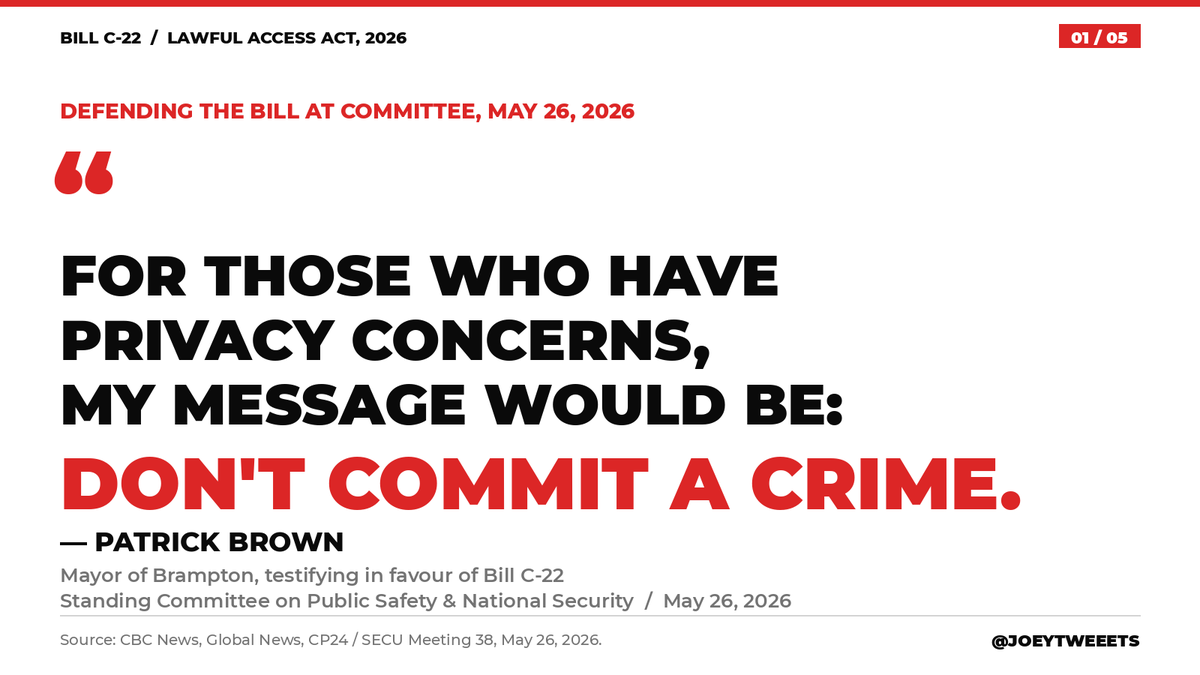
People need to understand what encryption actually is. Encryption is not some toy used only by criminals. Encryption protects bank accounts, corporate systems, private medical data, government communications, journalists, dissidents, businesses, lawyers, and ordinary citizens. Every time you use secure banking, send a private message, or protect sensitive data online, encryption is standing between you and cybercriminals.
The government always frames these laws as targeting terrorists, child exploitation, organized crime, or national security threats. But the mechanism itself never stays limited. Once governments establish the legal right to force “lawful access” into encrypted systems, the infrastructure for surveillance already exists. The temptation to expand those powers becomes overwhelming.
Apple warned directly that Bill C-22 could allow Canada to “force companies to break encryption by inserting backdoors into their products.” Meta warned the bill could require companies to “break, weaken, or circumvent encryption” and potentially install government spyware capabilities directly into systems. Signal reportedly stated it would rather leave Canada entirely than compromise its encryption promises.

There is no such thing as a “safe backdoor.” Once you intentionally weaken encryption for government access, you create vulnerabilities that hackers, hostile states, cybercriminals, foreign intelligence agencies, and malicious actors can eventually exploit. Government itself is composed of malicious actors for that matter.
The bill reportedly includes provisions requiring providers to maintain technical capabilities enabling authorized access while also retaining categories of metadata for up to one year. People underestimate how dangerous metadata itself becomes. Governments love pretending metadata is harmless because it does not always contain message content directly. Nonsense. Metadata reveals social relationships, movement patterns, communication habits, financial behavior, political affiliations, and entire personal networks. Modern surveillance increasingly relies on metadata because it allows governments to map society itself.
What is happening in Canada is part of a much larger global trend. Britain attempted similar measures against Apple recently. Australia passed controversial encryption-access laws years ago. The European Union continues pushing expanded digital surveillance frameworks. Governments worldwide are moving toward centralized digital monitoring systems because the financial and political pressures building globally are enormous.
This is exactly what I have warned about regarding the transition toward CBDCs, digital IDs, centralized payment systems, and cashless societies. Once governments gain the technical ability to monitor communications, financial transactions, movement, identity, and digital behavior simultaneously, you create a system where privacy itself effectively disappears.
That is how free societies slowly normalize surveillance infrastructure they once would have considered unimaginable. Governments globally are conditioning populations to accept the idea that privacy itself is suspicious. If you want secure communication, they imply you must have something to hide.
People better pay attention because once these systems are built, they rarely disappear.
 Centinel2012