
Posted originally on Jun 16, 2026 by Martin Armstrong |
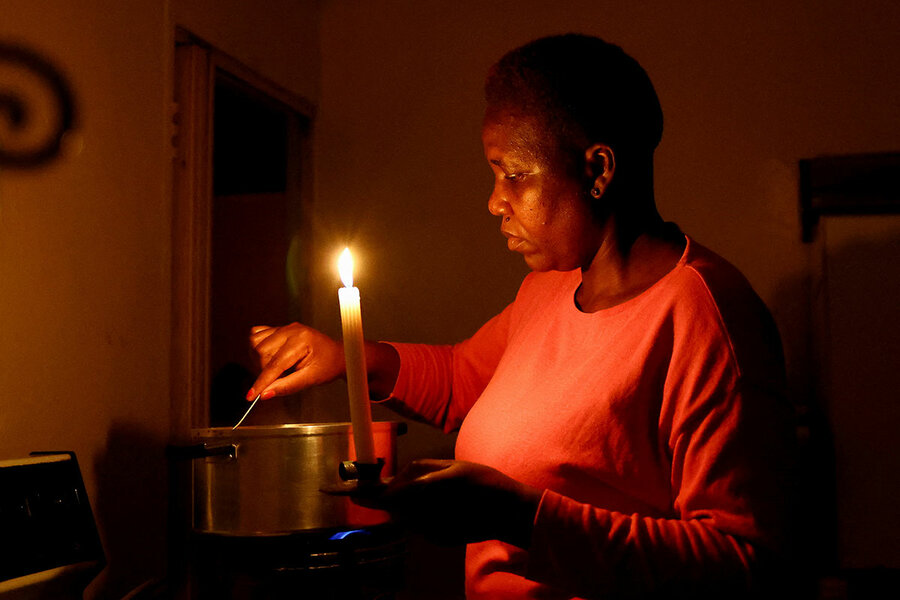
For years, South Africa’s rolling blackouts became a symbol of national decline. Businesses bought generators. Families planned their lives around power schedules. Factories lost production. Politicians blamed everyone but themselves. Now, after years of crisis, South Africa has achieved something many thought impossible. The country recently passed 300 consecutive days without load-shedding, and Eskom’s energy availability factor has climbed to nearly 66%. Diesel spending has fallen dramatically, and for the first time in years the power grid is no longer the country’s biggest economic problem.
The IMF projects South African GDP growth of just 1.0% in 2026. Even more troubling, real GDP per person has fallen from roughly $5,954 in 2010 to about $5,715 in 2024. After fourteen years, South Africans are approximately 4% poorer on a per-capita basis despite commodity booms, government plans, infrastructure spending, and now an improving electricity system.
This is where governments consistently misunderstand economics. They identify a visible problem and assume solving it will automatically create prosperity. It rarely works that way. South Africa’s blackouts were certainly damaging, but they were never the sole cause of economic stagnation. Weak investment, deteriorating infrastructure, high unemployment, declining productivity, capital flight, and government inefficiency were already undermining growth long before the power crisis reached its peak. The blackouts simply made the deeper problems impossible to ignore.
The labor market tells the real story. Official unemployment has climbed to 32.7%, while youth unemployment has reached an astonishing 45.8%. In the first quarter of 2026 alone, employment reportedly fell by 345,000 jobs. An economy growing at 1% simply cannot absorb a rapidly expanding labor force. Young people entering the workforce find themselves competing for opportunities that often do not exist.
The investment numbers are equally concerning. Gross fixed capital formation stands at just 14.5% of GDP, well below the levels typically seen in emerging economies that experience sustained growth. No country becomes prosperous without investment. Factories, railways, ports, power plants, technology infrastructure, and housing all require capital. When investment remains weak, growth inevitably follows.
Even South Africa’s freight network reveals the problem. Rail volumes have recovered from recent lows, but remain nearly 30% below the levels recorded less than a decade ago. The country may have restored electricity, but moving goods efficiently across the economy remains a challenge. Growth is not merely about producing power. It is about transmitting economic activity throughout an entire system.
What makes South Africa particularly important is that it serves as a warning for many countries facing similar pressures. Around the world, governments are confronting aging infrastructure, rising debt, slowing productivity, demographic challenges, and declining living standards. Politicians continue searching for single solutions to what are fundamentally systemic problems. There is no magic switch that restores prosperity once confidence has been damaged.
The lesson is simple. Electricity matters. Infrastructure matters. But confidence matters more. Capital flows where it feels secure. Investment follows confidence. Jobs follow investment. Living standards follow productivity. South Africa solved the crisis everyone could see. The challenge now is solving the problems that remain hidden beneath the surface.
The lights came back on. The harder task is reigniting economic confidence.

