
Posted originally on Jul 17, 2026 by Martin Armstrong |
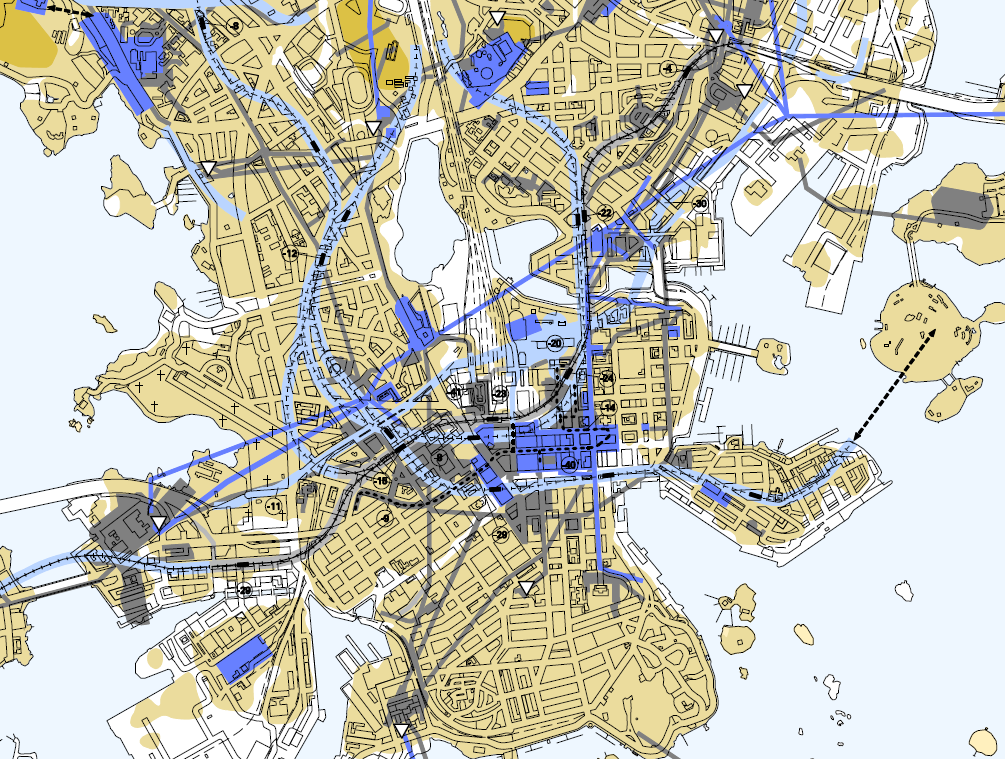
Finland has built an underground network beneath Helsinki capable of sheltering nearly one million people. Let that sink in. Nearly one million people. This is not a handful of bomb shelters scattered throughout the city, but rather an underground city stretching beneath the capital, consisting of more than 5,500 reinforced shelters connected by tunnels carved directly into solid granite. They can be converted from civilian use into military-grade protection in as little as 72 hours.
Engineered to withstand explosions, chemical attacks, biological threats, radiation, and the collapse of the world above. The shelters contain independent power systems, water supplies, communications networks, hospitals, sanitation, filtration systems, and enough infrastructure to sustain life if the surface becomes uninhabitable. During peacetime, they function as swimming pools, hockey arenas, churches, sports centers, parking garages, and shopping facilities.
Ask yourself a very simple question. Who spends decades and billions of dollars constructing an underground city unless they genuinely believe it may one day be needed?
Finland is not building these shelters because of some passing political disagreement with Moscow. The country shares an 830-mile border with Russia and has never forgotten the Winter War. Unlike much of Europe, Finland never embraced the fantasy that major wars had become impossible. While politicians across Europe dismantled civil defense, reduced their militaries, and diverted spending toward every fashionable political cause imaginable, Finland kept digging.
Today, nearly 4.8 million shelter spaces exist for a nation of just 5.6 million people. Very few countries on Earth have anything remotely comparable. That means Finland has spent generations preparing to keep the overwhelming majority of its population alive during the unthinkable. Governments do not invest on that scale because they expect peace.
Finland is probably not the exception. It is simply one of the few countries honest enough to admit what it has been doing. Across Europe, governments are quietly rebuilding civil defense systems, expanding military production, discussing conscription, increasing defense budgets, and warning citizens to prepare emergency food, water, medicine, batteries, and cash. Every policy points in the same direction. They are preparing society for prolonged conflict.
Our computer has warned that the years ahead would not resemble the decades people have grown comfortable living through. The sovereign debt crisis was always destined to evolve into geopolitical conflict because governments eventually turn outward when they can no longer solve problems at home. History has followed that pattern for thousands of years. Debt leads to instability. Instability leads to political desperation. Political desperation ultimately leads to war.
The frightening reality is that governments never announce the danger while they are preparing for it. They reassure the public until the very last moment because panic becomes another enemy to manage. By the time officials openly admit the risks, it is usually far too late to begin preparing.
Finland’s underground city is more than an engineering achievement. It is a message written in concrete and granite. It says that one government believes there is a realistic possibility that nearly one million people may someday have to disappear beneath the earth simply to survive. That should concern every person in Europe far more than another reassuring speech from politicians claiming everything is under control.

