
Posted originally on: Oct 30, 2026 by Martin Armstrong |
QUESTION: Dear Marty,
I sincere hope you are well and sound, i do wrote to you before about starvation in Russia, currently territory called Ukraine, this is the same statment as anyone saying that it was BIG SHORT which cause the crash, if you care please have a look though the prism off the food consumption, that some record was falsified to discredit something else, is The Different story, but in the article below you are stating that Янукович fall was due to army not support him, This is not just incorrect, but contradicting your previous assignment. I always wondered why is this happening? Any particular reason for this. If we assess the whole situation and question the guys in charge at the time , they all waited for orders and Янукович didn’t give those orders, in fact orders was not to engage, dispite the fact that the crowd was way passed peaceful one, but west overthrown elected government, this is blant and short version
Truly your’s
Gleb R.
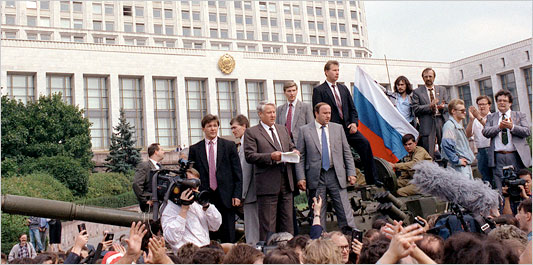
ANSWER: Perhaps I over-simplified the event. Neither of these two factors alone is the whole story. The more accurate conclusion is: Yeltsin standing on the tank did indeed play a crucial role, but the deeper reason for the coup’s failure was that the coup plotters themselves never truly dared to issue a clear order to fire, nor could they guarantee that the troops would execute such an order.
Yeltsin standing on the tank was an extremely symbolic scene that played a huge role in rallying the masses and demonstrating resistance. It gave the opposition a focal point and morale boost, encouraging more citizens to come to the White House to form human shields. However, this was more like a “catalyst“—it ignited resistance but did not directly disarm the coup forces. The true turning point was the hesitation and refusal of the military and security services.
The coup plotters (the State Committee for the State of Emergency) nominally controlled the military, KGB, and Ministry of Internal Affairs, but in practice they were unable to issue effective orders.
No one was willing to sign a written order to fire: According to recollections, the elite Alpha Group was ordered to storm the White House, but the team members refused, stating they only fought terrorists and not their own people, demanding that whoever issued the order should sign it themselves. More critically, the coup leaders themselves (such as Defense Minister Yazov and KGB Chairman Kryuchkov) refused to sign their names on the attack order, passing the responsibility around like a hot potato. This stemmed from the “Tbilisi Syndrome”—the military had previously been used for bloody crackdowns and then abandoned by politicians, so officers were unwilling to take the fall again.
Troops defected and refused to obey: After Yeltsin stood on the tank, the tank unit he was on (a company of the Tamanskaya Division) defected on the spot and turned their guns around. Other units also wavered, with some senior officers even publicly expressing support for Yeltsin, causing a collapse in military morale. The KGB special forces also refused to carry out the order to storm the parliament building and kill Yeltsin.
The coup organization itself was chaotic: The tanks that entered the city did not even receive clear instructions on what to do, and soldiers idled on the tanks while citizens brought them food and took photos with them, completely lacking the atmosphere of military control.
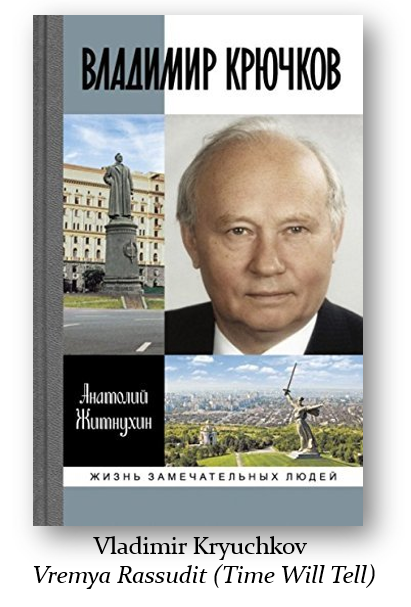
Vladimir Kryuchkov wrote regarding the August 1991 coup within his broader memoirs, “Личное дело” (Personal File), first published in 1996 while he was in prison awaiting trial, and later reissued with additional material as “Личное дело. Три дня и вся жизнь” (Personal File: Three Days and a Whole Life). It is judged as a historical source. However, I must say that the book is a frustrating yet still a revealing document providing valuable insider access to the mindset of the Soviet security elite. However, it must be realized that it is deeply compromised as a reliable narrative of the coup itself.
Kryuchkov writes providing his own vantage point, rather than analytically. Thus, the book does not offer a sustained, critical examination of the coup’s planning, execution, or failure. What is most telling about Kryuchkov’s account of the coup is what it does NOT tell us. It does not offer a coherent explanation for why the plot failed. You are correct that the historical record demonstrates that the plotters were incompetent, and you are correct that they refused to take decisive responsibility (including signing orders to use lethal force), but I think you attributing too much to that factor while overlooking the fact that the military’s unwillingness to fire on civilians existed, and Yeltsin’s political skill in seizing the symbolic initiative standing on the tank has a critical impact. Kryuchkov’s memoir does not engage with this failure in any systematic way. It is the testimony of a participant who never fully accounts for his own role in the fiasco.
So, Yeltsin standing on the tank was a brilliant political performance that successfully ignited civilian resistance and accelerated military defection. But if the coup leaders had been ruthless enough from the start and issued a clear order to fire (and the troops had executed it), Yeltsin would likely have been unable to stop it by standing on the tank alone. The fundamental reason the coup failed was that this was a “coup without a backbone“—the plotters lacked the will to take responsibility, while the military and security forces, drawing on past lessons, chose to stand still or defect.
My point is that for a revolution to succeed in any country, it turns on the willingness of the military/police to follow orders. If they fail to do so, or even join the people, then the political government will collapse. You are right that the coup FAILED to issue the order to fire, but there were indications that had they done so, the troops would have hesitated. To get the troops to do so, they would have needed to paint Yeltsin as some criminal. Without demonizing your opposition, you create doubt. This is why Europe demonizes Putin to get the people to be willing to kill Russians as evil. The coup failed to demonize the opposition, and this was fatal to the coup.
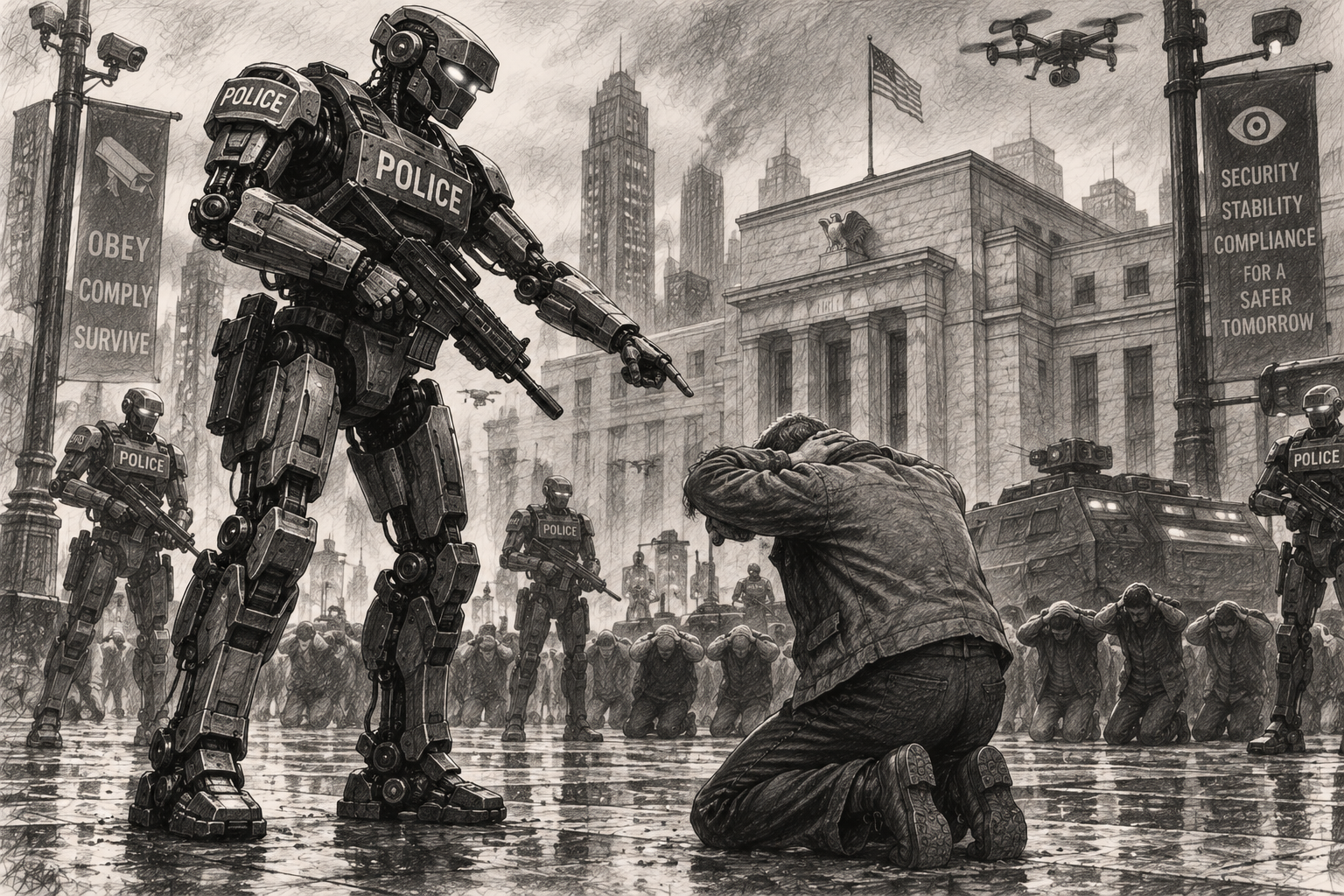
This is also why governments are desperate to create robots for the police and military. They will follow orders and will NOT be swayed by morality. No demonization is required.
Categories:Revolution

