Posted originally on the CTH on September 3, 2026 | Sundance
This morning the Trump administration launched the Foundry School, a national program to train the entrepreneurs, engineers, technicians, and industrial leaders needed to rebuild American manufacturing. [Press Release Here]
“President Trump’s reindustrialization agenda has already brought trillions of dollars in industrial investment to American soil. Foundry School will focus on turning that investment into jobs. American manufacturers will need an estimated 3.8 million skilled workers by 2033 in semiconductors, defense, energy, and beyond, and Foundry School exists to make sure Americans fill those jobs. The program will put American workers first by equipping them with the skills needed to bring manufacturing jobs home and build careers in industries critical to our nation’s economic security.”
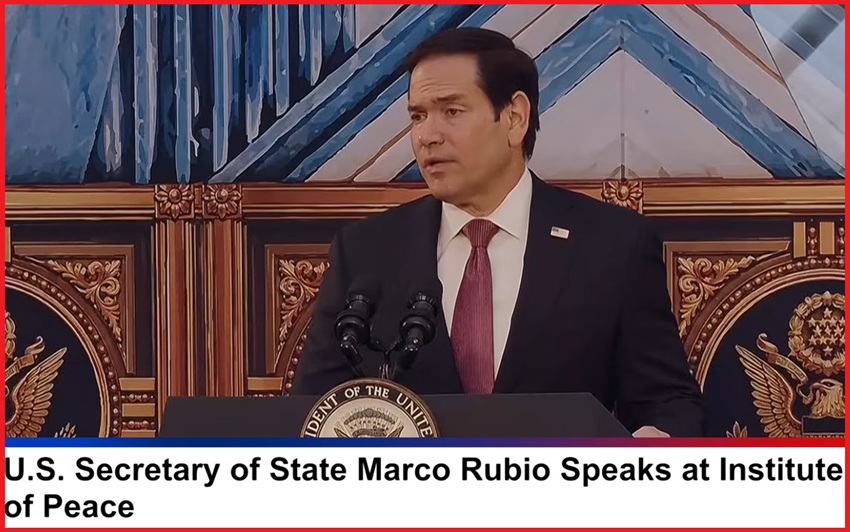
This critically important initiative launched today with the full support of the administration including remarks by both Vice-President JD Vance and Secretary of State Marco Rubio. ‘Industrial Security Is National Security’, noted Vance. ‘We Lost Our Ability to Make Things’ Rubio warned as both explain the importance of the objective. WATCH:
Posted originally on the CTH on September 2, 2026 | Sundance |
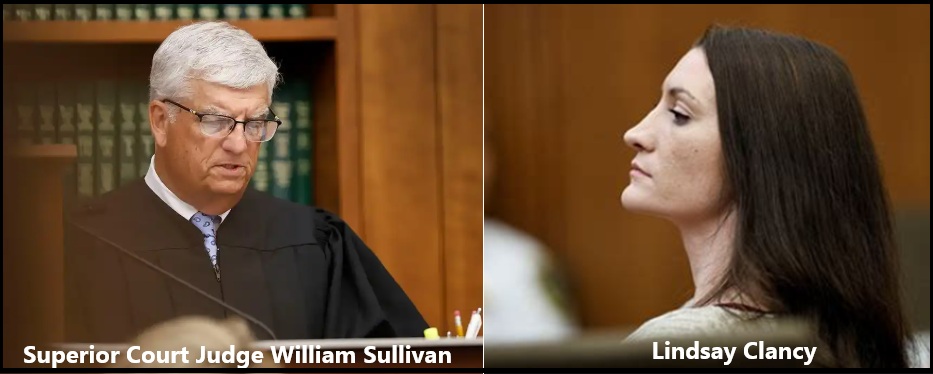
Many of us are watching the story of a woman, Lindsay Clancy, who is accused of murdering her three young children in 2023 in their Massachusetts home. The widely discussed case is being tried in Plymouth Superior Court, and after five days of jury deliberations the jury has again told the judge they are hopelessly deadlocked.
Clancy killed her three children [Cora (5), Callan (8 months), and Dawson (3)], that aspect is not in question; she strangled them with an exercise band. However, the defense has argued that Clancy was suffering from postpartum psychosis, and she is not criminally responsible. Prosecutors argued Clancy knew right from wrong and acted deliberately, pointing to evidence of her planning, and the fact she hid her thoughts of harming the children from doctors because she knew they were wrong.
The jury is made up of nine women and three men. The jury cannot decide if Clancy is criminally responsible for killing her children. The jury has deliberated for five days and has reported twice before they are deadlocked. Superior Court Judge William Sullivan responded with a Tuey-Rodriguez charge, an instruction that urges deadlocked jurors to keep working toward a verdict while reminding them not to abandon their own honestly held views.
Rather than declaring a mistrial, the judge allowed the jurors to go home for the day. It looks like tomorrow a mistrial will be declared.
(Via Fox News) – The instruction that Judge William Sullivan gave to the Lindsay Clancy jury on Wednesday takes its name from two Massachusetts Supreme Judicial Court decisions.
In Commonwealth v. Tuey (1851), the court approved an instruction encouraging deadlocked jurors to re-examine their views with an open mind. More than a century later, in Commonwealth v. Rodriguez (1973), the state’s highest court revised that language to remove pressure on minority or holdout jurors, creating a neutral instruction that asks all jurors to carefully consider one another’s views while maintaining their own honestly held convictions.
Receiving a Tuey-Rodriguez charge does not mean a verdict is imminent. The instruction is generally considered a necessary step before a judge declares a mistrial because of a hung jury, although it often results in jurors reaching a unanimous verdict after further deliberations. (read more)
The trial has gathered considerable national attention because a remarkably large number of women support Ms. Clancy and claim that many women suffer from extreme hormone imbalances and are not responsible for their conduct or behavior. The supporter group has a lot of commonalities with the women who previously wore genitalia on their heads.
Many American men are, for the first time, looking at the hormonal claims of the Clancy defenders and asking themselves some very serious questions about the mental stability of a large swath of American women. Meanwhile another significant group of American men remind them this is not new.
The ramifications of a “not guilty” decision are considerable.
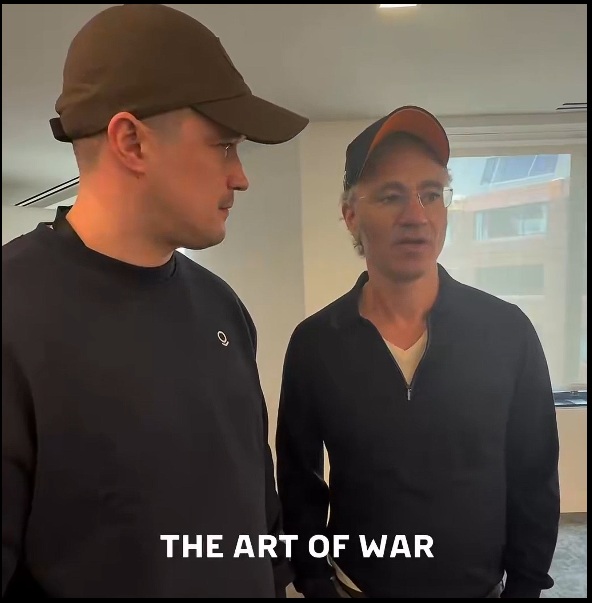
Palantir CEO Alex Karp and former Ukraine Defense Minister Mykhailo Fedorov have been collaborating jointly for over 5 years, according to the statement made by Karp. That means the Palantir-Ukraine relationship pre-dates the Russian military advance into Eastern Ukraine.
Given the nature of U.S. involvement in Ukraine, and understanding the shady and sketchy background that has been in place for quite some time, the detail of the length of time Palantir and Ukraine military have been working together is worth noting.
As Secretary of State Marco Rubio first mentioned in March 2025, …” frankly, it’s a proxy war between nuclear powers – the United States, helping Ukraine, and Russia – and it needs to come to an end.” {source}
It’s also worth remembering in June 2022, the New York Times published an article saying the CIA and Pentagon special forces were organizing and conducting the NATO war effort from a secret operation center in Kyiv.
KYIV, Sept 1 (Reuters) – Palantir CEO Alex Karp will become the first major investor in a new defence technology company launched by Mykhailo Fedorov, the tech-savvy former Ukrainian defence minister who was dismissed in July.
“The new company will build on Fedorov’s experience in modern technological warfare, with its primary mission to strengthen Ukraine and develop defense technologies that can help build a safer future for the entire world,” a press release from Fedorov’s team said on Tuesday.
The dismissal of Fedorov, a longtime advocate of drone warfare and artificial intelligence, sparked protests that later subsided after he publicly called for wartime elections, an issue that splits Ukrainians.
Since leaving office, Fedorov has said he plans to launch several ventures, including a defence investment fund and a think-tank. “You and your colleagues are launching a company that I think will be defining for the world,” Karp told Fedorov in a video posted on the former minister’s Telegram channel.
Karp said he and Fedorov had worked together for “half a decade.” Palantir has provided software to Ukraine to support its war effort against Russia and government operations.
The statement said the two men met at Palantir’s Washington, D.C. office on Monday. (source)
War is a very lucrative business.
Within Ukraine Fedorov has a lot of support. However, one can look at his decisions recently as driven more by the affluence opportunity than anything else. As always, when given ideology or money as two options, most choose the money.
Posted originally on the CTH onSeptember 2, 2026 | Sundance |
Palantir CEO Alex Karp and former Ukraine Defense Minister Mykhailo Fedorov have been collaborating jointly for over 5 years, according to the statement made by Karp. That means the Palantir-Ukraine relationship pre-dates the Russian military advance into Eastern Ukraine.
Given the nature of U.S. involvement in Ukraine, and understanding the shady and sketchy background that has been in place for quite some time, the detail of the length of time Palantir and Ukraine military have been working together is worth noting.
As Secretary of State Marco Rubio first mentioned in March 2025, …” frankly, it’s a proxy war between nuclear powers – the United States, helping Ukraine, and Russia – and it needs to come to an end.” {source}
It’s also worth remembering in June 2022, the New York Times published an article saying the CIA and Pentagon special forces were organizing and conducting the NATO war effort from a secret operation center in Kyiv.
KYIV, Sept 1 (Reuters) – Palantir CEO Alex Karp will become the first major investor in a new defence technology company launched by Mykhailo Fedorov, the tech-savvy former Ukrainian defence minister who was dismissed in July.
“The new company will build on Fedorov’s experience in modern technological warfare, with its primary mission to strengthen Ukraine and develop defense technologies that can help build a safer future for the entire world,” a press release from Fedorov’s team said on Tuesday.
The dismissal of Fedorov, a longtime advocate of drone warfare and artificial intelligence, sparked protests that later subsided after he publicly called for wartime elections, an issue that splits Ukrainians.
Since leaving office, Fedorov has said he plans to launch several ventures, including a defence investment fund and a think-tank. “You and your colleagues are launching a company that I think will be defining for the world,” Karp told Fedorov in a video posted on the former minister’s Telegram channel.
Karp said he and Fedorov had worked together for “half a decade.” Palantir has provided software to Ukraine to support its war effort against Russia and government operations.
The statement said the two men met at Palantir’s Washington, D.C. office on Monday. (source)
War is a very lucrative business.
Within Ukraine Fedorov has a lot of support. However, one can look at his decisions recently as driven more by the affluence opportunity than anything else. As always, when given ideology or money as two options, most choose the money.
Posted originally on the CTH on September 2, 2026 | Sundance |
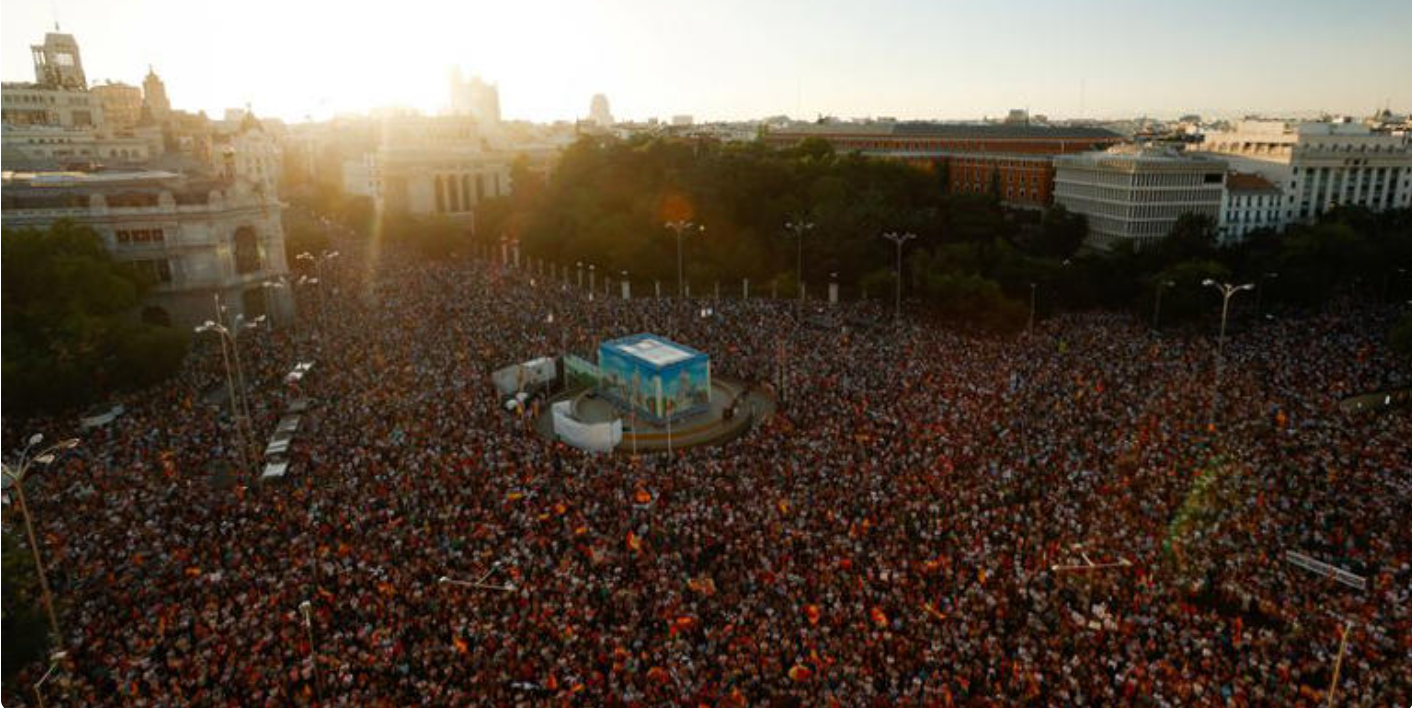
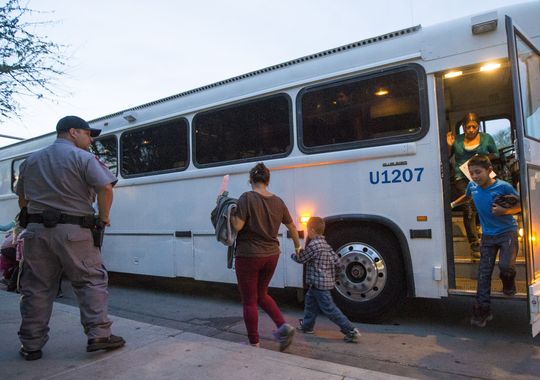
Tens of thousands of people took to the streets of Madrid today, in a massive show of support for Spain’s North African enclave of Ceuta. The protests follow weeks of crisis in the region following a border surge from neighboring Morocco.
More than 70,000 migrants crossed into Ceuta during the surge and local authorities estimate that more than 10,000 migrants remain in makeshift camps scattered across the enclave. The residents are dealing with lawlessness, chaos and criminal activity. Protesters in Madrid wave Spanish flags, called for stronger border control and criticize Prime Minister Pedro Sanchez over his handling of the crisis. The demonstrations are ongoing as serious clashes and fights between migrants and local residents continue in Ceuta.
CEUTA, Spain, Sept 2 (Reuters) – Residents of Spain’s North African enclave of Ceuta took to the streets on Wednesday to protest the handling by Madrid of a migration crisis caused by a deadly border surge in July when at least 72,000 people crossed from Morocco.
Thousands of people marched through the streets of the city of about 80,000 residents in a protest that coincided with the annual Ceuta Day. Waving Spanish flags and blowing whistles, they chanted: “Ceuta is not for sale, Ceuta must be defended.”
One placard read: “SOS. Europe, save us from our traitor government” while some demanded that authorities should “expel the invaders” and others called for Prime Minister Pedro Sanchez to resign as demonstrations also took place in other cities across Spain, including Madrid, Barcelona and Bilbao. (read more)
Posted originally on the CTH on September 2, 2026 | Sundance |
The Justice Department has issued an important ruling requiring states to follow the legislated rule of reporting illegal aliens who receive Temporary Assistance for Needy Families (TANF) or Supplemental Security Income (SSI). This rule can substantially alter the nature of financial support programs currently taking place with federal funds. [Full Press Release] [Full Opinion]
The Office of Legal Counsel has issued a legal opinion clarifying that when a state chooses to participate in the Temporary Assistance for Needy Families (TANF) and the Supplemental Security Income (SSI) programs, all agencies within that state — not only those that administer TANF or SSI benefits — must report individuals known to be not lawfully present in the United States to The Dept of Homeland Security. {citation}
DOJ Press Release: […] “Congress wrote this requirement plainly,” said Assistant Attorney General T. Elliot Gaiser of the Justice Department’s Office of Legal Counsel. “When a state chooses to participate in TANF, it accepts the obligation to report illegal aliens in the United States. Tax dollars intended to help vulnerable Americans should not perversely encourage illegal entry into the United States, but rather should reinforce our laws and our borders.”
“Our clarification does not impose new obligations on states,” said Deputy Assistant Attorney General Joshua Craddock of the Justice Department’s Office of Legal Counsel and author of the opinion. “It simply restores the original meaning of the statute Congress enacted and ensures that DHS receives the information it is legally entitled to. States that accept TANF funding must abide by federal law, and failure to comply may lead to serious consequences, including loss of program funding.”
The Office withdrew a Clinton-era opinion from 1998 that construed the reporting requirement much more narrowly. Under that prior interpretation, only the specific state agencies administering TANF or SSI were required to provide information to federal immigration authorities. All fifty states, the District of Columbia, and several U.S. territories currently participate in TANF and SSI, and federal TANF funding grants exceed $16.4 billion annually.
The Office of Legal Counsel’s Sept. 1 opinion explains that Congress defined “State” broadly in the Personal Responsibility and Work Opportunity Reconciliation Act of 1996. As a result, when a state accepts federal TANF or SSI funds, the entire state government — including all component agencies — is bound by federal law to share information with DHS about individuals the state knows to be not lawfully present.
The opinion applies prospectively. States will not face retroactive penalties for past reliance on the 1998 interpretation. Federal agencies may rely on OLC’s advice to update TANF and SSI grant agreements and compliance processes to reflect the correct legal standard moving forward. (SOURCE)
Posted originally on the CTH on September 2, 2026 | Sundance |
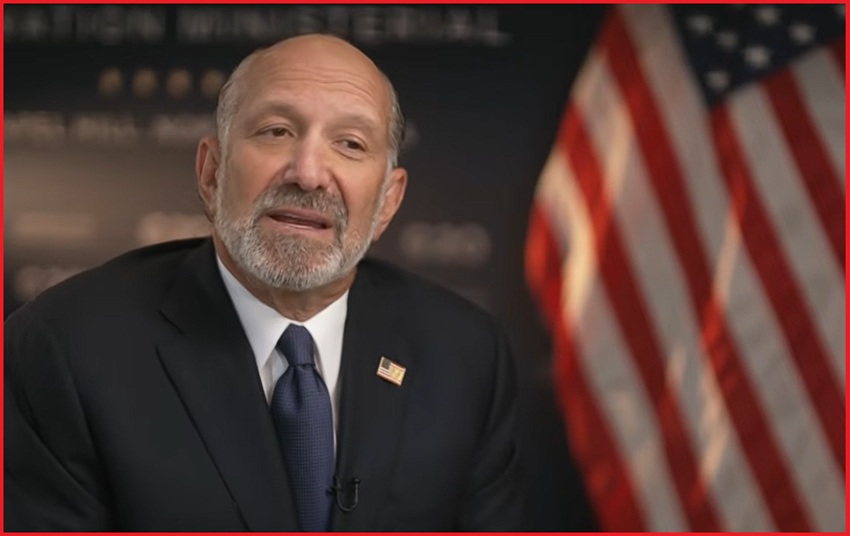
A rather remarkable statement from Commerce Secretary Howard Lutnick puts the Canadian government on notice. If Lutnick is accurately outlining what took place, there’s no way Trump is going to give them a trade deal.
When he is questioned about the U.S-Canada trade agreement collapse, Secretary Lutnick quotes the Canadian govt officials. “I said to him, are you trying to blow this up? and he said, and I quote, “I’m not allowed to say that.“” Lutnick then encapsulates what that response meant.
“They decided for political reasons, domestically, domestic Canada, they’d rather fight with Donald Trump; even if it’s bad for the economy of Canada, for their political ambition to get a certain election,” Lutnick noted. He continued, “now remember, Quebec has the sovereign party was in the lead, so that’s why they came up with this French nonsense. You think the American side talked about how people speak in Quebec? We have a deal with France, we have a deal with Italy, we have a deal with Germany, we don’t care about their language; none of that was true.” WATCH (prompted):
Posted originally on the CTH on September 2, 2026 | Sundance |
Considering that European NATO partners are urgently trying to expand the Ukraine conflict and assemble a united NATO war effort against the Russian Federation, it is worth reviewing the current position of Russian President Vladimir Putin.
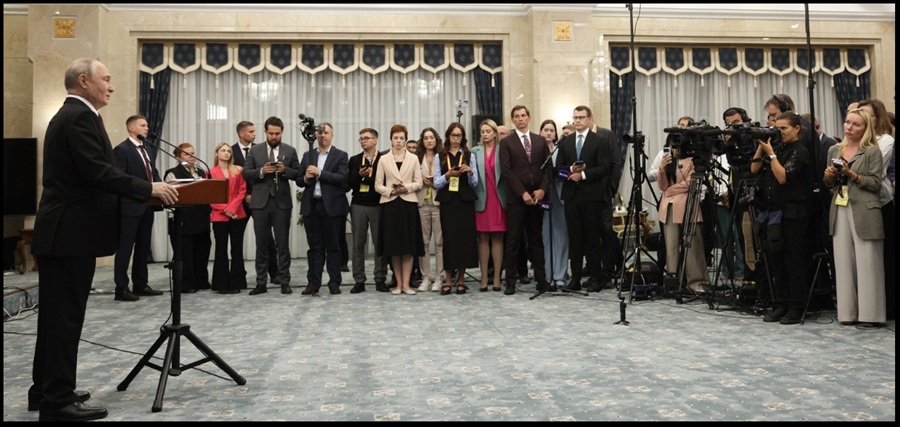
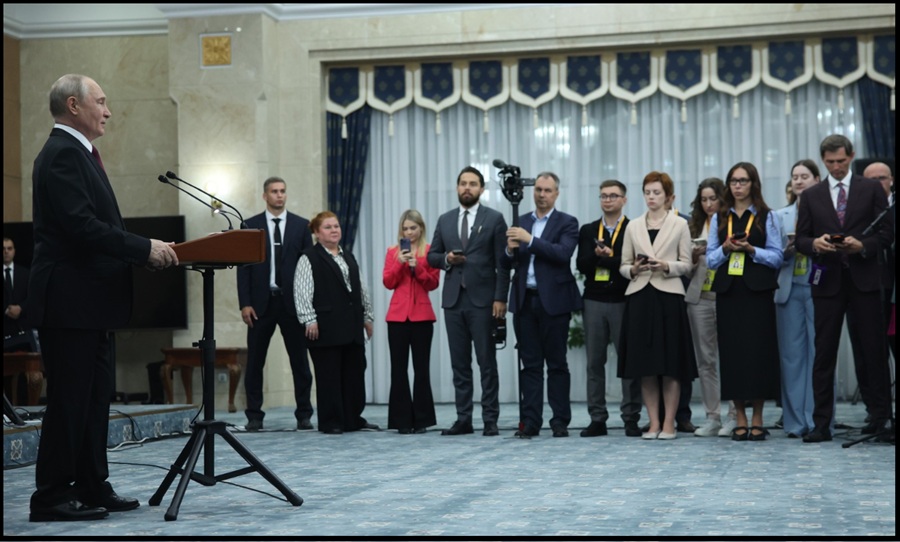
Vladimir Putin held a press conference on the sidelines of the SCO summit in Kyrgyzstan. A transcript is below:
Olga Knyazeva: Today, very much attention is given to our contacts with the United States. The CIA director has reportedly visited [Moscow] to offer trilateral Russia-US-Ukraine talks.
Do you think we need any negotiation tracks now or possibly new intermediaries, including American ones?
Vladimir Putin: First, communication between our intelligence services is maintained at all times. You may have noticed that we have recently handed over to the American side an American citizen who was serving a prison term in Russia. We did that for health and humanitarian reasons. He is a simple guy, a drinker and a brawler with health problems, so we sent him home to get medical assistance.
It was my first point. Communication is and was always maintained, even in the most difficult periods of the Cold War, and even more so now. Direct contacts are also maintained between the senior officials of our intelligence services.
As for expanding the number of negotiators, we believe that negotiations, any kind of negotiations, should be primarily filled with concrete content. If anyone is making or can make a practical contribution to this process, we are all for it.
The only thing we would like to avoid is to carry on a senseless process. If anyone can make a positive contribution to this negotiating process, which has been frozen to some extent, as we see this, we would not be against this. But this requires the involvement of specialists, the military and diplomats, of course.
On the other hand, we are quite comfortable with working with those who we know well and generally trust. These people are close to President Trump. In my opinion, they are sincere people who try to add practical content to our efforts. And President [Trump] trusts them, which is very important and without which no negotiations are possible. The thing is that everything is pointless if these people coordinate some issues with us but their top leader reviews the arrangements they make and divides them by a thousand or more. As far as we can see, he trusts them. That is why Mr Kushner and Mr Witkoff are always welcome here, and we enjoy working with them.
Viktor Sineok: Russian troops are currently advancing towards Kramatorsk and Slavyansk, and strikes on Ukrainian military facilities are ongoing. Has the turning point in this conflict already been reached, and will the enemy, as the saying goes, begin to crumble? Or does that moment still lie ahead? And what is the present situation at the front, and how do you assess it?
Vladimir Putin: I have no doubt whatsoever that the enemy will, indeed, crumble. Matters of precise timing are always exceedingly complex, and these are precisely the questions to which it is best not to attempt definitive answers – neither in respect of timing nor of any other specifics. For war is an enterprise that is harsh and difficult to predict.
Nevertheless, questions of the sort you have just raised invariably arise at every meeting with media representatives. That is why, before entering this hall, I proceeded to my office upstairs and have just spoken directly with the Chief of the General Staff. I would note, however, that the information I receive is sourced from a wide array of channels, from virtually all command bodies of the special services and our agencies which, in one manner or another, are engaged in the special military operation. Accordingly, the picture – at least as it appears to me – is fairly objective. I have just received the latest reports from him [Valery Gerasimov] and from other colleagues.
I would like to add, of course, that hostilities always involve casualties, which is sad and it is always a tragedy and faces us with new challenges, especially at this time of rapid scientific and technological development.
The biggest challenge is posed by unmanned vehicles, which operate in all spheres – underwater, on sea, land and in the air. This is a serious challenge to us, but we are coping with it. I am confident that all tasks in this sphere will be fulfilled. I have no doubt whatsoever about this. I can conclude this from the speed our defence enterprises have accumulated.
But there is more to it. You know, I was pleased with my meetings with representatives of small and medium-sized businesses and our nascent engineering schools. The average age of their engineering professionals is 35 years. I have recently held such a meeting and I was really pleased and impressed by this fact. We may be lagging behind or moving ahead of the enemy in some spheres, but we will certainly overcome all challenges and fulfil all our tasks.
But the main thing I would like to say in reply to your question is this. Despite all challenges, Russian forces are accelerating their offensive in the zone of the special military operation. They are not simply advancing but accelerating their movement.
The liberation of the Donetsk People’s Republic is proceeding as planned. I would like to note that in August alone we assumed control over 270 square kilometres of the republic’s territory and 15 localities. Here are the details.
The units of the South Group of Forces are confidently, I repeat, confidently advancing, overcoming the defence lines and engineering fortifications of the enemy, advancing… (Addressing Viktor Sineok) You have said “charging ahead.” Well, they may not exactly be charging ahead, but they do move unhurriedly in a high drone threat environment, advancing towards the eastern suburbs of Slavyansk and Kramatorsk and the southern suburbs of Druzhkovka, which are between 1.5 and 4 kilometres away in different sections of the frontline. Moreover, they are approaching Druzhkovka from several directions, bypassing it in the south and approaching it from the east.
Troops from the Centre group are advancing on several key axes simultaneously and are now engaged in street-by-street fighting to take the city of Dobropolye. This is a major, heavily fortified logistics hub, with both permanent and semi-permanent defensive structures in place. I will not tempt fate by predicting the outcome, but I am confident the result will come.
Forces from the West group – I am not sure whether this has been reported in the media – have encircled a large enemy contingent on the eastern bank of the Krasnooskol Reservoir, near the village of Peski-Radkovskiye, and have begun to neutralise it. Thirteen Ukrainian armed forces battalions, totalling around 5,000 troops, are trapped in the pocket. This happened recently, and I do not know whether the Ministry of Defence has issued any statement or has been able to confirm it. The figure is probably somewhere around 4,500 to 4,800 troops – roughly that number. Moreover, this encirclement has been physically sealed. That is to say, not just under fire control, but physically complete – we have them fully surrounded and are now tightening the ring.
The offensive in the Zaporozhye Region is also proceeding actively. Units and formations of the Vostok and Dnepr groups are pushing forward on a broad front towards Zaporozhye. They liberated nine communities in August, and fighting is now underway in the central districts of Orekhov. The troops there are operating calmly, but with great confidence.
The North group of forces continues to establish a buffer zone along the Russian-Ukrainian border in the border areas of the Sumy Region (there are now only 12 kilometres left to Sumy itself, before the ring road) and also in the Kharkov Region. Over the past month, 14 communities have come under Russian control, including the liberation of Kazachya Lopan and, as of yesterday, the town of Svyatogorsk.
In the north-eastern part of the Kharkov Region, another enemy grouping of up to 2,000 troops has been completely encircled. The pocket formed there is substantial – 460 square kilometres – and encompasses 27 communities. Its elimination will allow the line of contact in this sector to be pushed back by at least 20 kilometres from the border areas of the Belgorod Region.
I would like to remind you that our actions were taken in response to the Kiev authorities’ provocation, namely their incursion into the Kursk Region.
We continue to target Ukrainian military facilities, industrial enterprises, and the port and logistics infrastructure that operate in the interests of the Ukrainian armed forces. As you know, we are doing this in response to the Ukrainian regime’s continued attacks on Russia’s civilian infrastructure and its fuel and energy complex, including oil refineries. I have been told that last night a large number of drones tried to get past the air defence systems of Moscow and St Petersburg, targeting civilian facilities, including oil refineries. They attempted to hit three oil refineries. Taking all this into account – the attacks on Russia and these facilities – the Russian Armed Forces were instructed to prepare and deliver mass strikes on Ukrainian energy facilities. They are targeting our facilities; we strike back. This is roughly the situation.
Alexander Yunashev: May I ask an additional question about drones?
Vladimir Putin: Yes, you may.
Alexander Yunashev: Good afternoon, Mr President.
The German authorities have stated that Russia is behind the drone incident in Leipzig, claiming that it was a Russian drone armed with explosives. However, this is a murky story. They have denounced the lease for the Russian House and want to shut down our consulate general in Berlin. At the same time, Zelensky openly threatened our air force several hours ago, saying that civilian aircraft have no place in the sky used by Ukrainian drones.
What can you say about this?
Vladimir Putin: Let’s start with the first part, about the actions of the German authorities. I believe that it mostly has to do with the internal political situation. The Chancellor’s political standing is complicated. He is not trusted by his citizens, and it is clear why – because he does not uphold but sells out national interests, and because of apparent economic missteps: enterprises are being shut down, people are losing their jobs, and living standards are plummeting. It is not clear why they did what they did. They have only one explanation: they need to stand up against “aggressive Russia.” You want proof? Here you are; they have planted it.
I would like to remind everyone that some time ago – several months or even a year ago – the German authorities accused Russia of blowing up the Nord Stream pipeline. I was really surprised that they came up with such a strange idea because we were interested in selling gas to Europe. We would be ready to provide gas today too. They only need to press the button, to make the decision to do it. But they don’t have the stomach for this, because of the US sanctions and everything else.
Good, but now they need to explain the reasons behind their actions. Considering the falling ratings and the upcoming elections, including in Saxony, this puts the political future of the German ruling circles in question. I believe that this is the explanation. I think that this is yet another blunder, and that it runs contrary to the interests of the German people.
What was the other part of your question, about a statement?
Alexander Yunashev: Zelensky has said that the skies are unsafe for civilian airlines. Is this a threat?
Vladimir Putin: I have not heard such statements, but if he did say this publicly, this sounds like a claim to state terrorism. I would like to note that they are asking us to resume talks and hold personal meetings. We don’t negotiate with terrorists. This is the first point.
Now, about the second part of your question. If, God forbid, such tragedies happen, we will provide a reply, let no one be in any doubt about this.
Gleb Ivanov: Mr President, you have recently signed an executive order authorising the Government to place critical infrastructure facilities under temporary administration if their security is not ensured. Could you elaborate on this executive order? First, in what cases do you intend to implement this, and second, could this lead to the nationalisation of these assets, turning them into state property?
Thank you.
Vladimir Putin: Of course not. What are you talking about? This is not a matter of nationalising anything – do not even think about it. There was never any such intention behind this move. Nationalisation is not an option. What compelled us to do this was quite straightforward. There is a saying, you know, that a man will not lock the barn door until after the horse is stolen. The adversary has started targeting civilian sites, including oil refineries. Did the adversary succeed in inflicting damage? It did. But why? Among other factors, and primarily because they were not protected. Unfortunately, our companies – I have had many face-to-face and collective meetings with them – these companies have been saying: “This is a matter for the law enforcement agencies, the army, etc. to handle.” But once we discussed this, they understood that they also had to be part of this effort.
Let me assure you… I said that there were attempts to target three oil refineries this night alone. These attempts failed. Why? Because these facilities were already protected. This does not mean that no strikes will ever get through. It might happen every now and then, but this elevates the protection to a whole new level. We have yet to complete repairs at just 10 percent of our oil refineries, so there is no way we can afford to have those of them that were repaired suffer from any strikes.
Therefore, we must all work together. This executive order is designed to achieve just that: to enable public administrations on the ground, including in municipalities, cities, regions and republics of the Russian Federation, as well as law enforcement agencies, and the Defence Ministry to work together to defend critical sites. This is all there is to it in terms of the purpose of this executive order. And it works, you know.
Of course, everything is possible, and there is always a possibility that something penetrates these defences somewhere, since the defences are not always effective. That said, this is the purpose of this executive order. And we can see that it works. (MORE)
Posted originally on the CTH on September 2, 2026 | Sundance |
Canada is drowning in the Sea of China. The USA is the rescue swimmer. When we reach the victim they thrash, try to climb on our back and pull us under. Survival for both now requires us to punch them in the face, back away and ask them if they prefer to drown. If not, listen to instructions.
The USMCA or CUSMA needs to be terminated! That’s the punch in the nose.
Then a bilateral trade agreement can be negotiated. That’s the swimmer giving the victim instructions.
If Canada chooses to drown in the Sea of China, so be it.
Then we build a regulatory wall against all Canadian products, banning the entry of Chinese component parts in EVERYTHING!
Posted originally on the CTH on September 1, 2026 | Sundance |
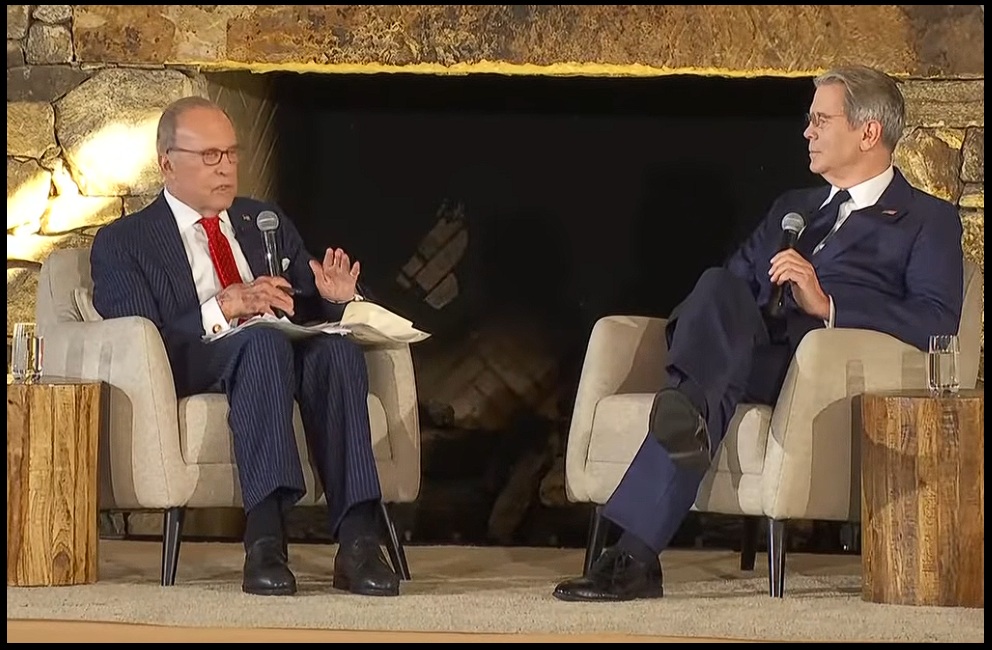
On the sidelines of the Asheville, North Carolina, G20 meeting of global finance ministers, U.S. Treasury Secretary Scott Bessent holds a fireside chat to discuss current geopolitical events and economic conditions.
Posted originally on the CTH on September 1, 2026 | Sundance |
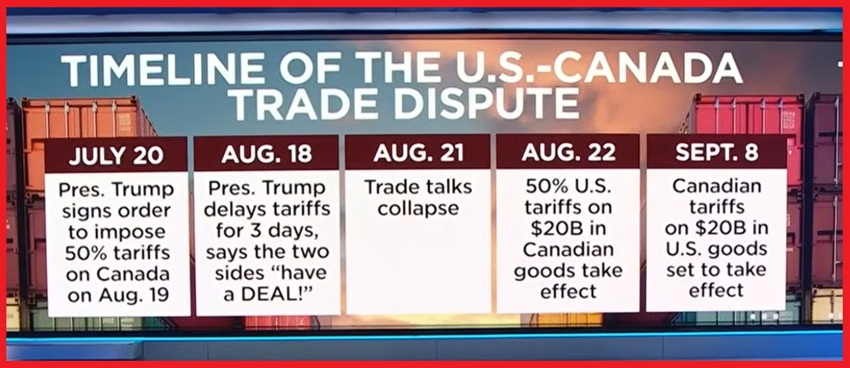
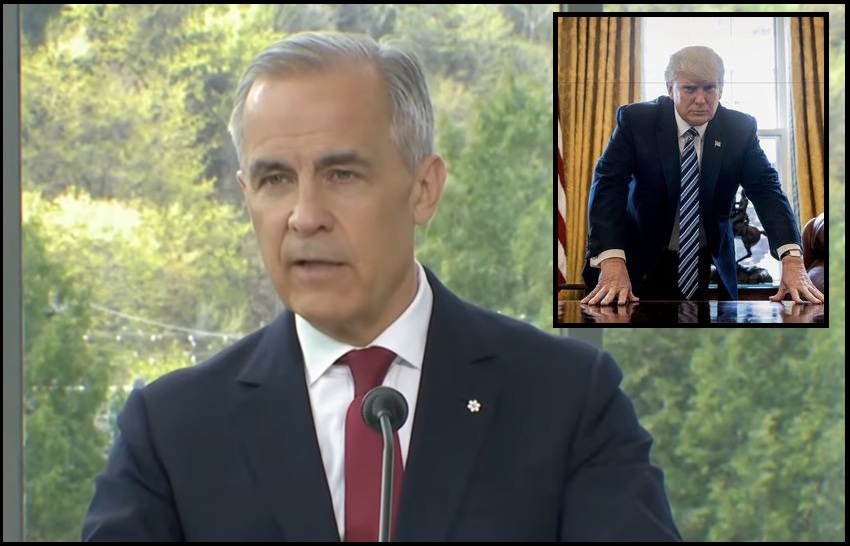
Within 12 hours of the Friday announcement that Canada had walked away from trade discussions with the U.S, we were able to piece together what the four points were. Several people disagreed and claimed something else was involved. Today, Prime Minister Mark Carney affirmed specifically the accuracy of those four points.
While Prime Minister Carney used his verbose gaslighting to describe them, you can listen for yourself. It boiled down to four issues: [1] U.S. streaming services writing code for “search engines” in the French language (cultural issue). [2] The U.S. having a right to reject a trade deal made by Canada with a non-market economy, ie. CHINA. [3] Removal of tariffs on Canadian assembled heavy trucks, semi-trucks and industrial trucks (not in the auto sector). [4] Canada demanding 5% of gross revenues from U.S. tech platforms, with an attitude that U.S. controls North American trade.
You can listen to his own words describing these issues. WATCH:
The United States must, as a matter of U.S. national security and survival, immediately cut all trade ties with Canada completely. I’ll explain why this is so critical and important.
The most appropriate metaphor is the drowning victim (Canada) with an intentionally placed anchor on its foot (China), now becoming a threat to the rescue swimmer (USA). If we don’t cut ties, we risk our own livelihood.
Here’s the four counterpoints:
♦The Stupid French Language thing. The French language stuff was an ancillary aspect where the Canadian Cultural Police were demanding that all U.S. streaming platforms (YouTube, Netflix etc.) must have search engines using the French language so Canadian users can search for stuff to watch using the French language. A ridiculous issue that was not part of the trade discussion, but Mark Carney saw political value in blowing up the issue.
This is really stupid, because when you buy your hardware (TV, Phone, Computer etc.) it asks you what language or country during set up. If you live in France, you put France. The operating system does the rest. We don’t code search engines for French in FRANCE because the OS does it! But Canada was requiring U.S. tech companies (streaming services) to install search features in French [I guess so they can set up the OS in English but get some ancillary feature.] It was a stupid “side paper” in the Intellectual Property sector of the trade discussion.
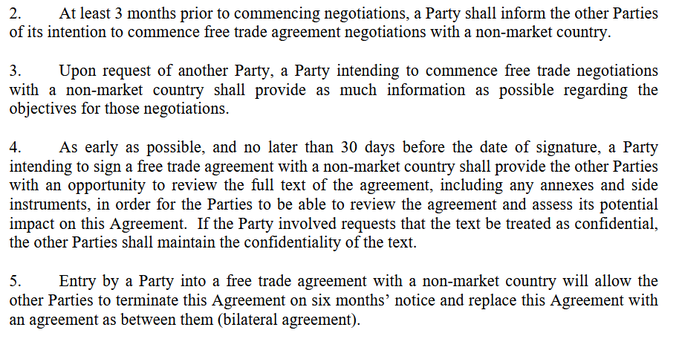
♦U.S. Right to Limit Canadian Trade Deals. This point is exponentially ridiculous for Canada to be upset about because the current USMCA/CUSMA already has that clause. The U.S (or Mexico) can exit the USMCA if Canada enters into a trade agreement with a “non-market” economy, ie China. [USMCA Sec 32:10]
Canada was already in violation of the USMCA/CUSMA when they entered into a trade agreement with China and agreed to import Chinese EVs. This action triggered the U.S. to become more focused on the stuff Canada was going to import; hence, the renewed emphasis on the clause.
This is critical. It’s not an ancillary issue. The Carney administration had requested “Fortress North America” a synergetic alignment of U.S-Canada trade principles. Canada claimed they wanted a united North American continent against the world on trade. Therefore, this talk of Canada being upset about joint collaboration and agreement on trade agreements with third countries, a point brought up repeatedly by Carney just doesn’t make sense.
If Canada wanted to join a united trade policy for North America, where each nation is anchored to the $31 trillion U.S. market, then each nation in North America must hold the same baseline trade agreement with third parties, other nations. Those were previously agreed principles; until all of a sudden Canada accused the U.S. of dictating terms and violating its sovereignty.
♦U.S. tariffs on Canadian “heavy use trucks”. This is not the “auto sector” despite Canada trying to make heavy duty trucks part of it. These tariffs are on industrial trucks, farm equipment, heavy trucks and semi-trucks. The U.S. said no, these are not autos and auto tariffs do not apply.
The reason is simple. Tractors, heavy industrial trucks, big rigs assembled/built in Canada are compromised when built in Canada. Why? Because they are full of cheap Chinese component goods and parts that wear out quickly. The U.S. wants two things on this issue. Either: (1) Make heavy industrial trucks in the USA, or (2) stop using cheap Chinese component parts. Failing to do so retains tariffs.
The parts that Canada are using are not even available in the USA because we tariff and reject them, so why should we accept them when Canada installs them? Either quit using Chinese parts (hence, the trade alignment against Chinese imports) or accept a tariff equal to the rate we would apply if the product was coming directly from China. This is the USA approach to that specific sector of heavy trucks.
SUMMARY: Yes, the United States dictates the terms for North American trade, because the United States is the overwhelming center of North American trade and consumer spending. The USA is the market, and Canada has an entire economy about the size of Texas. It is ridiculous to contemplate that the Canadian government can dictate terms against the U.S. economy, and we have no option other than to adhere to them out of some demanded politeness.
Enough already. Announce the termination of the USMCA.
Build a North American fortress.
Secure the Western Hemisphere.
Exit NATO.
Respectfully engage with each bilateral interest as a sovereign nation.
I have created this site to help people have fun in the kitchen. I write about enjoying life both in and out of my kitchen. Life is short! Make the most of it and enjoy!
This is a library of News Events not reported by the Main Stream Media documenting & connecting the dots on How the Obama Marxist Liberal agenda is destroying America