Posted Originally on Sep 11, 2026 by Martin Armstrong |
Welcome to America, where apparently standing around is now enough to have your movements searched through a nationwide surveillance network.
Records obtained from the Plano, Illinois Police Department reveal more than 1,200 searches involving the category “Curfew/Loitering/Vagrancy Violations.” That is from cameras controlled by ONE small police department, with law enforcement agencies elsewhere accessing those cameras as part of their searches. Additional audit records collected around the country show hundreds more searches under the same category. Flock has more than 120,000 cameras spread across 49 states, and its network has expanded into thousands of communities. This is no longer some camera sitting outside a convenience store recording a robbery. They have constructed the infrastructure to reconstruct where ordinary people travel, and police departments across jurisdictions can search that information.
This is precisely what I wrote about when I said, “Your Car Was Never the Target.” License plate readers were sold as a tool to find stolen vehicles and dangerous fugitives. Then the systems began recording the make, model, color, location, and movements of vehicles. Now Flock is developing AI systems capable of doing considerably more. Its newer investigative technology can combine camera information with police records, dispatch logs, and commercial identity databases, while other tools can search camera networks using written descriptions. Once you combine AI with a nationwide camera network, you are no longer investigating a crime after it occurs. You are constructing the machinery necessary to search the movements and associations of an entire population.
Flock’s newer AI tools can allow police to continuously search cameras in a defined area for someone matching a written description. A Texas deputy previously searched tens of thousands of cameras looking for a woman who had obtained an abortion. Officers have been accused of using Flock to track former romantic partners. Illinois discovered that federal immigration agents had gained access to state camera information despite restrictions. Now we learn the system is being searched for loitering and vagrancy. Yet they continue telling us not to worry because safeguards are coming. Flock has announced shorter default retention periods, case codes, auditing, and other controls. Fine. None of that changes the fundamental question: Why should government possess the ability to reconstruct the movements of millions of innocent people in the first place?
The Fourth Amendment was not written with an exception saying government may watch everyone so long as a private corporation owns the cameras. I wrote earlier this year about the FBI admitting that it purchases commercially available location information on Americans. This is the loophole they have discovered. Government does not always need to build the surveillance system itself anymore. Private corporations collect the information, construct the databases, and develop the technology. Government simply purchases access or contracts for the service. The private sector builds the cage and government gets the key.
People keep saying, “I have nothing to hide.” That is perhaps the most dangerous response imaginable. Liberty was never based upon proving to government that you have nothing to hide. Government was supposed to prove that it had probable cause to investigate YOU. We have turned that principle upside down. Everyone is monitored first, the information is stored, and government searches the database later when it decides somebody has become interesting. You do not need to commit murder. You do not need to rob a bank. You apparently do not even need to steal a car. You can be searched because somebody decided you were loitering.
We are all criminals now. That is where this mentality inevitably leads. Every citizen becomes a potential suspect because every citizen generates data that can be searched. Your car identifies where you travel, your phone identifies where you sleep, your credit card identifies what you buy, your bank identifies who you pay. Facial recognition identifies where you appear in real time. AI can connect information that once required hundreds of investigators and months of work in seconds. Governments of the past could only dream of possessing this kind of power.
This is how a surveillance state is created. There is no announcement from Washington declaring that privacy has ended. There is no single law abolishing the Fourth Amendment. It happens camera by camera, database by database, emergency by emergency, until one day people realize that anonymity in public has effectively disappeared. The government will insist that only criminals need to worry right up until the definition of “criminal” includes standing somewhere too long.
Posted Originally on Sep 11, 2026 by Martin Armstrong |
11greatest problem has been the NEOCONS who usurp American foreign policy to wage their quest to rule the world, spreading the fake democracy that they originally claimed when the multipolar world was capitalism vs communism. Communism collapsed all by itself BECAUSE of pure economic inefficiencies, which the Neocons are carrying out in the West.
Some did not our forecast that China will surpass USA post-2032 as te financial capital of the world. This not my opinion nor my desire. I am not here to sell my ideas over anyone else. The computer correlated the world and concludes the trend. In recent times since 1989, China has avoided getting dragged into wars because they know that undermines the economy.
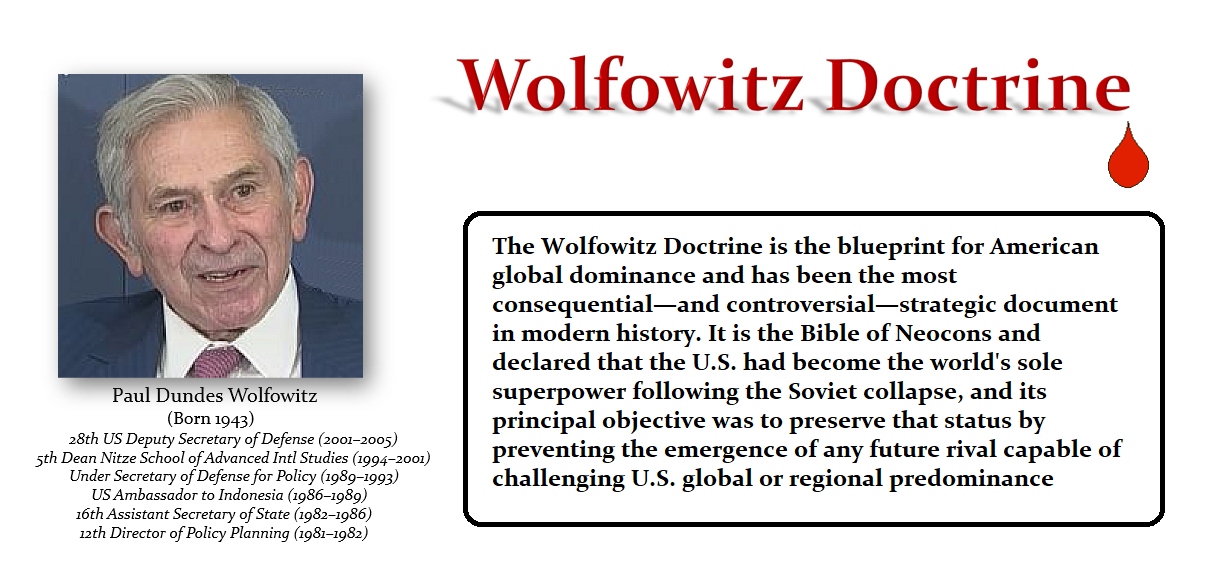
That is precisely opposite of the the United States and to a lessor degree, Russia. Post-Cold War hubris led U.S. Neocons to manipulate political leaders to take on a vast array of global responsibilities. That is illustrated by the Wolfowitz Doctrine of world superiority. The Neocons have squandered American wealth on their endless or forever wars in Iran, Iraq and Afghanistan not to forget Libya, Yemen, Syria, and various parts of Africa, all part of their global war on terror as well as their proxy war using Ukraine to conquer Russia.
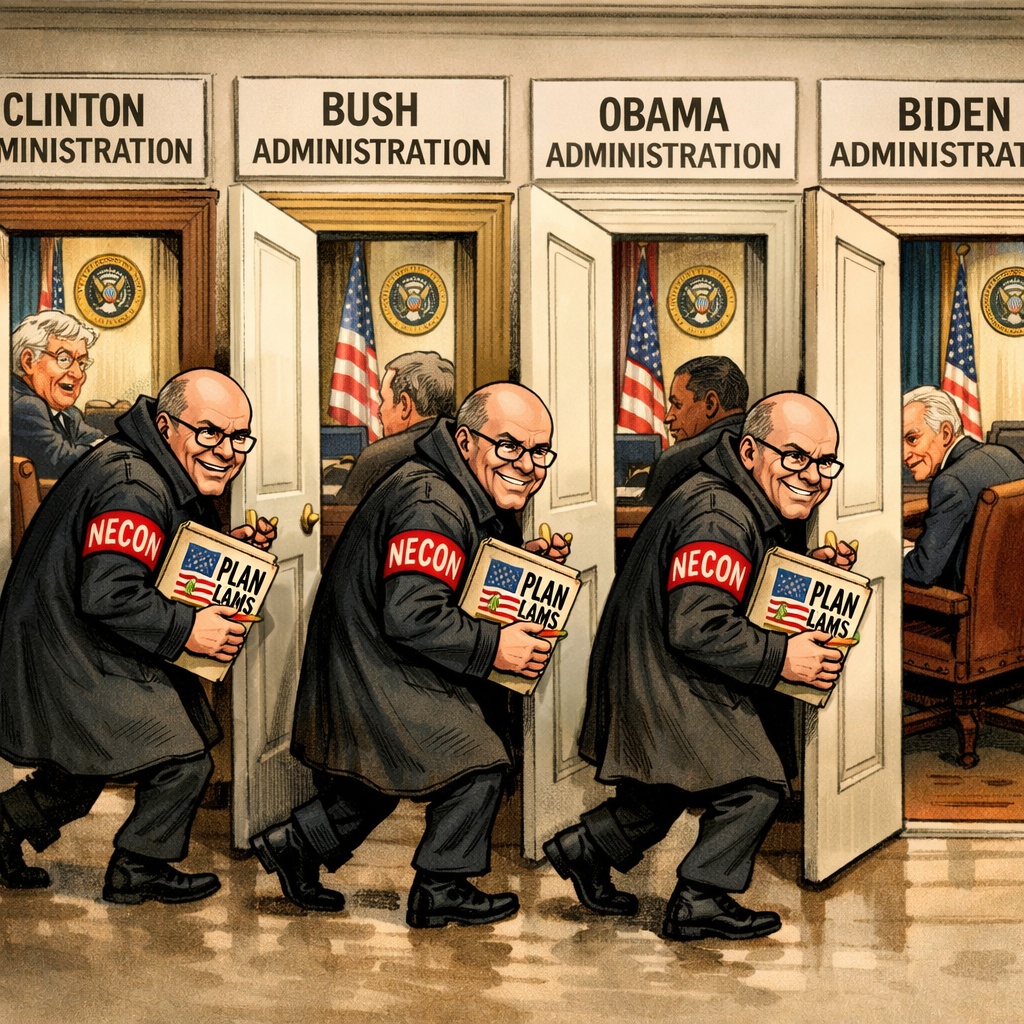
They do not care about te country, the people, the budget – nothing, except their quest to rule the world. They move from one administration to the next with no regard to domestic policies LEFT or RIGHT. All they care about is their geopolitical aspirations. Nothing else! Your children will NEVER be safe as long as these people usurp power.
Russia vs Ira trade up is up 40%. The Russia & Iran banking systems are now linking. Iran joined BRICS completing the division of the world economy and nobody is talking about it.
I have been warning for decades that the world is not run by rational forethought but by vindictive actors seizing foreign policy all for their geopolitical objectives that are counter-to economics. If you look at the data, you will see that the Neocons have become the cancer that is crashing the system. They do not understand how the world actually works. They think they can redraw borders and install governments by force, but they are playing checkers while the rest of the world is playing 3D chess.
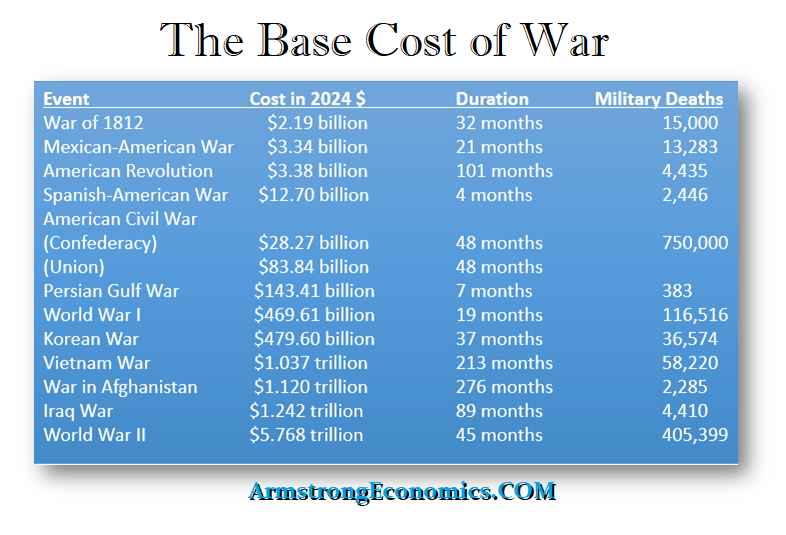
They create class warfare and blame the rich claiming they do NOT pay their fair share and this is a DISTRACTION so nobody pays attention to the spending on endless wars that (1) raise the national debt, (2) interest expenditures grow crowding out social spending like Medicare, (3) the Democrats demand the rich pay more, while all of this never addresses the problem. They are strip-mining our economy all for the cost of these endless wars as the Neocons washing their hand the blood of others.
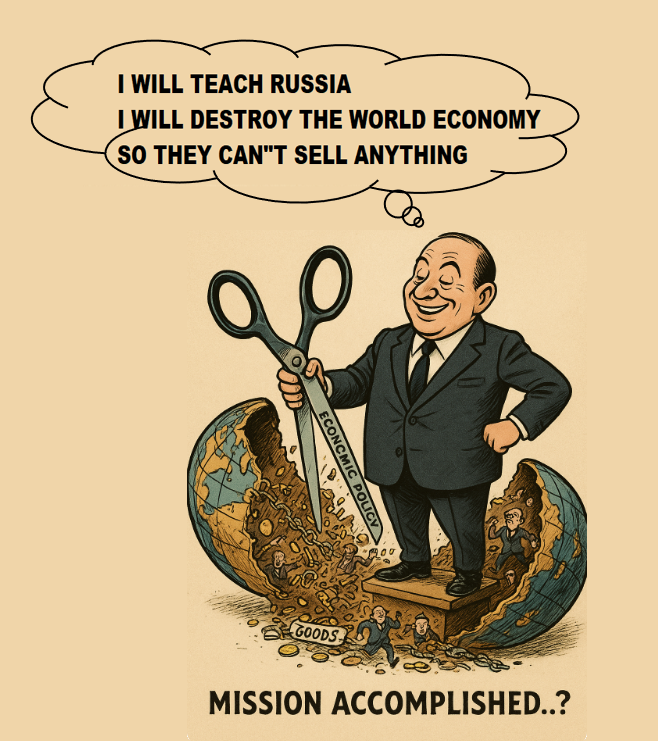
The Great Dividing of the World The neocons have created a world divided NOT by ideology anymore, but by survival and dominance. Their endless wars in Iraq, Afghanistan, and now Ukraine have forced nations to take sides not out of choice, but out of necessity. The sanctions imposed on Russia after their provocations have backfired spectacularly. Instead of isolating Moscow, the Neocons have accelerated the formation of BRICS. They have driven countries to seek alternative economic arrangements, moving gold and capital away from the traditional Western financial centers. By Bessent now threatening sanctions against any country that deals with Iran, he has proven his ignorance of this trend as well. The Dutch central bank is joining the rest of Europe shifting the location of 78 metric tons of gold, worth $11 billion at today’s prices, leaving the United States. This is nothing about the dollar, but geopolitical and Trump’s Tariff wars.
U.S. Treasury Secretary Scott Bessent has bluntly taken the Neocon approach advocating the US’s use of financial power as a foreign policy tool. Blinken did that removing Russia from SWIFT and destroyed the world economy giving rise to BRICS. By Bessent advocating using the federal balance sheet to advance he claims is the interests of American allies, using financial and political situations abroad, will increase the deficit and maintains this idea that America is the superpower to dictate to the world. He said:
“I believe that I can use the balance sheet of the U.S. for foreign policy. So, we have a foreign policy goal and that is to create allies in the Western hemisphere.”
The Neocons have pushed Russia, China, and the Global South into an alliance that President Nixon sought to divide and this is now in a position that cannot be repaired which will ultimately challenge the West’s dominance. Because these Neocons NEVER consider economics, they are destroying the world economy and are TOO IGNORANT to understand the consequences of their own actions. They have divided the world into those who still blindly follow the United States and those who are creating a new system to escape its demands and geopolitical reach.
Even a report from the Council on Foreign Relations, has noticed this trend and have described as a “geoeconomic fragmentation” where countries are retrofitting the global economy to suit geopolitical realities, moving away from the “just-in-time” global supply chains that were built for a more cooperative era. I have said main times that the model for World Peace is the Roman Empire. When there is free trade and everyone benefits from being inside the global economy, you DO NOT have war. This stupid Neocon agenda of imposing sanctions and using the dollar as a weapon is destroying the very thing they think they are expanding.
Iran is rushing ASAP to create a nuclear bomb now for self defense. The prevailing interpretation has been that if Saddam and Afghanistan had nukes, they would never have been invaded. That is the old Nuclear Deterrence Theory. The Pickaxe Mountain site, located near the Natanz nuclear complex roughly 140 miles south of Tehran, has been the subject of steady discussion by intelligence agencies, which view it as a likely location for Iran to protect future nuclear program efforts. According to a new satellite imagery, there has been a clear surge in construction activity this year.
Based on the available information, there is no direct evidence that the U.S. is currently testing a “bunker-busting” bomb with a low-grade nuclear warhead. However, the US is actively pursuing two separate but related efforts: developing a new conventional bunker-buster and considering the resumption of low-yield nuclear tests.
The Conventional Bunker-Buster bomb is developing with a new conventional “next-generation” technology. This program is focused on creating a more powerful non-nuclear weapon capable of destroying deeply buried targets, such as Iran’s nuclear facilities at Fordow and Isfahan, which are considered too difficult to destroy with existing bombs like the Massive Ordnance Penetrator (MOP).
The development involves testing at a unique underground facility at the White Sands Missile Range in New Mexico. Satellite imagery and contract records indicate that a project manager signed an emergency contract to repair this facility for “live-fire testing” related to a “time-sensitive national security directive.” This work is explicitly for a new conventional weapon, not a nuclear one.
Consideration of Low-Yield Nuclear Tests Separately, senior U.S. officials have stated that the country is prepared to conduct low-yield nuclear tests to maintain “an equal basis” with alleged activities by Russia and China. This would end a moratorium on nuclear testing that has been in place since 1992. The American Neocons can be using Iran as the excuse to resume Low-Yield nuke development. The rationale is also to respond to what the U.S. claims are secret, low-yield nuclear tests conducted by China and Russia. Both countries have denied these allegations. It has been justified by claims that this would not involve massive, multi-megaton atmospheric explosions, but rather low-yield underground tests.
As of March 2026, a senior State Department official testified that the U.S. is still evaluating how to implement the presidential directive to resume testing and has not made a final decision on the specifics. Throw in Iran, and that becomes the imminent threat to justify resumption. The developments are occurring using Iran as the excuse amidst heightened tensions with the expiration of the New START treaty with Russia, which was ultimately signed by President Barack Obama and Russian President Dmitry Medvedev on April 8th, 2010, in Prague.
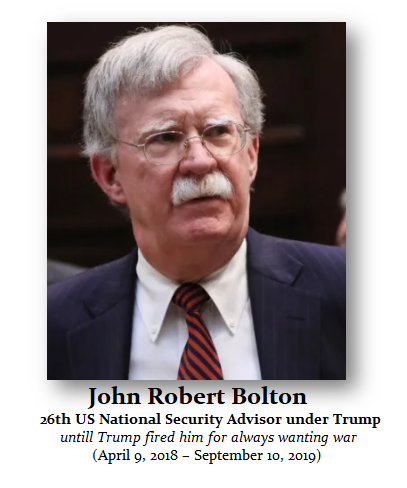
Neocons such as John Bolton has been one of the most vocal advocates for aggressive action against Iran. Bolton has repeatedly stated that eliminating the Iranian regime is the only way to end the nuclear threat. In a March 2026 PBS interview, he said, “If anybody wants peace and stability in the Middle East, this regime has to go.”
Just for the record, the Neocon John Bolton graduated from Yale University in 1970. In his 25th reunion class book, he wrote: “I confess I had no desire to die in a Southeast Asian rice paddy” and “I considered the war in Vietnam already lost.”
At the time, he had a student deferment at Yale. But the 1969 draft lottery, where his birthday, Nov. 20, was number 185, ended student deferments, and he faced the possibility of being called up. He then enlisted in the Maryland Army National Guard, which had long waiting lists because it offered a way to avoid being sent to Vietnam.
The upgrades to the Nevada White Sands test site, combined with the stated intent to resume low-yield testing, could be a precursor to a full resumption of nuclear testing, which would undermine global non-proliferation efforts. The Neocons are pushing this with President Trump and do not care about the Trump’s legacy, the nation, or the people. This is all about them dominating the world. These Neocons always present themselves a a Blessing in Disguise.
Without question, the US is developing a new conventional bunker-buster bomb and is separately considering low-yield nuclear tests, which are two distinct tracks rather than a single program to test a nuclear-armed bunker-buster.
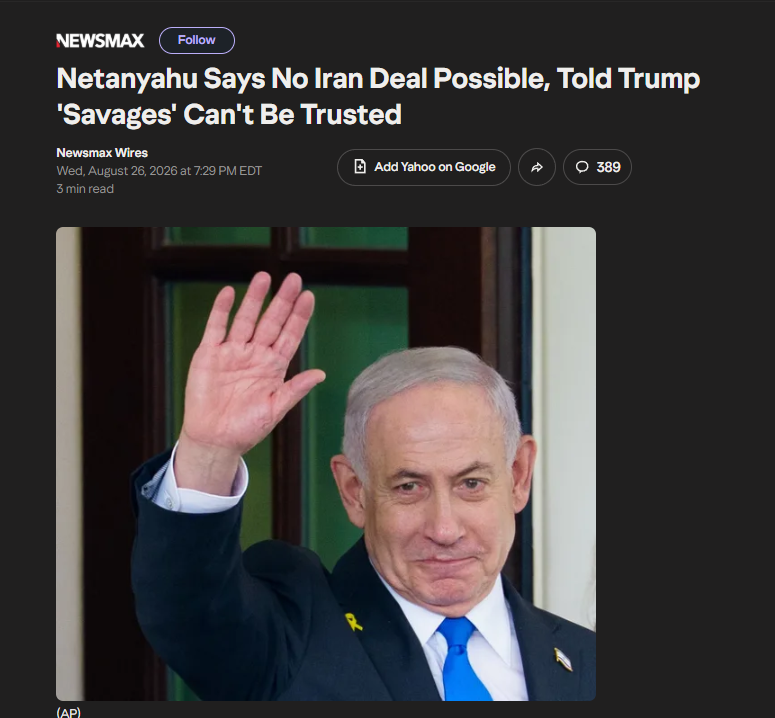
Israel cannot stop Iran’s nuclear program through conventional means. This has raised concerns that Netanyahu has made it his lifelong quest to destroy Iran. He has called them savages and refused to negotiate. In 2024, in his Knesset speech, Netanyahu said: “I’ve been warning about Iran for 30 years.” It was reported on March 3rd, during a visit to a site struck by an Iranian missile, Netanyahu stated:
“We read in this week’s Torah portion, ‘Remember what Amalek did to you.’ We remember—and we act.”
This is the problem. Netanyahu appears to view that the Bible justifies geocide. In 1 Samuel 15:2-3, God gives King Saul a specific, direct order to carry out this command. The prophet Samuel relays the message:
“This is what the LORD Almighty says: ‘I will punish the Amalekites for what they did to Israel when they waylaid them as they came up from Egypt. Now go, attack the Amalekites and totally destroy all that belongs to them. Do not spare them; put to death men and women, children and infants, cattle and sheep, camels and donkeys. ‘”
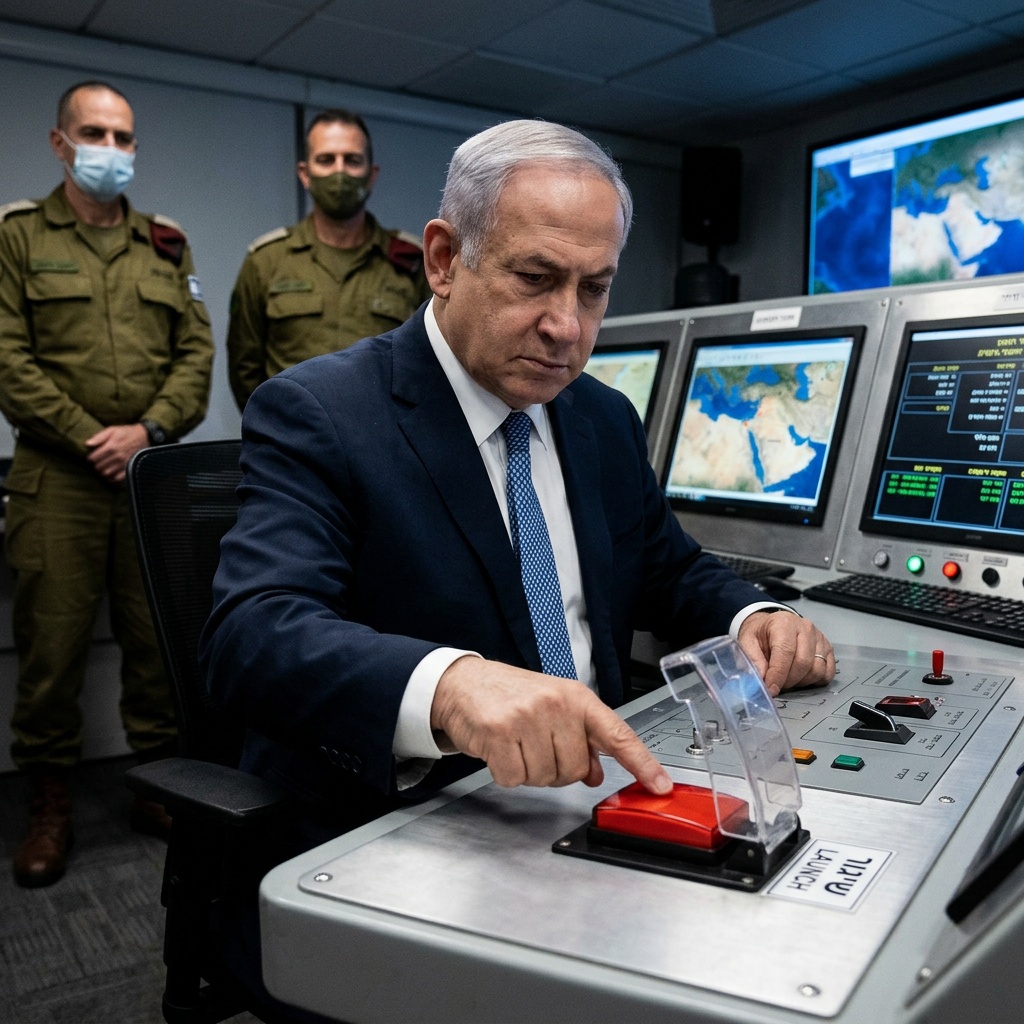
There are concerns that if Trump does not listen to the Neocons and refuses to attack Pickaxe Mountain with a low-yield nuke, Netanyahu might consider using nuclear weapons due to Netanyahu’s perception of Iran posing an existential threat. Some fear that if Netanyahu thinks he may lose the election, this would be his last chance to nuke Iran.
The dollar bottomed in May and has been rising because of the Iran War implying concern for this erupting into a Middle East War. Israel’s next parliamentary election is scheduled for October 27, 2026. They have 28 days to form a new government. In most polls, former military chief Gadi Eisenkot’s Yashar party is either the largest or second-largest party, with 22-25 seats. He also consistently leads Netanyahu in head-to-head polls on suitability for prime minister.
While we see the October 5th target in Israel is a Directional Change. If Netanyahu fears a loss, he may take action as soon as that week. However, the stronger target would bee the week of October 19th, 8 days before the election. The October 5th target may be more concentrated in Ukraine vs Russia.
There is also a significant political dimension. US lawmakers have recently demanded transparency from the administration regarding Israel’s undeclared nuclear arsenal, arguing that official ambiguity makes non-proliferation policy in the Middle East impossible. The Nuclear Threat Initiative estimates that Israel possesses around 90 nuclear warheads.
Netanyahu has been trying to get Trump to push the button and use a nuke. If Trump listened to Netanyahu and the Neocons, this would put nukes on the table globally. Moscow could nuke Kiev without a second thought. Yet the pressure in Russia is building intensely thank to Zelensky deliberately trying to get Putin to attack anything in NATO to drag them in to prevent Ukraine’s inevitable loss.
Posted Originally onSep 11, 2026 by Martin Armstrong |
Saudi Arabia just reported something that should scare the hell out of anyone who understands how the Middle East actually functions. According to Bloomberg, Riyadh told OPEC that crude production collapsed by 1.9 million barrels per day in August to just 6.238 million barrels per day, the lowest Saudi production since 1990 and even below the wartime low reached earlier this year. Saudi exports have reportedly fallen to around 3.1 million barrels per day, the lowest in more than a decade. This is not because the Saudis suddenly decided to tighten the market to make a few extra dollars. The war with Iran and renewed Houthi threats have disrupted the export routes that keep the entire Saudi financial system alive.
People look at Saudi Arabia and see oil, skyscrapers, sovereign wealth funds, and princes. They assume there is an endless pile of money buried beneath the desert. That is complete nonsense. I have written about this repeatedly and devoted an entire report to the Sovereign Debt Crisis and the Middle East because these governments have built enormous fiscal structures around one critical assumption: oil revenue continues to flow. Saudi Arabia can have all the oil beneath the ground it wants. If it cannot pump it, ship it, insure the tankers, and deliver it to customers, that oil does not pay the bills.
Saudi Arabia already recorded a budget deficit of 125.7 billion riyals, roughly $33.5 billion, in the first quarter of 2026 alone. That was nearly as large as the $44 billion deficit the government had projected for the entire year. Spending increased 20% while oil revenue declined 3%. Riyadh approved financing needs of roughly 217 billion riyals, or nearly $58 billion, for 2026, including money required to finance the deficit and refinance maturing debt. Now imagine what happens when the volume of oil available to sell suddenly collapses to levels not seen since the Gulf War.
This is precisely why looking only at the price of crude is so damn stupid. Yes, Brent above $100 means Saudi Arabia receives more for every barrel it successfully sells. But government revenue is PRICE × VOLUME. If production collapses 23%, exports plunge, military expenditures rise, shipping costs explode, insurance premiums soar, and infrastructure must be defended against drones and missiles, a higher oil price does not magically solve the problem. War can increase the price of the commodity while simultaneously destroying the finances of the government producing it.
Saudi Arabia is not alone. The fiscal systems throughout the Gulf were constructed during an era when oil revenue could finance enormous government expenditures, subsidies, public employment, infrastructure, defense, and social programs. These governments have attempted to diversify, but oil still provides the financial foundation supporting the transformation. Saudi Arabia’s Vision 2030 is supposed to create an economy less dependent on petroleum, yet the government is borrowing against future revenue to finance projects intended to reduce dependence on that same revenue. That contradiction becomes dangerous when war interrupts the cash flow.
This is what people fail to understand about the Middle East sovereign debt crisis. Governments do not simply stop spending because revenue declines. They BORROW. Saudi Arabia borrows. Bahrain borrows. Oman borrows. Iraq depends overwhelmingly on petroleum revenue. Even governments with enormous financial reserves must eventually liquidate assets or issue debt when expenditures persist while commodity income deteriorates. Oil made it possible to conceal the underlying fiscal structure because everyone assumed the money would always be there.
The Strait of Hormuz carries roughly one-fifth of the world’s petroleum supply. Traffic through the strait has again collapsed into the single digits on some days. Saudi Arabia spent years building the East-West pipeline so crude could be moved to Yanbu on the Red Sea and bypass Hormuz, but now the Houthi threat has demonstrated that the western route is not immune either. When both sides of the Arabian Peninsula become geopolitical choke points, Saudi Arabia has a problem that no central bank can solve by changing interest rates.
Oil does not stop at the gasoline pump. Crude feeds transportation, trucking, aviation, shipping, petrochemicals, plastics, agriculture, fertilizer production, manufacturing, mining, and virtually every supply chain on the planet. Diesel rises and the farmer pays more to operate machinery. The trucking company pays more to deliver food. The container ship pays more to cross the ocean. Airlines increase fares. Manufacturers pay more for raw materials and transportation. Those costs eventually reach the consumer.
Then comes the second wave that almost nobody talks about: sovereign debt. Higher energy prices feed inflation. Inflation prevents central banks from aggressively cutting interest rates. Higher rates increase government debt-service costs. Governments already buried beneath debt must then borrow even more merely to service what they previously borrowed. Europe is especially vulnerable because it deliberately destroyed much of its cheap energy structure in the name of climate ideology and then sanctioned Russia without having a viable replacement. Another sustained energy shock arrives while Germany is weak, France is drowning in debt, Britain cannot control its fiscal position, and governments everywhere are simultaneously demanding enormous increases in military expenditure.
The Saudis themselves are now spending more on defense simply to protect the infrastructure that generates the revenue needed to finance the government. Saudi military expenditures increased sharply earlier this year as Riyadh was forced to defend oil facilities, shipping routes, pipelines, ports, and population centers. That is money that produces no economic return whatsoever. A missile interceptor does not build a factory. It does not produce electricity. It does not create an export industry. It is consumed defending infrastructure from another weapon that may cost a fraction of the price.
There is no free war. Saudi Arabia pumping the least oil since 1990 is not merely a Saudi story. It is a warning that the financial arteries of the Middle East are being squeezed at precisely the moment the sovereign debt crisis is accelerating worldwide. If oil-producing governments lose revenue, they borrow more. If oil-importing governments face higher prices, they subsidize more and borrow more. The producer gets fucked by falling volume while the consumer gets screwed by rising prices.
Posted Originally on Sep 10, 2026 by Martin Armstrong |
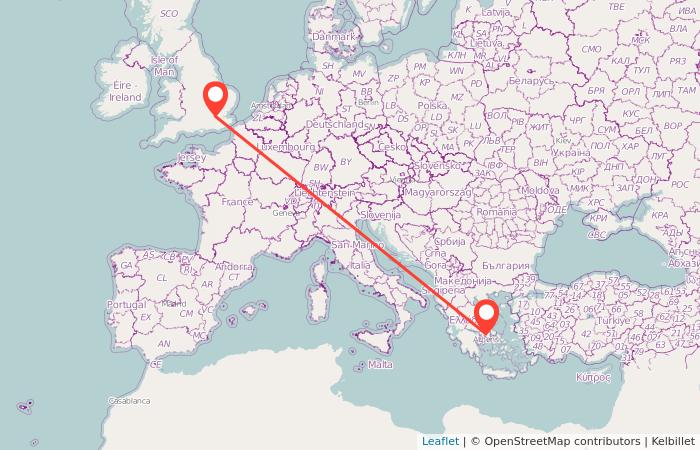
Britain has become a textbook example of what happens when politicians believe capital is imprisoned by geography. Billionaire hedge fund manager Chris Rokos is leaving the UK and moving his tax residency to Greece. This is a man who reportedly paid about £330 million in British taxes last year, ranking him among the country’s largest individual taxpayers. He also pledged £190 million to Cambridge University. Britain should be asking how to keep people like this. Instead, government keeps looking at successful people as if they are nothing more than an ATM that cannot walk away.
Greece understands something London has apparently forgotten. Capital goes where it is treated best. Greece offers qualifying wealthy newcomers a flat €100,000 annual tax on foreign-source income for as long as 15 years, provided they satisfy the requirements, including a substantial investment in Greece. Foreign assets can also receive favorable inheritance-tax treatment. Athens has now gone even further to attract the financial industry, introducing a 5% tax on bonuses and carried interest for qualifying private-equity and hedge-fund executives who relocate as part of substantial Greek operations. Britain has been moving in precisely the opposite direction.
This is not some abstract economic theory. Rokos reportedly paid himself £477 million last year and handed roughly £330 million to the British taxman. Now Greece gets the wealthy resident, potentially an Athens office, employees, spending, investment, property purchases, and all the economic activity that follows capital. Britain gets to congratulate itself for being “fair” while watching one of its largest taxpayers leave. Politicians never understand that the objective should be to expand the tax base, not destroy it.
Foreign income and gains become exposed to UK taxation after the new four-year window, and longer-term residents can also bring worldwide assets into the inheritance-tax net. Meanwhile, Britain already has a 45% top income-tax rate in England, and carried interest is taxed far above Greece’s new preferential 5% rate for qualifying executives. Then politicians float wealth taxes and wonder why wealthy people start calling Athens, Milan, Dubai, and Switzerland.
This is exactly how capital flight begins. It does not require people loading gold onto ships in the middle of the night. Today capital is electronic and international. A hedge fund manager can change residency, establish another office, move key employees, redirect investment, and eventually move an entire ecosystem around him. Governments remain trapped in this medieval idea that because somebody became wealthy in Britain, Britain somehow owns that person forever. It does not.
The socialists always imagine they can make the rich “pay their fair share.” Fine. Rokos paid approximately £330 MILLION in one year. How much more constitutes his fair share? According to one estimate raised in Parliament, replacing that tax contribution would require the income taxes of roughly 38,000 average workers. When somebody paying hundreds of millions leaves, government does not magically collect the same money from an empty chair. The burden ultimately shifts toward everyone who cannot leave.
Greece is doing what governments SHOULD do when they need investment: compete for it. Athens wants these people to actually establish operations there, which is why the new financial sector incentives include requirements intended to ensure that firms have a genuine economic presence.
Britain is suffering from the same disease spreading throughout Western Europe. Debt keeps rising, government refuses to seriously reduce itself, and therefore politicians constantly need another source of revenue. They raise taxes because reforming government is politically difficult. When revenues disappoint, they raise taxes again. Eventually confidence breaks and productive capital begins leaving. Then the remaining taxpayers must carry an even greater burden.
Greece was the poster child of the European sovereign debt crisis not long ago. Now Greece is standing at the door welcoming capital while Britain is effectively showing it the exit. That should embarrass every politician in Westminster. You cannot tax a nation into prosperity, and you cannot confiscate capital that has already bought a ticket to Athens.
Posted Originally on Sep 10, 2026 by Martin Armstrong |
Germany’s Foreign Minister Johann Wadephul has now suggested that Germany could provide Kyiv with information on Ukrainian men of military age living inside Germany. His words were revealing: “We know who lives here.” Of course they do. The government knows who receives benefits, who has registered an address, and who holds a residence permit. These men escaped Ukraine believing Europe was offering them sanctuary from a war. Now Germany is openly discussing using the information collected on those refugees to help Zelensky’s government find them.
Wadephul claims nobody should be sent back “under coercion.” Wonderful. Then why does Kyiv need their information? Ukraine already prevents most military-age men subject to mobilization rules from simply leaving the country, subject to various exemptions, because Zelensky desperately needs bodies for the front. We have all seen reports of the forced mobilization confrontations inside Ukraine. Men have been stopped in public places and confronted by recruitment officers while videos of violent encounters have circulated for years. Kyiv has repeatedly tightened mobilization because it cannot manufacture young men the way Europe can manufacture another billion euros.
Now the net may be expanding beyond Ukraine. The European Commission has already proposed that Ukrainian men who were not legally permitted to leave because of military obligations should not automatically receive temporary protection if they arrive in the EU. Think about what that means. Europe spent years proclaiming that Ukrainians were fleeing for their lives and that Europe had a moral obligation to protect them. Apparently that promise comes with an expiration date if Zelensky needs more men.
This is why I have called them cannon fodder. Zelensky is not going to the front. The politicians in Brussels are not going to the front. Their sons are not being grabbed and sent into trenches. They sit behind desks talking about defending democracy “for as long as it takes” because somebody else’s children are doing the dying. Ukraine has a manpower problem that another weapons package cannot solve. You can print money. You can manufacture artillery shells. You cannot print another generation of Ukrainian men.
Wadephul was simultaneously complaining that Ukraine was not buying enough weapons from German manufacturers. Germany sends billions to Ukraine, Ukraine buys weapons, and now Germany discusses helping Kyiv locate military-age Ukrainian men. The defense industry gets another customer, politicians get another speech about democracy, and some Ukrainian kid gets a rifle and a trench. This is what war looks like when the people running it have absolutely no personal risk whatsoever.
Many of these men went to Germany precisely because they wanted nothing to do with this insanity. They were promised safety in Europe. They established homes, found jobs, registered with governments, and trusted that the information they provided would be used to administer their residency rather than potentially assist Kyiv in contacting them over military service. Now those same databases could become useful to the government they escaped. You cannot call yourself a sanctuary and then start discussing handing over information on the refugees when their government needs more soldiers.
The neocons wanted their proxy war against Russia, and Europe went along with it like obedient fools. Every failed strategy required another weapons package. Every battlefield setback required another billion. Every shortage of soldiers required another mobilization. Nobody in government ever admits the policy itself has failed. They simply demand more money, more weapons, and eventually more human beings.
Europe should be demanding negotiations before another generation of Ukrainians is destroyed. Instead, politicians who promised to save Ukraine are reaching the point where they may help Zelensky locate the very Ukrainian men who fled the slaughter. Today Wadephul tells us there will be no coercion. Fine. Remember those words. Governments always begin by saying something is voluntary. The moment the manpower crisis becomes desperate enough, the definition of “voluntary” has a remarkable tendency to change.
This is no longer about saving Ukraine. You do not save a nation by bleeding its young men dry. You do not defend freedom by trapping men inside their own country and then looking abroad for those who escaped. Zelensky needs bodies because this war has consumed an entire generation, and the European political establishment refuses to admit that its strategy has failed. They promised these men refuge. Now they know their names, they know where they live, and they are discussing helping Kyiv reach them. If that does not disturb you, then you have learned absolutely nothing from history.
Posted Originally on Sep 10, 2026 by Martin Armstrong |
2026.
Le Pen has finally said what European leaders are terrified to admit: there must be an end to this perpetual blank check for Ukraine. She has called for France to stop further military and financial aid to Kyiv if she comes to power and return to what statesmen were once supposed to do when wars became catastrophic: negotiate. Le Pen has called for a “major peace conference” aimed at bringing a diplomatic conclusion to what she rightly calls “this horrific war.” Naturally, the establishment immediately screams that stopping the money means helping Putin. That is their answer to everything. Anyone who dares suggest peace has sdenly become an agent of Russia.
The establishment insists that Ukraine’s security is France’s security. Édouard Philippe attacked Le Pen’s position and claimed ending aid would mean “serving Russia.” This is the childish mentality that has prevented any serious discussion of peace. There are only two choices in their world: keep paying for the war or you love Putin.
This is where these people have lost all sense of humanity. What good has perpetual war done for the Ukrainian people? Cities have been destroyed, families scattered across Europe, millions displaced, and an entire generation of men has been fed into a conflict that political leaders refuse to bring to an end. Ukraine has been forced to continually tighten mobilization because there are not enough men willing or available to keep this going forever. Men subject to military obligations have faced restrictions on leaving the country. Europe is now even debating how military-age Ukrainians abroad should be treated while Germany’s foreign minister has suggested sharing information that could allow Kyiv to contact Ukrainian men living there regarding military service.
You do not save a country by wiping out its youth. You do not save a nation by destroying its demographic future. You do not defend democracy by telling Ukrainian men they cannot leave while politicians safely sitting in Paris, Brussels, London, and Berlin demand that the war continue. Every Ukrainian killed is somebody’s son, father, husband, or brother. Yet these politicians discuss human beings like inventory. Another weapons package. Another mobilization. Another billion. Another year.
National Rally MP Laurent Jacobelli put it plainly: “We stand with Ukraine, but not at the expense of France’s financial health (…), of our debt and the taxes paid by the French people,” RN MP Laurent Jacobelli said on Saturday. “At a time when the French are being asked to make sacrifices on pensions and healthcare, when France is on the brink of bankruptcy, we cannot put our country’s future at risk.”
The European political establishment has spent years pretending that peace means surrender because admitting otherwise would require acknowledging the catastrophic consequences of its own policies. They believed sanctions would collapse Russia. They believed endless weapons would produce victory. They believed economic warfare would force Moscow to its knees. Instead, the war continues, Ukraine continues needing enormous outside financing, and Europe continues digging deeper into its own pockets.
Now Ukraine says it needs another €27 billion just to close a defense-funding gap in 2026, while it is also securing around 1,000 Patriot missiles with allied support and an EU loan. Where does this end? That is the question nobody wants to answer. Another €27 billion? Another thousand missiles? Another hundred thousand men? Another five years? At what point is someone permitted to say that perhaps diplomacy deserves as much effort as finding the next weapons package?
Le Pen is right to demand that France change course. France should be using whatever influence it possesses to drag both sides toward a negotiating table, not endlessly writing checks that perpetuate the battlefield. That is not pro-Russian. It is pro-French and, frankly, far more humane toward the Ukrainian people than pretending another generation can simply be sacrificed until politicians finally get the outcome they promised years ago. Peace is not weakness. The refusal even to pursue it while other people’s children die is cowardice.
Posted Originally on Sep 10, 2026 by Martin Armstrong |
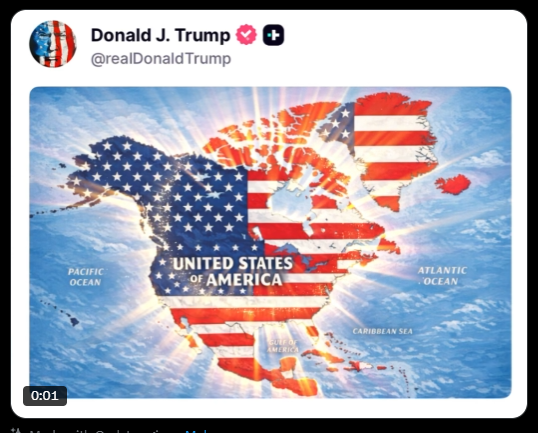
QUESTION: I know you have said you disagree with the whole tariff war. I believe you also said when you were here in Calgary, there was no way even Alberta could or should become the 51st state. Would you comment on this latest post of Trump draping the American flag over all of North America?
EP
ANSWER: This whole 51st state nonsense is just unrealistic. If Alberta became the 51st State, it would disrupt politics for then they would get two senators and untold congressmen. The Democrats would demand Puerto Rico and Guam be allowed to become states along with Washington DC. If somehow all of Canada and Mexico became part of the United States, who knows what that would disrupt politically. I suspect it might benefit the Democrats more than the Republicans. I could threaten to flee to Aruba anymore.
So, is Trump just poking fun at Carney? If he spoke to the State Department, they would surely be screaming are you insane! I’m not sure this could be serious even on Trump’s part. The process for a territory to become a state is established by the U.S. Constitution and granted specifically to Congress, not the president.
The specific authority is found in Article IV, Section 3 of the Constitution. This section is often referred to as the “Admissions Clause” and states that “no new State shall be formed or erected within the Jurisdiction of any other State…without the Consent of the Legislatures of the States concerned as well as of the Congress.”
Therefore, Trump I believe is having fun and he has to know that his meme is absolutely impossible. It seems to be more of a dig at Carney, but it was Trump’s rhetoric of making Canada the 51st State that got Carney elected in the first place. This tariff war is absurd and there is NO RESOLUTION that will benefit both sides anymore. We do not know the demands that actually broke the deal since both sides point at the other. I can say that Carney’s claim that the deal would restrict Canada’s sovereignty by limiting its ability to strike trade deals with other countries is really dodgy. That is the #1 way people circumvent tariffs and trade restrictions. You cut off trade with a given country so they cut a deal with Canada and the products appear to then be Canadian.
Chinese companies have been setting up plants in Mexico, and this strategy is widely seen as a way to circumvent U.S. trade barriers. Mexico’s location and its trade agreement with the U.S. make it an attractive “nearshoring” destination for Chinese manufacturers. I helped Japan to reduce its trade surplus buying gold in NYC, exporting to London to resell and this revolving door worked.
If Carney really killed the deal claiming this impeded on Canada’s sovereignty, I cannot believe he really believed that when in fact that is the #1 way to circumvent trade issues used by everyone.
If we examine the numbers, Canada did have a trade deficit in 2025. The data shows that its merchandise trade deficit widened significantly over the course of the year. For 2025, the annual merchandise trade deficit was C$31.3 billion. This was the largest annual shortfall since 2020 and a substantial increase from the C$7.2 billion deficit recorded in 2024. Focusing on just the USA & Canada, in U.S. dollar terms, Canada had a trade surplus with the USA in 2025 of about $50 billion. This implies that others are importing goods into Canda creating their trade deficit overall, but are then selling then to the USA creating the trade surplus with the USA.
Chinese-made goods are shipped to Canada, relabeled as Canadian, and exported to the United States without sufficient processing to change their country of origin. This is customs fraud if it is done to evade U.S. tariffs. U.S. and Canadian authorities have both acknowledged that this occurs, although its overall scale is difficult to measure. Recently, U.S. officials have stepped up scrutiny of alleged transshipment. The White House has claimed that rerouting goods through third countries—including Canada—is costing billions of dollars in lost tariff revenue, and U.S. Customs has increased enforcement efforts using AI and other investigative tools.
Carney may think he is defending Canada on this issue, but an all out trade war with the USA will also reduced the imports from other countries to circumvent trade restrictions. This is part of the problem.
Trump’s taunting Canada as the 51st State does not help matters when it is impossible anyway. Then there is the very issue of tariffs and jobs. This is a Marxist philosophy but overpaying people to keep jobs means the people are subsidizing jobs overpaying people who should get another job. You do NOT grow a head of lettuce in the Saudi desert importing war and top soil so the cost is $10 a head when you can buy it from someone else got 50 cents. You do NOT make American Great Again by bringing back overpaid jobs.
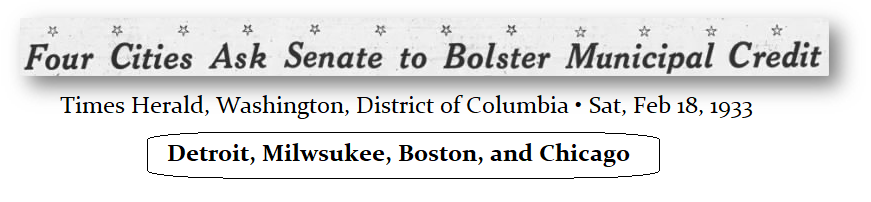
Detroit destroyed its auto industry like Mandami assuming they had endless revenues that they could tax. Not one auto manufacturer was left by 1937 in Detroit. They did not leave because of cheaper labor. They left because of taxes.
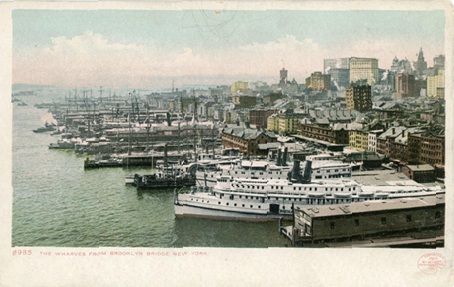
NYC was once the largest port in the USA. Between taxes, regulation, and corrupt unions, they chased everyone out to other ports. Until we look at the REAL reasons manufacture left, you cannot bring these back to America and they are exploited by progressives like Mandami. JP Morgan now employs more people outside of NYC and the financial Wall Street is abandoning NYC all because of Mandami. NYC will be a shadow of itself by 2030.
I have created this site to help people have fun in the kitchen. I write about enjoying life both in and out of my kitchen. Life is short! Make the most of it and enjoy!
This is a library of News Events not reported by the Main Stream Media documenting & connecting the dots on How the Obama Marxist Liberal agenda is destroying America