Somebody is Listening


Posted  Originally on Sep 9, 2026 by Martin Armstrong |  

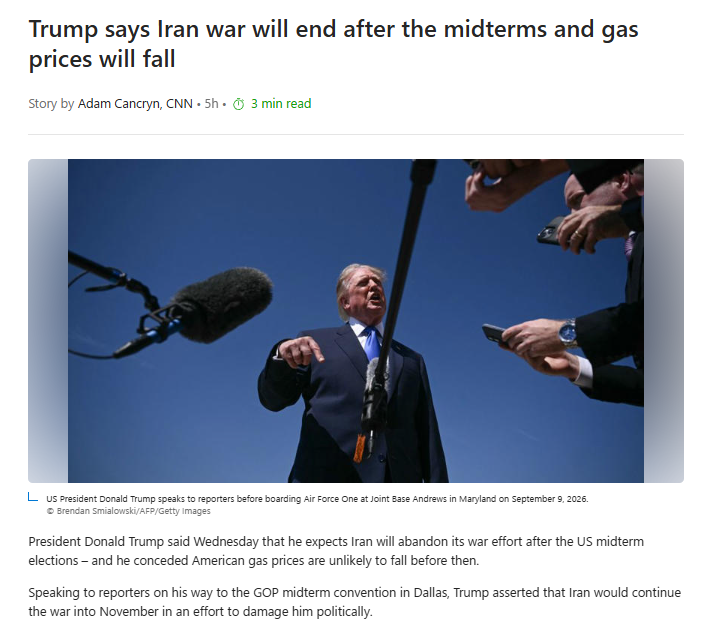
2026_09_09_21_25_07_Trump_says_Iran_war_will_end_after_the_midterms_and_gas_prices_will_fall_and_84_

COMMENT: Marty, you’ve been saying on these podcasts that Iran won’t wave the white flag, because they see a chance at reverse regime change with the midterms and Netanyahu in October. Trump has just admitted that gas prices won’t come down before the midterms and that Iran won’t surrender. He’s changed his tune. Somebody in the White House is listening and got him to change his tune.

You do have more influence than you realize.

GD

REPLY: Perhaps. I can’t believe nobody figured this out months ago.

Bessent & Sovereign Debt Crisis


Posted  Originally on Sep 9, 2026 by Martin Armstrong |  

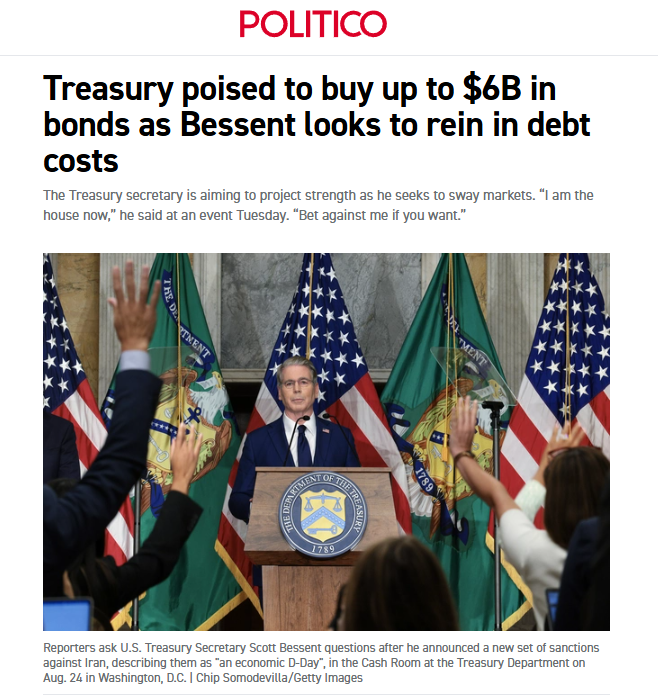
2026_09_09_14_18_21_Treasury_poised_to_buy_up_to_6B_in_bonds_as_Bessent_looks_to_rein_in_debt_costs

QUESTION: Marty, Bessent is plainly no trader. As you’ve pointed out, he’s spent far too long in the company of market manipulators. I remember your warning that rolling debt into shorter maturities only deepens future fragility. And as you put it, it’s Groundhog Day on repeat. So the question is: does this bring us closer to Socrates’ prophecy of even higher rates?

SK

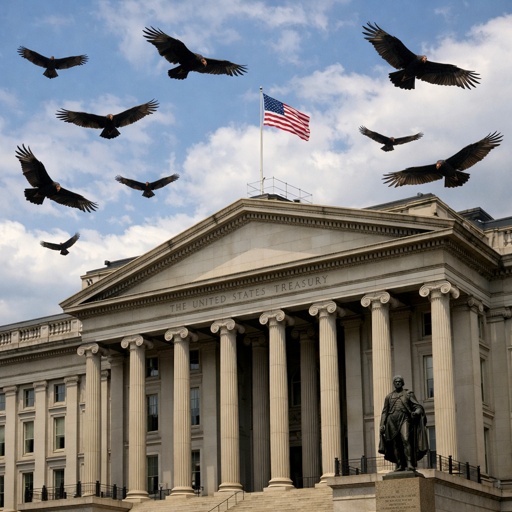
vultures circling the US Treasury

ANSWER: This is a dumb move. With war circling around like vultures waiting for the carcas to die for a free meal, the Bessent announced that the federal government will buy back up to $6 billion of its bonds this week three times its normal operations, which is really stupid, in a braindead theory that it will rein in longer-term borrowing costs.

maa wsj

This is OpEd I wrote for the Wall Street Journal back on April 19, 1995, was about the same gimmick where President Clinton (1993-2001) was able to balance the budge was (1) the economy recovered in 1994 with capital pouring into the United States as it fled South East Asia resulting in the Asian Currency Crisis in 1997, (2) US Interest rates rose sharply in 1994 attracting huge capital inflows including those from Japan, and (3) he shortened the maturity of the debt funding it short-term to cut interest expenditure.

The National Debt rose from $4,064.6 billion in 1992 to $5,807.5 billion by 2001. The rate of growth was slowed by the shift in funding. Interest rates at the Fed dropped by 6.5% in 2000 to 1.75% in 2001. When Clinton took office the Fed Discount Rate stood at 3.5%. The rise began in 1994 that helped to attract foreign capital, especially from Japan, and it peaked in 2000 with the Dot Com Bubble on the heels of the 1998 Long Term Capital Management debacle that followed the collapse of Russian debt.

Based on the most recent data available, the amount of long-term U.S. Treasury debt (20-year and 30-year bonds) outstanding was approximately $5.5 trillion as of July 31, 2026. This is little more than 13% of the total. Here is the problem. The more you shift the debt short-term, it becomes much more volatile and with war, the rates can explode and this will send the interest expenditures up dramatic crowding out other spending and when the Democrats get back in, they will demand raping anyone who earns more than the poverty level with higher taxes as if that is ever a long-term solution.

The debt instruments outstanding are:

Treasury Bills (T-Bills): Short-term securities with maturities of one year or less (e.g., 4, 8, 13, 26, and 52 weeks). They are funded by being sold at a discount to their face value; the investor’s return is the difference between the purchase price and the face value received at maturity, meaning they do not pay a periodic coupon. (outstanding $6.99 trillion).

Treasury Notes (T-Notes): Medium-term securities with maturities from 2 to 10 years (e.g., 2, 3, 5, 7, and 10 years). They are funded by paying a fixed interest rate (coupon) every six months until maturity. (T-Notes represent about 52% of all outstanding debt about $30.2 trillion).

Treasury Bonds (T-Bonds): Long-term securities with maturities of more than 10 years, currently issued as 20-year and 30-year bonds. They are funded by paying a fixed interest rate (coupon) every six months. (outstanding $5.5 trillion).

Treasury Inflation-Protected Securities (TIPS): These are medium to long-term securities (5, 10, and 30 years). They are funded differently, as their principal is adjusted based on inflation (CPI-U). They pay a fixed interest rate twice a year, but the payment amount changes with the inflation-adjusted principal. (outstanding $39.8 billion).

Floating Rate Notes (FRNs): These are 2-year notes whose interest rate is not fixed. Their funding mechanism involves a variable interest rate that is reset weekly, based on the most recent 13-week Treasury bill auction rate plus a fixed spread. (outstanding $600 billion).


The Buy Back

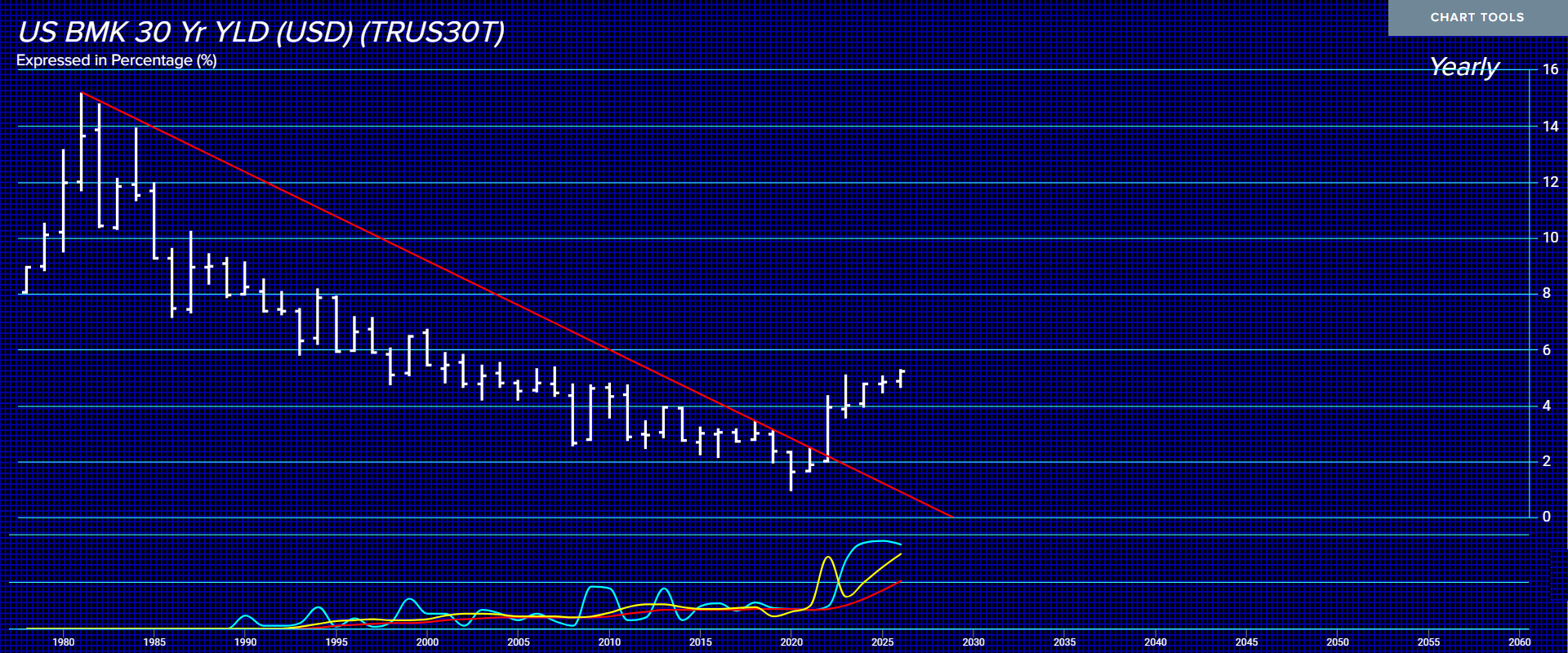
US 30yr Rate Tech Y 9 9 26

Look, the buy back of $6 billion amounts to .001%. This is again a CONFIDENCE game attempting to manipulate the market with a lot of hot air. As I have said, the 30-year has formidable resistance at 5.5%. A failure to close about that level warns we can have a knee-jerk reaction to the down side, but this will be caused by a rush of capital inflows because of war as capital flees the geopolitical epic-centers. However, that will not last beyond 2027. Inflation will rise because the real crisis is not in crude oil but in the refined products thanks to the madman of Ukraine, Zelensky attacking Russian refineries. As debts become exponential post 2027, rate will rise and the prospect of war becomes a reality and governments NEVER have any intention of ever paying off what they borrow. Shifting debts short-term make the roll costs exceptionally higher. We do we borrow with no intention of paying anything back? This is the way ALL governments function with no rational reasoning behind this stupidity. The press loves to bash the US and ignore the sovereign crisis which has reach about $350+ trillion worldwide. This is what 2032 is all about.

The Arrogance of Bessent


Posted  Originally on Sep 9, 2026 by Martin Armstrong |  

IBJYUS Y Tech 9 9 26

QUESTION: Marty, care to comment of your old adversary Bessent and his latest boast “I am the house” warning traders not to bet against him? They called you Mr. Yen and Milton Friedman called you the World’s Ambassador. Socrates seems to take issue with Bessent. They never learn.

K

Influence

ANSWER: He is trying to use his position to manipulate markets as usual. This is why these people hated me because they judged me by themselves. I would say they would lose, and when they did, they claimed I had greater influence than all the bribes they could pay. They even had the CFTC file a subpoena demanding I turn over a list of all my clients so they could prove I was manipulating the world economy. My lawyer asked where is the statute that says I could not manipulate the entire world? The judge laughed and threw that out of court. They lobbied to to try to shut down our forecasting because they try to bribe everyone for the guaranteed trade when I was the only real trader.

Louvre Accord Plaza Accord

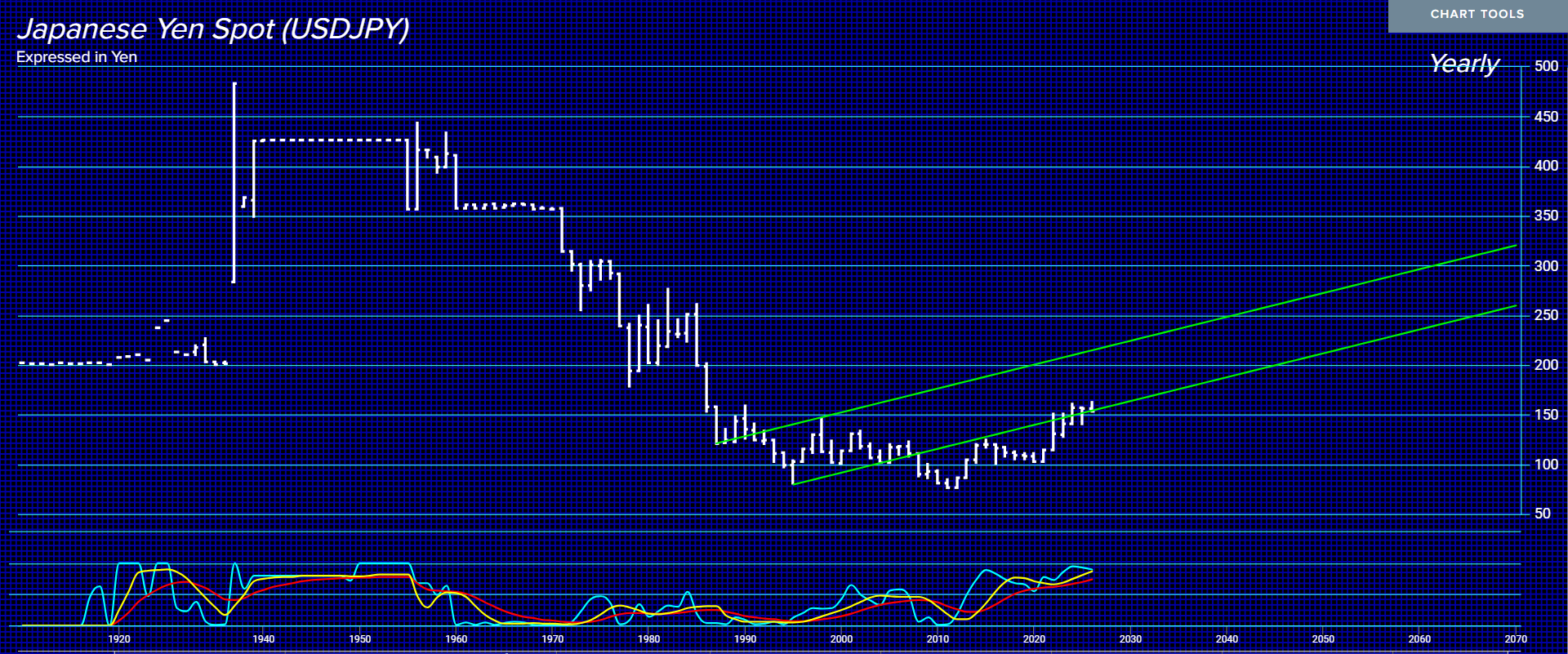
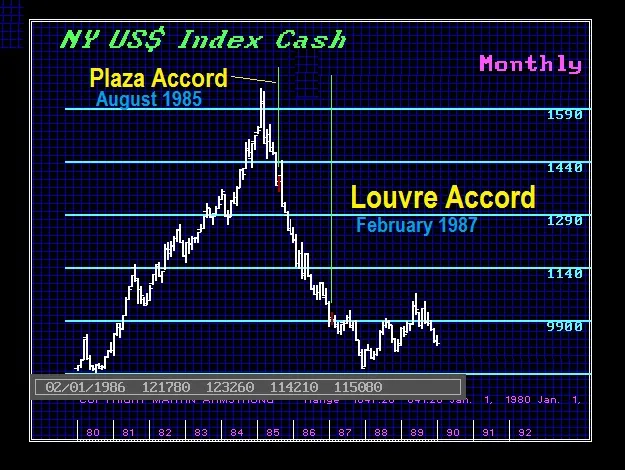
The dollar has risen against the yen for 15 years. Bessent thinks for trade purposes that he can talk the dollar down. Well, they tried that in 1985 and blew the world up when the G7 stood up and claimed that was it, the dollar fell far enough. As soon as the dollar fell lower, the world saw that the G7 could NOT dictate to the world what value a currency should be. When they even came out at the Plaza Accord, the trend had already turned on the dollar. They did NOT change its direction.

1987 Crash Brady Commission

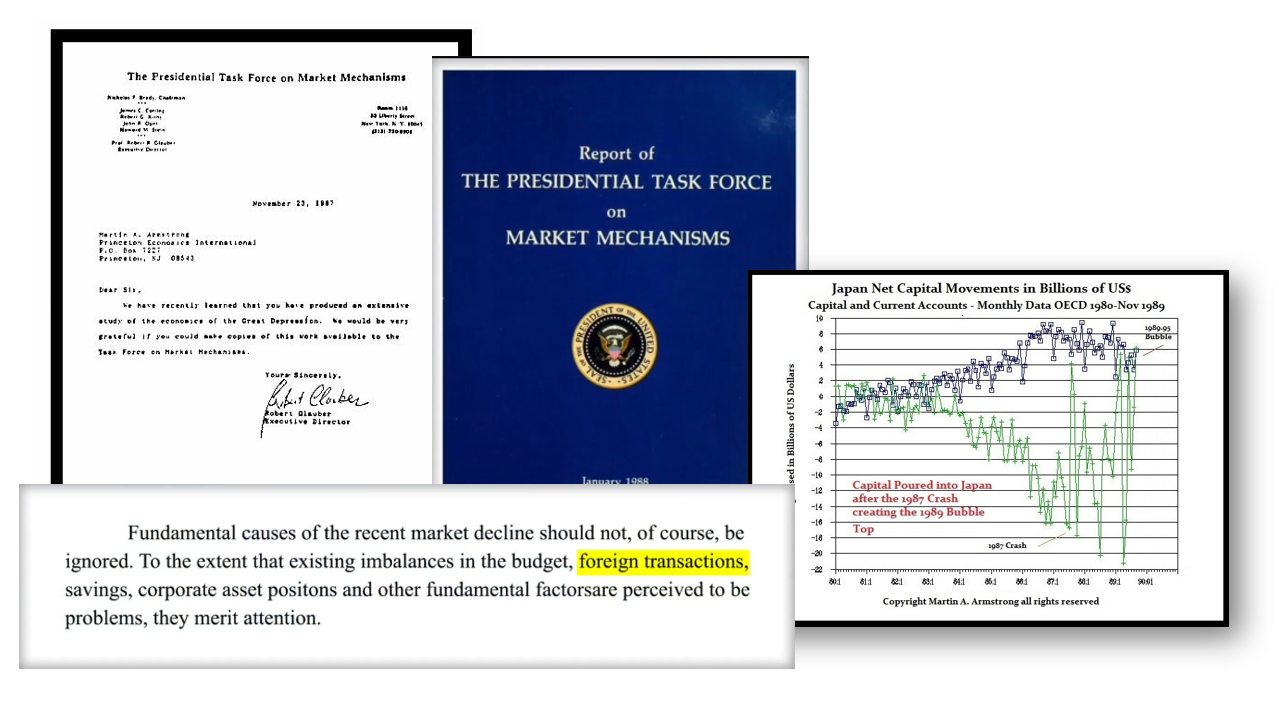
I wrote to President Reagan and I warned that they would cause a crase within 2 years. They laughed because they had the power, or so they thought. When the crash came in 1987, they were forced to call me in. I had to keep the staff late so we could have advice for President Reagan and what to say. The capital flows went crazy and the Japanese dumped dollar assets when the dollar continued lower after the Louvre Accord pronouncement that the dollar had fallen far enough. They were wrong, and we got the crash.

Rubin Letter
Geithneir R

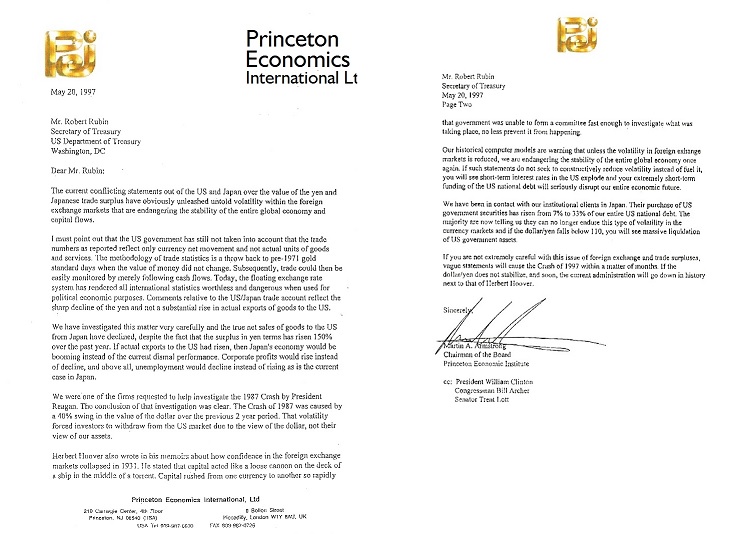
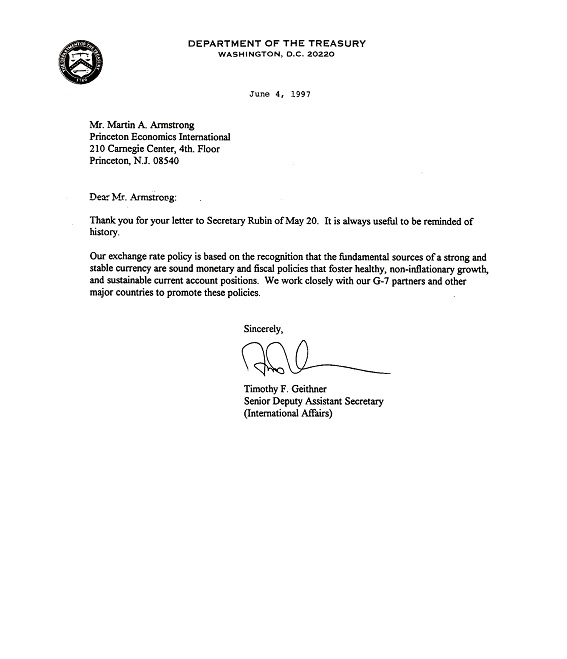
Robert Rubin was doing the same thing in 1997. I wrote to him on May 28th, 1997 and warned him he too would cause a crash. At least he responded to me. I wrote to Bessent but old grudges never die. He did NOT respond. They refuse to admit just maybe I created a computer that actually works and it was not my personal influence. Admitting that means they have been wrong for decades.

1997 Thailand Baht Crisis
MA China Diet r

The Asian Currency Crisis began on schedule a few weeks later. While they do not like me because they always prove to be wrong, China called me in and I flew to Bejing to meet with the central bank. They respected my computer and announced that they have adopted “capital flow analysis.” When I got back, people from the Treasury and the Fed called and wanted to know my opinion since I was the first American to be called in by the People’s Bank of China. I said it was interesting. Everyone I had met were TRADERS who had been sent to work on dealing desks in NY, London, Tokyo, and returned to run the bank. My comment was, they ONLY hired people with experience.

ScottBessent

So here we go again. The support on the yen for the close of 2026 lies at 154.20 while closing resistance stands at 160. The yen can move to 366 against the dollar by the Panic Cycle for 2030. The mere fact that Bessent is trying to talk the dollar down against the yen PROVES the underlying trend in motion. Like the Louvre Accord, making a public statement like this when you are the Treasury instead to manipulating markets with a herd of hedge funds back then is substantially different. When he is proven wrong, the world will lose confidence in his or any government’s ability to manipulate society, which is why they are all at least worship Marx in the closet who knighted them as the mover and shakers of the world at will endorsed by Keynes.

A 3rd Time Will Not Be the Charm

Categories:Japan

Uraine Wants to Tax Sex to Fund the War


Posted Sep 9, 2026 by Martin Armstrong |  

Sex Worker

How desperate must a government become before it considers taxing pornography to purchase drones for a war it cannot win? Ukraine is now reportedly considering legalizing parts of its adult entertainment industry to generate additional tax revenue for the war against Russia. Ukrainian lawmaker Yaroslav Zhelezniak estimates legalization could bring around $25 million annually into the government’s coffers, enough, he claims, to purchase up to 30,000 drones. The legislation has already passed its first reading in parliament and awaits further consideration. Zelensky has agreed that parliament should consider the proposal after a petition supporting reform attracted more than 25,000 signatures.

You cannot make this stuff up. Ukraine requires around $120 billion annually for defense, according to reporting on the proposal, and the government is scrambling everywhere it can for money. Its budget deficit exceeds $32 billion as Kyiv simultaneously negotiates with the IMF over additional financial assistance and new taxes. Europe and the United States have poured hundreds of billions into keeping this war machine operating, yet five years into the conflict Kyiv remains financially dependent upon outsiders.

The situation is even more outrageous because the government created this absurdity itself. Producing and distributing pornography remains illegal in Ukraine and can carry years in prison, yet tax authorities began demanding money from Ukrainians earning income through adult platforms. Pay the taxes and you effectively provide the government with evidence that you participated in an activity it criminalized. Refuse to pay and they can prosecute you for tax evasion. Zhelezniak himself described it as a “tragicomic situation.”

You cannot legislate human nature out of existence. Prostitution has survived emperors, kings, dictators, democracies, communism, religious prohibitions, and every law politicians have invented. The Romans tried regulating how prostitutes could be paid and people simply devised ways around the restrictions. Make an activity illegal and government frequently creates an underground market with multiple exploiters.

That is government in its purest form. First it declares something immoral and sends the police after you. Then it discovers you are making money, demands its percentage, and eventually considers changing the law because it desperately needs the revenue. Ukraine has simply added the insanity of war to the equation.

There is only desperation in reaching the point where politicians are calculating how many battlefield drones can be purchased from taxes on sex work. Every additional scheme to extract another dollar, euro, or hryvnia demonstrates the same underlying reality: this war has consumed Ukraine economically, financially, demographically, and socially. At some point, someone has to admit that destroying what remains of the country to finance an unwinnable war is not defending Ukraine.

reparing for War


Posted Sep 9, 2026 by Martin Armstrong |  

The Volkswagen Goes to War

Germany’s industrial empire is dying before our eyes. Volkswagen’s Osnabrück auto plant may be converted into a defense-production hub, with Israel’s Rafael Advanced Defense Systems serving as the anchor partner. A factory that once manufactured vehicles for the civilian economy may soon produce components for air-defense systems as Germany abandons commercial prosperity for a war economy.

The Osnabrück plant employs roughly 1,800 people. The proposed arrangement involving Aurelius Capital and the state of Lower Saxony may preserve approximately 1,400 jobs, but the plans have not yet been finalized. The politicians will celebrate this as a victory because they measure success by whether a worker remains attached to a payroll. They ignore the far more ominous transformation taking place. Germany can no longer compete effectively in the auto market, so it will borrow money to manufacture weapons for wars its people never demanded.

Volkswagen possesses enough excess capacity in Europe to produce approximately 500,000 more vehicles annually than it can sell. The company has approved another 50,000 job reductions, on top of roughly 50,000 already underway, bringing total planned cuts to around 100,000. That is nearly 15% of its global workforce of approximately 650,000 people. VW also intends to cut its model lineup in half and is considering alternatives for four German factories as production programs expire.

The Osnabrück conversion is therefore not some isolated modernization project. It is a potential blueprint for recycling the remains of Germany’s automobile industry into the machinery of war. Volkswagen is shrinking because demand is weak, costs are excessive, and Chinese manufacturers are taking market share. Berlin will now redirect idle factories and skilled workers toward defense because military demand can be manufactured politically and financed without regard to profit.

VW’s after-tax earnings reportedly fell 30% during the first half of 2026. First-quarter net profit declined 28% to €1.56 billion, while revenue slipped 2% to €75.7 billion. Sales in China dropped around 20% during the first quarter as companies such as BYD continued taking market share from the German manufacturers that once dominated the Chinese market.

Germany surrendered that advantage through arrogance and political interference. The country built its postwar prosperity upon affordable energy, engineering, chemicals, machinery, automobiles, and exports. Berlin destroyed access to dependable Russian energy, closed its nuclear plants, imposed Net Zero costs, and allowed Brussels to suffocate industry beneath environmental regulations. The same politicians then expressed shock when production moved abroad and German goods became uncompetitive.

The numbers show a structural decline that can no longer be concealed. Energy-intensive industrial production fell 15.2% between February 2022 and March 2026. Total industrial output declined 9.5% over the same period. German industrial production in July 2026 fell another 1.1% from June and stood 1.6% below the level recorded one year earlier. Automotive production collapsed 9.2% in a single month, while capital-goods production declined 3.4%.

Germany suffered two consecutive years of recession, with GDP contracting in 2023 and 2024. The economy managed growth of only 0.2% in 2025, supported partly by household consumption and government spending rather than a genuine industrial revival. Germany may post stronger numbers in 2026, but even that recovery is increasingly dependent upon massive government expenditure.

The private economy is being replaced by the state. Berlin plans to spend approximately €649 billion on defense over five years. Military expenditure is expected to rise toward 3.5% of GDP for core defense, while the government has also established a €500 billion infrastructure fund and relaxed constitutional borrowing restraints. Finance Minister Lars Klingbeil now argues that Germany cannot defend itself without new debt. The government is preparing to borrow hundreds of billions because its productive base can no longer finance the ambitions of its political class.

They will count this military spending as economic growth. A missile manufactured at Osnabrück will increase GDP just as a vehicle once did, but the accounting disguises the economic difference. A car transports a worker, supports commerce, and provides years of civilian use. A missile consumes steel, electronics, chemicals, energy, and labor before being fired and destroyed. It creates no continuing stream of productivity. The taxpayer finances the weapon, pays interest on the debt, and receives nothing capable of repaying the obligation.

Germany was once feared because it could outproduce its competitors. Its automobiles, machinery, chemicals, and engineering were demanded throughout the world. That power came from productivity, not speeches in Brussels or military appropriations in Berlin. Today, Chinese electric vehicles can compete at price points European manufacturers cannot approach, German chemical plants face crushing energy costs, and the country’s largest automaker has half a million vehicles of unused capacity.

Volkswagen itself demonstrates the failure of Germany’s forced electric transition. Berlin and Brussels attempted to dictate the future of transportation through emissions rules and deadlines rather than consumer demand and technological competition. German manufacturers were compelled to invest enormous sums into electric vehicles while China controlled crucial supply chains, refined key materials, and built cheaper cars. Germany provided the regulations while China developed the industrial advantage.

Now the same government will direct capital into defense. It will promise guaranteed orders, subsidize facilities, relax debt restrictions, and call the conversion a strategic success. Yet shifting workers from unwanted cars to taxpayer-funded weapons does not repair the underlying economy. It merely conceals the decay beneath military spending.

The decline in civilian industry and the rise of defense production are not separate developments. They are the same event. Germany can no longer generate sufficient growth through the sectors that once made it prosperous, so the state is becoming the buyer of last resort. The government borrows, places the order, counts the expenditure as GDP, and hands the debt to the public.

Germany is not rebuilding its economic empire. It is stripping the machinery from its factories, borrowing against future generations, and preparing the production lines for war.

Categories:European Union

Malaysia: Another Economy Rising in Real Time


Posted  Originally on Sep 9, 2026 by Martin Armstrong |  

How emerging markets can leapfrog into the digital age - Development Matters

Malaysia is another country where people are beginning to see economic growth taking place around them rather than hearing politicians tell them that prosperity exists somewhere inside a government statistic. The economy expanded 6.0% year-over-year during the second quarter of 2026, accelerating from 5.4% in the first quarter. Growth for the entire first half reached 5.7%, compared with 4.5% during the same period last year. That is an impressive rate for an economy that has already moved well beyond the earliest stages of development.

The composition is even more important than the headline number. Manufacturing expanded 7.3% in the second quarter, accelerating from 5.9% during the first three months of the year. Electrical, electronic, and optical production surged 14.4%. Information and communications grew 8.3%, transportation and storage increased 7%, construction expanded 6.5%, and mining and quarrying jumped 9.2%. Malaysia is not growing because government bureaucrats moved money from one pocket to another. Production, technology, construction, logistics, and investment are all participating.

This is exactly the type of economy I have described when explaining why some countries are growing while others are collapsing in real time. Malaysia spent decades positioning itself inside the Asian electronics supply chain. Penang became one of the most important semiconductor manufacturing centers outside Taiwan and South Korea. Now the artificial intelligence boom is pushing another wave of investment toward the country as corporations seek semiconductors, cloud infrastructure, data centers, power capacity, and advanced electronics production.

Malaysia secured RM218.5 billion in approved investments during the first half of 2026, an increase of 11.7% from the previous year. These projects are expected to create more than 99,000 jobs. Foreign investment alone reached RM126.9 billion, rising 18.5%, with the United States, Singapore, Japan, and China among the largest sources. Domestic manufacturing investment also increased 23%. Capital is coming from both East and West because businesses care about returns far more than political rhetoric.

Steady Growth For Trade Surplus in First Two Months of 2026 Amid Surge in  E&E Exports and Emerging Market Expansion

The data center story is particularly important. Malaysia has emerged as one of Southeast Asia’s fastest-growing data-center markets as global technology companies look for alternatives and complements to Singapore. Land and electricity are cheaper, the semiconductor ecosystem already exists, and Malaysia sits beside one of the world’s most important trading routes. Johor has become an extension of Singapore’s digital economy, while Penang remains deeply integrated into global electronics production.

This is how capital flows actually work. Singapore becomes expensive because capital pours into Singapore, so some productive investment migrates across the border into Malaysia. China becomes a geopolitical concern for American and European companies, so manufacturing capacity is expanded elsewhere in Asia. The corporation does not care about ideological speeches from politicians. It asks where the infrastructure exists, where electricity remains available, where skilled labor can be found, and where the investment can produce a return.

Bank Negara Malaysia reported that gross fixed capital formation grew 9.6% in 2025, while private investment increased 9.4%. Investment in information and communications technology was heavily concentrated in data centers and cloud services. Data-center investment alone accounted for roughly half of Malaysia’s net foreign direct investment inflows. That is not some theoretical promise of future development. Buildings are being constructed, machinery is being imported, electrical capacity is being expanded, and workers are being hired.

Contrast this with Europe, where governments have deliberately made energy expensive and then express surprise when energy-intensive industries leave. Brussels taxes production, regulates technology, restricts energy, and then produces another subsidy when businesses begin collapsing. Malaysia is attracting the very capital Europe claims it desperately wants.

Malaysia obviously faces risks. It remains deeply exposed to global trade, electronics demand, and the semiconductor cycle. Agriculture contracted during the second quarter, and higher energy prices remain a threat. Rapid construction of data centers also places enormous demands on electricity and water infrastructure. Government intervention can easily become excessive if politicians begin believing they created the boom.

Nevertheless, Malaysia is benefiting from one of the most significant reorganizations of global production since the rise of China. India is expanding. Vietnam is building factories. Indonesia is developing its enormous domestic economy and processing its own natural resources. Singapore is attracting wealth. Malaysia is capturing semiconductor, electronics, AI, and data-center investment.

Malaysia is becoming one of those destinations, and the people living there can see the transformation taking place around them in real time.

Armstrong in the Netherlands


Posted Sep 8, 2026 by Martin Armstrong |  

Armstrong on RT


Posted  Originally on Sep 8, 2026 by Martin Armstrong |  

RT 93 26

QUESTION: Why do you appear on Russian TV in Moscow?

DF

Sun Tsu Know your Enemy

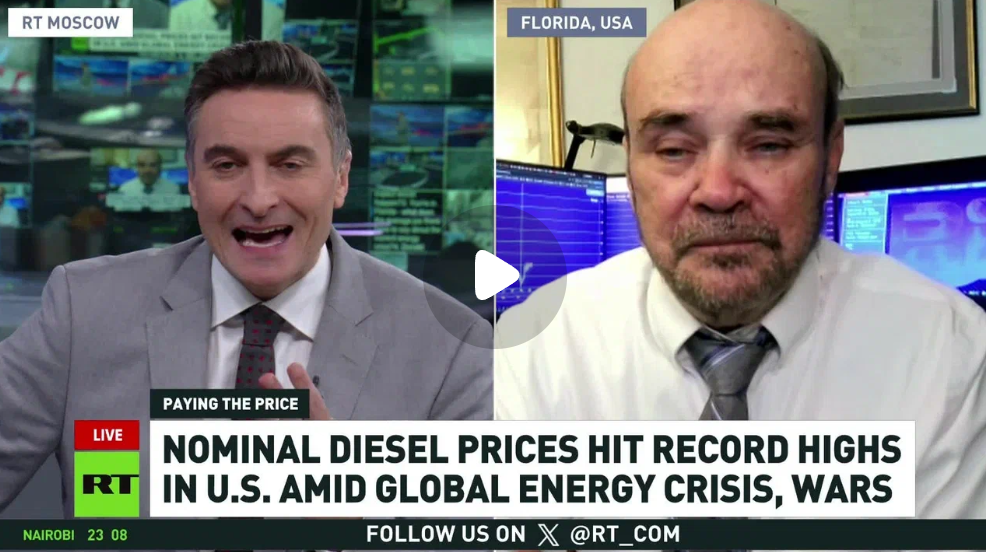
ANSWER: First of all, it is the Neocons who always wants to prevent any dialogue because that might lead to peace. I go on RT and they do not censor me, it is always LIVE. Moreover, I find it imperative to understand their viewpoint which comes across by their questions. As long as I am free to say what the computer is projecting, then I have no problem.I find ironically more censorhip in the West.

Video Player

00:00

00:23

When I was called in and asked to write the peace plan and to use my back channels to get it to Putin, they concluded the meeting and said:

“You know what we are asking you to do is what they killed Kennedy for.”

I was even shown the KGB file that Russia turned over on their investigation of the Kennedy Assassination. You cannot understand your opponent unless you get into their head. If people do not like that, go get a gun and volunteer for the Front Line in Ukraine. Put you mouth where your life is instead of cheering war and sending someone else’s children to fight while you watch it on CNN like a video game.

Gasoline Y Combined 3 3 26

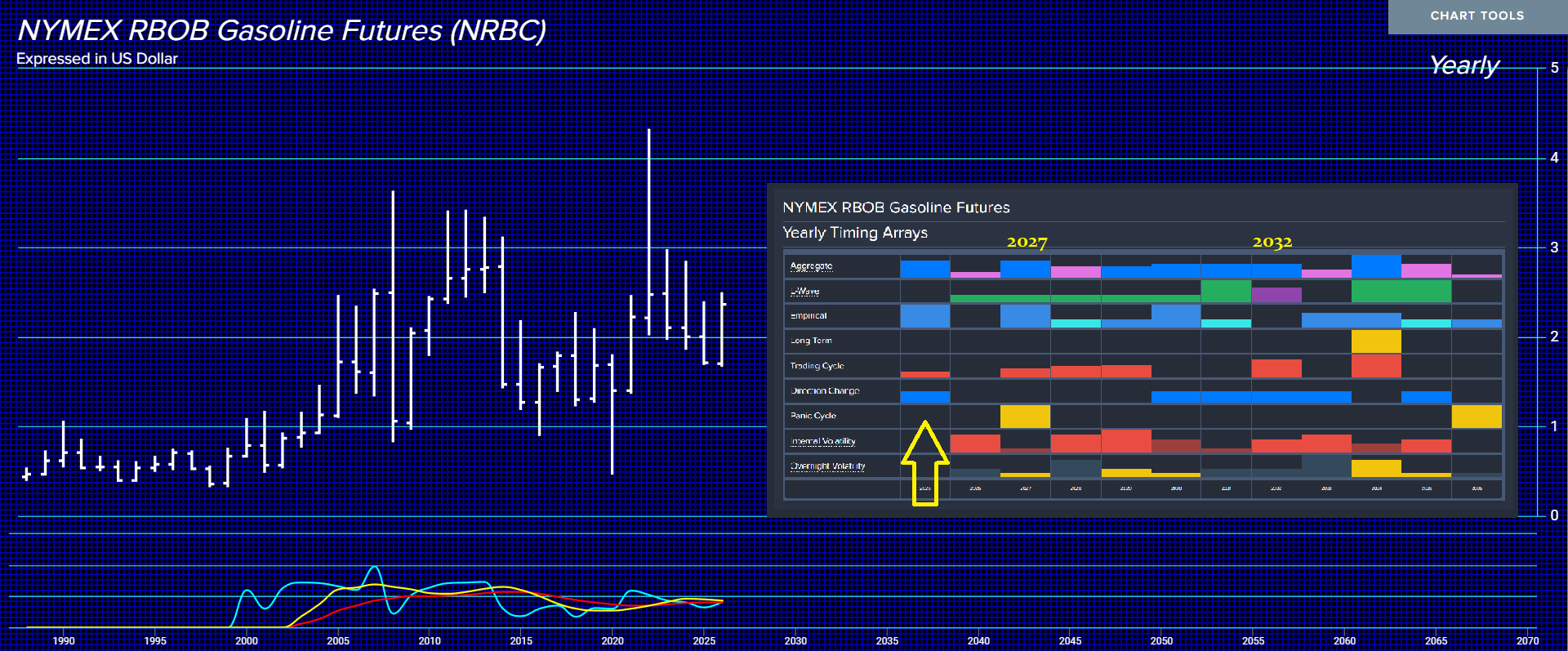
We have a crisis in refined energy products far more than crude oil. Nobody seems to wake up to that issue until it smacks them in the face. As far as the elections, it has nothing to do with my personal opinion. I do not see either party being able to prevent what our computer is forecasting. So, my comments are not political advocating either side.

Zelensky attacking the refineries in Russia is insane. He was behind blowing up the pipeline to Germany. He has no regard for what it would do to Germany or the EU. It  has destroyed the Germany economy and undermined the entire EU, yet all he cared about was cutting off Russian sales of energy. Here he has done it again attacking their refineries and in the process he is not just sending fuel prices up, he is creating a very serious crisis in refined products that will bring down the entire world economy into 2028. Washington does NOT listen to our computer or they would have done something about it. So we have a Panic Cycle in Gasoline for 2027. This is where Socrates becomes so important because it is not simply someone’s opinion.

Categories:Armstrong in the Media

European Revolution 2026


Posted Originally on Sep 8, 2026 by Martin Armstrong |  

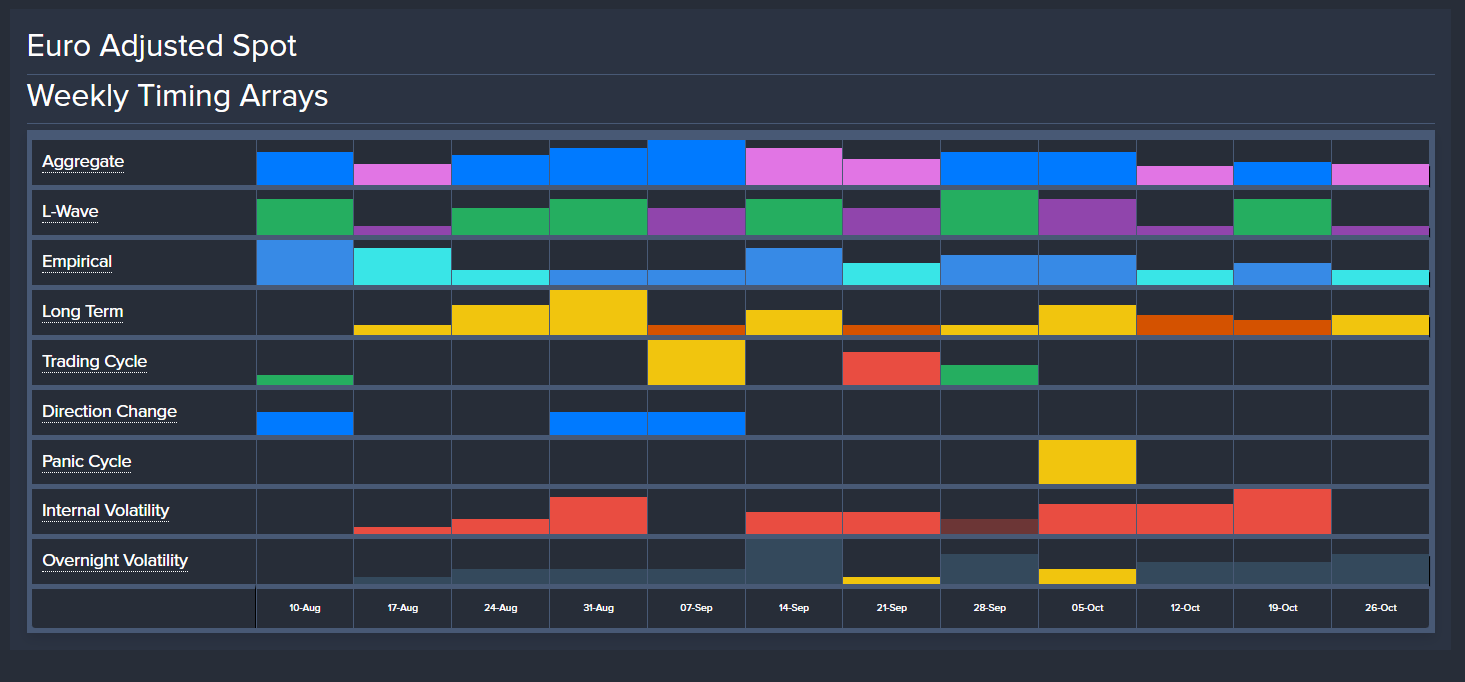
IBEUUS W Array 8 10 26

COMMENT: Marty, no award could cover what you have accomplished. The forecast that AfD would win was outstanding and as impressive as your forecast back on Poland. I am still amazed at how your computer forecasts war years in advance, politics, and major market movements. What you have discovered is like the legendary Philosopher’s Stone. The euro and Dax all had turning points right of schedule.

Just amazing.

Friedrich

AfD logo
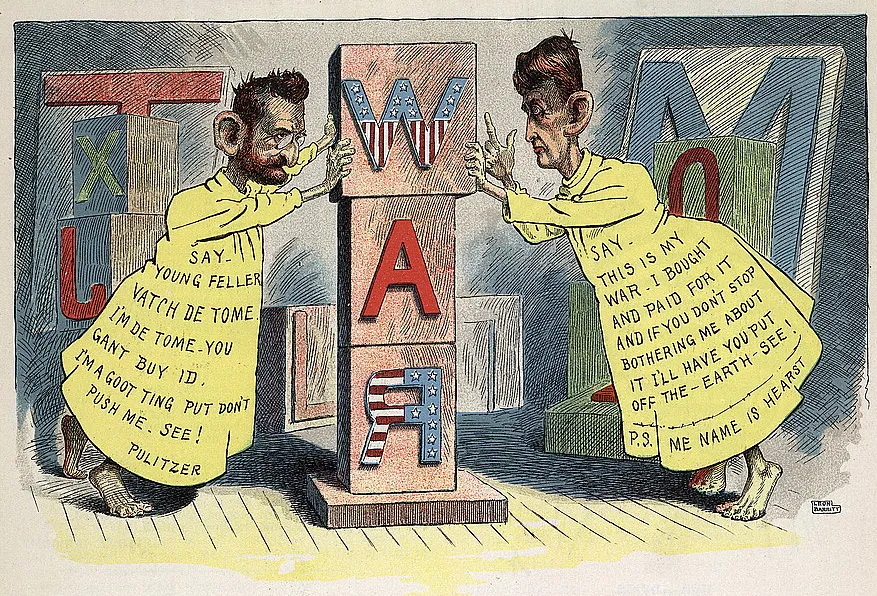
PulitzerHearstWarYellowKids

The success of Germany’s Alternative for Germany (AfD) in state elections is a warning sign to the madman of Ukraine, that the tide is turning against him. The AfD is now state’s largest party but short of a majority.

Nevertheless, the Neocon Western Press that keeping pushing the false narative that Russia invaded Ukraine “UNPROVOKED” simply want war and to picture as many dead bodies in the headlines as was the case was the famous case of Pulitzer vs Hearst who manufactured the Spanish American War for profit.

Quite frankly, I do not know how these people can even look themselves in the morror. They press has become the cheerleaders of endless wars and dip their pens in blood to write the next line. They are spinning this as a win for Putin for they fear there may not be any blood that they can write about. they are reporting that there is “unbridled delight in Moscow” with the success of the AfD over the weekend.

The press only supports the Neocons – not the people.  They will constantly bash the AfD and do their best to derail them and slander everything they do. They will use their position to disrupt the politics of Germany and Europe pushing their narative at all times. I remember Margaret Thatcher once told me that if she walked across the Thames River, the press would report it was only because she did not know how to swim.

The Western Warmonger Press ignores the fact that the German youth see no benefit in war with Russia for Ukraine, which is by far the most corrupt country on the planet which has been consistently documented over the years, not to mention the latest missing €70 million missing from Estonia. There there was the revelation that Zelensky was sending $50 million Per Month to USA preparing for the day he has to flee. Then they invested $1.5 billion creating a ski resort from war money?

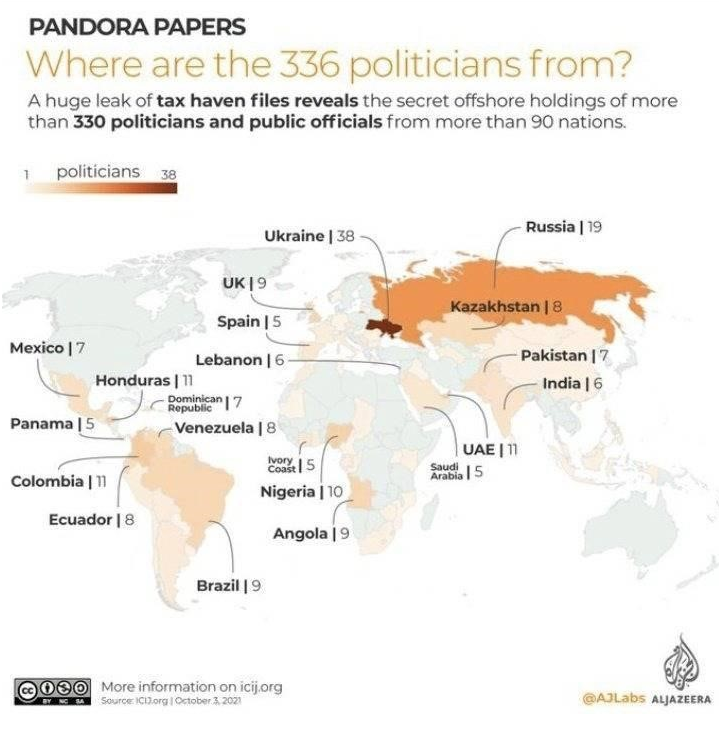
Ukraine Corruption PaNDORA pAPERS

Ukraine remains the most corrupt government in the world, and they are selling the Ukrainian people for personal wealth and greed with ZERO remorse for their nation or their people. Ukrainian politicians topped all other countries for corruption. Even in the Pandora Papers, 38 Ukrainian politicians have to hide cash offshore – the largest number of corrupt politicians in any other country.  Zelensky’s office tried to justify his use of offshore companies for himself as protecting him against pro-Russian forces, following leaked revelations of pervasive corruption. Even Foreign Policy Magazine has reported that the clock is running out on Zelensky.

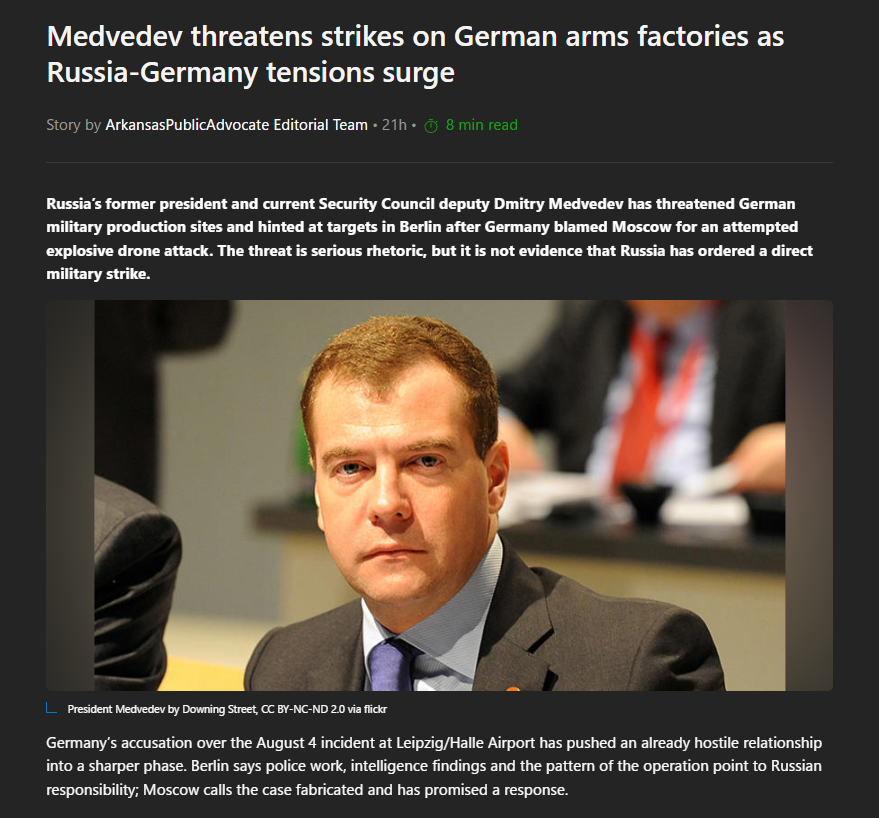
Medvedev_threatens_strikes_on_German_arms_factories_as_Russia_Germany_tensions_s

Merz has been absolutely braindead putting Germany in the crosshairs of Russia and for what? To keep the EU from collapsing? Let’s be honest here, a country that is supplying weapons to a nation at war during both World Wars I and II made the supplier a target, or at least brought it significantly closer to direct conflict.
During World War II, the US claimed neutrality but it began providing massive military aid to the Allies through the Lend-Lease Act of March 1941, effectively becoming the “arsenal of democracy.” Though the US wasn’t an official combatant, this policy had significant consequences. This policy supported Britain and the Soviet Union becoming a major factor in Hitler’s decision to declare war on the United States on December 11, 1941. Hitler saw this aid as a direct threat to Germany’s war effort and believed that by declaring war, he could disrupt this supply line.

Sweden’s most critical contribution was providing Germany with large quantities of iron ore, essential for its war industry. In return, Germany agreed to respect Sweden’s neutrality, provided this supply continued. Sweden also permitted German troops and military supplies to transit its territory. In total, over 2.14 million German soldiers and 100,000 railcars of military supplies were transported through Sweden to the front lines, particularly during the invasion of the Soviet Union.

Germany has closed the Russian consulate in Bonn and the Russian House cultural center in Berlin in response to an alleged attempted drone attack attributed to Russia. This action has led to Russia retaliating by closing the German consulate in St. Petersburg and all Goethe-Institut branches in the country. Germany’s closure of the Russian consulate is part of escalating tensions between the two nations. Merz takes his order from the warmongering Neocons in control of NATO.

Europe is changing all because the leaders of the pack in Europe have been more interested in trying to preserve the European Experiment in Brussels than the people they pretend to represent when in fact they are simply moving to reestablish the Mideval Serfdom where they become the landlord promising safety from evil Russia building their castle walls and moving to total economic subjugation even pressing with CBDCs to eliminate cash. In Spain, the law requires banks to report cash withdrawals exceeding €3,000 to the authorities for tax control purposes. They want to know what your are doing with cash. The potential fines are up to €150,000 for failing to report individuals or financial institutions withdrawing their own money. Obviously, they do not trust their own citizens.

Sweden no go

Europe is indeed shifting to the right because Brussel has ignored their culture and flooded Europe with Muslims from some of the most anti-Christian states. This has led to some areas even in Sweden posting signs that Shira Law applies there, ignoring the culture of European countries. These people did not come to assimilate. They brought their culture with them. This has been the #1 reason that the people of Europe are turning to the right against massive immigration. We are seeing this in Austria, France, and Germany.

Austria ??: The right-wing Freedom Party is leading at almost 40%
France ??: Marine Le Pen leading the polls to be President
Germany ??: Polls show AfD consistently the largest party.
Norway ??: The right-wing/Libertarian party leading massively at 33.4%

As we head into 2032, this is the most intense part of the wave. Europe is tearing apart at the seams. All we can hope for is that the EU breaks up ASAP. But I suspect that they will stage a false flag to desperately create war with Russia ASAP. That is the ONLY was the EU itself can survive or the individual states will break apart because of their authoritarian policies that made less sense than the WOKE Agenda.

POLITICS

In the US, the Progressives will win the House and try to push their insane agenda. That is what is needed for 2028 where we may see the Democratic Party split and the people rise up against this progressive movement.

Mandami Zohran

No matter how many times people throughout history try this same Marxist agenda that constantly fails, they will keep trying no mater what. Mandami has fulfilled our computer model right on target. JP Morgan noe has more people in Texas than NYC. Goldman Sachs has ordered many of its top people move to texas of resign. The New Texas Exchange will surpass NYC.

Even James Carville has declared he is no longer a Democrat. The Progressives need to impose their agenda and once and for all the people will see what communism really was all about. EQUITY was achieve not by raised the lower class, but by eliminating the upper class. There went investment, IPOs, venture capital etc. This will be how the political system self-destructs.

When the Democrats take the House, they will be waging war on Trump. They will impeach him again and probably going after even members of his family, probably Kushner, even for criminal allegations. Trump may retaliate and go after Obama. The next two years is going to be politically crazy. Hence, 2027 will start the volatility like we have not seen before.

Categories:GermanyEuropean UnionPolitics

89% of Americans Finally Understand That Government Is Corrupt


Posted Sep 8, 2026 by Martin Armstrong |  

Political Corruption

The American people are not merely dissatisfied with Washington. They have concluded that the government itself is corrupt. A new Gallup poll found that 89% of American adults believe corruption is widespread throughout the government, the highest reading in the 20-year history of the survey. This is no longer a fringe position dismissed as a conspiracy theory. Nearly nine out of every ten Americans now look at their government and see an institution serving someone other than the people.

The 89% reading rose by an astonishing 10 percentage points in a single year. Perceptions of widespread government corruption had remained between 72% and 79% from 2010 through 2025. The public was already deeply cynical, but something has clearly broken. When almost the entire population believes its government is corrupt, the political system has lost more than popularity. It has lost legitimacy.

Gallup found that 91% of Democrats, 90% of independents, and 83% of Republicans believe government corruption is widespread. Americans cannot agree on immigration, taxation, abortion, foreign policy, health care, or the definition of a woman, yet they have reached near-unanimous agreement that the people running the government cannot be trusted.

The partisan movement reveals how voters process corruption. In Joe Biden’s final year in office, only 57% of Democrats said corruption was widespread. That figure rose to 76% during the first year of Donald Trump’s second term and reached 91% in 2026. Democratic concern exploded by 34 percentage points once the opposing party controlled the White House. Republicans have been more consistent, with approximately eight in ten describing corruption as widespread during the past two years, compared with 87% in 2024.

Both parties recognize corruption most clearly when the other side controls the government. Democrats ignored abuses under Biden and suddenly discovered systemic corruption under Trump. Republicans condemned the Deep State under Biden but became more willing to defend Washington when their party returned to power. This is precisely how the two-party system protects itself. Each side treats corruption as a partisan weapon rather than an institutional disease.

corruption bribe under the table

America now has the highest perceived level of government corruption among the 38 nations belonging to the Organisation for Economic Co-operation and Development. The median across those advanced economies was 59% in 2025, down from 69% in 2009. The United States stood at 79% last year, already 20 percentage points above the OECD median and higher than every other member country. The new American reading of 89% may widen that gap dramatically once complete international figures become available.

Since 2023, Gallup has asked the question in 132 countries, and only four recorded readings nominally above America’s current 89%: Lebanon at 92% in 2024, Peru at 92% in 2025, and Ghana and Nigeria at 90% in 2024. The self-proclaimed guardian of global democracy is now viewed by its own citizens as nearly as corrupt as governments struggling with chronic instability and institutional failure.

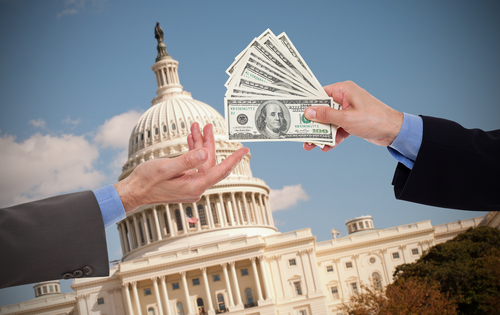
Corruption in the United States rarely resembles a politician accepting a suitcase filled with cash. Washington legalized much of its corruption and gave it respectable names such as lobbying, campaign contributions, consulting, public-private partnerships, speaking fees, book deals, foundations, and regulatory cooperation. The transaction is hidden beneath lawyers, nonprofit organizations, political action committees, government contracts, and a revolving door between regulatory agencies and the industries they supposedly regulate.

If a businessman hands a government official cash to obtain favorable treatment, everyone recognizes the bribe. If a corporation contributes millions of dollars to political organizations, hires former regulators, funds policy institutes, and helps write legislation benefiting its industry, Washington calls it participation in democracy. The outcome is often the same, but the paperwork makes it legal.

Members of Congress have access to information capable of moving markets while debating whether they should be permitted to trade individual stocks. Defense contractors finance politicians who approve military spending. Pharmaceutical companies influence agencies that approve and purchase their products. Banks help design regulations governing banks. Technology companies cooperate with government agencies while lobbying against restrictions on their power. Foreign governments and their representatives spend fortunes attempting to purchase influence over American policy.

This is why the public distinguishes between government and business. Gallup found that 71% of Americans believe corruption is widespread in business, an increase of eight points from last year. That is certainly high, but it remains 18 percentage points below the government figure, the largest gap recorded in the American survey. Between 2006 and 2025, perceptions of government corruption averaged 11 points above business corruption. Americans increasingly believe government has become the greater problem.

A private company must generally persuade someone to purchase its product. Government does not require consent. It taxes, regulates, fines, licenses, prosecutes, surveils, borrows, and spends through force of law. Corruption in business can destroy a company, but corruption in government can destroy the rule of law because the people benefiting from the abuse also control the institutions responsible for investigating it.

The national debt is another monument to this system. Washington spends trillions of dollars it does not possess, directs the money toward politically protected interests, and transfers the obligation to taxpayers who had no meaningful influence over the decision. Politicians purchase votes today with borrowed money and leave future generations with the interest bill. Both parties complain about debt while in opposition and expand it when in power because neither side is willing to dismantle the patronage network supporting Washington.

Americans have watched trillions disappear into wars with no clear objective, emergency programs with little oversight, failed infrastructure promises, corporate subsidies, foreign aid, government contractors, and agencies that can never pass a serious audit. The Pentagon has repeatedly failed comprehensive financial audits, yet Congress continues approving larger military budgets. No private corporation could admit that it cannot account properly for its assets and then demand even more money without consequences.

The public also witnessed how government behaved during COVID. Officials imposed lockdowns, closed businesses, censored dissent, issued contradictory directives, and protected pharmaceutical companies while insisting that every decision followed “the science.” Small businesses were destroyed while politically connected corporations expanded. Government officials violated restrictions they imposed upon everyone else, and few faced any accountability. That period taught millions of Americans that emergency power protects the institution before it protects the citizen.

The weaponization of law has deepened the collapse in trust. Each political faction now believes the other uses prosecutors, intelligence agencies, courts, tax authorities, and regulators as political instruments. Justice is no longer perceived as blind. The public increasingly assumes that the outcome depends upon the identity, wealth, connections, and political usefulness of the accused.

This is extremely dangerous for a republic. The rule of law survives because most people voluntarily accept the legitimacy of institutions even when they dislike an individual decision. Once the population believes that laws are selectively enforced and government acts primarily for itself, obedience becomes based upon fear rather than consent.

Elections cannot repair this when the bureaucracy, debt structure, lobbying apparatus, intelligence agencies, regulatory state, and government contractors remain largely untouched regardless of which party wins. Voters change the elected management, but the permanent machinery continues operating. Every president campaigns against Washington and eventually discovers that Washington is larger than the presidency.

The bureaucracy protects itself because its survival does not depend directly upon performance. A business that continually fails eventually loses customers and capital. A government agency that fails demands a larger budget, more employees, and broader authority. Failure becomes evidence that it was not given sufficient resources. Success is defined internally, and accountability disappears into committees, reports, and investigations that rarely punish anyone with power.

Americans finally see the system for what it is. The question is no longer whether government corruption is widespread. Nine out of ten have already answered that question. The issue is how long a republic can survive after its citizens conclude that the government no longer represents them.

Categories:CorruptionPolitics