France – Farmers and Energy Costs Push Toward Confrontation


Posted originally on Apr 13, 2026 by Martin Armstrong |  

France is once again approaching a familiar breaking point, and energy is at the center of it. Diesel prices across Europe have surged sharply in 2026 as geopolitical tensions in the Middle East disrupted supply routes, pushing Brent crude back above key resistance levels and filtering directly into transport and agricultural costs. In France, non-road diesel, which is critical for farming, has risen substantially over the past year, eroding already thin margins in agriculture. At the same time, electricity costs remain elevated compared to pre-2022 levels, despite government intervention, leaving producers exposed to sustained input inflation.

The agricultural sector has been particularly vocal. France has roughly 400,000 farms, and many operate on margins that cannot absorb double-digit increases in fuel and fertilizer costs. Fertilizer itself is heavily energy-dependent, linking natural gas prices directly to food production costs. When energy rises, food prices follow, and this has already been reflected in EU food inflation, which peaked above 15% in recent cycles and remains structurally elevated. The knock-on effect is that farmers face higher input costs while consumers resist higher prices, compressing profitability from both sides.

Protests are building along these fault lines. Farmer unions and independent groups have threatened renewed blockades of highways, logistics hubs, and wholesale food markets if the government fails to provide further relief. France has a long-standing pattern of escalation where tractors are used to shut down key transport arteries, and authorities are well aware of how quickly localized demonstrations can become national disruptions. Previous rounds of protests have already forced Paris to roll out billions in subsidies and tax concessions, but those measures have not resolved the structural issue, which is energy dependence combined with policy constraints.

The French government continues to attempt targeted relief, including fuel rebates and caps on electricity prices, but these interventions are temporary by design. They do not change the underlying exposure to global energy markets. Once those supports are reduced or removed, the pressure returns immediately. That is why these protests tend to recur in waves rather than dissipate entirely.

Energy costs are no longer viewed as an external shock but as a failure of domestic policy to shield the population from volatility. When that perception takes hold, protests move beyond sector-specific demands and begin to question the direction of national leadership itself.

The Quiet Rise of Capital Controls in America


Posted originally on Apr 14, 2026 by Martin Armstrong 

Capital Controls 2

What most people fail to understand is that governments do not lose control overnight. They lose it gradually, and then they respond in stages. First comes rising debt. Then comes higher taxation. When that fails to produce the expected revenue, the next step is not reform. It is restriction.

We are now entering that phase where governments begin tightening their grip on capital. It starts subtly. Expanded IRS reporting requirements. Increased scrutiny on bank transactions. Lower thresholds for what is considered “suspicious activity.” These are not random policy decisions. They are part of a broader shift toward monitoring and ultimately controlling the movement of money.

The justification is always the same. Prevent tax evasion. Combat financial crime. Ensure fairness. But behind that narrative is a much deeper problem. Governments are facing structural deficits that they cannot resolve through growth alone. When spending exceeds revenue and debt continues to rise, they must either cut spending, raise taxes, or prevent capital from escaping. Historically, they choose the latter two.

We are already seeing early signs of this shift. Discussions around taxing unrealized gains, proposals for wealth taxes, and increased enforcement efforts all point in the same direction. These policies assume that capital is static, but once people begin to move their money or themselves, the response changes. Governments begin looking for ways to stop that movement.

Digital infrastructure is what makes this possible today in a way it never was before. Every transaction is tracked. Every account is monitored. The banking system itself becomes the enforcement mechanism. You no longer need physical barriers when financial barriers can be imposed instantly.

The danger is not a single sweeping policy. It is the accumulation of smaller measures that gradually remove financial freedom. By the time people realize what has changed, the system is already in place.Posted Apr 14, 2026 by Martin Armstrong 

Sovereign Debt Crisis & the Middle East


Posted originally on Apr 13, 2026 by Martin Armstrong |  

Sovereign Debt Crisis Middle East 2026

The Sovereign Debt Crisis and the Middle East is the most under-reported financial crisis in Human History. It has been accelerated by the clever Weaponization of Debt that nobody seems to have even contemplated. We are dealing with the Illusion of Perpetual Wealth, combined with the Illusion of a Great Dollar Crash, in which, in both cases, people are completely distracted from the real crisis brewing behind the curtain around the globe, which is about to explode and take the world by surprise.

Neocon staring into the Eyes of Death

We are staring into the eyes of a massive financial crisis that culminates in a confrontation between Public and Private Assets. The computer has been right on projecting the event and the timing. The energy crisis is already unleashing civil unrest around the globe, which our computer forecast would coincide with international war. The shortage of fertilizer combined with the shortage of diesel fuels are also impacting the shortage of food. Add to this mess, the Sovereign Debt Crisis

Sovereign Debt Crisis and the Middle East

Because of the Importance of This Institutional Report that would normally be $1500, we are making this available to our entire readership at only $500

Sovereign Debt Crisis Middle East 2026 INDEX

New Homeland Security Secretary Cracks Down on Sanctuary Cities


Posted originally on Apr 13, 2026 by Martin Armstrong |  

Oklahoma's 19th Senator, Markwayne Mullin, sworn into office

What we are now witnessing with sanctuary cities is not simply a political disagreement, it is the breakdown of the rule of law at the structural level. The federal government is now openly questioning whether it should continue providing core services, including customs processing at international airports, to cities that refuse to comply with federal immigration law.

Homeland Security Secretary Markwayne Mullin has made that position clear in direct terms, stating, “If they are a sanctuary city, should they really be processing customs into their city?” and further pressing the issue by pointing out the contradiction, “If they’re a sanctuary city and they’re receiving international flights… but once they walk out of the airport, they’re not going to enforce immigration policy?”

Sanctuary cities are, by definition, jurisdictions that limit cooperation with federal enforcement, effectively creating a dual system of governance within the same country. Once you reach that point, you are no longer dealing with a unified legal framework, you are dealing with fragmentation.

Mullin has also made it clear that the federal government is being forced into difficult decisions, stating that “we’re going to have to start prioritizing things at some point” as funding battles intensify. That statement is critical because it signals a shift from negotiation to enforcement.

This is precisely the type of breakdown that unfolds during periods of broader systemic stress. The sovereign debt crisis, rising geopolitical tensions, and internal political divisions are all converging at the same time, and governments respond to that pressure by attempting to reassert control.

Sanctuary cities represent a direct challenge to that control, and the response is now escalating accordingly. The implications extend far beyond immigration because once the federal government begins selectively withdrawing services, whether it is funding, enforcement, or infrastructure support, it creates a chain reaction. Major cities like New York, Los Angeles, Chicago, and San Francisco are not isolated municipalities, they are economic hubs that handle millions of international travelers and billions in trade. Any disruption to customs operations alone would ripple through tourism, supply chains, and business activity, amplifying economic pressure at a time when the system is already under strain.

This is where the situation becomes dangerous because it introduces a new layer of uncertainty into the economy. Businesses and capital do not respond well to fragmented legal systems or political conflict between levels of government. Capital flows toward stability, and when stability is questioned, it begins to move. That is the core principle that has driven every major financial shift throughout history.

What Mullin has effectively done is put consequences on the table. For years, sanctuary cities have operated with limited federal pushback, but that appears to be changing. Once consequences are introduced, whether through funding cuts, service withdrawal, or legal action, the dynamic shifts entirely. Cities are forced to choose between maintaining their policies or preserving access to federal resources, and that is where the real conflict begins.

This is no longer about immigration alone. It is about who governs and enforces, and whether a nation can function with competing systems of authority.

First-Time Homebuyers Disappear


Posted originally on Apr 13, 2026 by Martin Armstrong |  

House US Real Estate

The American housing market is revealing a shift that goes far beyond rising interest rates, because what we are witnessing is the disappearance of the entry-level buyer, and once that foundation erodes, the entire structure of the market becomes unstable.

The data is striking. The income required to purchase a typical home has climbed to around $111,000, a level far beyond what most young workers earn, while the median age of first-time homebuyers has surged to 40. That alone tells you everything. A generation that should be forming households in their late 20s and early 30s is now being pushed a decade or more down the timeline.

At the same time, nearly two million “missing households” have been identified, representing young adults who, under normal conditions, would have entered the housing market but simply cannot. This is not a demand problem. It is an affordability collapse.

The implications extend beyond real estate. Housing has always been a primary driver of economic activity, influencing everything from construction to consumer spending. When young people are unable to buy homes, they delay other major life decisions, which feeds back into the economy as slower growth and reduced momentum.

What policymakers fail to acknowledge is that this is not simply the result of interest rates. It is the consequence of years of artificially inflated asset prices combined with stagnant wage growth. The system has been stretched to the point where even small increases in borrowing costs can shut out entire segments of the population.

From the standpoint of capital flows, housing has become less about shelter and more about investment, and that shift has created a market where prices are sustained by capital rather than affordability. The entry point for new buyers rises continuously, eventually reaching a level where participation becomes impossible.

Forecasting the Future


Posted originally on Apr 13, 2026 by Martin Armstrong |  

iranian Rial M Array 1 1 26
iranian Rial M Array 4 12 26

QUESTION: You have to be the most accomplished programmer ever. Socrates even forecast that this peace meeting would fail. No neural net would produce such a forecast. Your AI methods are beyond what anyone else has. Will you ever agree to reveal how to code?

PB

ANSWER: To be honest with you, probably not. I just have way too much on my plate. As a programmer, you should know. You should never even tinker with something that works, for you may lose that magic. The computer picked up war with Iran last December.

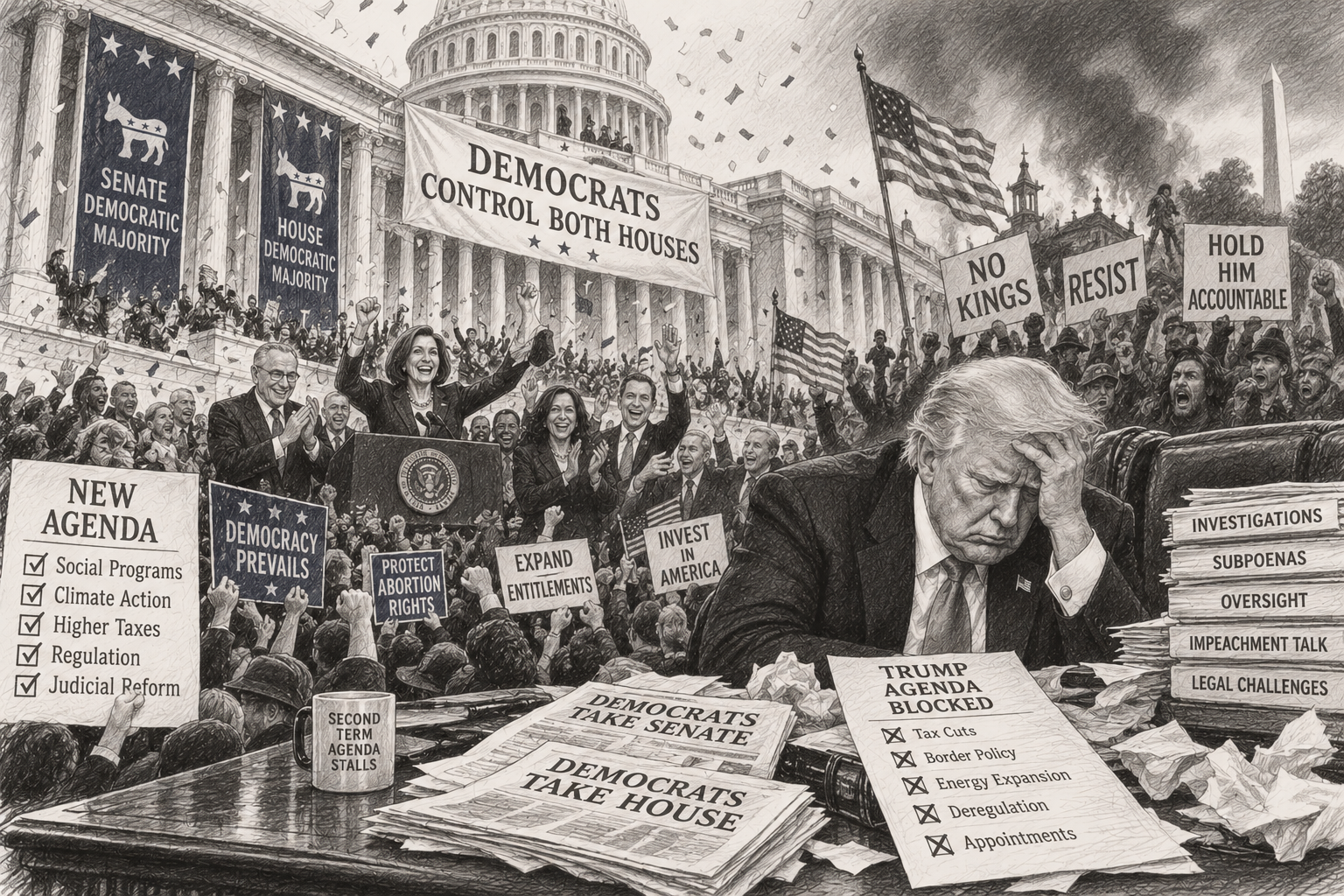
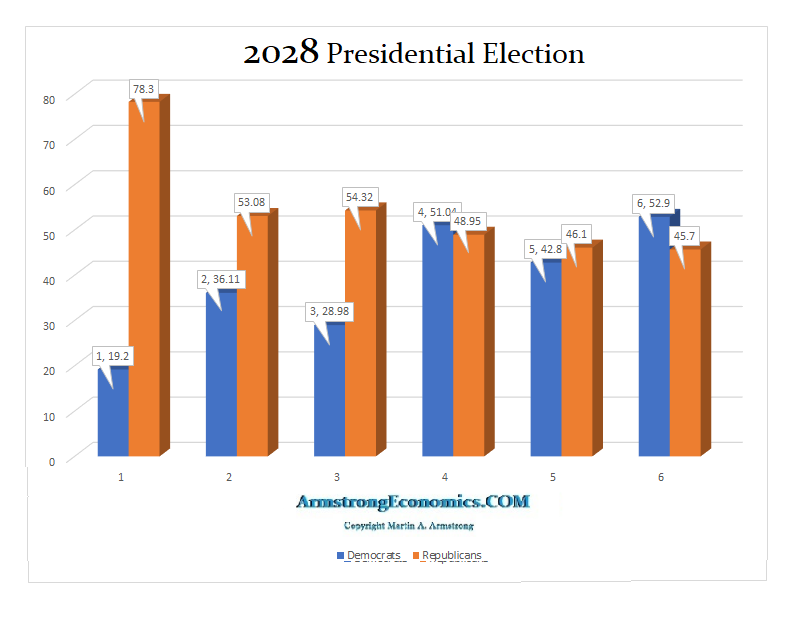
The computer is monitoring everything including future elections. If voters perceive that the US lost the war against Iran, the Republicans will lose Congress and the president would be facing impeachment motions from Democrats. If, on the other hand, voters perceive that this conflict with Iran was worth it and life returns to normal by the summer, then, and only  then, would the Republicans have a better chance of breaking even in November’s midterm elections. Add to this pressure, the Israeli elections where Netanyahu needs to appear to win. A ceasefire or peace with Iran that accomplished nothing but actually left Iran strategically with a victory controlling the Strait of Hormuz, this is a disaster for both.

I taught the computer how I would personally analyze. I did not create a neural net, dump in the data, shake well, and hope it figured everything out all by itself. To do that necessitated EXPERIENCE as a trader on an international level – not domestic. I rejected all the classic economic BS that does not work and never has.

Volcker Rediscovery

Even former Fed Chairman Paul Volcker came to realize that Keynesian Economics failed during the 1970s. Yet, all the TV pundits still talk in Keynesian terms and people forecast markets based on what the Fed will do next. Even Larry Summers admitted no economist has EVER forecast a recession in advance since WWII.

Hungary Votes for War


Posted originally on Apr 12, 2026 by Martin Armstrong |  

Hungary_Forint_Spot D Array 4 10 26
Hungary_Forint_Spot W Array 4 12 26

COMMENT: Mr. Armstrong, many others, and I here in Hungary have the utmost respect for you. But you declined to come to Hungary twice. You may have made a difference.

FV

REPLY: I am terribly sorry. I could not prevent Viktor’s loss. The computer warned that Viktor would lose. The election was going to be rigged from every direction: Brussels, Germany, and most certainly Ukraine. Zelensky was paying people to pretend to be protestors while trying to blow up your pipelines. Viktor had to lose to allow the EU to go to war with Russia. It is the EU’s date with destiny. Viktor was the last voice of reason in Europe.

Every model we had showed a political change. This coming week is a Panic Cycle. Friday the 10th was even a Directional Change.

To our many readers in Hungary, you have my deepest sympathy. Understand that it was necessary for a war with Russia. They were not about to allow a fair election any more than they did in Romania.

Your children will be drafted just as they are planning in Germany.

I suggest that you now plan accordingly.

PS: Viktor is always welcome here in Florida.

Iran War – The Movie – Trailer


Posted originally on Apr 12, 2026 by Martin Armstrong |  

Categories:Humor

Armstrong Interview from Serbia


Posted originally on Apr 12, 2026 by Martin Armstrong |  

Categories:Uncategorized

Energy Protests in Ireland


Posted originally on Apr 10, 2026 by Martin Armstrong |  

governmentfearspeople

Ireland is now confronting a full-scale energy protest movement that has gone far beyond symbolic demonstrations. What began as opposition to rising fuel costs has escalated into coordinated nationwide disruption, with farmers, haulers, and transport operators blocking major motorways, fuel depots, and even the country’s only oil refinery. The scale is unprecedented, with convoys and blockades reported in Dublin, Cork, Galway, Limerick, and beyond, effectively bringing parts of the country to a standstill.

The immediate driver is energy prices, which have surged sharply due to geopolitical tensions, particularly conflict in the Middle East. Diesel, petrol, and heating fuel costs have risen to levels that many small businesses and agricultural operators say are no longer sustainable. Protesters are demanding direct intervention, including fuel price caps, removal of carbon taxes, and emergency subsidies to offset rising costs.

What makes this situation critical is not just the protest itself, but how it is being carried out. Demonstrators have targeted the arteries of the energy system. Fuel depots in Galway and Limerick have been blocked, while the Whitegate refinery in Cork, which supplies a significant portion of Ireland’s fuel, has been shut down by protesters. As a result, up to half of the country’s fuel supply has been effectively immobilized, not because of global shortages, but because distribution has been cut off internally.

This has triggered immediate consequences. Panic buying has emerged across regions, with long queues forming at petrol stations and some locations running out of fuel entirely. Essential services, including emergency response units, public transportation, and hospital access, have been disrupted. The government has warned that supply chains for food, water, and basic goods are now at risk if the protests continue.

The response from the state has been to move into enforcement. Authorities have warned protesters to remove blockades or face legal consequences, while the Defense Forces have been deployed to help clear heavy vehicles from critical infrastructure. Officials have gone so far as to describe the protests as “national sabotage,” reflecting how seriously the government views the threat to the country’s functioning.

At the same time, the government has refused to negotiate directly with many of the protest groups, insisting it will only engage with officially recognized organizations. This has further inflamed tensions, as protesters argue that existing channels do not represent their interests and have failed to address the crisis.

Ireland’s energy strategy has left it heavily exposed to external shocks, relying on imported fuel while simultaneously pushing domestic climate policies that increase costs through taxation. When global energy prices rise, there is very little buffer. The burden is passed directly onto consumers and businesses, and that is now feeding back into the political system in the form of unrest.

There is also a deeper structural issue emerging. The protests are not confined to one sector. They involve agriculture, transport, and small business, all of which are highly sensitive to fuel costs. Once multiple sectors align in opposition, the movement gains momentum quickly because the economic impact becomes widespread rather than isolated.

When fuel distribution is blocked domestically, and the government is forced to deploy the military to restore order, it signals that the system is under real stress. The issue is no longer just energy prices.

Ireland is now a clear example of what happens when energy policy, geopolitical instability, and economic pressure collide. The protests may subside in the short term, but the underlying problem remains unresolved. As long as energy costs remain elevated and policy continues to rely on external supply without sufficient domestic resilience, the risk of renewed unrest will remain high.