Posted Posted originally on: Oct 18, 2026 by Martin Armstrong |
QUESTION: Marty, I know you warned about a bubble in 2000, and I think you were talking about capital inflows from China and Europe because of the coming Euro. Is this the same outcome as the Dow rising now out of fear of war, and will it eventually create a bubble here like in 2000?
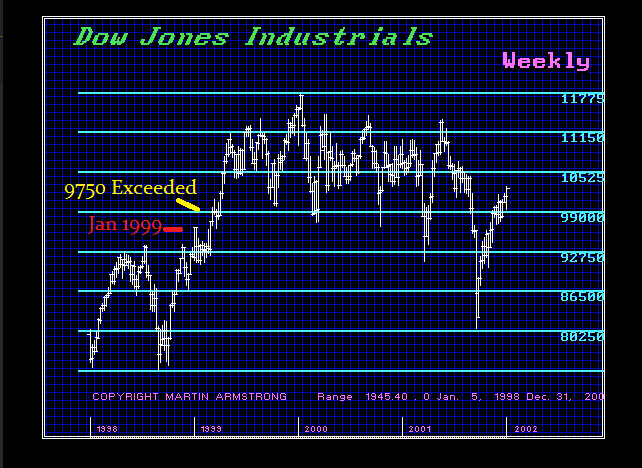
REPLY: Bubble are always a result of CAPITAL CONCENTRATION which our computer picks up in tracking international capital flows. This is the video clip from the February 1999 WEC. Back then, our number for the breakout was 9750 on the Dow. Once that was exceeded, the Bubble began.
In addition to the 40% of global savings in Japan was was shifting to US assets, the formation of the EU saw Germany demanding austerity and raising taxes on the rest of Europe. They were demanding that Britain shut down the Channel Islands that were being used as tax havens. Capital was fleeing Europe because of this austerity being pushed by Germany. So the 2000 DOT.COM bubble was more than just prices. It was enabled by the capital inflows.
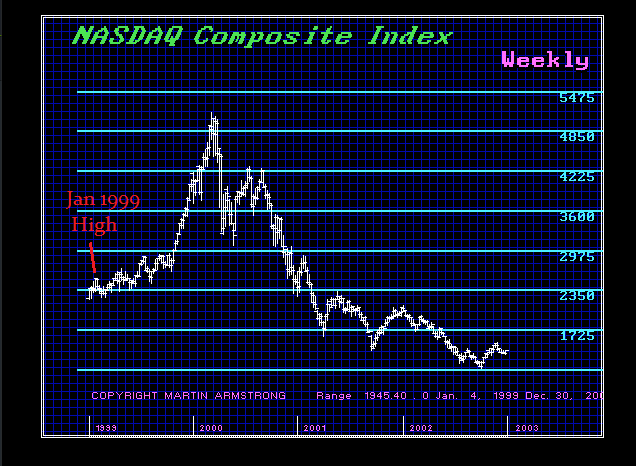
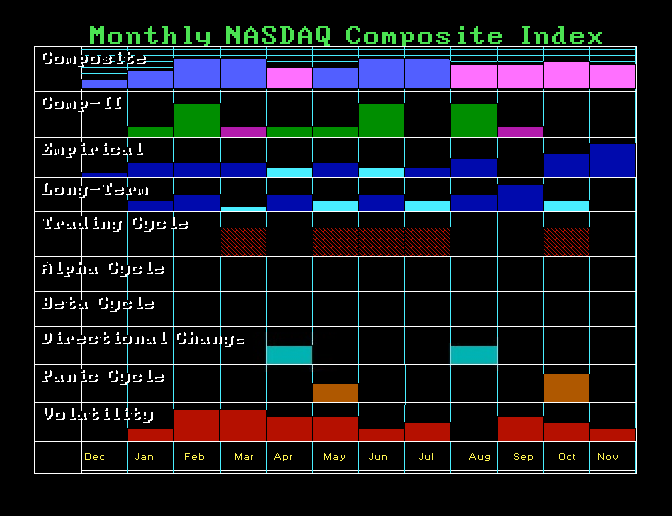
The high formed the week of March 6th, 2000 while February posted the highest monthly closing. There was a two month initial correction down to 304266 from a March high intraday of 51352 and May was the Cycle Low that was a Panic Cycle with April providing the Directional Change. The bounce was into July and then August was the Directional Change and October started the Panic. The initial low formed in April 2001 followed by the final low in October 2002.
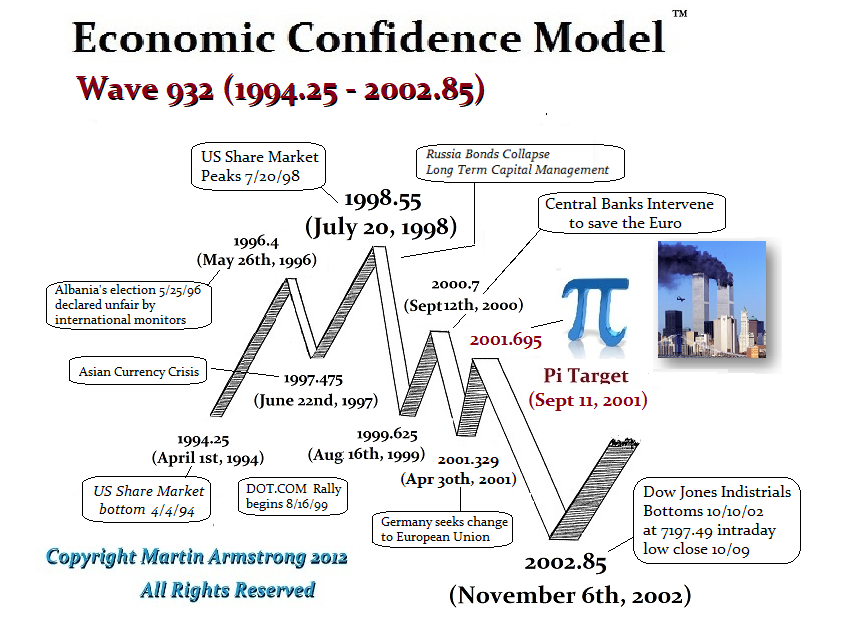
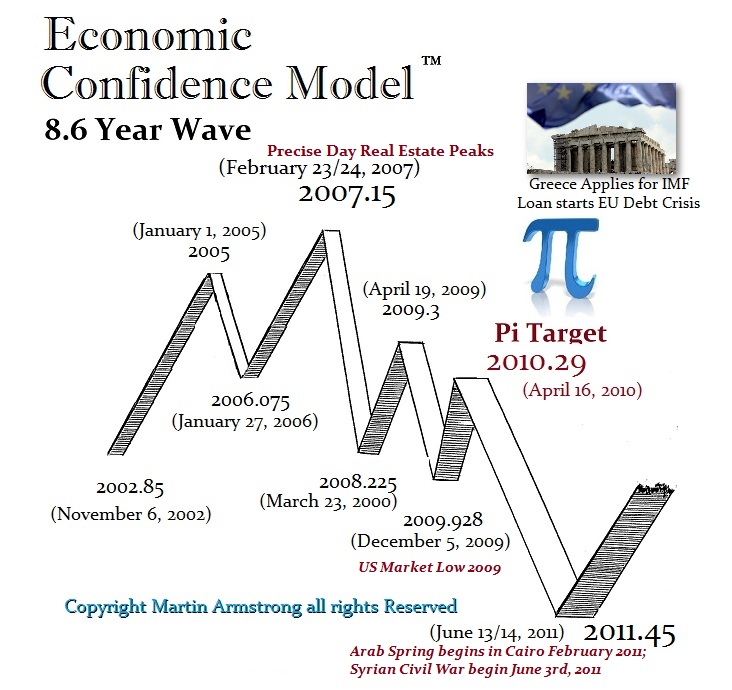
The market bottomed with the ECM in October 2002 with the ECM low being November 6th, 2002. That was an interesting ECM Wave. The next ECM wave saw the rally and peak in 2007 with the Great Recession crash into 2009 with gold peaking at the bottom of that wave in 2011 in the heels of the European Sovereign Debt Crisis which began with Greece asking for an IMF loan on the very day of the Pi Target.
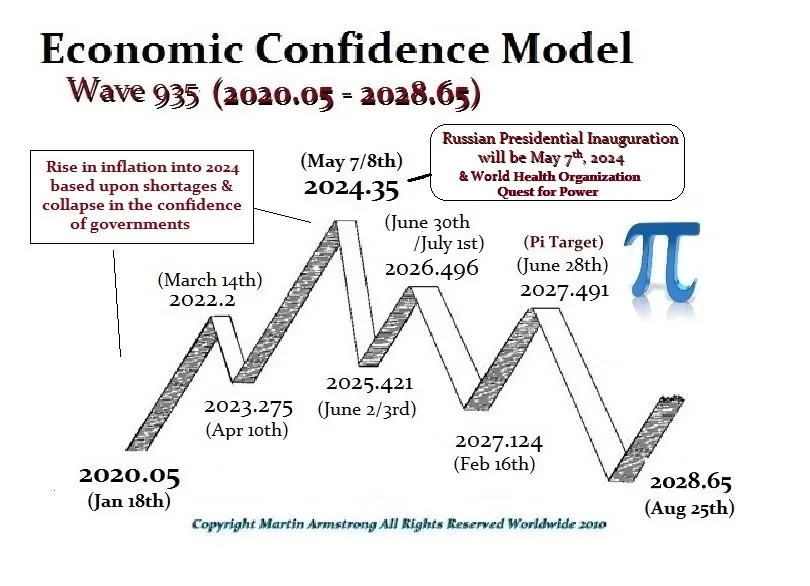
The Next ECM wave bottomed precise with the start of the COVID Pandemic. Now we face the formidable turning point going into 2028. This current wave peaked precisely to the day that Putin was sworn in. That was sending up a warning flar that this wave would involve Russia. All we see now is Russia, Russia, Russia, and hail Zelensky.
As far as the NEXT Bubble and Capital Concentration, we will deal with that at the WEC. On December 18, 2019 (2019.964) the House impeached Trump on charges of abuse of power and obstruction of Congress related to his dealings with Ukraine. The Democrats again on January 13, 2021 (2021.035) impeached Trump for a second time on a single charge of “incitement of insurrection” following the attack on the U.S. Capitol on January 6, 2021. In both instances, the Senate subsequently acquitted him, and he remained in office. The difference was just 1.071 years.
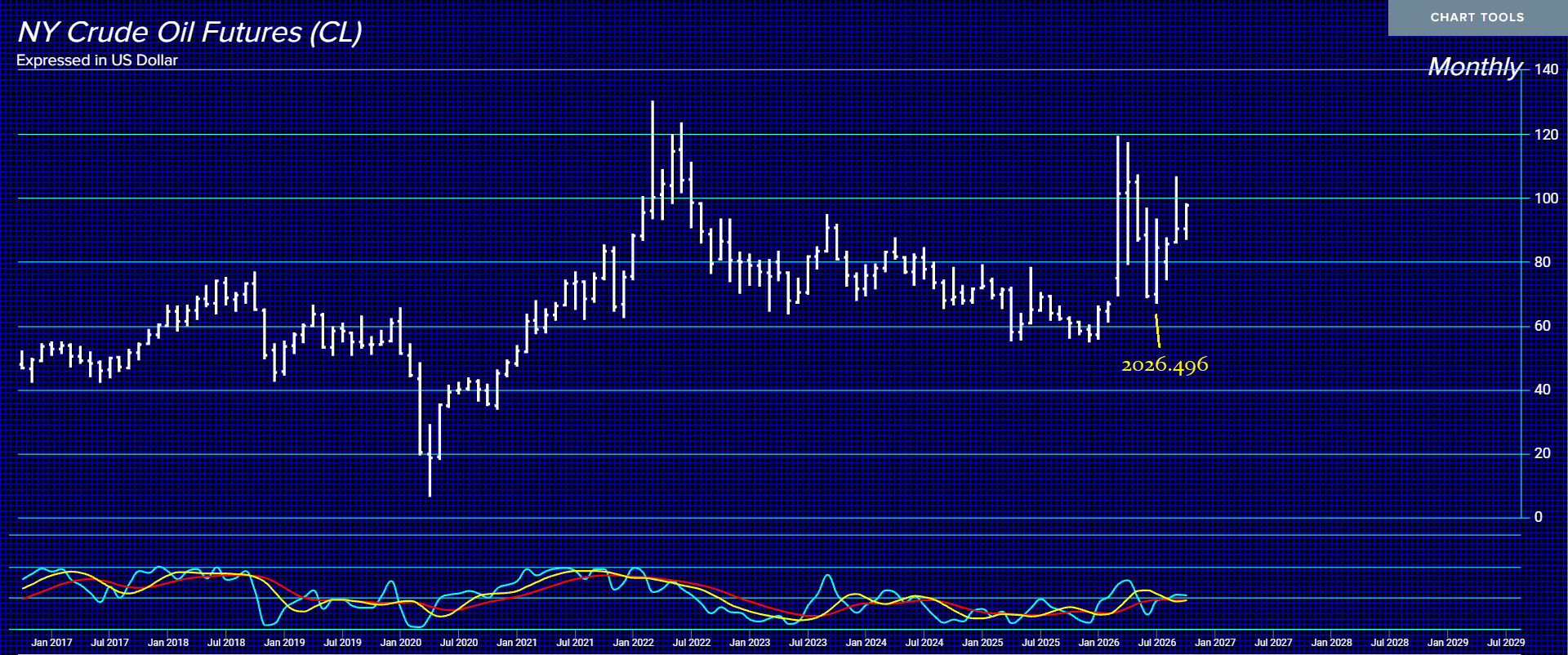
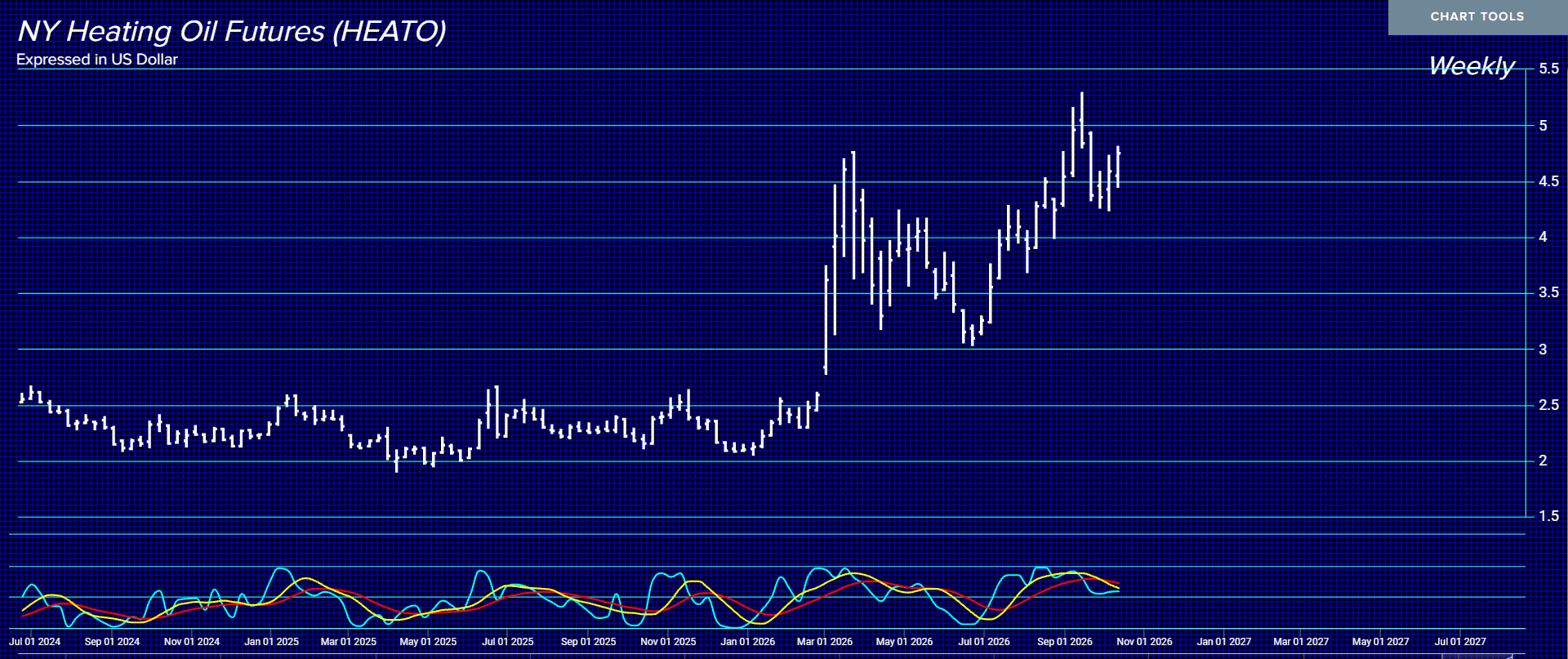
The turning point 2026.496 was the reaction low in oil with July 20206 producing the intraday Low at 67.04, but June produced the lowest monthly closing at 69.50. Since that turning point we have witnessed crude oil rising again. We should be on guard for a rally into February and possibly into June 2027. We will review that at the WEC.
Posted Prepare for Nuclear War – There is No Choice
Posted Oct 16, 2026 by Martin Armstrong |
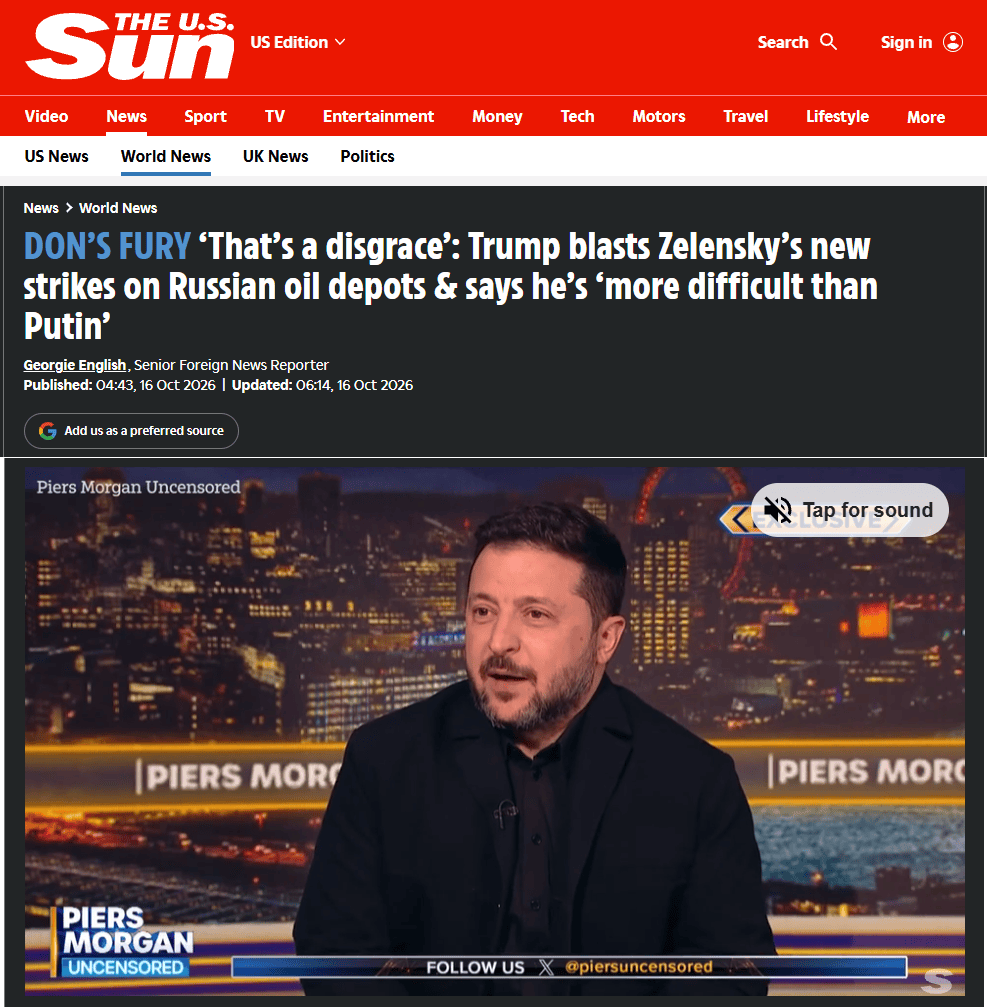
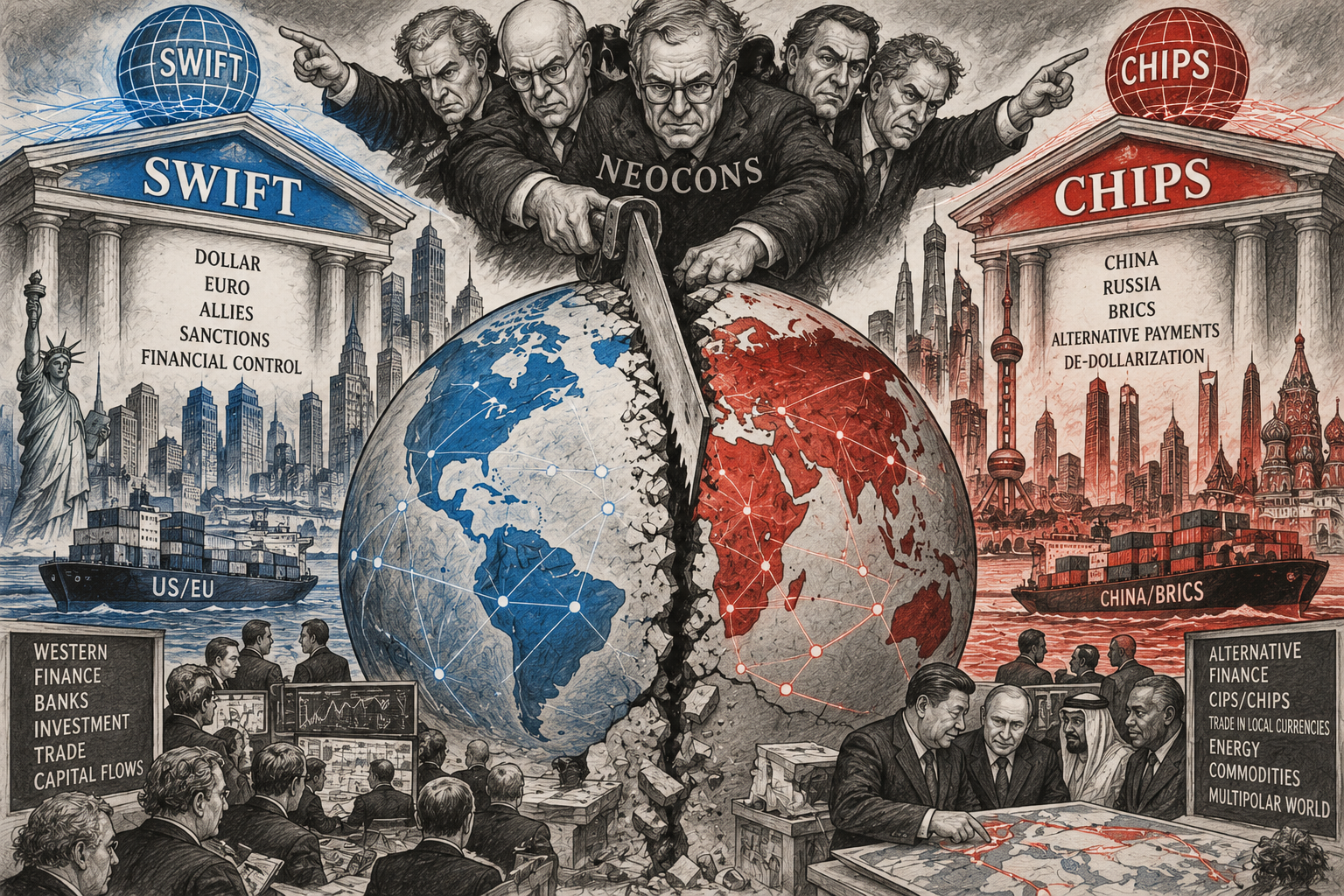
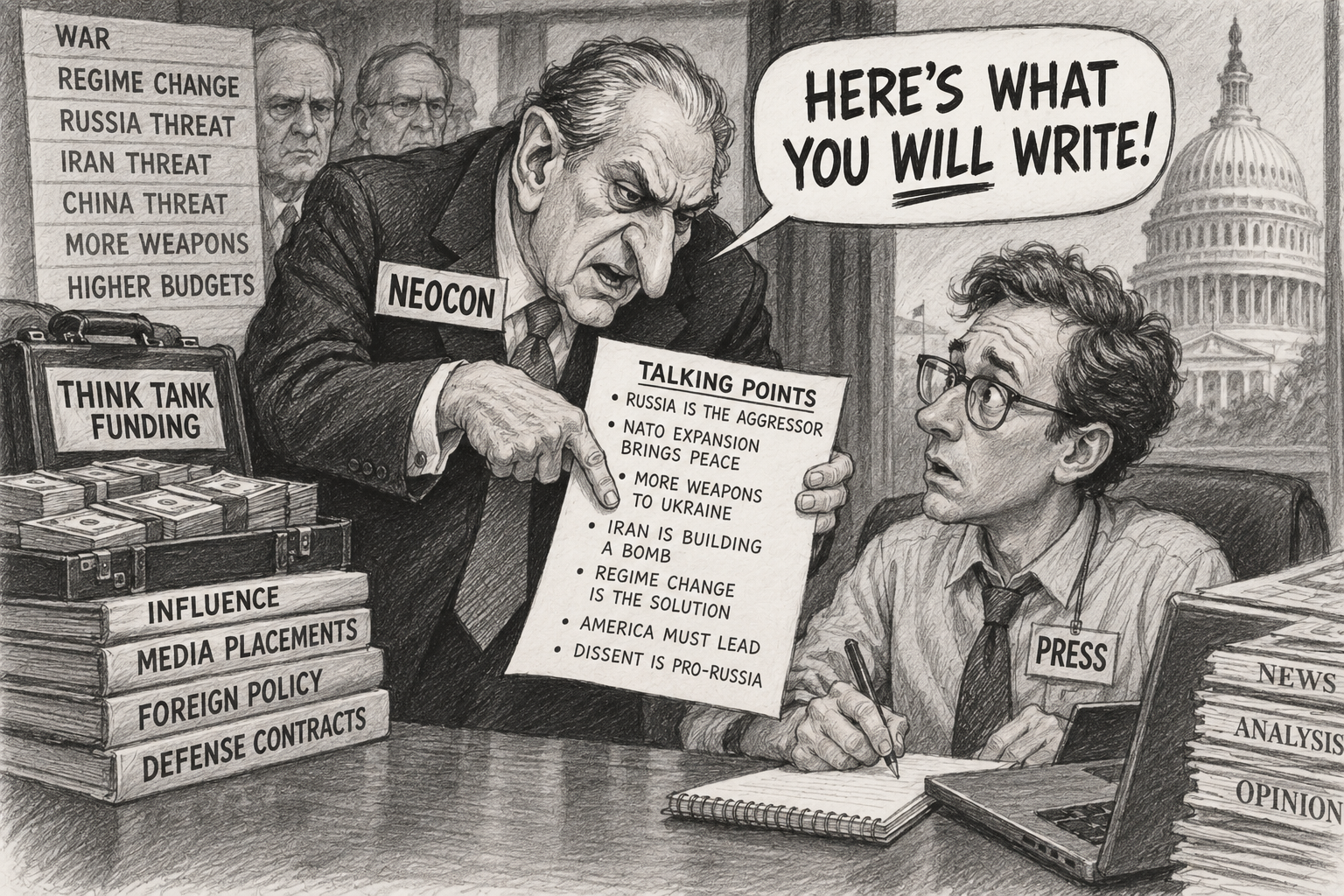
The Neocons have won. They have successfully shifted the blame for the Ukraine war entirely onto Russia, and 99% of media coverage now frames the invasion as completely unprovoked. Their hatred of Trump is so intense that they feel compelled to oppose him on principle, regardless of what he does. Now they are cheering Zelensky on to destroy every refinery in Russia, as if this will somehow win the day, lead to Russia’s collapse, and let them dance on Russian graves. Nowhere in the press is there anyone with more than two brain cells to rub together. Like neocons everywhere, they seem incapable of asking what comes next. It’s the same pattern as Netanyahu’s approach: kill the Ayatollah on day one and declare victory. Or Iraq: kill Saddam and declare victory—while ignoring that he was the one keeping all the warring factions from slaughtering each other.
A global famine would require a catastrophic disruption to the production and distribution of food. The war in Ukraine has already threatened food security, and its escalation increases that risk into 2028.
Zelensky and the neocons seek to destroy all Russian refineries, assuming this would cause a catastrophic domestic fuel shortage that cripples Russia’s military logistics, agriculture (fuel for tractors and transport), and economy. They ignore the fact that global oil prices would likely spike to $200 a barrel by 2028, with diesel soaring to $10 or more. This would contribute to general inflation, including food prices, and also impede their own military operations.
Russia would struggle to harvest and transport its own grain without fuel, terminating its exports and risking famine—especially in the Middle East, where Iran is 100% dependent on Russian grain supplies. This would put upward pressure on global grain prices, but it would also expand the war, as other countries would then be positioned to attack the EU as well. This risks a worldwide famine. The idea that other producers could theoretically increase output and that markets would adjust—albeit painfully—still requires diesel.
While the destruction of Russian refineries would be a dramatic escalation with serious global economic consequences, the neocons directing this madman Zelensky never once address the question of what comes next.
Then there is the matter of Russian fertilizer exports. Russia is the world’s largest exporter of mineral fertilizers. Disruptions to these exports raise costs for farmers globally, potentially reducing crop yields and pushing the world toward famine. In theory, fertilizers are produced by a separate industry. However, without diesel, Russian exports would come to a halt.
Russia and Ukraine are major global breadbaskets, accounting for a huge share of global wheat, corn, and sunflower oil exports. The actual threat to global food security comes from Ukraine’s attacks on Russian ports and Russia’s retaliation against Ukrainian ports, shipping lanes, and agricultural infrastructure—which directly block the shipment of grain from both sources to countries that need it.
Zelensky is not carrying out this war to retain the Donbas, which is occupied by ethnic Russians whose language and religion he has outlawed—a fact the press refuses to report, given his former neo-Nazi affiliations. This is the neocon dream of conquering and destroying Russia once and for all. It has never been about democracy or any other propaganda. The Minsk Agreement was meant to allow the Donbas to vote, which Zelensky refuses to honor. He has suspended all elections because he knows they would not benefit Ukraine and he would be voted out in a second. Even 10% of the population has fled Ukraine.
Video Player
00:00
00:42
A few months ago, Zelensky ordered a direct strike on a Russian Ministry of Defense. This is like a direct attack on the Pentagon. Zelensky is deliberately trying to provoke Russia into attacking anything in NATO to start World War III where he has urged NATO to make a pre-emptive attack on Moscow with nuclear weapons. This is the Neo-Nazi speaking.
We have switched sides and are now supporting the ethnic cleansing of a modern-day Adolf Hitler. The CIA protects the Ukrainian neo-Nazis because they always intended to use them to destroy Russia. This is ethnic cleansing, orchestrated by the neocons, and they will destroy Western society in the process—for they have not won a single war since World War II. These are the statements coming from major Ukrainian figures, and they make clear that this has always been about the destruction of Russia, not the Donbas.
Oleksiy Danilov, Secretary of Ukraine’s National Security and Defense Council, stated in December 2022 that “everything will blaze and burn until all of Moscow burns.” Robert Brovdi (“Magyar”), Commander of Ukraine’s Unmanned Systems Forces, wrote “Moscow will fall” while reporting on strikes against Russian energy infrastructure. Mykola Kokhanivsky, leader of the Ukrainian Nationalist Organization (OUH), promised to “destroy Russia,” stating “Russia must be destroyed. Carthage must fall.” It’s worth noting that Yulia Tymoshenko, former Prime Minister of Ukraine, also made statements about “destroying Moscow” and “wiping it off the map.”
The We’re Next Argument
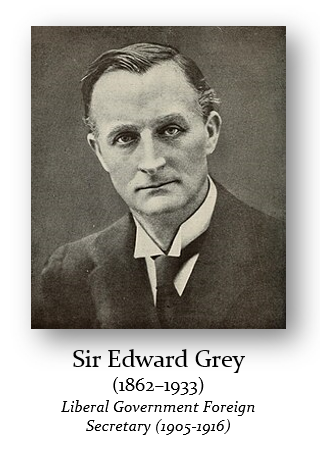
The most famous example is Britain’s entry into World War I. Britain had a treaty (the Treaty of London, 1839) guaranteeing Belgium’s neutrality. When Germany invaded Belgium in August 1914, Britain declared war. The British politician most closely associated with the argument that Britain had to enter World War I to prevent itself from being “next” was Sir Edward Grey, the Foreign Secretary. His argument “We’re Next” logic was most famously laid out in his speech to the House of Commons on August 3, 1914, constructed on the idea that Britain could not stand aside while France was crushed. The logic was strategic: if Germany defeated France and dominated the Continent, Britain would be left isolated and vulnerable.
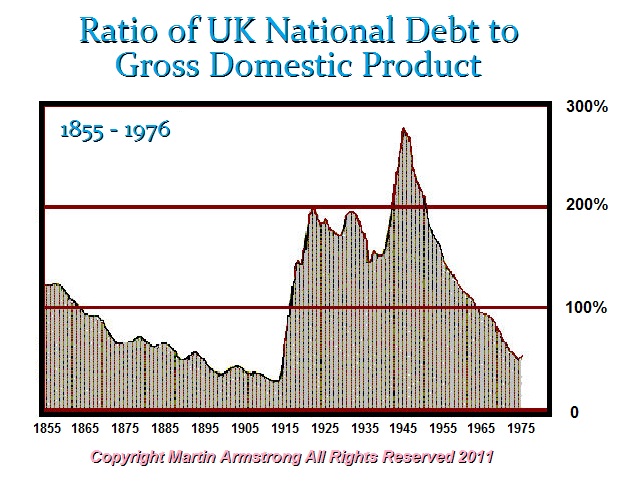
Grey’s warmongering succeeded in reducing the British economy and shifting financial capital from London to New York. He sent UK debt to 200% of GDP. Wars seem to always be promoted by the left—perhaps they think they are the hand of God, empowered to smite the opposition. Grey was the left, and he entered the war just as WWI, WWII, Vietnam, and Korea were all advocated by Democrats, who now want to double the money sent to Zelensky to smite Russia.
However, the deeper strategic reasoning was explicitly about the fear of being next. Britain’s leaders argued that if Germany conquered Belgium and the French coast, it would dominate the English Channel and threaten Britain directly. The German invasion of Belgium was not just a violation of a treaty—it was a strategic move that, if successful, would leave Britain isolated and vulnerable. This is a case where the “we’re next” logic was central to the decision, even if the public justification focused on the treaty.
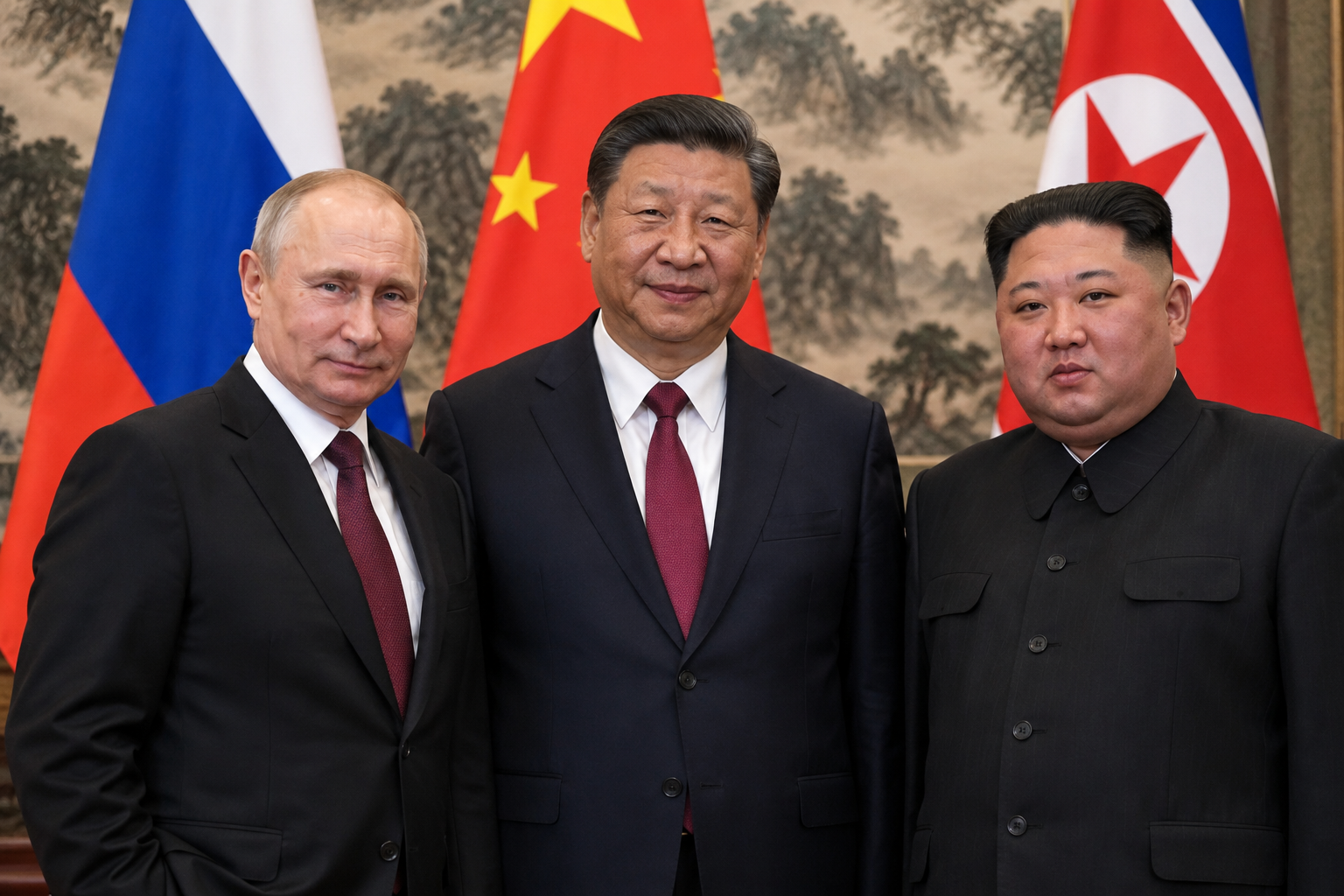
China & North Korea Will Join Russia Fearing They TOO Will Be NEXT
I have repeatedly warned that history demonstrates a recurring pattern: when a nation confronts a serious domestic crisis, its political leaders often seek an EXTERNAL ENEMY to divert public attention from their own failures. This is nothing new. It is a pattern that has unfolded throughout history, from ancient empires to modern nation-states.
We are heading into what I have warned will be a serious global economic decline extending into 2028. The danger is that economic instability will increasingly feed geopolitical confrontation as governments seek someone else to blame for their own mismanagement.
The problem with these warmongering Neocons is that they NEVER anticipate the consequences of their actions. They view the world through the narrow lens of military confrontation, assuming that sanctions, threats, and regime change will somehow produce the political outcomes they desire. They fail to understand that every action produces a reaction, often with consequences they never imagined. Even elements within the Democratic Party appear increasingly willing to embrace confrontation under the banner of defending democracy and claiming the moral high ground. Yet moral declarations do not prevent wars. They can just as easily become the justification for escalating conflicts beyond anyone’s control.
China presents a particularly dangerous dimension to this developing crisis. China is confronting serious structural economic problems, including its prolonged property-market downturn, heavily indebted local governments, weak household confidence, demographic decline, and growing dependence on manufacturing and exports to sustain economic activity. However, economic weakness and a direct political threat to Xi Jinping are two entirely different questions.
The real issue for Xi is not simply whether economic growth slows. It is whether prolonged economic deterioration begins undermining CONFIDENCE within the Communist Party itself, particularly among provincial officials, influential business leaders, and the military establishment. That is where economic problems can eventually become political problems.
Nevertheless, dissatisfaction with economic performance does not automatically mean Xi faces an imminent leadership challenge. China’s political structure is fundamentally different from Western electoral systems, and Xi has consolidated considerable authority over the party, the government, and the military.
The greater danger is how Beijing might respond if economic pressure intensifies while Washington and Europe simultaneously escalate their confrontation with China. This is where the Neocons fail to understand the dynamics of international capital flows, confidence, and geopolitical alliances.
These Neocons assume that increasing pressure on Russia, China, Iran, and North Korea will somehow force each country to submit independently. What they fail to consider is that their policies may instead encourage these nations to cooperate more closely against a common external threat.
China does not need to agree with every Russian policy to recognize that weakening Moscow could eventually leave Beijing more exposed to American strategic pressure. Likewise, Russia has an incentive to strengthen its relationship with China as Western sanctions and military confrontation continue.
North Korea faces a similar calculation. Its leadership has every incentive to strengthen relationships that provide economic support, military cooperation, and protection against international isolation.
This does not mean these countries form a unified alliance with identical interests. They do not. But common external pressure can create cooperation among governments that would otherwise have significant disagreements. That is precisely how geopolitical confrontation spreads through contagion.
The more Washington and European leaders attempt to isolate their adversaries simultaneously, the greater the incentive for those adversaries to coordinate their responses.
Meanwhile, European governments face their own economic difficulties, fiscal pressures, and political instability. Yet influential voices continue advocating military escalation as though economic resources were unlimited and public confidence could never collapse.
The greatest danger is that political leaders will turn an economic crisis into a military crisis in their desperate attempt to retain power and avoid responsibility.
This is why I have consistently warned that you cannot analyze war independently of economics. War, capital flows, sovereign debt, political confidence, and economic decline are interconnected. They are not isolated events.
As we move toward 2028, the critical question will not merely be whether China experiences an economic slowdown or whether Xi Jinping faces domestic dissatisfaction.
The question is whether mounting economic pressure, combined with increasingly aggressive Western foreign policy, creates the incentive for China, Russia, and North Korea to deepen their strategic cooperation.
History warns that when governments begin losing CONFIDENCE at home, they often seek confrontation abroad. The tragedy is that those who start these confrontations rarely understand how they will end.
“We’re Next” Argument Has Existed for Millennium
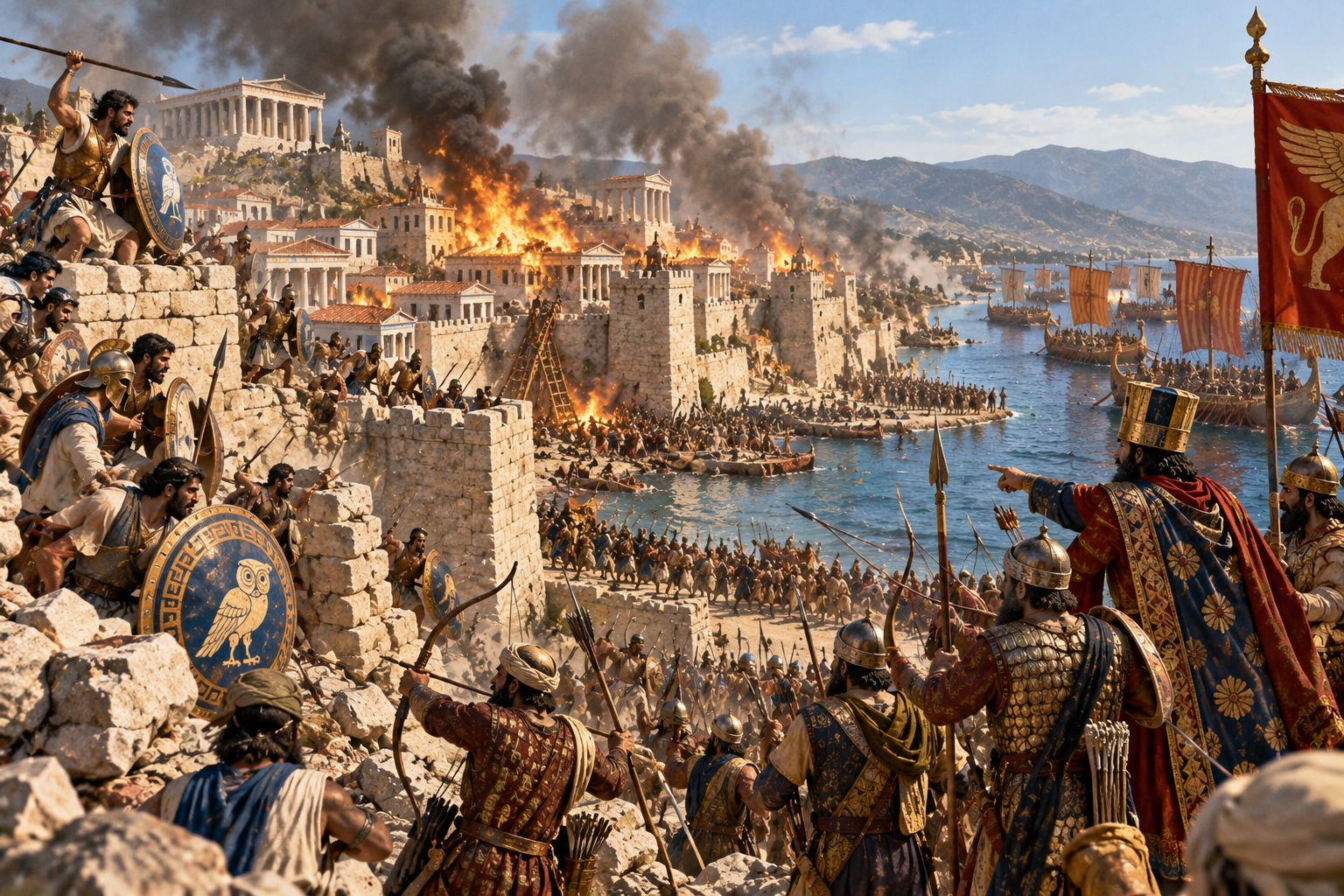
When Athens and Eretria sent ships to aid the Ionian Revolt in 498BC, they were not acting from pure altruism. There was the assumption that Persia would march on Greece immediately. This was a diagnosis of geostrategic realities and future issues. Athens’ decision was a “preemptive strike” to check Persian expansionism, which is precisely what Zelensky is demanding that NATO conduct. The Athenians had already clashed with Persia indirectly when they had refused to give earth and water to Persian envoys, and Persia was harboring the exiled Athenian tyrant Hippias, who wanted Persian help to regain power. Supporting the revolt was a way to weaken a hostile empire before it could act on those tensions.
This is the sequence that Athens feared when it aided the Ionian Revolt in 498BC. The revolt itself was crushed by 493BC, and Darius I of Persian then turned his attention to mainland Greece, partly to punish Athens and Eretria for their support of the Ionians, and partly to expand Persian control into the Aegean. So the Athenian “we might be next” calculation proved correct, though the invasion came about a decade after they withdrew from Ionia, not immediately. Supporting the Ionian Greeks in Turkey also declared that Athens was the enemy of Persia much as the US support Britain that dragged the US into WWI and WWII.
First Invasion (492–490BC) of Persian into Greece came one year later after the Ionian Revolt was crushed. A Persian expedition under Mardonius crossed into Thrace and Macedonia, but a storm destroyed much of the fleet and the campaign was abandoned.
A second force under Datis and Artaphernes crossed the Aegean in 490BC, captured Eretria, and landed at Marathon in Attica. The Athenians, with only a small contingent of Plataeans, defeated the Persians at the Battle of Marathon. The Persians withdrew.
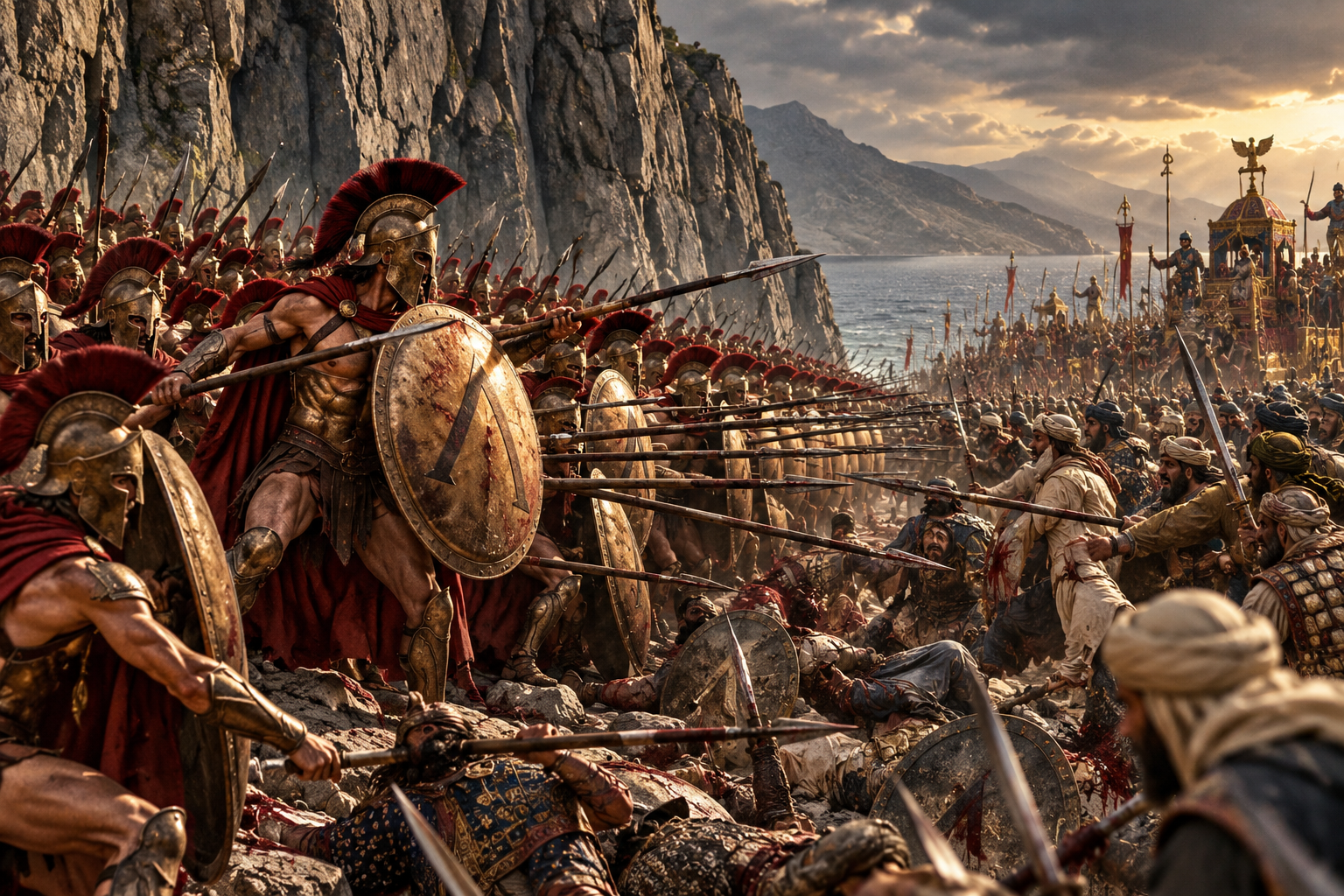
A Second Invasion (480–479BC) was the much larger invasion, personally led by King Xerxes I. The Persians crossed the Hellespont on a pontoon bridge and marched south. They were delayed by the Greeks at Thermopylae (the famous stand of Leonidas and the 300 Spartans) and defeated at sea at Salamis, which forced Xerxes to retreat.
The Persian commander Mardonius remained in Greece with a land army. The Greeks decisively defeated him at the Battle of Plataea in 479BC, and a simultaneous Greek naval victory at Mycale effectively ended the invasion.
When all was said and done, Persia funded Sparta to defeat Athens in 404BC. That was a ancient cold war of the Greeks vs Persians. This was followed by Alexander the Great conquering the Persian Empire (the Achaemenid Empire) in a remarkably short campaign, spanning roughly 334–330BC.
The Neocons have already destroyed the world economy and they control the press that only calls Trump insane and advocates WWIII with Russia to support Zelensky.
Neocons Defeated the Peace Dividend
There was an expectation of a “peace dividend,” and the decision to keep NATO was the result of a deliberate strategic choice driven by several key figures who argued that the end of the Cold War did not mean the end of security risks. The Neocons transformed their hatred and opposition to Communism into racism and even argued that President Reagan should not meet with Gorbachev saying “you can never trust a Russia.” The Neocons at every stage of the last nearly 40 years have done nothing but promote war. With the Democrats taking at least the House and possibly the Senate because Trump will not admit a mistake and throw Netanyahu under the bus, the Neocons are just days away from realizing their dream – World War III.
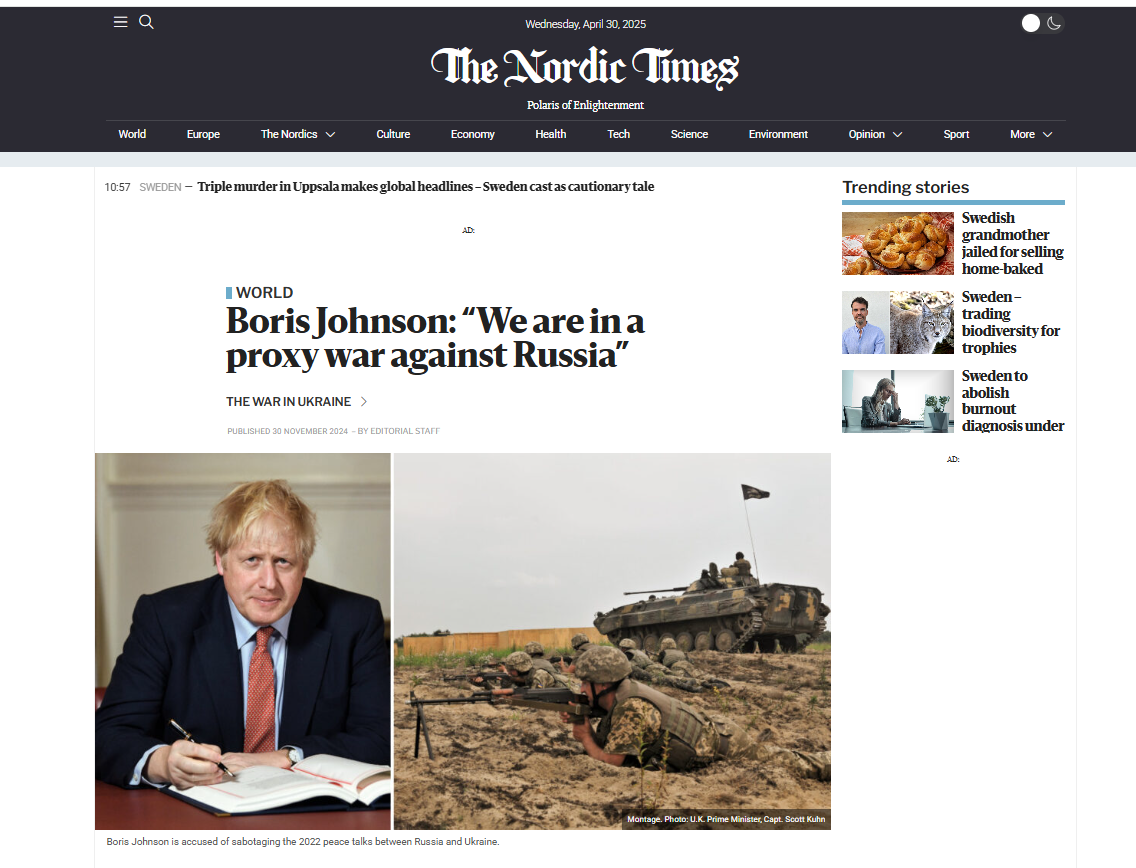
Boris may be delighted to think of all the millions of pounds he has been paid as “donations” from the military industrial complex and speaker fees promoting war with Russia, but (1) he will not have a place left to spend it, and (2) the British pound will no longer exist anyway.
All of this nonsense that Putin would never resort to nuclear war because he knows it would push back on him is absurd. When you have NATO and their mouth piece Zelensky with Boris Johnson and Kallas all advocating the total destruction and break up of Russia, that is a death sentence and he would have no choice but at the very least to take them with him. This will bring China, North Korea, Iran, and Russia all together.
With the Democrats cheering Zelensky incapable of ever looking at what comes next, as I have said many times, I have tried so hard to defeat my own computer, but I am the one who always loses. I have even offered to fly to DC to meet with Trump to explain what is at stake. He MUST throw Netanyahu under the bus. He needs also to establish an external enemy and state what will happen by supporting Zelensky – WWIII with China and North Korea joining Russia. Dropping the mother of all bombs on Iran is bullshit. This is like the Epstein nonsense focusing on who went to his island rather than who was paying Epstein for this honey trap and what was the blackmail for? A power play that inevitably comes back to war?
We are on our own. Government is hopeless – It Has Been Usurped By Neocons
The Neocons have won. They have successfully shifted the blame for the Ukraine war entirely onto Russia, and 99% of media coverage now frames the invasion as completely unprovoked. Their hatred of Trump is so intense that they feel compelled to oppose him on principle, regardless of what he does. Now they are cheering Zelensky on to destroy every refinery in Russia, as if this will somehow win the day, lead to Russia’s collapse, and let them dance on Russian graves. Nowhere in the press is there anyone with more than two brain cells to rub together. Like neocons everywhere, they seem incapable of asking what comes next. It’s the same pattern as Netanyahu’s approach: kill the Ayatollah on day one and declare victory. Or Iraq: kill Saddam and declare victory—while ignoring that he was the one keeping all the warring factions from slaughtering each other.
A global famine would require a catastrophic disruption to the production and distribution of food. The war in Ukraine has already threatened food security, and its escalation increases that risk into 2028.
Zelensky and the neocons seek to destroy all Russian refineries, assuming this would cause a catastrophic domestic fuel shortage that cripples Russia’s military logistics, agriculture (fuel for tractors and transport), and economy. They ignore the fact that global oil prices would likely spike to $200 a barrel by 2028, with diesel soaring to $10 or more. This would contribute to general inflation, including food prices, and also impede their own military operations.
Russia would struggle to harvest and transport its own grain without fuel, terminating its exports and risking famine—especially in the Middle East, where Iran is 100% dependent on Russian grain supplies. This would put upward pressure on global grain prices, but it would also expand the war, as other countries would then be positioned to attack the EU as well. This risks a worldwide famine. The idea that other producers could theoretically increase output and that markets would adjust—albeit painfully—still requires diesel.
While the destruction of Russian refineries would be a dramatic escalation with serious global economic consequences, the neocons directing this madman Zelensky never once address the question of what comes next.
Then there is the matter of Russian fertilizer exports. Russia is the world’s largest exporter of mineral fertilizers. Disruptions to these exports raise costs for farmers globally, potentially reducing crop yields and pushing the world toward famine. In theory, fertilizers are produced by a separate industry. However, without diesel, Russian exports would come to a halt.
Russia and Ukraine are major global breadbaskets, accounting for a huge share of global wheat, corn, and sunflower oil exports. The actual threat to global food security comes from Ukraine’s attacks on Russian ports and Russia’s retaliation against Ukrainian ports, shipping lanes, and agricultural infrastructure—which directly block the shipment of grain from both sources to countries that need it.
Zelensky is not carrying out this war to retain the Donbas, which is occupied by ethnic Russians whose language and religion he has outlawed—a fact the press refuses to report, given his former neo-Nazi affiliations. This is the neocon dream of conquering and destroying Russia once and for all. It has never been about democracy or any other propaganda. The Minsk Agreement was meant to allow the Donbas to vote, which Zelensky refuses to honor. He has suspended all elections because he knows they would not benefit Ukraine and he would be voted out in a second. Even 10% of the population has fled Ukraine.
Video Player
00:00
00:42
A few months ago, Zelensky ordered a direct strike on a Russian Ministry of Defense. This is like a direct attack on the Pentagon. Zelensky is deliberately trying to provoke Russia into attacking anything in NATO to start World War III where he has urged NATO to make a pre-emptive attack on Moscow with nuclear weapons. This is the Neo-Nazi speaking.
We have switched sides and are now supporting the ethnic cleansing of a modern-day Adolf Hitler. The CIA protects the Ukrainian neo-Nazis because they always intended to use them to destroy Russia. This is ethnic cleansing, orchestrated by the neocons, and they will destroy Western society in the process—for they have not won a single war since World War II. These are the statements coming from major Ukrainian figures, and they make clear that this has always been about the destruction of Russia, not the Donbas.
Oleksiy Danilov, Secretary of Ukraine’s National Security and Defense Council, stated in December 2022 that “everything will blaze and burn until all of Moscow burns.” Robert Brovdi (“Magyar”), Commander of Ukraine’s Unmanned Systems Forces, wrote “Moscow will fall” while reporting on strikes against Russian energy infrastructure. Mykola Kokhanivsky, leader of the Ukrainian Nationalist Organization (OUH), promised to “destroy Russia,” stating “Russia must be destroyed. Carthage must fall.” It’s worth noting that Yulia Tymoshenko, former Prime Minister of Ukraine, also made statements about “destroying Moscow” and “wiping it off the map.”
The We’re Next Argument
The most famous example is Britain’s entry into World War I. Britain had a treaty (the Treaty of London, 1839) guaranteeing Belgium’s neutrality. When Germany invaded Belgium in August 1914, Britain declared war. The British politician most closely associated with the argument that Britain had to enter World War I to prevent itself from being “next” was Sir Edward Grey, the Foreign Secretary. His argument “We’re Next” logic was most famously laid out in his speech to the House of Commons on August 3, 1914, constructed on the idea that Britain could not stand aside while France was crushed. The logic was strategic: if Germany defeated France and dominated the Continent, Britain would be left isolated and vulnerable.
Grey’s warmongering succeeded in reducing the British economy and shifting financial capital from London to New York. He sent UK debt to 200% of GDP. Wars seem to always be promoted by the left—perhaps they think they are the hand of God, empowered to smite the opposition. Grey was the left, and he entered the war just as WWI, WWII, Vietnam, and Korea were all advocated by Democrats, who now want to double the money sent to Zelensky to smite Russia.
However, the deeper strategic reasoning was explicitly about the fear of being next. Britain’s leaders argued that if Germany conquered Belgium and the French coast, it would dominate the English Channel and threaten Britain directly. The German invasion of Belgium was not just a violation of a treaty—it was a strategic move that, if successful, would leave Britain isolated and vulnerable. This is a case where the “we’re next” logic was central to the decision, even if the public justification focused on the treaty.
China & North Korea Will Join Russia Fearing They TOO Will Be NEXT
I have repeatedly warned that history demonstrates a recurring pattern: when a nation confronts a serious domestic crisis, its political leaders often seek an EXTERNAL ENEMY to divert public attention from their own failures. This is nothing new. It is a pattern that has unfolded throughout history, from ancient empires to modern nation-states.
We are heading into what I have warned will be a serious global economic decline extending into 2028. The danger is that economic instability will increasingly feed geopolitical confrontation as governments seek someone else to blame for their own mismanagement.
The problem with these warmongering Neocons is that they NEVER anticipate the consequences of their actions. They view the world through the narrow lens of military confrontation, assuming that sanctions, threats, and regime change will somehow produce the political outcomes they desire. They fail to understand that every action produces a reaction, often with consequences they never imagined. Even elements within the Democratic Party appear increasingly willing to embrace confrontation under the banner of defending democracy and claiming the moral high ground. Yet moral declarations do not prevent wars. They can just as easily become the justification for escalating conflicts beyond anyone’s control.
China presents a particularly dangerous dimension to this developing crisis. China is confronting serious structural economic problems, including its prolonged property-market downturn, heavily indebted local governments, weak household confidence, demographic decline, and growing dependence on manufacturing and exports to sustain economic activity. However, economic weakness and a direct political threat to Xi Jinping are two entirely different questions.
The real issue for Xi is not simply whether economic growth slows. It is whether prolonged economic deterioration begins undermining CONFIDENCE within the Communist Party itself, particularly among provincial officials, influential business leaders, and the military establishment. That is where economic problems can eventually become political problems.
Nevertheless, dissatisfaction with economic performance does not automatically mean Xi faces an imminent leadership challenge. China’s political structure is fundamentally different from Western electoral systems, and Xi has consolidated considerable authority over the party, the government, and the military.
The greater danger is how Beijing might respond if economic pressure intensifies while Washington and Europe simultaneously escalate their confrontation with China. This is where the Neocons fail to understand the dynamics of international capital flows, confidence, and geopolitical alliances.
These Neocons assume that increasing pressure on Russia, China, Iran, and North Korea will somehow force each country to submit independently. What they fail to consider is that their policies may instead encourage these nations to cooperate more closely against a common external threat.
China does not need to agree with every Russian policy to recognize that weakening Moscow could eventually leave Beijing more exposed to American strategic pressure. Likewise, Russia has an incentive to strengthen its relationship with China as Western sanctions and military confrontation continue.
North Korea faces a similar calculation. Its leadership has every incentive to strengthen relationships that provide economic support, military cooperation, and protection against international isolation.
This does not mean these countries form a unified alliance with identical interests. They do not. But common external pressure can create cooperation among governments that would otherwise have significant disagreements. That is precisely how geopolitical confrontation spreads through contagion.
The more Washington and European leaders attempt to isolate their adversaries simultaneously, the greater the incentive for those adversaries to coordinate their responses.
Meanwhile, European governments face their own economic difficulties, fiscal pressures, and political instability. Yet influential voices continue advocating military escalation as though economic resources were unlimited and public confidence could never collapse.
The greatest danger is that political leaders will turn an economic crisis into a military crisis in their desperate attempt to retain power and avoid responsibility.
This is why I have consistently warned that you cannot analyze war independently of economics. War, capital flows, sovereign debt, political confidence, and economic decline are interconnected. They are not isolated events.
As we move toward 2028, the critical question will not merely be whether China experiences an economic slowdown or whether Xi Jinping faces domestic dissatisfaction.
The question is whether mounting economic pressure, combined with increasingly aggressive Western foreign policy, creates the incentive for China, Russia, and North Korea to deepen their strategic cooperation.
History warns that when governments begin losing CONFIDENCE at home, they often seek confrontation abroad. The tragedy is that those who start these confrontations rarely understand how they will end.
“We’re Next” Argument Has Existed for Millennium
When Athens and Eretria sent ships to aid the Ionian Revolt in 498BC, they were not acting from pure altruism. There was the assumption that Persia would march on Greece immediately. This was a diagnosis of geostrategic realities and future issues. Athens’ decision was a “preemptive strike” to check Persian expansionism, which is precisely what Zelensky is demanding that NATO conduct. The Athenians had already clashed with Persia indirectly when they had refused to give earth and water to Persian envoys, and Persia was harboring the exiled Athenian tyrant Hippias, who wanted Persian help to regain power. Supporting the revolt was a way to weaken a hostile empire before it could act on those tensions.
This is the sequence that Athens feared when it aided the Ionian Revolt in 498BC. The revolt itself was crushed by 493BC, and Darius I of Persian then turned his attention to mainland Greece, partly to punish Athens and Eretria for their support of the Ionians, and partly to expand Persian control into the Aegean. So the Athenian “we might be next” calculation proved correct, though the invasion came about a decade after they withdrew from Ionia, not immediately. Supporting the Ionian Greeks in Turkey also declared that Athens was the enemy of Persia much as the US support Britain that dragged the US into WWI and WWII.
First Invasion (492–490BC) of Persian into Greece came one year later after the Ionian Revolt was crushed. A Persian expedition under Mardonius crossed into Thrace and Macedonia, but a storm destroyed much of the fleet and the campaign was abandoned.
A second force under Datis and Artaphernes crossed the Aegean in 490BC, captured Eretria, and landed at Marathon in Attica. The Athenians, with only a small contingent of Plataeans, defeated the Persians at the Battle of Marathon. The Persians withdrew.
A Second Invasion (480–479BC) was the much larger invasion, personally led by King Xerxes I. The Persians crossed the Hellespont on a pontoon bridge and marched south. They were delayed by the Greeks at Thermopylae (the famous stand of Leonidas and the 300 Spartans) and defeated at sea at Salamis, which forced Xerxes to retreat.
The Persian commander Mardonius remained in Greece with a land army. The Greeks decisively defeated him at the Battle of Plataea in 479BC, and a simultaneous Greek naval victory at Mycale effectively ended the invasion.
When all was said and done, Persia funded Sparta to defeat Athens in 404BC. That was a ancient cold war of the Greeks vs Persians. This was followed by Alexander the Great conquering the Persian Empire (the Achaemenid Empire) in a remarkably short campaign, spanning roughly 334–330BC.
The Neocons have already destroyed the world economy and they control the press that only calls Trump insane and advocates WWIII with Russia to support Zelensky.
Neocons Defeated the Peace Dividend
There was an expectation of a “peace dividend,” and the decision to keep NATO was the result of a deliberate strategic choice driven by several key figures who argued that the end of the Cold War did not mean the end of security risks. The Neocons transformed their hatred and opposition to Communism into racism and even argued that President Reagan should not meet with Gorbachev saying “you can never trust a Russia.” The Neocons at every stage of the last nearly 40 years have done nothing but promote war. With the Democrats taking at least the House and possibly the Senate because Trump will not admit a mistake and throw Netanyahu under the bus, the Neocons are just days away from realizing their dream – World War III.
Boris may be delighted to think of all the millions of pounds he has been paid as “donations” from the military industrial complex and speaker fees promoting war with Russia, but (1) he will not have a place left to spend it, and (2) the British pound will no longer exist anyway.
All of this nonsense that Putin would never resort to nuclear war because he knows it would push back on him is absurd. When you have NATO and their mouth piece Zelensky with Boris Johnson and Kallas all advocating the total destruction and break up of Russia, that is a death sentence and he would have no choice but at the very least to take them with him. This will bring China, North Korea, Iran, and Russia all together.
With the Democrats cheering Zelensky incapable of ever looking at what comes next, as I have said many times, I have tried so hard to defeat my own computer, but I am the one who always loses. I have even offered to fly to DC to meet with Trump to explain what is at stake. He MUST throw Netanyahu under the bus. He needs also to establish an external enemy and state what will happen by supporting Zelensky – WWIII with China and North Korea joining Russia. Dropping the mother of all bombs on Iran is bullshit. This is like the Epstein nonsense focusing on who went to his island rather than who was paying Epstein for this honey trap and what was the blackmail for? A power play that inevitably comes back to war?
We are on our own. Government is hopeless – It Has Been Usurped By Neocons
Posted Posted originally on: Oct 16, 2026 by Martin Armstrong |
Iran’s oil industry has been brought to a standstill, and the economic consequences are becoming impossible to ignore. Iran’s seaborne crude oil exports collapsed from a 14-day average of 230,000 barrels per day at the beginning of September to ZERO, remaining there into October. This is an extraordinary development for a country that depends upon petroleum revenues to finance its government, support its currency, and obtain the foreign exchange necessary to purchase imports. Washington has spent decades attempting to cripple Iran’s economy through sanctions, but the naval blockade has accomplished something far more devastating in a matter of weeks.
Claire Jungman, Vortexa’s director of maritime risk and intelligence, stated, “The blockade is doing what years of sanctions never managed.” There are now an estimated 83 million barrels of Iranian crude sitting aboard tankers, including 43 million barrels trapped west of the Strait of Hormuz. Iran has the oil, it has potential buyers, and it has enormous financial obligations, but it cannot freely deliver its product and collect the revenue. Liquefied petroleum gas exports have also collapsed by 48% from the previous month, reaching their lowest level since at least January 2023. The government is being deprived of its principal source of hard currency while the costs of maintaining the state and its military continue.
This is precisely what I have explained regarding the sovereign debt crisis throughout the Middle East. These governments built their budgets around petroleum revenues, and when that income disappears, the financial structure begins to unravel. They cannot simply replace billions in lost export earnings by increasing taxes on a population that is already struggling. Government employees still expect to be paid, military expenditures continue, imports must be financed, and outstanding obligations do not disappear because the oil tankers cannot leave port. The longer this blockade continues, the more difficult it becomes for Tehran to maintain the financial machinery upon which the government depends.
Iran’s currency has already been devastated. The rial has lost approximately 35% of its value against the dollar since July, while annual inflation reached 73.6% in September. Imagine living under a government where the purchasing power of your savings is being destroyed at that pace while the country loses access to its most important source of foreign exchange. Imported goods become more expensive, businesses struggle to obtain necessary supplies, and the average family pays the price for decisions made by politicians who never seem to suffer the same consequences as the people they govern.
The economic contraction is equally alarming. The International Monetary Fund now projects Iran’s economy will shrink 7.6% in 2026, while Iranian government figures show GDP contracted approximately 10% during the spring compared with a year earlier. Industrial production, trade, and household consumption are all suffering. A country cannot lose its export revenue, experience a currency collapse, and maintain normal economic activity simply because its leaders insist they remain financially secure. The government may be able to survive politically for some time, but the private economy is being systematically deprived of the capital necessary to function.
China’s position is particularly important because Beijing has been one of the principal destinations for Iranian petroleum. Vortexa reports that China’s demand for Iranian crude has weakened as Russian oil has filled part of the gap. This illustrates how international capital and trade flows adjust regardless of the political arrangements governments believe they have established. Russia benefits from replacing Iranian supplies, while Tehran loses both revenue and bargaining power. Russia now accounts for 80% of the high-risk petroleum exports tracked by Vortexa among Iran, Russia, and Venezuela. Moscow may be politically aligned with Tehran, but that does not mean Russian producers will voluntarily surrender their own market share to rescue Iran’s finances.
Washington may believe that eliminating Iran’s oil revenue will force Tehran to negotiate, but economic warfare carries consequences well beyond the intended target. Iran still possesses the ability to threaten shipping through the Strait of Hormuz, one of the most strategically important energy corridors in the world. The more desperate its financial position becomes, the greater the incentive for its leadership to use whatever leverage remains. A blockade intended to weaken one country can therefore create disruptions throughout the region, raising transportation costs, insurance premiums, and energy prices for nations that have nothing to do with the original dispute.
We are already witnessing the inflationary consequences of this conflict. American gasoline prices surged 9.1% in September, and the energy component of the Consumer Price Index increased 5.2% in a single month. The same government attempting to deprive Iran of petroleum revenue must now confront the consequences of higher energy costs at home. Energy enters virtually every stage of production and distribution, so the disruption does not end at the gasoline pump. It works its way into transportation, agriculture, manufacturing, and ultimately the cost of living for ordinary households.
The global economy is interconnected, whether politicians wish to acknowledge it or not. Iran loses its oil revenue, Russia captures additional market share, China adjusts its purchases, and Western consumers confront higher energy costs. Every government involved believes it can manipulate the outcome through sanctions, blockades, or military pressure. But international commerce does not operate according to political wishes, and the economic damage rarely remains confined to the country originally targeted.
Posted Posted originally on: Oct 16, 2026 by Martin Armstrong |
Canada has apparently learned absolutely NOTHING from the immigration disaster under Justin Trudeau. Prime Minister Mark Carney is already discussing increasing immigration again, and now India’s High Commissioner to Canada, Dinesh K. Patnaik, has suggested that Canada’s economic ambitions could require another 15 million workers over the next decade. Canada has a population of approximately 42 million people. We are talking about a number equivalent to more than one-third of the country’s existing population, yet these people discuss such enormous demographic changes as though they were simply adding employees to a corporate payroll. Nobody seems particularly concerned about where these millions of people would live, how much infrastructure would cost, or whether the Canadian economy could actually support such an expansion.
Carney has indicated Canada will eventually resume increasing immigration after the government supposedly brought the previous surge under control. Trudeau had already opened the floodgates, allowing Canada’s population to increase by approximately 1.27 million people in 2023 alone, with international migration accounting for nearly 98% of that growth. Canada admitted nearly 484,000 permanent residents in 2024, and the government is still targeting another 380,000 in 2026. Ottawa is officially reducing temporary admissions, but Carney is already talking about when population growth should accelerate again. They have barely begun cleaning up the mess before discussing another expansion.
Canada has been suffering from a housing affordability crisis, overcrowded public services, and an economy where population growth has not translated into comparable improvements in living standards. The politicians look at GDP and celebrate whenever they can make the total number larger. Add another million consumers and naturally total economic activity can increase. That does not mean the average Canadian has become wealthier. GDP per capita matters because it measures economic output relative to the population. Importing more people does absolutely NOTHING to improve living standards if housing, productivity, wages, and infrastructure cannot keep pace.
Now we have India’s representative discussing 15 million additional workers to support Carney’s proposed investment ambitions. Patnaik was discussing a potential labor requirement, not an immigration agreement committing Canada to admit 15 million Indians. Nevertheless, the sheer scale of the suggestion exposes how these governments approach economic policy. Instead of asking how to improve productivity, encourage investment in machinery, or make it possible for existing citizens to afford families, they continually return to expanding the labor supply. Businesses may welcome a larger pool of workers, particularly when it reduces pressure to increase wages, but the public is left competing for housing and services that governments have failed to expand.
Canada’s fertility rate has fallen to approximately 1.25 children per woman, and politicians present immigration as the only practical solution to an aging population. Perhaps they should ask WHY young Canadians are increasingly unable to afford children. Housing has become outrageously expensive, taxation consumes an enormous portion of income, and the cost of raising a family continues climbing. The government then points to declining birth rates as justification for bringing in more workers without addressing the economic conditions discouraging family formation in the first place. This is the mentality of politicians who treat human beings as entries on an economic spreadsheet.
America should be paying close attention because Canada shares the longest international land border in the world with the United States, stretching approximately 5,525 miles when Alaska is included. We have spent years arguing about securing the southern border while treating the northern border as though geography somehow guarantees security. It does not. If Ottawa pursues immigration policies that overwhelm its ability to screen arrivals or enforce visa rules, Washington cannot simply assume that none of those consequences will reach American territory. The United States has every right to secure its northern border, increase enforcement where necessary, and insist that Canada maintain credible immigration and security controls. A wall along sensitive stretches may eventually become part of that discussion, although no physical barrier could reasonably replace enforcement across the entire frontier.
There is also a growing political divide between Washington and Ottawa. Carney is pursuing closer economic relationships with India, China, and the European Union while attempting to reduce Canada’s dependence on the United States. Canada is entitled to determine its own trade relationships, but Washington is equally entitled to determine who enters American territory. Immigration policies have consequences beyond national borders, particularly when two countries are so closely integrated economically and geographically. American taxpayers should not be expected to absorb the consequences of decisions made in Ottawa.
What makes this particularly absurd is that Canada possesses enormous natural resources, agricultural capacity, energy reserves, and opportunities for industrial development. Its problem is hardly a shortage of land or natural wealth. The political establishment has created an economy increasingly dependent upon government spending, expensive housing, and population expansion rather than productivity and investment. Instead of developing the resources already available and making life affordable for existing citizens, the solution being discussed is to bring in millions more people and hope the economy somehow catches up.
The Canadian people deserve a government that measures success by their standard of living rather than the number of people politicians can add to the population. Immigration can contribute to economic growth when it is properly managed and supported by productive investment, but there is a limit to what housing, infrastructure, and public services can absorb within a given period. Trudeau ignored those constraints, and Carney appears eager to revisit the same policies before the damage has been repaired. If Ottawa refuses to recognize those limits, Washington will have to take its northern border far more seriously. America cannot control Canada’s immigration policy, but it certainly can control its own border.
Posted Posted originally on: Oct 16, 2026 by Martin Armstrong |
JEB: “I don’t know of any other president in my lifetime that had so much momentum behind them that they could’ve really made serious change. But I also never saw a president sell America out to Israel so blatantly.”
BD: “Trump built a durable coalition that would have ruled for 25 years. No other Republican could have done it. Then we did a regime change war in the Middle East”
GLEN: “I’m telling you, the turnout models being used by GOP pollsters are wrong. A bunch of Republicans that nobody thought would lose are going to find themselves very negatively surprised in a few weeks. It may be a “historic precedent that is rarely defied” but I can tell you what is unprecedented ,… it’s the seething anger we Republican voters have for Trump and the feckless, self-serving worms in Congress. We know how disastrous it will be if the lunatic left gain back control, but our anger is so great that many of us have a burn it all down mentality. The rot in our government is so gargantuan that is has become unsustainable. Everyone is bought off and utterly corrupt…. The left, the right, the degenerate Corp media, all of our institutions. Those of us who don’t have our heads up our asses know that we are in very perilous times.”
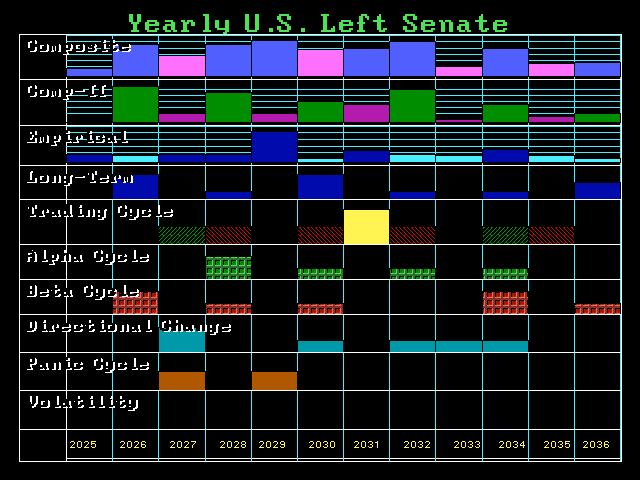
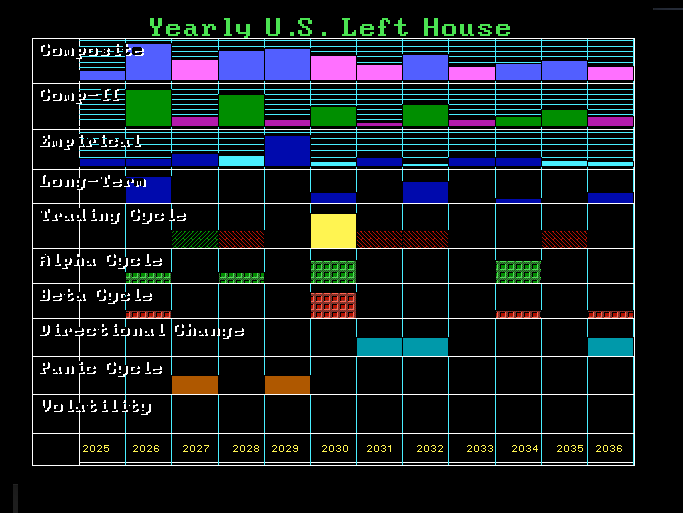
We have a Panic Cycle in 2027 in the Senate for the Democrats. I suspect we will have a surprising midterm. Netanyahu has so screwed the United States all for his personal vendetta with Iran. I suspect the progressives will go crazy and the people have to learn the hard way, for history suggests that is the only way human ever learns. Anyone who thinks voting in the Democrats will change anything for the better know nothing. The Democrats will so screw up the economy with their hatred of the rich that the migration from Blue States to the Red will accelerate.
People like Elizabeth Warren, a diehard communist for the rest of society her excluded will seriously destroy CONFIDENCE in the economy and investment fulfilling our model into a steep recession into 2028. Mandami will succeed in reducing NYC into a wasteland just as the city of Detroit cause every auto manufacturer to flee. Without CONFIDENCE in the future, capital will contract and NOT invest. No matter what you say, they refuse to listen. They are no different than a guy with a gun robbing passers by because they have more than them.
What they preach is forbidden in the Ten Commandments showing that this is the evil dark side of humanity that always destroys civilization. It has been taking place for thousands of years. This is what is REQUIRED to get to 2032 that will finally convince the average American that the system is broke and neither side is even capable of fixing anything because they are too busy playing the game.
The Great Migration Blue to Red
I have personally met many families who fled to Florida because their children were getting suicidal under the lockdowns and school closing during COVID. The data points to a few key drivers, though the reasons are complex and personal:
Cost of Living and Affordability: This is often cited as a primary factor. High housing costs in states like California and New York are pushing residents to seek more affordable areas .
Family and Quality of Life: Wanting to be closer to family has been the top reason for interstate moves for several years. Other common motivations include retirement and a desire for a different pace of life .
Taxes and Policy: Some analyses, particularly from conservative-leaning think tanks, argue that lower taxes and less regulation in red states are significant draws . However, this remains a subject of debate; for instance, one analysis found that most people leaving Massachusetts earned under $200,000, suggesting affordability concerns outweighed tax policy for many
COVID lockdowns
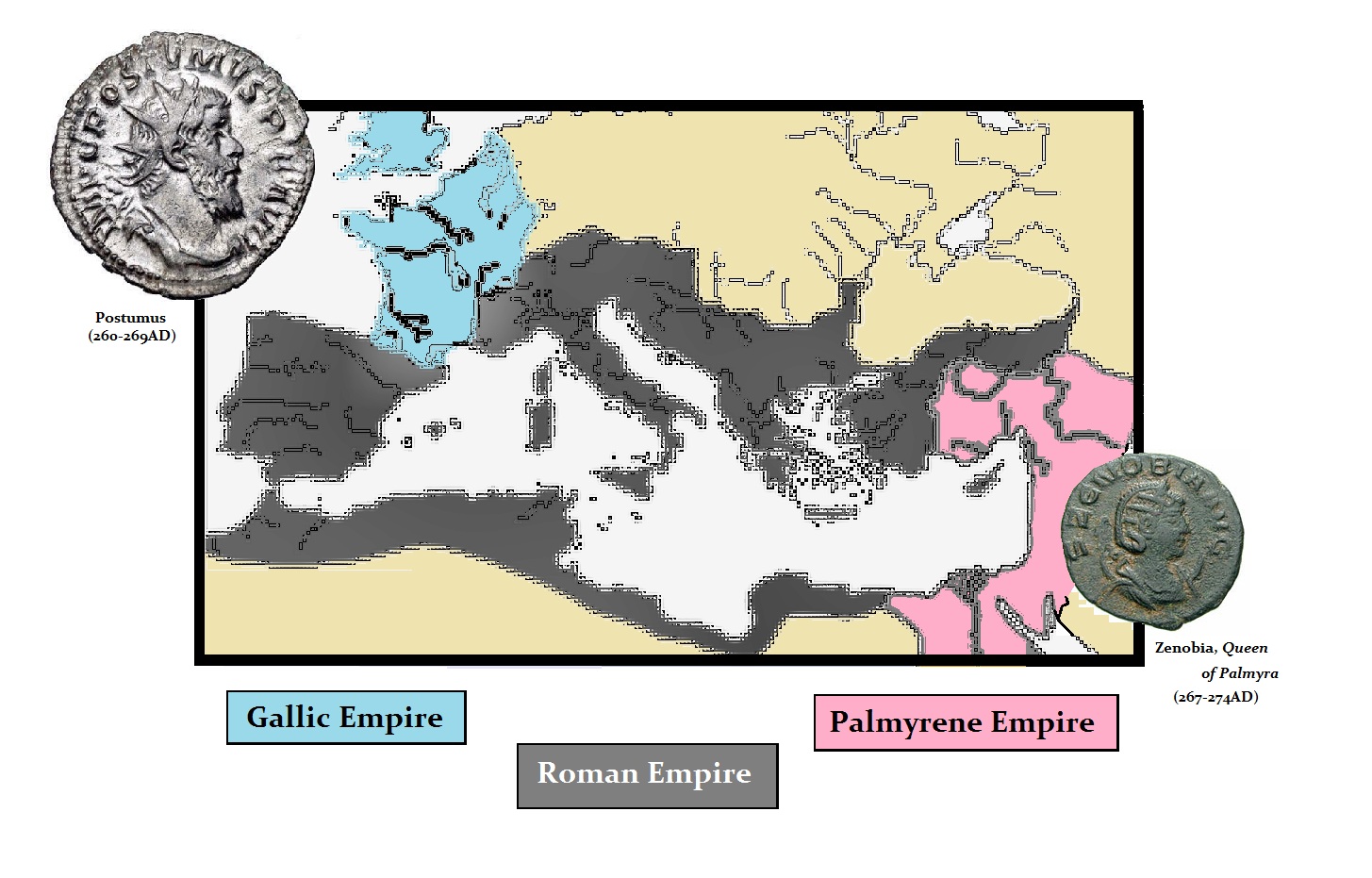
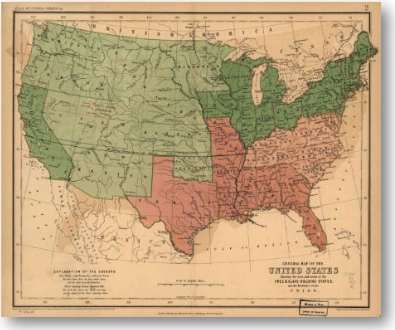
There is no doubt that the a major Democratic victory will spark the Separatist Movement for people are starting to see that this two party system is hopelessly corrupt and incompetent of running the country. We will see the US break apart precisely as the Roman Empire split into three for the very same reasons –
Posted Posted originally on: Oct 15, 2026 by Martin Armstrong |
COMMENT: Marty, Socrates is simply unbelievable. When everyone assumed a deal would be reached and Trump was trying to strong-arm Zelensky, Socrates still predicted rising diesel prices. Today, after saying Kyiv would no longer comply with US President Donald Trump’s demand that it not strike Russian oil refineries, Zelensky turned to his European lapdogs. Socrates sees through everything. I don’t know how you ever managed this.
Z
REPLY: I have said, even I cannot beat Socrates. It is an objective observer of the world. It is not partisan, and it is not opinion. We all have an opinion. That doesn’t lead to accurate forecasts. There is still the risk of this week forming a temp high with a 2 to 3 week retest of support. The major risks will be in the 1st quarter next year. The Democrats want to have Zelensky trillions as Elizabeth Waren shakes everyone upside down to get every last dime.
Based on polling data, the vast majority of Democrats support continued or increased military aid to Ukraine, but there is no polling data showing that a majority of Democrats specifically want to fund strikes on all Russian refineries with no regard to what they will do to creating a famine. They insisted on lockdowns for COVID with also no regard for its economic impact.
Democrats are overwhelmingly in favor of supporting Ukraine militarily. 53% of Democrats want to increase military aid to Ukraine, while 19% want to maintain current levels. Only 9% want to decrease or stop aid. There is a Congressional Ukraine Caucus, which includes Democrats, that has pushed back against any restrictions that would limit Ukraine’s ability to to wage World War II in its quest to destroy Russia. They are yelling on Capitol Hill screaming that any restrictions is putting civilians at risk are “unacceptable.” Of course, the do not care about how many Ukrainian ethnic Russian they kill in revenge.
If Democrats retake the House in November, impeachment is “essentially guaranteed” according to Republican leaders like Speaker Mike Johnson and Rep. Jim Jordan. We have a Panic Cycle in the Senate for 2027 and that does NOT look good. Democrats need only a simple majority to pass articles of impeachment, and many in the progressive wing, such as Reps. Alexandria Ocasio-Cortez and Ro Khanna, are already vocal supporters .
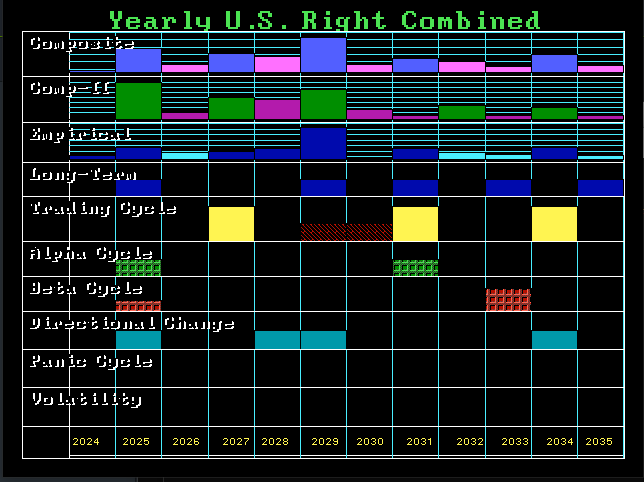
As you can see, we also have a Panic Cycle in 2027 for the Democrats in the House AND Senate. This is not good. This will be waging war against anything Trump does and they will seriously disrupt the country, the government, and geopolitics. Trump’s refusal to throw Netanyahu under the bus will seriously undermine his legacy no matter what he names after himself.
The peak for the Republicans was 2025. That was the turning point and a Directional Change. Welcome to 2032.
You may need to buy a bigger bed to hide under especially going into 2028/2029.
Categories:EnergyPolitics Oct 15, 2026 by Martin Armstrong |
COMMENT: Marty, Socrates is simply unbelievable. When everyone assumed a deal would be reached and Trump was trying to strong-arm Zelensky, Socrates still predicted rising diesel prices. Today, after saying Kyiv would no longer comply with US President Donald Trump’s demand that it not strike Russian oil refineries, Zelensky turned to his European lapdogs. Socrates sees through everything. I don’t know how you ever managed this.
Z
REPLY: I have said, even I cannot beat Socrates. It is an objective observer of the world. It is not partisan, and it is not opinion. We all have an opinion. That doesn’t lead to accurate forecasts. There is still the risk of this week forming a temp high with a 2 to 3 week retest of support. The major risks will be in the 1st quarter next year. The Democrats want to have Zelensky trillions as Elizabeth Waren shakes everyone upside down to get every last dime.
Based on polling data, the vast majority of Democrats support continued or increased military aid to Ukraine, but there is no polling data showing that a majority of Democrats specifically want to fund strikes on all Russian refineries with no regard to what they will do to creating a famine. They insisted on lockdowns for COVID with also no regard for its economic impact.
Democrats are overwhelmingly in favor of supporting Ukraine militarily. 53% of Democrats want to increase military aid to Ukraine, while 19% want to maintain current levels. Only 9% want to decrease or stop aid. There is a Congressional Ukraine Caucus, which includes Democrats, that has pushed back against any restrictions that would limit Ukraine’s ability to to wage World War II in its quest to destroy Russia. They are yelling on Capitol Hill screaming that any restrictions is putting civilians at risk are “unacceptable.” Of course, the do not care about how many Ukrainian ethnic Russian they kill in revenge.
If Democrats retake the House in November, impeachment is “essentially guaranteed” according to Republican leaders like Speaker Mike Johnson and Rep. Jim Jordan. We have a Panic Cycle in the Senate for 2027 and that does NOT look good. Democrats need only a simple majority to pass articles of impeachment, and many in the progressive wing, such as Reps. Alexandria Ocasio-Cortez and Ro Khanna, are already vocal supporters .
As you can see, we also have a Panic Cycle in 2027 for the Democrats in the House AND Senate. This is not good. This will be waging war against anything Trump does and they will seriously disrupt the country, the government, and geopolitics. Trump’s refusal to throw Netanyahu under the bus will seriously undermine his legacy no matter what he names after himself.
The peak for the Republicans was 2025. That was the turning point and a Directional Change. Welcome to 2032.
You may need to buy a bigger bed to hide under especially going into 2028/2029.
Posted originally on Oct 15, 2026 by Martin Armstrong |
The September Consumer Price Index has come in at 3.7%, up from 3.4% in August, with prices rising another 0.6% in a single month. The Bureau of Labor Statistics reported the largest monthly increase in five months, driven primarily by energy. Gasoline jumped 9.1% in September alone, accounting for more than half of the monthly increase, while the overall energy index rose 5.2%. The politicians and economists continue talking about inflation as though these monthly reports represent the entire cost-of-living problem. They seem incapable of understanding that Americans are paying these increases ON TOP of the massive inflation that has already accumulated since 2020.
The breakdown of September inflation illustrates just how unevenly these increases are hitting consumers. Energy prices are now 20.4% higher than a year ago, gasoline has surged 34.2%, and fuel oil has exploded 74.2%. Airline fares have risen 22.4%, while education is up 3.8% and shelter another 3.2%. These are not insignificant expenses that households can simply eliminate. People must drive to work, heat their homes, pay their mortgages or rent, and purchase the necessities of life. The government can exclude food and energy to produce its preferred core inflation figure of 2.6%, but nobody gets to exclude those expenses from their household budget.
The cost of living was already elevated before this latest surge. The inflation accumulated during the pandemic never disappeared. Prices did not return to 2020 levels simply because the annual inflation rate temporarily declined. When a household is already paying roughly 30% more for many everyday expenses than it did before the pandemic, another 3.7% increase means the purchasing power of its income deteriorates further. This is why the public becomes increasingly angry when politicians announce that inflation is improving. They are discussing the RATE of increase while the public is struggling with the actual PRICE of everything.
Energy is now feeding another wave of inflation throughout the economy. The disruption caused by the conflict involving Iran has pushed fuel costs higher, and that expense does not remain confined to the gasoline pump. Diesel moves the trucks that deliver food, supplies the agricultural industry, and supports construction and manufacturing. When transportation becomes more expensive, those costs eventually work their way into everything from groceries to building materials. The Fed cannot manufacture oil, reopen shipping routes, or resolve geopolitical conflicts by raising interest rates another 25 basis points.
Meanwhile, the labor market is showing signs of weakness. September payroll growth was only 29,000, and unemployment stood at 4.2%. The economy is producing insufficient employment growth to give workers confidence that they can simply demand higher wages to offset these rising costs. This is the squeeze that conventional economic theory continually fails to address. Consumers face higher prices while employment conditions weaken, and raising interest rates to combat inflation can make financing even more expensive for businesses already struggling with energy and operating costs.
Washington is also the largest borrower in the economy, yet nobody seriously expects Congress to stop spending. The federal government continues accumulating debt, paying more to service that debt, and competing with the private sector for capital. The Federal Reserve can influence short-term rates, but it cannot control government deficits, international capital flows, energy supplies, or the willingness of businesses and consumers to spend. The academics continue pretending that inflation is something they can fine-tune through monetary policy while ignoring the fiscal and geopolitical forces driving the economy.
The September report is particularly troubling because inflation is accelerating at a time when the Fed has already reversed its previous easing policy. The bond market is watching these numbers because investors must consider whether the yield on government debt adequately compensates them for inflation. Washington wants lower borrowing costs, but global capital has no obligation to finance the government at artificially low rates simply because politicians have accumulated debts they cannot afford to service.
Americans are being told to accept permanently higher prices while government continues spending as though money has no cost. Inflation destroys purchasing power gradually, and the damage compounds year after year. The September CPI report is another reminder that bringing inflation down to 2% would not undo the enormous increase in living costs already imposed upon households. The government can celebrate a lower inflation rate whenever it arrives, but the American consumer will still be paying the accumulated bill.
I have created this site to help people have fun in the kitchen. I write about enjoying life both in and out of my kitchen. Life is short! Make the most of it and enjoy!
This is a library of News Events not reported by the Main Stream Media documenting & connecting the dots on How the Obama Marxist Liberal agenda is destroying America