Posted originally on Mar 20, 2026 by Martin Armstrong |
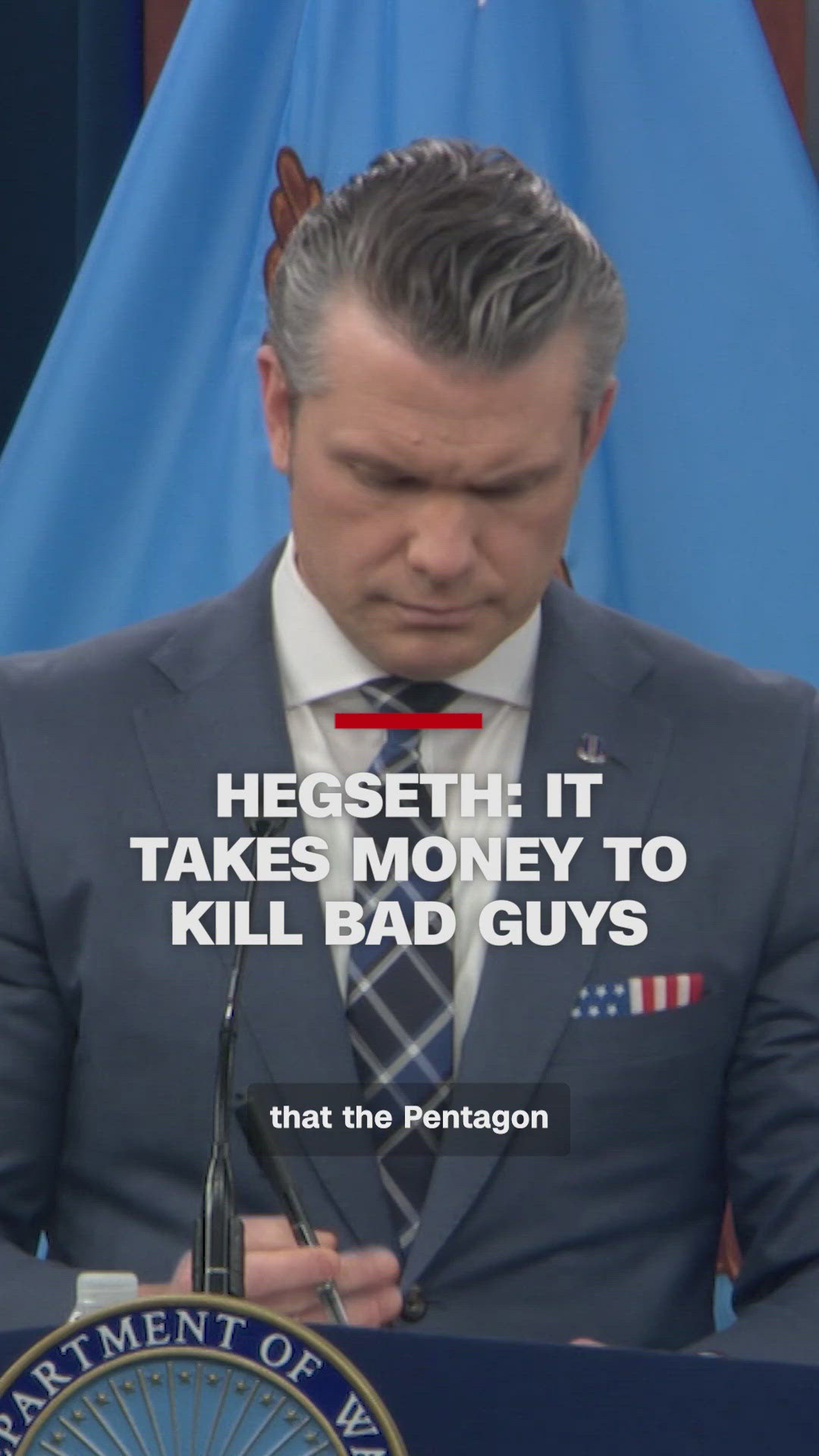
The Pentagon is now requesting more than $200 billion in additional funding tied to the war with Iran, and the Secretary of Defense stated plainly that “it takes money to kill bad guys.” That statement may sound crude, but it is one of the rare moments where Washington actually tells the truth about war, because war has always been about capital, and the numbers now emerging are already confirming the pattern that has unfolded in every major conflict.
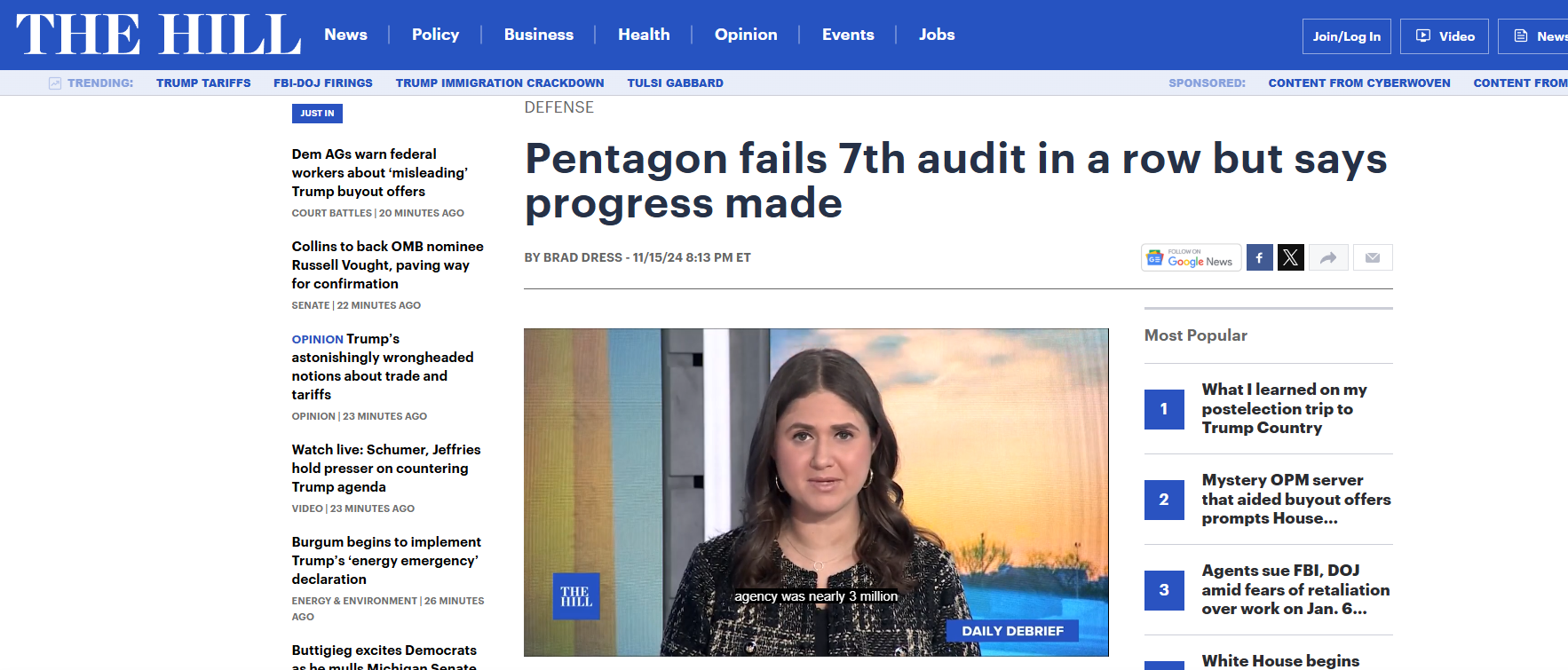
Within the first week alone, the United States spent approximately $11.3 billion, and more comprehensive estimates quickly pushed that figure toward$12.7 billion and beyond, with daily costs running in the range of $500 million or higher. These figures do not include troop deployment, equipment replacement, or reconstruction of depleted stockpiles, which historically account for the majority of total war expenditures, and that is where analysts always underestimate the true cost. The ripple effect of war through the global economy is another topic.
The United States is already operating with a military budget approaching $900 billion to over $960 billion depending on how it is measured under the latest authorization cycles, and that figure alone represents nearly 35% of total global military spending. When a government is already spending at that level before a major conflict escalates, any additional war simply layers on top of an already massive fiscal structure rather than creating a temporary expense.
Another $200 billion is not the cost of the war. That is the opening bid, as first numbers presented to Congress are always understated because they reflect immediate needs. The Iraq and Afghanistan wars followed the same trajectory, beginning with relatively modest projections and ultimately costing trillions.
The data coming out of the current conflict already shows the same dynamic. The Pentagon initially reported costs focused on munitions alone, yet analysts noted that these estimates excluded entire categories of spending, including logistics, personnel, and equipment replacement, which means the actual cost is already far higher than what is being publicly discussed. When high-cost systems such as long-range missiles, interceptor systems, and carrier strike group operations are deployed, the burn rate of capital accelerates dramatically, and those costs compound as the conflict continues.
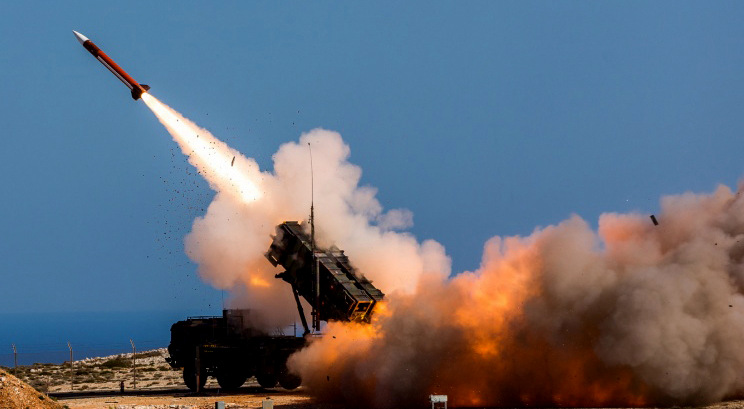
It often costs millions of dollars to intercept weapons that cost tens of thousands to produce. Interceptors such as Patriot and THAAD systems can cost between $4 million and $12 million per unit, while the drones they are designed to destroy may cost a fraction of that.
Can we afford a war? Janet Yellen once said America could afford perpetual warfare. Yet, the US national debt has now exceeded $39 trillion, rising rapidly with deficits well above $1 trillion annually. War does not occur in isolation from fiscal policy. It accelerates existing trends, particularly the expansion of government debt and the diversion of capital away from productive investment.
From the perspective of the Economic Confidence Model, this is exactly what we expect to see at this stage in the cycle. The 2020.05 turning point marked the beginning of a major shift in confidence, where governments expanded aggressively and fiscal discipline deteriorated. By the time we reached the 2024.35 phase, geopolitical tensions were rising across multiple regions, and capital was increasingly moving toward government as uncertainty in the private sector intensified.
Now moving into the 2026 wave, the model has been pointing to rising instability, and war becomes both a consequence and a driver of that shift. Governments expand military spending as confidence declines domestically, and that expansion further concentrates capital within the public sector. The private sector does not benefit from this in any meaningful long-term way. War spending does create economic activity in the short term, but it does not create sustainable growth. It destroys capital and then requires additional capital to rebuild what has been destroyed. Every missile fired, every aircraft deployed, every ship sent into a conflict zone represents capital consumption, not capital formation.
The request for $200 billion to replenish stockpiles illustrates another reality that is always ignored. War does not end when the shooting stops. The financial obligations continue for years through the replacement of equipment, the expansion of industrial production, and the long-term care of personnel. That is why the true cost of war is always measured over decades, not months.
Posted originally on Mar 20, 2026 by Martin Armstrong |
The FBI has now openly admitted that it is purchasing location data on Americans, confirming what many suspected for years. Director Kash Patel testified that the agency “does purchase commercially available information” and uses “all tools” to carry out its mission, which includes data capable of tracking people’s movements without a warrant.
This is being framed as a legal technicality, but that misses the entire point. The Constitution requires a warrant to obtain this type of information directly from telecom companies, yet by purchasing the same data from private brokers, the government simply bypasses that requirement. Lawmakers have already called this an “outrageous end-run around the Fourth Amendment,” and that is exactly what it is.
What we are witnessing is not new. Governments throughout history always expand surveillance when they begin to lose confidence domestically. The key detail here is not that the FBI is collecting data. It is how the data is being obtained. This information is sourced from the private sector through a multibillion-dollar data broker industry that aggregates location data from everyday phone apps, advertising systems, and digital platforms. The government is not hacking phones. It is simply buying what corporations already collect. That is what creates the legal gray area.
Data has become a commodity. Once something becomes a commodity, it can be bought and sold. Governments, like any other participant, will purchase what they need if the law allows it. The problem is that the law has not kept pace with technology, leaving a gap large enough to drive surveillance through.
This also ties directly into what I have warned about for years regarding financial surveillance. Governments began by monitoring bank accounts, tracking transactions, and implementing reporting requirements under the justification of preventing crime. That expanded steadily. Now we are moving into full behavioral tracking through digital data. The progression is always incremental, never abrupt.
The involvement of artificial intelligence makes this far more significant. Lawmakers have already warned that the ability to analyze “massive amounts of private information” changes the nature of surveillance entirely. It is no longer about targeting individuals. It becomes about pattern recognition across entire populations. That is a very different level of control.
The argument that the data is “commercially available” is also misleading. Just because something can be purchased does not mean it should be used without restriction by the state. The Constitution was designed to limit government power, not to be circumvented by market transactions.
The issue is that the legal framework itself is outdated and being used to justify practices that would have been considered unconstitutional in a previous era. This is how systems evolve. Technology advances, laws lag, and governments exploit the gap. By the time the public recognizes what has happened, the infrastructure is already in place.
From a confidence perspective, this is a warning sign. When governments begin to rely more on surveillance than on economic growth and stability, it reflects a shift away from maintaining confidence through prosperity and toward maintaining control through information.
Posted originally on Mar 20, 2026 by Martin Armstrong |
Video P
QUESTION: You said that in the Iraq War, they dragged out Bush to claim victory in just 6 weeks yet it took 8 years to finish. Do you see Trump declaring victory soon as well?
Paul
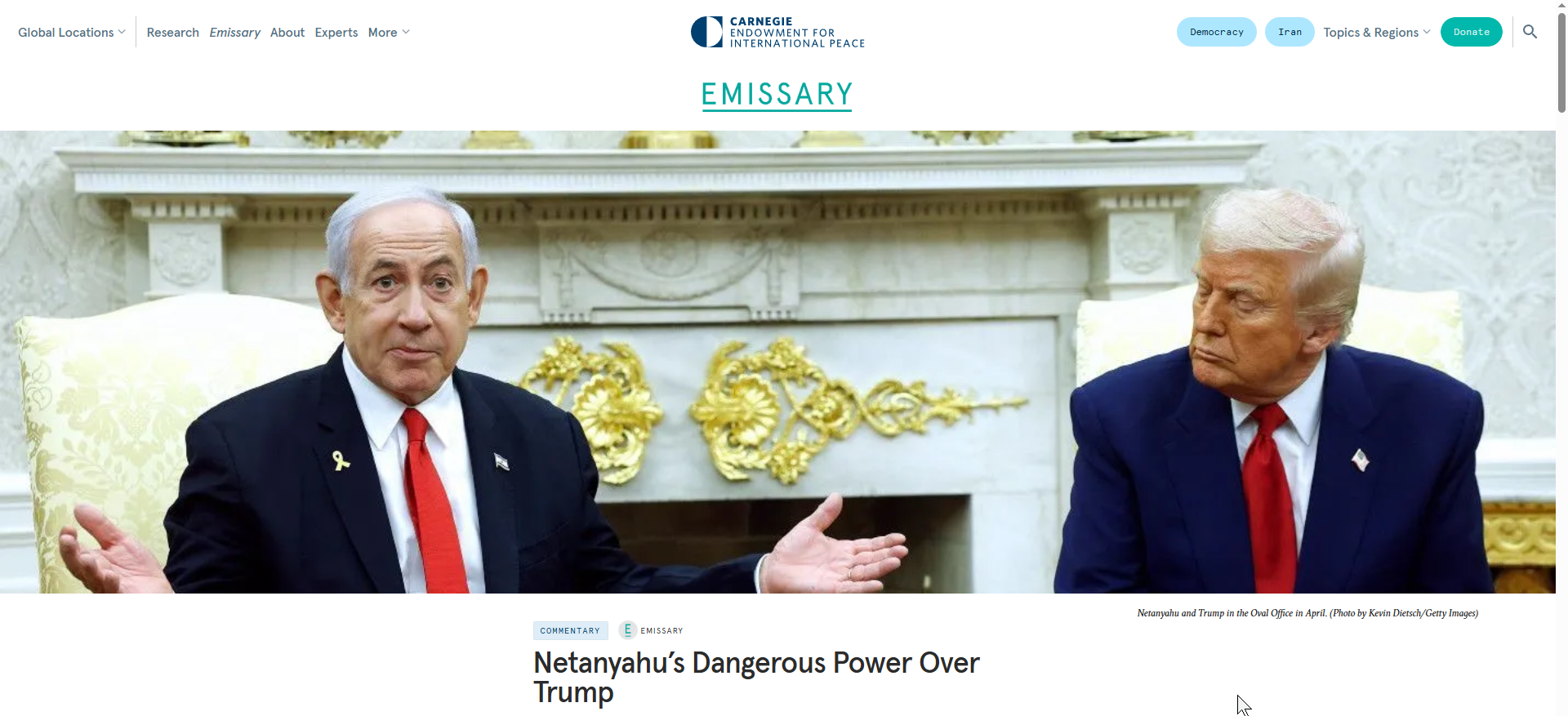
ANSWER: There is no question that President Donald Trump wants to declare victory ASAP. The problem is that Tehran also gets to vote on that subject and so does Netanyahu. It is true that the US has eliminated Iran’s navy, and much of its missile stockpile has also been destroyed, along with the assassinations of the Ayatollah and top leaders that was Netanyahu’s objectives. On the surface, it appears that Trump is nearing the goals his military leaders. However, he has not accomplished regime change, which has been Netanyahu’s #1 goal. If Trump attempts to exist, he may find that Netanyahu will take action to drag the US in deeper.
Israel’s Prime Minister Benjamin Netanyahu has said Israel “acted alone” in attacking an Iranian gas field, as tensions mount over strikes on energy infrastructure across the region. This is my point. We are NOT in full control of this war not matter what verbiage is used to not legally call this a war. Iran has retaliated striking the gas fields of Qatar. Let’s be clear here, while the US and Israel claim they devasted Iran. they are now using the more sophisticated missiles and they have been planning for this for a long time. We publicly said that a second carrier group was being sent and this too was a signal for they to prepare for the end-game war.
Videu has played Trump for a fool. He has achieved his goal drag American into this war spending billions. Some of the objectives that President Trump continues to espouse simply cannot be achieved without physical boots on the ground. There is no way to secure the claimed uranium without a physical presence. Netanyahu has been claiming three state were pursuing nuclear weapons since he testified before Congress in 2002. He should let Israel do that since they have been playing the nuclear card since for at least 24 years.
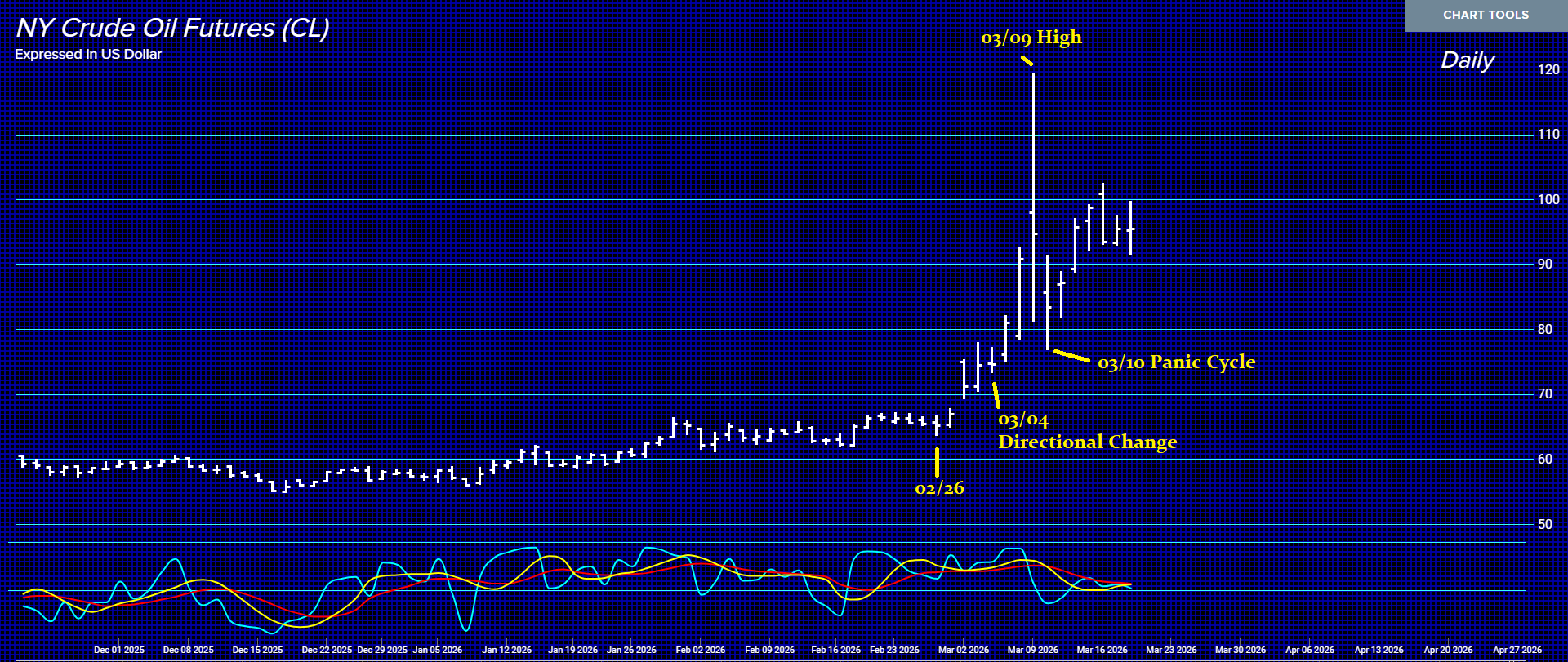
Trump may be forced to send in ground troops to try to secure the shoreline of the Strait of Hormuz. Something else on the table is sending in troops to seized their Kharg Island. Seizing the island holds enormous risk when the support for Trump in the war is marginal at best. Seizing Kharg Island may ignite a full-scale war by Iran against energy infrastructure across the Persian Gulf. A widening conflict in the Middle East involving the destruction of oil fields ports, and natural gas storage depots could send crude prices soaring which our computer has been warning we may yet see $200 oil. This combined with our Economic Confidence Model projecting global recession between 2024 into 2028 has been spot on. If Trump send boots on the ground, it may be late April into May/June.
Keep in mind that we entered Afghanistan in the war on terror. Bin Laden was killed in 2011. But we did not leave Afghanistan with a tail between out leges for 11 more years. Iran is going to look at how we have fought wars and that includes Iraq. They have been preparing for a long time. You have had Netanyahu running around screaming they have nukes soe we must destroy Iran. If they had nukes, we would not be invading. It is unlikely that Iran has any nuclear bomb. What they could have done is construct suitcase-dirty-bombs and spread them around the USA, EU, and perhaps even Israel.
The one thing I have come to comprehend in my study of various conflicts, is that you do NOT necessarily need a god or some supreme leader to fight an on going was of attrition for time is on Iran’s side, the one thing that is required to keep going is not some god, but a devil. As long as you can hate an adversary, then you will continue to fight. I totally disagree with Netanyahu’s strategy of decapitating the heads of so0me group or nation, for such assassinations only feed the image of the Devil. The USA and Israel are the Devils and anyone who thinks this will end is a fool. This has created another generation of terrorists.
As far as UAE is concerned, it was the largest airport in the region with some 90 million passengers passing through. It was part of the Abraham Accords and even conducted joint military exercises with Israel. A Saudi academic on TV accused UAE as operating in the interest of Zionists in the Arab world. He also accused the UAE of funding activists in Yemen who operated against Saudi’s interests. Over the last 18 months, there has been an unreported alliance forming between Saudi Arabia, Turkey, and Pakistan.It is essentially a NATO-like treaty with a mutual defense clause like Article 5 aligning all three nation states. The Saudis bring the unprecedented finance, Turkey brings the largest military to the deal but it is also a member of NATO so it brings more than the 2nd largest army in NATO, it brings intelligence. Pakistan brings the nuclear weapons since it is also the fastest growing nuclear arsenal in the world and it also has ballistic missiles. So why the Neocons have been focused on Iran and Iraq for nuclear weapons, they missed the fact that Pakistan has in fact brought a nuclear alliance to the Sunni Muslims which is not so friendly to Israel.
UAE was deliberately not invited to this ne Middle East NATO framework. Saudi Arabia on TV even said publicly that UAE is a problem. They have sought to overthrow UAE as the financial capital of the Middle East. This is why Tehran rained down more missiles on UAE than they did on Israel. What is unfolding here is the Neocons seemed to have also not been invited to the party. They have been too arrogant in the presumption of power to pay close attention to a new alliance that will reshape the Middle East from here on out.
The danger of targeting the leadership in Iran is the risk of creating a vacuum whereby that just may be filled not by the Neocon backroom deals, but China and Russia for the excessive bombing and assassinations carried out in Iran has left behind that dark image of the Devil.
Iran is not completely wiped out. They have proxies and sleeper cells along with strategic missiles where they have used the cheap ones so far. How wars are fought is changing. Iran is clearly waging an economic war of attrition and time is on their side.
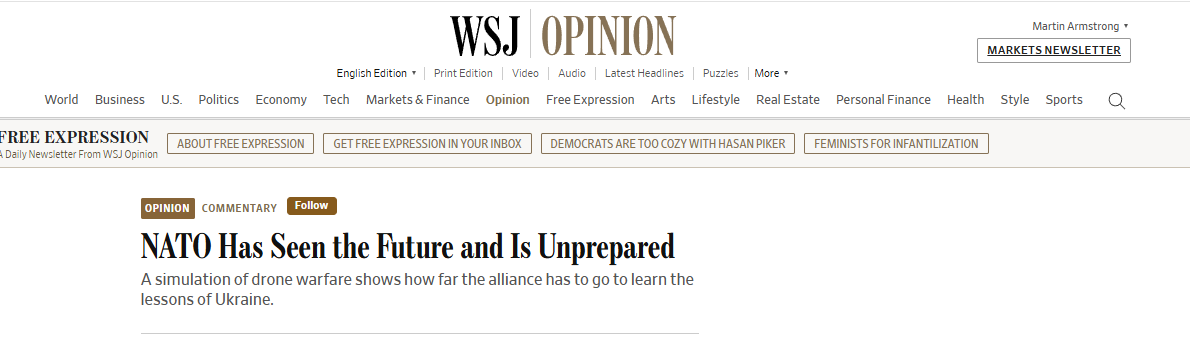
The Wall Street Journal just published an eye opening report on how NATO is not prepared for war and night is the USA if it attempts to invade with boots on the ground. A single team of some 10 Ukrainians, acting as the adversary, counterattacked the NATO forces. In about half a day they mock-destroyed 17 armored vehicles and conducted 30 “strikes” on other targets. Multiple sources told the story of one commander, who observed the drill and concluded, “We are f—.” They always seem to prepare to fight the last war. But that never happens. Drones and surveillance has change warfare just as they once thought a destroyer, then an aircraft carrier, and of course nuclear weapons would prevent war.
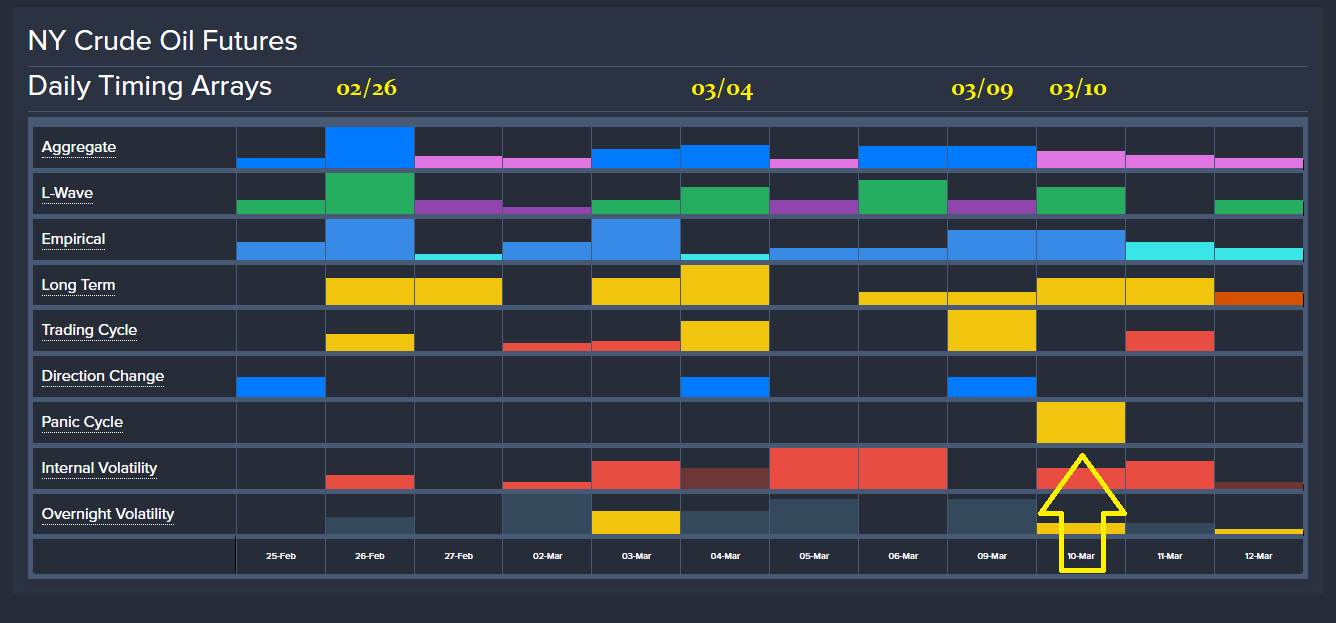
Everyone has an opinion. Sometimes we are right and sometimes we are wrong. Opinions are are always questionable because we are human and prone to not just mistakes, but this can also be biased that means it is skewed to one side or the other. But in time of war, TRUTH is always the first victim. Socrates has no human opinion. That is what has made it so valuable in times of crisis. The Timing Array mapped the rally perfectly. No human can make such a forecast from a gut perspective.
Unfortunately, it looks like Trump has gotten himself into a real jam. He has trusted Netanyahu who could care less about the United States or even Israel. This is all about his personal hatred of Iranians and his Biblical justification for genocide. The computer is still warning we may yet see $200 oil before this is over.
Never forget, Britain was the major power during the American Revolution. Washington fought a gorilla war and won. These Neocons, including Netanyahu, think having the biggest military means victory. History wars that such arrogance is often punished. Carthage was the major power and was defeated by Rome. Persian was the biggest power and was defeated by Alexander the Great. Th examples from history and endless.
Posted originally on Mar 19, 2026 by Martin Armstrong |
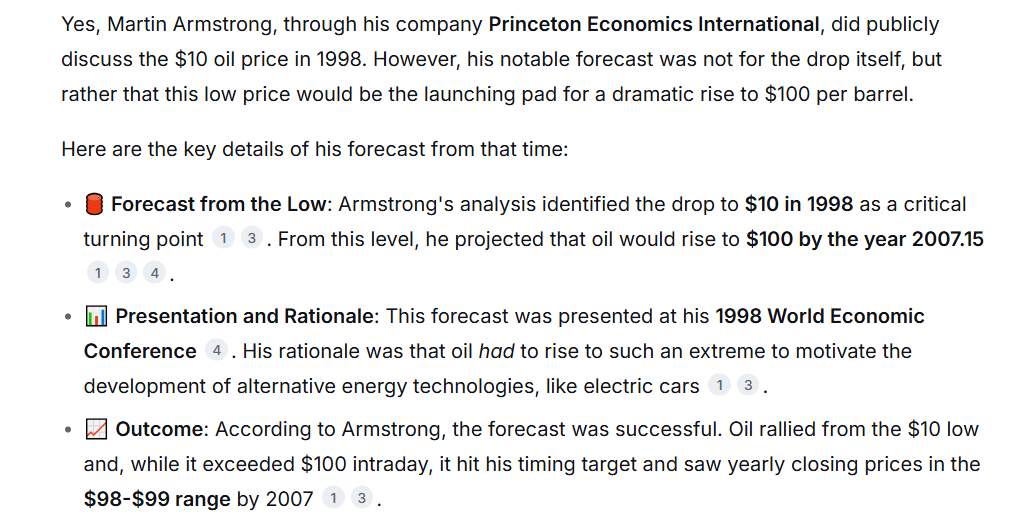
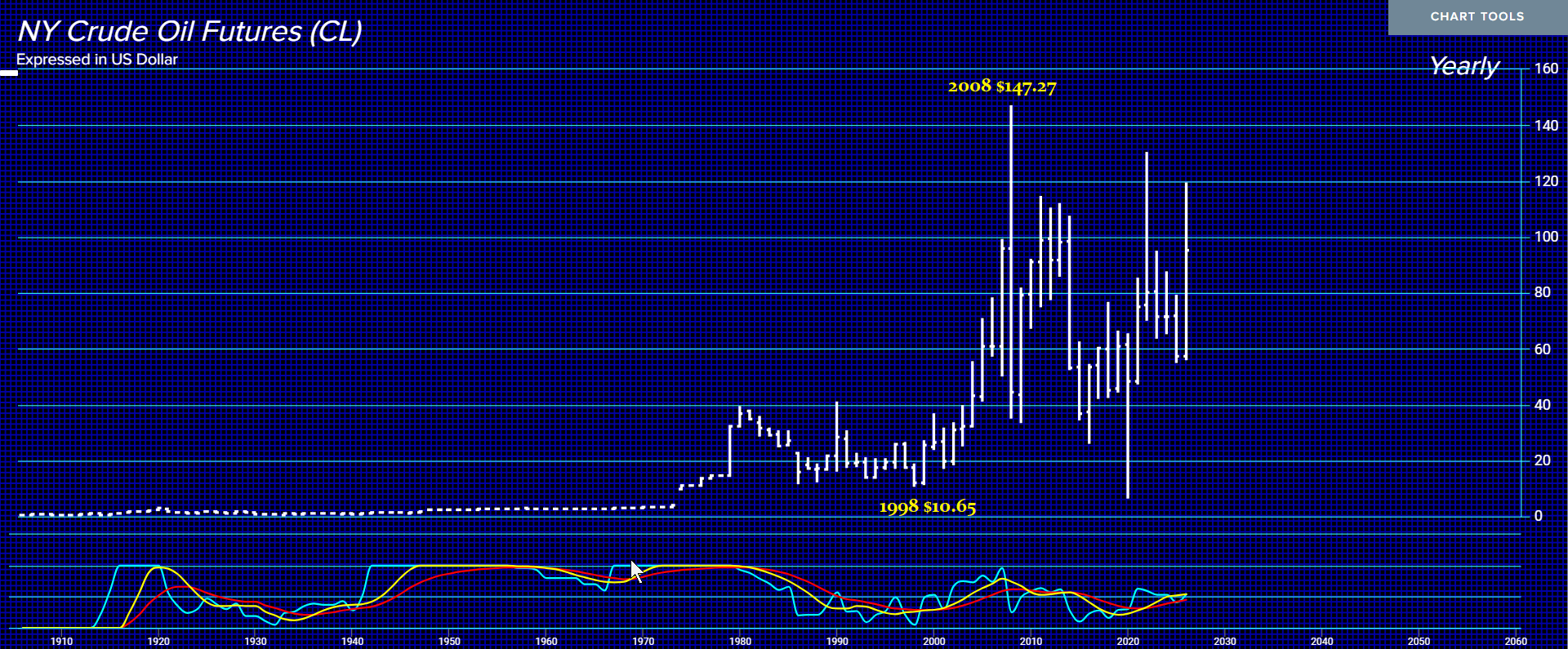
QUESTION: Marty, many people know about your forecast of Russia, 1987, 2007 high in real estate, Nikkei, the collapse of communism and so many, but I think even you forgot your forecast that oil would collapse to $10 in 1998 and then swing up to $100. I remember even Bloomberg covered that forecast that nobody would believe. You have been the master forecaster for you have projected what you call slingshots many times. I asked AI if you made that forecast and it confirmed you made that forecast back in 1998.
Do you still see oil rising to $200 in the years ahead?
Josh
ANSWER: Oh yes, I do remember that. It was Mark Pitman at Bloomberg who was astonished by that forecast. Yes, I still see oil is rising to $200 in the years ahead. Academics will never understand such forecasts. There is no random walk and there certainly is no efficient market nonsense. Markets always overshoot and undershoot the logical expectations.
Posted originally on Mar 19, 2026 by Martin Armstrong |
Wholesale prices rose 0.7% in February, more than double expectations and the largest monthly increase since mid-2025. On a year-over-year basis, PPI is now running at 3.4%, the highest level in roughly a year. This is not a sign that inflation has been defeated. It is a clear indication that price pressures are building again at the wholesale level.
What matters here is that PPI is a leading indicator. These are the costs businesses face before anything reaches the consumer. Manufacturers, transport companies, and wholesalers absorb these increases initially, but they do not simply eat those costs. They pass them along. What we are looking at is the early stage of future consumer inflation already forming in the pipeline.
Goods prices jumped 1.1%, the largest increase since 2023, driven by rising food and energy costs. Food prices alone posted sharp gains, with certain categories like vegetables showing significant spikes. Energy also turned higher again, with gasoline and fuel costs rising. Services inflation continues to push higher as well, rising 0.5% for the month. This marks several consecutive months of firm increases, including sharp moves in areas such as lodging. This is not isolated inflation. It is widespread and embedded throughout the system.
The timing is critical. This report does not yet fully reflect the geopolitical escalation that began at the end of February. Since then, oil prices have surged, and energy costs are already moving higher into March. Energy feeds into everything. Transportation becomes more expensive, production costs increase, and ultimately, the price of food rises as distribution costs climb.
This is how inflation returns in waves. It begins at the wholesale level, then moves into consumer prices. Even mainstream economists are now acknowledging that the inflationary impact from rising energy prices and geopolitical tension will begin to show up more clearly in the coming months. That means this report is likely showing the starting point rather than the peak. This is the environment where stagflation takes shape. Costs rise while growth weakens, and policymakers find themselves unable to respond effectively because the source of inflation is no longer monetary policy but geopolitical events.
From a cyclical perspective, this is exactly what we should expect at this stage. As we move through this period, war and geopolitical instability become dominant forces driving economic outcomes. Energy shocks, supply disruptions, and shifting capital flows create volatility that central banks cannot manage. The mistake governments always make is believing they can fine-tune the economy with interest rates. They cannot control geopolitical events, and they cannot prevent the ripple effects that follow rising energy prices.
Posted originally on Mar 19, 2026 by Martin Armstrong |
What the Bank of England is now proposing are changes to ensure banks can actually use their liquidity during a crisis. For years, regulators claimed the system was safe because banks were holding what they defined as high-quality liquid assets. Now they are effectively admitting those assets may not function when they are needed most.
This comes directly from the lessons of 2023. Silicon Valley Bank and Credit Suisse did not collapse because there was no money in the system. They collapsed because confidence broke and liquidity vanished in real time. Assets that were supposed to be safe could not be sold without losses, and funding disappeared almost overnight.
The Bank of England is now requiring banks to simulate rapid outflows over the course of a single week. That is not a normal recession scenario. That is a bank run. They understand that capital no longer moves slowly. In a digital world, money leaves instantly, and once that process begins, it accelerates. Central banks throughout the world now realize that they are looking at a liquidity crisis.
The mistake policymakers continue to make is believing liquidity is something they can regulate. Liquidity is a function of confidence. Once institutions begin to question counterparty risk, they stop lending. They hoard capital. They shorten the duration. That is when the system freezes, regardless of how much money central banks inject.
At the same time, central banks have been removing liquidity through quantitative tightening. They expanded their balance sheets for over a decade, and now they are reversing that process. This drains reserves from the system and increases stress in funding markets. Even officials have warned there will be disruptions as liquidity is withdrawn. So on one side, they are draining liquidity, and on the other, they are trying to redesign emergency mechanisms to deal with the consequences. That contradiction is the entire story.
Growth in the UK remains weak, inflation is still persistent, and rising energy costs driven by geopolitical tensions continue to pressure the economy. Banks are already reacting by tightening lending and becoming more defensive.
What the Bank of England is really saying, without saying it outright, is that they do not believe the system will function properly under stress. They are attempting to fix a structural flaw that cannot be fixed with regulation. The entire framework assumes markets behave rationally during crises, but history shows the opposite.
Every major financial event follows the same pattern. First, there are quiet warnings like this. Then there are policy adjustments. Then restrictions begin. Finally, when confidence breaks, capital moves and the system shifts very quickly.
This is not about a lack of money. It is about a lack of trust. Once that turns, liquidity disappears regardless of how much central banks try to inject. What we are seeing now is the early stage of that transition, and the Bank of England has just confirmed they know it.
Posted originally on Mar 19, 2026 by Martin Armstrong |
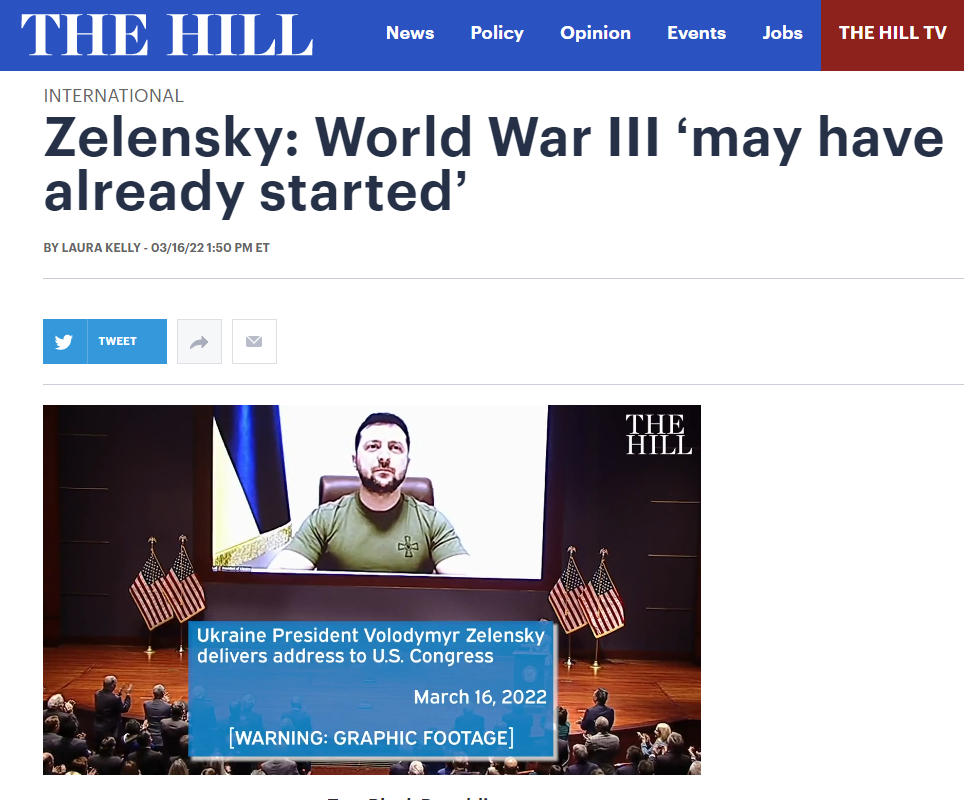
For years, the press has insisted that every conflict must be viewed in isolation: Ukraine is separate from the Middle East, China is separate from Russia, and Iran is simply another regional crisis. But history rarely works that way. When historians look back at major wars, they rarely begin them on the date politicians announce them. World War I did not suddenly begin with a single shot in Sarajevo, and World War II was not simply the invasion of Poland. The causes were decades in the making. The uncomfortable reality is that when historians eventually write about this period, many will likely conclude that what we are witnessing today is the early phases of a world war.
One of the greatest mistakes made after the Cold War was the assumption that the ideological struggle had been permanently resolved. The collapse of the Soviet Union was treated as a final victory rather than the end of a phase. Yet no durable geopolitical framework was created to integrate the defeated power structure into a stable international system. After World War II, the United States and its allies invested enormous resources into rebuilding Europe and Japan through the Marshall Plan and establishing institutions such as the United Nations and the Bretton Woods financial order. Those efforts created stability and prevented the reemergence of the same ideological conflict that produced two world wars. After the Cold War, nothing comparable was built.
Instead, Russia and other former Soviet states were left to endure economic collapse, political humiliation, and social chaos during the 1990s. Entire populations watched their national power evaporate while Western institutions expanded eastward. Whether one agrees with the political narratives or not is irrelevant. What matters historically is that unresolved tensions remained. Just as the Treaty of Versailles failed to resolve the deeper contradictions after World War I, the end of the Cold War left grievances that continued to grow beneath the surface.
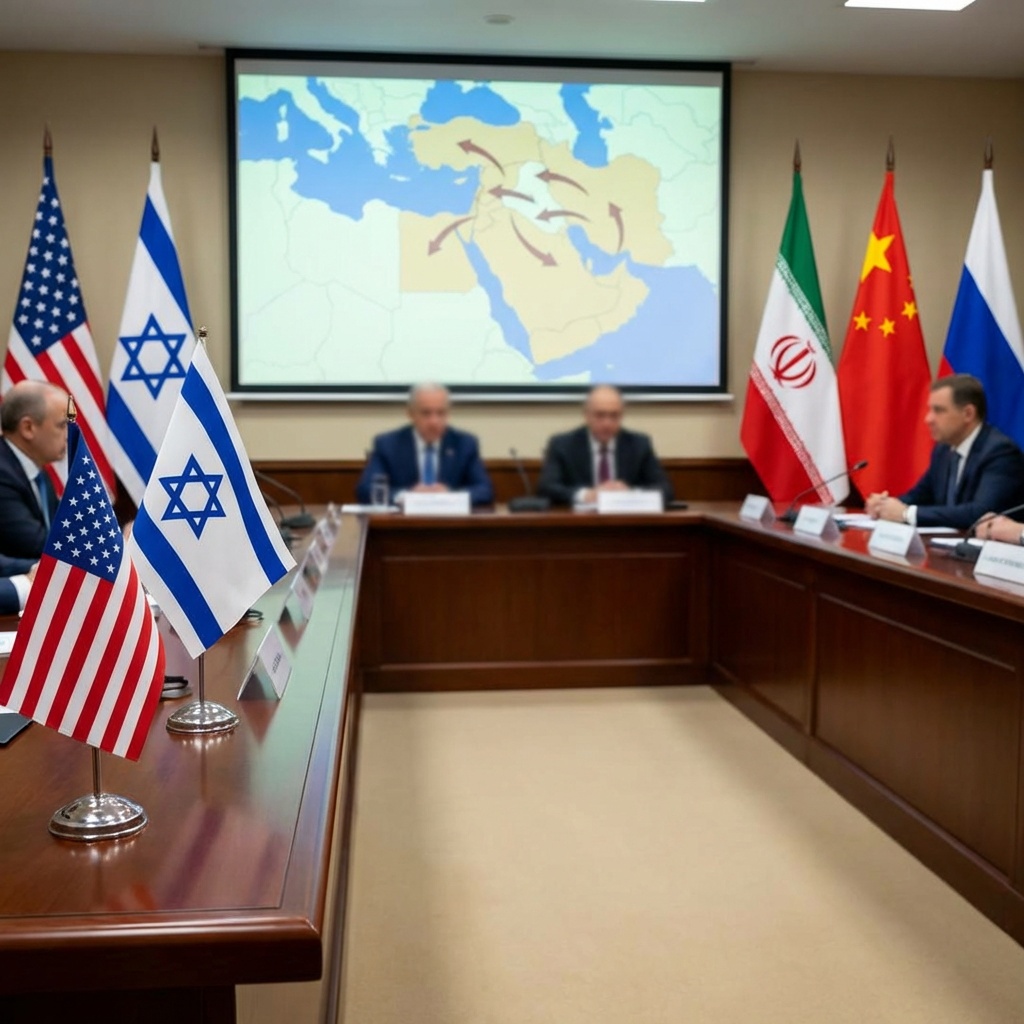
Now those unresolved tensions are resurfacing simultaneously across multiple regions. Russia is locked in confrontation with the West in Ukraine. China is challenging the global economic and military balance in the Pacific. The Middle East is once again erupting, with Iran increasingly aligned with Russia and China as geopolitical pressure mounts. These are not isolated events. They are overlapping theaters of strategic competition that increasingly resemble the early stages of great-power conflict.
The Economic Confidence Model has long projected that the period around 2026 would mark a geopolitical turning point. That does not mean a sudden global war declared overnight. Historically, major conflicts emerge through a series of regional crises that gradually merge into a broader struggle. The Panic Cycle expected in 2027, and the larger turning point into 2028, suggest rising volatility and confrontation across multiple fronts. What we are seeing today fits that pattern perfectly. If history is any guide, future historians may not mark the beginning of the next world war with a single event. They may instead look back and say the war had already begun during this decade but we simply failed to recognize it at the time.
Posted originally on Mar 19, 2026 by Martin Armstrong |
COMMENT: Marty, you were the first to point to Netanyahu was a neocon and they were using him to infiltrate the White House last year. You seem to be put in the middle of everything all the time. I had no idea Netanyahu went to school in Philadelphia, and that’s how you knew. Then you knew the Kristols. You know Europe well and have commented on how there has been a huge increase in anti-Americanism here, and you also warned that there would be a rise in antisemitism. It is questionable who is hated most here, Trump or Netanyahu. Everything has played out as Socrates has projected.
Al
REPLY: This is all Netanyahu’s scheme, along with the American Neocons. Rubio, who is a Cuban, is now trying to cause regime change in Cuba. These people will never stop interfering in other countries. I will do an update on the private blog. This on the one hand is going well for them, as they may have devastated the Iranian military, but there appears to be no regime change for the Islamic Revolutionary Guard Corps (IRGC). The IRGC is held together by religion, and this is playing right into the prophecies. The Israeli decapitation strategy of leadership is not weakening the government at this stage; it has stiffened its resolve. The Ayatollah has rejected a ceasefire. He has to know that Trump is on a short leash, and the longer this goes on, the worse it will be for him and in the midterms. The latest polls show he is -27 points just with independents. They never fogave Bush Sr for raising taxes after he said read my lips, no new taxes. Trump swore no more neocon endless wars.
The Japanese kamikaze Pilots were told to fly into American ships. They believed that the emperor was god so you do as god tells you. In the Middle East, individuals who carry out suicide bombings generally do not believe they are committing suicide, which is strictly forbidden in Islam. Instead, they believe they are performing an act of martyrdom (istishhād), a sacred duty of self-sacrifice in the path of God (fi sabil Allah) that promises great rewards in the afterlife. It is crucial to understand that this interpretation is highly contested and rejected by the vast majority of mainstream Muslim scholars and communities worldwide. It is essential to understand that the beliefs described above are based on interpretations of Islamic texts that are overwhelmingly rejected by mainstream Islamic scholarship.
This is what the Neocons fail to understand. You CANNOT judge an enemy based on your beliefs. All that matters is what THEY believe – not you. They underestimated Iran and they assumed that they would simply mine the Straut of Hormuz. The decision making in the war leaves a lot to be questioned.
The Israeli military killed Iranian Intelligence Minister Esmail Khatib, the latest in a series of high-profile killings of Iranian leaders that have worked to destabilize the nation’s institutions and industry as the U.S.-Israeli war with Iran intensifies. This has been their agenda to assassinate the leaders. They did that with Hammas, Hezbollah, Syra, Libya, and Iraq. This same strategy is now being deployed in Iran.
Here is the problem. So far Trump has not been attacking the Iranian regular army. Perhaps someone has learned a lesson from Iraq. You cannot simply destroy everything for then what comes at the end is sheer chaos. What is critical is that the main institutions are left intact for a post-war situation. Assuming the Islamic Republic collapses, the people need to have the infrastructure intact to form a normal government. If they leave Iran as the did Iraq, Sudan, Libya, Syria, etc., then the violence will only resurface from the chaos. There will be radical elements the surface just as ISIS in the aftermath of Iraq.
A rare written statement from Iran’s new supreme leader, Ayatollah Mojtaba Khamenei, promised retaliation for the killing of the nation’s top security official, Ali Larijani, saying, “All blood has its price that the criminal murderers of the martyrs must pay soon.” Because the IRGC is hard core religious, this makes it impossible to see them take some sort of leadership role. The best we can hope for is someone from the regular army rises up, but that could also end up in civil war.
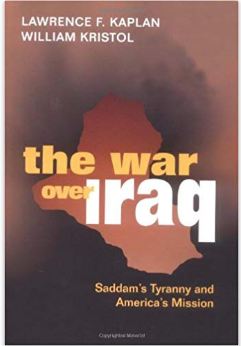
So far, Trump has avoided not just attacking the regular army, but the institutions that will be needed postwar. There is no intention to occupy Iran as took place in Iraq. Trump has also not destroyed the pipelines of Iran understanding that a postwar economy will need the oil exports to rebuild. The biggest crisis that I see is Netanyahu who seems to want genocide in Iran and the real risk here is that he can act in his own self-interest seeking to keep Trump engaged if not drag him in all the way with ground troops. My concern is that Trump is NOT fully in charge for Netanyahu cannot be counted on for honest intelligence any more than the weapons of mass destruction in Iraq. I knew Bill Kristol. He even spoke at one of our conference in the ’90s. If I remember correctly, he said taking out Iraq was to secure the future of Israel. He did write the book to justify that war.
In 2004, allegations surfaced that Iran was pursuing a nuclear weapons program, which was allegedly forged by Netanyahu to justify invading Iran back then. The International Atomic Energy Agency (IAEA) found NO credible evidence of such activities after 2003. Israeli Prime Minister Benjamin Netanyahu later claimed that Iran had lied about its nuclear ambitions, presenting documents in 2018 that he asserted were proof of a secret nuclear weapons program.
Joe Kent, the director of the National Counterterrorism Center, resigned on Tuesday in protest against the war on Iran. “Iran posed no imminent threat to our nation,” Kent wrote. So, what, in his estimation, was the reason for this war? Simple: The Israelis wanted it, and they get what they want. Of course, the Trump Administration is doing everything it can to now discredit Kent. Iran may be more of an existential threat to Israel, but the Iranian threat to U.S. civilians, service personnel, and interests abroad is constant and has been since 1979. They have cleverly switched the iss that Iran did not present a threat to the United States. They are claiming it was a threat only to those stationed in the region. The point is that the ONLY way a president can act without a declaration of war from Congress is to respond to a immediate threat. This is always the excuse for they used that against Iraq that they had weapons on mass destruction and it was imminent that they would attack the USA.
In 2002, Netanyahu addressed the United States Congress, saying Israel is certain Saddam Hussein has weapons of mass destruction and that America ‘must do something about this.’ He also said the same about Iran. Netanyahu has been pitching this same story since 2002. This is his personal vendetta and it has cost America billions and approximately 4,492 U.S. servicemembers were killed during the Iraq War from 2003 to 2011. Additionally, around 32,292 were wounded in the conflict. All for Netanyahu’s vendetta. I had family members who fought in that war. They were not too happy when they found out it was all a lie. This is not even for Israel. This is for one man who has admitted he has sought the destruction of Iran for 40 years.
I like Vance, but I think he has an obligation to look at the facts. When Gabbard said Iran had no nuclear program, Trump said he had different intelligence and that was from Netanyahu. I think it is time to interrogate Netanyahu for he is also putting Israel at risk for his insane personal vendetta.
Let’s be real. Iran is believed to possess enough enriched uranium to potentially build a nuclear weapon if it chose to. But even if Iran suddenly produced a bomb, nuclear deterrence and the risk of massive retaliation from countries like the United States or Israel would likely prevent it from ever being used. They furthermore lack the ability to make a bomb much different from what was dropped on Japan, but lack the ability to deliver such a bomb. Yet Gabbard in her written submission to Congress admitted that the 2025 strike obliterated Iran’s nuclear program and that there was no effort to restart it. There was no imminent threat. May are starting to see this as a war for Netanyahu, not for the United States. This was an unprovoked action to fulfill Netanyahu’s 50 year dream of destroying Iran. That is the real danger here that he started this war for personal reasons and there is a risk that he will act unilaterally to prevent any short-term end to this war.
For Iran, the UAE is a prime location where strikes can simultaneously pressure Washington, hit the Switzerland of the Middle East, and disrupt global energy flows. Thanks to the regulations and Marxist agenda in the EU, capital has been fleeing to UAE. Attacking Dubai unsettles international finance and corporates, and generate worldwide attention. We had to move our people out of our Dubai office as well.
Iran can inflict maximum regional and global pain, testing UAE that has positioned itself as the Gulf’s safest bridge between East and West, and the future of the region for finance, logistics, aviation and technology. There are many foreigners living in Dubai.
While there is a shot that March will remain as the high in oil for right now and there could be up to a 2 to 3 month correction, this does not appear to be over and we can still see an escalation during the summer from June into September.
With NATO refusing to join Trump in Iran, there is now a reasonable risk that Trump will abandon Ukraine and let Europe fund that one.
Posted originally on Mar 18, 2026 by Martin Armstrong |
Alberta Separation is deeply emotional for many people, yet at the same time, INEVITABLE, given the global trend that is becoming highly influential. I have warned that the corruption within government is always what brings down governments for thousands of years. Once a centralized government seizes power, it cannot resist exercising more and more power. This will always lead to corruption in republican forms of government, ultimately bribing people in office to do as they desire. We are witnessing this not just in Canada, but also in how the federal government was pushing the globalist agenda of climate change, attacking Alberta, and even flying in a 16-year-old to tell people to surrender their jobs.
Centralized governments inevitably lead toward core Marxism, for that never benefits the people, but yields more power for the state. This always leads to the idea that the government can control society. Taxation and regulation rise, and this becomes the seed of corruption. We see that in the EU, as even Merz of Germany has now publicly criticized the EU over its migration policies. What began as a trade partnership has evolved into a centralized dictatorial government seeking total power over every aspect of European life.
We have seen this trend in the United States. Washington seeks to supersede state policies, even though individual states were promised the right to form the United States. Canada has suffered the same fate. The central bank no longer cares about regions and will raise rates based on inflationary trends in the East. In the USA, we have referred to this as the Texas/NY Arbitrage. When Texas is booming, that leads to commodity inflation, and NY suffers with rising interest rates. In Canada, there are regional economic differences, which is why centralized governments always overstep their authority, because it becomes about their power rather than about managing the different economies within the nation as a whole.
While the issue becomes emotional for some, who see the nation state as their identity, like a sports team, others see the practical individual test – what do I get out of this? All nations collapse and break apart because centralized government is always inefficient. This is what brought down Communism, and we can see it causing tension already within the EU as the government has interfered in the cultural issues of member states with its migration policy. It is inevitable that a centralized government that thinks it is in charge becomes increasingly authoritarian and always seeks more power when a crisis arises, claiming it could have prevented the event if it had just had a little more power.
Posted originally on Mar 18, 2026 by Martin Armstrong |
🇺🇸🇨🇺 CUBA'S POWER GRID COLLAPSES UNDER STRAIN
Cuba is dealing with a brutal blackout crisis, with power outages lasting up to 20 hours a day. The island’s electrical system is falling apart, leaving many in the dark for weeks.
What we are witnessing in Cuba right now is the same failed policy recycled once again, dressed up under a different administration, with the same predictable outcome. The power grid collapsed, millions were left in the dark, food supply chains broke down, and the government blamed the United States while Washington pretended this was somehow a strategy for freedom. I have written extensively about sanctions in my reports, especially regarding Cuba, and the historical record is clear. Sanctions do not topple regimes, rather, they punish the people and strengthen the government.
Cuba’s national grid has collapsed again, leaving the entire island without power, and this is directly tied to the U.S. oil blockade. The United States has effectively cut off fuel supplies by seizing shipments and pressuring other nations not to sell oil to Cuba. No fuel, no electricity, no economy. Hospitals struggle, the food that remains spoils, transportation halts, and the population is pushed into desperation. This is exactly what sanctions are designed to do, collapse the economy from the outside.
Cuba has not received meaningful fuel shipments in months, and outages have stretched beyond 12 hours a day before culminating in total blackout events. The country relies heavily on imported oil, historically from Venezuela, and once that supply was cut, the entire system began to fail. This is what happens when you deliberately choke off energy to an island nation with aging infrastructure.
I have said many times that sanctions are the modern form of siege warfare. In ancient times, you surrounded a city and starved it. Today, you cut off energy, block trade, and restrict access to capital. The outcome is identical. The population suffers first, not the leadership. In fact, sanctions often strengthen the regime because they provide a convenient external enemy to blame. The government tightens control, suppresses dissent, and survives while the people pay the price. We saw this in Cuba after the collapse of the Soviet Union. We saw it in Iraq during the 1990s. We have seen it repeatedly, and yet policymakers continue to act as if this time will be different.
The economic damage extends far beyond electricity. The fuel shortage has crippled agriculture, disrupted water systems, and undermined food distribution. Garbage collection stops, public transport collapses, and businesses shut down because they cannot operate without power. This is systemic economic destruction and the civilians are the real victims.
Sanctions allow governments to appear strong without committing to direct military action. They shift the burden of conflict onto civilians while avoiding the immediate costs of war. But make no mistake, economically this is war. It is simply war by other means. You cannot force regime change by collapsing an economy from the outside. All you do is create human suffering and entrench the very system you claim to oppose.
What makes this even more dangerous is the rhetoric now coming directly from the White House. President Trump has openly stated that the United States may soon have “the honor of taking Cuba” and even declared, “I can do anything I want” when referring to the island. He has also floated the idea of a “friendly takeover” while describing Cuba as a failing nation that is on the brink of collapse. This is regime change language, and it comes at the exact moment the country’s power grid has collapsed due to a U.S.-enforced oil blockade.
They always sell it as helping the people, but the reality is that cutting off oil shipments, threatening tariffs on any nation that supplies fuel, and collapsing an entire energy grid is nothing short of siege warfare.
I have created this site to help people have fun in the kitchen. I write about enjoying life both in and out of my kitchen. Life is short! Make the most of it and enjoy!
This is a library of News Events not reported by the Main Stream Media documenting & connecting the dots on How the Obama Marxist Liberal agenda is destroying America






 Centinel2012