The COVID Cover Up- Is The New Virus A Sequel?


Posted originally on May 13, 2026 by Martin Armstrong |  

The rumors are that both the EU and India are contemplating using this new virus for lockdowns to force the price of oil back down. Oil during COVID fell to $6.50. Is this the new agenda to deal with an energy crisis?

Americans Drown in Debt While Washington Pretends the Economy Is Strong


Posted originally on May 13, 2026 by Martin Armstrong |  

Debt Burden

Americans now owe roughly 1.3 trillion dollars in credit card debt, and the average household carrying balances owes more than $11,000. People are no longer using credit cards for luxury spending. They are using them to survive.

A recent survey found that 42% of Americans believe they will carry credit card debt until they die. Think about what that means psychologically. Nearly half the country no longer sees debt as temporary. They see it as permanent. That is not a sign of prosperity. That is a sign of systemic economic decline.

This is exactly what happens when inflation outpaces wages for years while governments continue pretending the economy is healthy because stock indexes remain elevated. The average person does not live off the S&P 500. They live off monthly cash flow, and that cash flow has been destroyed by rising costs across every category, housing, food, insurance, transportation, and energy.

What is especially dangerous is that interest rates on many credit cards are now above 20%, with some consumers paying closer to 25–30% once penalties and fees are included. At those levels, debt compounds faster than many people can realistically pay it down. The system effectively traps consumers into permanent repayment cycles where they are covering interest rather than principal.

I have warned many times that once society shifts from productive borrowing into survival borrowing, the economy enters a completely different phase. Borrowing to build a business or buy productive assets creates future growth. Borrowing to buy groceries or pay utility bills simply delays the collapse temporarily while making the eventual outcome worse.

The broader numbers are staggering. Americans are simultaneously carrying roughly 1.7 trillion dollars in auto debt, over 12 trillion in mortgage debt, and trillions more in student loans and personal borrowing. Household debt across the board has reached historic highs.

This is why the middle class is disappearing. People are working simply to service debt obligations while the purchasing power of their income continues to decline. That creates enormous social frustration because the official narrative claims unemployment is low and the economy is expanding, yet people feel poorer every single year. Both things can technically exist at the same time if inflation and debt servicing consume real disposable income.

We are already seeing early signs of that stress emerge. Delinquencies on credit cards and auto loans have been rising sharply, especially among younger borrowers and lower-income households. Once defaults begin climbing broadly, banks tighten lending standards, which then reduces liquidity throughout the consumer economy.

The irony is that Washington itself is operating exactly the same way as the average overleveraged consumer. The federal government now runs trillion-dollar deficits routinely while interest payments on the national debt are approaching levels historically associated with sovereign debt crises. The population simply mirrors the behavior of the state.

This is why confidence becomes the key issue going forward. Once consumers lose faith in their financial future, spending patterns change. People stop planning long-term. They delay families, home purchases, investment, and entrepreneurship because survival overtakes expansion. That transition slowly erodes the entire economic structure from underneath.

Credit card debt at 1.3 trillion dollars is not just a statistic. It is evidence that millions of people can no longer maintain living standards through income alone.

Categories:USA Current Events

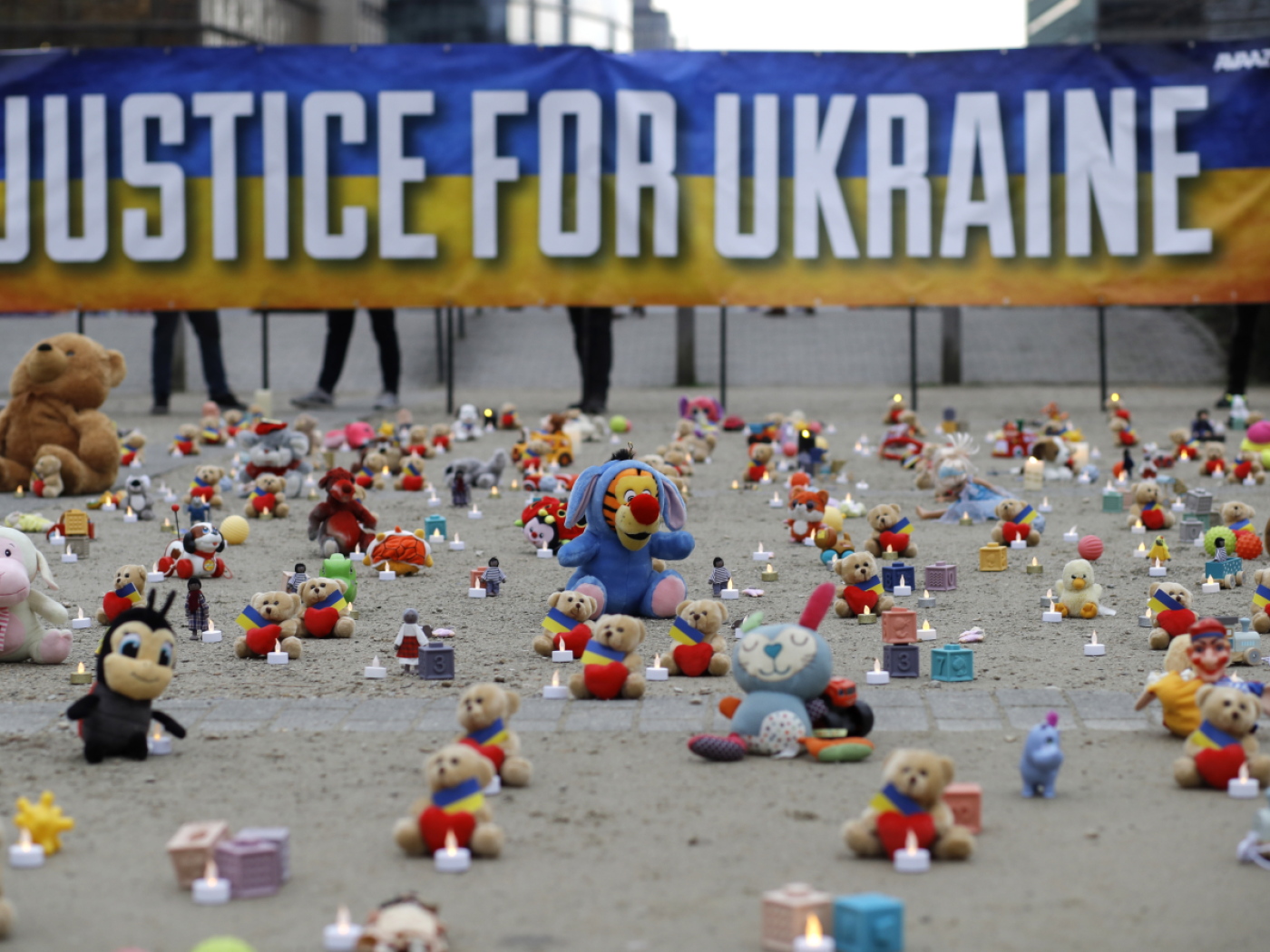
Europe Is Helping Zelensky Rebuild His Human Supply for War


Posted originally on May 13, 2026 by Martin Armstrong |  

poster

European governments are now hiding behind the word “humanitarian” while quietly assisting in the demographic reconstruction of a country being consumed by war. Switzerland has joined the international coalition for the return of Ukrainian children, and politicians are presenting this as some noble moral mission detached from politics. That is nonsense. The timing exposes exactly what this is really about. Ukraine is running out of people.

Volodymyr Zelensky has turned Ukraine into a machine that now depends on trapping, pressuring, and reclaiming human beings to sustain the war. Millions fled after the conflict began, and Kyiv quickly responded by banning most military-age men from leaving the country. Men between 18 and 60 were effectively turned into state property overnight. Then the government escalated further by restricting passport renewals and consular services abroad, targeting Ukrainian men who escaped the draft.

The Western media continues portraying Zelensky as some symbol of democracy while ignoring the authoritarian reality unfolding behind the curtain. Videos have circulated for months showing Ukrainian conscription officers grabbing men off the streets, dragging them into vans, stopping them in gyms, restaurants, shopping malls, and subway stations. Families live in fear of draft notices while frontline troops openly complain about exhaustion, horrific casualties, and endless rotations into death zones.

Now Europe suddenly wants to “repatriate children” while Zelensky repeatedly signals that every person with Ukrainian blood belongs back in service to the state. Zelensky stated clearly that ALL Ukrainians must return to the motherland to die in his war.

“As regards young people who are currently not in Ukraine, but abroad. First of all, there are different groups of young people. I agree with you regarding those of conscription age who left Ukraine. They left temporarily but ended up staying away for years,” Zelensky stated, oblivious to the reason so many fled their homes. “And many of them left in breach of Ukrainian law. The relevant authorities in both countries should address this issue.

Most would renounce their citizenship if possible, but here’s the catch: Zelensky has made it ILLEGAL to renounce citizenship during wartime. A person must already have another citizenship approved or guaranteed before they can give it up, and the process requires presidential approval and can take up to a year or more. The unelected president will not permit anyone to renounce their citizenship, but the press frames it as widespread patriotism as only a handful have managed to escape Zelensky’s claws.

Ukraine’s demographic collapse is catastrophic. Millions of women and children fled to Europe. Hundreds of thousands of military-age men escaped before the borders tightened completely. Birth rates were already collapsing before the war began, and now entire regions have been emptied out. Ukraine is not just losing soldiers. It is losing its future population.

Wars eventually stop being about territory and become wars over demographics themselves. Ukraine cannot sustain endless erosion indefinitely because the country is bleeding population faster than it can replace it. Infrastructure can eventually be rebuilt. Human beings cannot.

This is why Zelensky’s government has become increasingly obsessed with repatriation, citizenship restrictions, and controlling Ukrainians abroad. Kyiv understands perfectly well that if too many refugees permanently integrate into Europe, Ukraine may never recover economically or militarily. The country risks becoming a hollow shell dependent entirely on foreign aid and military support.

At the same time, European governments are exposing their own hypocrisy completely. These are the same politicians who lecture the world endlessly about human rights and democracy while now openly discussing mechanisms to return Ukrainian men to a war zone. Poland and Lithuania have already signaled support for helping Kyiv reclaim draft-eligible citizens.

The truth is becoming uglier by the day. Ukraine’s government needs more bodies. Casualties continue mounting. Recruitment is increasingly unpopular. Frontline troops are exhausted. The average age of Ukrainian soldiers has steadily risen because younger men are either dead, injured, hiding, or gone.

The entire narrative surrounding this war has become deeply dishonest. Western leaders keep pretending Ukraine is defending democracy while supporting policies that trap men inside the country, restrict citizenship rights, pressure refugees, and increasingly militarize society at every level. That is not what free societies look like.

Zelensky keeps demanding more money, more missiles, more sanctions, more escalation, and now implicitly more people. Every solution proposed by Kyiv requires sacrificing another generation of Ukrainians while European elites sit safely behind podiums speaking about “values.”

The horrifying reality is that this war is consuming Ukraine’s population itself. The country is being hollowed out economically, demographically, and socially while politicians continue pretending victory is just one more weapons package away.


Taiwan Is Becoming the Trigger Point for a US-China Confrontation


Posted originally on May 13, 2026 by Martin Armstrong |  

The decision by Taiwan to deploy U.S.-supplied HIMARS missile systems to islands sitting directly off the coast of China is one of the most dangerous escalations we have seen in the region so far. These launch systems are reportedly being positioned less than 30 miles from the Chinese mainland in an effort to create what officials are calling a defensive “dead zone.”

The HIMARS systems are capable of launching ATACMS tactical missiles with ranges approaching 300 kilometers, meaning they could strike military bases, logistics hubs, naval staging areas, and infrastructure deep along China’s southeastern coast within minutes. Some reports estimate missiles launched from islands such as Dongyin could reach PLA targets in roughly seven minutes.

I have warned repeatedly that war with China is becoming one of the primary geopolitical concerns moving into this period ahead. The economic relationship between the United States and China has already deteriorated into technological warfare, sanctions, tariffs, and military positioning across the Pacific. Taiwan is becoming the focal point where all of those tensions converge.

The numbers alone show how rapidly this situation is escalating. Taiwan has already acquired 11 HIMARS launchers from the United States, with dozens more expected as part of broader military packages worth billions of dollars. Additional sales include hundreds of ATACMS missiles and guided rocket systems. At the same time, the U.S. continues pressuring Taiwan to increase military spending dramatically, with discussions around supplementary defense budgets exceeding 40 billion dollars.

What many fail to understand is that China views Taiwan not as a distant geopolitical issue, but as a core national sovereignty question. Every new weapons deployment near the mainland strengthens the nationalist position inside China and makes compromise politically impossible. Instead of reducing the risk of war, these deployments increase domestic pressure on Beijing to respond aggressively.

The United States believes creating heavily armed island chains throughout the Pacific will deter China militarily. But from Beijing’s perspective, this looks like encirclement. Historically, great powers do not tolerate hostile missile systems positioned directly off their coastline indefinitely. The United States itself nearly went to nuclear war during the Cuban Missile Crisis over Soviet missiles positioned near Florida. Yet Washington now appears shocked that China reacts aggressively to missile deployments near its own territory.

China has already been conducting increasingly large military exercises around Taiwan involving warships, fighter aircraft, drones, and simulated blockades. PLA aircraft now enter Taiwan’s air defense zone almost continuously, and Chinese military drills have repeatedly simulated strikes on infrastructure and energy facilities.

At the same time, China is rapidly advancing military technology specifically geared toward a Taiwan conflict, including AI-powered drone swarms, amphibious assault preparation, and missile systems designed to overwhelm island defenses.

Meanwhile, the economic consequences are barely being discussed. Taiwan sits at the center of global semiconductor production and critical shipping routes. Any military conflict in the Taiwan Strait would send shockwaves through global supply chains far beyond anything seen during previous disruptions. The world economy is already under pressure from debt, inflation, and energy instability. A Pacific conflict involving China would magnify all of those problems simultaneously.

The more the United States militarizes Taiwan, the more China will feel compelled to respond militarily itself. Once both sides lock into that trajectory, reversing course becomes extremely difficult. History shows that major conflicts are often not started intentionally. They emerge gradually through escalation, positioning, and miscalculation until neither side can politically afford to back down.

Is Peace Really Possible in Middle East?


Posted originally on May 13, 2026 by Martin Armstrong |  

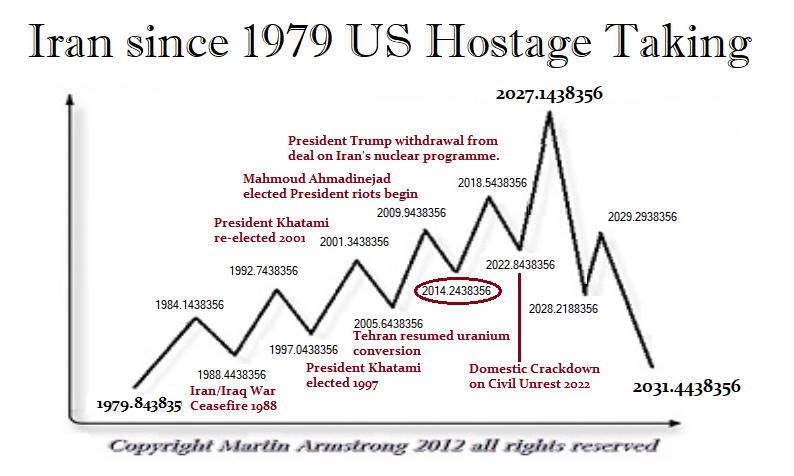
IRAN ECM

QUESTION: Mr. Armstrong, your computer forecast the collapse of Russia. You even forecast a war would begin in Ukraine. Your computer did the same in Romania and Syria. You even forecast that this war with Iran would not be quick but drawn out. The word is you know the Middle East because you have been there for decades and you managed money for the counter-revolutionary movement in Iran. You have said you were called in by the central bank of Lebanon. They say you attended OPEC meetings and managed money for Kaddafi. In London I was told you taught the Arabs how to trade gold futures. Is any of that True? If so, why does major media avoid you? I listened to the 60 Mimutes interview of Netanyahu and they staid nobody has ever forecast these wars. They glassed over his claims that Iran was developing a nuke and could strike the US, but admitted they did not have a missile to go 6,000 miles. The one they did shoot at the US base 2,000 away was shot down.

If this is all true, then nobody is more qualified than you on the Middle East. You said in a recent interview you had offices in Dubai. Very strange how mainstream media does backflips to avoid you and your computer. What do you see for peace in the Middle East?

FB

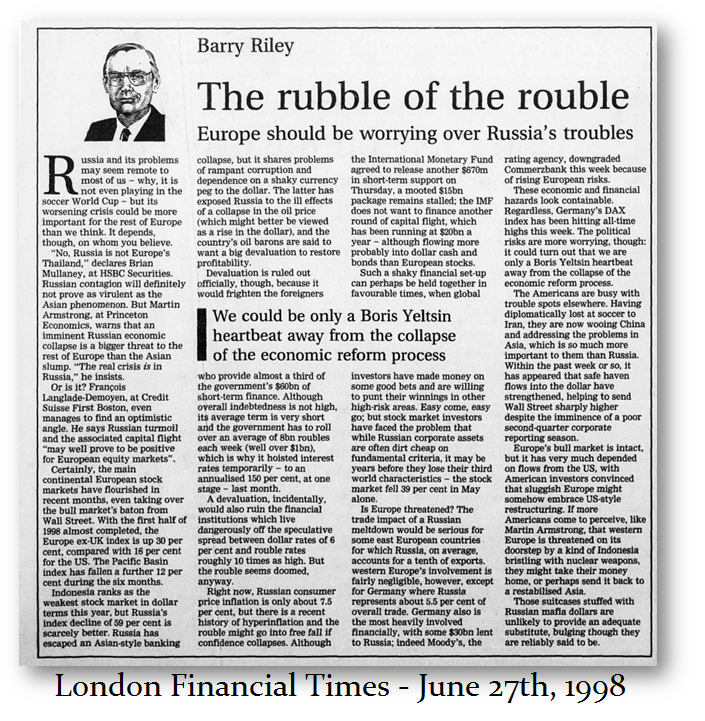
FT June 27 1998 Rouble

ANSWER: Yes, the computer has done  fantastic job. It was the Russian collapse that cause all the Trouble, That’s when the CIA wanted the model. I offered to run any study they wanted, but they said they had to own it. That’s when I learned we do not live in a free society. You say no to the government, and they could care less about the constitution.

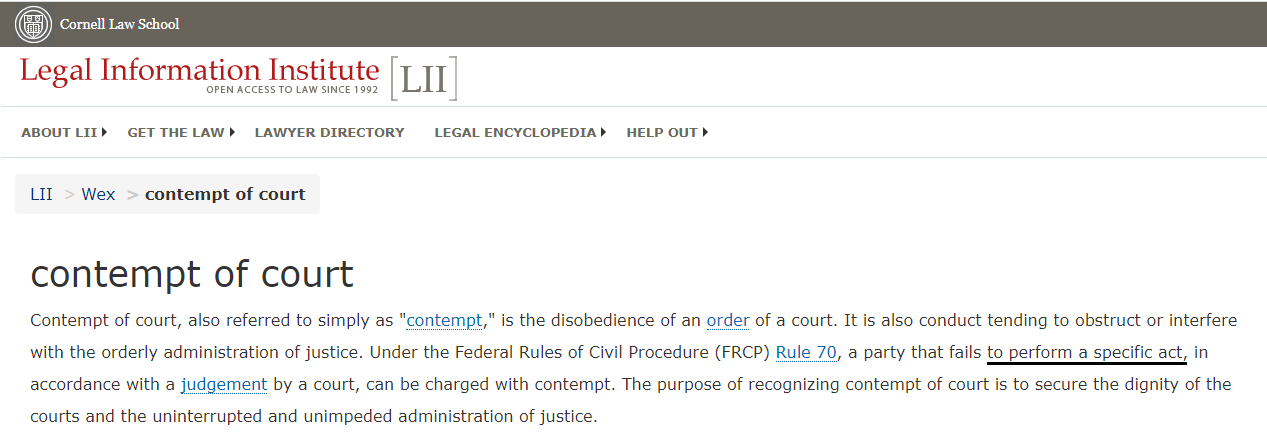
Contempt requitrement
Feb 7 2000 No list or order for contempt

They held me in civil contempt without any charges or even an order. Supposedly, you are supposed to have a clear directive do this you you go to jail.  The judge did whatever the government wanted and publicly was shocked when he found out they never produce such an order. Legally, he should have released me, but did not. I was NEVER given any order to make sure I could never comply. They media never reported the truth, especially Bloomberg.

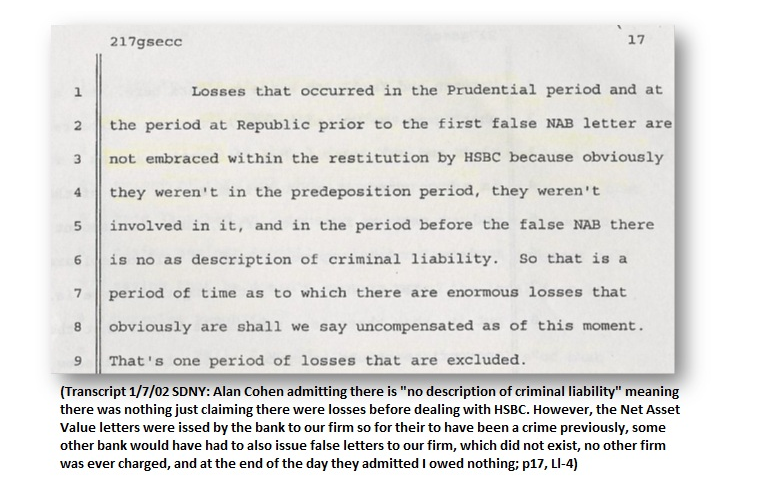
The when the bank pled guilty and was given a deal return all the money they stol and nobody would go to jail, so there were no remaining victims. In the end, I never had any restitution. But then the government outright lied, violated my civil rights openly in front of the world and the press remained silent. They they claimed there was another decades before and they kept me in contempt for another 5 years admitting there was no description of such a crime, but keep me in jail with not even a Theory.

Contempt No Description of fraud 1

I believe mainstream media was part of the scame and kept up the fake news to cover up their failed attempt to pull off a regime change in Russia, which is why I believe Hillary concocted the whole RussiaGate fake news.

Lebanon_1985 WEC

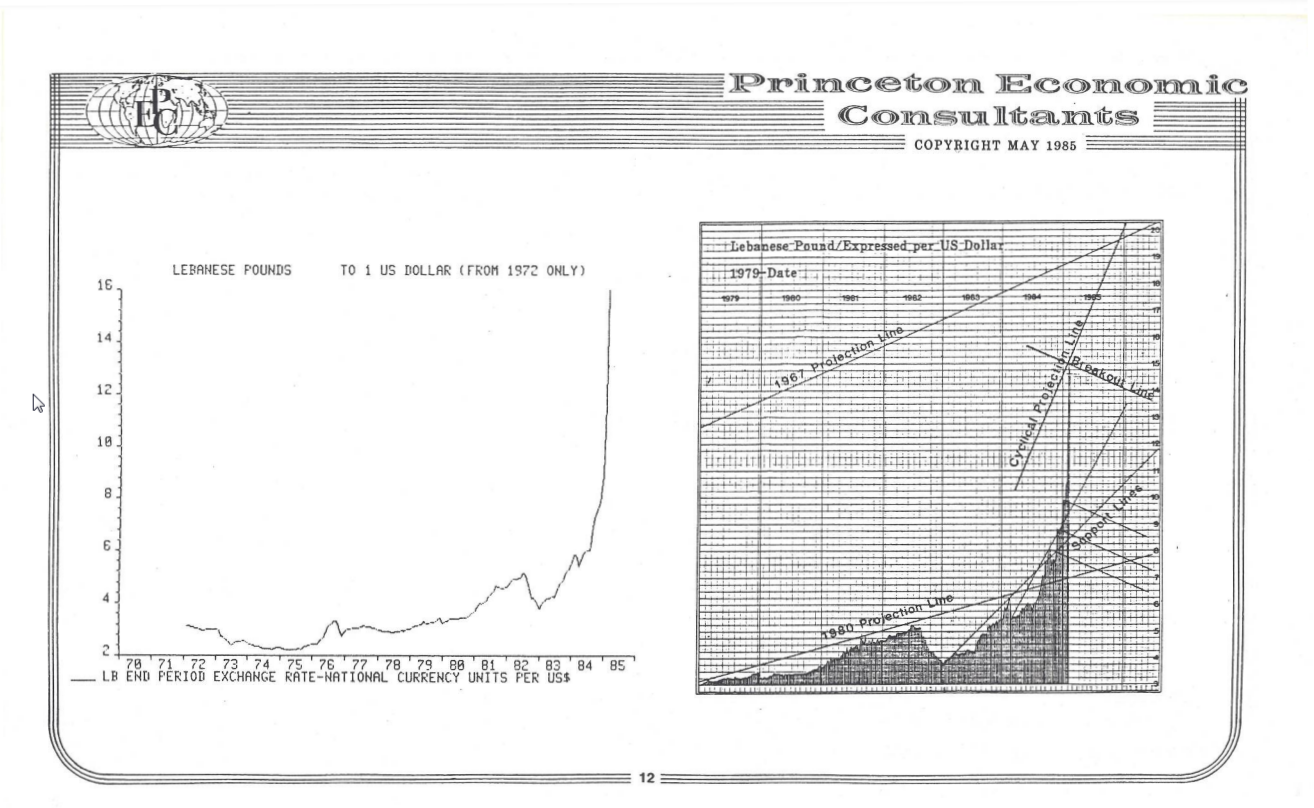
As far as the other issues, yes I advised the counter-revolutionary movement in Iran for they were trading futures to buy arms to overthrow the Ayatollah back then. Yes, it was the central bank of Lebanon that asks us to make a model on their currency and that opened the door where I came to discover how the computer was forecasting war. As far as attended OPEC meetings, that was being put on speakerbox not actually attending. Yes I did manage money for Kaddafi, twice, but unknowingly.

Well you must be talking to people who have been around for a long time in London. Yes, I taught the Arabs how to trade gold futures to make interest when they could not earn interest religiously. I gave the liquidity to get the gold futures off the ground. We were buying gold and then selling it forward, which in reality is the interest for carrying the trade. But it was not outright interest so religiously it worked. I restructured Middle East banks in similar ways.

Turkish Lira 1985

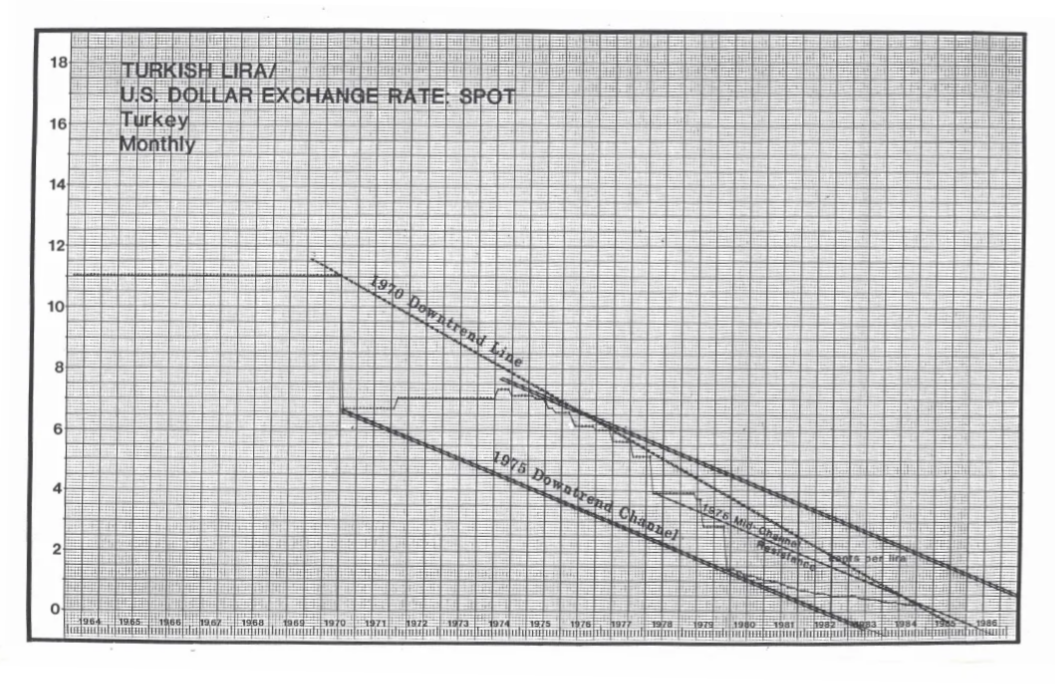
One of my more creative endeavors was the furst natural hedge I had to manufacture. I was called in by a major Middle East Bank who hired a top German banker to run the bank. The board was religious and said that they should open a branch in Turkey. The Turkish lira was in a steep bear market and they had to put up $10 million in escrow for one year until the license would be grated. They would have lost 90% of the money. The Turkish lira was not tradable in cash or futures. That’s why they called me in. I had to create a synthetic hedge to map the expected decline of the lira. I created a basket of other instrument to creat a synthetic nature hedge – the first ever such instrument created.

I did ny first billion deal in 1982. As my client put it, we were dealing in billions when Goldman was still in diapers. That’s also when the bankers were always afraid of me.

Yes, I roo listened to the 60 Mimutes interview of Netanyahu. They indeed glaced over his claims that Iran was a threat to the USA.

iranian Rial M Array 4 12 26

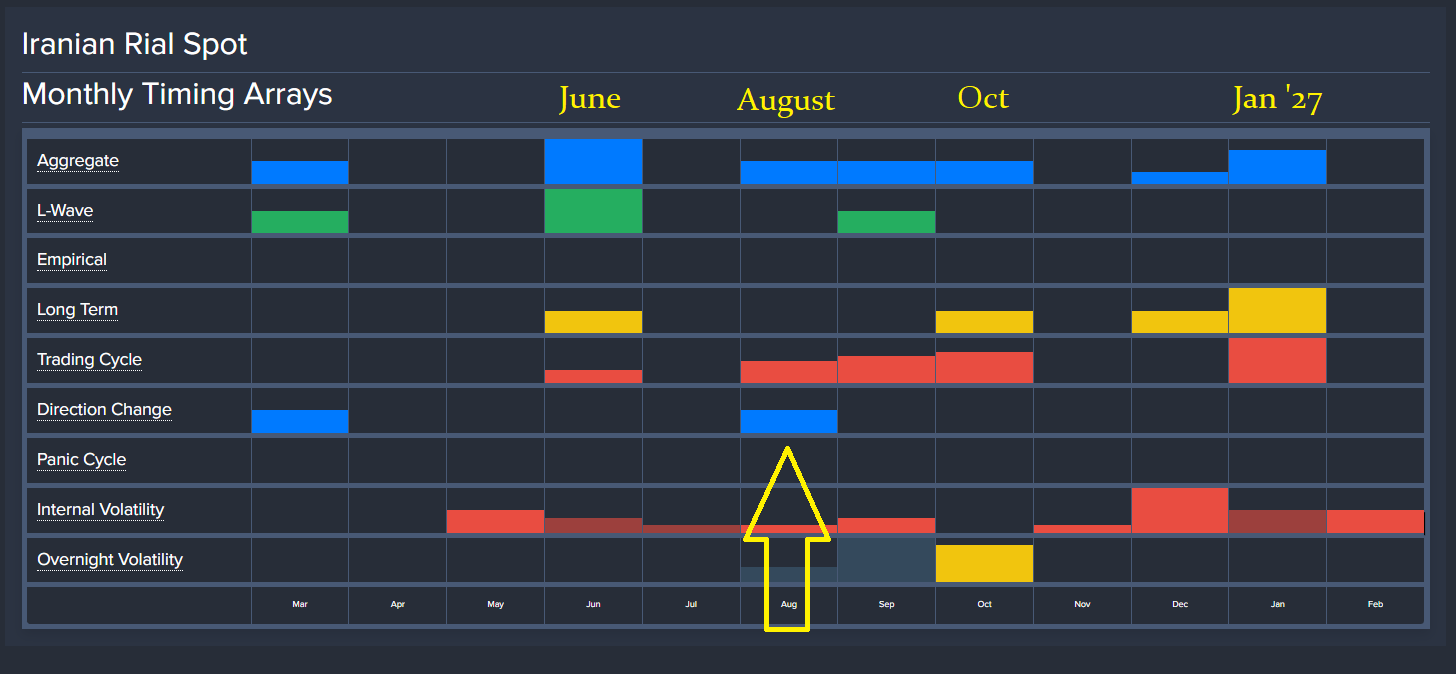
The computer is showing that we may have a serious change in the politics of Iran come Jan/Feb 2027. Nonetheless, we still see that something will shift going into June after Trump gets back from China.

Yes the media does backflips because they cannot report the truth about what took place in my case and the failed regime change without also admitted that they dropped the ball intentionally or were incompetent. That is why it may seem very strange how mainstream avoids our computer which is the only AI system in the world with nearly a 50 year track record.

As far as peace in the Middle East or even Ukraine, in both cases you are looking at deep seated hatreds on both sides. That is not negotiable with any permanent outcome..

Venezuela or Alberta as 51st State


Posted May 12, 2026 by Martin Armstrong |  

Part 51

QUESTION: Marty, I read on Zero Hedge that Trump was floating the idea of Venezuela becoming the 51st State. When you were here in Canada, you said the US would never let Alberta become the 51st State. Is this just more hype about Venezuela?

GS

ANSWER: Yes, it’s just words in the wind. The real story behind the curtain is that allowing Alberta to become the 51st State would mean the Democrats would insist that Puerto Rico and Guam become states. No matter who we consider, a state gets two senators plus representatives in the House, depending on population. This changes the political balance, and it will be a shit-fight to say the least.

The U.S. Constitution doesn’t require a national vote of all existing states to admit a new one, only under a specific set of “other states” those whose territory would be directly affected by the creation of the new state.

So there is far more at issue than just oil or resources. Redistricting just impact the House. A 51st State impacts the Senate.

US Real Estate Remains Stale


Posted originally on May 12, 2026 by Martin Armstrong |  

home for sale real estate sign in front of house generative ai photo

April existing home sales in the U.S. came in at an annualized pace of just 4.02 million units, barely rising 0.2% from March and missing expectations yet again. We are now looking at one of the weakest spring housing seasons in decades, despite population growth and years of underbuilding.

Real estate has always been driven by confidence in the future. People buy homes when they believe their job is secure, taxes will remain manageable, and the economy is stable enough to justify taking on long-term debt. That confidence has been steadily collapsing under inflation, rising insurance costs, property taxes, and geopolitical uncertainty.

Mortgage rates briefly dipped below 6% earlier this year and everyone rushed out claiming the housing market was recovering. Then rates shot back toward 6.4%-6.5% as inflation fears returned and war tensions escalated globally. That immediately froze buyers again. A $500,000 mortgage today carries monthly payments hundreds of dollars higher than buyers were paying only a few years ago. For younger generations already struggling with rent, food, insurance, and student debt, ownership is becoming mathematically impossible in many regions.

The median existing home price still rose to $417,700 in April, marking another record high for the month. This is the real crisis. Sales volumes are stagnating, yet prices remain elevated because inventory is still historically tight. We do not have a healthy market. We have a distorted market where people locked into 2%-3% mortgages refuse to sell because replacing that loan with a 6.5% mortgage would double their financing costs. That traps inventory and prevents natural market clearing.

The National Association of Realtors admitted inventory rose 5.8% to 1.47 million homes, but even that remains well below historical norms. A balanced housing market typically requires roughly a 5-6 month supply. We remain around 4.4 months. That means the market is simultaneously weak and expensive, which is the worst possible combination for society because it destroys mobility and locks younger generations out of ownership entirely.

What is unfolding now mirrors the broader sovereign debt crisis model. Governments kept rates artificially low for years to support endless borrowing and deficit spending. That created massive asset inflation in stocks, bonds, and real estate. Once inflation appeared, central banks had no choice but to raise rates, but they cannot normalize rates without crushing the very debt bubble they created. Housing is now caught directly in that trap.

The regional split is also important. The South and Midwest saw slight sales increases while the West continued weakening. That reflects the capital flow trend we have been monitoring for years. People are fleeing high-tax, high-cost regions in favor of states with lower taxes and cheaper living costs. California, New York, Illinois, and parts of the Northeast continue losing population to states such as Florida and Texas. Real estate is no longer just about location. It has become a referendum on government policy itself.

The broader danger is what comes next. Real estate historically drives consumer confidence because homes are the largest asset for most households. When housing freezes, consumer spending eventually follows. Construction slows, furniture sales weaken, appliance demand drops, and local tax revenues decline. The ripple effects spread throughout the entire economy.

The political class will eventually demand lower interest rates again to “save housing,” but lowering rates while inflation remains elevated only destroys purchasing power further. This is why the crisis becomes cyclical. Governments intervene to solve one problem and create a larger one. The housing market today is no longer operating under free-market conditions. It is functioning under constant monetary intervention, and every intervention creates another layer of instability.

Categories:Real Estate

Europe’s Push for an EU Army Signals the Beginning of NATO’s Fragmentation


Posted originally on May 12, 2026 by Martin Armstrong |  

Friends of Europe Frankly Speaking European army 2023

The calls coming out of Spain for a unified European army are not some isolated political fantasy. This is part of a much larger shift taking place behind the curtain as Europe quietly prepares for a world where NATO may no longer function in its current form. What politicians are now openly discussing would have been politically impossible just a few years ago, yet the conversation has accelerated because confidence in the postwar order is breaking down.

Spanish Prime Minister Pedro Sánchez has openly called for the creation of a European army, warning that Europe must strengthen collective defense capabilities as geopolitical tensions rise. The fact that this idea is now being discussed seriously across Europe tells you everything about where this cycle is heading.

I have warned repeatedly that NATO was never designed to survive indefinitely. It was a Cold War alliance built around the Soviet threat and financed overwhelmingly by the United States. Once the Soviet Union collapsed, NATO lost its original purpose. Instead of dissolving, it expanded eastward, transforming itself from a defensive alliance into a geopolitical instrument used to project influence throughout Europe and beyond.

The United States is increasingly focused on China and domestic instability. Europe is facing economic stagnation, migration crises, sovereign debt pressure, and energy shortages simultaneously. At the same time, European governments are realizing they may no longer be able to rely on Washington as the unquestioned guarantor of their security. That realization is what is driving these calls for a European military structure.

The timing here is critical. Europe is discussing an EU army precisely as military spending across the continent is exploding higher. Germany alone is now committing hundreds of billions toward rearmament. NATO members are under pressure to raise defense spending toward 3.5% of GDP. Countries that spent decades dismantling military infrastructure are now rushing to rebuild it.

What makes this especially dangerous is that Europe lacks political unity even as it talks about military unity. Spain itself has already broken publicly with parts of NATO over the Iran conflict, refusing offensive involvement while distancing itself from Washington’s position. That exposes the core weakness inside the alliance. Once member states begin diverging on major conflicts, cohesion starts to collapse.

France wants strategic autonomy. Germany wants military leadership. Eastern Europe wants maximum confrontation with Russia. Southern Europe is more concerned about economic instability and migration. Britain remains tied to Washington but is struggling economically itself. These are not unified objectives. They are competing interests temporarily held together by fear and uncertainty.

At the same time, Europe’s economic foundation is weakening. Net Zero policies have driven energy prices higher, industry is leaving, debt levels continue rising, and growth remains stagnant across much of the continent. Yet governments are simultaneously discussing massive military expansion. Historically, that combination creates internal instability rather than long-term strength.

The irony is extraordinary. Europe spent decades dismantling borders, reducing national armies, and promoting the idea that war between major powers was obsolete. Now the same political class is discussing “Military Schengen” systems to move troops rapidly across Europe and openly debating nuclear deterrence independent of the United States.

The war cycle has been turning for years, and what you are witnessing now is the institutional response. Governments sense the geopolitical environment deteriorating, so they are attempting to centralize military power before the crisis fully emerges. But historically, creating larger supranational military structures often accelerates tension because it increases fear among rivals and reduces flexibility among member states.

The bigger issue is that the creation of a European army would fundamentally alter the balance of power inside NATO itself. Once Europe develops independent command structures, procurement systems, and military integration separate from Washington, NATO begins losing relevance. It does not disappear overnight, but it slowly transforms into something weaker and more fragmented.

What politicians are admitting publicly now is that they no longer fully trust the existing structure to survive the next major crisis. Once alliances begin questioning their own future openly, fragmentation has already begun behind the scenes.

Canada’s Labor Market Is Cracking Under the Surface


Posted originally on May 12, 2026 by Martin Armstrong |  

Jobs

Canada’s unemployment rate has now climbed to 6.9%, the highest level in six months, after the economy unexpectedly lost 17,700 jobs in April while economists had projected gains instead. More importantly, the country has now lost approximately 112,000 jobs during the first four months of 2026 alone, marking the steepest four-month employment decline since early 2021. Nearly all of those losses came from full-time positions, which fell by roughly 46,700 in April, while part-time employment partially masked the deterioration statistically.

The political establishment in Canada spent years insisting mass immigration, soaring housing prices, and debt-driven consumption represented economic strength. In reality, much of the apparent growth was built on artificial liquidity, real estate inflation, government spending, and population expansion rather than genuine productivity growth. Now the pressure is beginning to show directly inside the labor market.

The details underneath the employment report are even worse than the headline itself. Canada’s goods-producing sector lost roughly 26,800 jobs while manufacturing, construction, and industrial sectors continue weakening under trade uncertainty, rising costs, and slowing demand. Youth unemployment climbed toward 14.3%, which is becoming a major political problem because younger Canadians are already struggling with impossible housing costs, weak wage growth relative to living expenses, and record household debt burdens.

This is why so many Canadians increasingly feel trapped financially despite constant government claims about economic resilience. The labor force itself continues expanding because immigration levels remained extraordinarily high for years, but job creation is no longer keeping pace. That creates the exact conditions for rising unemployment, weakening wages, and growing social frustration. Canada’s labor participation rate actually rose slightly to 65% because more people were searching for work even as full-time employment deteriorated.

The broader structural problem is that Canada tied enormous portions of its economy to housing, banking, immigration growth, and consumer debt rather than industrial competitiveness or productivity expansion. Mortgage renewals are now occurring at materially higher rates while housing activity weakens underneath the surface. Consumers are increasingly squeezed by food costs, taxes, utility bills, insurance premiums, and debt servicing simultaneously.

At the same time, Mark Carney and the political class continue pushing Canada further toward the European economic model just as Europe itself enters a depressionary phase into 2028 according to our ECM projections. Europe is already struggling with industrial decline, rising debt, weak productivity growth, migration pressure, and collapsing middle-class purchasing power. Canada increasingly mirrors many of the same policies involving aggressive climate regulation, expanding bureaucracy, centralized governance, and growing dependence on state intervention. The result is predictable, slowing growth underneath the surface while ordinary citizens feel poorer despite rising headline GDP figures inflated largely through immigration expansion.

The ECM has projected for years that confidence would erode gradually across Canada as the gap widened between official economic narratives and the lived experience of ordinary people. Canadians increasingly understand that despite government rhetoric about growth and stability, their quality of life is deteriorating underneath the surface.

Vietnamese are Feeling the Economy Grow in Real-Time


Posted originally on May 11, 2026 by Martin Armstrong |  

economicexpansion

Vietnam is undergoing one of the fastest economic transformations in the world right now, and unlike much of the West, ordinary people can actually feel the improvement in daily life. Wages are rising, factories are expanding, infrastructure is being built at enormous speed, and millions of Vietnamese citizens are moving into the middle class for the first time.

The country’s economy recently grew roughly 7.1%, placing Vietnam among the fastest-growing economies globally. Exports surged beyond $405 billion while foreign investment commitments climbed above $38 billion as multinational corporations continued relocating production into the country. Entire industrial corridors are expanding as manufacturers shift operations out of China and deeper into Southeast Asia. This is not growth driven purely by financial speculation or government stimulus. Vietnam is benefiting from a real industrial expansion cycle.

Samsung alone has invested more than $22 billion into Vietnam and now manufactures a massive share of its global smartphone production there. Apple suppliers continue moving assembly and component production into Vietnamese facilities while companies tied to electronics, apparel, semiconductors, and logistics rapidly expand operations. Industrial parks throughout northern Vietnam have become magnets for foreign capital because corporations increasingly want alternatives to concentrating manufacturing entirely inside China.

That shift is changing daily life for ordinary workers. Factory wages have more than doubled over the past decade while poverty rates collapsed from roughly 70% in the early 1990s to below 5% today. Retail sales continue growing strongly as rising incomes translate into greater consumer spending on transportation, education, technology, travel, restaurants, and housing.

The key difference between Vietnam and many Western economies is CONFIDENCE. In much of Europe, Canada, and Britain, younger generations increasingly feel financially trapped. Housing costs exploded, taxes rose, inflation damaged purchasing power, and debt burdens became overwhelming. In Vietnam, many younger workers still believe their lives will materially improve over time because for millions of families, conditions actually are improving year after year.

Urban expansion throughout Ho Chi Minh City, Hanoi, and surrounding industrial regions is visible everywhere. New highways, ports, airports, rail projects, apartment towers, logistics hubs, and technology centers continue reshaping the country at remarkable speed. Vietnam has aggressively positioned itself as one of the primary beneficiaries of global supply chain fragmentation.

The country also benefits from demographics at a time when many developed economies face aging population crises. Vietnam’s median age remains around 33 years old compared to roughly 49 in Japan and more than 45 across much of Europe. That younger workforce provides long-term labor capacity while maintaining relatively competitive wage structures for global manufacturers.

Inflation has also remained far more manageable than in many Western nations. While food and energy costs still create pressure periodically, Vietnam avoided the type of energy self-destruction policies that severely damaged industrial competitiveness across Europe. The government largely prioritized manufacturing expansion and export growth rather than aggressive deindustrialization.

Tourism is booming as well. International visitor arrivals recently exceeded 17 million while domestic travel spending surged alongside rising household incomes. Banking penetration, digital payments, automobile ownership, and middle-class consumption continue expanding rapidly as economic development spreads further beyond the largest cities.

None of this means Vietnam is without risks. Rapid urban growth is creating affordability pressures in some regions while export dependence leaves the economy vulnerable to global slowdowns. Wealth inequality is beginning to widen between urban industrial zones and rural areas. But the overall direction of the country remains clearly upward rather than defensive.

The world economy is fragmenting into regions experiencing very different realities. Much of the developed world is dealing with debt saturation, aging populations, declining middle classes, and stagnant growth. Vietnam is still moving through a stage where industrialization, capital inflows, and rising productivity are lifting large portions of the population simultaneously. That is why global capital continues pouring into the country.