Posted originally on Jan 5, 2026 by Martin Armstrong |
QUESTION:
Dear Mr.Armstrong,
Do you think of cycles and time as the same thing and interchangeable? Is it time that defines the architecture of a cycle or a cycle that characterises what we know as time?
A
ANSWER: This is an interesting and profound question. A few years ago, a group of scientists announced that they had recorded the sound of two black holes colliding a billion light-years away, thereby fulfilling the final prediction of Einstein’s general theory of relativity. This is the first direct evidence of gravitational waves, which are the ripples in the fabric of space-time that Einstein predicted a century ago.
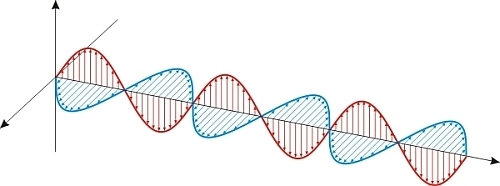
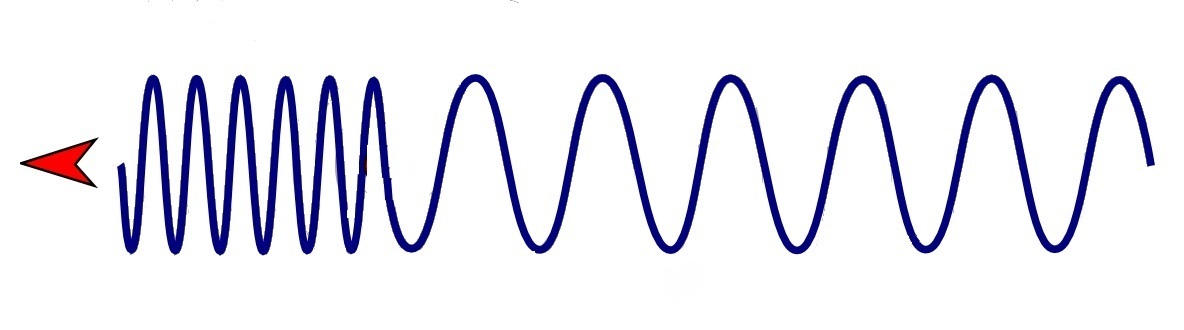
I have approached this also from a physics perspective. However, I assumed that time functions like everything else in the universe and thus moves in a cyclical manner. Sound moves in waves, as does light. Light (electric) is bound by magnetism, so the fact that magnetism provides the outer boundary limits that create the structural form to a light wave. Given this evidence, it was logical to assume that gravity also must have a wave structure. Consequently, what I have discovered is that absolutely everything moves in a cyclical manner without exception, from brain waves, the beat of your heart, a woman’s menstrual cycle, your mood cycle (good/bad days), to the world outside our bodies. There has been a significant disagreement with that statement in the field of political economics because people WANT to believe they can rule the world and force society to do what they want. Such people have postulated this theory, begun by Karl Marx, that the government is capable of managing the economy when in fact they are incompetent and always come back for more taxes. How many times has the ECB had to increase QE and lower rates because it was not working as expected?
I have shown that Larry Summers, the father of negative interest rates and one of the architects of the killing of Glass-Steagall, freely admits that he is not capable of forecasting the business cycle and claims that it is like weather and too complex. This has profound implications because it means the promises to vote for “change” are illusory, as government cannot forecast the business cycle. Politics has been based upon voting to rob someone else to make your life easier. This general result has emerged from the fact that people do not comprehend the business cycle and, rather than moving with it, fight it over time.
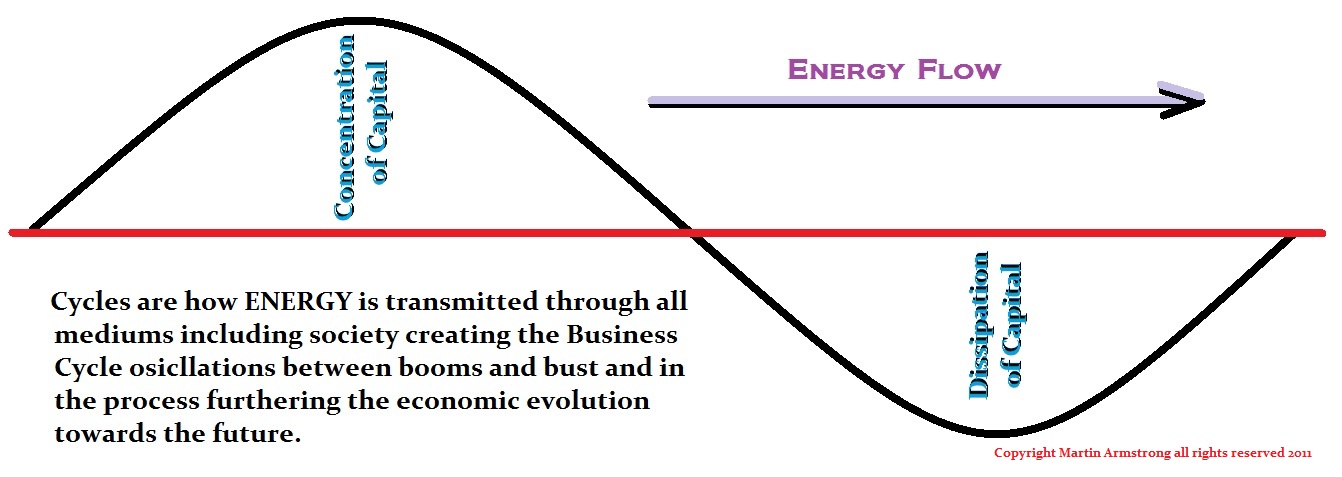
So cycles are the way ENERGY moves through everything, just as your brain functions in wave formations. ENERGY can neither be created nor destroyed; it can only change form. There are Phase Transitions that are bursts of ENERGY changing form like a boiling pot of water being converted to gas, which does not take place in a nice, straight, linear progression. There is always a nonlinear cycle. Comprehending how ENERGY within a system moves is the key to everything, including cyclical knowledge. Perhaps one day we will embark upon a new understanding of the world we live in and go with the flow rather than fighting against the winds of time, chance, and circumstance.
Posted originally on Jan 5, 2026 by Martin Armstrong |
Children born in 2026 will be known as Generation Beta. They represent a structural shift in human development itself as they will be the first to enter the world where artificial intelligence is not a novelty or a tool, but an omnipresent force woven into daily life from birth. Unlike Gen Alpha, who watched technology evolve around them, Beta will never experience a world without it.
Generation Beta, spanning births from 2025 through 2039, will not “learn” AI but they will assume it as a part of life. For Gen Alpha, digital technology enhanced education and communication. Gen Z cannot recall a time without smartphones, and few Millennials remember the days before the internet and cell phones. For Beta, learning, reasoning, social interaction, and even creativity will be mediated by algorithms from infancy. Virtual assistants will answer questions before parents do. AI tutors will adapt education in real time. Devices will observe, guide, and respond constantly.
This will profoundly alter cognitive development. These children will grow up outsourcing memory, pattern recognition, and problem-solving to machines. Society has never tested what happens when judgment is shaped by predictive systems rather than experience. Play itself may be structured, optimized, and subtly controlled. Socialization will increasingly take place inside digital frameworks rather than organic human interaction.
The real danger is dependency. History shows that every time humanity outsources critical thinking to an authority, whether government, religion, or now algorithms, resilience declines. Parents and educators are already sensing this intuitively. Emotional intelligence, skepticism, adaptability, and independence will become more important than rote knowledge, because information will be abundant but wisdom will not.
Generation Beta marks a turning point comparable to the Industrial Revolution, except this time the machinery is cognitive.
Posted originally on Jan 5, 2026 by Martin Armstrong |
Birthrates are rapidly declining across the West primarily due to economic factors. Over 163 million new lives emerged in 2025, far surpassing the 63 million deaths. The countries with the least tend to produce the most children. Over the past year, Angola, the Democratic Republic of Congo, Chad, and Somalia all experienced population growths around 2.5% to 3%.
In poor African nations, children are not a “lifestyle choice” or option for young parents. They are an economic necessity. There is no pension system you can rely on, no government safety net, and no guarantee of survival into old age. Children become labor, protection, and future security. When infant mortality is high, families have more children because statistically many will not survive.
This is why nations like Niger have a birth rate roughly five times that of any major European nation. Half of the population is under 15 and unable to work. The government is run by a military junta operating under a transnational charter, and the blatant corruption has caused Niger to be one of the poorest nations in the world by GDP per capita.
We see the same phenomenon out of many African nations that are then exploited by other nations. The same Western institutions that lecture about climate change and carbon footprints are simultaneously blocking industrialization, energy development, and infrastructure. You cannot tell a continent to stay poor for the sake of Net Zero and then act shocked when birth rates explode. Poverty plus insecurity always produces population growth.
There is a happy medium here. Spiking the population of Western nations through migration is not advantageous economically. Low birth rates in the West will contribute to future economic problems, but these nations with extremely high birth rates are face generational poverty in an environment where there is no option for economic freedom since these nations lack the basic infrastructure for a healthy, prosperous nation. These systems cannot be repaired through charity; a total overhaul and reconnection to the global economy would be a crucial first step.
Posted originally on Jan 5, 2026 by Martin Armstrong |
QUESTION: Marty, you have been silent on the rumors that the Fed is bailing out JP Morgan who they claim was short silver. If there is anyone who has been behind the curtain and confronted the banks, that is you. Would you please comment on this topic.
EL
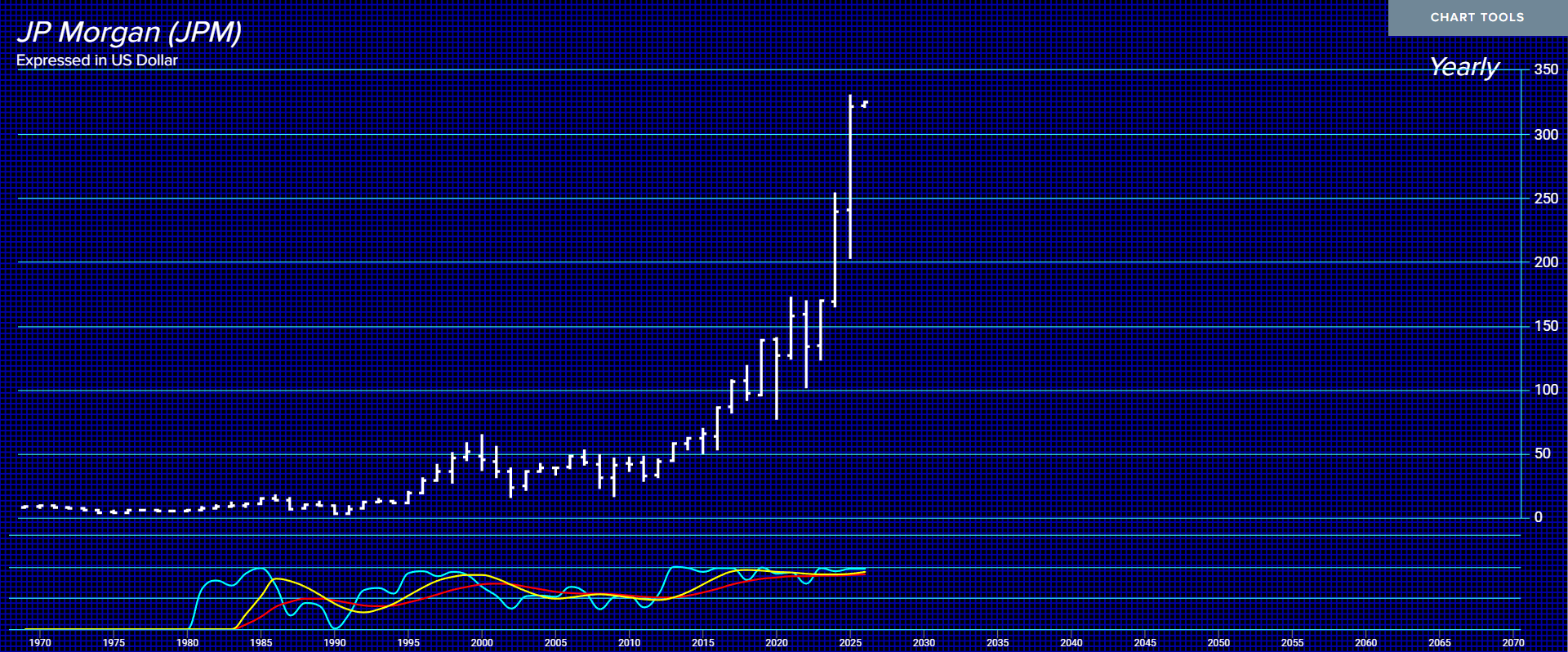
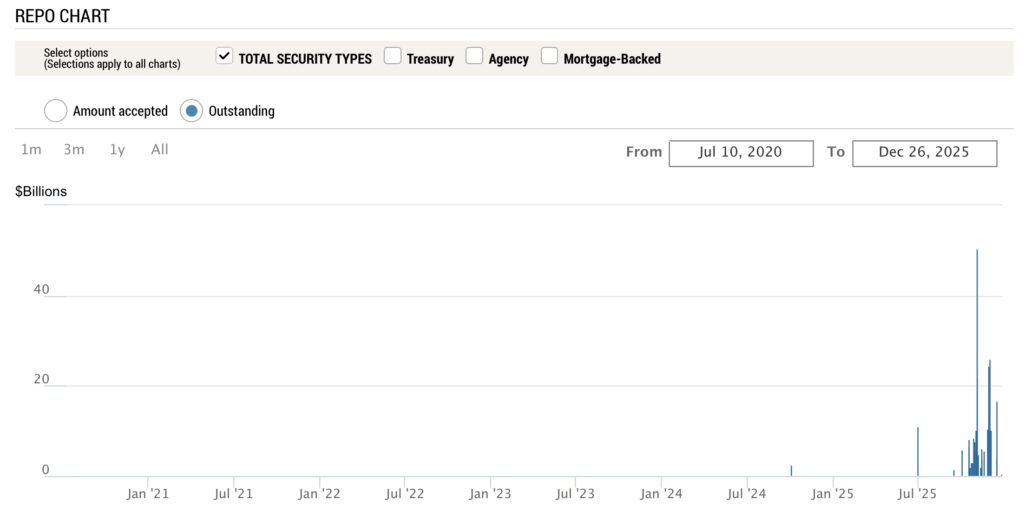
ANSWER: JP Morgan is on our site. It is due for new highs in 2026. We do have a Panic Cycle in 2027. The real crisis appears to be 2027 into 2028. I am aware that everyone seems to be freaking out about the injections into the REPO market. The global recession will spread starting here in 2026 but accelerate in 2027 int0 2028.
The implication is that something is wrong. However, this is a complex issue and as always the linear analysis always seeks to reduce this to a single cause and effect – i.e. silver short. However, what I rarely ever hear anyone mention is the real Shadow Dollar System: Repo and FX Swaps, both form the True Pillars of Global Liquidity. The global financial system operates on two largely invisible markets that dwarf traditional banking in scale and systemic importance: the repurchase agreement (repo) market and the foreign exchange swap market. Together, these markets circulate tens of trillions of dollars daily, providing the essential liquidity that keeps the modern financial system functioning.
Yet they remain poorly understood by the public as well as pretend analysts who focus on just one, and these are inadequately regulated by authorities who also fail to grasp their significance until crisis conditions revealed their centrality. The distinction between these markets matters profoundly because each serves different functions, involves different counterparties, and poses distinct systemic risks.
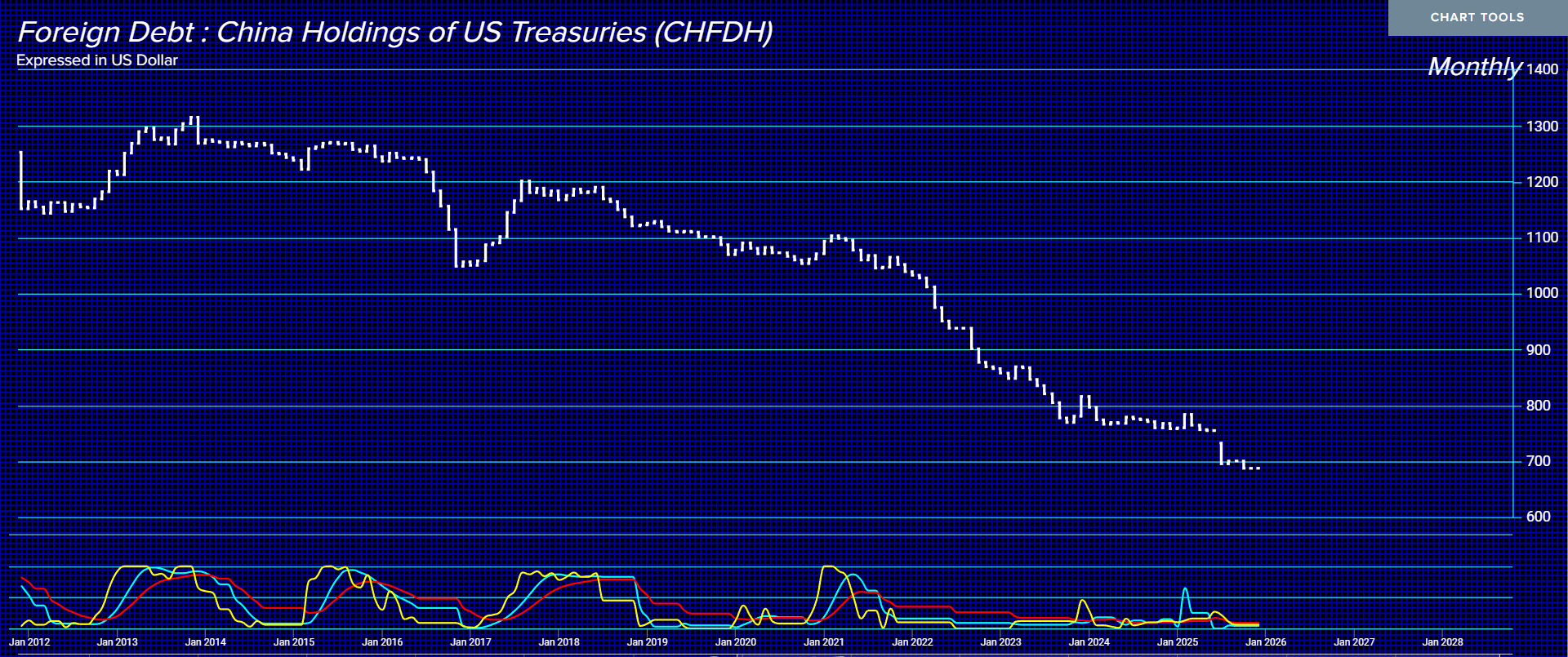
We carry the foreign holding of US Treasuries by various countries. I have written about how Antony Blinken transformed the dollar into a weapon by removing Russia from the SWIFT System and even threatened China. The led to the formation of BRICS, which most also seem to think this has something to do with the dollar being fiat as if it is the only such currency. China would be brain debt to back its currency with gold for that will create DEFALTION and ultimately collapse like Bretton Woods. You cannot fix a currency to anything because you have a business cycle that is also influenced by nature in addition to everything else including war.
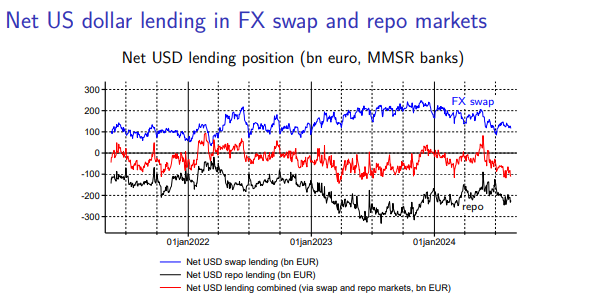
Just look at this chart and perhaps you might connect the dots that there is a second market of tremendous importance in the world economy – the FX Swap Market. I have been warning that Blinken has no idea what he was doing. He was only interested in hurting Russia. What he did is profoundly destroyed the world economy. Look at the steady decline of China’s holding of US debt. They are not trying to crash the market deliberately, but they have been dumping US Treasuries because you DO NOT OWN the debt of an adversary.
The Repo Market: Collateralized Short-Term Funding
The repurchase agreement market represents the primary funding mechanism for financial institutions requiring overnight or short-term cash. In a repo transaction, one party sells securities to another with an agreement to repurchase them at a specified price on a future date, typically the next day. The difference between the sale and repurchase price represents the interest rate, known as the repo rate.
This mechanism serves multiple functions simultaneously. Banks and broker-dealers use repos to finance their securities inventories without selling assets outright. Money market funds and other cash-rich entities deploy excess funds overnight, earning returns slightly above zero while maintaining liquidity. The structure provides secured lending, with the securities serving as collateral, theoretically reducing credit risk compared to unsecured interbank lending.
The repo market’s scale exceeds $4 trillion daily in the United States alone. Treasury securities dominate as collateral, though mortgage-backed securities and corporate bonds also circulate through these channels. The Federal Reserve itself conducts repo operations to implement monetary policy, adding or draining reserves from the banking system through these temporary transactions.
The critical feature distinguishing repos from traditional loans is the collateral mechanism and overnight tenor. Repos represent secured financing with minimal counterparty risk, at least in theory. The short duration means positions must be continuously rolled over, creating refinancing risk if market conditions deteriorate. This vulnerability manifested dramatically during the 2008 financial crisis when repo markets froze, leaving institutions unable to fund their positions despite holding securities as collateral.
The FX Swap Market: Currency Management Without Spot Exposure
Foreign exchange swaps operate on different principles serving distinct purposes. In an FX swap, two parties exchange currencies at the spot rate and simultaneously agree to reverse the transaction at a future date using a predetermined forward rate. This mechanism allows entities to obtain foreign currency for specific periods without incurring spot exchange rate risk on the principal amounts.
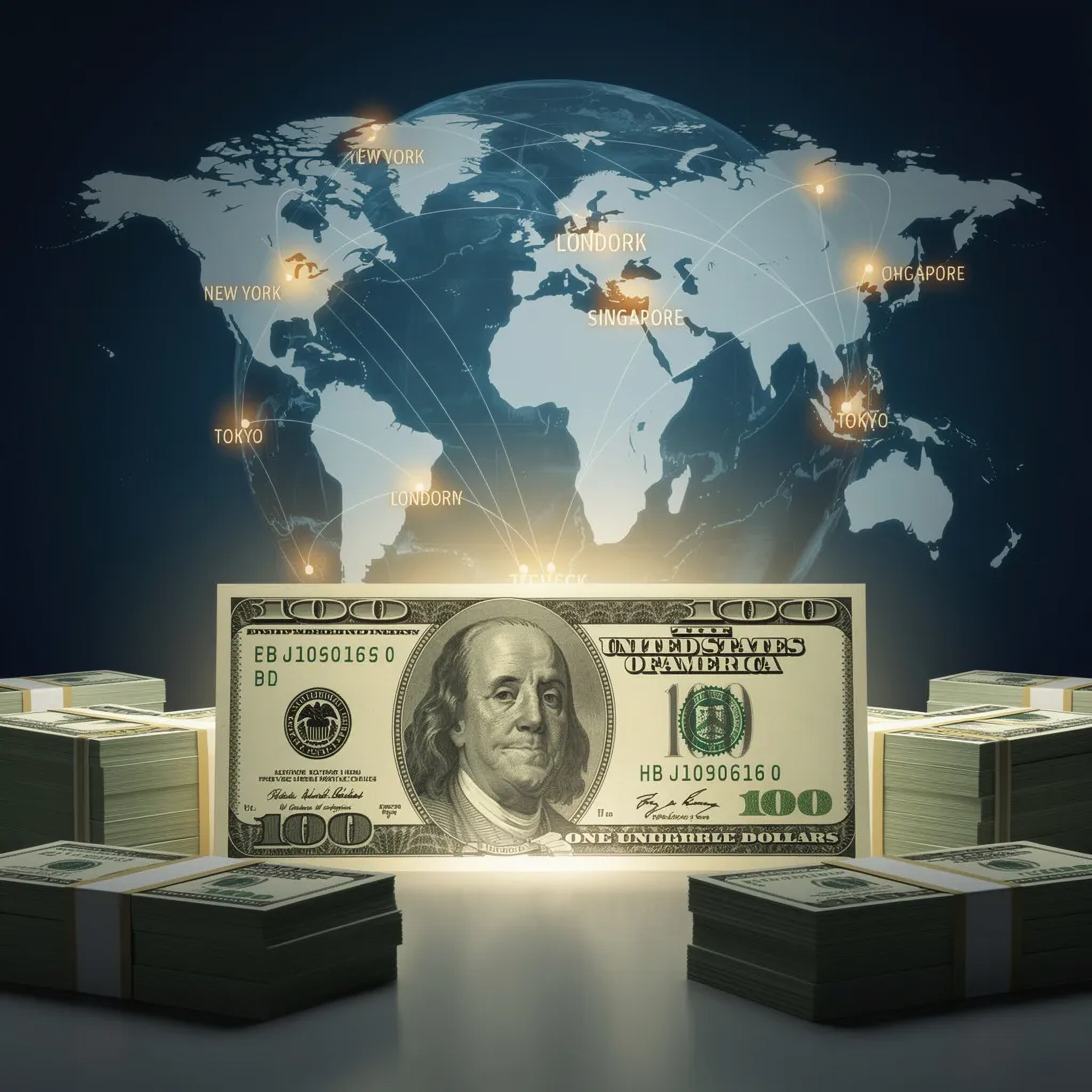
The scale dwarfs even the repo market. The Bank for International Settlements estimates daily FX swap turnover exceeds $5 trillion globally, making it the largest financial market by transaction volume. This market operates continuously across time zones, with London, New York, Tokyo, and Singapore serving as primary centers.
Corporations use FX swaps to hedge currency risk on foreign operations or transactions. A U.S. company expecting euro-denominated revenue in three months can swap dollars for euros today and reverse the transaction when the revenue arrives, locking in the exchange rate. Banks use FX swaps to manage their currency positions and provide dollar funding to foreign operations without maintaining massive dollar deposits.
The crucial distinction from repos lies in the currency dimension. FX swaps solve timing mismatches in currency flows rather than funding needs for securities positions. A Japanese bank holding dollar-denominated assets but with yen liabilities uses FX swaps to obtain dollars temporarily without selling the underlying assets. The forward leg of the transaction eliminates exchange rate uncertainty, making this a liquidity management tool rather than a speculative position.
The Hidden Dollar Shortage
The FX swap market reveals a profound structural reality: chronic dollar shortage among non-U.S. financial institutions. Foreign banks hold substantial dollar-denominated assets, from U.S. Treasury securities to corporate loans, but lack natural dollar deposit bases. They cannot simply create dollars the way they create their domestic currencies. When a domestic bank market a loan, they are actually creating dollar outside the FED that all the ranting and finger pointing seem to never understand. A Bank lends you $100 and even assuming that was back by a $100 deposite from someone else, the money supply is doubled without the Federal Reserve. What the dollar haters never understand is that foreign banks lack the dollar deposits to lend out. This creates constant demand for dollar funding through FX swaps.
European and Asian banks extensively use FX swaps to finance their dollar asset holdings. They swap euros or yen for dollars short-term, invest those dollars in longer-term assets, and continuously roll over the swaps. This maturity transformation generates profit but creates refinancing risk if swap markets become stressed. The arrangement also makes non-U.S. banks dependent on dollar liquidity conditions they cannot directly control.
This hidden dollar demand helps explain why the Federal Reserve’s monetary policy reverberates globally with amplified effect. When the Fed tightens policy and dollar liquidity contracts, the FX swap market transmits stress worldwide as foreign banks struggle to roll over dollar funding. The swap spreads, the difference between the implied interest rate in FX swaps and actual dollar interest rates, widen dramatically during stress periods, revealing the premium paid for dollar access.
A shortage of bank reserves in the US financial system caused the secured overnight funding rate (SOFR) to spike in September 2019. It was fixed by the Fed restarting repo operations and expanding its balance sheet. During the European Debt Crisis after Greece got into trouble needing an IMF bailout in 2010, Chancellor Merkel had implied that Deutsche Bank would not receive state aid if it got into trouble. The narrative was that Germany, having criticized other countries for bank bailouts, wanted to appear tough and avoid the political fallout of bailing out its largest bank. This sent a red flare warning to US banks. The year 2019 did not see a full-blown, acute systemic crisis on the scale of 2010-2012 or March 2020, but it was a period of significant and worrying stress, often described as a “simmering” or “slow-burning” crisis that raised serious concerns about a potential resurgence. US banks were reluctant to accept European counter-party risk unleashing a REPO CRISIS that compelled the Fed to step in.
Then came the March 2020 “Dash for Cash.” This was a global problem. A worldwide shortage of dollar funding that manifested in unsecured funding markets (libor-OIS spread) and the secured FX swap market (cross-currency basis). It was fixed by the Fed acting as a global lender of last resort via international swap lines. Hence, the 2020 crisis did not just “involve” a dollar shortage in the FX swap market; the dysfunction and extreme stress in that specific market were a primary symptom and transmission channel of the global US dollar funding shortage. The Fed’s response through swap lines was directly targeted at relieving that precise pressure point.
The Federal Reserve’s Implicit Global Role
This is what all of these pundits seem to ignore probably out of their DOMESTIC focus. The Fed’s currency swap lines with foreign central banks represent acknowledgment of its unavoidable role as global dollar lender of last resort – NOT simply the domestic central bank. These facilities, expanded dramatically during the 2008 crisis and reactivated during the 2020 COVID disruption, allow foreign central banks to obtain dollars from the Fed and provide them to domestic banks facing dollar funding crises.
This arrangement reveals uncomfortable truths about dollar hegemony. The global financial system operates on dollar foundations regardless of American preferences. Foreign banks and corporations hold dollar assets and liabilities because international trade and finance predominantly use dollars. This creates structural dollar funding needs that private markets cannot reliably satisfy during stress periods. This is why I say it is laughable about all of these claims that the dollar is collapsing. To accomplished that, the crisis MUST being externally FIST and then spread as a CONTAGION to the center. It does not begin in the reserve currency. That is where it ends.
The FED – Central Bank of the World
The Fed on technically serves American interests in theory and operates under Congressional mandate, yet it cannot avoid global responsibilities inherent in dollar dominance. Failing to provide dollar liquidity during crises would trigger global financial collapse with severe domestic consequences. The central bank of one nation has become, by necessity and circumstance, the central bank for the global economy.
The Unsustainable Trajectory
Both markets have grown exponentially while regulation has lagged and public understanding appears to be non-existent. The repo market’s dependence on continuous rollover creates inherent fragility – but globally. A funding disruption lasting mere days could trigger widespread failures as institutions cannot finance securities positions. The concentration of repo activity among major dealer banks creates single points of failure.
The FX swap market’s hidden dollar obligations represent claims on dollars that may not exist during crisis conditions. The Fed’s swap lines provide backstop liquidity, but political pressures could limit their use during future crises. The arrangement also embeds moral hazard, encouraging foreign banks to maintain dollar positions reliant on emergency Fed support.
The ultimate irony is that these shadow funding markets, each exceeding traditional banking in scale, developed precisely because regulations and capital requirements made conventional banking increasingly constrained. Repos allow balance sheet expansion without corresponding capital. FX swaps create dollar funding without dollar deposits. The regulations drove activity into less visible channels while authorities congratulated themselves on banking system safety.
The next crisis will likely reveal new vulnerabilities in these markets that regulators currently fail to appreciate. The mathematical certainty is that systems dependent on continuous short-term funding rollover eventually face conditions where that funding disappears during geopolitical crises. The question is not whether but when, and whether authorities respond with adequate speed and scale when private markets seize. That appears to be 2027 and beyond.
These are not peripheral financial markets but the central nervous system of global finance. Their continued growth and systemic importance guarantee that future crises will involve repo and FX swap market disruptions. Understanding the distinction between these markets and their respective fragilities matters enormously for anyone hoping to anticipate where the next financial earthquake originates. History suggests that understanding will come too late, after crisis reveals what calm periods obscured.
So is this all about silver? Come on. There is more to this complexity than a single cause and effect.
Posted originally on Jan 4, 2026 by Martin Armstrong |
COMMENT: You said these podcasts that Venezuela had the oil but the big question is China. Would like to expand on that now? Socrates showed the dollar taking off in October 2024 and the fourth quarter was a turning point. But it now shows volatility rising from February on. It looks like this is not over as you say until the fat lady sings.
FDS
ANSWER: OK. I suppose I can now give the bigger picture that headlines miss. Trump’s comment throws in energy secondly. He does not mention drugs. Most of the drugs come in through Mexico. As I have said, China is the #1 client of Venezuela. This all depends on the takover of those oil assets by the American oil companies and do they cut off China. That may not be in the cards just yet because Venezuela owes a lot of monet to China. However, overlooked here is the connection to Russia. That is the real issue nobody is taking about and this has been a goal of Rubio for a very long time.
Russian lawmaker Alexei Zhuravlyov told Gazeta.ru on November 1st, 2025 that Russia MAY supply Venezuela with its new Oreshnik and Kalibr missiles, stating “I see no obstacles to providing our friendly nation with new systems such as the Oreshnik or the well-proven Kalibr missiles.” This wasn’t merely hypothetical posturing but a direct response to U.S. military buildup in the Caribbean. This threat was taken seriously. The Oreshnik, with a reported maximum range of about 3,400 miles, could theoretically threaten much of the continental United States as well as Puerto Rico. The Kalibr is thought to have a range of between 930 and 1,550 miles, which could possibly threaten the southern continental U.S., as well as facilities throughout the Caribbean.
From Venezuelan territory, the missile could target most of South America, the Caribbean, Mexico, and large portions of the United States—with Washington likely among its primary targets, given the tense relations between the US and Maduro’s regime. Even parts of Canada could fall within its range.
The relationship between Venezuela and Russia and China represented one of the most significant geopolitical realignments of the 21st century, built on anti-American sentiment, oil-for-loans arrangements, and mutual opposition to U.S. hegemony. This trilateral dynamic evolved from modest beginnings under Hugo Chávez into a comprehensive strategic partnership that has sustained the Maduro regime through economic collapse and international isolation.
The relationship between China and Venezuela took formal shape in 2006, under President Hugo Chávez, with Caracas signing several trade agreements with Beijing and describing China as a “Great Wall” against US influence. Chávez, seeking to diversify Venezuela’s oil exports away from the United States and counter American regional dominance, found in China an eager partner with rapidly growing energy needs and no political conditions attached to its financing.
The financial dimensions proved staggering. China began extending large loans to Venezuela, backed by future oil supplies of oil. In 2006, Beijing provided $2 billion in loans, which rose to $7 billion in 2007. Of the $150 billion the Chinese Development Bank loaned to Latin America in the past 12 years, a third went to Venezuela. These weren’t traditional loans but rather oil-collateralized arrangements where Venezuela repaid through petroleum shipments to Chinese state companies.
In 2007, China and Venezuela set up a joint fund worth $6 billion–$4 billion loan from the China Development Bank (CDB) and $2 billion from El Fondo De Desarrollo Nacional S.A. (FONDEN) set up by Caracas. This fund doubled to $12 billion by 2009. The mechanism was straightforward: China provided upfront capital, and Venezuela committed to shipping specified quantities of oil at predetermined prices. When oil prices collapsed in 2014 and Venezuela’s economy imploded, China extended additional lifelines including a $10 billion loan to support the country’s balance of payments.
The relationship peaked between 2010 and 2013, when Venezuela received approximately 64% of China’s new credit lines to Latin America. However, as Maduro’s mismanagement destroyed the oil industry and production plummeted, Chinese enthusiasm collapsed as a result. By 2016, Venezuela received only 10% of Chinese regional lending, and new financing essentially ceased. China focused instead on restructuring existing debt and protecting already-committed investments.
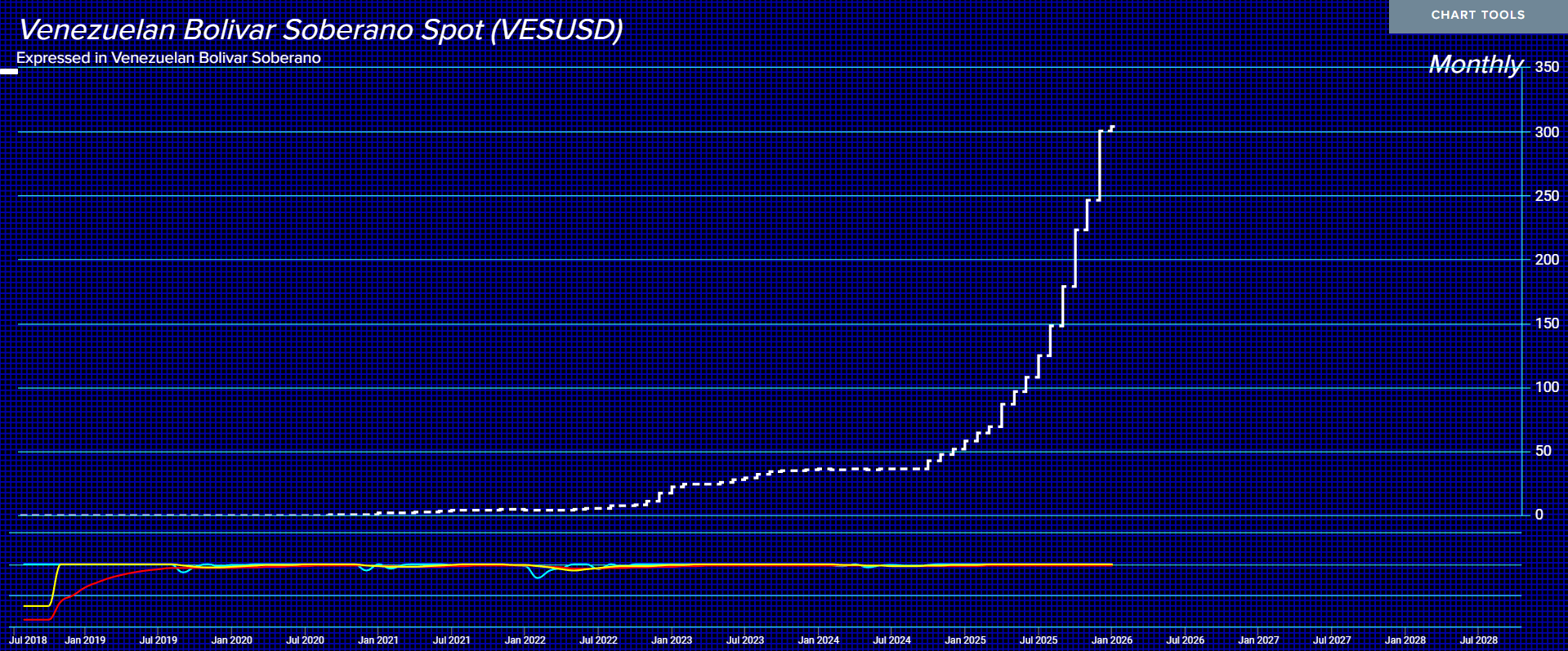
China is owed by Venezuela at least $20 billion in loans established before 2017. Some estimate that is even higher. The relationship shifted from expansion to damage control. Maduro’s rampant corruption and mismanagement has led to the region’s worst economic depression, creating unfavorable investment conditions, affecting oil production and exports, and limiting return on Chinese investment and Venezuela’s ability to repay Chinese loans.
Now, that said, we must look at the Russian comment and look at this video. Who is standing there with Trump? Marco Rubio. If you remember, Rubio was also running for president against Trump in 2016. Who was funding his campaign? Goldman Sachs. Rubio has pushed for regime change in Venezuela because of Russia for years. Marco Rubio has held many titles during Donald Trump’s presidency, and he now adds another: Viceroy of Venezuela.
Russia’s engagement with Venezuela followed different patterns than China’s, emphasizing military cooperation alongside energy sector involvement since Russia did not need their oil. Where China provided infrastructure loans, Russia sold weapons systems. From 2005, Venezuela purchased more than $4 billion worth of arms from Russia. These sales included fighter aircraft, helicopters, armored vehicles, and air defense systems, transforming Venezuela’s military from American-equipped forces to Russian-supplied ones.
Russia and Venezuela forged a comprehensive strategic partnership centered on anti-hegemonic solidarity and pragmatic cooperation. This wasn’t merely commercial but explicitly geopolitical. Chávez and later Maduro positioned Venezuela as Russia’s foothold in the Western Hemisphere, allowing military exercises and bomber flights that signaled Moscow’s reach into America’s traditional sphere of influence.
The energy relationship proved more complex than China’s. Russia’s state oil company Rosneft provided billions in loans and took equity stakes in Venezuelan projects, though on smaller scale than Chinese financing. Russia’s state-backed oil company Rosneft loaned $2.3 billion, excluding interest. Critically, Russia helped Venezuela circumvent U.S. sanctions by facilitating oil exports through complex shipping arrangements and providing technical expertise to maintain declining production.
The trade balance between Moscow and Caracas increased by 64% in 2024, demonstrating sustained engagement despite Venezuela’s economic deterioration. Russia viewed Venezuela through multiple lenses simultaneously both as an economic opportunity, as well as a strategic geopolitical asset.
The Geopolitical Chess Move
I hope this explains behind the curtain for this is NOT simply a grab for oil NOR is it simply about drugs. We will see if Trump/Rubio cuts off the energy flow to China. But I believe that is a card to be played later in the game. I believe that #1 reason is to prevent Russia using Venezuela as a foothold like Cuba in 1962. But this is again only one reason in a complex strategic geopolitical move that is beyond the headlines right now.
Posted originally on Jan 3, 2026 by Martin Armstrong |
QUESTION: What a way to start the new year with fireworks. And they waited for the markets to be closed to do it. How considerate of them.
Could this be seen as the start of an attack on China? Or at least an instigation?
EM
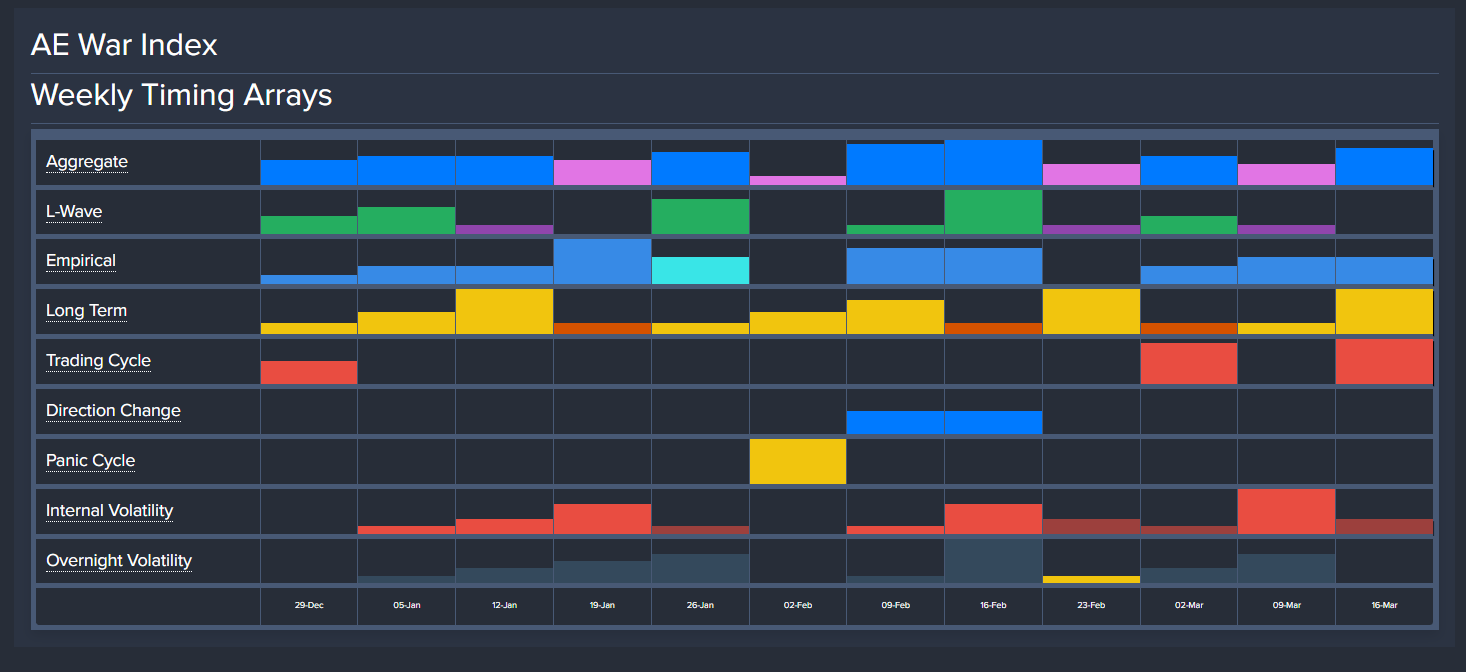
ANSWER: Well, the computer has been targeting the first week of January for months now going into the key week of the 19th and then the first week of February. China has been the #1 client for Venezuelan oil. They also get oil from Iran where Trump has stated that he is ready to invade Iran if they begin killing protesters. Iran also supplies oil to China and then constructed a railroad to bring that oil to China. Yes, 2026 is starting off with a bang.
U.S. President Donald Trump said Saturday the United States conducted a large-scale strike in Venezuela that resulted in the capture and removal of Venezuelan President Nicolas Maduro. Maduro and his wife were captured and flown to the USA. Trump said in an early morning post on Truth Social.
“The United States of America has successfully carried out a large scale strike against Venezuela and its leader, President Nicolas Maduro, who has been, along with his wife, captured and flown out of the Country. This operation was done in conjunction with U.S. Law Enforcement.”
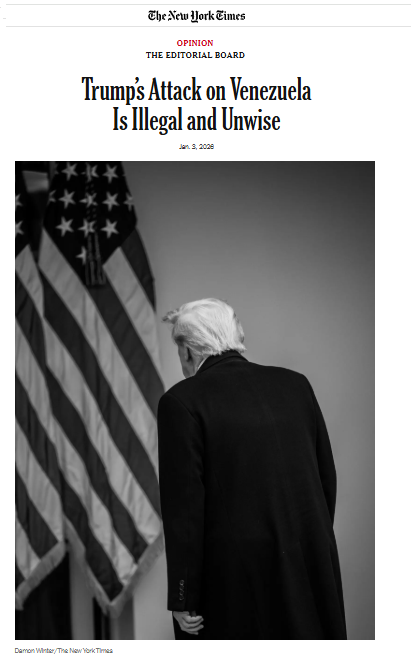
“Mr. Trump has not yet offered a coherent explanation for his actions in Venezuela. He is pushing our country toward an international crisis without valid reasons. If Mr. Trump wants to argue otherwise, the Constitution spells out what he must do: Go to Congress. Without congressional approval, his actions violate United States law.”
What I find most curious is how biased the press is against Trump. Theodore Roosevelt and Woodrow Wilson sent U.S. Marines and sailors into Central America at least 15 times between 1902 and 1920. The 1989 U.S. invasion of Panama, code-named Operation Just Cause, which resulted in the capture of Panama’s de facto leader, General Manuel Noriega took place the same way without asking permission from Congress. That applies to a declaration of war.
President George H.W. Bush did not seek or receive a formal declaration of war or specific authorization from Congress before launching the invasion to “seize the head of Panama” (capture Noriega). He acted based on his authority as Commander-in-Chief.
Mr. Bush is followed almost exactly the Roosevelt-Wilson policies that locked the U.S. into its worst era of U.S.-Latin American relations. He copied the earlier Presidents’ use of unilateral force to overthrow the government of a sovereign country, their declarations that they were doing this in the name of democracy and their installation of a regime that owed its power to U.S. force.
Here the NY Times is calling this action by Trump ILLEGAL, when they did not do so on any of these other actions. The Constitution requires a Declaration of War can only be issued by Congress. That is a prolonged conflict like Vietnam, WWI and WWII. None of these other actions were prolonged engagements of war,
The Declare War Clause (Article I, Section 8) of the Constitution explicitly grants Congress, not the President, the power “to declare War.” It is unlikely that the Founders intended to require a congressional declaration for the capture of a head of state as in the Panama invasion. The War Powers Resolution (1973) while not part of the Constitution itself, this law (passed over a presidential veto) was designed to enforce Congress’s constitutional role. It requires Consultation with Congress “in every possible instance” before introducing forces into hostilities. Reporting to Congress within 48 hours. Withdrawal of forces within 60-90 days unless Congress authorizes further action.
Critics argue that President Bush failed in the “consultation” requirement, only informing key leaders mere hours before the invasion began, which they see as a violation of the spirit and letter of the law meant to uphold Congressional authority. Proponents of this view argued that for major military actions, modern presidents have typically sought and received some form of congressional authorization (e.g., Gulf of Tonkin Resolution, 1991 Gulf War Authorization, 2001 AUMF). The absence of such authorization for Panama is seen as a constitutional breach.
The Opposing Argument: It Was a Lawful Exercise of Presidential Power
This was the position of the Bush Administration and its supporters. Commander-in-Chief Clause (Article II, Section 2) gives the President as the “Commander in Chief of the Army and Navy” this power that includes protecting U.S. citizens and interests abroad. They cited direct threats to the 35,000 Americans in Panama, the killing of a U.S. Marine, and harassment of another officer and his wife as imminent dangers requiring a swift military response.
The U.S. had treaty obligations to defend the Panama Canal. The administration framed Noriega’s regime as a threat to the canal’s neutrality and to U.S. strategic interests, justifying the use of force as an act of national self-defense, which falls within the President’s inherent authority. There is a long history of presidents using military force without a congressional declaration of war (e.g., Jefferson against the Barbary pirates, numerous Cold War interventions). They argue this establishes a constitutional precedent for the executive to act in defense of U.S. interests, especially in limited, short-term engagements.
The Bush administration maintained it complied with the law by reporting to Congress promptly (within 48 hours). They considered the prior “consultation” with a handful of congressional leaders as meeting the requirement, though many in Congress disputed the adequacy of that consultation.
The courts have historically been reluctant to adjudicate “political questions” involving war powers, and no lawsuit on the Panama invasion reached a definitive Supreme Court ruling. Therefore, there is no legal precedent from the judiciary. While some in Congress were furious, the operation was swift, successful, and popular with the American public. Congress held hearings but took no action to challenge or restrain the President, such as cutting off funding. This political ratification after the fact is often seen as a de facto acceptance of the action.
In theory, Congress’s ultimate constitutional check is the power of the purse and impeachment. By not using these tools, Congress effectively allowed the President’s interpretation of his powers to stand in this instance. From a strict constitutional theory perspective (emphasizing Congress’s sole power to initiate war), the capture of Noriega via a full-scale invasion can be argued as a violation. From a historical and practical executive power perspective (emphasizing the President’s role in responding to threats), it is argued as a lawful action.
The invasion of Panama remains a key case study in the unresolved tension between Article I and Article II war powers. It demonstrates how presidential initiative, combined with congressional inaction and public support, can effectively expand the boundaries of executive authority without a clear constitutional settlement.
Trump has the protecting American lives because of the flood of drugs that have been orchestrated from Venezuela and the Democrats lamenting about killing people on drug boats rather than the concern about Americans dying from the drugs.
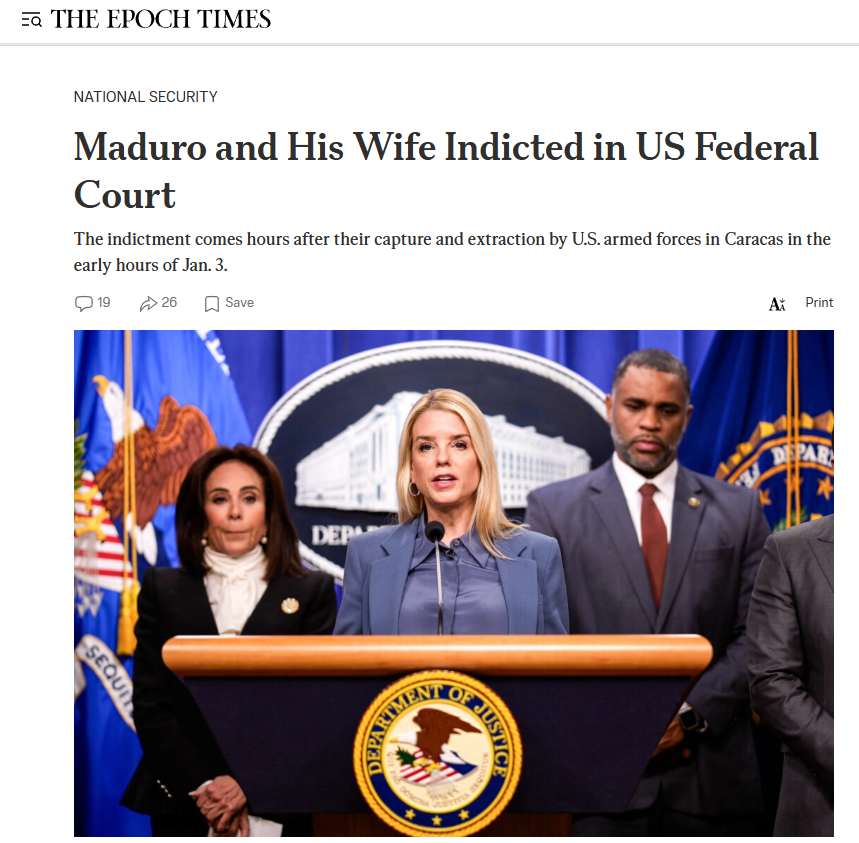
Nicolas Maduro and his wife were indicted in the Southern District of New York, the most corrupt court in the land. There is no way they will receive a fail trial. Trials in NYC are always a dog and pony show. The judges do as they are told and the court of appeals is a joke. This is only to make it pretend to be legal instead of just shooting him on the spot.
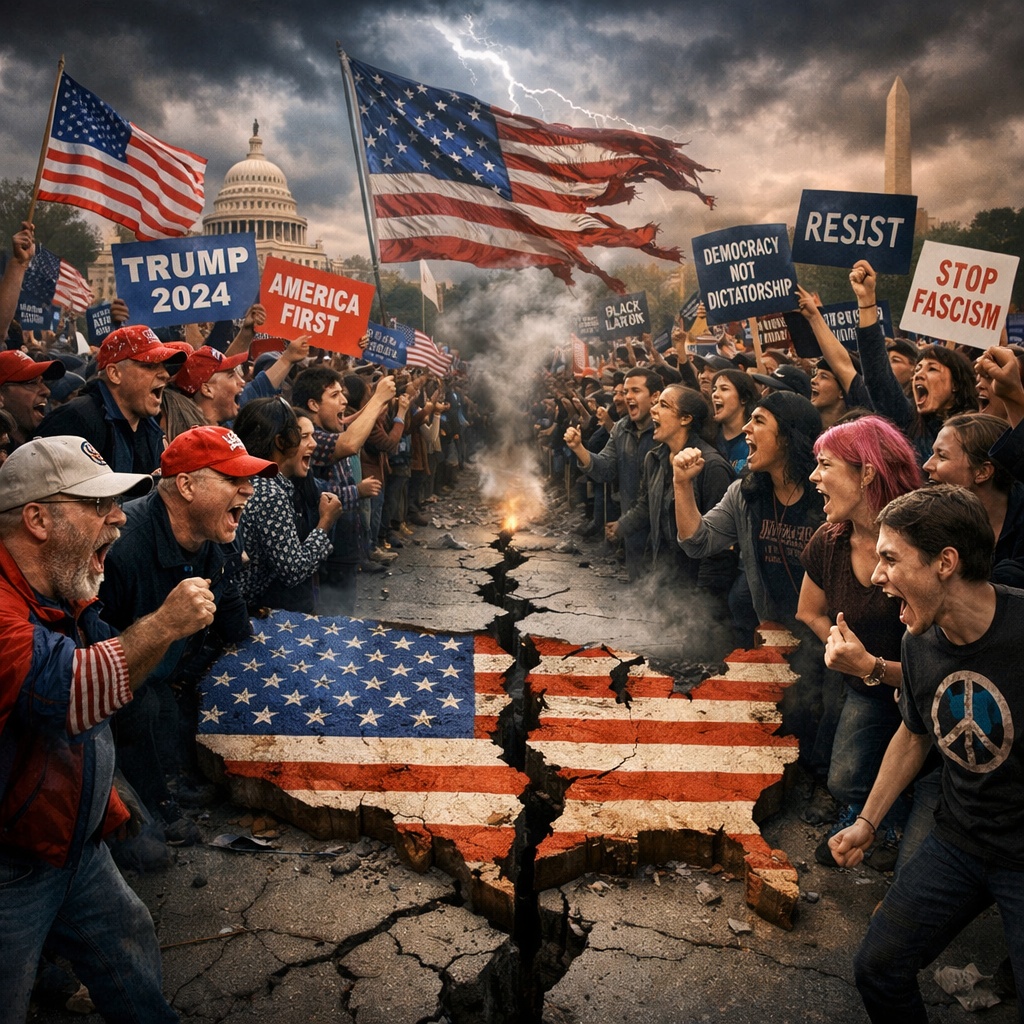
This is all illustrative of the deep seated polarization in politics. The United States is now so divided, it is like Iran vs Israel. There is no possible way to unite the nation. This is why the United States will eventually divide. Each side sees only their view and there can never be any compromise.
Posted originally on Jan 3, 2026 by Martin Armstrong |
Those who attended the 2025 World Economic Conference know that I have agreed to participate in a Hollywood film on my life. Everything is still in the works. I will provide more information once it becomes available, but I expect big news in the year ahead. Fortune and fame have never allured me or enticed me. I am driven by a passion for knowledge and a quest to share that knowledge with the public in hopes of inspiring a better way to run nation-states. They attempted to silence me I believe at the instructions of the bankers and the Neocons through death and imprisonment but I survived.
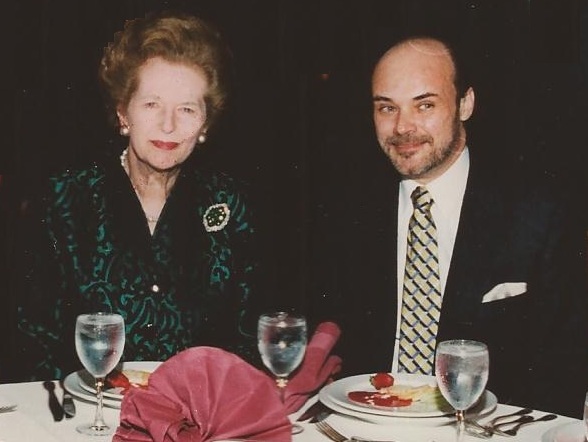
I believe that my oponents have been those who think that they can control the world and reject the idea of cycles because that threatens their power. They want their endless wars and others want to manipulate the markets refusing to understand how market even trade. When they lose money, as they always do, the go to government to be bailed out. They have continually blamed me for their failures insisting I have too much influence rather than admit that their manipulations never succeed. Prime Minister Thatcher instinctively understood cycles. We had conversations about the ultimate demise of the Euro and how a centralized government will always become authoritarian for they confuse the fact of who is really the sovereign – the people or their thirst for power.
I doubt that in my lifetime I will see the fruit of my efforts. That typically comes only after someone has been beamed up. China understands cycles. They are part of their religion. They are strategic and patient and think in terms of generational cycles whereas in the West we expect instantaneous results. To me, it is like the Biblical story of Joseph and the Pharaoh who he warns there will be 7 years of plenty and 7 years of drought. If we understand the cycles, we cannot change them, but prepare and live with them instead of people like Bill Gates who thinks shooting particles into the atmosphere to prevent Global Warming is a good idea never considering the devastation when a volcano erupts and we would all then surely freeze to death.
The Chinese believe in constant change, but with things always moving back to some prior state. This was the understanding of the ancients both in Greece and in Rome. The Dark Age lost that knowledge and even assumed the world was flat. Everything in connected and they saw the wide range of events connecting the dots searching for relationships between things. It is simply impossible to comprehend the world without considering all the fields of science to grasp that understanding of the whole. Because of the Dark Age, we lost all knowledge. It was not until Fibonacci that he resurrected mathematics. In the West, we still live in a simpler version of the world where we focus on a single issue like Global Warming and fail to look at how climate change led to the great migrations for thousands of years. Attila the Hun invaded Europe only because of a major Asin drought. Julius Caesar was actually asked for help from the some Gauls which were being pushed out by other Gaulic tribes. We arrogantly think we live in a world that is deterministic and we can control it because we think we even know all the rules. Cycle is the study of interconnecting the dots of everything around us so we can at last see the whole.
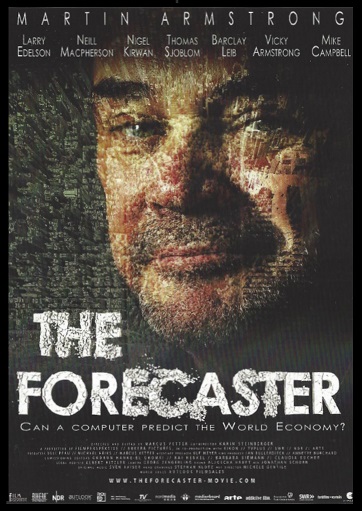
“The Forecaster” was blocked in the USA, Switzerland, and the UK to some extent. It was a clever trick when the distributor bought the rights for a country that then refused to show the film. The three places where this took place are strangely where the banks dominate. The bankers and government really hated this film. The producer, Marcus Vetter, even had his studio broken into. Marcus’ cameras were stolen and they searched his hard drives for the footage. Fortunately, he had backup elsewhere. Every dirty trick in the book has been played. In the film, one government employee came forward named Oliver Brown. He states in the movie that the FBI showed up at his home two days before the film crew flew in from Germany. The FBI tried to intimidate him into not appearing in the movie. It has been a difficult task to share my story.
I have also agreed to do an in-depth interview for a sequel documentary on the market manipulations, as press coverage on the matter to the general public is increasing. Even the success of the movie “The Big Short” has helped to raise awareness. Generally, the producers feel my experience in trading mixed with my legal education puts me in a very unique position to explain reality in detail using common sense. Being in the eye of the storm of, perhaps, the greatest attempt to manipulate markets in history, gave me a front-row seat.
Documentary films are respected far more outside the USA, which is why I think doing a major Hollywood production will get the message out that we are screwed. You cannot fix something unless you understand it is broken. So we have to explain the solution to the general public in order for political change to move in the right direction. Otherwise, we are heading into fewer and fewer rights and the rise of authoritarian governments globally. Hopefully, the more we keep pushing this issue, the more we stand a chance of mitigating how hard we fall.
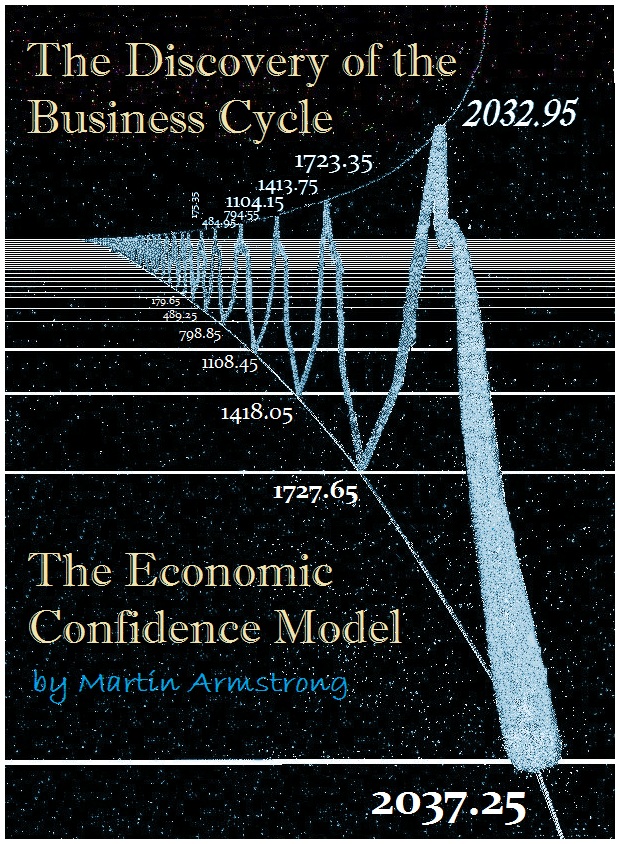
I have more money than I can spend. I do not seek like others to bribe people to do as I desire or to force my understanding upon others no less the world. I was handed this cup of destiny but was given the strength to also endure its travails. This has been my destiny. I never sought this role, but everything I have been through, I also cannot ignore that it must have been for a purpose. I am working diligently to put this all down in the book on the business cycle. This is what I hope to leave behind and for others to improve on in the future.
Posted originally on Jan 2, 2026 by Martin Armstrong |
QUESTION: Some claim that gold and silver are skyrocketing in terms of fiat currency prices because of the realization that fiat currencies are failing – mainly due to high inflation and unpayable national, corporate and personal debt. All fiat currencies eventually fail. Only precious metals have retained, on average, a consistent purchasing power over the past 6000 years because time and energy cannot be printed out of thin air like fiat currency. I think Zero Hedge refuses to post your comments any more because they are always anti-fiat. I see your point that the metals are no more a store of value than anything else since they too fluctuate. Is fiat currencies not the issue as all the hype claims?
Jeff
ANSWER: I find that these people who purport that all the evil comes fiat currency as if we returned to gold as money would solve all the problems. They REFUSE to look at history. They seem to think that the debt crisis today is purely because of fiat currencies. For that to be true, then there should be no sovereign defaults previously. That is just not the case. The metals have been rising because of the threat of war and that introduces the risk of what currency survives. Gold decline for 19 years between 1980 and 1999 with the debts rising and the fiat currencies. So that claim does not stand the test of history.
Spain became the richest nation in Europe thanks to wanderings of Columbus. Nonetheless, the amazing Decline and Fall of Spain is perhaps the greatest lesson if someone wishes to write “How NOT to Manage Government For Dummies.” The Spanish became both the richest nation yet the greatest debtor, not that dissimilar from the United States and succeeded in ending up as the poorest and this was all BEFORE fiat currencies or more correctly – paper currencies.
However, Spain became a serial defaulter beginning in 1557 followed by 1570, 1575, 1596, 1607, and 1647 ending in a 3rd world status without hyperinflation. This was when gold and silver were money well before paper currency. So, obviously fiat had nothing to do with that. Their economic model was one of conquest and plunder, rather than developing domestic industry and a viable economy. The lesson to be learned from Spain is precisely what Adam Smith wrote in his 1776 Wealth of Nations:
“Like an improvident spendthrift, whose pressing occasions will not allow him to wait for the regular payment of his revenue, the state is in the constant practice of borrowing of its own factors and agents, and of paying interest for the use of its own money.”
Look, the problem is NOT what is money, the problem is government and the quest to always spend more than they have. This is true long before paper money appeared in the West during the lat 17th century.
I understand that there are those who hate my guts because they want to BELIEVE that gold is the only money and that ending central banks and paper money will some how create Utopia. That would only lead to a Dark Age. Money is merely the medium of change. That is all. It began as barter, I will give you a chicken for those vegetables. The real importance of metal becoming the medium of change was that it suddenly allowed for the accumulation of wealth. You could not store barley, or cattle and chickens or potatoes indefinitely.
The first metal to be used as a medium of exchange was SILVER not gold. Even the Bible has passages about weighing the silver for a transaction. Metal enabled capitalism for suddenly one could accumulate wealth. Once that took place, then excess money enabled investment. Then markets developed. Here is a Babylonian tablet recording a futures contract.
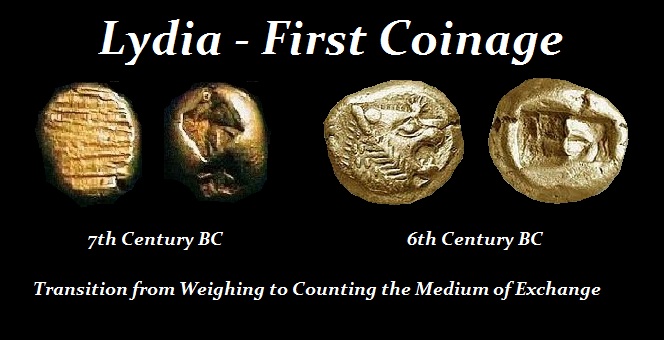
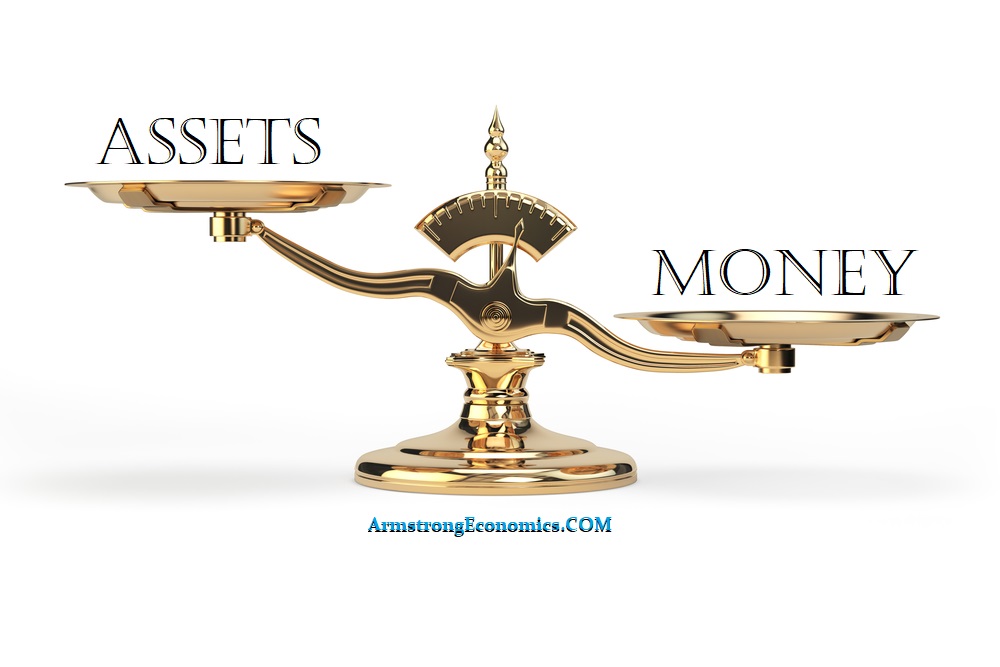
It does not matter what the medium of exchange might be. It is always on the opposite side of assets. This has been the true for 6,000 years. So your statement that gold has been money for 6,000 years is incorrect. Gold only emerged in coinage during the 7th century BC. Silver predated gold by at least 1,000 years and bronze before that.
The problem is by no means fiat currency. That is like blaming the gun for killing someone rather than the person pulling the trigger. Gold and silver hold a unique position in the monetary history. They are the same commodity everywhere. Even crude oil has different grades. Gold is the same ine China and India and it is in New York or London. It has been a movable asset unlike real estate. The risk gold and silver now face is capital controls to shut down the flight of capital. This is why platinum is starting to rise against gold for at least platinum has never been the subject of capital restrictions.
Stop blaming fiat and assuming gold will solve everything when the problem is those in power!
I have created this site to help people have fun in the kitchen. I write about enjoying life both in and out of my kitchen. Life is short! Make the most of it and enjoy!
This is a library of News Events not reported by the Main Stream Media documenting & connecting the dots on How the Obama Marxist Liberal agenda is destroying America










 Centinel2012