Japan Is the First Domino in the Sovereign Debt Crisis


Posted originally on Jul 27, 2026 by Martin Armstrong |  
Japan_Debt_Crisis_2025 6 5 25

Japan recorded a 1.01 trillion yen ($6.2 billion) trade deficit during the first half of 2026, according to preliminary government data. This does not mean that Japan will collapse tomorrow, but it is another crack in the foundation of a debt structure that can no longer withstand rising interest rates, a collapsing currency, and imported inflation.

Japan’s exports increased 13.7% during the first six months of the year to 60.66 trillion yen. Imports rose 10.7% to around 61.9 trillion yen. Yet Japan still imported more than it exported despite a yen so weak that Japanese products should be extremely competitive abroad.

The June figures reveal exports rose 19.3% year-over-year, marking the tenth consecutive monthly increase. Imports, however, surged 25.4% to a record 11.3 trillion yen. That left Japan with a 406.9 billion yen deficit for June, more than three times the 120 billion yen shortfall economists had expected. Japan had recorded a 122 billion yen surplus during June 2025.

Japan depends heavily on imported energy. The conflict with Iran and disruptions around the Strait of Hormuz have raised the cost of oil while forcing Japan to seek supplies from more distant sources. Japan’s oil import volume actually declined 13.7% in June, but the value of those imports increased 59.3%. Japan bought less oil and paid far more for it.

That is the consequence of a weak currency colliding with an external energy shock. The yen has fallen beyond 163 to the dollar, its weakest level since 1986. It stood near 140 a year earlier. Every barrel of oil, shipment of natural gas, imported food product, and foreign industrial component becomes more expensive when priced in yen.
Japan: Japanese rates soar...

Japan accumulated the largest sovereign debt burden in the industrialized world while interest rates were held artificially near zero. Government debt exceeds 200% of GDP by virtually every major international estimate, while broader measurements place the burden above 230%. Politicians convinced themselves that the debt did not matter because Japanese institutions held most of it and the Bank of Japan could always purchase whatever the private market rejected.

The Bank of Japan held approximately 485.4 trillion yen in Japanese government bonds as of March 2026, representing 47.9% of outstanding JGBs under the government’s calculation. This is not a free market. The central bank became the market because the government could not have financed this mountain of debt at normal interest rates. That arrangement worked only while inflation remained subdued and the yen retained public confidence. Both conditions are now breaking down.

The Bank of Japan raised its policy rate to 1% in June, the highest level in 31 years. Under ordinary circumstances, raising rates would help support the currency and contain inflation. Japan is not operating under ordinary circumstances. Every increase in rates gradually raises the government’s cost of refinancing debt that was accumulated under zero-rate policies.

Japan’s fiscal 2026 budget totals a record 122.3 trillion yen. Debt-service expenditures, including interest and redemptions, have jumped 10.8% to 31.3 trillion yen. That means more than one-quarter of general government spending is already being consumed by past borrowing.

The Finance Ministry estimates that debt-service costs could reach 40.3 trillion yen by fiscal 2029, representing roughly 30% of total government expenditures. Annual bond issuance is projected to rise 28% from its 2026 level to around 38 trillion yen by that time. The government will be issuing additional debt primarily because servicing the existing debt is becoming more expensive.

That is the sovereign debt spiral. New bonds must be issued to pay the interest and redeem the old bonds. As rates rise, the government requires still more borrowing. As borrowing increases, investors demand higher yields to compensate for fiscal and currency risk. The process feeds upon itself.

Global debt is climbing. In many nations, countries' total debt compared to the size of their economy now exceeds their annual output. The 2026 Snapshot: Critical (200%+): Japan, Singapore High (100%-140%): USA,

Japan’s 10-year government bond yield reached approximately 2.74% on July 22, more than one percentage point above where it stood a year earlier. Japan constructed its fiscal system around rates close to zero. A yield of 2.74% may look insignificant to an American investor who remembers much higher Treasury yields, but that comparison is meaningless. The danger depends on the size of the debt relative to the government’s tax base, not simply the nominal interest rate.

The Bank of Japan is trapped. If it raises rates aggressively to defend the yen, it increases government debt-service costs and inflicts losses on banks, insurers, pension funds, and other institutions holding government bonds. If it keeps rates too low, capital continues to move away from the yen, the currency declines, and imported inflation accelerates. If it resumes massive bond purchases, it confirms that the debt cannot be financed naturally and further undermines confidence in the currency.

Tokyo has already spent an estimated $215 billion intervening in currency markets, yet the yen has still fallen to a 40-year low. Currency intervention cannot repair a structural fiscal imbalance. A government can buy its currency temporarily, but it cannot force global capital to trust policies that no longer make sense.

This is incredible: The Bank of Japan owns 52.0% of all domestic government  bonds. : r/economy

Japan can no longer defend the currency without threatening the bond market, support the bond market without weakening the currency, subsidize energy without issuing more debt, or raise taxes without damaging an already strained population. Japan’s aging population makes the situation even worse. The tax base is shrinking while pension, medical, and social-service obligations increase. Social-security expenditures in the fiscal 2026 budget reached approximately 39.1 trillion yen. Debt service and social security together consume an enormous portion of government spending before politicians fund defense, infrastructure, education, energy subsidies, or anything else.

The $6.2 billion trade deficit is modest compared with Japan’s total economy, and by itself it is not a sovereign default signal. Anyone claiming that one trade report proves Japan is bankrupt is exaggerating. The importance of this report is that it shows the mechanism tightening: war raises energy prices, the weak yen magnifies those prices, imports overwhelm export growth, inflation pressures the Bank of Japan to raise rates, and higher rates increase the cost of servicing the world’s largest developed-market debt burden.

Japan is the first domino because it pushed modern monetary experimentation further than any other major economy. It normalized zero and negative interest rates, allowed its central bank to dominate the government bond market, and assumed domestic savings would finance public deficits forever. Europe and the United States followed the same path later, believing they could avoid Japan’s fate.

Fitch now projects that developed-market government debt will reach a record $75.8 trillion by the end of 2026, equal to 104% of global GDP. The ten largest developed economies will account for $69 trillion of that total. Japan may remain the most extreme example, but it is not an isolated case.

The Japanese trade deficit is another warning shot. The sovereign debt crisis will not necessarily begin with a formal announcement from the Ministry of Finance. It will begin through currency weakness, failed interventions, rising bond yields, imported inflation, captive domestic capital, and an increasing share of tax revenue diverted toward interest payments.

Japan is not merely experiencing a weak yen or a temporary energy problem. It is approaching the point where every available policy creates another crisis somewhere else. That is how confidence begins to fracture, and once confidence turns against government debt, no central bank can restore it by simply creating more money.


Note: Armstrong stopped allowing “some” of his videos to be copied. You can see them if you go to his blog.

America’s Local Police Are Becoming Intelligence Agencies


Posted originally on Jul 27, 2026 by Martin Armstrong |  

One of the most revealing investigations this week did not come from Washington. It came from Forbes, which uncovered how an Israeli surveillance company is quietly marketing intelligence-grade technology directly to American police departments. The story is not about another patrol vehicle or upgraded communications equipment. It is about bringing tools originally developed for intelligence and national security operations onto the streets of the United States.

According to Forbes, Texas has purchased four specially equipped Chevrolet Tahoes from Israeli surveillance firm Cognyte in a deal worth roughly $4.5 million. Hidden inside these vehicles is a system known as FalcoNet that functions as a cellular interception platform. The technology imitates legitimate cellphone towers, causing nearby mobile phones to connect to the police vehicle instead of the carrier’s network. Once connected, investigators can identify devices, determine their locations, and gather other cellular information. Forbes also reports that the same technology can be carried in a backpack or mounted on helicopters, allowing surveillance to expand far beyond a single vehicle.

Texas police bought four surveillance-equipped Tahoes using technology from  Israeli intelligence firm and Palantir rival Cognyte

Cognyte is not an ordinary technology company. It was spun off from Verint Systems and built much of its reputation supplying intelligence, counterterrorism, and surveillance capabilities to governments around the world. The company has longstanding roots in Israel’s security sector, where these technologies were developed for national security and intelligence collection. Today those same capabilities are being marketed to sheriffs’ departments, state police agencies, and local law enforcement across America. That should concern anyone who still believes there is a meaningful distinction between intelligence agencies and neighborhood policing.

There was a time when police investigated crimes after they occurred. Increasingly, departments are investing in systems designed to gather enormous quantities of information before anyone has been accused of committing anything. Cellphone interception systems, automated license plate readers, facial recognition software, artificial intelligence, drones, predictive policing algorithms, and massive databases are steadily becoming standard equipment.

Cognyte reeling after being dropped by Norway sovereign wealth fund | Ctech

This transformation has accelerated with remarkable speed. Only a few years ago many Americans had never heard of license plate readers. Today millions of vehicles are photographed and cataloged every day. Artificial intelligence is reviewing surveillance footage. Local governments are installing AI-powered cameras to monitor neighborhoods and code violations. Police departments increasingly rely upon drones instead of patrol officers. Every advance is sold as a way to improve efficiency, yet every advance also expands the government’s ability to collect information on people who have never been charged with a crime.

Technology developed overseas for counterterrorism is now becoming part of routine domestic policing. Whether one supports or opposes these tools is almost beside the point. The public deserves to understand exactly what is being purchased, where the technology originated, how the information is stored, who ultimately has access to it, and what limits actually exist once these systems become permanent fixtures inside law enforcement.

Supporters argue that criminals have become more sophisticated and that police must modernize to keep pace. Nobody disputes that law enforcement should have effective tools to investigate violent crime, terrorism, or organized criminal networks. The concern begins when extraordinary capabilities quietly migrate into ordinary policing. Once agencies invest millions of dollars in surveillance technology, there is constant institutional pressure to justify those expenditures by using the equipment more frequently and in a wider range of investigations.

The United States has spent years watching the line between military equipment and civilian policing gradually disappear. Armored vehicles once reserved for combat zones now appear in small-town police departments. Tactical equipment designed for battlefields has become routine. Intelligence software originally built for national security is now being sold to local governments. Surveillance platforms once reserved for counterterrorism are increasingly marketed as everyday policing tools. None of these developments occurred overnight. They arrived one contract at a time.

Imagine if these police vehicles came from a nation aside from Israel? Both China and the US have prohibited smart vehicles from entering one another’s military bases. A foreign government will now have the ability to compile more information on American civilians. Let us not forget that the Pentagon came out earlier this summer and admitted that Israel has been spying on the US, as all governments tend to do.

The broader trend should not be ignored. Governments facing rising debt, political polarization, economic uncertainty, and declining public trust almost always seek greater visibility into society rather than less. Modern technology makes that objective easier than at any point in history. A surveillance camera never calls in sick. Artificial intelligence never sleeps. Cellphone tracking can monitor thousands of devices simultaneously. The temptation to expand these systems inevitably grows as their capabilities improve.

Welcome to the surveillance state where your every move is tracked, not just by your own government, but by whoever has access to the technology.

Note: Armstrong stopped allowing “some” of his videos to be copied. You can see them if you go to his blog.

The Random Walk Theory


Posted originally on Jul 27, 2026 by Martin Armstrong |  

Random Walk Theory bogus

The Random Walk Theory has probably done more damage to economics and finance than almost any other academic theory ever introduced. It gave governments, central banks, and universities an excuse to dismiss the study of market behavior altogether. According to this theory, markets move randomly and future price movements cannot be forecast because all available information is already reflected in current prices. If that were true, then every financial panic, every boom, every sovereign debt crisis, and every capital flow throughout history would simply be a coincidence. That has never been the real world.

The theory became popular because it was convenient. If markets are random, then nobody can consistently forecast anything. Every successful trader becomes “lucky,” every market crash is an accident, and every government failure is impossible to anticipate. That has been the foundation of modern academic economics for decades. Universities teach equilibrium models where human behavior supposedly follows rational assumptions, yet history demonstrates repeatedly that people behave emotionally, politically, and cyclically. Markets are driven by confidence, not equilibrium.

When I built the Economic Confidence Model and later developed Socrates, I was approaching markets from the opposite direction. Human behavior is not random. Capital moves according to confidence, fear, opportunity, and political risk. We have seen capital flee Europe into the United States during debt crises, rush into precious metals during geopolitical uncertainty, and abandon governments that lose credibility. These movements occur repeatedly because human nature has never changed. Technology evolves, governments come and go, but the emotional responses driving markets remain remarkably consistent throughout history.

People often confuse unpredictability with randomness. Those are not the same thing. We cannot predict every individual transaction any more than a meteorologist can predict the exact path of every raindrop. Yet we can identify larger cyclical trends because collective human behavior produces recurring patterns. The mistake made by the Random Walk Theory was assuming that because individual decisions vary, the aggregate outcome must also be random. History demonstrates precisely the opposite.

This is why I wrote my seminar book, “The Random Walk and Cycles.” I wanted people to understand why the academic establishment has consistently failed to anticipate the biggest turning points in history. They missed the 1987 crash. They missed the collapse of the Soviet Union. They missed the Asian Currency Crisis, the Dot-com Bubble, the 2008 Financial Crisis, the European sovereign debt crisis, and countless other events because their models begin with the false assumption that markets fluctuate around equilibrium. They ignore confidence, political change, and the cyclical nature of human society.

Cycles exist everywhere. They exist in economics, politics, war, weather, demographics, and even biological systems. The idea that financial markets alone should somehow be exempt from cyclical behavior has always been absurd. Our computer does not forecast because it possesses magical insight. It analyzes enormous amounts of historical data without political bias and identifies recurring patterns that repeat across generations. That is the very opposite of guessing.

The greatest danger of the Random Walk Theory is not that it is academically wrong. It is that it teaches people to stop looking for causes. If every market movement is random, then there is no reason to study history, capital flows, or the rise and fall of civilizations. That is precisely why governments and central banks continue to be blindsided by crises they insist were impossible to foresee. History is not random. Human behavior is not random. Confidence is not random. Once you understand that, you begin looking at the world through an entirely different lens.

Note: Armstrong stopped allowing “some” of his videos to be copied. You can see them if you go to his blog.

Ukraine Intent on WWIII


Posted originally on Jul 27, 2026 by Martin Armstrong |  

Zelensky 6

COMMENT: Zelensky is obviously trying to get the world into a major war all for Ukraine. His attack on the ships from Russia to Iran, claiming they had military cargo, was the wrong direction that did not involve Ukraine. This is getting seriously out of control.

Craig

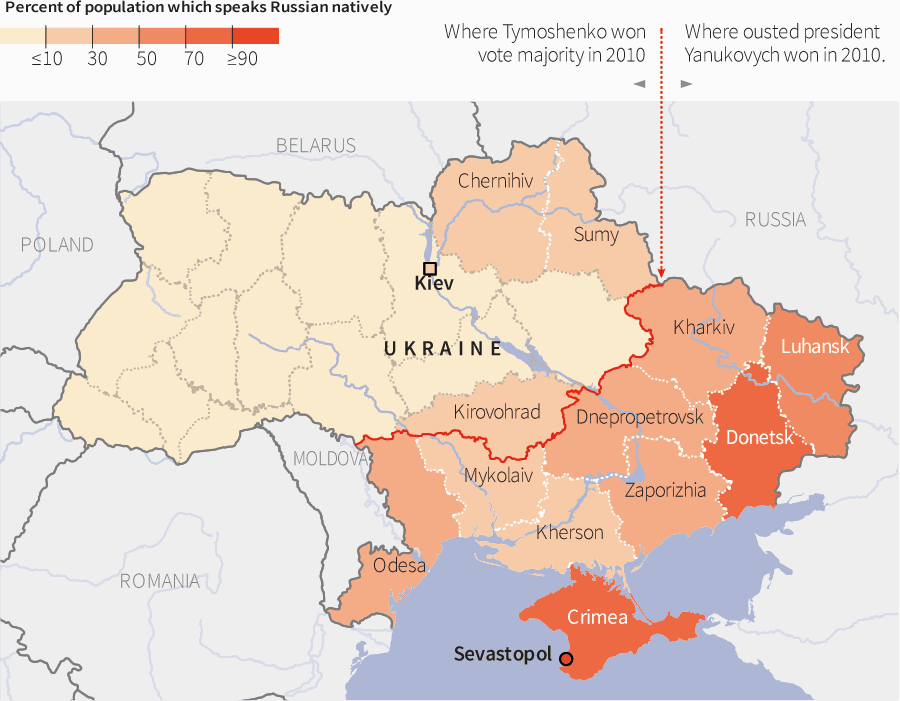
Ukraine Map
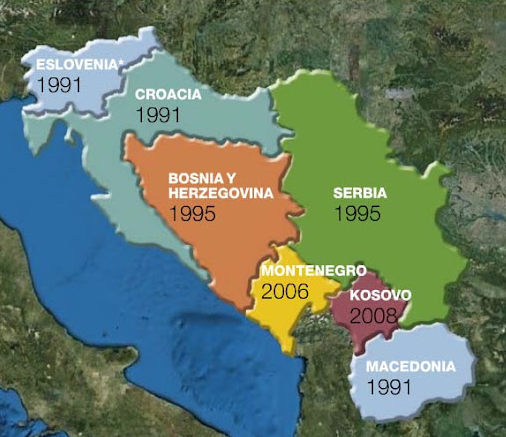
Yogoslavia_map_of_breakup

REPLY: This attack on a cargo ship in the Caspian Sea from Russia to Iran has the green light from the US. This is dangerously blurring the line between these two conflicts and is bringing us closer to World War III. The next misstep will be to involve China. Neither the Iran-US war nor the Ukraine-Russian War

The solution to the Ukraine War was no different than that of Yugoslavia. It should have been divided according to the ethnicity of each region. The people in the Donbas who have lived there for hundreds of years are ethnically Russian. The EU and Zelensky are violating international human rights trying to conquer that region which outlawed speaking Russian and their religion. What if Ilhan Abdullahi Omar became governor of Minnesota and outlawed Christianity? Would that be a violation of human rights?

Ukrainians are filled with such hatred of Russians all over their false understanding of history, and their own agenda of ethnic genocide instituted by Bandera all to create a country they never had, all based on the promises of Adolf Hitler. Because of this inherent hatred of Russians, there is no long-term solution. Both Russia and Ukraine understand that this war will ONLY end with the complete destruction of their opponent.

As I warned when Zelensky assumed the presidency of Ukraine, he was hand-picked to start World War III. He was a Neo-Nazis before becoming president pretending to be Christian marrying a Christian girl and his children were baptized. Only after becoming president did he claim to be Jewish to hide the fact that he was indeed a Neo-Nazis. My sources in Kiev maintained that the election was rigged and he was never elected president. They also insist this is why he has suspended all elections as long as Ukraine is at war securing a Neo-Nazi dictatorship preventing peace.

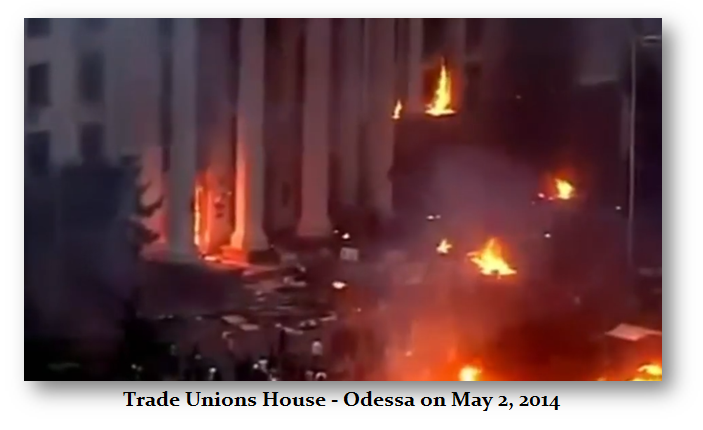
Ukraine wants to enter NATO to draw in all of Europe and the United States to utterly conclude their goal of ethnic cleansing of the Russian people. That became obvious when in 2014, the first act of the Ukrainians was to kill anyone who spoke Russian on the streets of Odessa, which led to the entire separation movement of the Donbas.

May 2 2014 Odessa Trade Unions House

Catherine II, the Great of Russia, ordered the founding and construction of the city of Odessa, where in 2014, the Neo-Nazi Ukrainians were openly killing Russians on the streets, chased them into the Trade Unions House, and burned them alive. That began this separatist movement, and it was the interim government installed by Victoria Nuland et al, who attacked the Donbas and started the civil war on the instructions of the Neocons. I have heard that I am on Zelensky’s death list. I believe he killed one of my sources in Ukraine, Gonzalo Lirawho was the first to expose that Zelensky was a coke-head.

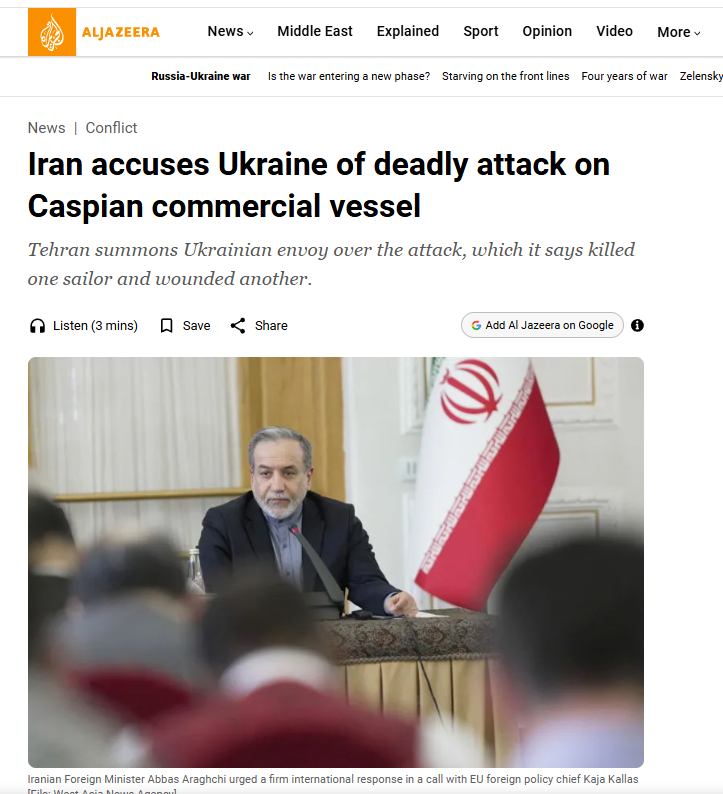
2026_07_26_13_08_30_Iran_accuses_Ukraine_of_deadly_attack_on_Caspian_commercial_vessel_Conflict_Ne

On July 25, 2026, Ukraine conducted a strike on ships in the Caspian Sea, and both Ukrainian and Iranian officials have confirmed the attack. However, the two countries give starkly different accounts of the target and the nature of the vessels involved. Zelensky claimed that the strike successfully targeted a Russian warship and vessels used to transport military cargo between Iran and Russia. Ukrainian officials identified the ships as legitimate military targets, as they were allegedly being used to supply weapons to Russian forces, violating international sanctions.

Iran’s officials strongly condemned the attack, describing it as an act of aggression on an “Iranian commercial vessel.” They stated the ship was carrying steel and was sailing from Russia to Iran, with the attack reportedly killing one sailor and injuring several others . Iran has denied Ukraine’s claims that the vessel was carrying military equipment. More importantly, Iranian officials claimed the strike was on a commercial ship carrying steel that was sailing FROM Russia’s Astrakhan Port TO Iran’s Anzali Port. They stated that the attack “killed one sailor and injured another” (later reports from Iran updated the injury count to three). Iran condemned the attack as a violation of the UN Charter and an act of aggression, reserving the right to defend its national interests.

The Caspian Sea has become a significant logistics route for Russia and Iran as they deepen their military cooperation, particularly for transporting weapons and military supplies. Russia has also been accused by Ukraine of providing satellite imagery to Iran for use in attacks in the Gulf region. What does that have to do with Ukrainian defense? This event highlights the expanding scope of the conflict and the growing overlap between regional confrontations. Zelensky appears to be carrying out war now against Iran as well.

Ukraine’s strike has prompted speculation since the Caspian Sea is more than 600 miles from the front line in Russia’s war, Ukraine has developed its long-range drones with targeting info most likely from the United States, which is highly unlikely to have taken place without the green light from Washington.

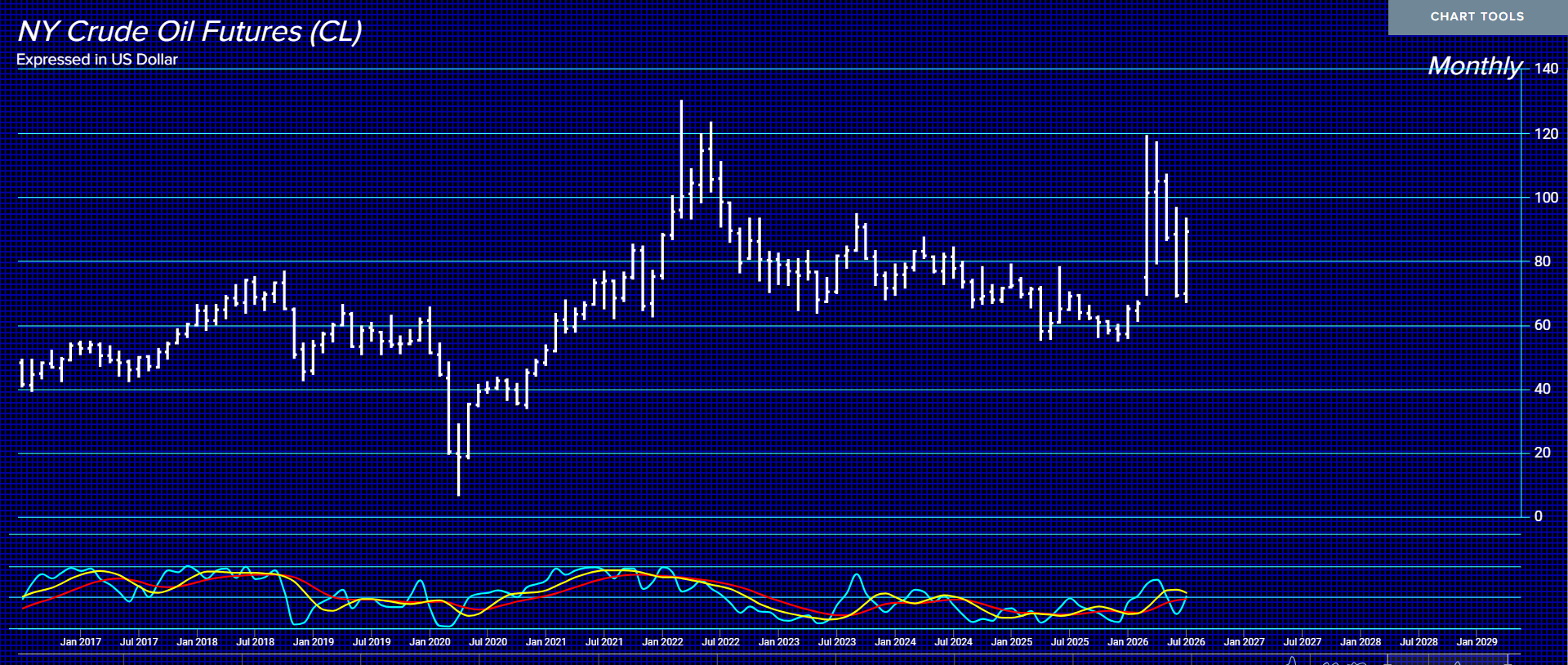
CRUDE M Tech 7 25 26

This move is highly dangerous for the US to have Ukraine enter the war with Iran all to pressure Iran seriously introducing the risk of merging these two wars. Neither the US-Iran War nor the Ukraine-Russian War are winnable. Iran has threatened retaliation expanding the war. The Neocons advising Trump are dead wrong. There is even talk of sending boots on the ground to attack Iran’s nuclear facility.

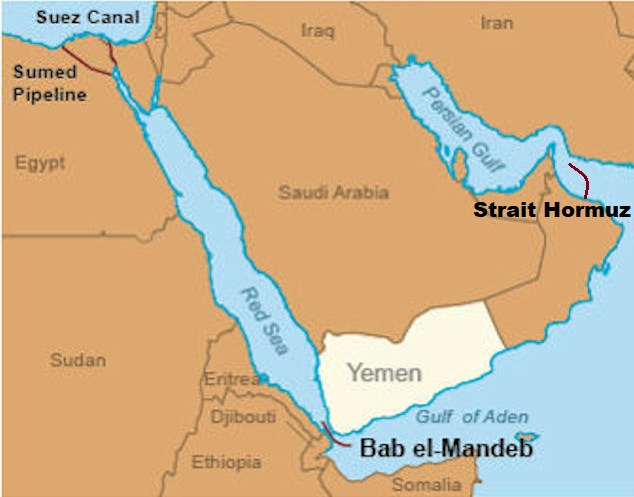
Bab_el_Mandeb_Strait Strait of Hormuz_map

The Bab el-Mandeb Strait is another vital shipping chokepoint, connecting the Red Sea to the Gulf of Aden. The Iran-backed Houthis hit two Saudi oil tankers in the Red Sea this past week, causing Saudi Arabia to strike the Yemeni port city of Hodeida. With the both the Bab el-Mandeb Strait and the Strait or Hormuz blocked,  in addition to expanding the war bringing in Ukraine, while the Trump Administration may assume it is now intended to complete a ring of economic and military pressure around the Iran, we may see Ukraine get involved even further supporting ethnic insurgent groups against Tehran, similar to Kyiv’s approach in Syria against the Assad regime. This only incentivizes Iran to launch its own direct attacks against Ukraine-linked vessels in other sea lanes or against Ukrainian infrastructure directly. Tehran could also recognize Crimea and the Donbas as parts of Russian territory.

Iran’s war is becoming increasingly intertwined with both the Saudi-Houthi confrontation as well as now the Russia-Ukraine war. This is developing into World War III that our computer has been warning becomes possible in 2027. With each passing week, we are witnessing the unfolding of a global war that is becoming increasingly complex with a  multidimensional risk profile. Those who think these wars are winnable are delusional. Ukraine has already become a real player in the Middle East, signing a security agreement with Saudi Arabia to develop defense against Iranian-designed drones they have supplied to Russia. Zelensky also made visits to the United Arab Emirates and Qatar to reach similar agreements

Oil Production

The situation in the West is part of a broader global trend of dwindling oil supplies. The near-closure of the Strait of Hormuz has significantly disrupted global oil flows, leading to large draws on inventories worldwide. The U.S. Energy Information Administration (EIA) projects that global oil inventories in the Organization for Economic Cooperation and Development (OECD) will fall to their lowest levels since 2003.

U.S. Strategic Petroleum Reserve: At a 43-year low.
U.S. Commercial Crude: Rose slightly in the latest week but is 6% below the five-year average.
U.S. Gasoline Stocks: 7% below the five-year average.
U.S. Distillate Stocks: 10% below the five-year average.

The overall picture shows that oil inventories in the West are under significant stress, with the crucial emergency reserve at a historic low and other commercial stocks sitting well below typical levels.

The simultaneous closure of the Strait of Hormuz and the Bab el-Mandeb Strait has created a severe and unprecedented crisis for global oil supplies. There is no exact timeline for how long this can hold, as it depends on several critical factors, but current estimates and data paint a concerning picture. As they say, the clock is ticking on emergency reserves.

The primary buffer against this crisis has been the release of strategic petroleum reserves (SPR), but these are being depleted rapidly. US Strategic Petroleum Reserve is at absolute critical lows. The US SPR has fallen to 319 million barrels as of mid-July, the lowest level in over 40 years . It is approaching a minimum operational threshold of 250 million barrels needed to maintain the physical integrity of its storage caverns. Withdrawals are averaging 6.4 million barrels per week. At this pace, the US SPR would hit that critical minimum in approximately 11 weeks (around early October 2026) .

Global refining margins have hit record highs, and the International Energy Agency (IEA) has stated there is “no room for complacency” on oil security as commercial inventories continue to be drawn down. Before the current conflict, it was already projected that OECD inventory days would fall to their lowest level since 2003. The demand on these reserves is immense because two of the world’s most critical oil chokepoints are blocked simultaneously for the first time in modern history.

Together, the two straits normally carry around a quarter of the world’s seaborne oil and gas. Current estimates suggest that the closures are blocking 15-17% of the world’s oil supply. Due to the war, Ukraine’s energy supply situation has transformed dramatically. It has effectively pivoted away from Russian energy and now relies on a combination of domestic nuclear power, massive electricity imports from European neighbors, and new supply routes for natural gas and oil from Western and other partners. Iran can bring the world to its knees forcing the depletion of the SPR.

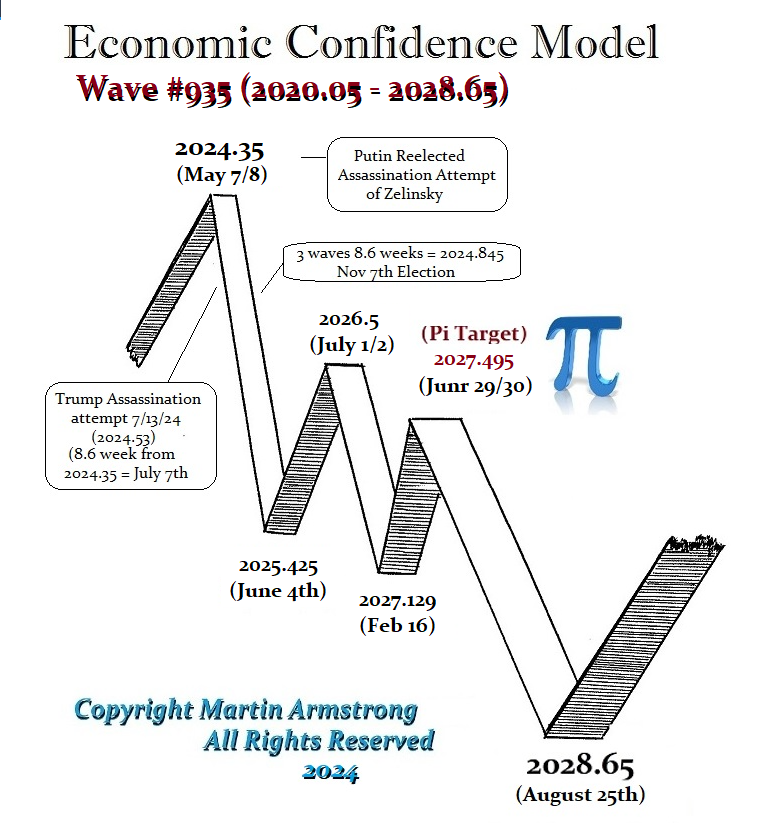
ECM 935 2024 2028

Soaring oil prices (Brent crude recently topped $100 per barrel) are already starting to reduce demand. This is a natural market mechanism to balance supply and demand, but it comes at the cost of significant economic pain and the risk of a global recession, which our computer is projecting into 2028. Ultimately, the world is navigating uncharted territory. While the SPR has provided a crucial bridge, it cannot replace the millions of barrels of daily supply lost to the blockades . The timeline for resolution hinges on geopolitics, and time is rapidly running out on the current emergency buffers.

Note: Armstrong stopped allowing “some” of his videos to be copied. You can see them if you go to his blog.

The Next Generation Conference


Posted originally on Jul 26, 2026 by Martin Armstrong |  

ConfNextGen 7 25 26 1

I want to extend a heartfelt thank you to everyone who made our Understanding the World Economy conference on January 25th in Tampa, Florida, such a remarkable success. Sorry we were sold out. We underestimated how many people would attend so it was capped at 300. I was truly impressed to see over 70 students in attendance, representing a range of universities. For years, our clients have encouraged me to host an event tailored to the Next Generation—especially since so many academic programs don’t fully address how interconnected the world truly is, or how central confidence is to driving both the economy and the business cycle.

Understanding the World Economy

For those of you with our global clientele who weren’t able to join us in person, we’ll be making the video recording, presentation slides, and the specially created textbook available online. We’ll notify everyone as soon as these materials are ready for access.

Note: Armstrong stopped allowing “some” of his videos to be copied. You can see them if you go to his blog.

Lindsey Graham Video Biographer Documents Something Interesting


Posted originally on CTH on July 26, 2026 | Sundance 

Senator Lindsey Graham was having a documentary about his life and political efforts made at the time he died.  The biographical outline is scheduled to be released in the future [CITATION]. However, the Wall Street Journal was granted some excerpts of the recent filming.

In a rather telling part of the storyline, Senator Graham notes on his goal to eliminate Iran, he needed to work with Marco Rubio because Steve Witkoff and Jared Kushner were in conflict to his intent.

Wall Street Journal – […] Holder is now distilling hundreds of hours of raw camera footage for a documentary currently titled “Lindsey’s Game,” which he said he wants to release in the coming months. Graham agreed to it, saying he wanted people to understand his long tenure in the Senate and hopefully inspire others to work in government. Graham repeatedly told the crew how “cool this was,” Holder said.

“He would call what this was ‘a game,’” Holder said, describing how Graham told him how bizarre he thought it was that a senator from South Carolina has a closer relationship with the Saudi Arabian leader than anyone in a Democratic or Republican administration.

The crew also filmed Graham as he talked in March with Jake Sullivan, who was national security adviser under President Joe Biden, about the challenges of working with the Trump administration on Middle East negotiations.

​“I can’t do it with Jared, and I can’t do it with Witkoff. They’re just too conflicted. It’s gotta be Rubio,” he said to Sullivan, referring to Trump’s primary envoys in the negotiations, his son-in-law Jared Kushner and his longtime friend Steve Witkoff, and his secretary of state, Marco Rubio.

A White House official said Graham, Witkoff and Kushner were close friends. “Steve Witkoff and Jared Kushner are excellent dealmakers whose results speak for themselves,” the official said.

Sullivan asks Graham in March about how much longer the war in Iran is going to last, and Graham provides a response that proved to be wildly off. “In three to four weeks, we’re going to have them in a spot where they start losing control of some cities…get the Arabs more openly involved tomorrow, and then have almost irreversible momentum.” (read more)

Sunday Talks – Fox News Gives Reasonable Platform to Democrat Socialists of America (DSA)


Posted originally on CTH on July 26, 2026 | Sundance

I’m thinking Don Henley was onto something when he described Shannon Bream’s reporting in 1982.

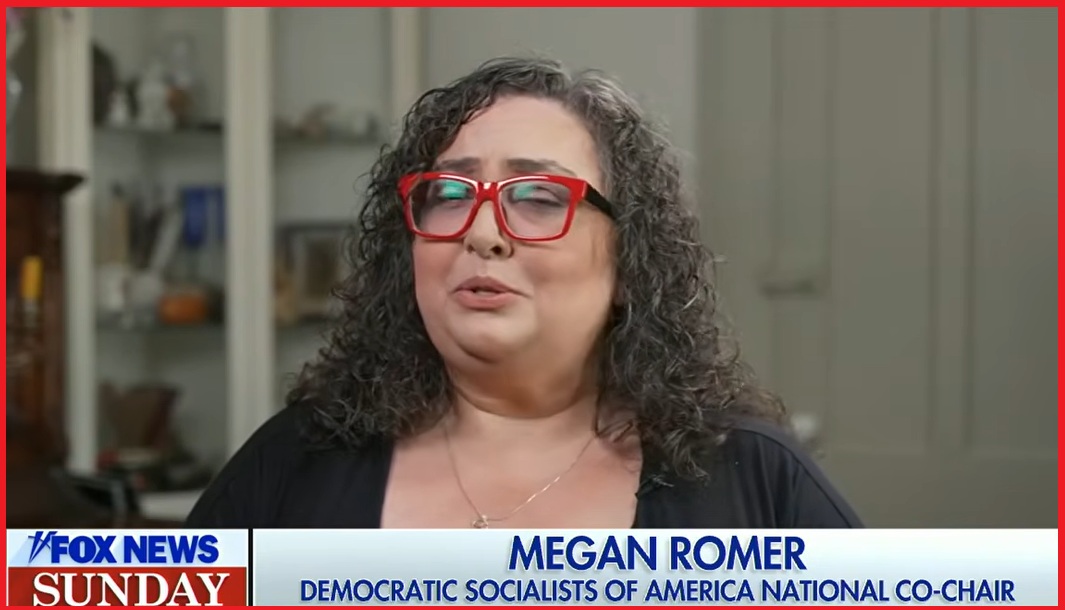
Giving reasonable discussion to the DSA co-chair from New York, Ms. Bream debates the value and benefit of the DSA platform for American civics.  WATCH:

.

Insider Politics Is an Elite Clique


Posted originally on CTH on July 26, 2026 | Sundance

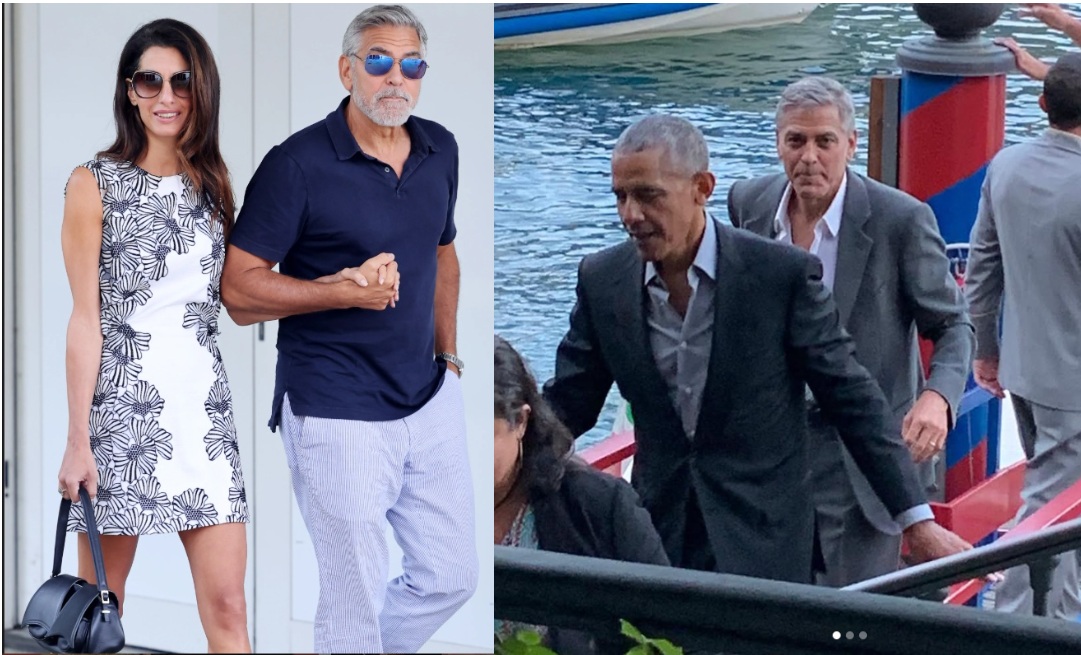
The relationship between George Clooney and Barack Obama is well known and well documented.  However, there are some interesting aspects that fill in a story and highlight how the constructs of U.S. political circles are always managed.

The origin of Clooney’s intersection with the Chicago machine likely begins during his time as an actor playing the role of Dr. Doug Ross in the TV series ER (circa mid 1990’s).  The show was based in Chicago.

Fast forward a few years, and Clooney was considered an alternate fellow traveler for potential as an insurance policy during the 2012 reelection of Obama.

There was always a problem for George Clooney in the political world which centered around his intelligence.

Clooney is not a smart fellow, and efforts to educate him on matters of strategic politics were doomed to failure. He was not competent as lead; the male AOC of his time.

However, in 2012 those who control the mechanisms of Democrat politics were worried about the reelection of Obama when contrast with the chaos created by the Arab Spring, which he purposefully triggered.

Enter Amal Alamuddin, an international “human rights” lawyer with significant leftist bona-fides.  Amal Alamuddin was Lebanese and British. In/around mid-2012, Clooney was told by his lawyer that Amal was coming to his home on the Amalfi coast of Italy; the lawyer said, “This is the woman you need to marry.”

Given the frustration of Clooney’s intellectual challenges, the objective was to immerse Clooney in competency and see if it would rub off.  Controlled leftism is always following a similar playbook (again, see AOC as a reference).

On June 30, 2012, the overthrow of Egyptian leader Hosni Mubarek was concluded.  Part of the USAID regime change operation, the part that triggered the original Islamist Spring, worked with great success to install Muslim Brotherhood member Mohammed Morsi.

Morsi took power in Egypt and quickly went to work on the platform of extremist Islam. In November of 2012, President Mohammed Morsi issued a provisional constitutional declaration that granted him unrestricted authority and the authority to legislate without the need for judicial oversight or review. The objective was a new Egyptian constitution based on Islamic Law, Sharia Law.

In the background of the Obama administration, with Secretary of State Hillary Clinton running the USAID operation supported by CIA Director Leon Panetta, the September 12, 2012, Benghazi crisis in neighboring Libya presented a problem. The U.S administration and the international control agents who supported the Muslim Brotherhood had their hands full.

Morsi in Egypt was going fully Islamist at the same time Libya was in turmoil. Back home the Benghazi crisis was filling the headlines as the U.S. reelection loomed large. Clooney was in London and the Amal Alamuddin operation was still ongoing. That’s the context for this video clip.

Listen to George Clooney talk about asking Amal Alamuddin to come meet him and what Alamuddin was working on at the time. The video is prompted; it only takes around 30 seconds to get the point.

Amal Alamuddin was working for the Muslim Brotherhood on the Egyptian constitutional changes in support of the objectives of introducing Sharia Law on behalf of Mohammed Morsi, the hand-selected leader approved by Barack Obama.

For those who are only just beginning to realize how candidates, politics and elections are controlled by global elites, you can literally see how the small group was operating through this example.

Obviously, Obama won re-election; however, despite getting married to Amal Alamuddin, now Amal Clooney, George Clooney’s intellectual deficiency could never be overcome.

Although, to be fair, there are still Obama operatives at work within the DNC who don’t want to give up on the Clooney enterprise.

Six months after Obama’s second inauguration, in June 2013, the Egyptian people had enough of the hardline extremism.  The military led by General Abdel Fattah al-Sisi, dispatched Morsi, closed the border with Libya, outlawed the Muslim Brotherhood, put the remaining extremists like Mohammed al-Zawahiri (brother to al-Qaeda #2 Ayman al-Zawahiri) into jail and saved themselves from the Islamist spring.

Amal Clooney then went to work for the International Criminal Court (ICC) and was part of the legal team that assembled the war crimes charges against Israeli Prime Minister Benjamin Netanyahu that have recently been in the headlines.

Clooney was working for ICC lead prosecutor Karim Ahmad Khan who has also been in the headlines recently.

(UK Guardian) – The prosecutor of the international criminal court, Karim Khan, has been removed from office after the court’s governing body concluded in June that he had committed serious misconduct in connection to allegations of sexual abuse.

The ICC’s member states voted on Friday to oust the British prosecutor in an unprecedented move that concludes a damaging episode for the court two years after the allegations were first raised.

According to sources familiar with the result, 82 of the court’s 125 member states voted in favour of removing Khan at a special meeting at the UN’s headquarters in New York. (more)

…And now you probably know more than you ever wanted to know about these things.

Berlin Terrorist Killed During Police Capture – Background of Terrorism as Known Wolfe


Posted originally on CTH on July 26, 2026 | Sundance 

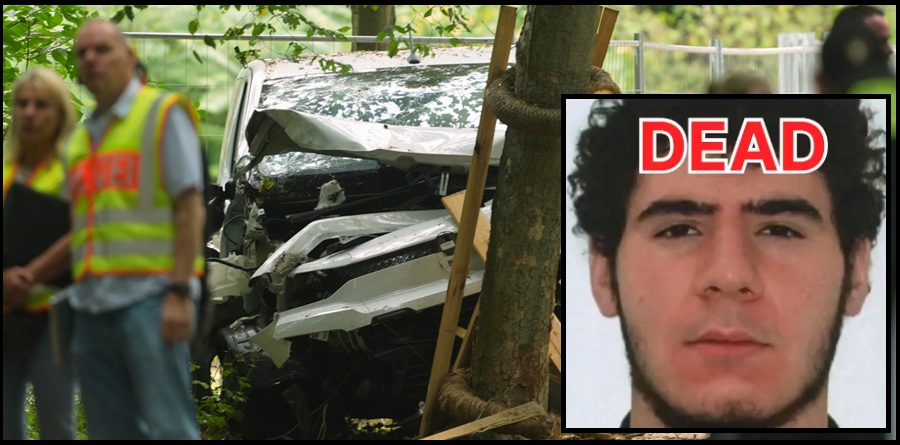
The suspect who drove a van into a crowded gay-pride celebration was shot and killed by police following a manhunt. Abdul Ballout, a German citizen with Lebanese roots, was killed following a search that lasted nearly 24 hours after the attack in downtown Berlin. {SOURCE}

KNOWN WOLF -The background of 21-year-old terrorist Abdul Ballout is a case study in failure by European authorities.  Ballout previously travelled to Lebanon in 2025 to join ISIS in Syria.  He was identified by German authorities as an ISIS terrorist and arrested in Lebanon where he served three months in prison and was returned to Germany.

Abdul Ballout was arrested at the Berlin airport upon return and was convicted in May of this year for preparing a serious act of violence endangering the state, as well as publishing Islamic State propaganda on his Instagram account and other charges.  He was sentenced to 1 year, 10-months in prison but the sentence was suspended for time served; he was released from custody.

(Via Associated Press) – BERLIN (AP) — The suspect in the deadly Berlin Pride attack that left one person dead and 29 injured was shot and killed by police during a confrontation on Sunday in a suburb of the city, authorities said.

Abdul Ballout, a German citizen with Lebanese roots, was killed following a search that lasted nearly 24 hours after the attack in downtown Berlin. Berlin prosecutors said the suspect had previously sought to join the militant Islamic State group. (read more)

The ironic aspect to this particular attack is the cultural sensitivity of his victims.  Abdul Ballout killed the same people who march in the streets to protect Islamists from the consequences of their ideology.

The Scale of Ineligible People Called for Jury Duty Starts to Highlight Number of Illegal Aliens Currently on Voter Rolls


Posted originally on CTH on July 26, 2026 | Sundance 

In most states the jury duty summons process comes from registered voter rolls. As a consequence, when a person is called for jury duty and is then disqualified as a non-citizen, we have another way to judge the scale of non-citizens on the voter rolls.

Reviewing lists of disqualified non-citizen jurors is now taking place in many counties led by citizen inquiry. The disqualification records, “non-juror” lists are public records in many states and counties.  These reviews are turning up tens-of-thousands of non-citizens who are on juror lists, which means they are also on voter rolls.

(New Jersey Globe) – About 75,000 noncitizens are summoned for jury duty in New Jersey each year, based on data from three state government agencies, including the Motor Vehicle Commission — a stunning figure that widens the scope of a growing controversy over government databases that may incorrectly identify noncitizens as eligible voters and jurors.

While the number is alarming, there’s no indication that noncitizens have served on a jury since the judiciary implemented additional guardrails to prevent it.

“Prospective jurors are asked about their citizenship and other qualifications when they complete the mandatory juror qualification questionnaire,” said Pete McAleer, a spokesman for the New Jersey Administrative Office of the Courts. “Those who advance are reminded of the eligibility requirements during jury orientation and are directly questioned about their citizenship during jury selection by the judge and, as permitted, the attorneys.”

In between, potential jurors watch a training video that includes the citizenship requirement.

The revelation of noncitizens making their way into jury pools comes three days after Gov. Mikie Sherrill disclosed that an alleged software glitch at motor vehicles led to the inclusion of roughly 6,600 noncitizens on New Jersey’s voter rolls; Sherrill blamed the vendor, IDEMIA, and said less than 400 noncitizens have voted in recent elections.

According to McAleer, the judiciary processes more than one million summonses annually for potential jury service and randomly selects records provided from the Division of Elections, the Division of Taxation, and the MVC. (read more)

That 75,000/yr number are just those summoned people who disqualified themselves by being truthful about their status.  I firmly believe the average non-pretending American will soon to realize/admit that many non-citizens actually remained on juries and passed judgement during trial.

Illegal aliens voting in elections is happening, we all know it and even though the media is still trying to retain their lies, you can tell that stance is softening against the reality.  However, illegal aliens sitting as jurors in trials, will create a big-time constitutional mess that is something the communist left and media will never admit.