BEN BERGQUAM: Charlie Had Fear Whenever He Went Into Hostile Environments, But He Chose To Walk In Courage


Posted originally on Rumble by Bannons War Room, on: Sep 7, 2026

NATASHA OWENS: Charlie’s Legacy Isn’t What People Say Now That He’s Gone. It’s What People Do Differently Because He Lived


Posted originally on Rumble by Bannons War Room, on: Sep 7, 2026

JACK POSOBIEC: Charlie Could Do What He Did Because He Had A Purpose. He Had A Why. He Understood What He Was Fighting For


Posted originally on Rumble by Bannons War Room, on: Sep 7, 2026

BANNON: Behind Everything You Saw, Charlie Was Nonstop. He Had An Incredible Energy, Drive, And Thirst For Knowledge. His College Debates Took Enormous Preparation


Posted originally on Rumble by Bannons War Room, on: Sep 7, 2026

POSOBIEC: Charlie Kirk Made Debate Look Effortless Because He Relentlessly Prepared for Every Question


Posted originally on Rumble by Bannons War Room, on: Sep 7, 2026

THE WHITE HOUSE PODCAST w/ Royce White & Professor Penn


Posted originally on Rumble by Bannons War Room, on: Sep 7, 2026

POSOBIEC: Charlie Kirk Was A Young Man In A Hurry. From The Moment He Woke Up Until His Head Hit The Pillow, Everything Was Regimented


Posted originally on Rumble by Bannons War Room, on: Sep 7, 2026

European Revolution 2026


Posted Originally on Sep 8, 2026 by Martin Armstrong |  

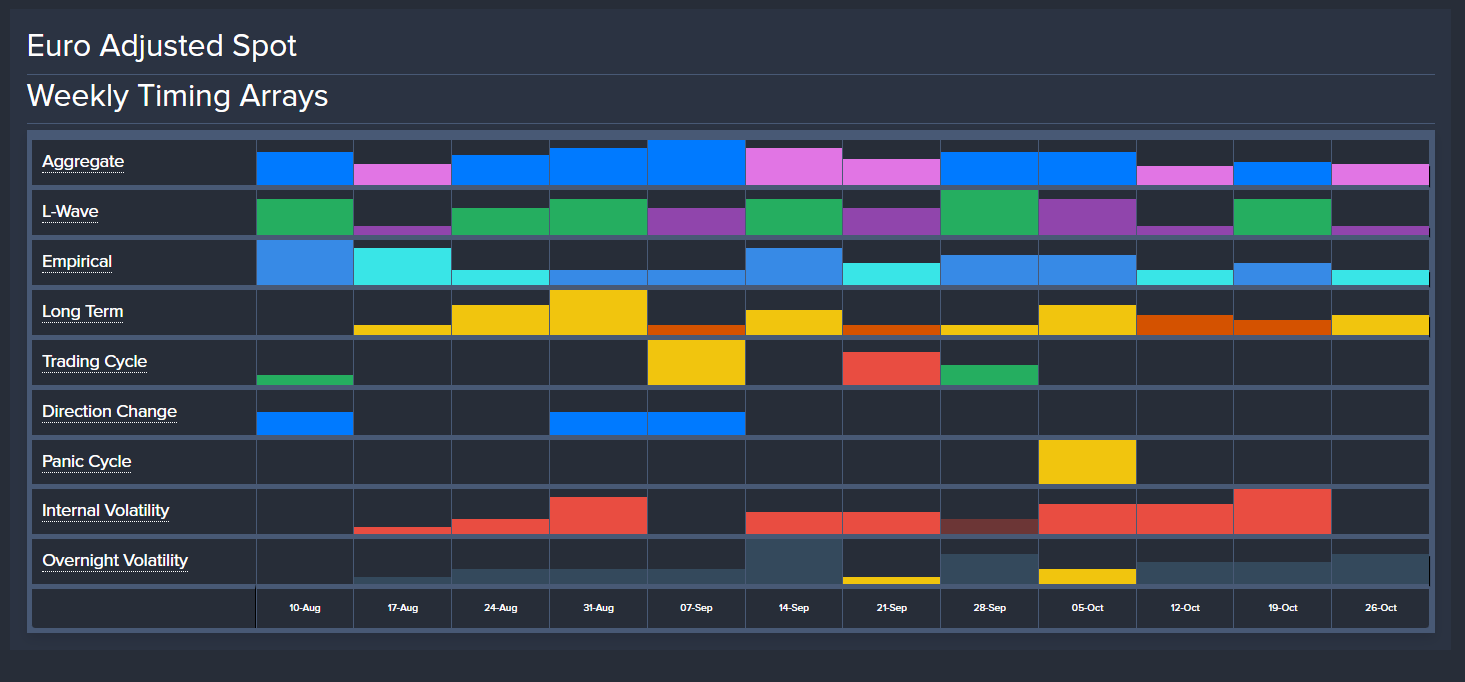
IBEUUS W Array 8 10 26

COMMENT: Marty, no award could cover what you have accomplished. The forecast that AfD would win was outstanding and as impressive as your forecast back on Poland. I am still amazed at how your computer forecasts war years in advance, politics, and major market movements. What you have discovered is like the legendary Philosopher’s Stone. The euro and Dax all had turning points right of schedule.

Just amazing.

Friedrich

AfD logo
PulitzerHearstWarYellowKids

The success of Germany’s Alternative for Germany (AfD) in state elections is a warning sign to the madman of Ukraine, that the tide is turning against him. The AfD is now state’s largest party but short of a majority.

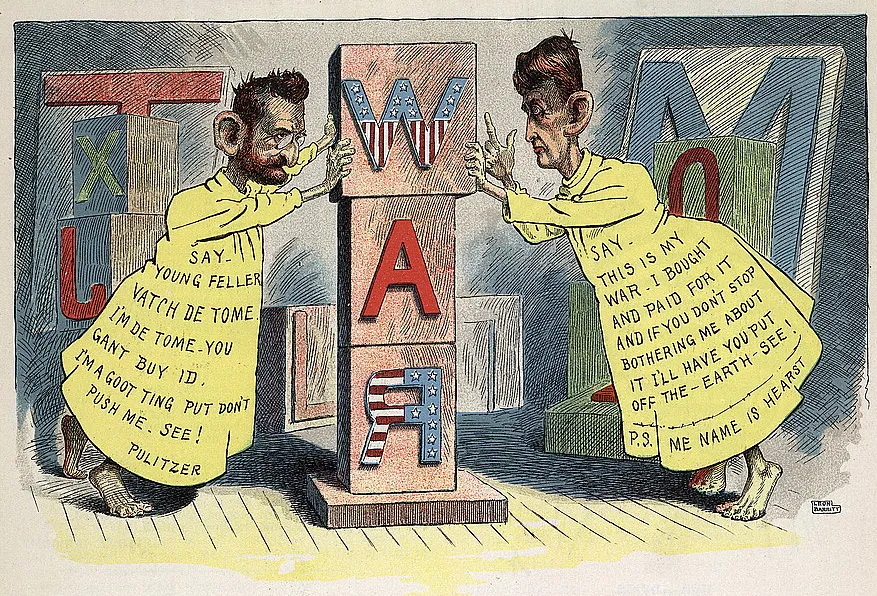
Nevertheless, the Neocon Western Press that keeping pushing the false narative that Russia invaded Ukraine “UNPROVOKED” simply want war and to picture as many dead bodies in the headlines as was the case was the famous case of Pulitzer vs Hearst who manufactured the Spanish American War for profit.

Quite frankly, I do not know how these people can even look themselves in the morror. They press has become the cheerleaders of endless wars and dip their pens in blood to write the next line. They are spinning this as a win for Putin for they fear there may not be any blood that they can write about. they are reporting that there is “unbridled delight in Moscow” with the success of the AfD over the weekend.

The press only supports the Neocons – not the people.  They will constantly bash the AfD and do their best to derail them and slander everything they do. They will use their position to disrupt the politics of Germany and Europe pushing their narative at all times. I remember Margaret Thatcher once told me that if she walked across the Thames River, the press would report it was only because she did not know how to swim.

The Western Warmonger Press ignores the fact that the German youth see no benefit in war with Russia for Ukraine, which is by far the most corrupt country on the planet which has been consistently documented over the years, not to mention the latest missing €70 million missing from Estonia. There there was the revelation that Zelensky was sending $50 million Per Month to USA preparing for the day he has to flee. Then they invested $1.5 billion creating a ski resort from war money?

Ukraine Corruption PaNDORA pAPERS

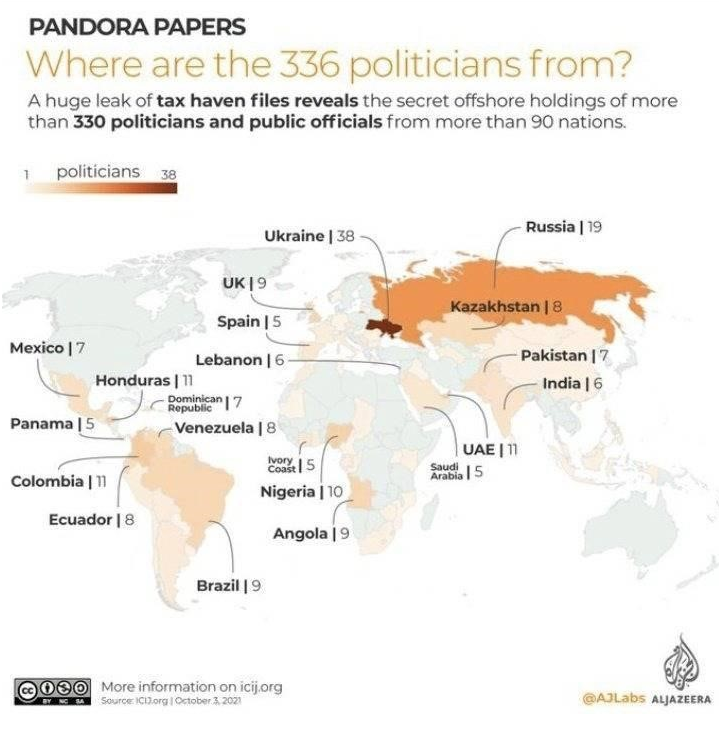
Ukraine remains the most corrupt government in the world, and they are selling the Ukrainian people for personal wealth and greed with ZERO remorse for their nation or their people. Ukrainian politicians topped all other countries for corruption. Even in the Pandora Papers, 38 Ukrainian politicians have to hide cash offshore – the largest number of corrupt politicians in any other country.  Zelensky’s office tried to justify his use of offshore companies for himself as protecting him against pro-Russian forces, following leaked revelations of pervasive corruption. Even Foreign Policy Magazine has reported that the clock is running out on Zelensky.

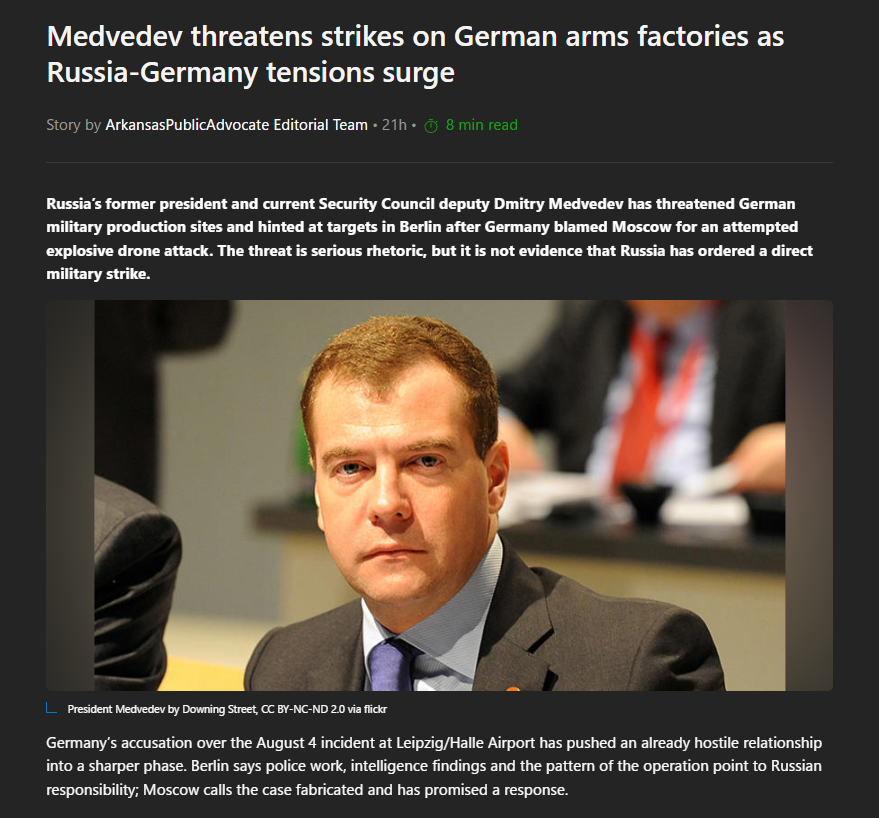
Medvedev_threatens_strikes_on_German_arms_factories_as_Russia_Germany_tensions_s

Merz has been absolutely braindead putting Germany in the crosshairs of Russia and for what? To keep the EU from collapsing? Let’s be honest here, a country that is supplying weapons to a nation at war during both World Wars I and II made the supplier a target, or at least brought it significantly closer to direct conflict.
During World War II, the US claimed neutrality but it began providing massive military aid to the Allies through the Lend-Lease Act of March 1941, effectively becoming the “arsenal of democracy.” Though the US wasn’t an official combatant, this policy had significant consequences. This policy supported Britain and the Soviet Union becoming a major factor in Hitler’s decision to declare war on the United States on December 11, 1941. Hitler saw this aid as a direct threat to Germany’s war effort and believed that by declaring war, he could disrupt this supply line.

Sweden’s most critical contribution was providing Germany with large quantities of iron ore, essential for its war industry. In return, Germany agreed to respect Sweden’s neutrality, provided this supply continued. Sweden also permitted German troops and military supplies to transit its territory. In total, over 2.14 million German soldiers and 100,000 railcars of military supplies were transported through Sweden to the front lines, particularly during the invasion of the Soviet Union.

Germany has closed the Russian consulate in Bonn and the Russian House cultural center in Berlin in response to an alleged attempted drone attack attributed to Russia. This action has led to Russia retaliating by closing the German consulate in St. Petersburg and all Goethe-Institut branches in the country. Germany’s closure of the Russian consulate is part of escalating tensions between the two nations. Merz takes his order from the warmongering Neocons in control of NATO.

Europe is changing all because the leaders of the pack in Europe have been more interested in trying to preserve the European Experiment in Brussels than the people they pretend to represent when in fact they are simply moving to reestablish the Mideval Serfdom where they become the landlord promising safety from evil Russia building their castle walls and moving to total economic subjugation even pressing with CBDCs to eliminate cash. In Spain, the law requires banks to report cash withdrawals exceeding €3,000 to the authorities for tax control purposes. They want to know what your are doing with cash. The potential fines are up to €150,000 for failing to report individuals or financial institutions withdrawing their own money. Obviously, they do not trust their own citizens.

Sweden no go

Europe is indeed shifting to the right because Brussel has ignored their culture and flooded Europe with Muslims from some of the most anti-Christian states. This has led to some areas even in Sweden posting signs that Shira Law applies there, ignoring the culture of European countries. These people did not come to assimilate. They brought their culture with them. This has been the #1 reason that the people of Europe are turning to the right against massive immigration. We are seeing this in Austria, France, and Germany.

Austria ??: The right-wing Freedom Party is leading at almost 40%
France ??: Marine Le Pen leading the polls to be President
Germany ??: Polls show AfD consistently the largest party.
Norway ??: The right-wing/Libertarian party leading massively at 33.4%

As we head into 2032, this is the most intense part of the wave. Europe is tearing apart at the seams. All we can hope for is that the EU breaks up ASAP. But I suspect that they will stage a false flag to desperately create war with Russia ASAP. That is the ONLY was the EU itself can survive or the individual states will break apart because of their authoritarian policies that made less sense than the WOKE Agenda.

POLITICS

In the US, the Progressives will win the House and try to push their insane agenda. That is what is needed for 2028 where we may see the Democratic Party split and the people rise up against this progressive movement.

Mandami Zohran

No matter how many times people throughout history try this same Marxist agenda that constantly fails, they will keep trying no mater what. Mandami has fulfilled our computer model right on target. JP Morgan noe has more people in Texas than NYC. Goldman Sachs has ordered many of its top people move to texas of resign. The New Texas Exchange will surpass NYC.

Even James Carville has declared he is no longer a Democrat. The Progressives need to impose their agenda and once and for all the people will see what communism really was all about. EQUITY was achieve not by raised the lower class, but by eliminating the upper class. There went investment, IPOs, venture capital etc. This will be how the political system self-destructs.

When the Democrats take the House, they will be waging war on Trump. They will impeach him again and probably going after even members of his family, probably Kushner, even for criminal allegations. Trump may retaliate and go after Obama. The next two years is going to be politically crazy. Hence, 2027 will start the volatility like we have not seen before.

Categories:GermanyEuropean UnionPolitics

89% of Americans Finally Understand That Government Is Corrupt


Posted Sep 8, 2026 by Martin Armstrong |  

Political Corruption

The American people are not merely dissatisfied with Washington. They have concluded that the government itself is corrupt. A new Gallup poll found that 89% of American adults believe corruption is widespread throughout the government, the highest reading in the 20-year history of the survey. This is no longer a fringe position dismissed as a conspiracy theory. Nearly nine out of every ten Americans now look at their government and see an institution serving someone other than the people.

The 89% reading rose by an astonishing 10 percentage points in a single year. Perceptions of widespread government corruption had remained between 72% and 79% from 2010 through 2025. The public was already deeply cynical, but something has clearly broken. When almost the entire population believes its government is corrupt, the political system has lost more than popularity. It has lost legitimacy.

Gallup found that 91% of Democrats, 90% of independents, and 83% of Republicans believe government corruption is widespread. Americans cannot agree on immigration, taxation, abortion, foreign policy, health care, or the definition of a woman, yet they have reached near-unanimous agreement that the people running the government cannot be trusted.

The partisan movement reveals how voters process corruption. In Joe Biden’s final year in office, only 57% of Democrats said corruption was widespread. That figure rose to 76% during the first year of Donald Trump’s second term and reached 91% in 2026. Democratic concern exploded by 34 percentage points once the opposing party controlled the White House. Republicans have been more consistent, with approximately eight in ten describing corruption as widespread during the past two years, compared with 87% in 2024.

Both parties recognize corruption most clearly when the other side controls the government. Democrats ignored abuses under Biden and suddenly discovered systemic corruption under Trump. Republicans condemned the Deep State under Biden but became more willing to defend Washington when their party returned to power. This is precisely how the two-party system protects itself. Each side treats corruption as a partisan weapon rather than an institutional disease.

corruption bribe under the table

America now has the highest perceived level of government corruption among the 38 nations belonging to the Organisation for Economic Co-operation and Development. The median across those advanced economies was 59% in 2025, down from 69% in 2009. The United States stood at 79% last year, already 20 percentage points above the OECD median and higher than every other member country. The new American reading of 89% may widen that gap dramatically once complete international figures become available.

Since 2023, Gallup has asked the question in 132 countries, and only four recorded readings nominally above America’s current 89%: Lebanon at 92% in 2024, Peru at 92% in 2025, and Ghana and Nigeria at 90% in 2024. The self-proclaimed guardian of global democracy is now viewed by its own citizens as nearly as corrupt as governments struggling with chronic instability and institutional failure.

Corruption in the United States rarely resembles a politician accepting a suitcase filled with cash. Washington legalized much of its corruption and gave it respectable names such as lobbying, campaign contributions, consulting, public-private partnerships, speaking fees, book deals, foundations, and regulatory cooperation. The transaction is hidden beneath lawyers, nonprofit organizations, political action committees, government contracts, and a revolving door between regulatory agencies and the industries they supposedly regulate.

If a businessman hands a government official cash to obtain favorable treatment, everyone recognizes the bribe. If a corporation contributes millions of dollars to political organizations, hires former regulators, funds policy institutes, and helps write legislation benefiting its industry, Washington calls it participation in democracy. The outcome is often the same, but the paperwork makes it legal.

Members of Congress have access to information capable of moving markets while debating whether they should be permitted to trade individual stocks. Defense contractors finance politicians who approve military spending. Pharmaceutical companies influence agencies that approve and purchase their products. Banks help design regulations governing banks. Technology companies cooperate with government agencies while lobbying against restrictions on their power. Foreign governments and their representatives spend fortunes attempting to purchase influence over American policy.

This is why the public distinguishes between government and business. Gallup found that 71% of Americans believe corruption is widespread in business, an increase of eight points from last year. That is certainly high, but it remains 18 percentage points below the government figure, the largest gap recorded in the American survey. Between 2006 and 2025, perceptions of government corruption averaged 11 points above business corruption. Americans increasingly believe government has become the greater problem.

A private company must generally persuade someone to purchase its product. Government does not require consent. It taxes, regulates, fines, licenses, prosecutes, surveils, borrows, and spends through force of law. Corruption in business can destroy a company, but corruption in government can destroy the rule of law because the people benefiting from the abuse also control the institutions responsible for investigating it.

The national debt is another monument to this system. Washington spends trillions of dollars it does not possess, directs the money toward politically protected interests, and transfers the obligation to taxpayers who had no meaningful influence over the decision. Politicians purchase votes today with borrowed money and leave future generations with the interest bill. Both parties complain about debt while in opposition and expand it when in power because neither side is willing to dismantle the patronage network supporting Washington.

Americans have watched trillions disappear into wars with no clear objective, emergency programs with little oversight, failed infrastructure promises, corporate subsidies, foreign aid, government contractors, and agencies that can never pass a serious audit. The Pentagon has repeatedly failed comprehensive financial audits, yet Congress continues approving larger military budgets. No private corporation could admit that it cannot account properly for its assets and then demand even more money without consequences.

The public also witnessed how government behaved during COVID. Officials imposed lockdowns, closed businesses, censored dissent, issued contradictory directives, and protected pharmaceutical companies while insisting that every decision followed “the science.” Small businesses were destroyed while politically connected corporations expanded. Government officials violated restrictions they imposed upon everyone else, and few faced any accountability. That period taught millions of Americans that emergency power protects the institution before it protects the citizen.

The weaponization of law has deepened the collapse in trust. Each political faction now believes the other uses prosecutors, intelligence agencies, courts, tax authorities, and regulators as political instruments. Justice is no longer perceived as blind. The public increasingly assumes that the outcome depends upon the identity, wealth, connections, and political usefulness of the accused.

This is extremely dangerous for a republic. The rule of law survives because most people voluntarily accept the legitimacy of institutions even when they dislike an individual decision. Once the population believes that laws are selectively enforced and government acts primarily for itself, obedience becomes based upon fear rather than consent.

Elections cannot repair this when the bureaucracy, debt structure, lobbying apparatus, intelligence agencies, regulatory state, and government contractors remain largely untouched regardless of which party wins. Voters change the elected management, but the permanent machinery continues operating. Every president campaigns against Washington and eventually discovers that Washington is larger than the presidency.

The bureaucracy protects itself because its survival does not depend directly upon performance. A business that continually fails eventually loses customers and capital. A government agency that fails demands a larger budget, more employees, and broader authority. Failure becomes evidence that it was not given sufficient resources. Success is defined internally, and accountability disappears into committees, reports, and investigations that rarely punish anyone with power.

Americans finally see the system for what it is. The question is no longer whether government corruption is widespread. Nine out of ten have already answered that question. The issue is how long a republic can survive after its citizens conclude that the government no longer represents them.

Categories:CorruptionPolitics

Argentina: Can Milei Wake a Dead Economy?


Posted  Originally on Sep 8, 2026 by Martin Armstrong |  

Argentina 100 Peso

10is perhaps the most fascinating economic experiment taking place anywhere in the Western Hemisphere. This was once among the wealthiest nations in the world. Generations of political corruption, socialism, currency destruction, defaults, subsidies, and government intervention turned that enormous potential into repeated economic crises. Javier Milei came to office attempting something politicians almost never do voluntarily: reduce the size of government instead of expanding it.

The latest numbers show that the transformation is far from complete, but Argentina is no longer moving relentlessly in one direction toward collapse. GDP expanded 2.3% year-over-year during the first quarter of 2026 and increased 0.7% from the previous quarter on a seasonally adjusted basis. Economic activity has remained uneven, but June strengthened sharply, with growth exceeding expectations and most major sectors expanding from the previous year. Argentina is beginning to show signs that an economy suffocated for decades may finally be attempting to breathe again.

Argentina.Javir_.Milei_.Chainsaw

Inflation remains painful at 33.8% YoY, with prices rising 2.1% during July alone.  Argentina entered the Milei era after inflation had exploded into triple digits. Inflation is still destroying purchasing power, but the government is no longer financing every political promise by endlessly expanding the deficit and then pretending money creation has no consequences. Through July, the national public sector accumulated a primary surplus of roughly 0.9% of GDP and a financial surplus near 0.1% of GDP after interest payments. July alone produced a primary surplus of nearly 3 trillion pesos and a financial surplus of about 245 billion pesos. Compare that with Washington, London, Paris, or Brussels, where politicians cannot even discuss balancing the budget without claiming civilization itself will collapse. Milei infamously stood at the podium with a chainsaw while campaigning, making good on his promise to cut down Argentina’s public sector.

Milei understood one basic fact that Keynesian economists refuse to accept. Government cannot permanently consume more than society produces. Eventually, the debt becomes the economy. Taxes rise to service the debt, borrowing costs increase, productive capital leaves, the currency weakens, and politicians respond by printing even more money. Argentina spent decades trapped inside that cycle.

Argentina and Chile recently revived their cross-border mining framework, opening the door to more than $20 billion in potential investment across major copper projects. Argentina has enormous reserves of lithium, copper, gold, silver, oil, and natural gas that were historically trapped beneath political instability and hostile investment policies. If investors begin believing contracts will be respected and capital will not simply be confiscated whenever government needs money, those resources suddenly become economically valuable.

The Vaca Muerta shale formation could prove even more important. YPF and international partners have submitted a proposed LNG project under Argentina’s new large-investment incentive regime with potential investment eventually reaching $51 billion. Argentina possesses one of the largest shale gas resources in the world, yet political incompetence forced a country sitting on enormous energy wealth to repeatedly struggle with energy shortages and foreign currency problems.

That is the insanity government creates. You can have oil and still import energy. You can have fertile farmland and still destroy agriculture with export taxes. You can possess mineral wealth and prevent anyone from developing it. Resources do not make a nation wealthy. Confidence and the rule of law determine whether anyone will risk capital developing those resources.

Private companies are beginning to notice the change as well. Chinese ride-hailing company Didi plans to invest more than $200 million in Argentina during 2026 after investing around $160 million the previous year. Uber has separately announced plans to invest hundreds of millions over several years. These may seem insignificant compared with enormous mining projects, but they demonstrate the same principle. Capital begins with small commitments, observes whether the rules remain stable, and increases exposure when confidence rises.

Argentina is still nowhere near being fixed. Unemployment remains elevated, industrial production is inconsistent, poverty remains serious, infrastructure needs enormous investment, and inflation is nowhere near acceptable. Anyone proclaiming victory already does not understand economic cycles. You cannot reverse a century of political destruction in two years. But Argentina is providing an important contrast to the direction of much of the West. Europe believes every problem requires another government program. Britain believes the solution to excessive taxation is another tax. Canada expands government while productivity deteriorates. Washington runs trillion-dollar deficits even during economic expansions.

Whether he ultimately succeeds will depend less on speeches than on whether confidence returns. If domestic capital stops fleeing, foreign investment continues rising, energy and mining projects move from announcements into actual construction, inflation continues declining, and the government maintains fiscal discipline, Argentina could enter a very different economic cycle. That is what makes Argentina so important to watch. India, Vietnam, Malaysia, Indonesia, and Singapore demonstrate economies rising through industrialization, demographics, manufacturing, and international capital flows. Argentina offers another possibility entirely: whether a nation that destroyed itself through government can recover by finally getting government out of the way.