Posted originally on Jul 16, 2026 by Martin Armstrong |
New York Federal Reserve President John Williams now says inflation has likely peaked and that monetary policy is “well positioned” to bring inflation back toward the Fed’s 2% objective. Williams acknowledged inflation remains “unquestionably too high,” but argued that the worst of the tariff effects have passed, housing inflation is moderating, oil prices have peaked, and disruptions tied to the Middle East conflict should ease over time. He forecasts inflation falling to roughly 3.25% by the end of the year and gradually returning to 2% by 2028.
This is precisely where central bankers always get it wrong. They continue assuming the geopolitical landscape will cooperate with their economic forecasts. There is absolutely no evidence supporting that assumption. If anything, the evidence points in exactly the opposite direction. The Middle East is becoming more unstable, not less. Ukraine remains a war of attrition consuming enormous military resources every day. Europe is dramatically expanding defense spending. China is eyeing Taiwan and waiting for the US to stretch itself too thin to protect it. NATO members are rebuilding their militaries at levels not seen in decades. Governments everywhere are preparing for a world of prolonged geopolitical confrontation.
Wars are the most inflationary events imaginable.
Williams argues that oil prices have peaked and that disruptions in the Middle East should gradually subside. That is an assumption, not a forecast supported by events. The ceasefire that briefly lowered energy prices has already broken down. Shipping risks remain elevated. Iran, Israel, Lebanon, Syria, and the Red Sea continue presenting risks capable of sending commodity prices sharply higher overnight. It only takes one escalation to completely invalidate months of inflation projections.
The same mistake is being made with Europe. Governments across Europe are now increasing military budgets at extraordinary rates. Germany is rebuilding its armed forces. Poland continues massive military expansion. Finland has built underground shelters capable of protecting nearly its entire population. Civil defense has returned across Europe because governments themselves are preparing for scenarios they refuse to discuss publicly. Military production does not reduce inflation. It diverts labor, capital, raw materials, and industrial capacity away from productive investment and into war preparation.
This is exactly why Keynesian economics continually fails. It treats inflation as though it exists in isolation from politics. The world economy has never functioned that way. Capital moves because of confidence. Prices move because of shortages. Governments create shortages during wars faster than central bankers can hold press conferences explaining why inflation should be falling.
I have said repeatedly that interest rates are not the master variable. Confidence is. Once governments begin financing wars with debt, inflation becomes only one symptom of a much larger sovereign debt crisis. The borrowing required to finance military expansion eventually overwhelms every textbook model economists continue relying upon.
The Federal Reserve itself admits one of the biggest drivers behind last year’s inflation was the Middle East conflict. Williams acknowledged supply disruptions tied to that war contributed significantly to rising prices. Yet he simultaneously assumes those pressures will fade while the conflict itself continues expanding. That is an extraordinary leap of faith.
The Federal Reserve may believe inflation has peaked, but our computer has consistently warned that increased worldwide conflict is coming in the near-term, and there is nothing more inflationary than war.
Posted originally on Jul 16, 2026 by Martin Armstrong |
The Producer Price Index, which measures wholesale inflation, was unchanged in June after economists expected a 0.2% increase. On an annual basis, producer prices rose 2.3%, down from 2.7% in May and below expectations of 2.5%. Core wholesale inflation, excluding food and energy, also remained flat for the month, while the annual core reading eased to 2.6%. On the surface, the report appears to confirm what Tuesday’s CPI numbers suggested—that inflation is cooling.
The problem is that everyone is looking at the wrong cause. Wholesale inflation cooled for the same reason consumer inflation cooled. Energy prices temporarily collapsed after the brief ceasefire in the Middle East reduced fears over oil shipments through the Strait of Hormuz. Goods prices fell 1.4% during June, the largest decline since July 2022, driven primarily by a 6.4% drop in energy prices. Gasoline alone plunged 12%. Food prices also declined. Those are geopolitical events showing up in the inflation data, not some miraculous victory by central bankers.
The irony is that while economists are celebrating June’s numbers, the very event responsible for those lower prices has already disappeared. The ceasefire has collapsed. Oil prices have begun climbing once again as tensions with Iran intensified. The markets are celebrating yesterday while completely ignoring what is already unfolding today.
The service sector tells a very different story. While energy pushed wholesale prices lower, services continued rising. Trade services increased, margins expanded, and the costs associated with moving goods through the economy remain under pressure. Businesses may have caught a temporary break at the fuel pump, but the structural costs of operating in today’s economy have hardly disappeared.
This is where conventional economics completely breaks down. They continue pretending inflation is simply the result of too much money chasing too few goods. That theory ignores geopolitics, sovereign debt, and capital concentration. Governments continue borrowing at rates never before seen during peacetime. Interest expense continues exploding across virtually every developed nation. Europe is slipping deeper into economic stagnation while military spending accelerates. None of that disappears because gasoline happened to fall for one month.
The markets immediately began pricing in a more dovish Federal Reserve. Treasury yields declined while investors increased their bets that rate hikes may be postponed. They have made this same mistake repeatedly. Every soft inflation report becomes the excuse to predict easier monetary policy. Then another geopolitical event erupts, commodity prices reverse, and everyone wonders what happened.
I have said repeatedly that interest rates are not determined solely by inflation. They are determined by confidence. Capital moves where it believes governments are least likely to collapse. During periods of international uncertainty, both the U.S. dollar and gold can rise together because money is fleeing political risk, not responding to textbook economic formulas. The people waiting for one inflation report to dictate Federal Reserve policy continue misunderstanding how international capital actually functions.
If inflation has supposedly been defeated, why are governments still borrowing trillions, why are defense budgets exploding across the West, why are energy markets once again moving higher, and why is every major nation preparing for a world that looks far more dangerous than the one they promised only a few years ago?
Inflation was never the disease. It has always been one symptom of a much larger sovereign debt crisis. Until governments confront that reality, every temporary improvement will simply be another pause before the next wave arrives.
Posted originally on Jul 16, 2026 by Martin Armstrong |
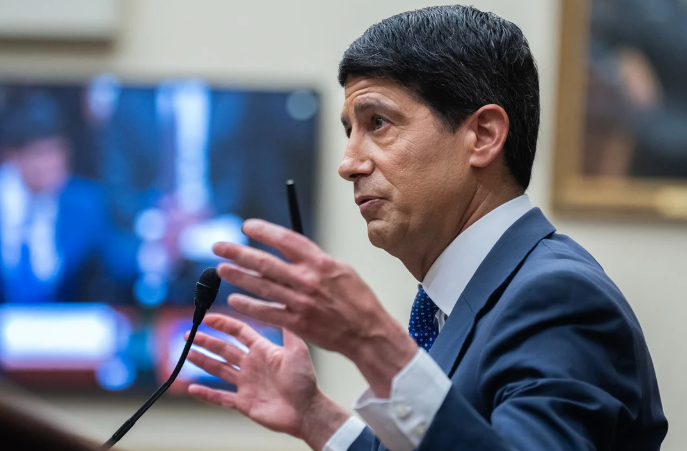
QUESTION: Marty, will you have any input into Warsh’s task forces that will study and give recommendations on improving the US monetary policymaking?
H
COMMENT: Marty,
I watched some of Warsh’s responses in yesterday’s hearing. I was stunned by his response that he believes he can control inflation (ignorance mixed with hubris is a recipe for a horrible disaster). That said from what I saw yesterday I’d rank Warsh right up there with Yellen on the “oh my God, I can’t believe that person is chair” scale. I actually had to stop watching for a while because (to paraphrase an Adam Sandler movie) I was getting dumber for hearing it.
He clearly doesn’t seem to understand how the economy works or what the Fed can actually do to help the economy. So ignorant. He would do well to read some of your books, maybe start with “Fiat” and then the book you’re giving the attendees of the July meeting/training (I won’t be at the event, but put me on the list for when the book comes out as I want to read it).
Let’s hope his actions are far better than what he said yesterday because if not his tenure may be a stupifying shitshow. Based on Socrates projections about China taking over the mantle in a few short years maybe Warsh is just the right guy for the job. Sad to see it playing out live.
Thank you for working to educate people on how the economics of the world really works.
Regards,
Joel
REPLY: I have probably dealt with more central banks than anyone. I was the keynote speaker at the BIS Conference in Paris and sat at the head table with all the heads of the central banks in attendance. I have even had two on the phone at the same time asking if they should intervene in the middle of a financial crisis, I have even sat in a central bank when their red phone connecting then the G7 refusing to answer because it was another wanting them to buy more of their currency. I spoke at the Treasury Management Association and asked questions about what central banks were doing. The finance Minister of Nova Scotia later worked his way next to me at a party later to argue that I downplayed the importance of central banks. Later I asked my friend in the Bank of Canada why he could talk to me, but not to the Finance Minister of one of his provinces. He said (1) I was not Canadian, and (2) if he spoke to Nova Scotia 2 minutes before Newfoundland, he got in trouble.
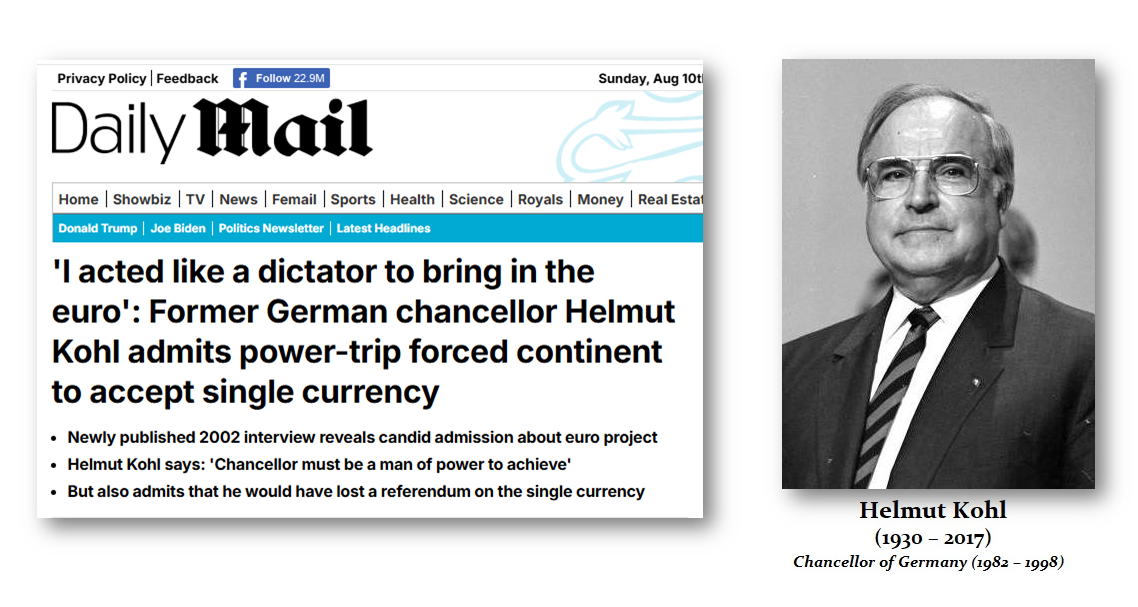
I have stood at times even between a central bank and its political government. Not only did the commission that was creating the euro come to me because we had ended up specializing in currency from the ’70s, but as I have said on various podcasts, it was Helmut Kohl who took Germany into the euro denying the people a right to vote who also admitted he acted like a dictator and would have lost 7:3 if the German people were allowed to vote on joining the euro. The German central bank, Bundesbank, was vehemently against joining the euro for all the same reasons we are starting to see rise to the surface today. They were feeding us all the notes of what was taking place in the meetings . So, I was really square in the middle of this mess so I was getting it from both sides.
The original Keynesian theory was to control the economy following Karl Marx’s lead. When I was in school, I found it very frustrating. You went to Physics class that they told you nothing is random. Einstein said God does not play dice with the universe. Across the hall, you walked into Economics class and they said that was all wrong, there is no definitive business cycle because everything is a random walk so the government can control society and smooth out the business cycle eliminating recessions and depressions. The theory that inflation was simply an increase in the money supply meant that political governments did not create inflation, it was the central bank’s job to eliminate inflation. Thus, politicians took no responsibility and turned to the central banks arguing that they were responsible for the money supply and thus inflation. Therefore, it was allegedly their duty to control inflation irrespective of the spending of politicians. This was an inconvenient economic truth that has led us to where we are today.
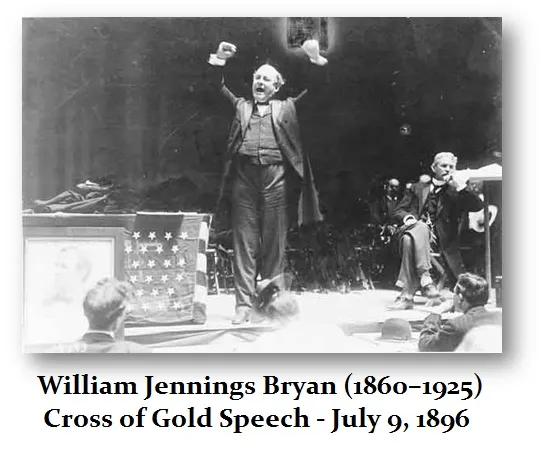
The problem is that the ONLY theory central bankers have is the Keynesian Model. They really have no other theory to rely on. So they keep this braindead idea that lowering rates will stimulate demand and raising rates will decrease demand and this inflation can be controlled with such a theory. They exclude government spending and taxation from the economic reality. Just like the Silver Democrats led by William Jennings Bryan overvalued silver to deliberately create inflation as their solution to get out of the Long Depression of the 1890s.
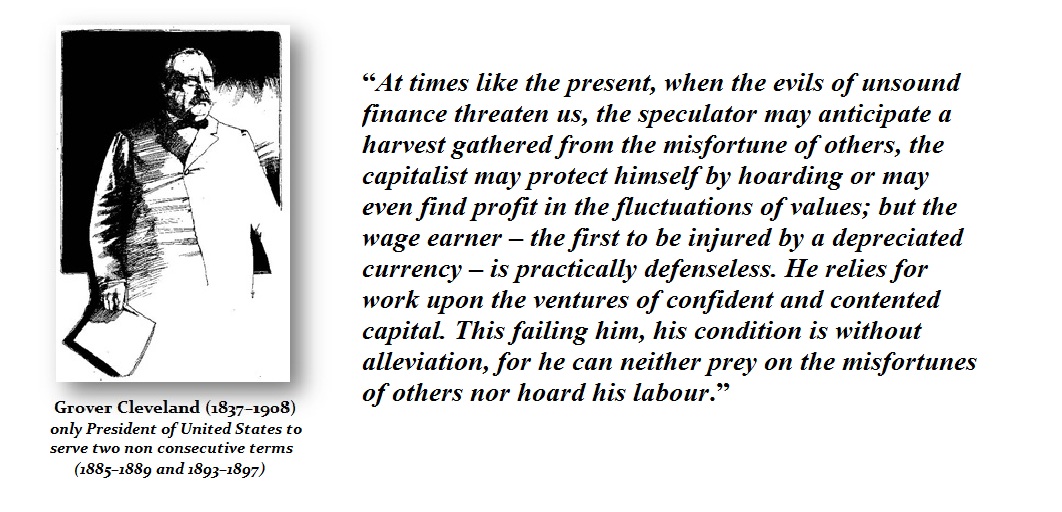
President Grover Cleveland was a Democrat who spoke out against the recklessness of his own party. They virtually bankrupted the country forcing J.P. Morgan to arrange a gold loan to bailout the US Treasury in 1896. Today, the Democrats continue this same idea. They do not know how ro run for office without bribing the people to vote for them and they will a free lollypop and a toaster. The central bank is INCAPABLE of controlling inflation when they cannot control the fiscal side of the economy.
The central banks are now TRAPPED with no alternative. They are afraid to state the truth because that would put them in direct confrontation with the political side of this nightmare. All they have is raising or lowering interest rates, which has NEVER worked even just once. We are looking at the national debts that governments never pay off. Raise the rates and the government budgets explode and that comes back as a political disaster.
That included his commitment to bringing inflation under control and his plan to establish five task forces review factors affecting monetary policy. No, I have not been contacted about providing any input into Warsh’s task forces on improving the US monetary policymaking. I am not certain that they are ready for the truth. All they have is the Keynesian Economic Model. Before they would abandon that and listen to what I have witnessed will take a cold day in Hell, or a major financial crisis. They will NEVER listen to me to prevent such a crisis. Those in government react, they do not put their neck on the chopping block voluntarily.
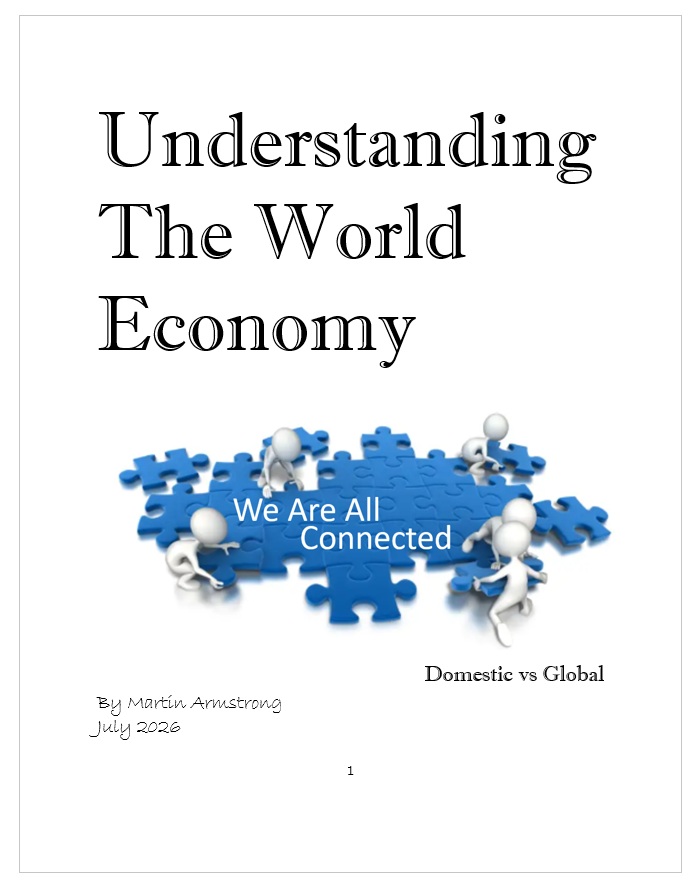
Do not expect any change. Walsh had to say the standard BS because that is all they have. There is never a plan B. I am doing this July 25th Seminar to address all of this. Many people have brought their children to conferences and have asked me to do an introduction to how the world really functions. All of the economic theories are wrong because they were all formed during the Gold Standard when currency was never a variable. Today we trade currencies and capital flows around the world first because of currency. Then the second great fallacy is that all of the economic theories are domestic and never international.
No politician ever said vote for me and I will make the dollar the reserve currency. That was created by the free markets and as World Wars I & II that sent all the capital fleeing to the United States. Those wars were beyond any domestic analysis. It is time we change the way we even view the economy because we are all connected. We will be issuing a text book for this event that is included in the price for those attending.
Posted originally on Jul 15, 2026 by Martin Armstrong |
QUESTION: You previously stated that the 2020 election was rigged by the Neocons, and that they attempted the same in 2024 but failed due to a Panic Cycle and Directional Change. I’m now noticing what appears to be another Panic Cycle forming around the 2026 election. Looking further ahead, you’ve mentioned that 2028 could be extremely volatile, potentially to the point where an election may not even occur. Do you have any updated perspective on this timeline?
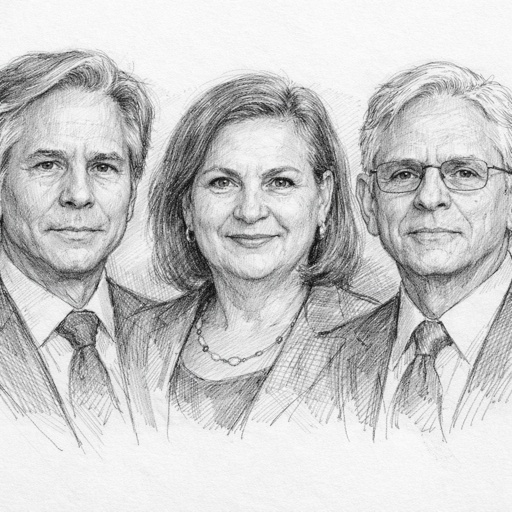
Antony Blinken, Victoria Nuland, Merrick Garland
REPLY: If we look at the 2020 election objectively, it was clearly rigged for the Neocons, and they then installed three people, Blinken, Nuland, and Garland, in the Biden Administration who all claimed that their families had been persecuted by Russians. We would not have this endless war against Russia using Ukraine as a PROXY, if it were not for the Biden Administration. That was no coincidence.
They tried like hell to rig the 2024 election. Every Neocon was out for blood, lining up to endorse Kamala, because they knew she’d be just another Biden, nodding along to whatever they wanted.
Here is a tape of former CIA Director James Woolsey openly admitting that the CIA has rigged elections—”only for a very good cause,” he says, “in the interest of democracy.” He also refused to rule out continued interference in foreign elections. If you believe for one second that the 2020 election was fair, you’re a fool. The Neocons got rid of Trump and immediately launched into war.
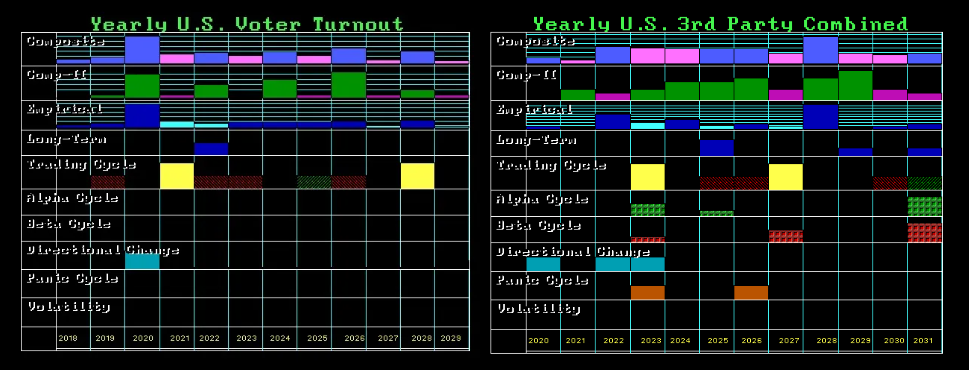
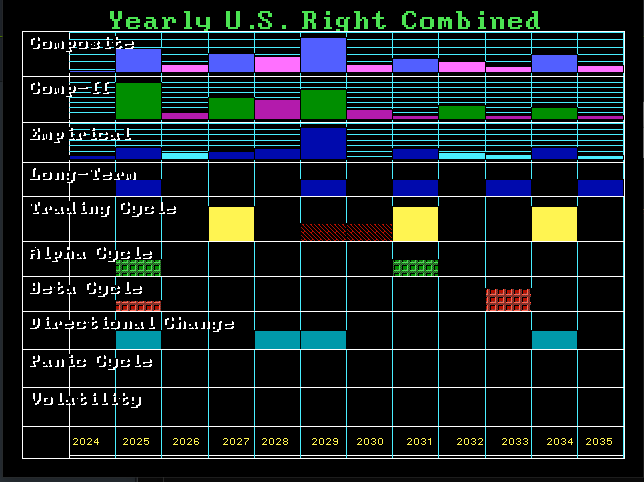
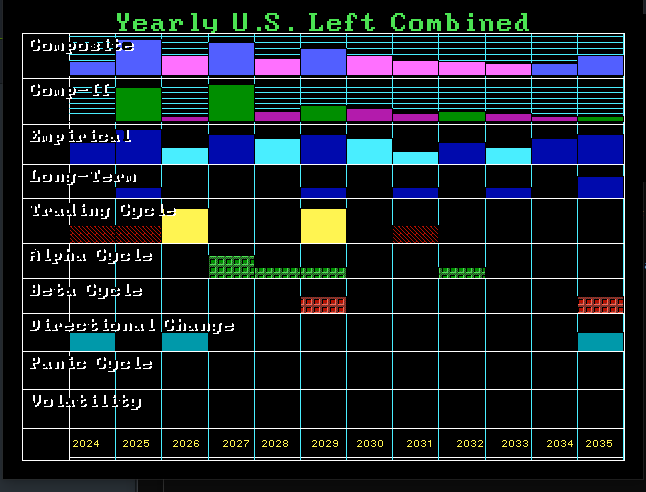
Now look at the arrays: they show we should have seen a sharp rise in voter turnout—which also registered as a Directional Change. Then, looking at the 3rd Party data, we see another Directional Change. And in 2023, we hit a Panic Cycle, right on schedule. 2024 was projected to be a turning point, followed by another Panic Cycle in the 2026 midterms. But the real seismic shift comes in 2028, and it points to one thing: neither Democrats nor Republicans will win.
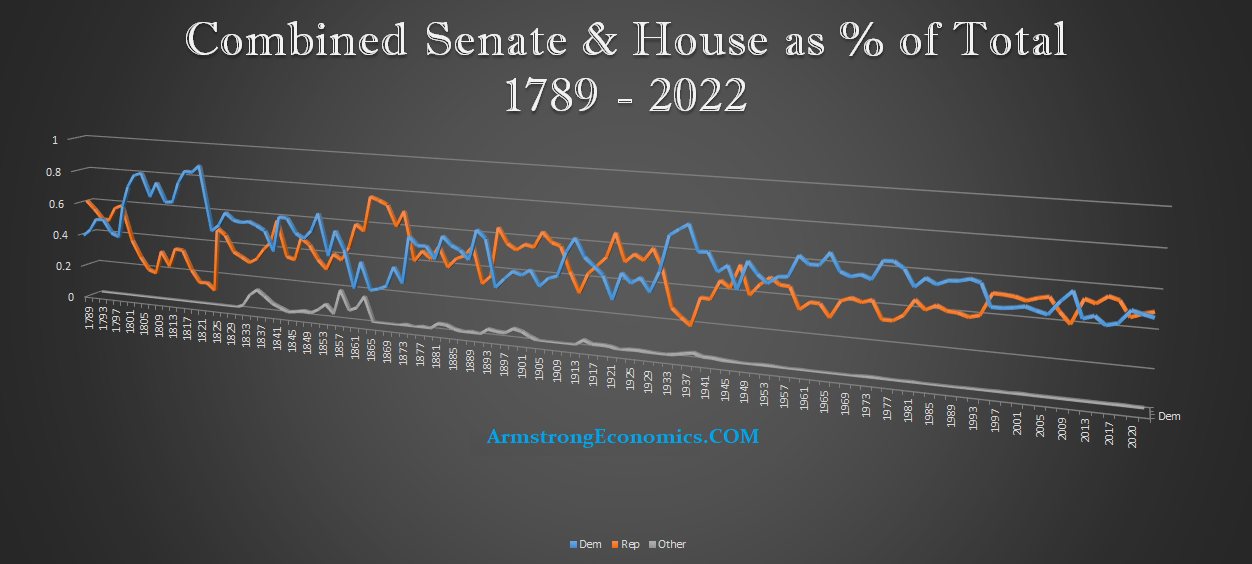
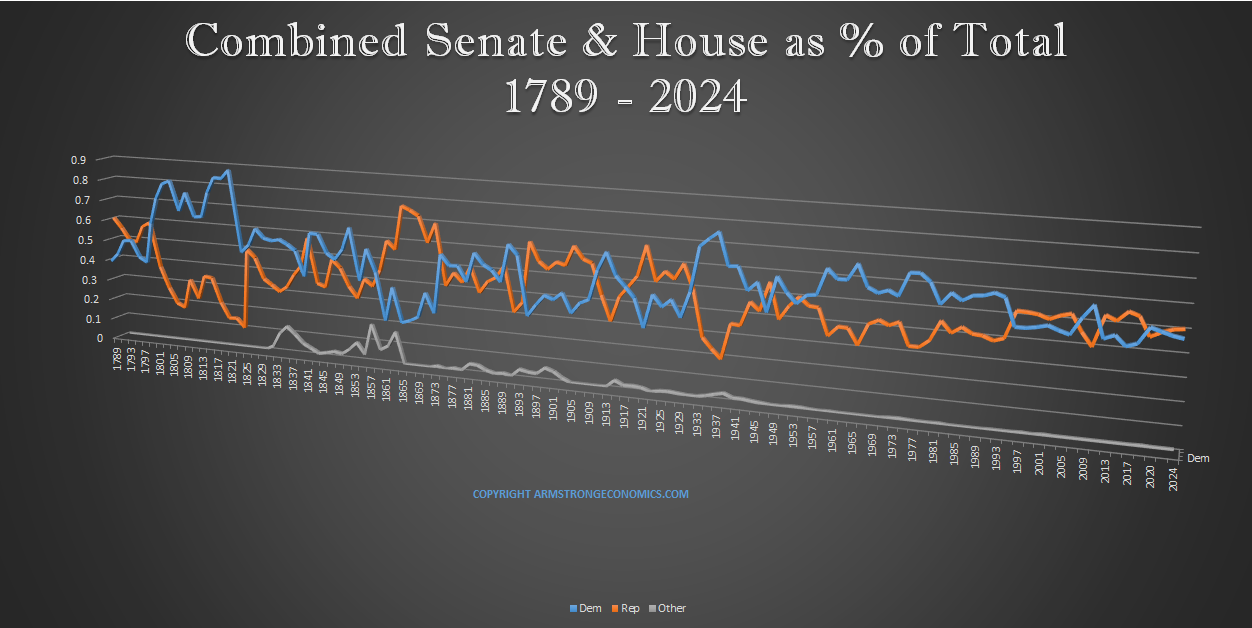
This chart aggregates the total number of seats across both the House and Senate and plots the combined figure. Nothing in the data supports the notion that the 2020 election was fair or accurate. It all comes to a head in 2024. The Democrats, ironically, claim they’re defending democracy—while simultaneously working to remove Republicans from the ballot. It’s a totally absurd contradiction and, in reality, a genuine insurrection against our free system of government. The people are supposed to decide—not a party that will stop at nothing to win, even if it means dragging us into totalitarianism and World War III.
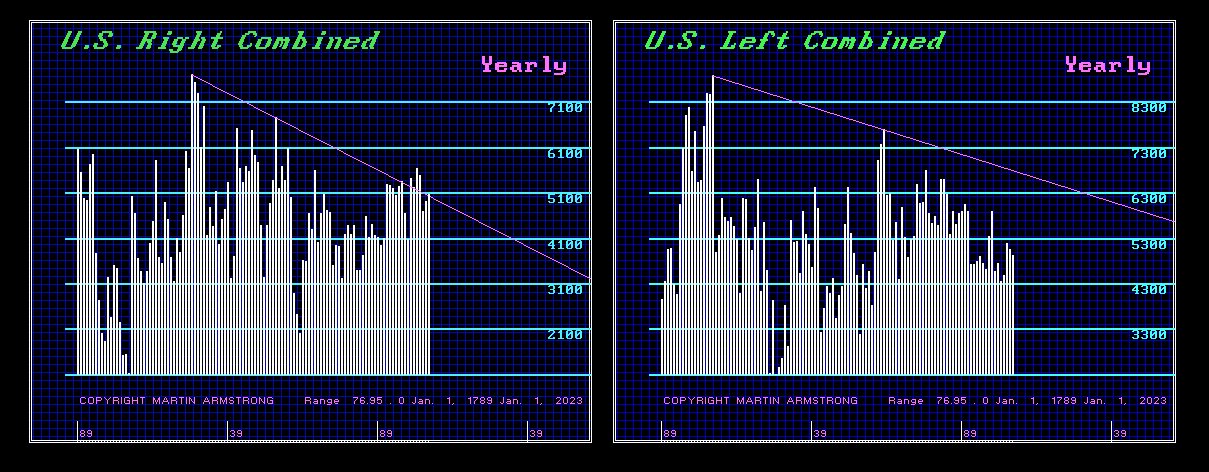
Even technically, we can see that the trend for the Republicans (RIGHT) has been punching through the Downtrend Line. The Democrats (LEFT) are clearly in a bear market trend long-term. None of the statistics supported an overwhelming victory for Biden in 2020 to the point he got more votes than Hillary or Obama. If that were true, we should expect to have seen a major spike high. They claim the election was NOT rigged in 2020, but the Russian inferred in the 2016 elevation to “Trump’s benefit” according the propaganda of MS Now. There was no way that Biden got more votes than Obama and Hillary.
They are going to fight tooth & nail for 2026. You will also have the Israeli lobby interring as they did to get rid of Massie. There are so many people with a finger in the pie and it is all to wage war – not peace.
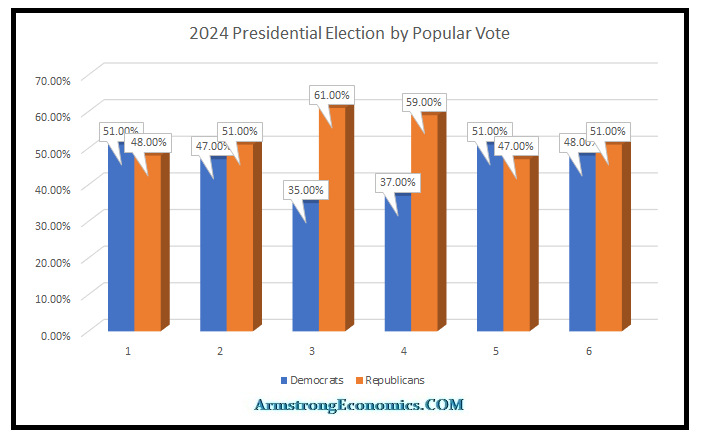
The 2024 election was too overwhelmingly against the Neocons to stop a Trump victory.
They took out John F. Kennedy because he, too, was against the war. Johnson took us right into Vietnam.
Video Player
Newsmax’s Rob Finnerty has introduced a bombshell revelation hidden within the newly released JFK files—one that raises serious questions about a likely CIA cover-up. When someone is there to upset their grand plans, don’t count on free elections.
I have created this site to help people have fun in the kitchen. I write about enjoying life both in and out of my kitchen. Life is short! Make the most of it and enjoy!
This is a library of News Events not reported by the Main Stream Media documenting & connecting the dots on How the Obama Marxist Liberal agenda is destroying America



 Centinel2012