
.1.26 – SCOTUS Greenlights Great Replacement and Senator Moreno Defends Op-Ed with Pocahontas
Posted originally on Rumble By Strictly Speaking: Unfiltered with Bob Frantz on July 1, 2026
WarRoom Live
Posted originally on rumble on Bannons War Room on: July 4, 2026
The Supreme Court Finally Draws a Line on Digital Surveillance
Posted originally on Jul 6, 2026 by Martin Armstrong |

For years, I have warned that technology would become the government’s greatest surveillance tool. Politicians always promise new powers will only be used against criminals. Then those same powers gradually expand until everyone becomes a potential suspect. History never changes because governments never voluntarily surrender authority once they obtain it.
The U.S. Supreme Court has now delivered one of the most important privacy decisions in years. In a 6-3 ruling, the Court held that law enforcement’s use of geofence warrants constitutes a search under the Fourth Amendment.
Justice Elena Kagan wrote that people do not surrender their constitutional right to privacy simply because they carry smartphones or enable location services. As she explained, “A cellphone user is not to be viewed as sharing private information with third parties… just by doing the ordinary things cellphone users do.” The Court sent the case back to determine whether the warrant itself satisfied the constitutional requirement of probable cause, but the broader principle is now clear, digital location data deserves constitutional protection.
Geofence warrants represent one of the most sweeping investigative tools ever created. Instead of identifying a suspect first, police define a geographic area and time period, then compel companies such as Google to identify every device that was present. In the Virginia robbery case before the Court, Google initially identified 19 devices located within approximately 150 meters of the crime scene before investigators narrowed the list. These warrants invert the Constitution by allowing police to search thousands of innocent people first and decide who becomes a suspect afterward.
The significance extends far beyond one robbery case. Smartphones constantly generate location histories, travel patterns, religious attendance, medical visits, political gatherings, and personal relationships. The government no longer needs someone to follow you down the street. Your phone already performs that task every minute of every day. Technology companies possess an extraordinary amount of information, and governments around the world increasingly view those databases as investigative gold mines.
This ruling does not end digital surveillance. It simply reminds governments that constitutional limits still exist. Many technology companies have already begun changing how they store location data. Google, for example, has shifted much of its location history storage onto users’ own devices rather than centralized servers, making broad geofence requests more difficult. Law enforcement will undoubtedly seek new methods as technology evolves, because governments never stop seeking additional powers.
The larger trend remains exactly what our computer has warned. Governments burdened by rising debt, political instability, and civil unrest always seek greater control over information. Surveillance expands during every crisis because politicians claim extraordinary circumstances require extraordinary powers. Today it is geofence warrants. Tomorrow it will be artificial intelligence analyzing billions of data points in real time. The battle between personal liberty and government surveillance is only beginning, and this decision represents one of the few occasions where the courts have reminded Washington that the Constitution still matters in the digital age.
The War on Agriculture Never Ends
Posted originally on Jul 6, 2026 by Martin Armstrong |

People wonder why I devoted an entire Agricultural Report to food security. It was never simply about crops. Agriculture has become another battlefield where governments, multinational corporations, and unelected organizations all believe they have the right to dictate what people eat, what farmers grow, and ultimately who controls the food supply. History has always shown that whoever controls food controls society. That lesson has never changed.
Now researchers have found another reason for concern. A new study published in the Journal of Antimicrobial Chemotherapy found that exposure to glyphosate, the world’s most widely used herbicide, may increase antibiotic resistance in bacteria. Scientists reported that even concentrations below legal application levels triggered biological changes that made bacteria less susceptible to commonly used antibiotics. As the researchers noted, this “highlights the potential impact of glyphosate on antibiotic resistance.” This comes as antimicrobial resistance is already estimated to contribute to more than one million deaths globally each year, making it one of the fastest-growing public health concerns.
Glyphosate has already been surrounded by controversy for years. Thousands of lawsuits have alleged that Roundup exposure caused cancer, resulting in billions of dollars in settlements and verdicts against Bayer after it acquired Monsanto. More recently, the U.S. Supreme Court ruled that many state-law failure-to-warn claims are preempted by federal pesticide law, significantly limiting future litigation against the manufacturer. Whether one agrees with those legal rulings or not, they demonstrate how difficult it has become to hold large corporations accountable once regulatory agencies approve a product. The courts decide legal liability. Science continues to evolve independently.
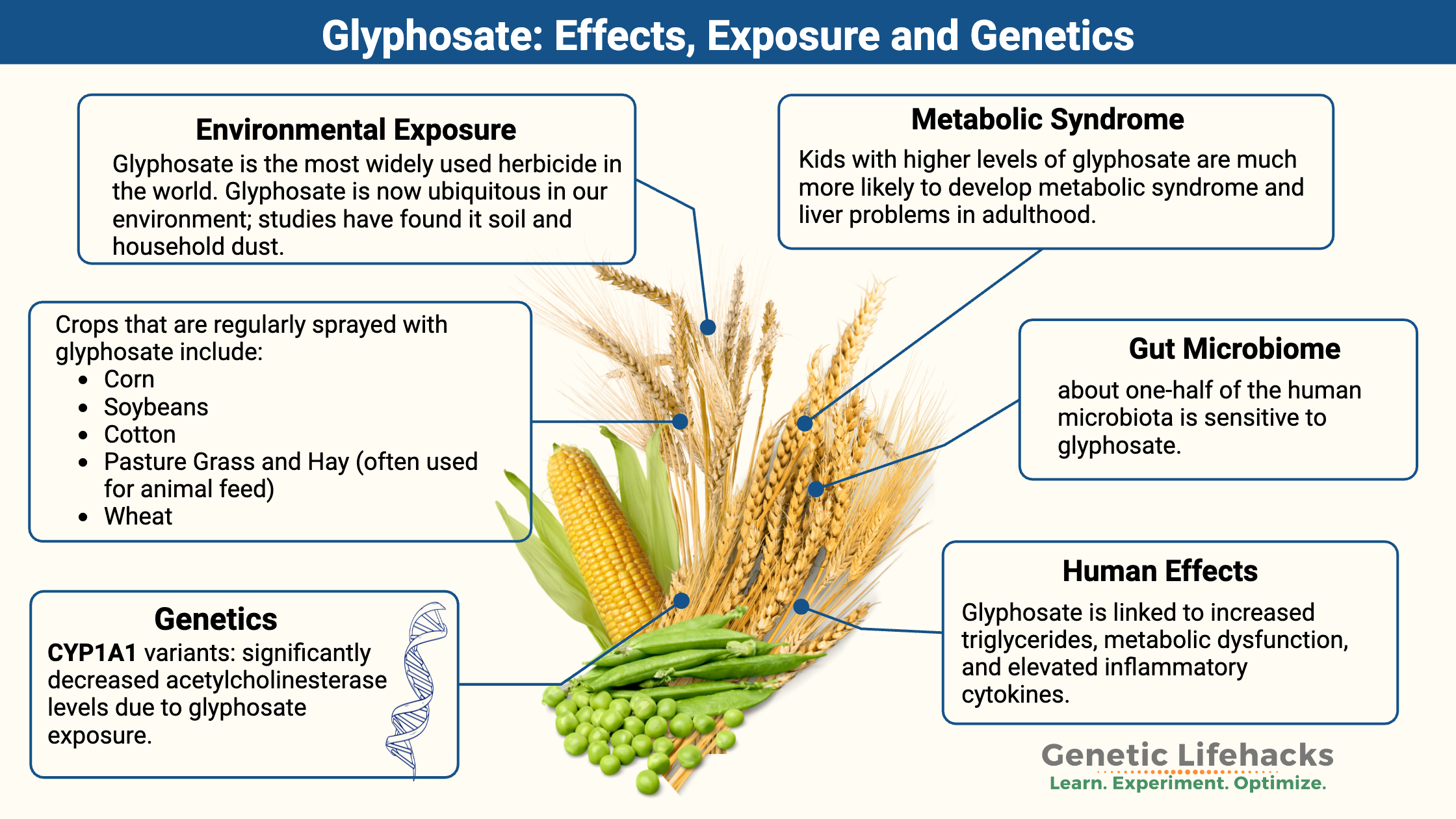
My concern has never been limited to one herbicide. The broader issue is the increasing concentration of agriculture into fewer and fewer hands. Farmers across Europe are already facing nitrogen restrictions, fertilizer regulations, water limitations, and climate mandates that make it increasingly difficult for family farms to survive. The World Economic Forum has openly promoted changing global diets to reduce meat consumption, while numerous governments have discussed reducing livestock production in the name of climate policy. Meanwhile, restrictions on backyard livestock, zoning rules affecting home food production, and tighter regulations on seeds and fertilizers have fueled concerns among many people that food independence is gradually becoming more difficult.
Suggesting that the food supply is poisonous is seen as conspiracy rhetoric, but modern agricultural methods are silently poisoning the population. That is an uncomfortable truth that has been proven time and time again.
Throughout history, governments facing sovereign debt crises have always sought greater control over strategic industries. Food, energy, transportation, and finance inevitably become political tools because they are essential to daily life. You do not need a grand conspiracy to see that governments consistently expand their influence during periods of economic stress.
The computer has warned repeatedly that agriculture will become one of the defining strategic sectors into the next decade. As geopolitical tensions rise, fertilizer supplies remain vulnerable, energy costs fluctuate, and governments intervene more aggressively in farming, food security becomes a national security issue. My Agricultural Report explained that nations able to produce their own food will hold a tremendous advantage during the sovereign debt crisis. Those that become dependent on imports or centralized supply chains will discover that food can become just as powerful a weapon as sanctions or military force.
The debate over glyphosate is therefore much larger than one chemical. It raises fundamental questions about how food is produced, who regulates it, who profits from it, and whether governments are becoming too dependent on large corporations to manage an increasingly fragile agricultural system. Once confidence in institutions begins to break down, people naturally question everything, from the safety of their food to the integrity of the agencies responsible for protecting public health. That erosion of confidence is precisely what the computer has been warning would emerge as we move deeper into the current crisis cycle.
Zelensky Angers Allies by Honoring Ukrainian Nazis
Posted originally on Jul 6, 2026 by Martin Armstrong |

Europe’s united front behind Zelensky is beginning to crack, and this time it is not because of money or weapons. It is because of history. The Czech opposition party SPD has demanded that President Petr Pavel revoke the Order of the White Lion, the country’s highest state honor, that was awarded to Volodymyr Zelensky. The demand came after Zelensky approved naming Ukraine’s 225th Separate Assault Regiment after the Organization of Ukrainian Nationalists (OUN), a movement whose factions collaborated with Nazi Germany during the Second World War and whose legacy remains deeply divisive throughout Central Europe.
SPD chairman Jindřich Rajchl declared that the Czech Republic “cannot remain silent when the highest state decoration is worn by a man who names military units after Nazi monsters.” That statement followed an even stronger reaction from Poland. Polish President Karol Nawrocki announced that he is moving to revoke the Order of the White Eagle that had been awarded to Zelensky after Ukraine honored figures connected to the Ukrainian nationalist movement. For Poland, this is far more than a political disagreement. The OUN and its military wing, the Ukrainian Insurgent Army (UPA), are associated with the Volhynia massacres of 1943-44, during which tens of thousands of Polish civilians were brutally murdered. Those events remain one of the darkest chapters in Polish history.
This is an extraordinary political blunder. Poland stood beside Ukraine from the very beginning. It accepted millions of refugees, became one of Kyiv’s largest military supporters, and repeatedly urged Europe to increase aid. The Czech Republic likewise committed substantial military, financial, and humanitarian assistance. Instead of recognizing the enormous sacrifices these countries have made, Zelensky chose to celebrate a movement that many of his closest allies remember not as freedom fighters but as perpetrators of wartime atrocities. He cannot expect governments to erase generations of historical memory simply because it is politically convenient today.
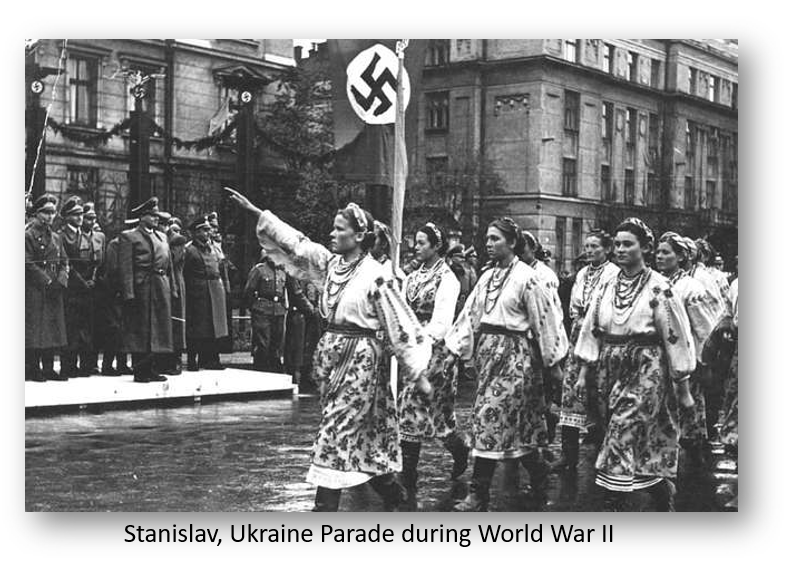
The bureaucrats in Brussels have spent years insisting that everyone accept a single approved version of history, but history cannot be rewritten by decree. Whether one views the OUN as anti-Soviet nationalists or collaborators who committed horrific crimes, the reality is that Poland has never forgotten the slaughter of its people. By elevating these symbols, Zelensky has managed to alienate one of Ukraine’s most loyal allies at the very moment his government depends on continued European support. Now the backlash is spreading beyond Poland into the Czech Republic, and others may follow.
This is how alliances begin to unravel. Governments believed they could paper over centuries of ethnic and historical conflict with endless funding and political slogans. They were wrong. Economic pressure is rising, public support for the war is fading, and old grievances are resurfacing across Europe. Our computer has warned for years that Europe would enter a period of fragmentation as confidence in governments declined. The dispute between Ukraine, Poland, and now the Czech Republic is another indication that the façade of European unity is beginning to crack. Once history becomes a political weapon again, repairing those relationships becomes far more difficult than issuing another package of financial aid.
Ambassador Hoekstra Interview Highlights How Canadian Govt Controls Canadian Media
Posted originally on CTH on July 5, 2026 | sundance
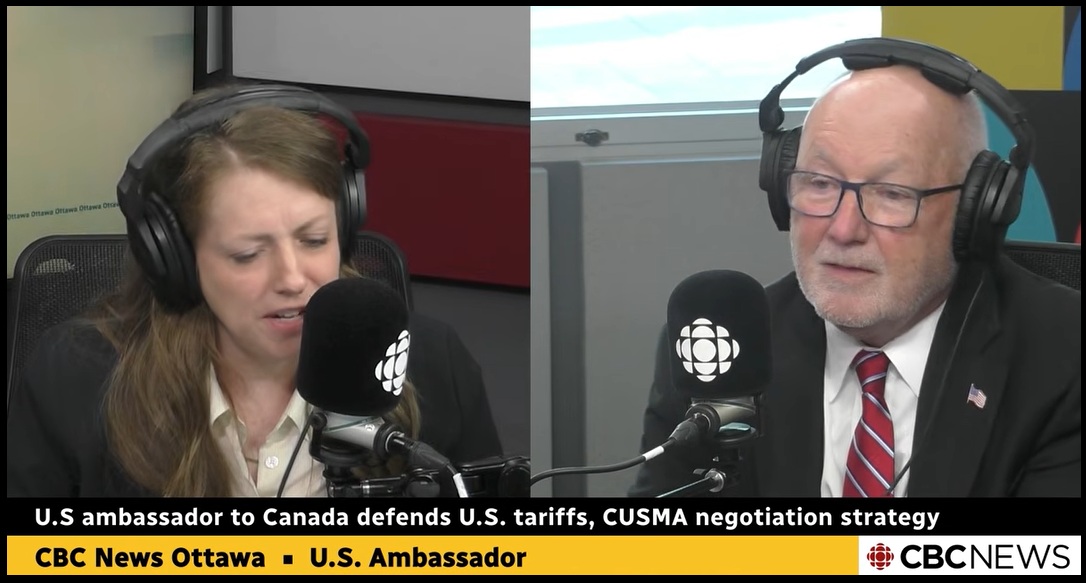
U.S. Ambassador to Canada Pete Hoekstra appears for an interview on CBC News to share perspectives on U.S-Canada relations. However, what happens within the interview is a case study on how Canadian media represent an extension of the Canadian government.
This example is exactly why the Canadian people have no reference point for information counter to the official propaganda policy from their government offices. Rebecca Zandbergen, host of CBC’s Ottawa Morning represents the voice of government in combative tone, condescending attitude and refusal to accept counter arguments.
The level of passive-aggressive condescension highlights why Canada has continued to lose position in a world where pretending has become devalued. However, it’s clear why the Canadian people will be stunned when it all collapses around them. They have no reference points. Ambassador Hoekstra should get hazard pay. WATCH (prompted):
I like how Hoekstra reminds Rebecca Zandbergen that the 51st state issue surfaced as an outcome of a discussion between Prime Minister Justin Trudeau and President Trump in Mar-a-Lago that centered around NATO spending and reciprocity in trade via non-tariff barriers. The points Ambassador Hoekstra makes at the end of this interview are exactly on point, and yet Zandbergen pretends not to understand them.
The American govt is not running anti-Carney advertising in Canada. Americans are not banning Canadian products. The American Government is not telling Americans not to travel to Canada. The American govt has not banned Canadian companies from bidding on contracts. These are all actions taken by the Canadian government.
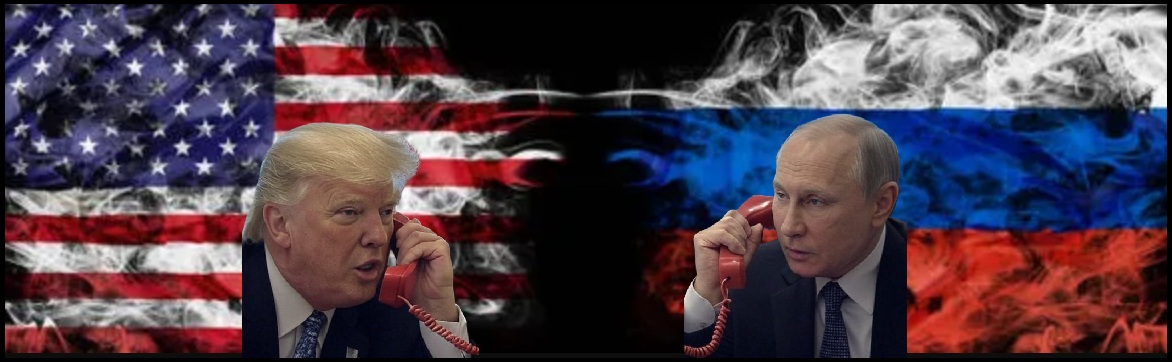
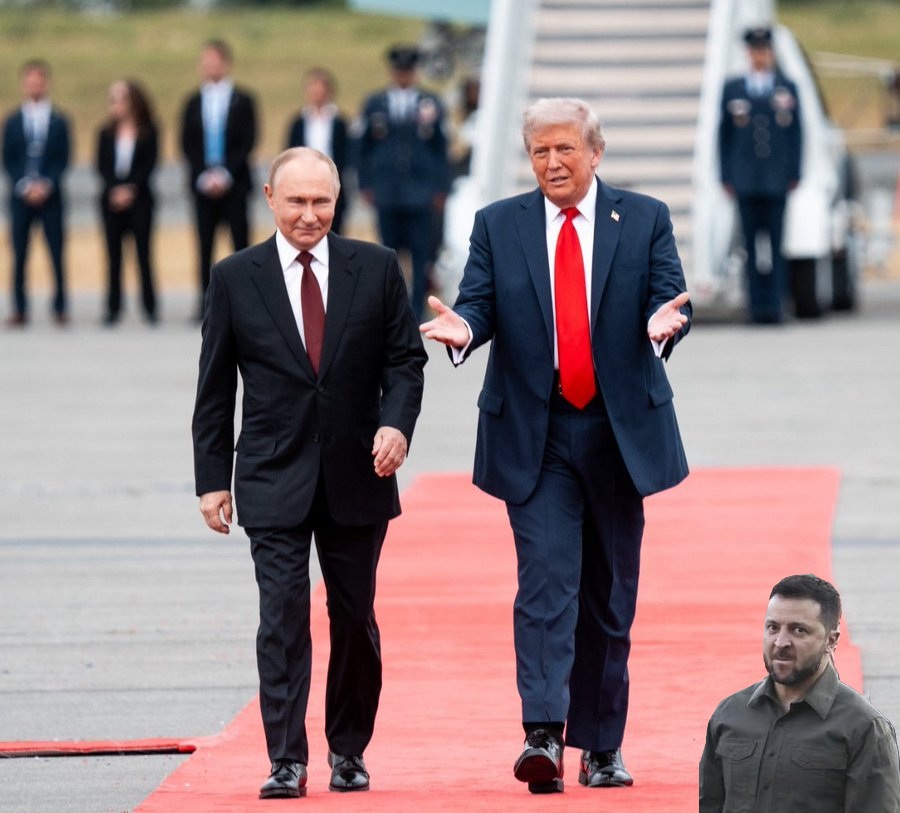
President Trump and Russian Federation President Putin Held an 85-Minute Phone Call
Posted originally on CTH on July 5, 2026 | sundance
It’s an unfortunate state of affairs when you cannot review the U.S. media take on the phone call due to the propaganda script that underpins the Western narrative they promote. Instead, a more direct and reliable review of the important discussion comes from the Russian Federation side.
RUSSIA – […] Of course, today’s conversation between the two heads of state began with President Putin congratulating Donald Trump and the American people on their landmark holiday and recalling Russia’s contribution to the development of American statehood. In this context, the presidents noted the importance of treasuring the historical heritage which our nations share. It was pointed out that our nations will never forget their alliance during World War II.
The United States is widely celebrating Independence Day today. This is being done in style and on a grand scale, as Donald Trump knows how to do it, and our President has mentioned this.
Their conversation, the fourth one this year, was not only formal but also business-like and constructive. The leaders candidly discussed current issues on the bilateral and international agenda. Incidentally, that conversation lasted nearly an hour and a half, or more precisely, 85 minutes.
Naturally, the presidents also talked about a Ukrainian settlement, including in light of Donald Trump’s participation in the upcoming NATO summit in Turkiye on July 7–8.
The US President reaffirmed his readiness to facilitate an early termination of the hostilities and the search for peaceful solutions to the crisis. His special envoys – Steve Witkoff and Jared Kushner – will carry on their mediation efforts and are ready to come to Moscow at our convenience.
The Russian President reaffirmed our commitment to a political and diplomatic settlement of the conflict, with due consideration for Russia’s known principled approaches.
However, Kiev and its Western sponsors rely on drawing out and even escalating the conflict and terrorising civilians. Moreover, the European “party of war” proceeds from a false perception of the overall situation and developments on the frontline. Our President has outlined the real situation on the battlefield, where the Russian Armed Forces are confidently advancing, liberating one settlement after another.
The establishment of control over one of the Ukrainian Armed Forces’ key fortified settlements, Konstantinovka, is an important stage in the liberation of the Donetsk People’s Republic. No matter how hard the Kiev regime clings to the remaining fortified areas, our army will definitely take them.
Regarding the situation around Iran, Vladimir Putin has expressed hope that the negotiation process based on the memorandum of understanding between the United States and Iran will help find mutually acceptable long-term solutions to the key aspects of the settlement. We have confirmed our readiness to provide practical assistance with the de-escalation and stabilisation efforts in the region. On his part, Donald Trump thanked the Russian side for our balanced stance and constructive proposals.
With respect to bilateral relations, the presidents stressed the importance of continuing the contacts, including on military, political and, certainly, economic issues. There is colossal potential for mutually beneficial cooperation between our countries. Donald Trump stressed that for these prospects to be realised, it is necessary to put a stop to the Ukrainian conflict as soon as possible.
It was noted during the conversation that the upcoming launch of a Russian-US crew from the Baikonur Space Launch Centre to the International Space Station is symbolic. This joint project is a specific example proving the two powers’ interest in close cooperation across different fields.
Naturally, the same is true about culture that unites our congenial nations. Incidentally, Donald Trump mentioned that he personally admires The Hermitage in St Petersburg.
The presidents talked about football as well. Considering Russia’s 2018 experience, Vladimir Putin wished the United States success with the FIFA World Cup.
The leaders agreed to maintain contact and have another telephone conversation shortly. The President of Russia reminded Donald Trump that he has a standing invitation to visit Russia.
It should be noted that the Russian side initiated the previous telephone conversation on June 14, when Donald Trump celebrated his 80th birthday. This time, the initiative to arrange a conversation on the 250th anniversary of US independence notably came from our American partners. (SOURCE)
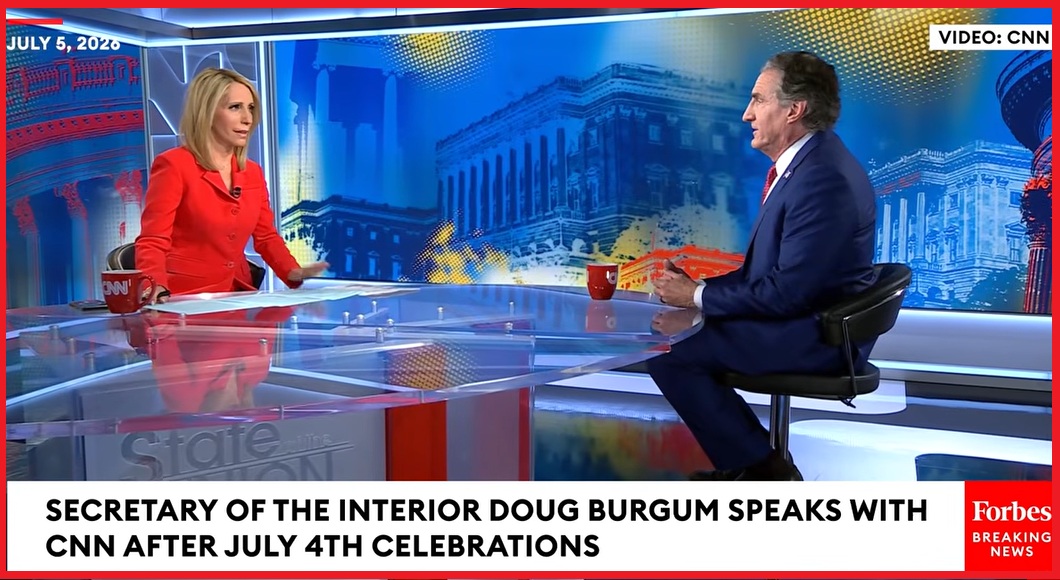
Sunday Talks: Secretary Burgum -vs- Dana Bash
Posted originally on CTH on July 5, 2026 | sundance
Starting with purposefully created propaganda, CNN pundit Dana Bash begins questioning Interior Secretary Doug Burgum about protest marchers in Washington DC who Bash describes as extremists and racist.
The heavy media promotion of the event is the first indicator of manufactured propaganda. Ms Bash then lets the second indicator slip when she notes a viral photograph on a bus “taken by Reuters.” How did Reuters know to have a photographer on that specific bus, to capture that specific moment? WATCH:
There is a part of the interview where Burgum finally has enough of the narrative engineering pushed by Bash on the topic of the Lincoln Memorial reflecting pool; however, other than that these scripted pantomime performances by the insufferable pundits are tiresome.
A Shift Begins? Canadian Media Start Discussing Six-Month USMCA Termination Possible
Posted originally on CTH on July 5, 2026 | sundance
The media and Canadian government discussions around the U.S-Canada trade and economic relationship, specifically as they pertain to the USMCA (CUSMA) continue to be fascinating.
As we noted over a year ago, the expressed perception from the Canadian side was remarkably disconnected from the most likely scenario.
The level of entrenched disbelief that the U.S. could completely separate from a trilateral trade deal in favor of a bilateral replacement has been remarkable to watch.
However, for the first time today Canadian media began admitting to themselves the USMCA can technically be terminated within six months; albeit buried at the end of the article.
GLOBAL NEWS – […] “I’m not in a position to guarantee anything. These decisions are made at the White House. They are made by the president,” Hoekstra said.
His comments come just days after the Trump administration declined to extend the trilateral pact with Canada and Mexico for a new 16-year term, citing what the U.S. calls “shortcomings” and “trade deficits.” Mexico and Canada both publicly pushed for a renewal.
U.S. President Donald Trump suggested last month that the U.S. is “better without” CUSMA, and that he’d even prefer to see it “terminated.”
When asked by Global News, Hoekstra would not say if the administration is considering ripping up the deal, which can be done by any party with six months’ formal notice.
“All options are on the table,” Hoekstra said. “[Termination] clearly is allowed for within the agreement.” (read more)
Canada has painted themselves into a corner on the issue of Chinese manufactured automobiles. This is an issue that is not going away.
 Centinel2012