MOMENTS AGO: President Trump Holds Rally in Clarksville, TN…


STEVE CORTES: The Midwest Political Landscape


LIVE: New White House Press Secretary Katie Zacharia Holds First Briefing…


MOMENTS AGO: President Trump Holds Rally in Youngstown, OH..


Suspect Leads Police on Crazy Off-Road Chase


Beatrix von Storch: Europe Mocks Trump, AfD Fights Back


ssians Not Welcome In Europe?


Posted Originally on: Oct 14, 2026 by Martin Armstrong |

Passport OCR API solution for Russia

Finland wants the European Union to stop issuing tourist visas to Russians until Moscow ends its war against Ukraine. Finland’s Foreign Ministry says Schengen countries issued close to 500,000 tourist visas to Russians in 2025. Foreign Minister Elina Valtonen declares that “Russian citizens should not be issued tourist visas,” adding, “The same must finally happen at the EU level.” Her argument is that Russians should not enjoy European freedoms while their country attacks Ukrainian homes. But who, exactly, is being held accountable here? The person applying for a holiday visa did not necessarily order the invasion, support it, or possess any means of stopping it.

I question the logic of making someone’s freedom to travel conditional upon a decision made in the Kremlin. What is an ordinary Russian supposed to do to satisfy that condition? Walk into Putin’s office and demand that he withdraw the army? Europe describes Russia as an authoritarian state and then treats its citizens as though they personally control its foreign policy. You cannot have it both ways. If political power is concentrated and opposition is repressed, the responsibility of the individual must be judged by what that individual has actually done.

The people with money have more options. Russian businessmen Mikhail Fridman and Petr Aven, for example, hold multiple nationalities and have challenged sanctions through European courts. That does not mean wealthy Russians are untouched by sanctions; many have faced asset freezes and travel restrictions. It means a billionaire’s position is very different from that of someone with one passport, a salary, and no team of international lawyers. A blanket nationality restriction is easiest to apply to the person least equipped to contest it.

As for espionage, does anyone seriously believe Russian intelligence depends entirely on Russians arriving with tourist visas and their real identities neatly printed in their passports? Documented cases show intelligence officers operating under commercial and diplomatic cover, as well as covert agents using false identities. Travel restrictions can complicate some operations, but they cannot replace counterintelligence. The Kremlin can recruit people already abroad or use intermediaries. Keeping out an ordinary visitor does not establish that a professional operative has been stopped.

There is also a consequence Europe seems unwilling to consider. Closing ordinary contact can strengthen the Kremlin’s claim that the West despises Russians themselves. A person who might otherwise discover that Europeans distinguish between a government and its citizens instead encounters a policy telling him that his passport is sufficient reason for exclusion. That outcome would serve propaganda far better than diplomacy. If the objective is to weaken hostility between societies, treating an entire nationality as suspect deserves considerably more scrutiny.

In truth, Russians already feel the hostilities from Europe. The arrogance is believing that another restriction on ordinary people constitutes a meaningful blow against rulers who remain in office. Finland is promoting the hatred of Russian people. The distinction between the Kremlin and the Russian citizen disappears.

Once an entire nationality is treated as suspect, people find it easier to dismiss the suffering of its ordinary citizens and harder to imagine any future reconciliation. Demonizing the population makes it politically easier to maintain confrontation. The rulers remain insulated while ordinary people learn to distrust one another. Europe should ask whether closing those human connections weakens the Kremlin or merely gives it another reason to tell Russians that the West hates them.

Categories:European Union

Europe Is Regulating Its Auto Industry Into Retreat


Posted Originally on: Oct 14, 2026 by Martin Armstrong |

AutoManufacturing

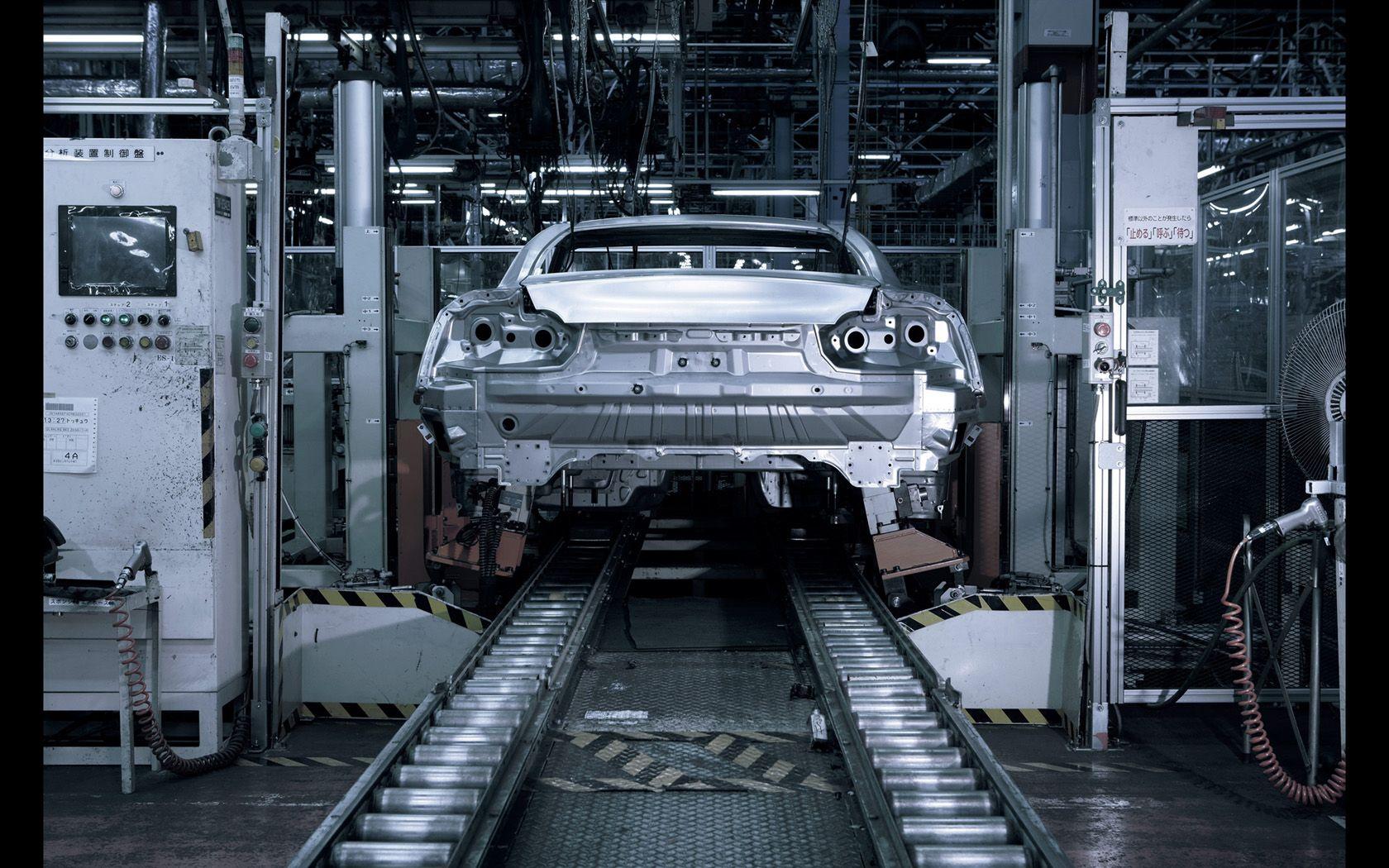
Brussels apparently believes it can dictate what an industry produces without accepting responsibility when the economics cease to work. Renault is now warning that European production could fall by approximately 300,000 vehicles unless there is greater flexibility around the 2030 emissions requirements. Volkswagen describes the mass market business as under “enormous pressure.” BMW’s global deliveries fell 6.4% in the third quarter, with China down by a quarter. Competition is fierce, customers have choices, and these companies cannot finance a transformation indefinitely by producing vehicles at inadequate margins.

Look at how the target changed. The agreement reached in 2018 called for a 37.5% reduction in new-car CO₂ emissions by 2030 relative to the 2021 target. The subsequently adopted requirement became 55%, an increase of 17.5 percentage points. These are fleet average standards for new cars, but meeting them still depends on what customers actually purchase. A regulation can compel a manufacturer to change its product mix. It cannot compel a family to have the money, charging access, or confidence needed to buy the car.

Volkswagen, Stellantis, and Renault account for more than 60% of European car production. Their mass market operations rely on high volumes and thin margins. That means even a relatively small deterioration in costs or sales can produce a substantial financial problem. The consequences then move through suppliers, machinery makers, transport firms, and communities built around manufacturing. Nobody should imagine that removing 300,000 vehicles from production would affect only Renault’s accounts.

Europe’s own Council describes the wider automotive industry as supporting 12.7 million jobs and contributing more than 7% of EU GDP. Yet its explanation of the emissions rules promises stronger competitiveness and more jobs in new technologies. Fine. Show the workers where those jobs are, what they pay, and when they become available.

Now the Commission proposes easing the 2030 van target from 50% to 40% and the 2035 tailpipe-reduction requirement from 100% to 90%, subject to compensating measures. The passenger car target for 2030 remains 55%. These are proposals, but they expose the problem with planning an industrial transformation around political deadlines. Companies commit capital, develop products, and reorganize factories while officials argue over which requirements should survive. Who pays when the assumptions change? The business, its employees, and eventually the taxpayer asked to support another rescue.

This obsession with the 2030 target is sheer stupidity when Europe is already struggling with expensive energy, mounting debt, war, and competition from manufacturers who can produce cars for less. Where do they imagine the money for this transformation will come from? They are demanding enormous investment while making it harder for the companies expected to provide it to earn a profit. Keep squeezing those margins and production moves, suppliers close, and the industrial skills accumulated over generations disappear with the jobs. Brussels can congratulate itself for reducing emissions within Europe while Europeans buy vehicles manufactured elsewhere. What has that accomplished for the worker whose factory is gone? A deadline means nothing if reaching it helps destroy the industry that supports your economy. Yet they cling to 2030 as though preserving a political promise matters more than preserving the livelihoods of the people paying for it.

The Sheer Ignorance Of What’s At Stake Globally


Posted Originally on: Oct 14, 2026 by Martin Armstrong |

This is a classic example of how people who rise to the top of one field are complete idiots when it comes to everything else. Lt. General Keith Kellogg served as National Security Advisor to former Vice President Mike Pence and later as Special Envoy for Ukraine and Russia. He is Co-Chair at the Center for American Security, America First Policy Institute, USA, which is a Neocon think tank. The ignorance of this guy is just stunning. He has made no effort to look at the facts, or more likely, he knows the facts and is deliberately no discussing how Victoria Nuland selected the interarm government which started this civil war and attacked the Donbas on Neocon orders.

He advocates that Zelensky should say FU to President Trump and destroy every refinery in Russia. To illustrate he absolute stupidity, forget the food crisis he would cause in Russia knowing that will lead to nuclear war, he completely ignores that overall, Africa and the Middle East account for over 80% of Russia’s wheat exports, making these regions the most directly tied to Russian grain. Iran is 100% dependent on Russian grain. That would be one sure fire way to make sure the Middle East explodes into a full blown war and it will then merge with the Russia vs EU war and China and North Korea will join.

It is these Neocons who simply hate the Russian people that are cascading the world into World War III for a war that they instigated using Ukraine. He would fulfill our mode pushing diesel to the extreme projecting to $8, which will impact the US economy reducing trucking and result in a US food shortage. This is what I mean. Having expertise in one field does not qualify you to argue things that will impact the rest of the entire would with ZERO comprehension of where that goes.

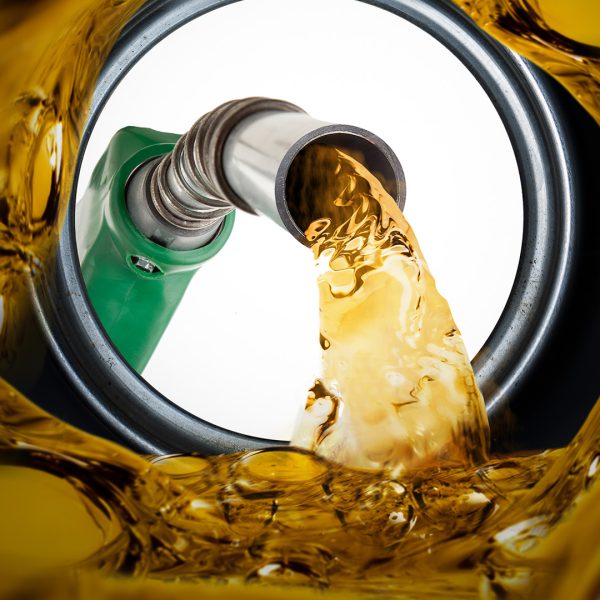
A full-scale war with Russia would very likely cause a severe global diesel crisis, and in many regions, a collapse in supply is a real possibility. The system is already under extreme strain, and a broader conflict would push it past its breaking point. Our computer project $10+ a gallon by 2032.

diesel fuel pojxw0cfi8eav65ptottx225v8p5m1ya8h76nhglf4

The Current Diesel Market Is Already Fragile
The global diesel market is not starting from a position of strength; it is already in a state of acute shortage driven by two simultaneous wars. A wider conflict with Russia would remove one of the world’s largest suppliers from a market that is already reeling. Russia is the world’s second-largest diesel exporter, accounting for roughly 9.5% of global export volumes whereas the United States exports 1,264,000 bpd 15.4%. Russia’s exports are a vital source of supply for Turkey, Brazil, and parts of Africa and the Middle East.

Russia’s diesel exports have already plummeted due to Ukrainian drone strikes on its refineries. In June 2026, exports fell below 1 million tons, compared to around 2.5 million tons a year earlier—a drop of over 60%! Its monthly exportable surplus has fallen from about 3 million tons to as low as 325,000 tons. Global inventories were already drained before any wider war. In the U.S., diesel stocks hit their lowest level for September 2026 since 1982, and European stocks in the ARA hub were 16% below the five-year average.

There has been a shortage without a wider war. The combined effect of the Iran war (disrupting Gulf refining and shipping) and the Ukraine war (disabling Russian refineries) has already created a global diesel shortage expected to last into 2027 even if peace was achieved now. With that unlikely, the shortages will expand into 2028.

A direct war with Russia as advocated by the EU would be catastrophic because it would compound the existing crisis in several ways not to mention seriously wipe out the European economy. Russia’s exports would likely cease entirely, either through a formal blockade or the destruction of its remaining energy infrastructure. The market would lose a supplier already responsible for nearly a tenth of global trade.

The current war has shown that refineries are Zelensky’s primary targets after he blew up the Nord Stream Pipeline. A wider conflict would likely see attacks on refining and export infrastructure far beyond Russia, including in the Middle East and potentially on shipping routes, further crippling the world’s ability to turn crude oil into diesel.

War is incredibly fuel-intensive. NATO’s Secretary General has warned that a full-scale conflict would require “hundreds of thousands of cubic meters of fuel daily” for tanks and fighter jets, putting immense additional strain on already depleted supplies. Military needs would be prioritized over civilian and agricultural use. That is where Zelensky proves he is a idiot. Take out the fuel of Russia, and NATO will find war even more expensive to wage.

A “Collapse” would not look very orderly.  Not only will the food supply decline, but in Asia, ships will not be able to fish. This risks global starvation and now everyone has a stake. The first impacts would be felt in regions already most vulnerable.

Poorer, fuel-importing nations in Africa, Asia, and Latin America are the most exposed. They are “price takers” with limited financial reserves to buffer price shocks or secure alternative supplies. Some are already rationing fuel or declaring energy emergencies.

Diesel is the backbone of global logistics. A collapse would halt trucks, trains, ships, and agricultural machinery. This would immediately impact food distribution, leading to shortages and skyrocketing prices, with a particularly severe effect on countries dependent on food imports.

STAGFLATION

Diesel shortages are inflationary and act as a drag on the entire economy. The U.S. Federal Reserve, for example, cannot fix a physical fuel shortage with interest rate policy; it can only try to suppress demand elsewhere, risking a recession. This will fulfill our model calling for STAGFLATION into 2028 on a global scale all because of Zelensky.

In short, the global diesel system is already in a state of emergency. A war with Russia would not create a new vulnerability so much as it would shatter a system that is already cracking under the pressure of two existing conflicts. If US heating poil closes ABOVE 4.78 at year-end, this is going to get worse before it gets better. General Keith Kellogg’s comment demonstrate how these Neocons are oblivious to the world around them. They just always think they can destroy Russia and someone they will never suffer any repercussion.

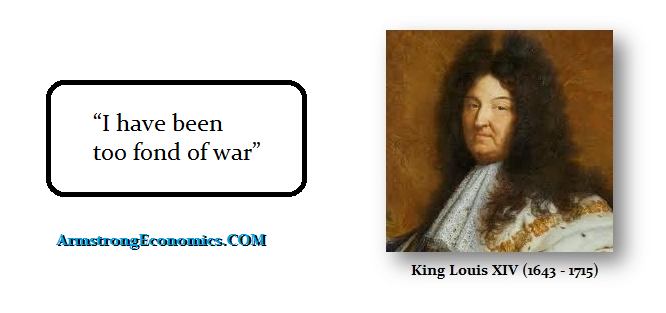
Louis XIV War

People like Kellogg should never be allowed to advise anyone. They are too prone to warmongering and have no regard for the world economy. There are always more civilians who die in wars than soldiers. They ignore that. Humanity will never live in peace because people like this want that taste of power and seek such positions to carry out their personal hatreds and love of war. Louis XIV only lamented that he had been a warmonger on his death bed.

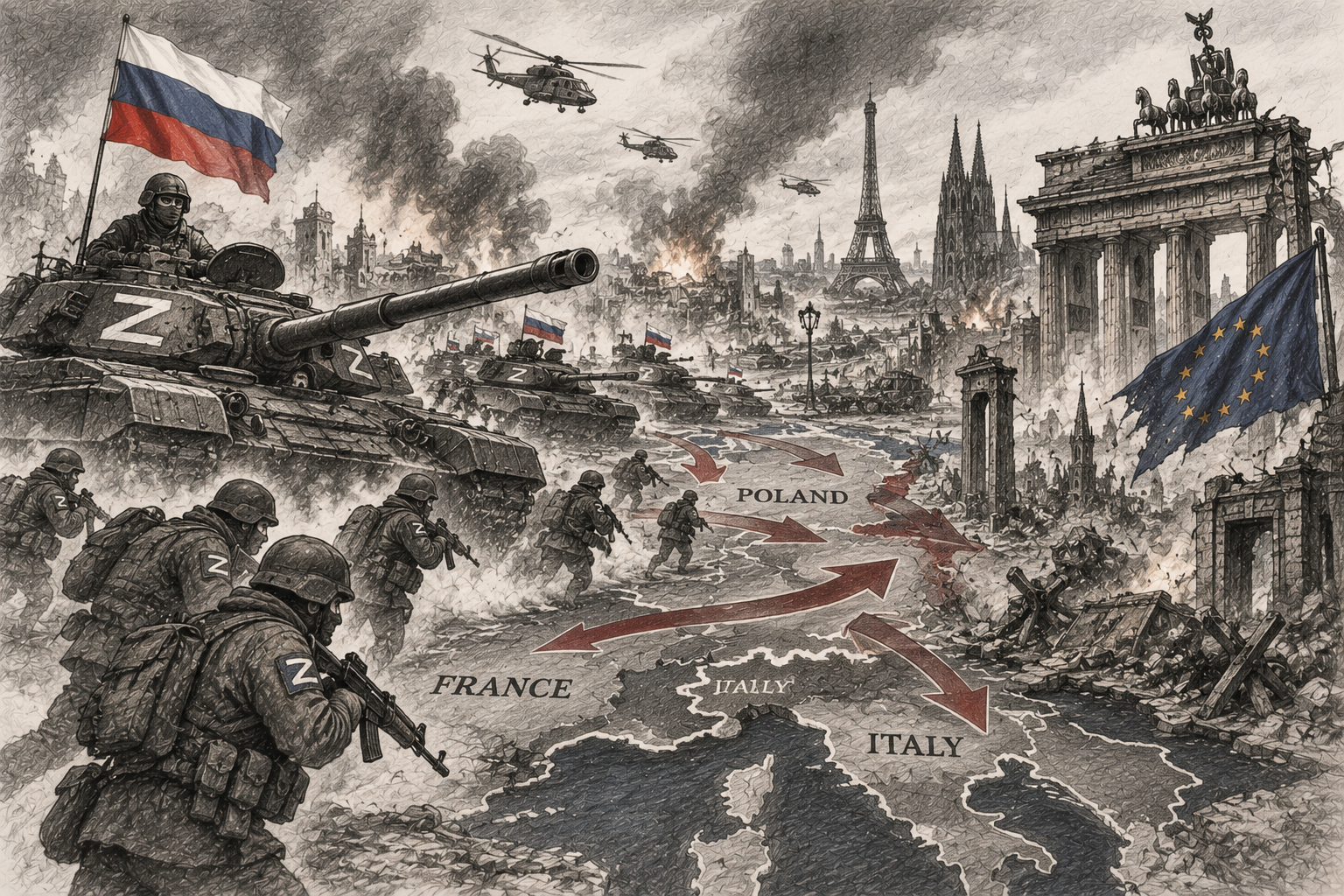
Why Would Russia Want to Invade Europe?


Posted Originally on: Oct 13, 2026 by Martin Armstrong |

Russia Invades Europe

COMMENT: Marty, I spoke with a diehard warmonger here in Germany. I asked why Russia would want to invade Europe. They actually could not articulate a reason. They resorted to revenge. When I asked what that meant, revenge implies Europe did something first. Then it was silence. There is no single coherent explanation. You are absolutely correct. A significant part of the narrative is fueled by internal European dynamics and the need to justify major policy shifts. Nobody can answer the question you have presented.

WK

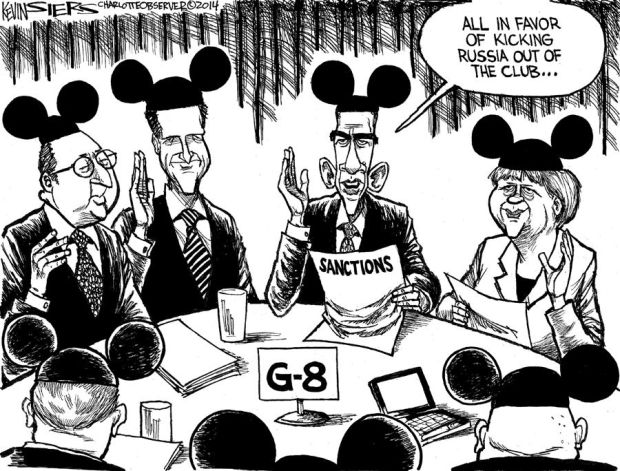
Obama G8 Micky Mouse Crimea Russia

REPLY: The Cold War was all about Communism versus Capitalism. Khrushchev’s “We Will Bury You” enraged all the neocons. The whole idea of the Cold War was that Communism wanted to conquer Capitalism. That was why the U.S. entered Vietnam. They assumed Russia was behind it and were wrong, as McNamara admitted before he died.

Video Player

00:00

03:33

There is no reason for Russia to invade Europe. They are no longer communist. There is no such philosophical war. The claims that Russia wants to invade boil down to the fact that European leaders are escalating militarily, through rearmament, funding, and potential troop deployments all without a realistic plan for achieving victory or a coherent exit strategy. They dismiss the idea of nuclear war, yet believe they can destroy Russia and break it up, as Kallas proposes. This is all being driven by political posturing, because the EU is collapsing and they need an external enemy, and Russia is the best enemy money can buy. There is ZERO sound strategic calculation.

Kremlin spokesman Dmitry Peskov stated that the EU is “obsessed” with militarization and is building its defense policy on “confrontation with Russia,” which he called “a dead end” that “leads to nothing good.” Foreign Ministry spokeswoman Maria Zakharova called Zelensky’s ideas about a new European military bloc “insane.” NATO needs war for if there is peace they lose their jobs. So they have to beat the war drums or they are unemployed.

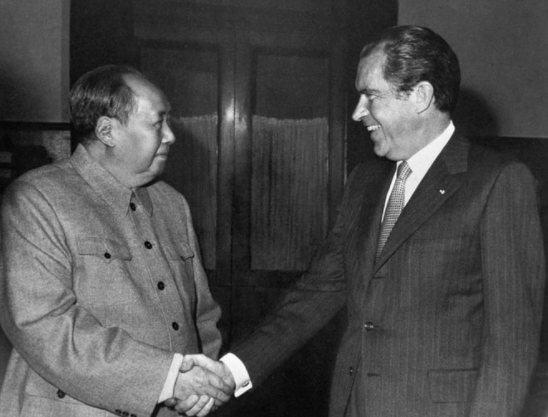
2Nix meets Mao

Richard Nixon opened the door with China to separate China and Russia. The neocons and Zelensky have done everything to undo Richard Nixon’s legacy that he set out to accomplish. The war in Ukraine has undoubtedly accelerated the economic and strategic convergence between Russia and China. Zelensky has been the tip of the spear in truly destroying Western civilization by “permanently dividing” the world economy, with the help of the neocons.

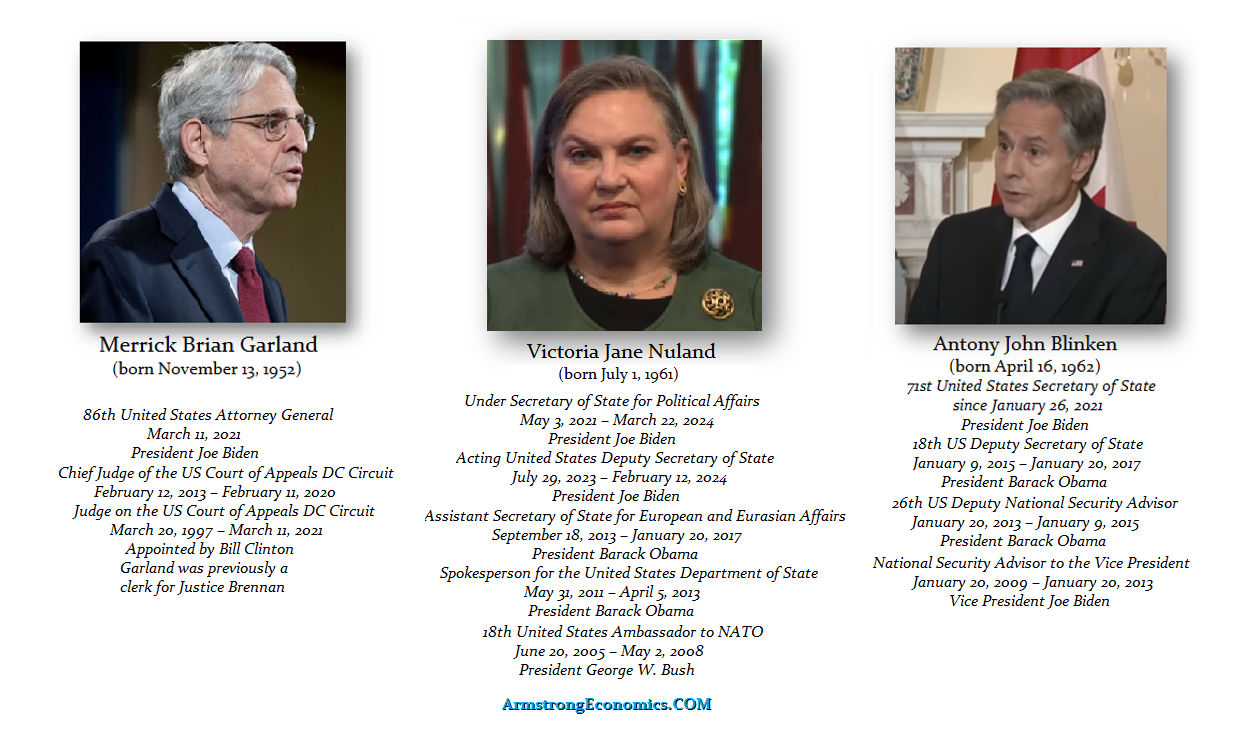
Bidens Neocons

This is a significant geopolitical reality. Zelensky is accelerating a pre-existing fracture that was set in place by the neocons who controlled the Biden administration—Blinken, Nuland, and Garland. Zelensky has already driven this fissure into a much deeper structural crisis.

War is not historically driven purely by personal hatred, with absolutely zero economic motive. There is essentially also, behind the curtain, some economic benefit. Here, despite all the rhetoric, the economic incentive for war lies with the EU, not Russia. The EU stands to gain $75 trillion in natural resources by conquering Russia, but there is no economic incentive for Russia to invade Europe.

While many conflicts are sparked or fueled by personal vendettas, hatred, or wounded pride, they almost always unfold within an economic context. Leaders may feel personal hatred, but wars require armies, supplies, and resources—things that inevitably tie back to economic interests.

Russia will defend itself, and China, along with North Korea, will join, and you may even see Iran join this party. NATO is planning on getting Canada to come to Europe’s defense, and they are counting on Trump being impeached and are looking forward to the Democrats seizing control, who are pro-war with Russia. There is always an economic incentive, and that lies in the hands of Europe.