Posted Originally on Sep 3, 2026 by Martin Armstrong |
The European Union has finally admitted that it does not control its own payment infrastructure. Visa and Mastercardnow process approximately 65% of card payments across the euro area, while 13 of the 20 eurozone countries depend entirely upon international card schemes for in-store transactions. Brussels spent decades allowing two American corporations to become the backbone of European commerce, and now it is using that dependence to frighten the public into accepting a digital euro controlled by the European Central Bank.
EU Economic Commissioner Valdis Dombrovskis said that Europe’s payment landscape is “highly dominated by non-European providers” and warned that this dependence could prevent the European Union from acting autonomously. He declared that surrendering such technological control to foreign companies poses “real threats to our resilience and economic security.” The concern is valid, but the solution Brussels is offering should alarm every European.
The European Union is presenting the digital euro as a defense against American economic coercion. Officials point out that Visa and Mastercard are American companies subject to American laws, sanctions, and political pressure. If relations between Washington and Brussels deteriorate, European businesses and citizens could theoretically find themselves trapped inside a payment infrastructure controlled from outside Europe.
The European Commission highlighted the case of International Criminal Court judges who faced American sanctions after the ICC issued an arrest warrant for Israeli Prime Minister Benjamin Netanyahu. Those sanctions reportedly interfered with their ability to use payment cards even while living in Europe. Brussels looked at that episode and realized that Washington could reach into the daily financial lives of European residents without controlling a single European government.
This is the problem governments created when they transformed payment systems into instruments of foreign policy. Washington has used access to the dollar, SWIFT, correspondent banking, credit cards, and international reserves as weapons against targeted governments and individuals. Europe enthusiastically participated whenever the target was Russia, Iran, or another political opponent. Now European officials are suddenly offended because the same infrastructure could be used against them. Brussels never objected to financial warfare as a principle. It objected only when it discovered that someone else controls the weapon.
The digital euro is being marketed as “strategic autonomy.” The ECB claims it will provide a universally accepted European payment option that works in stores, online, between individuals, and even without an internet connection. The European Council agreed on its negotiating position in December 2025, and the ECB intends to be ready for a potential first issuance during 2029 if the required legislation is adopted in 2026. Pilot testing is expected to begin in 2027.
The politicians insist that the digital euro will merely complement cash rather than replace it. They promise that basic use will be free, merchants will be required to accept it, and consumers will retain the freedom to use other payment methods. They also say that the digital euro will not be programmable money, meaning public authorities supposedly will not be able to dictate where, when, or upon what it can be spent.
The ECB maintains that it would not be able to connect the identity of an individual directly to online digital-euro transactions. Offline payments are being designed to offer greater privacy, with transaction details supposedly known only to the payer and recipient. European officials repeatedly describe these safeguards as proof that fears of surveillance and government control are unfounded.
The issue is not what they promise today. The issue is what the infrastructure will permit tomorrow. Every system of government control begins with assurances that the new power will be narrow, temporary, and protected by law.
The same argument will always be used. First, they will target terrorism, organized crime, sanctions evasion, and tax fraud because few people will publicly defend those activities. The controls will then expand to ordinary financial behavior. Governments will demand more reporting to fight the underground economy, more restrictions to enforce sanctions, and more visibility to collect taxes. During the next banking crisis, they will argue that holding limits or transfer restrictions are necessary to prevent instability.
The ECB will say that offline digital-euro payments offer cash-like privacy, but “cash-like” is not cash. The digital euro will still require an electronic device or card, a wallet, software, funding procedures, and rules governing maximum balances and transactions. The existence of an offline function does not transform a centrally issued electronic liability into a bearer instrument beyond the reach of the system.
Holding limits expose another contradiction. The ECB does not want people moving too much money from commercial banks into digital euros because that could drain bank deposits and destabilize the banking system. Authorities therefore intend to restrict how much digital currency an individual may hold. They are creating what they call digital cash while ensuring that citizens cannot freely hold it like cash.
Replacing Visa and Mastercard with a centralized public system does not eliminate concentrated power. It transfers that power from two American corporations to European political and monetary institutions. Visa cannot impose a negative interest rate upon the euro. Mastercard cannot establish capital controls across the continent. Neither corporation can inflate the currency, rescue insolvent governments, or change the legal definition of money. The ECB and European legislators possess powers far beyond anything available to a card company.
The same governments that froze reserves and expelled opponents from financial systems are asking the people to trust them with digital money. The same central banks buying and repositioning gold are telling citizens that electronic currency is the safe future. Europe is not escaping financial weaponization. It is bringing the weapon home and placing it under Brussels’ control.
Posted Originally on Sep 3, 2026 by Martin Armstrong |
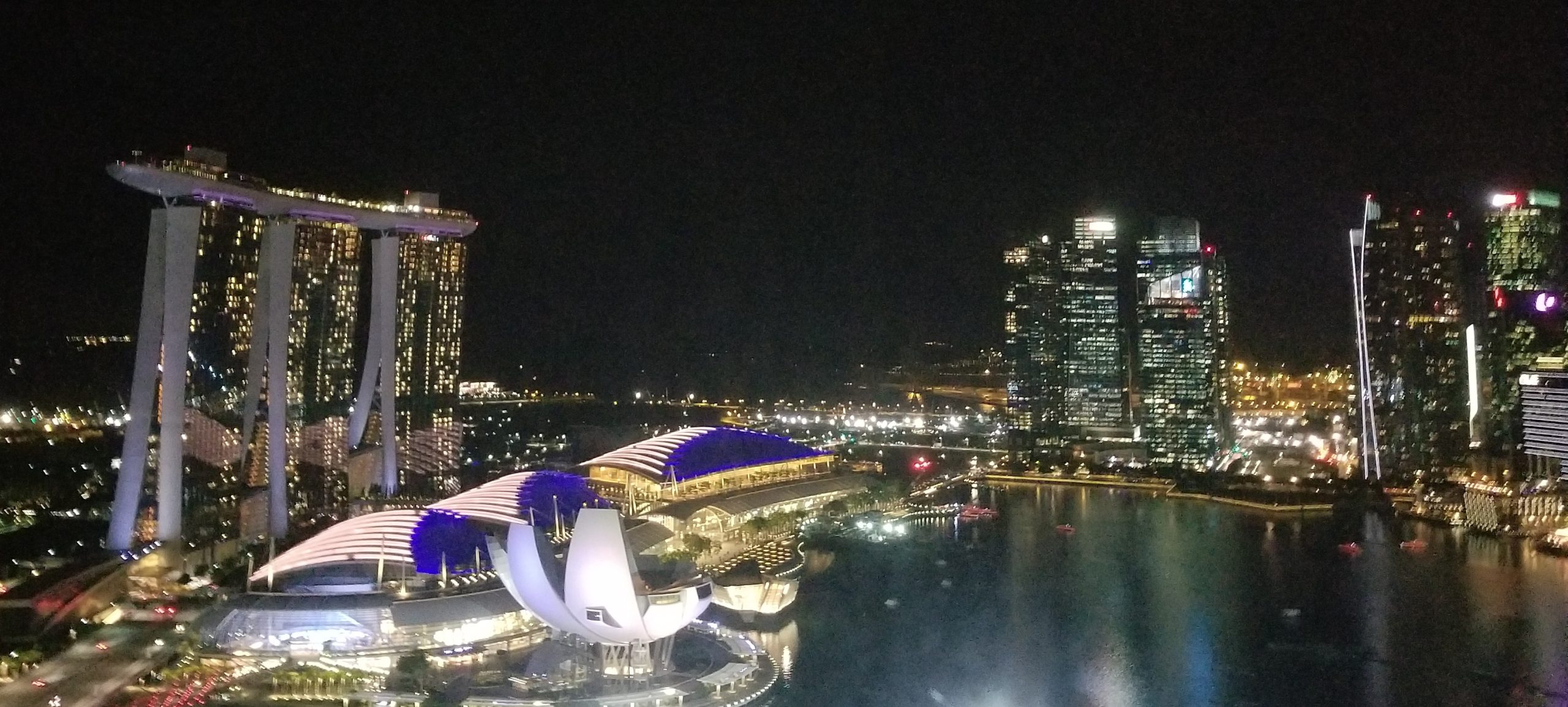
Singapore’s economy expanded 5.9% year-over-year during the second quarter of 2026 after growing 6.3% in the first quarter. That brought growth for the first half of the year to 6.1%, an extraordinary performance for an already-developed economy. The government has now raised its full-year growth forecast to between 4.5% and 5.5%, substantially higher than its previous projection of 2% to 4%. This is not India or Vietnam starting from a low economic base. Singapore is already one of the wealthiest countries in the world.
I wrote earlier this year that Singaporeans were feeling their economy grow in real time. The latest numbers continue to confirm what is taking place there. Singapore has become one of the primary beneficiaries of global economic and geopolitical fragmentation because capital does not care about political speeches. It moves where it believes it will be safe, where business can operate, and where there is confidence in the future. Singapore understood this while much of the West decided that successful businesses and wealthy individuals were simply another source of revenue to be taxed.
Manufacturing has been one of the driving forces behind this expansion. Singapore positioned itself directly in the path of the semiconductor and artificial intelligence investment boom while Europe was debating how many regulations it could impose on technology. Electronics, precision engineering, semiconductors, pharmaceuticals, financial services, logistics, and information technology have all helped support the expansion. Singapore does not possess vast natural resources. It became wealthy by understanding that human capital, financial stability, infrastructure, and confidence are resources in themselves.
This is also a capital flow story. Singapore has become a magnet for wealth leaving other jurisdictions. More than 2,000 single-family offices are now operating there, compared with only a few hundred several years ago. Chinese wealth seeking diversification, Asian entrepreneurs, multinational corporations, and Western investors looking for stability have increasingly viewed Singapore as a safe place to establish businesses and preserve capital. Money does not need a passport. Politicians can erect barriers, impose taxes, and condemn people for moving their wealth, but capital will always seek the environment where it is treated best.
This is precisely what Western governments fail to understand. Britain believes it can continually increase taxes on capital without consequences. Brussels believes corporations will simply absorb higher energy costs and endless regulation because politicians command them to do so. Canada has attacked investment while expanding government spending and debt. France believes wealthy citizens exist merely to finance government promises. Then politicians express shock when businesses, entrepreneurs, and capital begin looking elsewhere.
Singapore took the opposite approach. It created a financial center where international companies could operate efficiently, built world-class infrastructure, maintained one of the busiest ports on the planet, developed Changi into a major international aviation hub, invested heavily in education and technology, and cultivated an environment where corruption remained comparatively low. None of this happened accidentally.
Geography has certainly helped. Singapore sits directly on one of the most important trade routes in the world. Yet countless countries possess favorable geography and squander it through corruption and political incompetence. Singapore turned its location into an economic weapon. As tensions between China and the United States intensify, multinational companies increasingly need Asian headquarters that can operate between both worlds. Singapore is becoming that neutral ground.
This is why the current transformation of the world economy is so fascinating. India is expanding at 7.8%. Vietnam has been growing above 8%. Mexico is benefiting from nearshoring and its proximity to the United States. Singapore is attracting capital and high-value industries as investors seek stability. These countries are not identical and they are certainly not without problems, but capital is increasingly migrating toward regions that are still building rather than those desperately taxing their populations to maintain systems created generations ago.
Singapore still has serious challenges. Housing is extremely expensive, the cost of living is high, the population is aging, and the economy remains extraordinarily dependent on international trade. A severe collapse in global commerce would certainly affect Singapore. No economy operates independently of the global cycle.
Yet Singapore demonstrates an important principle that governments continually refuse to understand. You do not create prosperity by attacking those who produce it. You create an environment where capital wants to come voluntarily.
The global economy is not simply rising or falling together. We are watching a geographic redistribution of wealth, production, technology, and confidence. India is rising through demographics and industrialization. Vietnam is rising through manufacturing and foreign investment. Mexico is benefiting from the reorganization of North American supply chains. Singapore is rising because global uncertainty itself is pushing capital toward stability. That is why Singaporeans can feel the economy growing in real time.
Posted Originally on Sep 3, 2026 by Martin Armstrong |
The Netherlands is moving a substantial portion of its gold reserves out of the United States and Canada and placing it in London. De Nederlandsche Bank will dress this up as an exercise in “tradability,” geographical diversification, and crisis preparedness, but central banks do not quietly rearrange billions of euros in physical gold because everything is stable. This is a geopolitical decision forced by the realization that the international financial system has been weaponized and that access to national reserves can no longer be taken for granted.
NOS reported that approximately 86 tonnes of Dutch gold were relocated between March and August 2026. The Netherlands holds 612.4 tonnes in total, valued at €72.2 billion at the end of 2025. Before this operation, 31.3% was held in New York, 19.7% in Ottawa, 18.1% in London, and 30.8% at the Dutch central bank’s cash center in Zeist. The new distribution places 32.1% in London, 30.8% in the Netherlands, and 18.5% each in New York and Ottawa.
The amount held in New York has therefore been reduced from roughly 192 tonnes to 113 tonnes. London’s share has increased from around 111 tonnes to approximately 197 tonnes. DNB has not reduced the overall gold reserve, but it has deliberately reduced its exposure to North America and made London its largest foreign storage location.
This was not simply a fleet of armored trucks carrying 86 tonnes across the Atlantic. DNB sold nearly 59 tonnes of gold held in New York and purchased an equivalent quantity in London that conforms to modern international trading standards. Another 27 tonnes were physically moved from the United States and Canada to the Netherlands, while an equivalent amount of internationally tradable gold was transferred from Zeist to London. They avoided having to melt and recast older bars, reduced transportation risk, and tested multiple methods for moving gold during a future crisis.
DNB openly stated that this experience could prove useful if gold must be moved again during another crisis and one of the available methods is no longer possible. Central banks do not conduct emergency drills without contemplating the emergency. They are preparing for a world in which a traditional transportation route could suddenly become unavailable.
DNB President Olaf Sleijpen said, “We assume that we will never have to use the gold, but it is nevertheless necessary to strengthen our resilience and preparedness.” The bank also described gold as the “ultimate anchor of trust” capable of covering extreme systemic risks. These are extraordinary admissions from the same class of central bankers who spent decades pretending gold was an outdated relic while they created money without restraint and drove sovereign debt beyond any possibility of repayment.
The official explanation is that gold held at the Bank of England is more immediately tradable because London remains the world’s largest over-the-counter bullion market. Gold stored there meets the international Good Delivery standards needed for rapid settlement, lending, swaps, and outright sale. London’s bullion market processes enormous volumes, and its clearing infrastructure reportedly handles around $160 billion in transactions each day. If DNB needs liquidity during a systemic crisis, London provides the fastest route from physical metal into usable funds.
That explanation is technically valid, but it does not answer why the Dutch suddenly decided that they needed 86 additional tonnes positioned for immediate crisis deployment. The decision is explicitly linked to “increasing geopolitical unrest.”
The West destroyed the neutrality of the reserve system when it froze Russia’s foreign-exchange reserves after the invasion of Ukraine and later developed mechanisms to redirect the earnings from those assets. Whatever one thinks of Russia or the war is irrelevant to the monetary consequences. The United States and Europe demonstrated that foreign reserves held in their jurisdictions are conditional assets. They belong to another nation only for as long as Washington, Brussels, or London recognizes that government and approves of its conduct.
Moving the gold to London does not eliminate geopolitical risk. Britain has already demonstrated that custody does not guarantee access. The Bank of England refused to release Venezuelan gold after the British government ceased recognizing Nicolás Maduro’s authority. Dutch officials may regard Britain as a friend today, but alliances change, governments fall, and foreign policy can reverse overnight. If the purpose is absolute protection against extreme systemic risk, the only unquestionable location is inside the Netherlands.
Nevertheless, the Dutch move exposes the broader trend. Governments are no longer preparing merely for fluctuations in exchange rates or ordinary banking stress. They are preparing for fractured payment networks, sanctions between former partners, capital controls, sovereign defaults, and a breakdown in the political trust supporting the postwar financial order.
Trust is vanishing because governments themselves destroyed it. Once money became a weapon of war, every nation was forced to ask whether its reserves could be used against it. The Dutch have now answered by placing more of their gold where they believe it can be mobilized quickly and, as some put it, held among friends. The troubling part is that nations only begin identifying their true friends when they expect the system to fracture.
Posted Originally on Sep 2, 2026 by Martin Armstrong |
Treasury Secretary Scott Bessent threatened the entire world in perhaps the most authoritative speech that makes other nations hate Americans for this arrogance. Scott Bessent thinks he is still with Soros and can now really manipulate the world economy. Those who ask if I have any connection with him the answer is FLAT OUTRIGHT NO WAY!!!!! We are adversaries and he would sooner destroy the USA before ever consulting Socrates. He hates my guts.
The arrogance of the United States is off the charts. Allowing Bessent and the Neocons to use the dollar as a weapon has already divided the world economy. China’s CIPS has been experiencing significant growth. It processed 175 trillion yuan (about $24.47 trillion) in 2024, with plans to expand to support multi-currency settlement. SWIFT is exclusively dollars. CIPS handles approximately 70% of all RMB cross-border payments, and its single-day transaction value has reached new highs, exceeding 1.22 trillion yuan in early 2026. That is 179.9 billion USD daily.
Transforming the US dollar into a weapon is having devastating effects and underminded the FAITH in the US dollar. Obama started this insanity. When Russia came to the aid of Russians in Crimea, he went to SWIFT and insisted that they remove Russia from the system. They said no way. So they replaced the head of SWIFT as a puppet and they started weaponizing the dollar by removing Russia and then had the audacity to threaten China if they aided Russia against Ukraine.
Let’s expose the hypocrisy here. The United States has a well-established history of using military force to protect or rescue its citizens abroad, sometimes escalating to a full-scale invasion. This practice is rooted in the government’s view that it has a legal right—based on national “self-defense“—to protect its citizens wherever they are, and that this right has even been used to justify military intervention in foreign countries. They deny that to Russia.
The principle that the U.S. government can use force to protect its citizens abroad is long-standing. An 1860 U.S. Circuit Court case, Durand v. Hollins, established an important precedent by upholding a naval bombardment of Greytown, Nicaragua, as a reprisal for violence against U.S. nationals. The ruling stated that “the citizen abroad is as much entitled to protection as the citizen at home,” and that a government failing in this duty “is not worth preserving” .
This legal concept supports what has historically been called “gun-boat diplomacy“—the use of military force to protect citizens or their property in other countries . The US will invade and has done so but claim Russia coming to the aid of Russians in the Donbas is illegal?
These people who love power are so stupid that they cannot see that the more people they remove from SWIFT isolates the United States and in the process they are destroying the dollar. The DEDOLLARIZATION has nothing to do with debt, gold, or FIAT. Such arguments only reveal how little they know about how the world economy functions. This is geopolitical and this latest NONSENSE from Bessent will only fulfill our computer forecast that they are destroying the world economy and in the process the dollar as soon as 2030 where we have a Panic Cycle. These idiots are so arrogant and stupid, they cannot see that they are undermining not just the dollar, but the entire world economy. BRICS is a response to American arrogance.
They are guaranteeing that China will supplant the United States as the financial capital of the world for the yuan will become more trustworthy by the mere fact that China would not turn its currency into a weapon when they are benefitting every day the more the USA weaponizes the dollar.
Posted originally on the CTH on September 2, 2026 | Sundance |
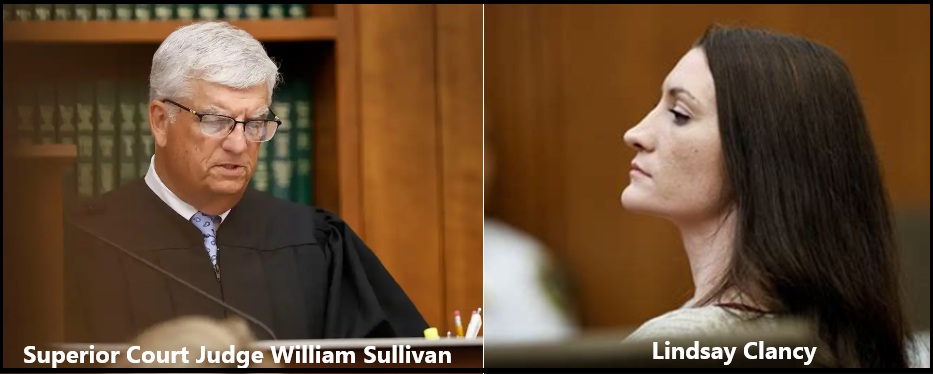
Many of us are watching the story of a woman, Lindsay Clancy, who is accused of murdering her three young children in 2023 in their Massachusetts home. The widely discussed case is being tried in Plymouth Superior Court, and after five days of jury deliberations the jury has again told the judge they are hopelessly deadlocked.
Clancy killed her three children [Cora (5), Callan (8 months), and Dawson (3)], that aspect is not in question; she strangled them with an exercise band. However, the defense has argued that Clancy was suffering from postpartum psychosis, and she is not criminally responsible. Prosecutors argued Clancy knew right from wrong and acted deliberately, pointing to evidence of her planning, and the fact she hid her thoughts of harming the children from doctors because she knew they were wrong.
The jury is made up of nine women and three men. The jury cannot decide if Clancy is criminally responsible for killing her children. The jury has deliberated for five days and has reported twice before they are deadlocked. Superior Court Judge William Sullivan responded with a Tuey-Rodriguez charge, an instruction that urges deadlocked jurors to keep working toward a verdict while reminding them not to abandon their own honestly held views.
Rather than declaring a mistrial, the judge allowed the jurors to go home for the day. It looks like tomorrow a mistrial will be declared.
(Via Fox News) – The instruction that Judge William Sullivan gave to the Lindsay Clancy jury on Wednesday takes its name from two Massachusetts Supreme Judicial Court decisions.
In Commonwealth v. Tuey (1851), the court approved an instruction encouraging deadlocked jurors to re-examine their views with an open mind. More than a century later, in Commonwealth v. Rodriguez (1973), the state’s highest court revised that language to remove pressure on minority or holdout jurors, creating a neutral instruction that asks all jurors to carefully consider one another’s views while maintaining their own honestly held convictions.
Receiving a Tuey-Rodriguez charge does not mean a verdict is imminent. The instruction is generally considered a necessary step before a judge declares a mistrial because of a hung jury, although it often results in jurors reaching a unanimous verdict after further deliberations. (read more)
The trial has gathered considerable national attention because a remarkably large number of women support Ms. Clancy and claim that many women suffer from extreme hormone imbalances and are not responsible for their conduct or behavior. The supporter group has a lot of commonalities with the women who previously wore genitalia on their heads.
Many American men are, for the first time, looking at the hormonal claims of the Clancy defenders and asking themselves some very serious questions about the mental stability of a large swath of American women. Meanwhile another significant group of American men remind them this is not new.
The ramifications of a “not guilty” decision are considerable.
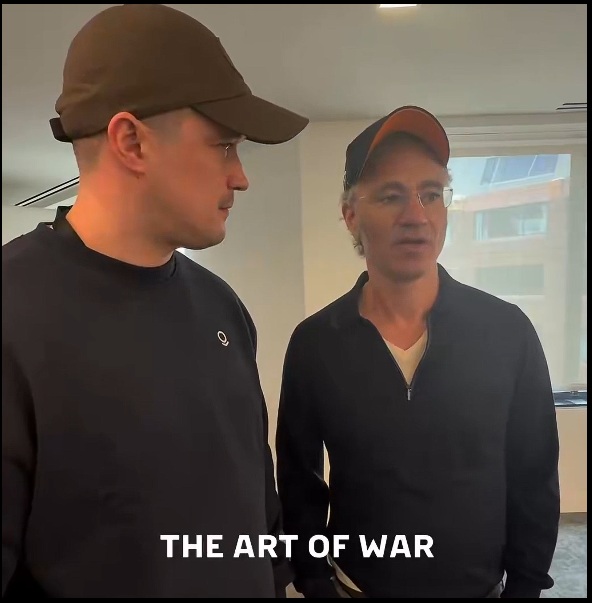
Palantir CEO Alex Karp and former Ukraine Defense Minister Mykhailo Fedorov have been collaborating jointly for over 5 years, according to the statement made by Karp. That means the Palantir-Ukraine relationship pre-dates the Russian military advance into Eastern Ukraine.
Given the nature of U.S. involvement in Ukraine, and understanding the shady and sketchy background that has been in place for quite some time, the detail of the length of time Palantir and Ukraine military have been working together is worth noting.
As Secretary of State Marco Rubio first mentioned in March 2025, …” frankly, it’s a proxy war between nuclear powers – the United States, helping Ukraine, and Russia – and it needs to come to an end.” {source}
It’s also worth remembering in June 2022, the New York Times published an article saying the CIA and Pentagon special forces were organizing and conducting the NATO war effort from a secret operation center in Kyiv.
KYIV, Sept 1 (Reuters) – Palantir CEO Alex Karp will become the first major investor in a new defence technology company launched by Mykhailo Fedorov, the tech-savvy former Ukrainian defence minister who was dismissed in July.
“The new company will build on Fedorov’s experience in modern technological warfare, with its primary mission to strengthen Ukraine and develop defense technologies that can help build a safer future for the entire world,” a press release from Fedorov’s team said on Tuesday.
The dismissal of Fedorov, a longtime advocate of drone warfare and artificial intelligence, sparked protests that later subsided after he publicly called for wartime elections, an issue that splits Ukrainians.
Since leaving office, Fedorov has said he plans to launch several ventures, including a defence investment fund and a think-tank. “You and your colleagues are launching a company that I think will be defining for the world,” Karp told Fedorov in a video posted on the former minister’s Telegram channel.
Karp said he and Fedorov had worked together for “half a decade.” Palantir has provided software to Ukraine to support its war effort against Russia and government operations.
The statement said the two men met at Palantir’s Washington, D.C. office on Monday. (source)
War is a very lucrative business.
Within Ukraine Fedorov has a lot of support. However, one can look at his decisions recently as driven more by the affluence opportunity than anything else. As always, when given ideology or money as two options, most choose the money.
Posted originally on the CTH onSeptember 2, 2026 | Sundance |
Palantir CEO Alex Karp and former Ukraine Defense Minister Mykhailo Fedorov have been collaborating jointly for over 5 years, according to the statement made by Karp. That means the Palantir-Ukraine relationship pre-dates the Russian military advance into Eastern Ukraine.
Given the nature of U.S. involvement in Ukraine, and understanding the shady and sketchy background that has been in place for quite some time, the detail of the length of time Palantir and Ukraine military have been working together is worth noting.
As Secretary of State Marco Rubio first mentioned in March 2025, …” frankly, it’s a proxy war between nuclear powers – the United States, helping Ukraine, and Russia – and it needs to come to an end.” {source}
It’s also worth remembering in June 2022, the New York Times published an article saying the CIA and Pentagon special forces were organizing and conducting the NATO war effort from a secret operation center in Kyiv.
KYIV, Sept 1 (Reuters) – Palantir CEO Alex Karp will become the first major investor in a new defence technology company launched by Mykhailo Fedorov, the tech-savvy former Ukrainian defence minister who was dismissed in July.
“The new company will build on Fedorov’s experience in modern technological warfare, with its primary mission to strengthen Ukraine and develop defense technologies that can help build a safer future for the entire world,” a press release from Fedorov’s team said on Tuesday.
The dismissal of Fedorov, a longtime advocate of drone warfare and artificial intelligence, sparked protests that later subsided after he publicly called for wartime elections, an issue that splits Ukrainians.
Since leaving office, Fedorov has said he plans to launch several ventures, including a defence investment fund and a think-tank. “You and your colleagues are launching a company that I think will be defining for the world,” Karp told Fedorov in a video posted on the former minister’s Telegram channel.
Karp said he and Fedorov had worked together for “half a decade.” Palantir has provided software to Ukraine to support its war effort against Russia and government operations.
The statement said the two men met at Palantir’s Washington, D.C. office on Monday. (source)
War is a very lucrative business.
Within Ukraine Fedorov has a lot of support. However, one can look at his decisions recently as driven more by the affluence opportunity than anything else. As always, when given ideology or money as two options, most choose the money.
Posted originally on the CTH on September 2, 2026 | Sundance |
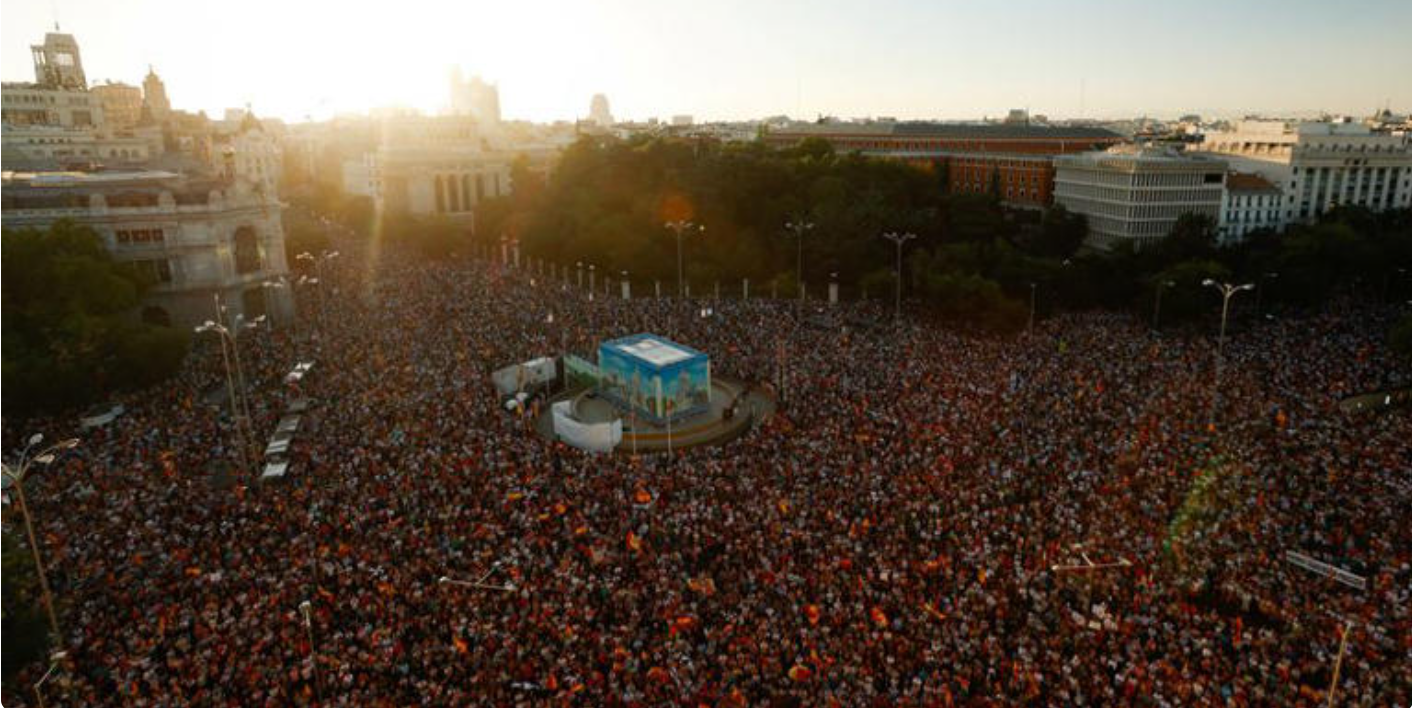
Tens of thousands of people took to the streets of Madrid today, in a massive show of support for Spain’s North African enclave of Ceuta. The protests follow weeks of crisis in the region following a border surge from neighboring Morocco.
More than 70,000 migrants crossed into Ceuta during the surge and local authorities estimate that more than 10,000 migrants remain in makeshift camps scattered across the enclave. The residents are dealing with lawlessness, chaos and criminal activity. Protesters in Madrid wave Spanish flags, called for stronger border control and criticize Prime Minister Pedro Sanchez over his handling of the crisis. The demonstrations are ongoing as serious clashes and fights between migrants and local residents continue in Ceuta.
CEUTA, Spain, Sept 2 (Reuters) – Residents of Spain’s North African enclave of Ceuta took to the streets on Wednesday to protest the handling by Madrid of a migration crisis caused by a deadly border surge in July when at least 72,000 people crossed from Morocco.
Thousands of people marched through the streets of the city of about 80,000 residents in a protest that coincided with the annual Ceuta Day. Waving Spanish flags and blowing whistles, they chanted: “Ceuta is not for sale, Ceuta must be defended.”
One placard read: “SOS. Europe, save us from our traitor government” while some demanded that authorities should “expel the invaders” and others called for Prime Minister Pedro Sanchez to resign as demonstrations also took place in other cities across Spain, including Madrid, Barcelona and Bilbao. (read more)
Posted originally on the CTH on September 2, 2026 | Sundance |
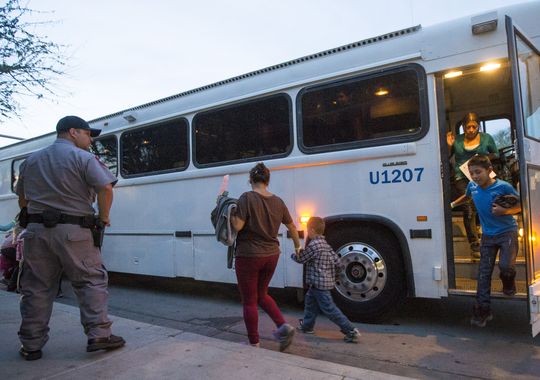
The Justice Department has issued an important ruling requiring states to follow the legislated rule of reporting illegal aliens who receive Temporary Assistance for Needy Families (TANF) or Supplemental Security Income (SSI). This rule can substantially alter the nature of financial support programs currently taking place with federal funds. [Full Press Release] [Full Opinion]
The Office of Legal Counsel has issued a legal opinion clarifying that when a state chooses to participate in the Temporary Assistance for Needy Families (TANF) and the Supplemental Security Income (SSI) programs, all agencies within that state — not only those that administer TANF or SSI benefits — must report individuals known to be not lawfully present in the United States to The Dept of Homeland Security. {citation}
DOJ Press Release: […] “Congress wrote this requirement plainly,” said Assistant Attorney General T. Elliot Gaiser of the Justice Department’s Office of Legal Counsel. “When a state chooses to participate in TANF, it accepts the obligation to report illegal aliens in the United States. Tax dollars intended to help vulnerable Americans should not perversely encourage illegal entry into the United States, but rather should reinforce our laws and our borders.”
“Our clarification does not impose new obligations on states,” said Deputy Assistant Attorney General Joshua Craddock of the Justice Department’s Office of Legal Counsel and author of the opinion. “It simply restores the original meaning of the statute Congress enacted and ensures that DHS receives the information it is legally entitled to. States that accept TANF funding must abide by federal law, and failure to comply may lead to serious consequences, including loss of program funding.”
The Office withdrew a Clinton-era opinion from 1998 that construed the reporting requirement much more narrowly. Under that prior interpretation, only the specific state agencies administering TANF or SSI were required to provide information to federal immigration authorities. All fifty states, the District of Columbia, and several U.S. territories currently participate in TANF and SSI, and federal TANF funding grants exceed $16.4 billion annually.
The Office of Legal Counsel’s Sept. 1 opinion explains that Congress defined “State” broadly in the Personal Responsibility and Work Opportunity Reconciliation Act of 1996. As a result, when a state accepts federal TANF or SSI funds, the entire state government — including all component agencies — is bound by federal law to share information with DHS about individuals the state knows to be not lawfully present.
The opinion applies prospectively. States will not face retroactive penalties for past reliance on the 1998 interpretation. Federal agencies may rely on OLC’s advice to update TANF and SSI grant agreements and compliance processes to reflect the correct legal standard moving forward. (SOURCE)
Posted originally on the CTH on September 2, 2026 | Sundance |
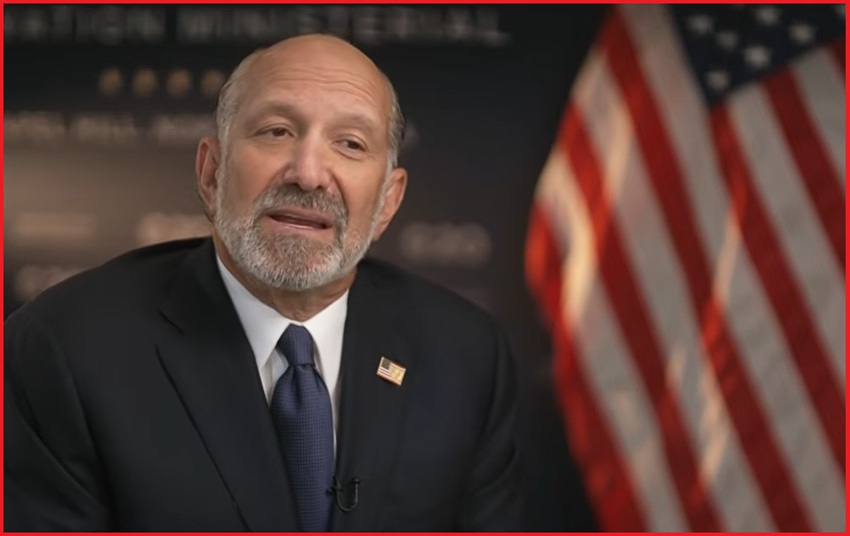
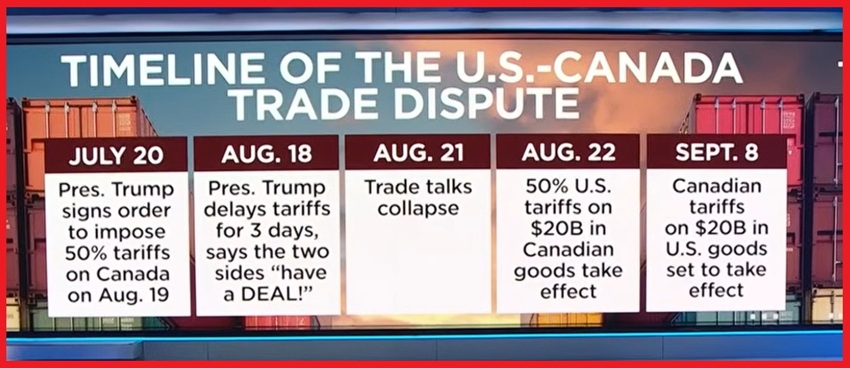
A rather remarkable statement from Commerce Secretary Howard Lutnick puts the Canadian government on notice. If Lutnick is accurately outlining what took place, there’s no way Trump is going to give them a trade deal.
When he is questioned about the U.S-Canada trade agreement collapse, Secretary Lutnick quotes the Canadian govt officials. “I said to him, are you trying to blow this up? and he said, and I quote, “I’m not allowed to say that.“” Lutnick then encapsulates what that response meant.
“They decided for political reasons, domestically, domestic Canada, they’d rather fight with Donald Trump; even if it’s bad for the economy of Canada, for their political ambition to get a certain election,” Lutnick noted. He continued, “now remember, Quebec has the sovereign party was in the lead, so that’s why they came up with this French nonsense. You think the American side talked about how people speak in Quebec? We have a deal with France, we have a deal with Italy, we have a deal with Germany, we don’t care about their language; none of that was true.” WATCH (prompted):
Posted originally on the CTH on September 2, 2026 | Sundance |
Considering that European NATO partners are urgently trying to expand the Ukraine conflict and assemble a united NATO war effort against the Russian Federation, it is worth reviewing the current position of Russian President Vladimir Putin.
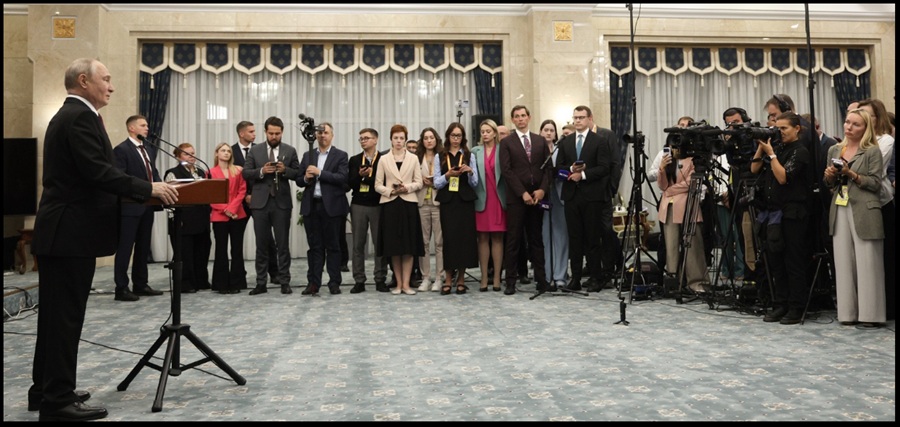
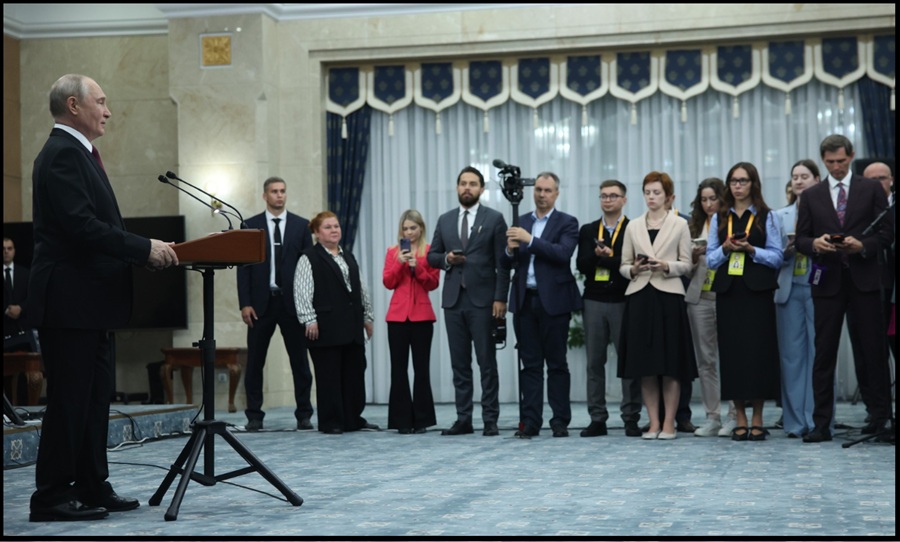
Vladimir Putin held a press conference on the sidelines of the SCO summit in Kyrgyzstan. A transcript is below:
Olga Knyazeva: Today, very much attention is given to our contacts with the United States. The CIA director has reportedly visited [Moscow] to offer trilateral Russia-US-Ukraine talks.
Do you think we need any negotiation tracks now or possibly new intermediaries, including American ones?
Vladimir Putin: First, communication between our intelligence services is maintained at all times. You may have noticed that we have recently handed over to the American side an American citizen who was serving a prison term in Russia. We did that for health and humanitarian reasons. He is a simple guy, a drinker and a brawler with health problems, so we sent him home to get medical assistance.
It was my first point. Communication is and was always maintained, even in the most difficult periods of the Cold War, and even more so now. Direct contacts are also maintained between the senior officials of our intelligence services.
As for expanding the number of negotiators, we believe that negotiations, any kind of negotiations, should be primarily filled with concrete content. If anyone is making or can make a practical contribution to this process, we are all for it.
The only thing we would like to avoid is to carry on a senseless process. If anyone can make a positive contribution to this negotiating process, which has been frozen to some extent, as we see this, we would not be against this. But this requires the involvement of specialists, the military and diplomats, of course.
On the other hand, we are quite comfortable with working with those who we know well and generally trust. These people are close to President Trump. In my opinion, they are sincere people who try to add practical content to our efforts. And President [Trump] trusts them, which is very important and without which no negotiations are possible. The thing is that everything is pointless if these people coordinate some issues with us but their top leader reviews the arrangements they make and divides them by a thousand or more. As far as we can see, he trusts them. That is why Mr Kushner and Mr Witkoff are always welcome here, and we enjoy working with them.
Viktor Sineok: Russian troops are currently advancing towards Kramatorsk and Slavyansk, and strikes on Ukrainian military facilities are ongoing. Has the turning point in this conflict already been reached, and will the enemy, as the saying goes, begin to crumble? Or does that moment still lie ahead? And what is the present situation at the front, and how do you assess it?
Vladimir Putin: I have no doubt whatsoever that the enemy will, indeed, crumble. Matters of precise timing are always exceedingly complex, and these are precisely the questions to which it is best not to attempt definitive answers – neither in respect of timing nor of any other specifics. For war is an enterprise that is harsh and difficult to predict.
Nevertheless, questions of the sort you have just raised invariably arise at every meeting with media representatives. That is why, before entering this hall, I proceeded to my office upstairs and have just spoken directly with the Chief of the General Staff. I would note, however, that the information I receive is sourced from a wide array of channels, from virtually all command bodies of the special services and our agencies which, in one manner or another, are engaged in the special military operation. Accordingly, the picture – at least as it appears to me – is fairly objective. I have just received the latest reports from him [Valery Gerasimov] and from other colleagues.
I would like to add, of course, that hostilities always involve casualties, which is sad and it is always a tragedy and faces us with new challenges, especially at this time of rapid scientific and technological development.
The biggest challenge is posed by unmanned vehicles, which operate in all spheres – underwater, on sea, land and in the air. This is a serious challenge to us, but we are coping with it. I am confident that all tasks in this sphere will be fulfilled. I have no doubt whatsoever about this. I can conclude this from the speed our defence enterprises have accumulated.
But there is more to it. You know, I was pleased with my meetings with representatives of small and medium-sized businesses and our nascent engineering schools. The average age of their engineering professionals is 35 years. I have recently held such a meeting and I was really pleased and impressed by this fact. We may be lagging behind or moving ahead of the enemy in some spheres, but we will certainly overcome all challenges and fulfil all our tasks.
But the main thing I would like to say in reply to your question is this. Despite all challenges, Russian forces are accelerating their offensive in the zone of the special military operation. They are not simply advancing but accelerating their movement.
The liberation of the Donetsk People’s Republic is proceeding as planned. I would like to note that in August alone we assumed control over 270 square kilometres of the republic’s territory and 15 localities. Here are the details.
The units of the South Group of Forces are confidently, I repeat, confidently advancing, overcoming the defence lines and engineering fortifications of the enemy, advancing… (Addressing Viktor Sineok) You have said “charging ahead.” Well, they may not exactly be charging ahead, but they do move unhurriedly in a high drone threat environment, advancing towards the eastern suburbs of Slavyansk and Kramatorsk and the southern suburbs of Druzhkovka, which are between 1.5 and 4 kilometres away in different sections of the frontline. Moreover, they are approaching Druzhkovka from several directions, bypassing it in the south and approaching it from the east.
Troops from the Centre group are advancing on several key axes simultaneously and are now engaged in street-by-street fighting to take the city of Dobropolye. This is a major, heavily fortified logistics hub, with both permanent and semi-permanent defensive structures in place. I will not tempt fate by predicting the outcome, but I am confident the result will come.
Forces from the West group – I am not sure whether this has been reported in the media – have encircled a large enemy contingent on the eastern bank of the Krasnooskol Reservoir, near the village of Peski-Radkovskiye, and have begun to neutralise it. Thirteen Ukrainian armed forces battalions, totalling around 5,000 troops, are trapped in the pocket. This happened recently, and I do not know whether the Ministry of Defence has issued any statement or has been able to confirm it. The figure is probably somewhere around 4,500 to 4,800 troops – roughly that number. Moreover, this encirclement has been physically sealed. That is to say, not just under fire control, but physically complete – we have them fully surrounded and are now tightening the ring.
The offensive in the Zaporozhye Region is also proceeding actively. Units and formations of the Vostok and Dnepr groups are pushing forward on a broad front towards Zaporozhye. They liberated nine communities in August, and fighting is now underway in the central districts of Orekhov. The troops there are operating calmly, but with great confidence.
The North group of forces continues to establish a buffer zone along the Russian-Ukrainian border in the border areas of the Sumy Region (there are now only 12 kilometres left to Sumy itself, before the ring road) and also in the Kharkov Region. Over the past month, 14 communities have come under Russian control, including the liberation of Kazachya Lopan and, as of yesterday, the town of Svyatogorsk.
In the north-eastern part of the Kharkov Region, another enemy grouping of up to 2,000 troops has been completely encircled. The pocket formed there is substantial – 460 square kilometres – and encompasses 27 communities. Its elimination will allow the line of contact in this sector to be pushed back by at least 20 kilometres from the border areas of the Belgorod Region.
I would like to remind you that our actions were taken in response to the Kiev authorities’ provocation, namely their incursion into the Kursk Region.
We continue to target Ukrainian military facilities, industrial enterprises, and the port and logistics infrastructure that operate in the interests of the Ukrainian armed forces. As you know, we are doing this in response to the Ukrainian regime’s continued attacks on Russia’s civilian infrastructure and its fuel and energy complex, including oil refineries. I have been told that last night a large number of drones tried to get past the air defence systems of Moscow and St Petersburg, targeting civilian facilities, including oil refineries. They attempted to hit three oil refineries. Taking all this into account – the attacks on Russia and these facilities – the Russian Armed Forces were instructed to prepare and deliver mass strikes on Ukrainian energy facilities. They are targeting our facilities; we strike back. This is roughly the situation.
Alexander Yunashev: May I ask an additional question about drones?
Vladimir Putin: Yes, you may.
Alexander Yunashev: Good afternoon, Mr President.
The German authorities have stated that Russia is behind the drone incident in Leipzig, claiming that it was a Russian drone armed with explosives. However, this is a murky story. They have denounced the lease for the Russian House and want to shut down our consulate general in Berlin. At the same time, Zelensky openly threatened our air force several hours ago, saying that civilian aircraft have no place in the sky used by Ukrainian drones.
What can you say about this?
Vladimir Putin: Let’s start with the first part, about the actions of the German authorities. I believe that it mostly has to do with the internal political situation. The Chancellor’s political standing is complicated. He is not trusted by his citizens, and it is clear why – because he does not uphold but sells out national interests, and because of apparent economic missteps: enterprises are being shut down, people are losing their jobs, and living standards are plummeting. It is not clear why they did what they did. They have only one explanation: they need to stand up against “aggressive Russia.” You want proof? Here you are; they have planted it.
I would like to remind everyone that some time ago – several months or even a year ago – the German authorities accused Russia of blowing up the Nord Stream pipeline. I was really surprised that they came up with such a strange idea because we were interested in selling gas to Europe. We would be ready to provide gas today too. They only need to press the button, to make the decision to do it. But they don’t have the stomach for this, because of the US sanctions and everything else.
Good, but now they need to explain the reasons behind their actions. Considering the falling ratings and the upcoming elections, including in Saxony, this puts the political future of the German ruling circles in question. I believe that this is the explanation. I think that this is yet another blunder, and that it runs contrary to the interests of the German people.
What was the other part of your question, about a statement?
Alexander Yunashev: Zelensky has said that the skies are unsafe for civilian airlines. Is this a threat?
Vladimir Putin: I have not heard such statements, but if he did say this publicly, this sounds like a claim to state terrorism. I would like to note that they are asking us to resume talks and hold personal meetings. We don’t negotiate with terrorists. This is the first point.
Now, about the second part of your question. If, God forbid, such tragedies happen, we will provide a reply, let no one be in any doubt about this.
Gleb Ivanov: Mr President, you have recently signed an executive order authorising the Government to place critical infrastructure facilities under temporary administration if their security is not ensured. Could you elaborate on this executive order? First, in what cases do you intend to implement this, and second, could this lead to the nationalisation of these assets, turning them into state property?
Thank you.
Vladimir Putin: Of course not. What are you talking about? This is not a matter of nationalising anything – do not even think about it. There was never any such intention behind this move. Nationalisation is not an option. What compelled us to do this was quite straightforward. There is a saying, you know, that a man will not lock the barn door until after the horse is stolen. The adversary has started targeting civilian sites, including oil refineries. Did the adversary succeed in inflicting damage? It did. But why? Among other factors, and primarily because they were not protected. Unfortunately, our companies – I have had many face-to-face and collective meetings with them – these companies have been saying: “This is a matter for the law enforcement agencies, the army, etc. to handle.” But once we discussed this, they understood that they also had to be part of this effort.
Let me assure you… I said that there were attempts to target three oil refineries this night alone. These attempts failed. Why? Because these facilities were already protected. This does not mean that no strikes will ever get through. It might happen every now and then, but this elevates the protection to a whole new level. We have yet to complete repairs at just 10 percent of our oil refineries, so there is no way we can afford to have those of them that were repaired suffer from any strikes.
Therefore, we must all work together. This executive order is designed to achieve just that: to enable public administrations on the ground, including in municipalities, cities, regions and republics of the Russian Federation, as well as law enforcement agencies, and the Defence Ministry to work together to defend critical sites. This is all there is to it in terms of the purpose of this executive order. And it works, you know.
Of course, everything is possible, and there is always a possibility that something penetrates these defences somewhere, since the defences are not always effective. That said, this is the purpose of this executive order. And we can see that it works. (MORE)
I have created this site to help people have fun in the kitchen. I write about enjoying life both in and out of my kitchen. Life is short! Make the most of it and enjoy!
This is a library of News Events not reported by the Main Stream Media documenting & connecting the dots on How the Obama Marxist Liberal agenda is destroying America









 Centinel2012