Episode 5467: Victory In New York Is A Troubled Sign Of What’s To Come


Posted originally on rumble on Bannons War Room on: June 24, 2026

BERGQUAM: When I Was At The DNC Last Year In Chicago, They Were Attacking Each Other For Not Being Communist And Jihadist Enough. The Base Of The Democrat Party They Are Raising Up Is Worse Than What They’re Electing In New York Right Now


Posted originally on rumble on Bannons War Room on: June 24, 2026

DANIEL KISHI: Housing Prices Have Doubled From Pre-Pandemic Levels, And Interest Rates Remain High. For Americans In Their 20s And 30s Who Are Just Starting Families, The Dream Of Homeownership Is Slipping Away


Posted originally on rumble on Bannons War Room on: June 24, 2026

LIVE: President Trump Hosts a Dinner with Farmers in the Rose Garden…


Posted originally on Rumble on Bright Bart News Network on: June 25, 2026

LIVE: Sec. Markwayne Mullin Testifies on DHS Oversight…


Posted originally on Rumble on Bright Bart News Network on: June 25, 2026

The Computer Was RIGHT About Gold


Posted originally on Jun 26, 2026 by Martin Armstrong |  

Gold Price Slightly Lower as Test of 200-Day Moving Average Looms Large

Gold has now fallen below $4,000 an ounce for the first time since November 2025, and suddenly everyone is proclaiming the bull market is dead. On June 24, spot gold fell to an intraday low of approximately $3,973.79, breaking below the $4,000 level for the first time in seven months. On June 25, gold remained under pressure, trading around $3,982.49. From its January record high near $5,595 an ounce, gold has now declined more than 28%, approaching the 30% correction our computer models had been pointing toward. Markets move in cycles, not straight lines. A correction of this magnitude frightens the late buyers into dumping their positions at precisely the time our computer indicated this washout would unfold.

During my latest interview with Mining, I warned that gold had become extremely overextended and that a major correction into this time period should surprise no one. I also explained that simply replacing the Federal Reserve chairman would not magically produce lower interest rates if inflation continued to accelerate. The market is now beginning to recognize that reality. Expectations for tighter monetary policy under Kevin Warsh, a stronger U.S. dollar, and reduced fears of an immediate Middle East escalation combined to create the perfect environment for a sharp liquidation.

What most analysts continue to miss is that a correction does not automatically signal the end of a secular bull market. The sovereign debt crisis has not disappeared. Europe’s financial problems have not been solved. Governments everywhere continue borrowing at unsustainable levels while geopolitical tensions remain elevated. Capital moves in waves, and violent corrections are a normal feature of every major bull market. During periods of international uncertainty, it is entirely possible for both gold and the U.S. dollar to strengthen together as capital flees political instability and sovereign debt risk around the world. Those who mistake a cyclical correction for the end of the trend usually discover they sold at exactly the wrong time.

This is why relying on opinion is so dangerous. The computer has no emotion, no political bias, and no personal agenda. It follows the movement of global capital. While everyone was chasing gold near $5,600 in January, the models warned that a significant correction was approaching. Now that fear has returned and commentators are declaring the bull market over after a decline to roughly $3,975, the majority is once again reacting emotionally instead of understanding the cycle. Markets rarely reward the majority. They reward those who recognize the trend beneath the volatility.

China Moves on Taiwan – Ethnic Unity Law


Posted originally on Jun 26, 2026 by Martin Armstrong |  

One-China Policy: The Basics

China has now openly declared that it believes it has the legal right to pursue people beyond its own borders under its new Ethnic Unity Law, which takes effect on July 1. Beijing insists the law is “legitimate, lawful, necessary, and feasible,” and argues that every nation has the right to suppress separatism. The legislation extends legal liability to individuals and organizations outside China accused of undermining what Beijing defines as “ethnic unity” or promoting separatism. This is no longer simply domestic legislation. It is a declaration that China intends to extend its legal reach far beyond its own borders.

The key nation to watch is Taiwan. Taipei immediately warned that the law could become another legal weapon against Taiwanese officials, politicians, academics, journalists, business leaders, and anyone Beijing considers supportive of independence. China has steadily expanded its legal framework over the past several years, beginning with sanctions, travel bans, and criminal guidelines aimed at so-called Taiwan separatists. Now it is broadening that authority by explicitly stating that people overseas can also be held accountable. This is another step in a process that has been unfolding piece by piece rather than overnight.

Taiwan has every reason to take this law seriously because Beijing has followed a similar playbook before. After imposing the National Security Law on Hong Kong in 2020, authorities steadily expanded its reach beyond the territory itself. Arrest warrants and bounties were issued for pro-democracy activists living overseas, passports were canceled, assets targeted, and pressure was applied to dissidents residing in Britain, Australia, and elsewhere. Hong Kong has also invoked national security powers against exiled activists abroad and offered financial rewards for information leading to their capture.

This new Ethnic Unity Law appears to follow the same pattern by creating another legal foundation that Beijing could use against Taiwanese politicians, academics, journalists, business leaders, and overseas supporters of Taiwanese independence. The first battle is always legal, the second is political, and only then does it become military. That is why Taiwan remains the critical flashpoint to watch as we move toward the 2027 War Cycle.

People continue looking only at military exercises and naval deployments, but the first stages of every major conflict are often legal, economic, and political. Governments create the legal justification long before they consider military action. Once laws are in place claiming jurisdiction beyond national borders, the political foundation has already been established.

This is why Taiwan remains the market everyone should be watching. The issue is no longer simply whether Beijing intends to reunify with Taiwan. The question is how far China is prepared to project its authority beyond its own borders. As sovereign debt pressures rise, geopolitical tensions intensify, and the global order continues to fracture, Taiwan remains one of the most significant pressure points in the world economy. Capital follows political risk, and our models continue to indicate that this region will remain one of the defining geopolitical stories of this decade.

Inflation Remains Undefeated


Posted originally on Jun 26, 2026 by Martin Armstrong |  

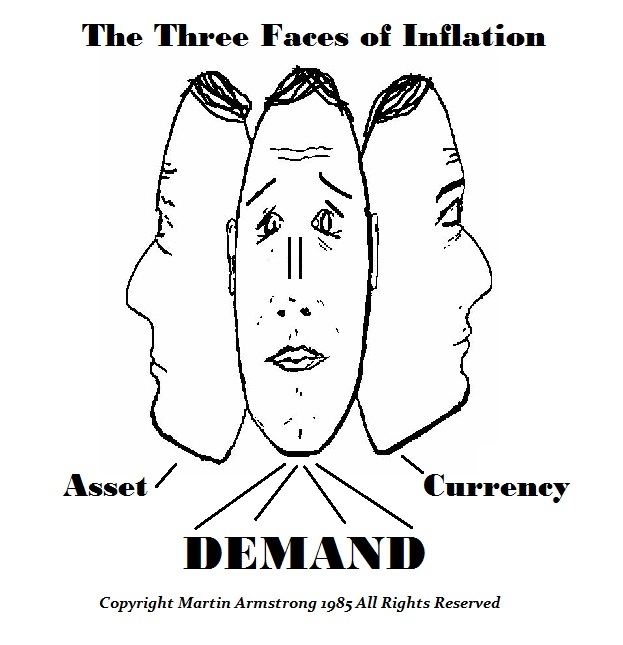
3FACESn of Inflation

The Federal Reserve’s preferred inflation gauge just delivered another reminder that inflation has not been defeated. The Personal Consumption Expenditures (PCE) Price Index rose 4.1% year-over-year in May, the highest annual reading in three years, after climbing 0.4% during the month alone. Even stripping out food and energy, the so-called “core” PCE increased another 0.3% in May and now stands at 3.4% annually, still nearly double the Fed’s mythical 2% target. This is now the third consecutive month that inflation has accelerated rather than cooled. Meanwhile, consumer spending increased another 0.7% during May despite prices continuing to rise. People are still spending, but they are increasingly financing that spending by drawing down savings rather than enjoying genuine increases in purchasing power.

This is precisely why I have said repeatedly that simply replacing the Fed chairman changes nothing. Kevin Warsh inherits the same Keynesian institution that has governed monetary policy for decades. The politicians want lower interest rates because governments are drowning in debt and every percentage point increase dramatically raises interest costs. But central bankers cannot simply ignore inflation when it is moving back above 4%. Markets continue to fantasize that a new chairman somehow has a magic wand. That is political wishful thinking, not economics.

If inflation continues to reaccelerate, the pressure to raise rates will become overwhelming regardless of who occupies the chairman’s office. The Fed follows its mandate, and inflation above 4% leaves very little room for political fantasies.

Many commentators immediately blamed the increase entirely on higher oil prices during the recent Middle East conflict. Energy certainly contributed, but that explanation is far too simplistic. Core inflation excludes food and energy, yet it also accelerated to its highest level since late 2023. That tells us inflationary pressures have spread throughout the broader economy. Housing, services, transportation, insurance, labor costs, tariffs, and supply-chain disruptions all continue feeding higher prices. This is exactly why I have argued that reducing inflation to a single commodity price misses the broader cyclical forces driving the economy. Once inflation becomes embedded throughout the system, it becomes far more difficult to eliminate than politicians care to admit.

The markets continue to misunderstand another important point. Rising interest rates are not automatically bearish. Historically, rates tend to rise alongside strong capital concentration and expanding markets because money competes for returns. Rates generally collapse during bear markets and recessions when capital desperately seeks safety. We are entering a period where geopolitical instability, sovereign debt problems across Europe, and international capital flight continue funneling money into the United States. That capital flow can support both the U.S. dollar and financial markets even while interest rates remain elevated. The old Keynesian assumption that higher rates automatically destroy markets has repeatedly failed during previous international crises.

The broader issue extends far beyond one inflation report. Governments worldwide have accumulated debt levels that cannot realistically be serviced under permanently elevated interest rates. Every central bank now finds itself trapped between inflation and sovereign debt. Lower rates encourage inflation and currency instability. Higher rates increase government financing costs and expose the insolvency of highly indebted nations. That is why sovereign debt remains the defining issue of this decade. Inflation is not simply about gasoline or groceries. It is the symptom of governments that borrowed far beyond any sustainable level and now face the consequences.

Our models continue to point toward rising volatility into 2026 as the Panic Cycle unfolds. War, capital migration, sovereign debt stress, and declining confidence in government institutions are converging simultaneously. The latest PCE report is simply another confirmation that inflation has not disappeared. It merely paused before beginning its next advance. Those expecting a smooth return to the low-inflation world of the last decade are preparing for a future that no longer exists.

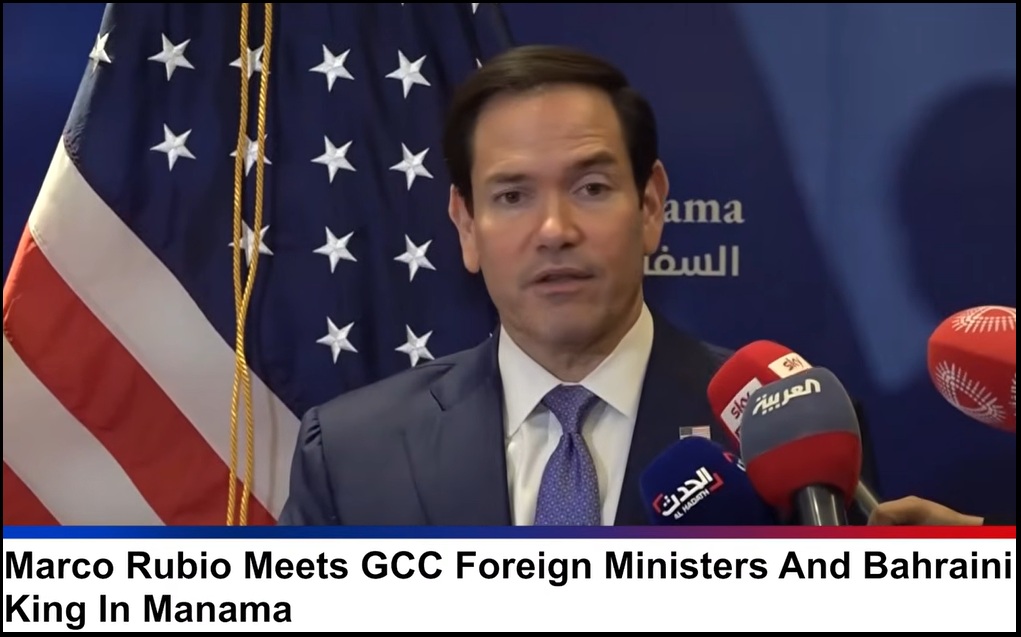
Secretary of State Marco Rubio Gives Media Remarks from Bahrain on GCC Discussions and Venezuela Earthquake Crisis Response


Posted originally on CTH on June 25, 2026 | Sundance

U.S. Secretary of State Marco Rubio delivers a post-meeting media briefing in Bahrain following talks with Gulf Cooperation Council foreign ministers. Secretary Rubio begins with an outline of the U.S. crisis response to the requests from the Venezuela government, the Iran peace process, regional security, U.S.-Italy relations involving Giorgia Meloni, questions regarding JD Vance, and broader diplomatic priorities shaping Washington’s foreign policy agenda. WATCH:

.

Death Toll Climbing Rapidly in Aftermath of Venezuela Earthquake


Posted originally on CTH on June 25, 2026 | Sundance

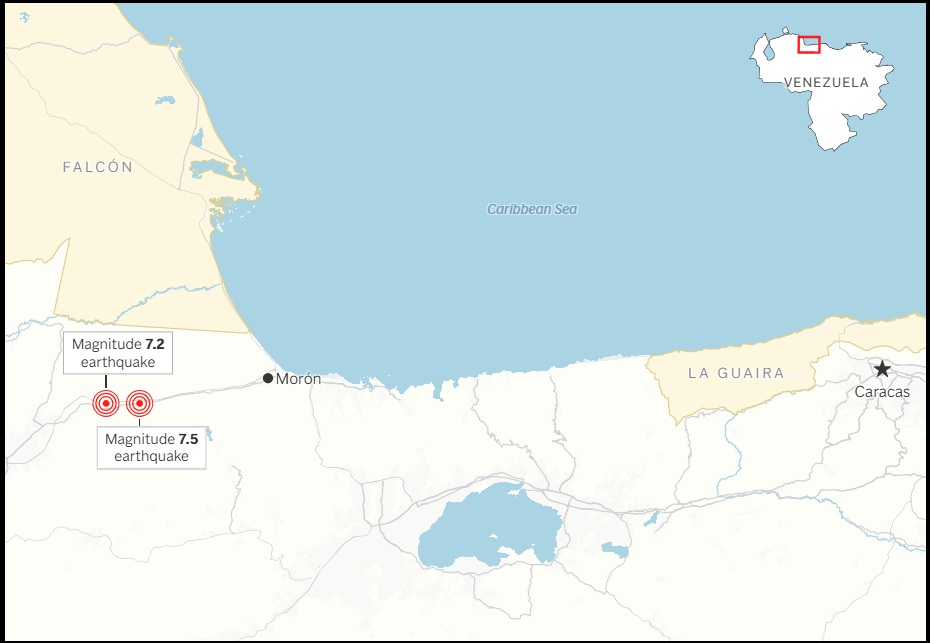
The news feed from Associated Press in Venezuela shows catastrophic damage in the aftermath of a pair of earthquakes that have devastated the Northern section of the country. [AP HERE]  Acting President Delcy Rodríguez said at least 164 were dead and 971 injured; however, the death toll is climbing rapidly.

.

.

.