
Posted originally on CTH on June 25, 2026 | Sundance
In 2008 Joe Biden was Chairman of the Senate Foreign Relations Committee, with oversight jurisdiction of the U.S State Dept. Foreign Service and the passport office, along with and all foreign policy nominations etc.
In 2008 John Brennan was working for the Obama campaign when someone from his outside government group, The Analysis Corporation, “hacked” into the state dept database to access the passport files and State Dept records of Barack Obama.
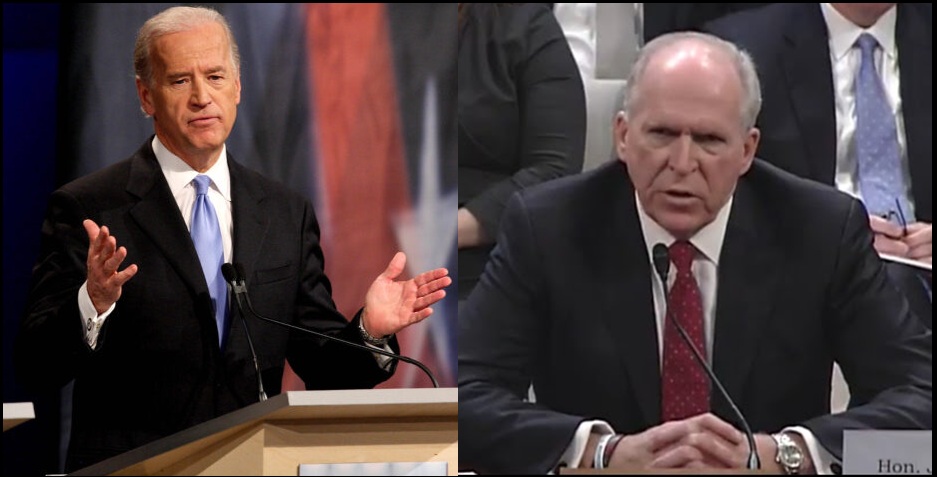
John O. Brennan, Obama’s then top terrorism and intelligence adviser, was the owner of The Analysis Corp. The company was cited in March 2008 for penetrating the files of presidential candidates Barack Obama, Hillary Rodham Clinton, and John McCain in the State Department’s passport office.
At the time of the breach, John Brennan was working as an unpaid adviser to the Obama campaign. After the breach was revealed by the Washington Times, Brennan stated:
“This individual’s actions were taken without the knowledge or direction of anyone at The Analysis Corp. and are wholly inconsistent with our professional and ethical standards,” Brennan’s company said in a statement sent to reporters after the passport breach was made public. (link)
The Washington Times Reported – Passport application data includes such details as date and place of birth, e-mail address, mailing address, Social Security number, former names and travel plans. Mr. Obama was born in Honolulu in 1961 to a Kenyan father and American mother. He lived in Jakarta, Indonesia, from age six to 10.
Computer-monitoring equipment detected the activities by the three employees on Jan. 9, Feb. 21 and March 14, triggering alarms in each case, Mr. McCormack said. Mr. McCormack said the officials accessed Mr. Obama’s records “without a need to do so.”
“In each case, we immediately contacted our contractors, their employer, and two were fired and one was disciplined,” he said. (link)
But it is important to remember EXACTLY what Brennan’s background was before the State Department breach. Brennan spent 25 years working for the CIA prior to the security breach:
Mr. Brennan spent most of his C.I.A. career as an analyst, but during the 1990s served a tour as the chief of the station in Saudi Arabia. From 1999 to early 2001, he was chief of staff to George J. Tenet, the director of central intelligence, as the position was then called. At the end of his CIA. service, in 2004 and 2005, Mr. Brennan set up what is now the counterterrorism center. (link)

Yet, people would have us believe, after 25 years within the CIA, and after being the Chief of Staff to the Director, and after being the person who set up the counter terrorism center, and after being the CIA approved contractor for the State dept., well, John Brennan just didn’t know that someone from his firm was penetrating the passport files within the State Dept. on three occasions in Jan and Feb 2008 to look at information of the candidate who he was specifically working for.
That was their story, and they stuck to it in 2008.
After the initial inquiry, federal investigators maintained that the target of the illegal activity was Senator Barack Obama’s passport file. It does not take a stretch to come to the conclusion this was for the sole purpose of cleansing records of information that would jeopardize Obama’s candidacy. As many people speculated at the time, the breach of the passport records of the other candidates was merely to create confusion.

Brennan was, at the time, an unpaid advisor working with Obama’s campaign. Passport files include an applicant’s name, gender, social security number, date and place of birth, and passport number. Additional information may include birth certificates, naturalization certificates, or oaths of allegiance for U.S. born persons who adopted the citizenship of a foreign country as minors.
It is important to remember the oversight agency that would be investigating the breach – The Senate Foreign Relations Committee oversees the State Department.
At the time Senator Joe Biden was the Chairman of the Senate Foreign Relations Committee when the breach would be investigated.
Secretary of State Condoleezza Rice phoned Obama and personally apologized for the breach. “I told him that I myself would be very disturbed if I learned that somebody had looked into my passport file,” Rice told reporters. She phoned Clinton and McCain and offered similar apologies.
Following the breach, State Department managers met with Senate Foreign Relations Committee Chairman Joseph Biden, whose committee has oversight over the Foreign Service and the passport office. (link)
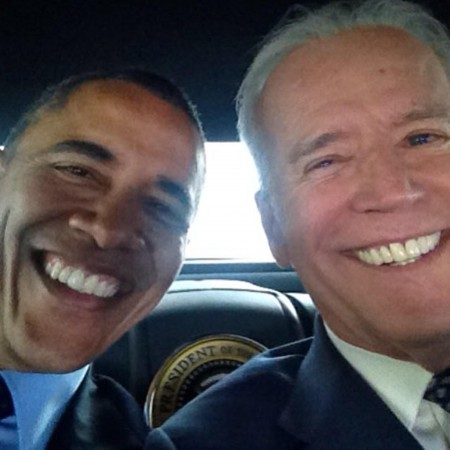
And, well, what do you know… Biden became the VP pick of Obama.
State Department employee, Lieutenant Quarles Harris, Jr. who had the passport access, apparently was the guy who penetrated the database and scrubbed the records. Harris was killed – April 18th, 2008.
Yes, Lieutenant Harris decided to cooperate with the FBI who were investigating the break-in. Soon after his cooperation became a matter of record, his body was discovered in his parked car; he had been shot twice in the head, likely a “suicide”.
Last point. In mid-February 2010, White House Press Secretary Robert Gibbs alerted WH reporters that certain questions about Obama’s job with Business International Corporation (BIC) would not be subject to discussion. BIC was well known in Washington DC to be a front company for the CIA; hence, many speculated the State Department passport records were scrubbed to erase any potential mention of Obama’s CIA activities and his personal information. You decide.
Here’s the thing, and I do mean this with great seriousness:
If you take a close look at it, you realize that seemingly every function of the USAID as an institution came from the CIA. In essence, USAID was the operational cover for the CIA. The CIA seemingly created the mechanics of USAID for CIA purposes.
Now, once you look at USAID as an outreach arm of the CIA, then suddenly everything USAID partnered with can realistically be looked at -at the very least questioned- as a CIA operation working with joint partners for CIA intentions.
This agency relationship means everything.
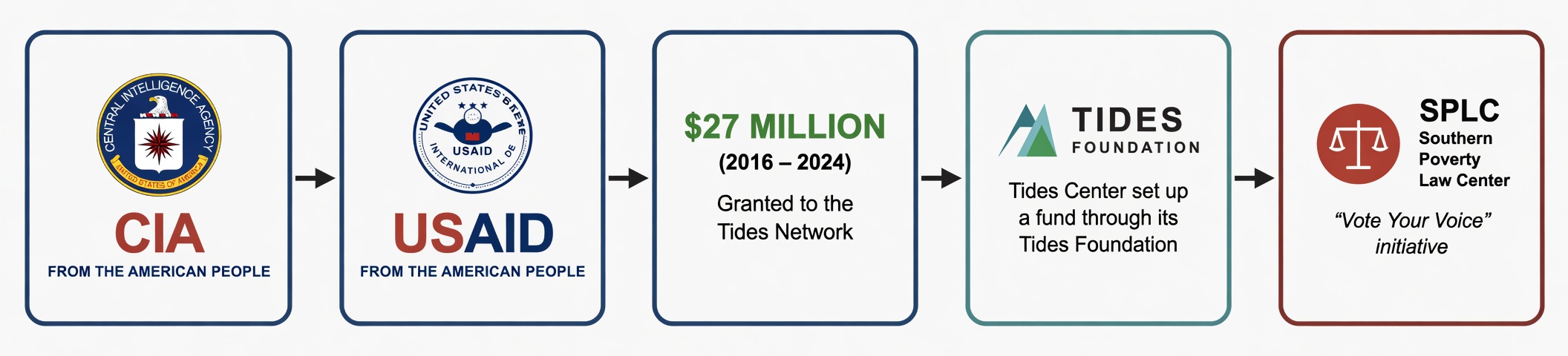
The recent story of USAID funding The Southern Poverty Law Center (SPLC), which in turn was funding KKK ops, is just one example. In actuality, with the nature of the relationship now being spotlighted, was the CIA directing activity and funding KKK ops? If so the implications are remarkable.
When we transition our thinking to accept much of the USAID activity was a CIA operation, it completely changes things. That shift in review, also reconciles things. Additionally, it is worth noting that Barack Obama’s mom worked for USAID.
The Clinton Foundation had a partnership with USAID. Ergo, essentially Bill and Hillary were partnered with the CIA. Now, does the lack of accountability for “Clinton Cash” or the pay-to-play make sense?
The same thing applies to Joe/Hunter Biden in Ukraine.
The Anthony Weiner/Huma Abedin laptop. The Awan Brothers. The Hunter Biden laptop, labeled as “Russian Disinformation” by former Acting CIA Director Mike Morrell and others.
USAID Administrator Samantha Power traveling Europe organizing political movements inside European and non-European countries. Well, that can now become the CIA organizing ‘leftist’ political groups, when you accept CIA as the chicken and USAID as the egg.
The entire analysis of how our govt is structured completely changes under the perspective that CIA operations have been much more deeply enmeshed than previously accepted. George H.W. Bush was a former CIA Director.
Now, we take recent events into that context.
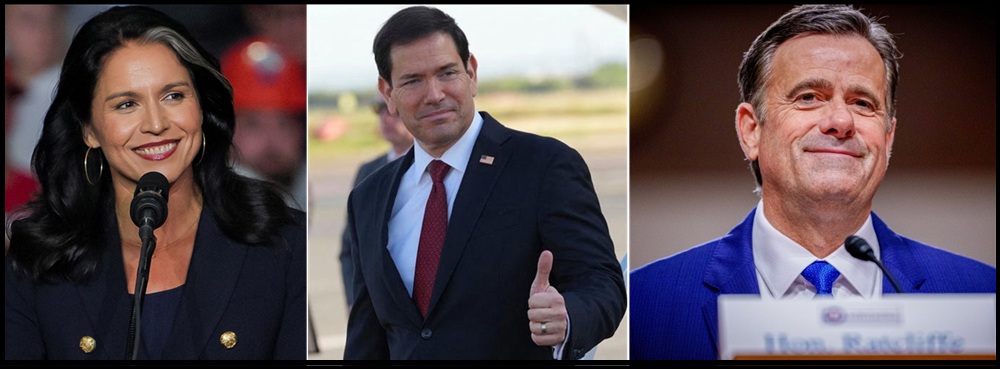
The Vice Chairman of the Senate Select Committee on Intelligence, Marco Rubio, a long time Gang of Eight member, becomes the U.S. Secretary of State.
What changes first?
What is the first priority?
USAID!
USAID is dissolved inside the State Dept.
Concurrently, the Directorate of Analysis inside the CIA, the office that connects the NSA to the CIA, is removed from inside the CIA and put under the Office of the Director of National Intelligence, Tulsi Gabbard. The heads of the Directorate of Analysis are removed and input feeding officials lose their security clearances.
At the same time, the ODNI then replaces the CIA as the principal director to assemble the President’s Daily Intelligence Brief (PDB).
Put these actions together: the political manipulation of the CIA analysis desk is now confronted. ✔️ The outcome equities of the CIA are fact-checked and confronted (PDB)✔️…. and the biggest move, the USAID operation that is run by the CIA to influence both foreign and domestic government operations is dissolved. ✔
However, that said, we must remember these are generational CIA constructs, legacy networks with the ability to adapt, shrink and/or expand their muscle memory depending on the objectives of who is watching them.
Then overlay the 5-eyes aspect that supports the foundational CIA operation, and what we get is a likelihood that even if the domestic CIA is brought to heel, the U.K (GCHQ), Canada, Australia and EU alliance part can still operate on the original framework.
Now think about Prime Minister Mark Carney’s recent opposition, his words and network to whom he is speaking. Then President Obama and Mark Carney assemble. Again, does that shift in perspective change the way these events look?
This is our current status.
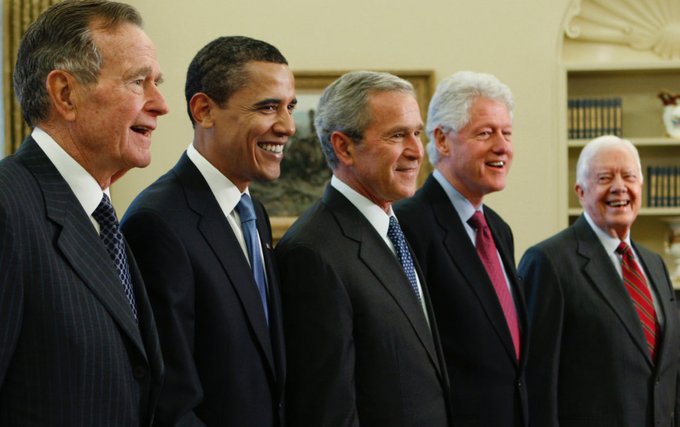
It certainly does seem that all roads, historic, recent and even generational; along with almost all significant political events and the political figures within them (Bush I, Clinton, Bush II, Obama); have some direct connection that leads back to Langley, Virginia.
 Centinel2012