🚨BREAKING: The European Union announces FULL CONTROL over crypto assets.
🇪🇺 Ursula von der Leyen: "For the first time, we will introduce a FULL third-country BAN for crypto asset services to make sure 🇷🇺 Russia can’t avoid sanctions." pic.twitter.com/8iDG87TcO6
The European Union has announced what may prove to be one of the most significant developments in the battle over financial freedom. European Commission President Ursula von der Leyen declared that the EU would introduce, for the first time, a “full third-country ban” on certain crypto-asset services as part of a new sanctions package against Russia. The official explanation is that Brussels wants to prevent Russia from using cryptocurrency-related services to evade sanctions. Most people will read that headline and move on. They should not.
What was actually said is far more important than many realize. The European Union is asserting the authority to prohibit crypto-asset service relationships involving entities outside its borders if Brussels determines those relationships undermine its sanctions regime. Today the target is Russia. Tomorrow it could be any country, institution, company, platform, or financial network that falls outside the political objectives of Brussels. Once governments establish the power to control access to financial infrastructure, the scope of that power rarely contracts.
I have warned for years that governments would eventually move against cryptocurrency if it became large enough to threaten their ability to monitor and control capital. The crypto community often assumed governments would embrace innovation. That was never how this would unfold. Governments do not like competition when it comes to money. Their power rests on controlling the financial system. Taxation, regulation, reporting requirements, sanctions, and monetary policy all depend on that control. A decentralized system operating beyond their direct authority was always going to create conflict.
The timing is no coincidence. Europe is drowning in debt. France’s debt has surpassed €3.3 trillion. Italy’s public debt exceeds €3 trillion. Numerous European governments are running chronic deficits while facing aging populations, declining birth rates, expanding pension obligations, and stagnant economic growth. The mathematics simply do not work. Politicians continue making promises while the bills continue piling up.
This is where history becomes important. Governments rarely impose capital controls during periods of prosperity. They impose them when confidence begins to decline. During the Great Depression, the United States confiscated gold. Argentina repeatedly restricted currency movements. Cyprus imposed depositor losses during its banking crisis. India invalidated large denominations of cash overnight. Throughout history, governments facing financial stress have always sought greater control over private capital.
The European Union is quietly constructing the infrastructure necessary for that control. They have implemented sweeping anti-money laundering regulations. They are expanding crypto reporting requirements. They are advancing digital identity initiatives. They are discussing the digital euro. They are creating centralized databases capable of tracking financial activity across member states. Each measure is presented as a reasonable response to a specific problem. When viewed together, however, the objective becomes much clearer.
What terrifies governments about cryptocurrency is not the technology itself. It is the possibility that capital can exist outside traditional financial institutions. Governments can regulate banks. They can pressure brokers. They can freeze accounts. They can monitor transactions. Cryptocurrency introduced a system that operates differently. From the perspective of heavily indebted governments, that represents a threat.
The argument will always be sanctions, crime, terrorism, money laundering, or national security. Those explanations change depending on the political circumstances of the day. The underlying objective remains remarkably consistent. Governments want visibility. They want oversight. They want the ability to determine where capital is located, where it is moving, and who controls it.
What concerns me most is that Europe continues moving in the direction of greater centralization precisely as economic conditions deteriorate. The European project was sold as a framework for cooperation and prosperity. It is increasingly evolving into a system where unelected bureaucrats accumulate authority over energy policy, migration policy, financial policy, digital policy, and now cryptocurrency. Every crisis becomes justification for expanding power.
The tragedy is that none of these measures solve the underlying problem. Restricting cryptocurrency will not reduce sovereign debt. Governments bought into the lie that they can tax the people out of their debt crisis. Politicians refuse to blame failed policies and instead blame the average person for holding onto wealth, which they feel belongs to the state. Governments are attempting to manage a debt crisis through regulation when the problem is fundamentally fiscal and structural.
Our models have warned repeatedly that Europe is entering a period of rising political and financial instability. The 2026 Panic Cycle year was never solely about markets. It was about confidence in government itself. As confidence declines, governments historically seek greater control over capital. Investors seek freedom while governments seek restrictions. That conflict has existed for thousands of years.
The announcement regarding cryptocurrency should therefore be viewed as far more than another sanctions measure. It is a glimpse into how governments behave when debt burdens become overwhelming and confidence begins to erode. History shows that the road from regulation to capital controls is often much shorter than people expect.
Posted originally on Jun 10, 2026 by Martin Armstrong |
The announcement by the Pentagon that Israel spies on the United States is being presented as some shocking revelation. Really? Jonathan Pollard stole massive quantities of classified intelligence for Israel and was convicted in 1987. The NSA reportedly caught Israeli officials discussing efforts to influence U.S. policy during the Obama administration. Even former CIA and FBI officials have repeatedly acknowledged that Israel conducts aggressive intelligence operations inside the United States. This is not a conspiracy theory. This is how nation-states behave.
What caught my attention was not the allegation but the timing. Washington is warning about Israeli intelligence activities at the exact moment the United States is becoming increasingly entangled in Middle Eastern affairs. The Iran conflict continues to escalate. Gaza was destroyed and forgotten, and now Lebanon is under a constant barrage. American military assets are spread across the region. Defense spending is approaching levels that would have been unthinkable a generation ago. Yet instead of reassessing these commitments, our AIPAC devout Congress wants even deeper integration.
The numbers are becoming absurd. Federal debt has surpassed $37 trillion. Interest payments are now among the largest items in the federal budget. The Pentagon budget is approaching $1 trillion annually. Yet the solution is always more spending, more deployments, more foreign obligations, and more promises that American taxpayers will ultimately be forced to finance.
The espionage issue exposes a deeper problem. If intelligence officials genuinely believe there is a serious security concern, why pursue greater integration? If greater integration is essential, then why raise alarms? The answer is that Washington no longer has a coherent strategy. Different factions are pulling in different directions while pretending there is a unified policy.
This is how empires decline. Rome reached the point where competing interests, foreign entanglements, military expenditures, and political factions overwhelmed any clear national purpose. The government became reactive rather than strategic. Looking around today, the similarities are becoming difficult to ignore.
My concern has never been whether Israel spies. Every country spies. China spies. Russia spies. Britain spies. France spies. The United States spies on allies and adversaries alike. The real issue is that Washington continually places itself in positions where it cannot distinguish between American interests and the interests of everyone else.
What we are witnessing is not a sudden discovery. It is the slow realization that decades of foreign entanglements, endless commitments, and political hypocrisy have created a system that no longer knows where its own interests begin and end. That is a far greater threat than any espionage operation.
Posted originally on Jun 10, 2026 by Martin Armstrong |
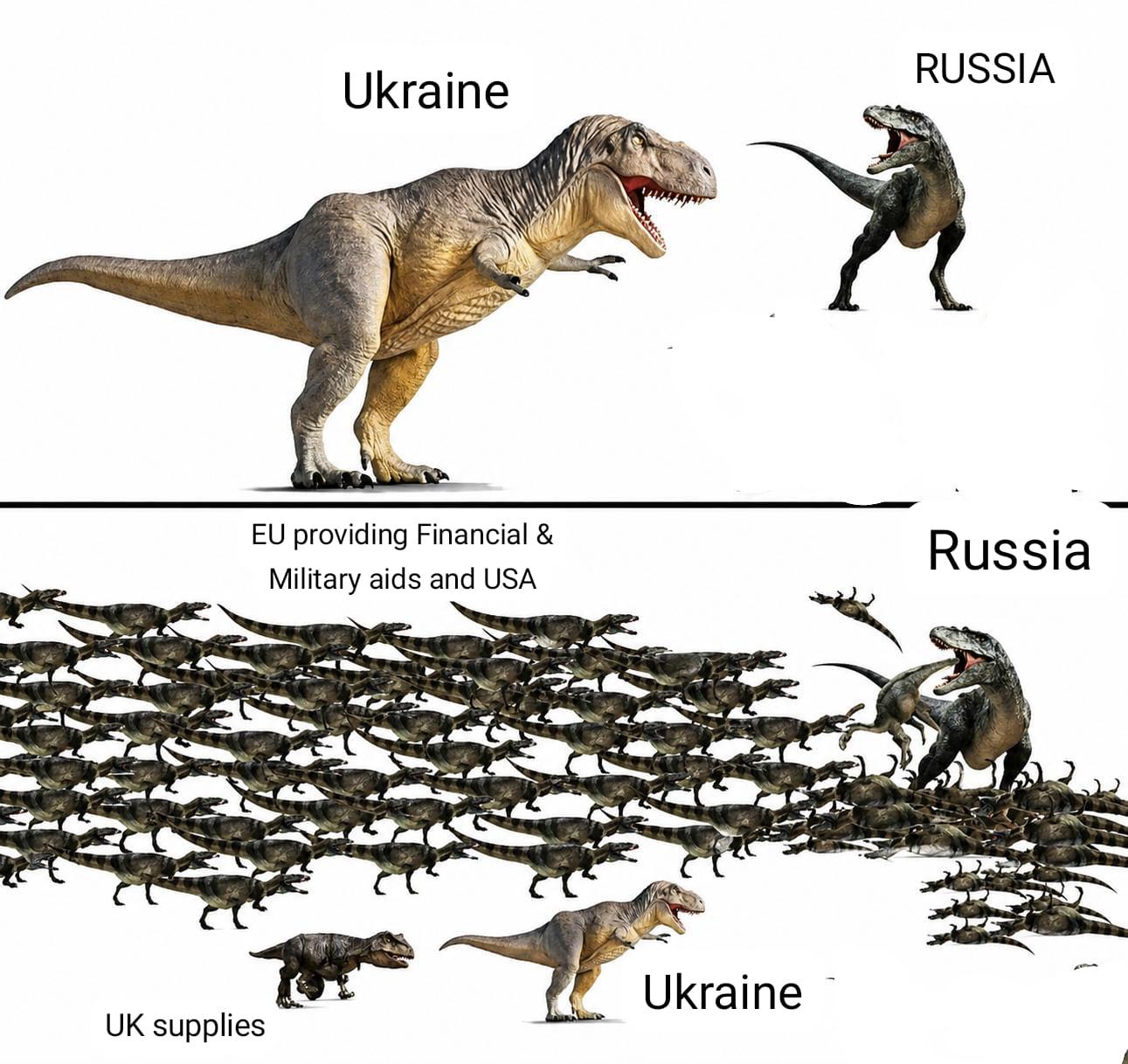
I have said countless times that the biggest problem in Europe is not Russia. It is the complete abandonment of national sovereignty by politicians who seem more interested in satisfying Brussels than representing their own people. Bulgaria’s decision tohalt further military aid to Ukraine is one of the first signs that some countries are beginning to recognize reality. After years of sending money, weapons, equipment, and resources into a war that has no military solution, there are finally voices asking the obvious question: When does this end?
The Ukrainian conflict has become Europe’s black hole. Hundreds of billions have been committed by Western governments while European economies struggle with stagnant growth, rising debt, housing shortages, inflation, and declining living standards. The European Union continues to demand sacrifices from ordinary citizens while finding endless resources for foreign wars. At some point, voters begin to realize that their governments have become more concerned with financing conflicts abroad than fixing problems at home.
Bulgaria is hardly alone. Public support for endless aid packages has been weakening across Europe. Governments in Hungary and Slovakia have openly challenged the prevailing narrative, while political opposition to continued military spending is growing in Germany, France, Italy, and throughout Eastern Europe. The reason is simple. People can see that every new shipment of weapons is followed by demands for even more weapons. Every funding package is followed by another request. Every promise that victory is just around the corner is replaced by a new justification for continuing the war.
What makes Bulgaria’s position particularly important is that it exposes the growing divide between European elites and the populations they claim to represent. The average citizen is worried about energy prices, food costs, taxes, housing, and economic security. Brussels is focused on military commitments, sanctions, and geopolitical ambitions. These priorities are no longer aligned.
From a cyclical perspective, this shift was inevitable. As economic conditions deteriorate, governments face increasing pressure to redirect resources inward. The 2026 Panic Cycle year was always likely to expose fractures within the European Union. The economic stress building across Europe is forcing governments to confront choices they have spent years avoiding. They can continue financing external conflicts while borrowing endlessly, or they can begin putting their own citizens first.
Bulgaria appears to be recognizing that prolonging the conflict indefinitely serves nobody’s interests. Whether other European governments follow remains to be seen, but this decision signals that the once-unquestioned consensus behind unlimited support for Ukraine is beginning to crack.
I have created this site to help people have fun in the kitchen. I write about enjoying life both in and out of my kitchen. Life is short! Make the most of it and enjoy!
This is a library of News Events not reported by the Main Stream Media documenting & connecting the dots on How the Obama Marxist Liberal agenda is destroying America


 Centinel2012