
Posted originally on the CTH on September 1, 2026 | Sundance |
The White House has released details of the U.S-Venezuela oil deal [SOURCE HERE].
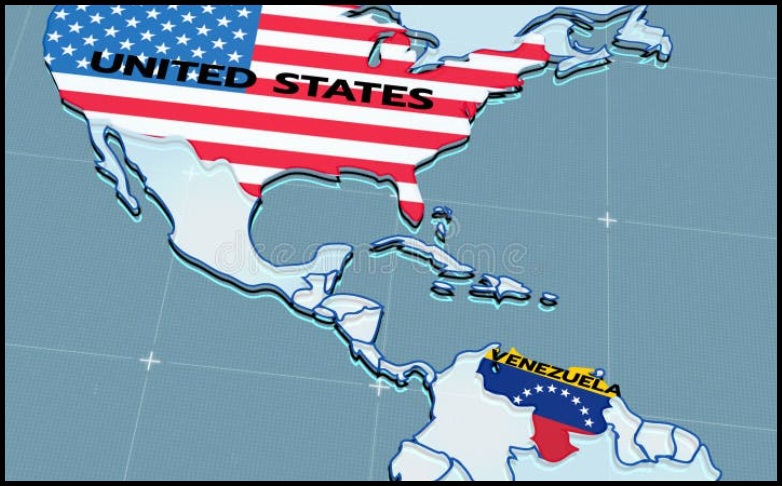
WHITE HOUSE – SECURING STABLE & LOW-COST OIL SUPPLY IN OUR HEMISPHERE: In the biggest oil deal in world history, President Donald J. Trump has secured U.S. majority control of more than 65 billion barrels of proven oil reserves in Venezuela – vastly expanding our current U.S. territorial proven reserves of roughly 46 billion barrels. This deal secures our energy dominance for the next century—all at zero cost to the United States. The deal, signed by Secretary of State Marco Rubio and Secretary of War Pete Hegseth, gives the U.S. government powerful governance rights, economic ownership, and guaranteed low-cost off-take from a new private Venezuelan oil champion, which will be the second-largest private oil company by reserves in the world:
♦ In connection with this agreement, the Venezuelan interim authorities have granted North American Blue Energy Partners (NABEP), a privately held oil company that is the second-largest private Venezuelan oil producer and a proven operator, 100-year concessions for 17 oil fields with proven reserves of approximately 65 billion barrels.
♦ At no cost to the American taxpayer, NABEP has granted the U.S. Department of War’s Office of Strategic Capital a 35% equity stake in its corporate parent, representing up to hundreds of billions in value and dividends for the United States.
♦ NABEP has granted the U.S. Department of State the right to purchase, at production cost, a guaranteed 20% of the off-take from all current and future fields NABEP will operate—ensuring a stable supply of low-cost oil that can facilitate refilling the Strategic Petroleum Reserve (SPR), which Joe Biden depleted to historic lows, and to provide supply for military and other sensitive uses.
♦ NABEP has also granted the U.S. Department of State the right of first refusal to purchase the remaining 80% of its production, providing a guaranteed source of energy in our hemisphere in emergency situations.
♦ The U.S. government has a veto power over the appointment of any member of the board of directors, and a majority of NABEP’s board of directors must be U.S. citizens. NABEP will have reputable U.S. auditors, lawyers, and advisors and the U.S. government’s agreement with NABEP is governed by U.S. law and is subject to the jurisdiction of U.S. courts.
♦ Millions of barrels of new Venezuelan output will be processed through U.S. refineries and pumped with American rigs and infrastructure, supporting billions in investment in the United States and thousands of jobs here at home.
DRIVING ECONOMIC RECOVERY & THE RECONSTRUCTION OF VENEZUELA’S OIL SECTOR: This groundbreaking privatization and investment in Venezuela’s energy sector is a key step in the Trump Administration’s three-part plan of stabilization, reconstruction and democratic transition. Private-sector led growth in production, output, and investment in Venezuela is a key precondition to driving continued reform and democratic transition following the incredible success of Operation Absolute Resolve:
♦ NABEP has developed an ambitious plan to rapidly scale production by investing up to $100 billion in new oil infrastructure in Venezuela, helping to drive economic growth, support thousands of high-paying jobs in Venezuela, and lead to tens of billions in broader economic activity.
♦ NABEP’s concessions are governed by Venezuela’s new hydrocarbons law, adopted with U.S. support, which provides for historic modernization, privatization and development of Venezuela’s lagging oil sector. Under this framework, as it scales production, NABEP will pay an expected $200 billion in royalty and tax payments over the first 25 years, representing critical revenue and fiscal support for current and future Venezuelan governments to fund reconstruction and social development.
♦ After years of underinvestment and mismanagement, the majority of Venezuela’s oil fields are not producing or vastly underproducing. By investing in a proven private operator with a track record of scaling production in the country, who will be able to raise private American capital to fund capital expenditures, Venezuela has a historic opportunity to revitalize its key sector, drive oil output growth, and grow its economy.
♦ The U.S. government’s robust governance and audit provisions, along with the Trump Administration’s banking reform, payment oversight and financial monitorship, will ensure tax and royalty payments are spent in the interests of the Venezuelan people.
♦ The United States is sponsoring reconciliation talks between the 2015 National Assembly and the interim authorities – a process which has already resulted in significant reforms to the Venezuelan judiciary, the release of hundreds of political prisoners, and cooperative efforts to finance reconstruction following the devastating June earthquakes. The process will continue with additional meetings in September.
REASSERTING THE MONROE DOCTRINE & EXPELLING FOREIGN ADVERSARIES FROM OUR HEMISPHERE: The majority of the incremental oil fields to be operated by NABEP were previously controlled or operated by Russian and Chinese firms, or by corrupt cronies of Maduro and Chavez. These malign foreign actors looted Venezuela’s resources for the benefit of American adversaries like Cuba, Russia and China and failed to invest in Venezuela’s infrastructure or development.
♦ President Trump has re-established the Monroe Doctrine, purging foreign malign influence from our backyard and ensuring American dominance in our hemisphere is never again questioned.
♦ By working with both new and old partners, President Trump’s Administration is forging new robust, strategic and defensible supply chains in our hemisphere to support the revitalization of our manufacturing and energy sectors after years of globalist decline.
 Centinel2012