LIVE: Preliminary Hearing in Tyler Robinson Murder Trial…


Posted originally on Network on: July Rumble on Bright Bart News on July 9, 2026

The American Dream Now Comes with an $800 Monthly Car Payment


Posted originally on Jul 10, 2026 by Martin Armstrong |  

Joliet Used Cars | Low Priced High Quality Pre Owned

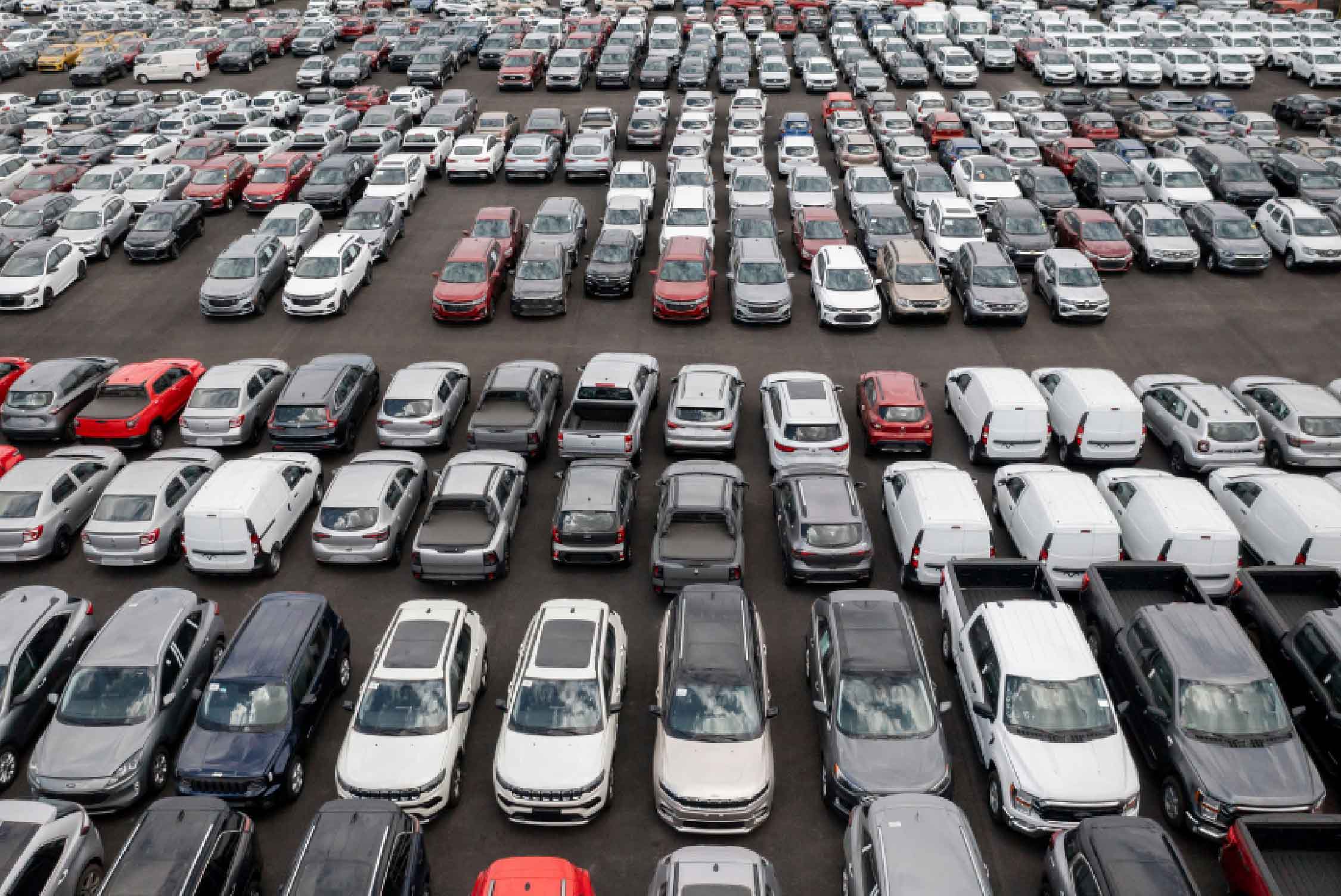
FOX Business reported that the average monthly payment for a new vehicle reached a record $770 during the first quarter of 2026, according to LendingTree’s analysis of Experian data. Lease payments climbed to $619 per month, while used vehicle payments reached $531. The average amount financed for a new vehicle rose to $43,925, and outstanding auto loan debt surged to a record $1.685 trillion, exceeding the nation’s total student loan debt for the first time. This is not merely an automobile story. It is another warning that the purchasing power of the average American continues to deteriorate.

The average family is financing nearly $44,000 just to buy a depreciating asset because wages have failed to keep pace with the real cost of living. Government tells us inflation is under control, yet Americans are borrowing more money than ever simply to drive to work. If inflation were truly only 2%, car payments would not have doubled over the past generation while household budgets continue to buckle under the weight of necessities.

The debt statistics are becoming alarming. Auto loan balances have risen from $1.071 trillion in 2016 to $1.685 trillion today, an increase of more than 57% in just ten years. Auto debt now represents roughly 9% of all consumer debt, narrowly surpassing student loans. Americans originated another $182.1 billion in auto loans during the first quarter alone. We are borrowing at record levels to finance assets that lose value the moment they leave the dealership.

Borrowers with credit scores between 601 and 660 actually carried the highest average monthly payment at $811, while even subprime borrowers averaged $792. The system is trapping the middle class in perpetual debt. The better your credit, the lower your payment. Those already struggling financially are paying the greatest monthly burden, making it even harder to escape.

Edmunds found that the average financed amount for new vehicles reached another record of nearly $44,000, while average monthly payments climbed to approximately $773. One out of every five financed new vehicles now carries a monthly payment of at least $1,000. Buyers are responding the only way they can. Down payments are shrinking while loan terms continue stretching to seven and even eight years. Nearly one-quarter of new-car buyers are now taking loans lasting 84 months or longer. It is financing transportation like a mortgage.

Negative equity is becoming another hidden crisis. Edmunds reported that nearly 31% of trade-ins involved owners who owed more than their vehicles were worth, with the average underwater balance exceeding $7,100. Consumers are rolling debt from one vehicle into the next. They are not buying newer cars because they are wealthier. They are borrowing more because they have no alternative.

This is precisely what happens during the late stages of a debt cycle. Governments celebrate rising consumer spending while ignoring that it is financed with ever-larger amounts of borrowed money. The economy appears healthy because credit continues expanding, not because the average citizen has become more prosperous. Eventually there comes a point where consumers simply cannot borrow any more. That is when demand collapses, defaults accelerate, and politicians inevitably look for someone else to blame.

Categories:Inflation

Housing Costs Soared Throughout EU in Q1


Posted originally on Jul 10, 2026 by Martin Armstrong |  

https://www.instagram.com/p/DaSOEI7gaAB/embed/captioned/?cr=1&v=14&wp=500&rd=https%3A%2F%2Fwww.armstrongeconomics.com&rp=%2Freal-estate%2Fhousing-costs-soared-throughout-eu-in-q1%2F#%7B%22ci%22%3A0%2C%22os%22%3A918.7000000476837%7D

Europe’s housing market is not recovering, it is becoming unlivable. Eurostat reported that in Q1 2026, EU house prices rose 5.1% from Q1 2025, while rents increased 3.0%. Compared with Q4 2025, house prices rose another 1.2% and rents increased 0.7%. Between the 2025 average and Q1 2026, house prices climbed 2.9% and rents 1.8%. Wages do not keep pace with this, and young families are being priced out of the future.

A house is no longer a home, it has become a political and financial instrument. Europe buried its people under taxes, regulation, Net Zero costs, energy insanity, and mass migration pressure on housing supply, then acts surprised when people cannot afford to live. The state creates the crisis, then demands more power to solve it.

The worst house-price increases between 2025 and Q1 2026 were in Portugal at 10.3%, Bulgaria at 9.4%, Slovakia at 9.1%, Croatia at 8.4%, Spain at 7.5%, and Lithuania at 7.4%. France fell 0.5% and Finland fell 1.8%, but that does not mean affordability has returned. It means confidence is collapsing in places where the economy is already under strain.

Rents increased in almost every EU country. Croatia was the disaster, rents exploded 21.9% in just that comparison period. Bulgaria rose 6.4%, Greece 5.0%, Romania 4.5%, Czechia 4.1%, Slovakia 3.5%, and Portugal 3.3%. Slovenia was the only country where rents fell, down 0.9%, while Finland was basically flat.

This is the consequence of centralized planning. Brussels wants open borders, climate mandates, expensive energy, endless regulation, and then wonders why the average person cannot rent an apartment or buy a home. The private citizen is being squeezed from every side while governments protect bondholders, banks, and their own failed social experiments.

The sovereign debt crisis and housing crisis are connected. Governments need rising asset values to keep the illusion of solvency alive. They tax property, they borrow against inflated economies, and they pretend rising home prices mean prosperity. But when housing becomes unaffordable, birth rates collapse, civil unrest rises, and capital begins to flee. That is where Europe is heading. This is not a housing boom, it is another warning sign of a system that is breaking apart.

Canada’s Growing Aerospace and Defense Sector


Posted originally on Jul 10, 2026 by Martin Armstrong |  

Saab ready to offer GlobalEye for Canada's Airborne Early Warning and  Control program

Canada’s latest defence procurement is becoming impossible to ignore. The CBC reports that Ottawa is now looking beyond simply purchasing Saab’s GlobalEye airborne early warning aircraft. NATO itself has now selected the same Swedish system to replace its aging Boeing E-3 AWACS fleet, making GlobalEye the alliance’s future airborne surveillance platform. This is no small contract. NATO intends to acquire up to 10 aircraft in a program worth roughly $4.5 billion, while Canada is expected to purchase six of its own. The significance extends well beyond military hardware. It represents another major boost for Canada’s aerospace industry and another step toward integrating Canada’s economy deeper into the expanding military-industrial complex.

What many fail to appreciate is that this is not simply Sweden selling aircraft to Canada. GlobalEye is built around Bombardier’s Global 6500 business jet, manufactured in Canada. Every NATO aircraft ordered means additional work flowing into Canadian aerospace, engineering, maintenance, supply chains, and long-term servicing. NATO Secretary General Mark Rutte himself emphasized that this is a multinational program involving European, Canadian, and American industries. Canada is no longer merely buying equipment. It is positioning itself as part of the production network supplying NATO’s future surveillance capability.

This follows precisely the trend we have been watching unfold. Canada recently selected Saab over Boeing for its own airborne early warning fleet, citing Arctic sovereignty, domestic industrial development, and reduced dependence on American suppliers. Saab has openly stated that the program will provide skilled work for Canadian industry, while Bombardier becomes an integral supplier to NATO’s next-generation surveillance fleet. These are not isolated procurements. They are laying the industrial foundation for decades of defence spending.

Canada already has the industrial base to profit from this shift. Ottawa’s own 2026 aerospace review found that the Canadian aerospace industry contributed C$34.2 billion to GDP in 2024 and supported 225,000 jobs, while remaining the top R&D performer in Canadian manufacturing. The broader defense industry added another $11.1 billion to GDP and supported 81,800 jobs. Canada also exported nearly C$27 billion in aerospace goods to 166 countries in 2024, with over 70% of aerospace manufacturing revenue tied to exports. This is why the GlobalEye decision matters. It is not just a plane. It plugs Bombardier and Canada’s aerospace supply chain directly into NATO’s rearmament cycle.

Canada is steadily transforming from a country known primarily for natural resources into one playing a much larger role within NATO’s defense production network. Whether one supports that direction or not, investors should recognize what governments themselves are signaling through their spending priorities. The expansion of aerospace, surveillance technology, advanced manufacturing, and military infrastructure is no accident. It reflects a world that is preparing for a far more dangerous geopolitical future than politicians are willing to admit publicly.

Ukraine & Zelensky’s Ultimate Corruption


Posted originally on Jul 9, 2026 by Martin Armstrong |  

2014 War Cyclew 2011 Conference

The Ukrainian currency has been a perpetual short since 1998, and nothing has changed since. The central bank tried to fix the currency in 2022 when the war began. Our models could easily forecast precisely when the war would begin, for there was a massive outflow of currency in advance. Yet, I posted that the war cycle turned up in 2014, which marked the beginning at the 2011 World Economic Conference, and later I posted that the model had targeted Ukraine in 2013.

Zelensky Did not warn people Washington Post 8 19 22

Zelensky actually confessed to the Washington Post that he knew when Russia would invade but refused to warn the people, claiming it would have cost him $7 billion because capital would have fled.  Our models clearly picked up massive capital outflows ahead of the start of the war confirming that advance knowledge existed. It appears that was the money of  Zelensky and friends moving money out based on inside information while he refused to tell the people on advance. That would have been a crime in the United States.

There is evidence of a significant financial and economic exodus from Ukraine in the lead-up to February 24th, 2022. While comprehensive data on capital flight is not available insofar as identifying the specific individuals without searching accounts in offshore havens. Zelensky purchased a $5 million property in Egypt under his mother-in-law’s name, Olga Kiyashko. His aids apparently stole $75 million from US funds.

The weeks before the invasion saw several distinct forms of capital and asset flight. For example, on February 13th, 2022, a reported 20 private jets and charter planes departed from Ukraine, carrying some of the country’s wealthiest businesspeople and oligarchs. This was a clear, visible sign of the wealthy moving their assets and themselves out of the country on insider information.

The flight of capital was also evident in the global financial markets. The prospect of war led to a “flight to safety,” where investors moved money out of riskier assets into safer havens like the U.S. dollar. Specifically, Ukraine experienced investor flight, its currency (the hryvnia) came under severe pressure, and its central bank’s reserves were being rapidly depleted as it tried to stabilize the currency.

Ukrainian Passport

In the days before the invasion, dozens of Western diplomats and their families were EVACUATED from Kiev. This was accompanied by international insurance companies announcing they would stop covering flights over Ukraine from February 14th, which led to a near-total closure of Ukrainian airspace as commercial airlines canceled flights. This made it physically difficult for anyone to leave the country, accelerating the panic. If you had a private jet, that was the only way out of town.

This pre-war flight of capital and talent contributed to a rapidly growing financial crisis for Ukraine. The European Commission noted that the financial “financing gap” for Ukraine, the amount of money it needed to function, more than doubled from €2.5 billion to €5 billion due to the investor flight and economic pressure caused by the Russian troop buildup before the invasion even began.

Capital Controls 2

The capital controls were implemented on February 24th, 2022, to prevent any citizen from doing what Zelensky and friends were doing on inside information. Zelensky admitted to the Washington Post that he knew in advance and did not warn the people. The capital controls were implemented only when the war began.

Ukraine_Hryvnia_Spot M Tech 7 9 26

Their primary purpose was to stop a complete financial collapse by preventing the remaining capital from fleeing the country as the full-scale war began. The operation of the foreign exchange market was suspended, except for the sale of foreign currency by customers. They also implemented a moratorium on Cross-Border foreign currency payments, effectively preventing money from being transferred abroad.

Ukraine 100 hryvnia note

Cash withdrawals from client accounts were limited to UAH 100,000 per day, and the release of cash in foreign currency was prohibited entirely. Even the National Securities and Stock Market Commission also introduced restrictions on transactions on capital and organized commodity markets starting at 11:00 a.m. that same day to prevent market collapse.

People who were skeptical about how we could forecast where and when the war would begin simply have to comprehend that someone ALWAYS knows in advance and money and assets as ALWAYS moved in advance. We may not be able to nail it down to a specific person without access to the accounts where the money is transferred, but we can forecast such events with capital flows in addition to our cyclical models. There were multiple indicators pointing to a sharp increase in capital leaving the country before the invasion.

SURVEY: Many Canadian Manufacturers Considering Relocation to U.S.


Posted originally on CTH on July 9, 2026 | Sundance

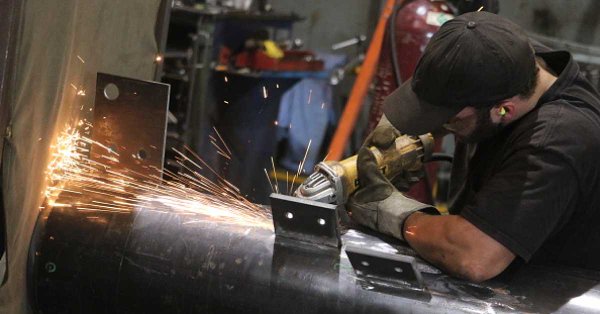
An interesting report from Bloomberg following a survey conducted by KPMG of Canadian manufacturers.  Keep in mind this is a survey of companies within Canada that do traditional manufacturing of products; this is not a survey of companies that assemble foreign goods for export – there is a substantial difference.

As noted within the report, approximately 10% of Canadian GDP comes from Canadian manufacturing.  Within that sector there are multiple companies now planning or considering moving out of Canada into the United States.

Many will claim the trigger for the consideration is based on the potential elimination of the USMCA (CUSMA) trade agreement, and there is truth to that aspect.  However, the systemic issues within Canada -including energy policy, regulation and corporate tax burdens- represent the larger problem; the termination of the USMCA is the straw that breaks their back.

The domestic hurdles to manufacturing, are the bigger issues that cannot be negotiated away in U.S-Canada trade agreements.  Specifically, the low-price and stable energy policies are the core consistencies that are no longer present in Canada; that fundamental cannot be easily fixed.

BLOOMBERG – […] KPMG Canada said on Tuesday that 42 per cent of Canadian manufacturing companies indicated they have or are considering moving production to the United States. Of those considering relocating, 77 per cent expect to make the transition within the next two years.

[…] the issues go beyond the trade situation though, with Canada needing to create a competitive environment for manufacturers to grow.

“This survey clearly shows that manufacturers need to feel more comfortable and see some action from the government in order to continue to produce and invest and grow in Canada,” she said.

“Some of the key factors that companies have cited are more certainty around interprovincial trade barriers, they need more tariff certainty, they want to see lower corporate taxes, they want better access to capital and cheaper energy.”

The survey also found 57 per cent of manufacturing firms have paused, reduced or cancelled capital investment projects. Thirty-six per cent said they have scaled back investments, 12 per cent have paused their plans and nine per cent have cancelled planned spending. (read more)

This survey is further evidence of the scale of leverage President Trump and USTR Jamieson Greer carry toward the Canadian trade negotiations.  Quite simply, despite their unwillingness to accept reality – Canada is economically dependent on the United States as the customer for any export.

Without the USMCA (CUSMA) trade agreement Canada is structurally incapable of economic growth.

FISA 702 Surveillance Authorities Expired June 12th – Collection Authorities Continue Until March 2027


Posted originally on CTH on July 9, 2026 | 

FISA 702 authorization from congress expired June 12, 2026.  The world did not end, despite the predictions and proclamations from the DC proletariat and narrative engineers.

However, despite the statutory expiration, the intelligence collection continues under the FISA Court’s annual certifications, which were renewed in March 2026 and remain valid through March 2027. {citation}

The annual certifications allow the government to continue collecting communications from foreign targets and querying the Section 702 database, including incidental U.S. communications, without interruption.

Essentially, the surveillance program operates on a separate “certification clock” that is independent of Congress’s statutory timeline. That’s a remarkable workaround.

In ancillary news, I will be offline most of the day as it is a pre-scheduled travel day. I will catch up later tonight.

Episode 5501: The New Threat To Our Nation; Pay To Play For America’s Vote


Posted originally on rumble on Bannons War Room on: July 8, 2026

JOE ALLEN: Silicon Valley Is Trying To Replace Your Doctor With A Hallucinating Chatbot


Posted originally on rumble on Bannons War Room on: July 8, 2026

NATALIE WINTERS: Democrat Voter Registration Group Takes Foreign Money To ‘Change The Outcome’ Of U.S. Elections Against Republicans


Posted originally on rumble on Bannons War Room on: July 8, 2026