Ep 3905a – Trump Planned The Economic Restructuring,Now China Is Getting On Board,[CB] Is Doomed


Posted originally on Rumble By X 22 Report on: May, 15, 2026

Ep 3905b-Iran Lost Their Life Line,Xi Admits The World Is At A Crossroads,Leverage Belongs To Trump


Posted originally on Rumble By X 22 Report on: May, 15, 2026

Ep 3904b – Trump Trapped The [DS][CB][WEF] With His Visit To China, He Is Countering The [DS] Agenda


Posted originally on Rumble By X 22 Report on: May, 15, 2026

WHO Declares Ebola a Global Health Emergency


Posted originally on Rumble By The Salty Cracker on: May, 17, 2026

Fanone Committed Perjury ReeEEestream 05-17-26


Posted originally on Rumble By The Salty Cracker on: May, 17, 2026

Hundreds of Thousands of British Rally to “Unite the Kingdom” in London


Posted originally on Rumble By The Salty Cracker on: May, 17, 2026

Creepy Lefty Gets Cop Fired Over Liking a “Racist comment” on Instagram


Posted originally on Rumble By The Salty Cracker on: May, 17, 2026

BLM Leaders Are Upset Netflix Airs George Floyd Joke


Posted originally on Rumble By The Salty Cracker on: May, 17, 2026

The Real Reason North Korea Fights for Russia


Posted originally on May 18, 2026 by Martin Armstrong |  

2024 06 19T192709Z_924838947_RC2JE8ASMPQ0_RTRMADP_3_NORTHKOREA RUSSIA 1024x681

Reports now estimate North Korea has earned roughly $14 billion through military cooperation tied to the war in Ukraine. That number is staggering when you realize North Korea’s entire GDP has been estimated at around $25 to $30 billion annually. This conflict may have generated revenue approaching half the size of the country’s entire economy.

People still cannot see what this war has become because they think North Korea entered Ukraine out of loyalty to Russia or some anti-Western alliance. That is childish analysis. North Korea entered this war because from Pyongyang’s perspective it would have been insane not to. While Washington believed sanctions would isolate Russia and cripple its partners, the exact opposite happened. The sanctions accelerated the formation of a wartime economic bloc stretching from Russia to Iran to North Korea. This is what governments never understand because they do not study history seriously.

North Korea was sitting on enormous Soviet-era ammunition stockpiles while NATO suddenly discovered its own industrial capacity was nowhere near prepared for a prolonged artillery war. Europe spent decades dismantling industrial infrastructure, outsourcing production, and obsessing over climate ideology while assuming major war on the continent was impossible. Then reality arrived.

But the real prize for North Korea is not merely money nor respect from power partners on the world stage. It is battlefield evolution. For decades, North Korea’s military doctrine remained trapped in Cold War thinking. Large infantry formations, rigid command structures, outdated artillery coordination, and Soviet-style battlefield tactics defined much of their strategic posture. Now, suddenly, North Korean units are being exposed directly to modern warfare against NATO-backed systems involving drones, electronic warfare, satellite surveillance, precision targeting, AI-assisted battlefield coordination, and real-time intelligence integration.

Reports already suggest North Korean forces initially suffered heavy losses because older assault tactics collided directly with modern battlefield realities. Then adaptation began appearing. Smaller formations, expanded drone deployment, improved artillery synchronization, faster communication systems, decentralized battlefield operations. Russia effectively trained North Korea’s military for modern warfare.

Meanwhile, the West keeps pretending this war is weakening its enemies when, in reality, it is training them. North Korea is now gaining direct exposure to Russian missile systems, drone technology, electronic warfare capabilities, loitering munitions, targeting systems, and battlefield intelligence it could never have developed this rapidly alone. Ukraine has effectively become a military laboratory where every major power is studying the future of warfare in real-time.

The battlefield laboratory has attracted all of the West’s adversaries. China is studying sanctions warfare and Western political fragmentation. Iran is studying drone integration and asymmetric escalation. Russia is adapting to NATO weapons systems. North Korea is observing modern battlefield coordination directly against Western-backed equipment. Even Europe is learning how catastrophically weak its own industrial base became after decades of globalization and political incompetence.

skynews kim jong un north korea_6725188

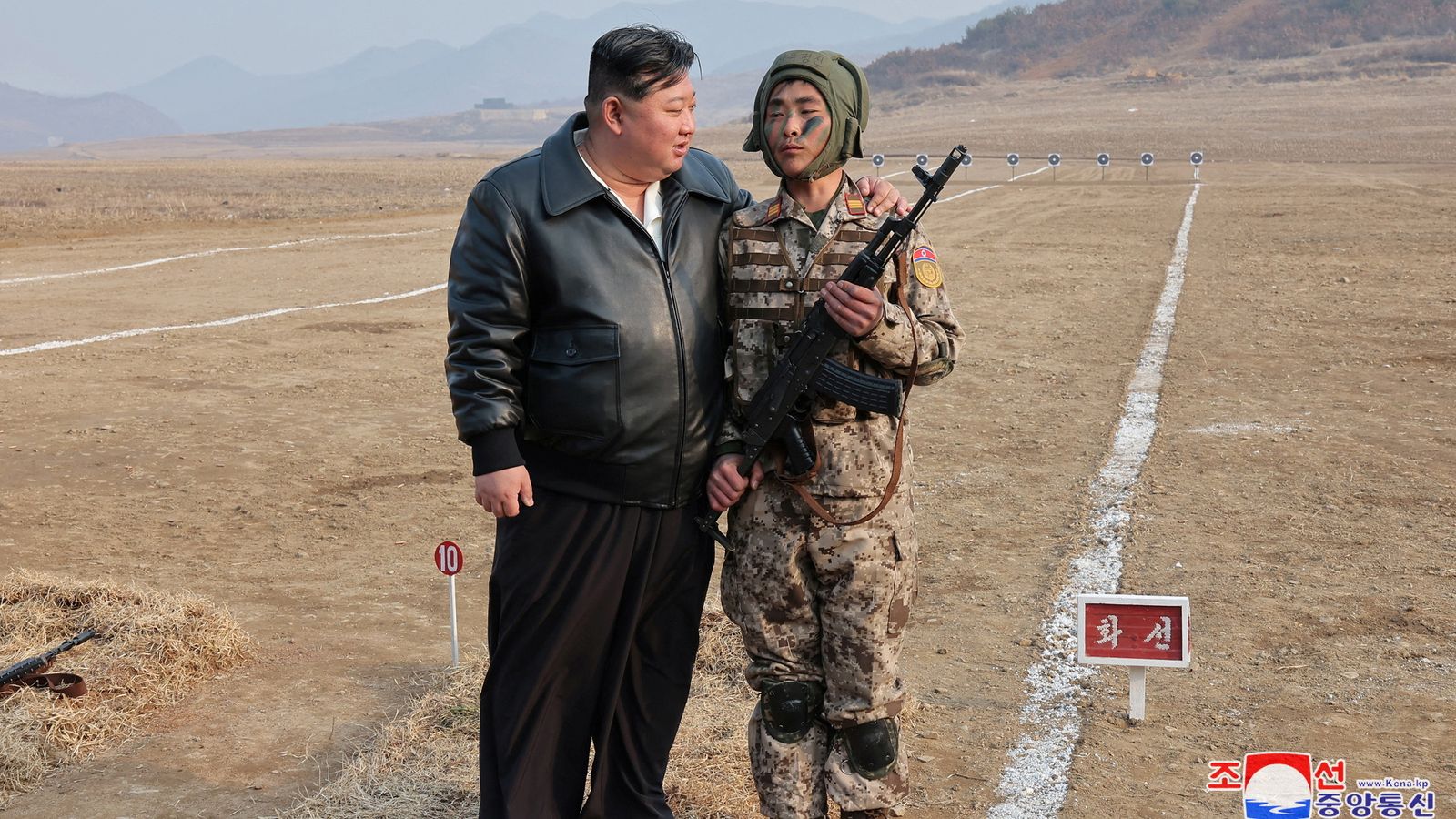
The political value inside North Korea matters as well because authoritarian systems require permanent confrontation to justify militarization. Kim Jong Un is already transforming dead North Korean soldiers into nationalist mythology through memorials and state propaganda. War creates purpose for regimes like this. It reinforces sacrifice, obedience, and state authority.

What should concern people most is that North Korean forces are now directly observing how Western systems actually function in combat. HIMARS deployment, NATO battlefield coordination, electronic warfare countermeasures, drone integration, satellite-guided artillery, all of it is being studied through live battlefield exposure rather than theoretical analysis.

North Korea did not enter this war because of friendship with Russia. Yes, the Hermit Kingdom programs its people to hate the West, but they did it for more than the love of the game. It entered because the conflict offered economic survival, military modernization, technological advancement, and direct exposure to modern warfare all at once. Nuke warfare may be enough to temporary ward off enemies, but did nothing to boost the economy. From Pyongyang’s perspective, this war is one of the greatest strategic opportunities the regime has encountered.

America’s Sovereign Debt Crisis Has Already Begun


Posted originally on May 18, 2026 by Martin Armstrong |  

Sovereign Debt Crisis Begins

The United States has crossed a threshold that historically marked the beginning of sovereign debt crises for empires throughout history. According to newly released figures, U.S. debt held by the public has now surpassed 100% of GDP for the first time since World War II, reaching roughly 100.2% as public debt climbed above $31.27 trillion while GDP stood near $31.22 trillion. Total national debt is meanwhile rapidly approaching a remarkable $39 trillion.

The media continues comparing current debt levels to the period following World War II, but the comparison is fundamentally misleading because the conditions today are entirely different. After 1945, the United States emerged as the dominant industrial power globally while much of the world rebuilt from destruction. Economic growth surged, demographics expanded rapidly, productivity increased, and debt ratios naturally declined over time. Today, the opposite dynamic is unfolding.

The federal government now runs deficits even outside recessions or major global wars. Congressional Budget Office projections show deficits remaining near 6–7% of GDP annually for years ahead while debt held by the public climbs toward roughly 108% of GDP by 2030 and potentially 120% within the following decade. Interest payments alone are moving toward or beyond $1 trillion annually, already rivaling or exceeding military spending itself.

There are no true budgets for government. The people in power do not care about the economy beyond their term in office. If they cannot find a reason to justify a larger spending package, then they’ll simply go over the allotted amount, fail every audit, and face zero repercussions.

Governments increasingly borrow simply to service existing obligations while politicians refuse to cut spending meaningfully because the entire system became dependent on perpetual debt expansion. Military spending rises, entitlement obligations grow, infrastructure demands increase, and governments are now layering industrial policy, migration costs, AI subsidies, climate initiatives, and geopolitical competition directly onto already unsustainable fiscal structures.

This problem is not limited to the United States since the nature of politicians is identical. Global debt recently climbed toward $353 trillion according to the Institute of International Finance, reaching approximately 305% of global GDP. China, Europe, Japan, and the United States are all trapped inside debt structures that require continuous monetary intervention and refinancing simply to remain stable. Problem is they cannot roll over these debts forever.

That capital flow advantage is the only reason the system has not fractured more violently already. Foreign capital continues flowing into Treasury markets because investors still view the United States as the least unstable major market globally. Even Federal Reserve officials recently acknowledged that demand for U.S. government debt remains relatively strong despite exploding borrowing levels.

The crisis is emerging gradually through declining purchasing power, rising interest burdens, slower growth, weakening middle classes, political fragmentation, and falling confidence in institutions. The average citizen already feels the consequences directly even if they do not fully understand the mechanics underneath.

Inflation destroyed purchasing power over recent years. Housing affordability collapsed across large portions of the country. Insurance costs surged. Property taxes rose sharply. Food, healthcare, utilities, and debt servicing all became materially more expensive. Younger generations increasingly feel locked out of long-term financial stability despite working harder than previous generations.

That is what sovereign debt deterioration looks like in practice. Governments now face an impossible trap. If interest rates remain elevated, debt servicing costs continue exploding higher while households, banks, and commercial real estate weaken further. If central banks suppress rates aggressively again, currencies weaken and inflation accelerates. Either path gradually undermines confidence and the massive debt rollover will eventually hit a wall.

This is why governments worldwide are simultaneously discussing CBDCs, unrealized gains taxes, wealth taxes, digital IDs, banking surveillance systems, and expanded financial reporting requirements. Yet they can NEVER tax the people enough to cover even a portion of these debts. Sovereign debt crises always push governments toward tighter control over capital because states cannot tolerate unrestricted wealth movement once fiscal conditions deteriorate severely enough. People often ask me when the soverign debt crisis will begin, but we have already reached that point. The system will continue to collapse until 2032 when we have the opportunity to perhaps get it right.