Posted originally on May 18, 2026 by Martin Armstrong |
For years, many people dismissed artificial intelligence as little more than a threat to jobs or another speculative technology bubble. Yet beneath the political noise and media hysteria, one of the most important medical revolutions in modern history is quietly beginning to emerge. Artificial intelligence is now helping doctors detect diseases earlier, develop drugs faster, personalize treatments, and potentially save millions of lives that otherwise would have been lost under traditional medical systems.
One of the most important breakthroughs this year came from researchers at the Mayo Clinic, where a new AI system demonstrated the ability to detect pancreatic cancer up to three years earlier than doctors typically can using conventional scans. Pancreatic cancer remains one of the deadliest forms of cancer because symptoms often appear only after the disease has already advanced. The five-year survival rate in the United States remains near just 12% to 13%. The new AI model identified subtle structural abnormalities invisible to the human eye and successfully detected early-stage warning signs in roughly 73% of patients long before formal diagnosis occurred.
That is the critical point many people fail to understand about AI in medicine. The technology is not simply “thinking faster” than humans. It can analyze patterns across millions of data points that no physician could reasonably process alone. In imaging systems such as CT scans, MRIs, and X-rays, AI can detect microscopic irregularities years before symptoms emerge. Early detection changes everything because most cancers become dramatically more survivable when caught early enough. The AI hysteria skips out on the benefits the technology will bring to humanity.
We are also seeing AI dramatically accelerate drug discovery itself. Traditionally, developing a new drug could take 10 to 15 years and billions of dollars in research costs. AI systems are now capable of simulating molecular interactions, identifying promising compounds, and narrowing viable candidates in months rather than years. Researchers at St. Jude Children’s Research Hospital recently used AI-assisted genetic analysis to identify new cancer drug targets with lower risk of side effects, which could eventually improve treatments for multiple solid tumors.
Cancer treatment itself is also becoming increasingly personalized because of artificial intelligence. Instead of giving every patient identical therapies, AI systems can analyze genetic profiles, tumor mutations, immune responses, and patient histories to tailor treatments to the individual. Personalized cancer vaccines using mRNA technology are now advancing rapidly through clinical trials, particularly in melanoma and kidney cancer research.
Another major shift is taking place in robotic and AI-assisted surgery. Advanced robotic systems are beginning to combine real-time AI guidance with 3D anatomical modeling, allowing surgeons to operate with greater precision and fewer complications. Medical technology firms now openly discuss a future where surgeons may have instant access to dynamic “digital twins” of organs during operations, reducing risk and improving outcomes.
The aging Boomer population may ultimately benefit the most from these breakthroughs. AI-powered monitoring systems are already being developed that can predict cognitive decline, dementia progression, heart attacks, and fall risks before symptoms fully appear. Researchers reported that speech-analysis AI systems are now predicting Alzheimer’s progression with accuracy levels exceeding 78% in some studies.
Healthcare itself generates enormous amounts of data that humans alone struggle to fully interpret. Every scan, blood test, genetic sequence, pathology report, and patient history contains patterns. Determining how that data is collected in another topic.
What makes this so economically important is that healthier populations are more productive populations. Earlier diagnoses reduce long-term treatment costs, lower hospitalization burdens, and improve quality of life. The economic implications alone could reshape healthcare spending globally over the next decade. We have the ability to make computers work for us rather than against us. AI does not want to conquer the world as some sentient Terminator like monstronsity. The technology is there for our benefit if we know how to utilize it properly. There will be those who use AI to kill on the battlefield, and others will use it to save lives. Demonizing AI misses the mark. Technology simply helps human advancement and will be bent to accommodate human nature, which in itself could perhaps be demonized at times.
Beneath all the fear surrounding AI, there is another story unfolding. For the first time in modern history, medicine may be shifting from treating diseases after they emerge toward predicting and preventing them before they become fatal. That may ultimately become one of the most positive developments of this entire technological cycle.
Posted originally on May 18, 2026 by Martin Armstrong |
Japan spent decades trying to convince the world that endless debt, money printing, and zero interest rates could continue indefinitely without consequences. Now ordinary Japanese citizens are beginning to feel the pressure directly as inflation rises, wages fail to keep pace, and living standards steadily deteriorate underneath the surface.
For the first time in generations, Japanese households are experiencing sustained cost-of-living stress while confidence in economic stability weakens sharply. Recent polling showed more than 80% of Japanese households now believe prices are rising faster than their incomes, while consumer confidence remains near recessionary levels despite years of government stimulus and intervention. Food inflation, utility costs, transportation expenses, and housing-related costs have all risen materially as the yen weakened dramatically against the dollar over recent years.
The psychological impact inside Japan is enormous because the country spent decades living through deflationary conditions where prices remained relatively stable. Japanese consumers became accustomed to stagnant prices and low borrowing costs. Once inflation finally arrived, the shock to household budgets was immediate.
Rice prices alone surged more than 20% year-over-year at one stage while basic food staples, imported goods, fuel, and electricity all moved sharply higher. Japan imports enormous quantities of energy and raw materials, which means yen weakness translates directly into higher consumer prices across much of the economy.
This is exactly what I warned would eventually happen once central banks lose control of sovereign debt cycles.
Japan now carries government debt exceeding 260% of GDP, the highest among major industrial economies. For years the Bank of Japan artificially suppressed interest rates and monetized government debt through massive bond purchases. The BOJ effectively became trapped because allowing rates to normalize aggressively would destabilize the government’s own financing structure.
Now Japan faces the consequences of that trap.
The yen weakened substantially because interest rate differentials between Japan and the United States widened dramatically after the Federal Reserve raised rates. That currency decline temporarily benefited exporters but crushed household purchasing power because imports became far more expensive. Ordinary Japanese families are now paying materially higher prices for necessities while real wage growth remains weak.
The younger generation feels this particularly hard. Many younger Japanese workers already struggled with stagnant wages, temporary employment contracts, and rising urban living costs before inflation accelerated. Now household budgets are increasingly consumed by food, transportation, rent, utilities, and taxes while long-term financial security becomes harder to achieve.
An aging population means fewer workers to support expanding pension obligations, healthcare systems, and government debt burdens simultaneously. The country increasingly depends on monetary intervention to stabilize the system financially, but monetary intervention itself weakens the currency and fuels imported inflation.
The media continues portraying Japan as stable because social order remains intact and unemployment is relatively low, but confidence underneath the surface is weakening steadily. Consumer spending has softened repeatedly because households are becoming more defensive financially. Savings rates are under pressure. Retailers continue raising prices gradually after decades of avoiding increases entirely.
This is why the ECM projected sovereign debt instability as the defining issue globally into this decade. Japan was always the leading example of what happens when governments attempt to indefinitely postpone economic reality through debt expansion and monetary manipulation.
Japan avoided the violent banking collapse seen elsewhere during previous crises, but the long-term consequence has been decades of economic stagnation slowly eroding national vitality underneath the surface. Inflation is now exposing those structural weaknesses directly to the population.
The Japanese people are feeling the economy weaken in real-time because daily life itself is becoming more expensive while financial security becomes harder to maintain. Once households begin losing confidence broadly in future living standards, the political and economic consequences eventually follow.
Posted originally on May 17, 2026 by Martin Armstrong |
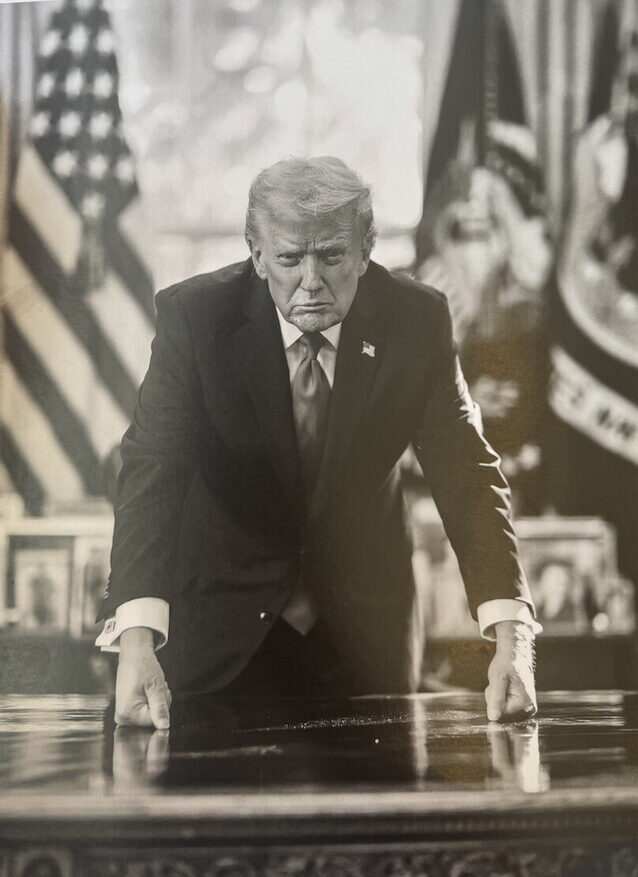
President Trump is recommending that chip manufacturers IMMEDIATELY move their manufacturing facilities to AMERICA. The conversations with Xi have confirmed how China will move to take over Taiwan. Chip manufacturing is essential for AI and technology in general. Taiwan is the world’s chip manufacturing center at the moment. That’s one of the main reasons China wants to take Taiwan, for it is also a geopolitical play.
Trump is saying that he would like to see everybody making chips in Taiwan come into America. He also expects that the USA will have 40% to 50% of the world chip business by the end of his term.
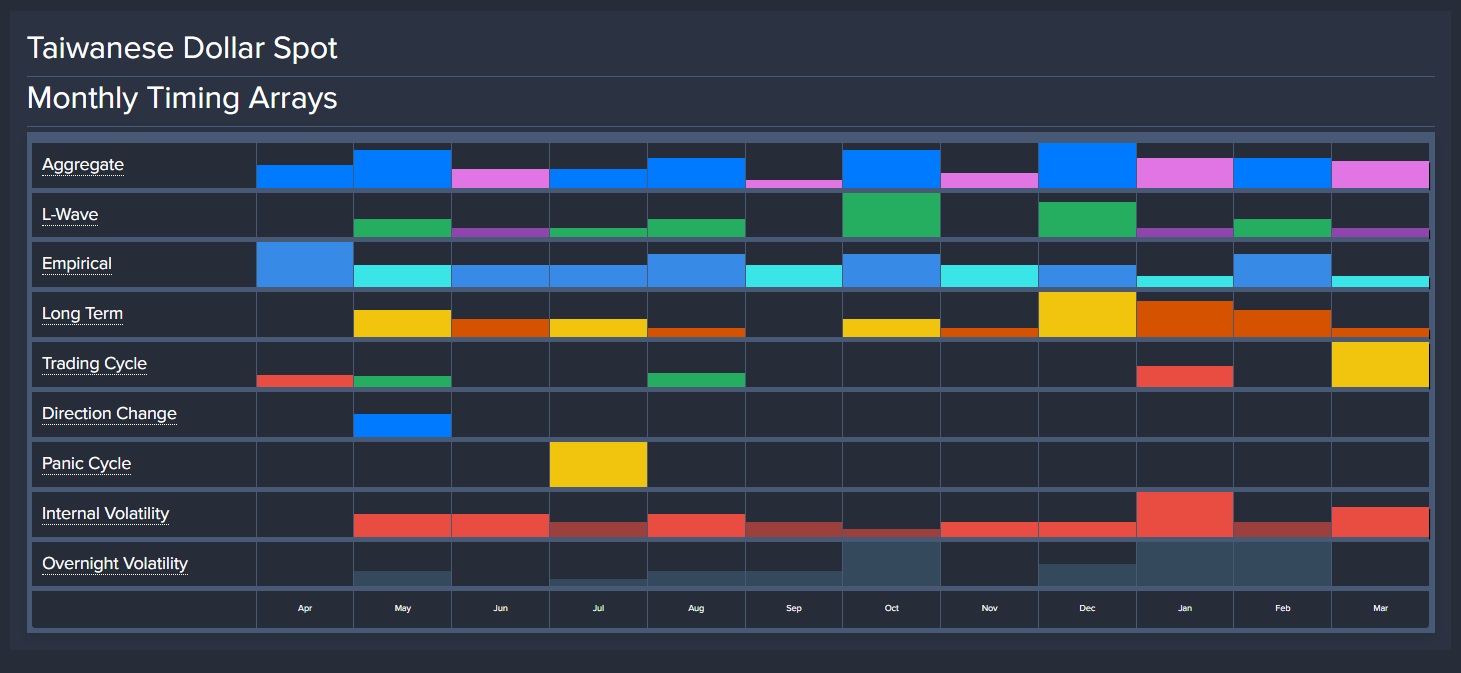
We saw May as a Directional Change and a Panic Cycle appears in July leading into August. Keep in mind that with the US tied up in Iran, I warned that this would be the time for a conflict over Taiwan. Macron visited China and told Xi they will NOT intervene with respect to Taiwan. The next major turning point in Taiwan is 2027.33.
Posted originally on May 17, 2026 by Martin Armstrong |
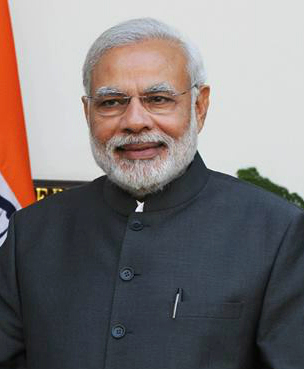
From our staff on the ground, they have reported that Modi has gone through with what many were suspecting – a lockdown to save energy. Modi has officially announced a partial lockdown asking people to work from home, commute as little as possible, and use less cooking oil too as India must save its FOREX reserves.
We will expect this to unfold in Europe eventually.
Posted originally on CTH on May 17, 2026 | sundance
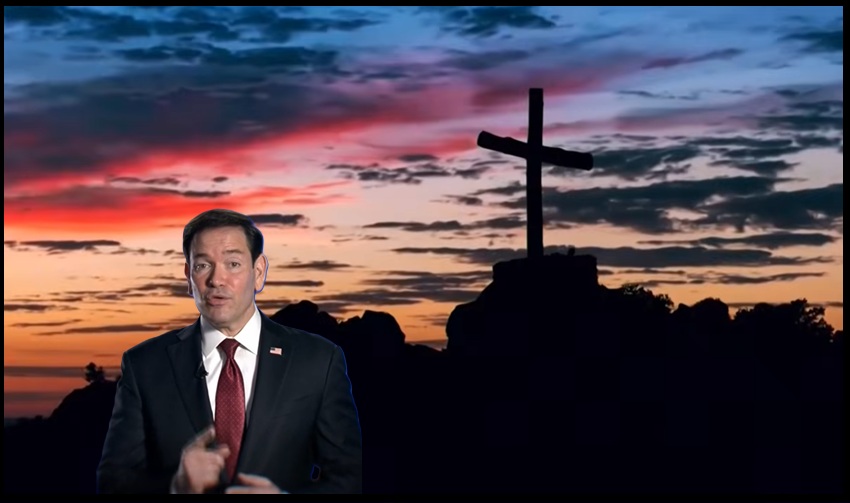
Those of dark whispered voices are shrieking loudly today, directing their soulless vessels to shout opposition to the Christian rededication of our nation. They listen to the voices of betrayal telling them to shriek about “freedom of religion” as noted in the constitution, yet their arguments are twisted around the false premise that does not exist, “freedom from religion.”
Our constitution does not block the expression of religion; it blocks the favoring of one expression over another.
Freedom of religion is entirely different than freedom from religion, though both represent a moral choice.
Posted originally on CTH on May 17, 2026 | sundance
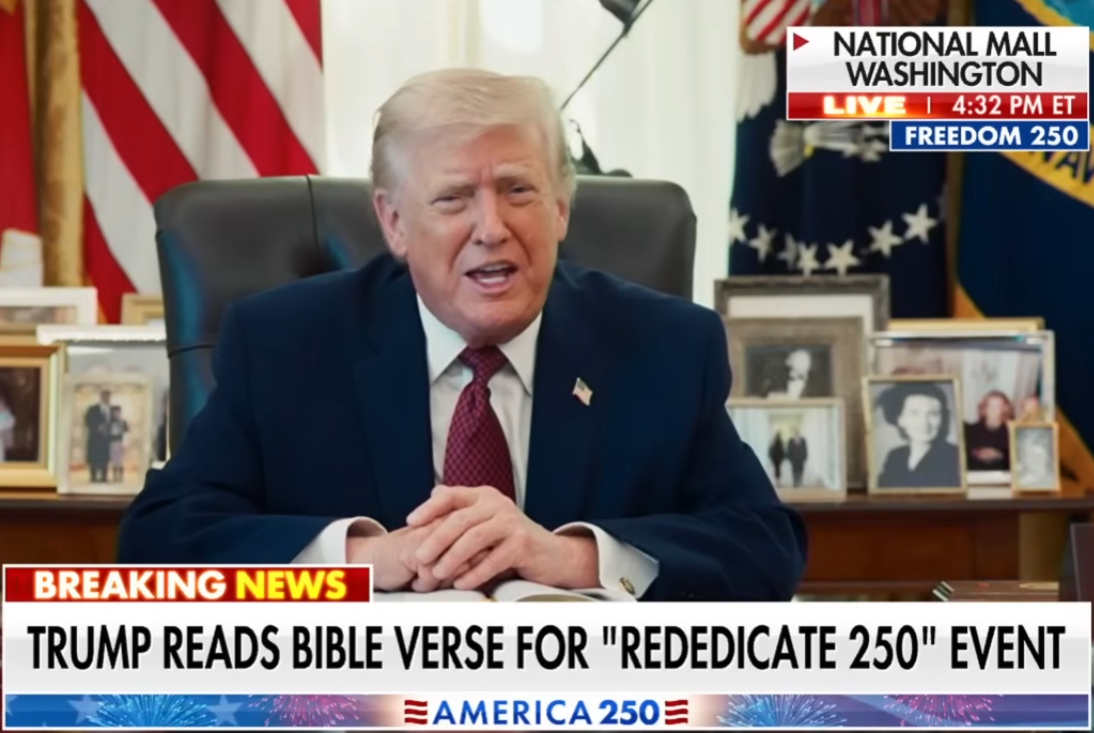
A remarkable sight to witness. President Trump reads 2nd Chronicles 7:11-22 from the Bible during a simulcast at the “Rededicate 250” event in Washington DC.
“Thus Solomon finished the house of the Lord, and the king’s house: and all that came into Solomon’s heart to make in the house of the Lord, and in his own house, he prosperously effected.
And the Lord appeared to Solomon by night, and said unto him, I have heard your prayer, and have chosen this place to myself for an house of sacrifice.
If I shut up heaven that there be no rain, or if I command the locusts to devour the land, or if I send pestilence among my people;
If my people, which are called by my name, shall humble themselves, and pray, and seek my face, and turn from their wicked ways; then will I hear from heaven, and will forgive their sin, and will heal their land.
Now mine eyes shall be open, and mine ears attent unto the prayer that is made in this place.
For now have I chosen and sanctified this house, that my name may be there for ever: and mine eyes and mine heart shall be there perpetually.
And as for you, if thou wilt walk before me, as David your father walked, and do according to all that I have commanded you, and shalt observe my statutes and my judgments;
Then will I stablish the throne of thy kingdom, according as I have covenanted with David your father, saying, There shall not fail you as a man to be ruler in Israel.
But if you turn away, and forsake my statutes and my commandments, which I have set before you, and shall go and serve other gods, and worship them;
Then will I pluck them up by the roots out of my land which I have given them; and this house, which I have sanctified for my name, will I cast out of my sight, and will make it to be a proverb and a byword among all nations.
And this house, which is high, shall be an astonishment to every one that passeth by it; so that he shall say, Why has the Lord done thus unto this land, and unto this house?
And it shall be answered, Because they forsook the Lord God of their fathers, which brought them forth out of the land of Egypt, and laid hold on other gods, and worshipped them, and served them: therefore hath he brought all this evil upon them.”
Posted originally on CTH on May 17, 2026 | sundance
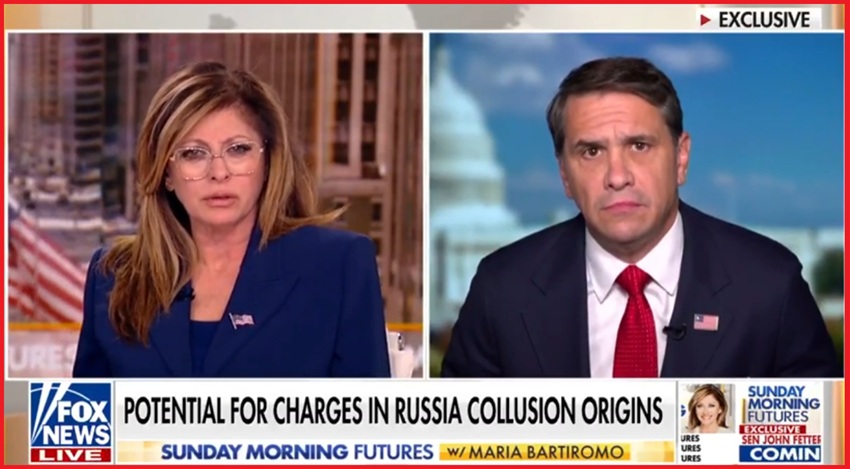
Appearing with Maria Bartiromo, Acting Attorney General Todd Blanche answers questions about the ongoing conspiracy case against former government officials for targeting Donald Trump as well as investigations into the 2020 election outcome. {Direct Rumble Link Here}
In this interview it appears Ms. Bartiromo realizes she needs to convey a sense of frustration on behalf of her viewership who followed the arc of the targeting of Donald Trump for the past nine years, through the Horowitz investigation(s), through the Mueller investigation, through the John Durham investigation and into the Jack Smith investigation, yet none of the preceding investigations ever focused on the real problem: the government officials who conducted the targeting. Corruption and unlawful conduct within Washington DC is a self-protecting enterprise. WATCH:
I can tell you from first-hand experience that one of the primary reasons we have not seen accountability is that most of the people with the authority to do something about it don’t know where to look to find the evidence, and when they do, they don’t know what it means in context.
Washington DC is a system of self-absorbed stakeholders who use isolating silos to preserve their interests. Within the game everything has a political currency, including leverage and information – and everyone wants proprietary credit for their inventory. Washington DC is a narcissist’s playground.
Posted originally on CTH on May 17, 2026 | sundance
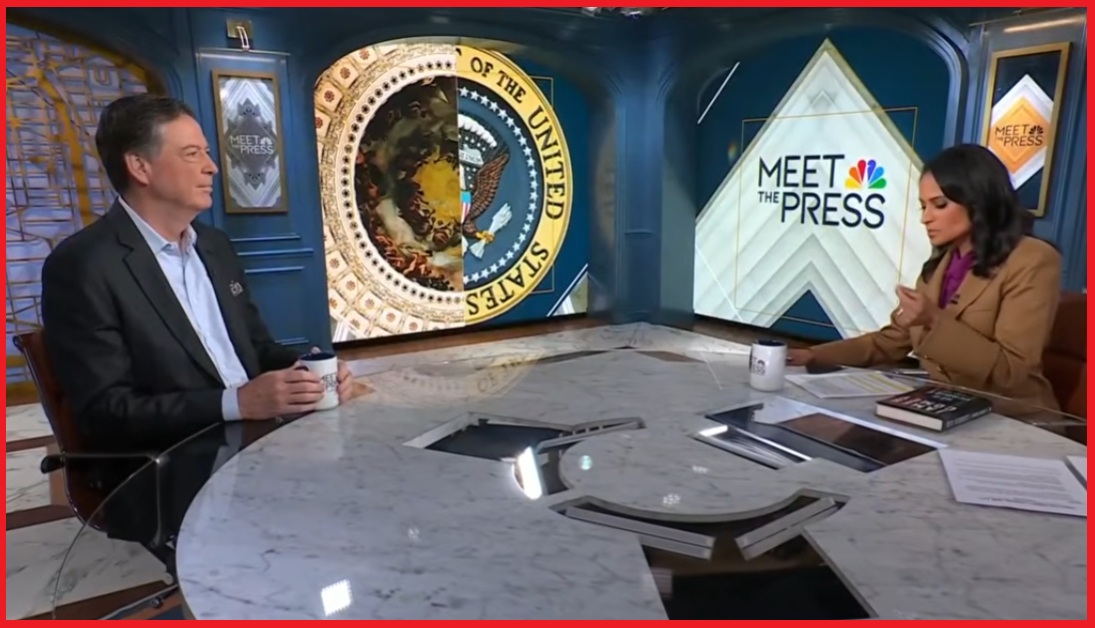
Incapable of retaining a stiff upper lip since birth, the sanctimonious James Comey instead pontificates in his customary political fashion about how non-political he is; all the while remaining mounted on his high-horse. If there’s one corrupt official who deserves to spend time behind cold bars, it’s this creature.
James Comey appears on NBC news to send a message to his remaining corrupt allies within the FBI and DOJ to hang on and retain their position within the Lawfare resistance. As a spineless and immoral creature, and in an absolute case study about how a narcissist projects his mindset, Comey shifts the blame for his current status to his wife and then blame-casts his former conduct to AG Loretta Lynch. Video and Transcript Below:
[Transcript] – KRISTEN WELKER: Welcome back. And joining me now is former FBI Director James Comey, author of the new novel Red Verdict. Director Comey, welcome back to Meet the Press.
JAMES COMEY: Great to be with you.
KRISTEN WELKER: Great to have you here. Congratulations on your novel. We’ll talk about it in just a moment. I do want to start with this extraordinary moment in which you find yourself. You’re facing a second indictment by the Trump administration, trial in just a few weeks potentially. I know you’re not going to comment on the specifics of the case, but I want to ask you a big-picture question. The charges against you stem from this Instagram post of seashells that spelled out “86 47.” You see it right there. The indictment says it was, quote, “a serious expression of an intent to do harm to the president of the United States.” Has being under this microscope changed the way you live your life, Director Comey?
JAMES COMEY: It’s made me want to spend more time as a grandfather, pushing my grandkids on a swing and not talking to awesome people like yourself. But it hasn’t changed how I see the world or my life.
KRISTEN WELKER: Well, I interviewed the Acting Attorney General Todd Blanche earlier this month. And he said, quote, “This is not just about a single Instagram post. This is about a body of evidence that the grand jury collected over a series of about 11 months.” Do you know what he’s talking about, evidence over a series of 11 months?
JAMES COMEY: Yeah, I saw that, as you said just a few minutes ago. I don’t talk about the case because the federal court rules require you not. I would urge the acting attorney general to bone up on the rules.
KRISTEN WELKER: So but do you know what he’s talking about with the other evidence?
JAMES COMEY: I don’t want to comment on it because then someone will say I’m commenting on the case. He ought not to be talking about it, I can’t talk about it. That’s why we have a judicial process in a courtroom.
KRISTEN WELKER: Fair enough. In an interview with Stephen Colbert last year, you did address what you were thinking when you and your wife were walking on the beach. You said you saw the shells in the sand. I want to just play a little bit of what you told Stephen Colbert.
[BEGIN TAPE]
JAMES COMEY: She looked at it and said, “Why did someone put their address in the sand?”
STEPHEN COLBERT: All right.
JAMES COMEY: And then we stood at it trying to figure, looked at it trying to figure out what it was. And she’d long been a server in restaurants. And she said, “You know what I think it is? I think it’s a reference to restaurants when you’d 86 something at a restaurant.”
STEPHEN COLBERT: Right, off the menu.
JAMES COMEY: Yeah. I said, “No, I remember when I was kid, you’d say ‘86’ to get out of a place. ‘This place stinks, let’s 86 it.’” And so I said, “I think it’s a clever political message.” And she said, “You should take a picture of it.” I said, “Sure.” And then she said, “You should Instagram that.” And boom.
[END TAPE]
KRISTEN WELKER: Just big picture Director Comey, what do you say to those who would argue the former director of the FBI shouldn’t be putting political posts on Instagram or social media?
JAMES COMEY: Yeah, I’m a private citizen. I saw a shell in the fall of 2024 where someone wrote an endorsement of Kamala Harris in a big seashell. I took a picture of it, I thought it was very clever, and I think I wrote, “Ariel understands the assignment,” a reference to Little Mermaid. I’m a private citizen. Again, I’m not going to talk about that particular post, but I use Instagram the way any awkward, nerdy dad would.
KRISTEN WELKER: Well, in the past, you’ve said you have faith in the legal system. As you face this second indictment, are you confident that you will be cleared one way or another?
JAMES COMEY: I have complete faith in our judicial system. It’s the genius of our founders. It’s the, frankly, the only leg of our three-legged stool that is still standing in the U.S. government. But it’s standing tall and straight. It is the guardian of the rule of law. And I believe in it. And so let’s make use of it.
KRISTEN WELKER: And you’ve publicly posted you haven’t done anything wrong, you haven’t done anything illegal. So are you confident that at the end of the day, you’ll be cleared in one way or another?
JAMES COMEY: Yeah, all I can do without making my lawyers angry at me is repeat what I said in my initial statement. I’m not just not guilty, I am innocent, and so let’s go.
KRISTEN WELKER: All right. You have, if we look back, been in the cross hairs of politicians in the past. This is not new, from Hillary Clinton, the email investigations, the Russia probe. Looking back, Director Comey, is there anything you would’ve done differently over the past decade?
JAMES COMEY: Anything? Yeah, lots of things in my life as a father and a grandfather–
KRISTEN WELKER: –Anything in your professional?–
JAMES COMEY: –and an FBI director.
KRISTEN WELKER: So there you go.
JAMES COMEY: There are all kinds of things that I screwed up. The major decisions that people often talk about I still see them the same. But yeah, I would be better in all kinds of ways if I had a magic wand.
KRISTEN WELKER: Yeah, well let me be more specific because you’ve wondered out loud whether your decision to reopen the Clinton email investigation 11 days before voters went to the polls may have helped elect President Trump back in 2016. Knowing what you know now, would you have made the same, exact decision again?
JAMES COMEY: I think so. The only thing I’ve wondered is whether I should’ve dumped that very difficult decision on the attorney general on October the 28th. She declined to speak to me, but I could’ve just sent her a memo saying, “Here’s what I think that we have to do.” But I decided then, and honestly ten years later, it feels the same. That would’ve been a chicken-blank thing to do. It was a decision that I had to make because I had testified all summer that the investigation was done and now it’s not done. Do I really conceal that from the American people, from the Congress? I can’t. And it would’ve been a chicken thing to do to dump it on the AG. But sometimes when people are unhappy with me on the street, I think, “Hmm, I should’ve left it for Loretta Lynch.”
KRISTEN WELKER: Well, ten years later, now that you’ve had all of this time to think about it, do you think that decision did play a role in the election of President Trump?
JAMES COMEY: I hope not. My goal all of that year was to stay out of politics. And having seen two elections after that, where as I said, the difference the FBI made was late-deciding voters broke for Trump in ‘16, but then they did again in ‘20, and then they did again in ‘24, when I was home in my pajamas for both elections. So I don’t think so. But again, we made the decision because it was the least-bad option. Both options sucked, honestly. But this was the one most consistent with the values of the department. So as painful as it is, I’d have to do the same thing again.
KRISTEN WELKER: President Trump was indicted twice by the Justice Department. As you know in public posts, he’s now justified going after his political enemies because of how he believes he was treated. Do you view the prosecutions against you as political payback?
JAMES COMEY: Well, I can’t talk about the shell case. The one before–
KRISTEN WELKER: Talk about the first one.
JAMES COMEY: –that got dismissed, absolutely. And we made a motion to have it dismissed as a vindictive prosecution. The president of the United States cannot use the Justice Department to target people because he wants to retaliate against them. We just can’t operate as a republic if that happens. And so there’s a powerful argument to be made that’s illegal. We didn’t get to that, ‘cause there are all kinds of other problems with the case. But absolutely, going after John Brennan, after Jim Clapper, after Adam Schiff, all of these things are not about the merits. It’s about retaliation. And that is not just wrong, it’s a way in which our system cannot operate and be effective.
KRISTEN WELKER: Does it make you and your family fearful?
JAMES COMEY: No. ‘Cause I know what I’m dealing with, someone who’s announced he’s now the hunter? Okay, let’s go.
KRISTEN WELKER: Acting Attorney General Todd Blanche told me earlier this month the evidence that was presented to a grand jury in this latest case, not the government, not the Department of Justice, he said, quote, “It’s not Todd Blanche that returned an indictment against James Comey, it’s the grand jury, part of the judicial process.” Does the fact that a grand jury issued this latest indictment undercut any argument that this latest indictment might be political retribution? Not that you have made this argument that you have made that argument here, but for those who would make that argument?
JAMES COMEY: Yeah, I’m so tempted to answer that, but can I answer it about the last case, which is now gone?
KRISTEN WELKER: Please.
JAMES COMEY: Same argument was made, a grand jury returned an indictment, still doesn’t change the fact that it can be a vindictive prosecution. And there, of course, a magistrate judge found misconduct of a variety of kinds by the late-breaking appointed U.S. attorney Lindsey Halligan. And so it’s important. The grand jury’s an important part of the process. But there’s more to follow.
KRISTEN WELKER: As you know, the FBI director is meant to serve a non-partisan, ten-year term. I don’t have to tell you that. You’re very familiar with that. Do you think the next president should keep FBI director Kash Patel in his position through his ten-year term?
JAMES COMEY: The next president should make an evaluation about whether, whoever’s in that job, come January of 2029, is performing it in a way that’s consistent with the American people’s expectations of that organization, which is to be competent, honest, and independent. On the current record, it would be a tough continuation for the current director. But I don’t know. The president, whoever the president is then will have to make that evaluation.
KRISTEN WELKER: Let me ask you, because would it undermine the independence of the FBI if the next president doesn’t allow Patel to serve out that full ten-year term?
JAMES COMEY: Well, again, the values are independence, competence, and honesty. And if by some stroke Mr. Patel is reflecting all of those values in another two years, then maybe the next president will want to keep him. But I think you have to have a competent, honest, and independent person leading that institution, else its other contributions to America are lost.
KRISTEN WELKER: You’ve laid out the qualities that you think are necessary to be FBI director. Do you think Kash Patel has those qualities? Has he showcased that?
JAMES COMEY: Not for me to say. Expression from law school keeps popping in my head, the res ipsa loquitur, which is Latin I think for, “The thing speaks for itself.” So I’ll let others make that judgment.
KRISTEN WELKER: Okay. Acting Attorney General Todd Blanche says that during the second Trump administration, so far, more than 200 people have been forced out of the Justice Department, that includes your own daughter, who was a federal prosecutor in New York. Do you have confidence in the Justice Department to serve the people of this country right now?
JAMES COMEY: I do not, looked at from the top level. The people running it, if you’re bragging about forcing out career prosecutors and agents because the president doesn’t like a lawful investigation they conducted, something is seriously broken at the top. But I have great confidence in the people down below who are just trying to hang on. And I’m urging them, hang on. Two and a half years, and then we can rebuild these institutions. But we need good people in those roles. America does.
KRISTEN WELKER: All right. Director Comey, let me turn to your novel, Red Verdict. Here it is. Great book. It’s the latest in your series, quite frankly, of legal thrillers. It’s number four. You write scenes based on your decades of experience inside the DOJ. Do you think your novels still reflect the reality of the people serving in the Justice Department today?
JAMES COMEY: Yes. Again, I’m going to exclude that top layer and sort of skim that off. Down below, yes. People join the Department of Justice, the FBI, which is part of the Department of Justice, because they want to do the right thing. And in the overwhelming main, they do. My characters are flawed because they’re humans, as I am. But they are good people trying to do the right thing. That’s what I love about this writing and I hope readers, first the stories are really cool and capture you, but most of all, the characters show something that is real and that ought to reassure all of us.
KRISTEN WELKER: Well, one of the characters, the central character, based on your daughter you have said, I wonder what do you hope this next chapter will look like, for your daughter, for you, for your family in your actual, real life?
JAMES COMEY: Well, next chapter for me will be more books. And then once a year, I will do interviews. So maybe we’ll see each other again. But for people like my daughter, my son-in-law who resigned from the U.S. Attorney’s Office in Virginia the day I was charged, they represent hundreds of quality people. I think they’re, I don’t want to tell them what their employment situation should be, but I hope they flow back. And I think lots and lots of great people will flow back with the opportunity to rebuild the department, which is what happened after Watergate. Great, young people came back to save us. And they will again.
KRISTEN WELKER: All right. Director James Comey, thank you so much for being here. We really appreciate it.
JAMES COMEY: Thanks for having me.
{END TRANSCRIPT}
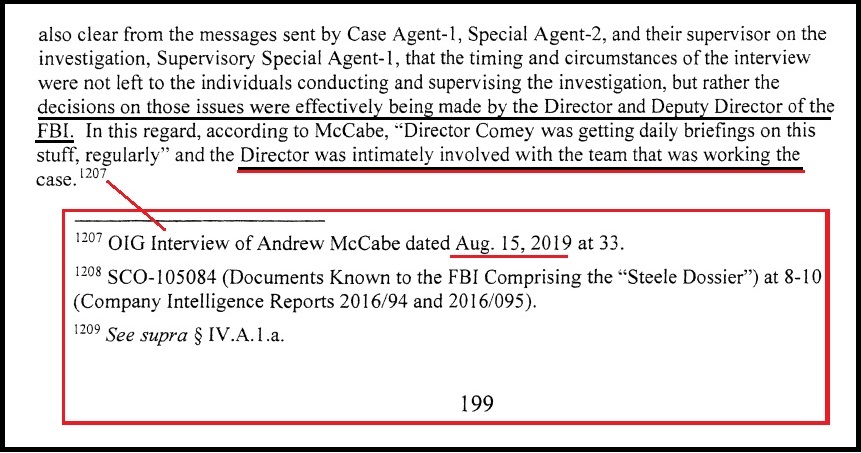
Inside the 2020 report by John Durham [CITATION], the special counsel outlined how former FBI Director James Comey was intimately involved in the creation of the Carter Page FISA application.
John Durham noted that Comey kept asking the DOJ National Security Division and FBI counterintelligence investigators, “Where’s the FISA, we need the FISA.” However, John Durham never interviewed James Comey or Andrew McCabe. The former FBI Director and Deputy refused to cooperate or give testimony to John Durham. So, how did John Durham have details about the demands of Comey?
The answer is found in the footnotes. John Durham reviewed transcripts of interviews given by Andrew McCabe to the Office of the Inspector General, Michael Horowitz, who previously investigated FBI conduct in the origin of the Carter Page FISA.
♦QUESTION: If Andrew McCabe gave testimony to the OIG about the motives and impetus of FBI Director James Comey in pushing for the Carter Page FISA application, why did the OIG report never outline those transcribed interviews?
Why was the interview transcript never included in IG Michael Horowitz’s OIG report to congress?
[ NOTE to DNI Tulsi Gabbard and Acting AG Todd Blanche. Now that you know a transcribed interview of Andrew McCabe exists in the OIG office, request the transcription – send it to South Florida USAO Jason Reding Quiñones – and/or release it to the public.]
Let me answer other questions without the customary pretending from the DC professional political class. The short version is that OIG Michael Horowitz was trying to protect the DOJ and FBI. The longer version is that a coverup that included DAG Rod Rosenstein, AG Bill Barr and yes, Special Counsel John Durham.
“Where’s the FISA? We need the FISA?” ~ James Comey
The DOJ-NSD and FBI Counterintelligence Division needed to find a safe and legal way to defend their previous spying on the Trump campaign. The 2016 FISA Title 1 surveillance of former CIA asset Carter Page became the fraudulent justification for that intent.
Because “FISA Title I” surveillance authority against a U.S. citizen is so serious (the U.S. government is essentially calling the target a spy), only a few people are authorized to even apply for such surveillance warrants. One of the four people authorized to make such a Search Warrant request is the Asst. Attorney General as head of the National Security Division of the DOJ.
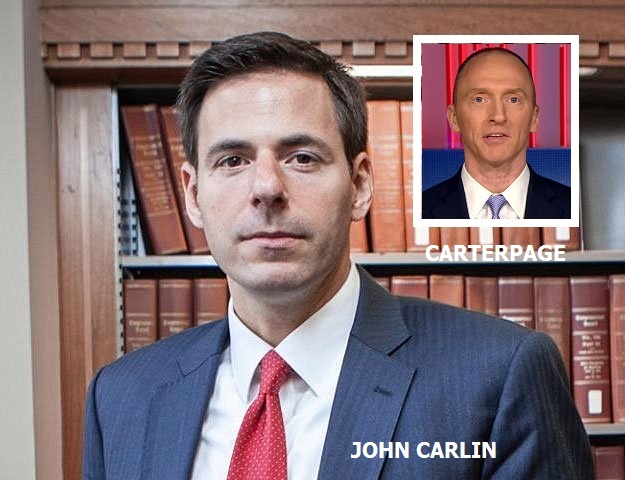
In September and October of 2016, at the same time the DOJ was putting the finishing touches on the FISA Court application to be used against Carter Page, Asst. Attorney General John P Carlin resigned as head of the DOJ-NSD. [CITATION]Did Carlin resign in protest or fear?
As James Comey was demanding that Deputy Director Andrew McCabe and his FBI counterintelligence agents get the FISA warrant, likely an ass covering necessity, the person responsible to get the warrant from the court, Asst Deputy Attorney General of the National Security Division, John Carlin, quit the DOJ.
Considering all the facets outlined above, this cannot be accidental.
Here’s where it gets SERIOUSLY sketchy.
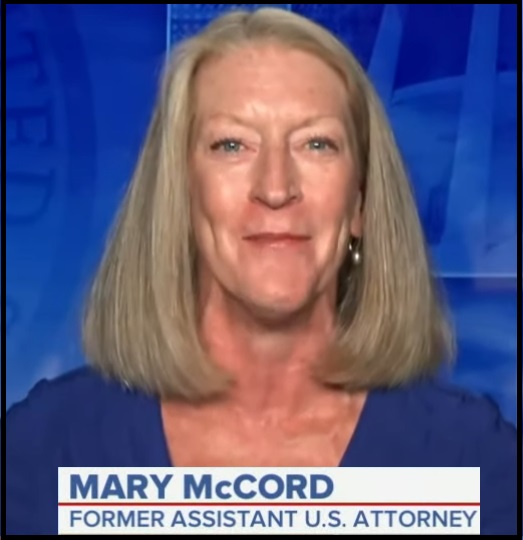
The next in line person, who can fulfill the DOJ/FBI goal of getting the fraudulent application through the FISA court, is Mary McCord. Put into the position as Acting Asst. Attorney General for the National Security Division, the job of submitting the FISA application now falls upon Mary McCord.
On October 21, 2016, When the FISA application was finally submitted, signed by DAG Sally Yates and FBI Director James Comey, it was Mary McCord who did the actual process of filing the application and gaining the Title-1 surveillance warrant.
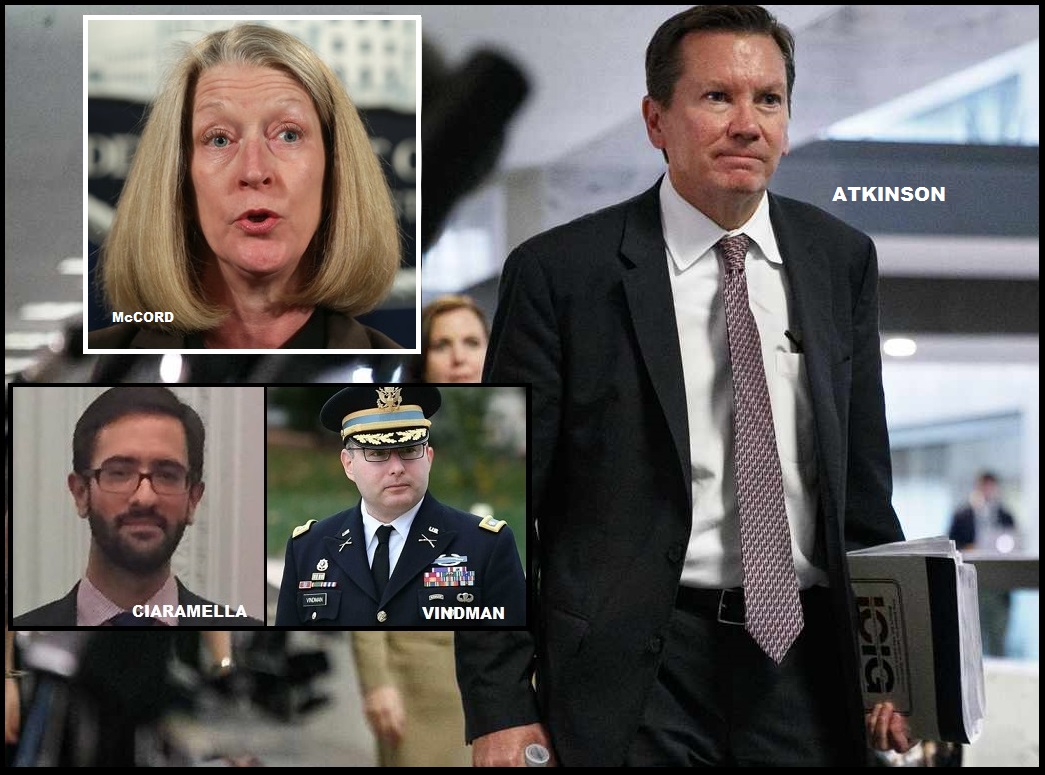
At the time the Carter Page application was filed (October 21, 2016), Mary McCord’s chief legal counsel inside the office was a DOJ-NSD lawyer named Michael Atkinson. In his role as the legal counsel for the DOJ-NSD, it was Atkinson’s job to review and audit all FISA applications submitted from inside the DOJ. Essentially, Atkinson was the DOJ internal compliance officer in charge of making sure all FISA applications were correctly assembled and documented.
Obviously, with the background and context of the entirely fraudulent Carter Page FISA application, a government surveillance warrant using a Clinton funded political opposition research file known as the Steele Dossier to support the warrant, both Mary McCord and Michael Atkinson would know they were directly involved in an intentional effort to weaponize the mechanisms of the justice department against a political candidate.
While James Comey and Sally Yates’ signatures were on the FISA application falsely vouching for it, the attestations of legal compliance fall upon DOJ-NSD head Mary McCord and her top legal advisor Michael Atkinson.
McCord and Atkinson were doing, in October of 2016, what former DOJ-NSD head John Carlin refused to do.
WATCH WHAT COMES NEXT: Mary McCord then resigns from her position in the DOJ, and Michael Atkinson is left, as lawyer for the DOJ-NSD, to become Inspector General of the Intelligence Community.
♦ The Impeachment Effort – Do you remember how the impeachment effort against President Donald Trump was created? Do you remember Alexander Vindman, the claims about Ukraine; the statements of hearing from a CIA whistleblower about the content of a phone call between President Trump and Ukraine President Volodymyr Zelenskyy?
When the anonymous CIA whistleblower complaint was filed against President Trump for the issues of the Ukraine call with President Zelensky, the Intelligence Community Inspector General had to change the rules for the complaint to allow an anonymous submission. Prior to this change, all intelligence whistleblowers had to put their name on the complaint. It was this 2019 IGIC who changed the rules.
Who was the Intelligence Community Inspector General? Michael Atkinson.
Yes, after she left main justice, Mary McCord took the job of working for Chairman Jerry Nadler and Chairman Adam Schiff as the chief legal advisor inside the investigation that led to the construction of articles of impeachment. As a consequence, Mary McCord received the newly permitted anonymous whistleblower complaint from her old office colleague Michael Atkinson.
Can you see how Atkinson and McCord were working together, both connected to the fraud behind the false FISA application used in the Trump-Russia narrative in 2016 and 2017, now both working together on a 2019 impeachment effort against President Trump holding an identical motive? Can you see the stunning conflicts of interest and the coordination?
The weaponized FISA surveillance of the Trump administration doesn’t exist without Mary McCord and Michael Atkinson creating the surveillance mechanism. The weaponized impeachment origin doesn’t exist without McCord – now in congress working for Nadler/Schiff – and Atkinson changing rules as Intelligence Community Inspector General (IC IG), to create the baseline of a fraudulent whistleblower complaint. Can you see it?
But wait…. It gets worse.
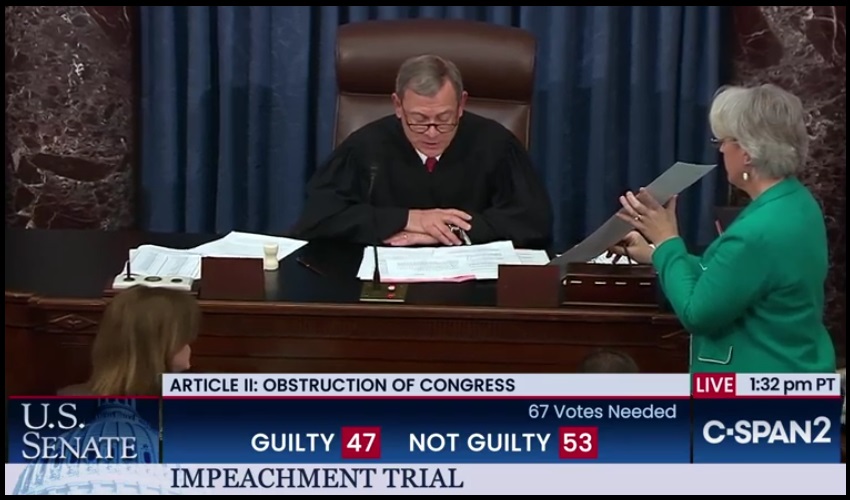
♦ Chief Justice John Roberts – As if things could not possibly be more corrupt, now we have the construct of Atkinson and McCord forming the predicate for the impeachment effort. To wit, Supreme Court Chief Justice John Roberts now becomes the presiding judge over the impeachment trial of President Trump.
Mary McCord is married to a fellow traveler named Sheldon L. Snook.
From 2014 though 2020, not coincidentally the timeline of the Trump targeting and administration in office, Mary McCord’s husband, Sheldon Snook, was the special assistant to Chief Justice John G. Roberts Jr.’s counselor. [CITATION]
As noted by the Washington Post in discussing both McCord and Snook, “The counselor’s office advises the chief justice not only on the management and budget of the Supreme Court but also on his interactions with the executive and legislative branches, along with numerous other public roles in which Roberts serves.” [CITATION]
From 2014 through 2020, Sheldon Snook was responsible for running the office of the lawyer legally advising and counseling John Roberts.
Let me put this another way. The most important guy in the judicial branch, Supreme Court Chief Justice John Roberts, has a lawyer to advise and construct the responsibilities of the SCOTUS chief judge, which includes the construct of the FISA court and appointment of judges therein.
As Chief Justice, John Roberts is in charge of everything to do with the FISA court. The guy running the office of the lawyer doing the counseling of Roberts, is Mary McCord’s husband.
Mary McCord, knowingly and with specific intent, lied to the FISA court to support the FBI targeting of Trump. Mary McCord’s husband runs the office which would intercept any communication from the FISA court to the Chief Justice if the FISC had any concerns about the false FBI application. See the problem?
♦ SUMMARY – Now, we go back to where we came in.
Why did the Office of the Inspector General never publish the interview transcript about Andrew McCabe talking about how desperate FBI Director James Comey was to get a FISA warrant?
Why did John Durham never publish those same interview transcripts, but instead simply referenced the existence of the transcript in a footnote?
Follow these questions to their logical conclusion, and you will discover that all of the participants including Rod Rosenstein, Bill Barr, James Baker, Dana Boente, Michael Horowitz and John Durham were trying to protect the DC system, officials who did criminal acts, and preserve institutions from collapse that sunlight would create.
Sunlight…
… The best disinfectant.
I ain’t quitting.
Until we deal with this mess, it doesn’t matter who we make president.
Posted originally on CTH on May 17, 2026 | sundance
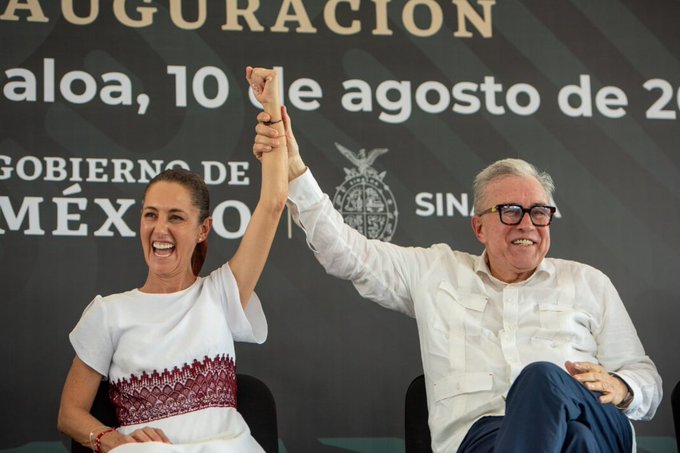
Things are happening rather quickly in the storyline of Sinaloa political leadership and the indictments by U.S. Dept of Justice officials.
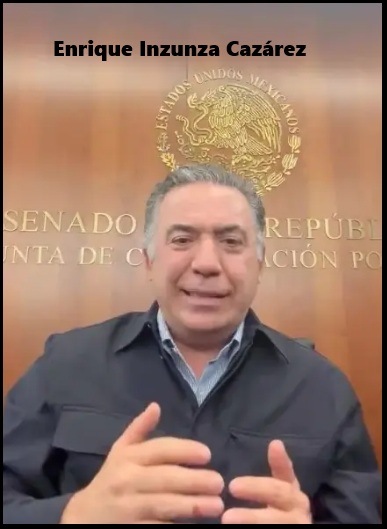
In the latest development, following the Tucson, Arizona, capture of Gerardo Mérida, a retired Mexican army general who served as public-security secretary in northwestern Sinaloa state, today Sinaloa Senator Enrique Inzunza Cazárez, who is also facing drug trafficking and weapon charges, was taken into custody in San Diego by the DEA.
Both Merida and Cazarez were named in the lengthy indictment that included current Sinaloa GovernorRocha Moya, who, if ground reports are accurate, appears to be hiding while protected by the Mexican national guard.
Here’s where it gets really interesting. According to the New York Post reporting, businessman Enrique Diaz Vega – another name from the indictment – also turned himself into U.S. authorities in Arizona last Friday. That means four of the ten men named are currently in custody, with Governor Rocha Moya hiding out in Mexico.
However, it gets even more interesting when highlighted with this section:
… “Inzunza Cázares’ lawyers reportedly held talks with the Department of Justice for his voluntary surrender and to become a government witness, Mexican newspaper El Universal reported May 2.”… {link} “A drug trafficker who surrenders and offers information primarily falls under the category of a cooperating witness,” a Department of Justice source told the outlet.
However, Inzunza Cázares shut down the report the same day. “Utterly false,” he wrote on X.
So, three days after the primary indictment was announced, Inzunza Cazares is reported to be working with the DEA and DOJ. He denies cooperation while in Mexico, and then two weeks later turns himself in to the DEA in San Diego.
It sounds like each of the men turning themselves in to U.S. authorities were facing a rather dangerous Hobson’s choice.
If they stayed in Mexico the Sinaloa cartel would consider them a threat, and it is likely that threat would be eliminated. After all, cooperation would be detrimental to the interests of the cartel. Or Senator Cazares, General Merida and businessman Vega could flee from that threat, turn themselves in and hope to live. It appears they chose the latter.
The New York Post – […] Sinaloa Senator Enrique Inzunza Cazárez, who is facing drug trafficking and weapon charges, was taken into custody in San Diego by the Drug Enforcement Administration, multiple Mexican news outlets reported on Saturday.
Inzunza Cazárez, a member of the ruling Morena party, has held office since August 2024 and previously served as the Secretary General of Sinaloa under Governor Ruben Rocha Moya, who was also indicted and stepped down May 2.
According to the 34-page superseding indictment, the Sinaloa Senator conspired with the Sinaloa Cartel faction Los Chapitos – which is run by Joaquín ‘El Chapo’ Guzmán’s sons, to import drugs to the United States.
Inzunza Cazárez is accused of meeting with Los Chapitos leaders “and agreed on specific plans for the government in Sinaloa, under Rocha Moya, to support and protect the cartel for favors from the cartel that, in turn, help the defendants and other corrupt officials in power.” (source)
Sinaloa Governor Rocha Moya stepped down but his whereabouts are unknown.
With three of the officials now in custody and reports of cooperation very visible in the headlines, is it only a matter of time before Mexican President Claudia Sheinbaum is forced to extradite Rocha Moya?… Or will the Sinaloa cartel just eliminate the threat Moya represents.
Perhaps the answer within that outcome determines who is in charge of Mexico, President Sheinbaum (Morena party) or the Cartels (Morena party).
Left, President Claudia Sheinbaum – Right, Governor Rocha Moya
Posted originally on CTH on May 17, 2026 | Sundance |
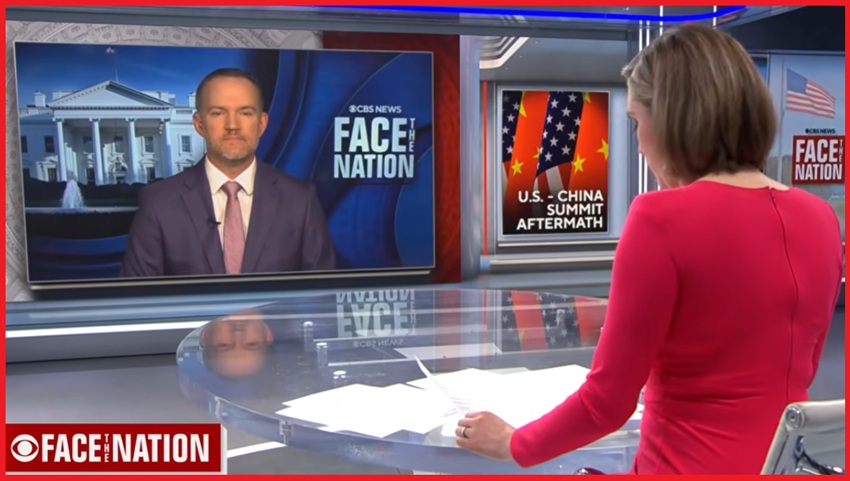
U.S. Trade Representative Jamieson Greer appears on CBS Face the Nation to discuss current U.S-China trade relations on the heels of the recent Beijing summit. Brennan in her customary passive-aggressive mode as a professional narrative engineer. Video and Transcript Below:
[Transcript] – MARGARET BRENNAN: We begin this morning with a top member of the president’s economic team, United States Trade Representative Jamieson Greer. Good morning to you, Ambassador.
JAMIESON GREER: Good morning. Good to be here.
MARGARET BRENNAN: It isn’t just a matter of sentiment. Gas is at an average of $4.51 a gallon. Americans have spent $45 billion more on fuel since the war began versus a year ago. The stock market is up, but lower-income Americans are pulling back on their spending. The New York Fed reports households earning less than $125,000 a year are fueling up their cars less often. How do you provide relief to the average American?
JAMIESON GREER: Well, we know that no one wants to see higher gas prices. At the same time, the president is balancing foreign policy considerations. We know that, in addition to wanting to have low gas prices, we don’t want our children or grandchildren to inherit a world where Iran has a nuclear weapon, so the president is focused on affordability in as many ways that he can- that he can. He’s bringing jobs back to America. We’re focused on getting wages up to offset any kind of increase in prices, and we’re seeing prices go down for staples like dairy, cheese, flour, etc. So we’re very focused on this. The president’s focused on it, and we look forward to seeing those prices come down soon as the operations wrap up in the Gulf.
MARGARET BRENNAN: But we have no time frame for that at this point. Let me ask you about what you were just working on in Asia. China said it agreed with the United States to establish a board of investment to consider Chinese investment here in the U.S., and to establish bilateral boards of trade to discuss tariffs. Which products are going to be affected by that board. Are these items outside the current investigations that you are conducting?
JAMIESON GREER: So, when we think about the Board of Trade, we’re thinking about how to manage economic relations between the U.S. and China. These are two economies that are quite different, and we’re focused on trade in non-sensitive goods. When you talk about sensitive goods, you know the most high-tech stuff, you know, things that can be used for military uses, those are things that- those are national security issues. So we’re looking to discuss things like sales of agricultural goods to China, energy goods, Boeings, medical devices. When we talk about the kinds of things we want to be importing from China, there are a number of things, there can be consumer goods, maybe low-tech items, and so we look at those types of areas where we should be trading. On the investment side, the Board of Investment is really about discussing key issues in U.S.-China investment policy. It’s not really an investment program, but it’s to try to almost be like a firefighter and put out issues when they arise between the two countries.
MARGARET BRENNAN: So really this just seems a message of stability, because you were already discussing a lot of these things on a bilateral basis, right? I mean, what’s new?
JAMIESON GREER: So we have never had a Board of Trade or a Board of Investment before, we’ve always had an ad hoc approach with China and the United States, which I think is actually challenging. I think it’s more important to formalize these relations. The United States has a host of tariffs, import controls, export controls on China. China has a number of non-tariff barriers that have been in place for a long time, other challenges they impose to block our imports and things like that. It’s much better to discuss these in a formalized way between our government and their government. In addition to this, we saw China over the past couple of days reduce a host of nontariff barriers on agricultural products, such as beef and poultry, et cetera. And so we’ve seen them already starting to do things to facilitate imports from the United States.
MARGARET BRENNAN: Well, I’ll come back to some of those in a moment, but I want to ask you about tariffs. The president said to reporters he did not discuss tariffs with Xi Jinping at all. Are we in an indefinite trade truce, or were you- are you looking at bringing that tariff rate back to where it was before the Supreme Court ruling?
JAMIESON GREER: Well, the Chinese know, and that’s part of our deal, that the United States can can elevate tariffs to the higher level that we had at the time of what we call the Busan deal in October, when President Xi and President Trump met, following the Supreme Court case in February, about 10 percentage points were knocked off the tariff rate for China. We believe under our deal that we are able to elevate that again. The president is exploring different tools that he has. I don’t want to prejudge a lot of the investigations that are happening. The Chinese know, just like many other countries we’re dealing with, that we’re going to have a certain level of tariff to control our imports, but that we also expect market opening.
MARGARET BRENNAN: Okay, but the last time you were here after the Supreme Court decision, you said that when some of these tariffs expire in July, that you would expect to roll out new tariffs after the end of these investigations under authority 301. So, are you saying now that you no longer expect tariffs to come into place after July?
JAMIESON GREER: Well, I think I was careful to tell you, because my general counsel always tells me to say this. I can’t prejudge the outcomes of those investigations. Those investigations, if they find on- tariff barriers or unfair trading practices, they can authorize the president to take actions like tariffs, like fees on services, like quotas, things like that. So we’ll certainly be presenting the president with those options, if those, if those investigations show what we think they might show, which is that there’s a huge problem with over capacity in China and other countries. So we’ll- we’ll get back to you on the findings in those investigations when they conclude.
MARGARET BRENNAN: Okay, we did see China on Saturday release a statement confirming some of the deals with the U.S., but it was pretty vague. There was no mention of the promise to buy 750 Boeing planes that President Trump told reporters about if the first 200 go well. China said there was a guarantee by the U.S. to supply aircraft engines, but it didn’t mention the 400 to 450 GE engines that the president announced. GE hasn’t commented either. So, how locked in are these agreements?
JAMIESON GREER: So, the 200 Boeings, those are locked in. There’s obviously a future to have more Boeings. The reality is, this is the first major purchase by China in almost 10 years of Boeings or orders, rather. So that’s- that’s going forward, and like the president said. You know, when and if Boeing delivers, there’s- there’s a lot of upside there. With respect to some of the other details. We’re finalizing a fact sheet that will hopefully get out very soon, so we can be clear about the double digit increase in agricultural purchases we expect from the Chinese, and some of the other things that happened and were agreed to during the visit.
MARGARET BRENNAN: Okay, and I know GE is meeting with China today, but we haven’t seen anything from them on the aircraft engines. On the ag products, the conservative Wall Street Journal editorial board questioned whether the summit achieved any of the stated wins, because of how vague these things have been. They said “Mr. Trump boasted about fantastic Chinese purchases of U.S. soybeans in aircraft, but China didn’t confirm the sales, and by our count, this is the second time China has bought the same American soybeans, or is it the third?” They’re kind of arguing you’re playing a shell game here with, like, reannouncing past deals on past agreements to purchase over a period of time. Can you answer these conservative skeptics with any specifics?
JAMIESON GREER: So, first of all, we’ve had a deal in place with the Chinese since October that they would buy 25 million metric tons of soybeans each year for the rest of the president’s administration, so that deal is still in force. What we expect with the new purchase agreements, where the specific number will be announced very soon, double digit purchases of aggregate agricultural products. When I say aggregate, I mean everything else that could be soybeans, that could be beef, that could be grains, that could be dairy products, all kinds of things. So we have the existing soybean deal that they may be referring to, and then over on top of that we have these agricultural products as well, and all of that will be facilitated by Board of Trade discussions with the Chinese.
MARGARET BRENNAN: So still not nailed down, just an aggregate agreement. So how many concessions did the US make? What were those concessions in order to get this?
JAMIESON GREER: Well, one thing, they’re- they’re balance trades here, right? We’re trying to get to balance trade with the Chinese. For a long time, it’s been out of whack. So, when you see something like what the Chinese said, which I can confirm, about a sale of Boeings accompanied by a sale of aircraft and auto parts and spare- auto parts, aircraft parts, and those kinds of things. The Chinese want to make sure that they have regular access to these kind of spare items, so they can continue to fly their fleets. So that’s something we want to do. We are focused on mutually beneficial trade, so when you’re talking about that kind of thing, what we should be exporting, what we should be importing, becomes less a question of concessions and more a question of what’s mutually beneficial for both of us. That’s why we’re so focused on non-sensitive trade, because that doesn’t, that doesn’t require concessions, that’s about working together, talking about what they need, what we want to sell, what we need from them, so we’re already seeing it as they’ve re-registered beef facilities, where beef facilities expired. They’re taking poultry again, they’re working with us on biotech traits to make sure that those types of products that have genetic modification can go into China without any problem.
MARGARET BRENNAN: China still sells more to the US than it buys, but that difference has decreased by about 31 and a half percent. So, thank you, Ambassador.
JAMIESON GREER : Yes, we’re very happy to see that progress. It’s a main goal that we have, and it’s good to be achieving it.
I have created this site to help people have fun in the kitchen. I write about enjoying life both in and out of my kitchen. Life is short! Make the most of it and enjoy!
This is a library of News Events not reported by the Main Stream Media documenting & connecting the dots on How the Obama Marxist Liberal agenda is destroying America