DR. DOUGLAS AXE says the new film The Story of Everything is about the hidden hand behind the Cosmos


Posted originally on Rumble on Bannon War Room on: May 9, 2026

Digital ID Trap | EP55 | The White House Podcast LIVE 🏛🔴


Posted originally on Rumble on Bannon War Room on: May 9, 2026

Phillip Patrick: Central Banks Piling Into Gold After 2022 Sanctions, Moving From Paper Promises to Physical Gold Amid Rising Debt and Deficits


Posted originally on Rumble on Bannon War Room on: May 9, 2026

Patti Lyman: VA Supreme Court Reverses Referendum Outcome, Declares “As If the Referendum Never Happened”


Posted originally on Rumble on Bannon War Room on: May 9, 2026

Sean Spicer: Virginia, Florida, Alabama, Louisiana Redistricting Could Shift 10–12 Seats Toward GOP


Posted originally on Rumble on Bannon War Room on: May 9, 2026

John Solomon: FBI probing Senate Intel Democrats for possible classified leaks, spurred by NSA criminal referral


Posted originally on Rumble on Bannon War Room on: May 9, 2026

“It’s My Birthday!” Woman Caught Driving 25mph on I-95


Posted originally on Rumble on Bright Bart News Network on: May 9, 2026

How To Distinguish a Real Bull Market


Posted originally on May 10, 2026 by Martin Armstrong |  

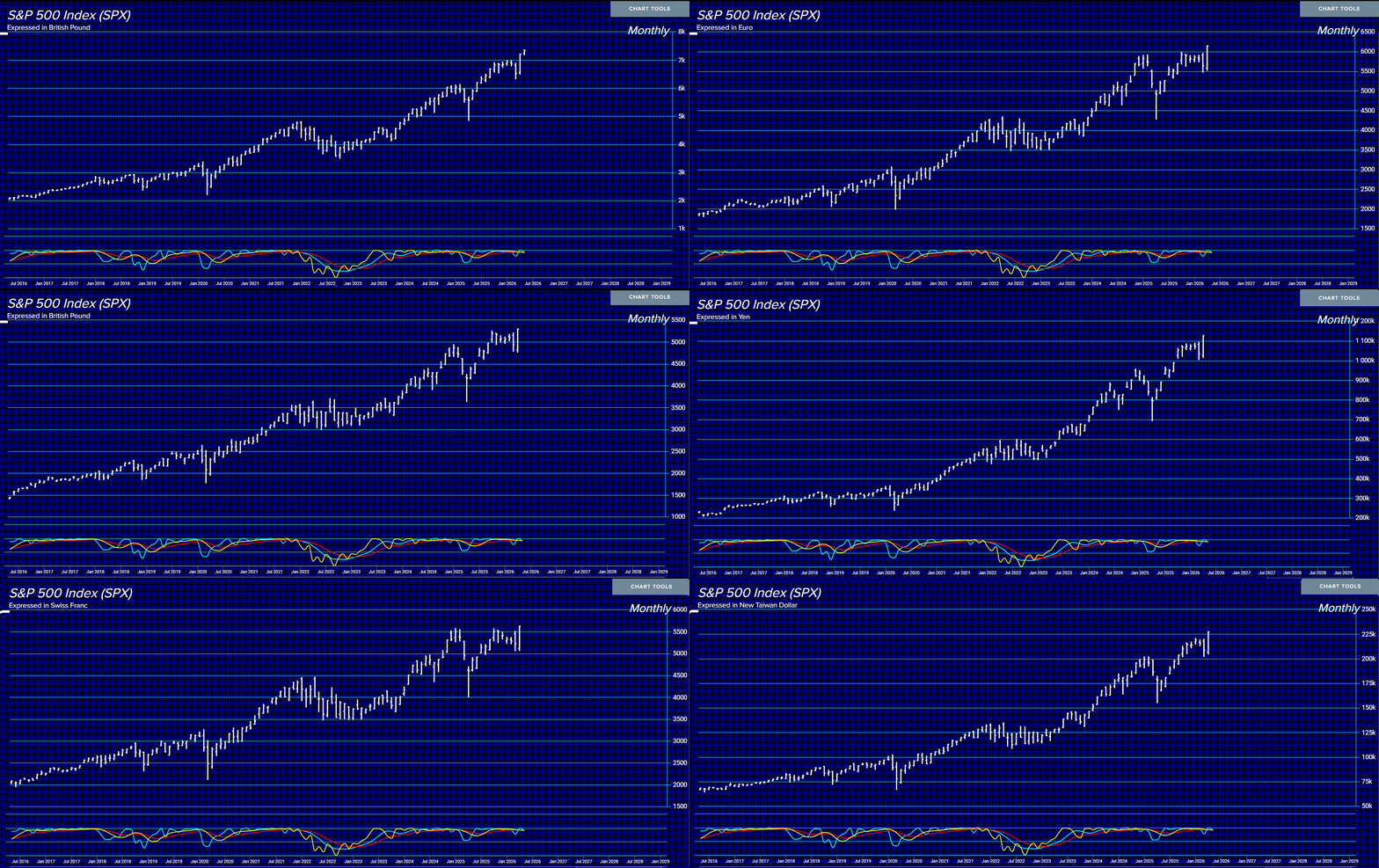
SP500 5 26

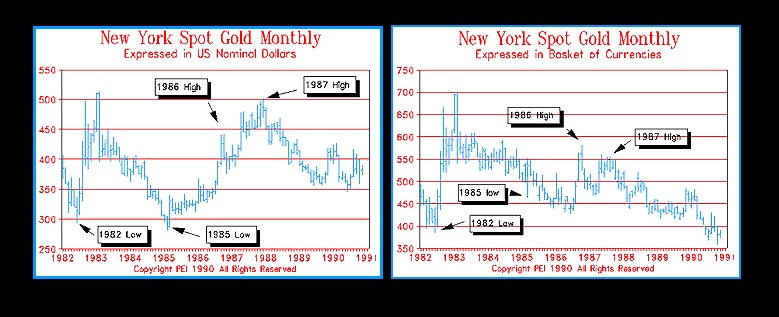
COMMENT: Mr. Armstrong, we never met. I was introduced to Socrates at the insistence of a friend at another one of our divisions. There was no 80% Crash on April 29. The whole de-dollarization seems to be another hype, as we have witnessed ourselves. Your system allows you to plot anything in any currency. I just have to comment that you are obviously a highly experienced trader, for it takes someone who has thrown their hat in the ring to actually come up with something useful rather than theory. Plotting the S&P across various currencies confirms the bull market, as you have consistently said. A bull market requires advancement in all currencies.

I understand you will be doing a Next Generation conference to teach the next generation how the world really works. I know our company has used you for many years. I am a recent addition. I just wanted to say that you have opened my eyes and transformed my career into something exciting.

God bless you, Mr. Armstrong, and thank you.

Robert

Add 1983
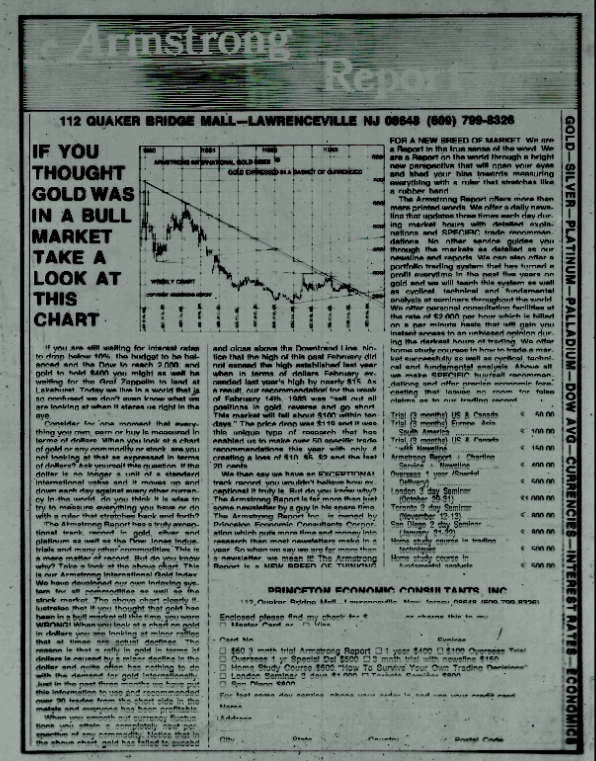
Basket Gold 1990

REPLY: Thank you very much. I know what you mean. When things are always evolving, it keeps you on your toes. Lillian Smith put it this way:

“When you stop learning, stop listening, stop looking and asking questions, always new questions, then it is time to die.”

My father took the family to Europe for the summer back in 1964. That taught me currency, for we traveled all over Europe, and back then, you had to change currencies at every border. That trip taught me more than anything in school, for not only did they never talk about currency because everything was at a fixed rate, but economics was not even a science. It was all really Marxism and Keynes projecting that government was wonderful, our savior, who would eliminate recessions and depressions, creating the path to economic utopia.

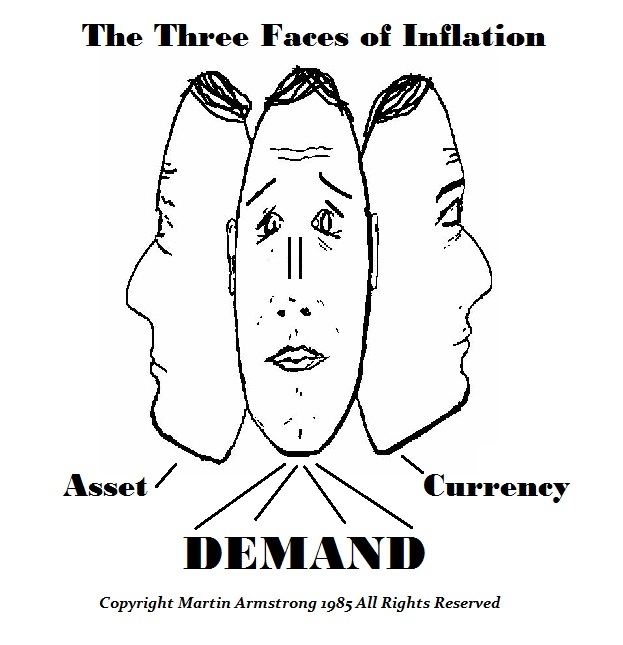
3FACESn of Inflation

It was currency that dragged me around the world and had companies and governments knocking on my door. It has been my clients who have taught me, not academia. I learned early on that a bull market is something that rises in all currencies – not just your local currency.  If your currency declines by 50%, your private assets will rise in proportion because everything has an international value.

Nikki GIF 1989

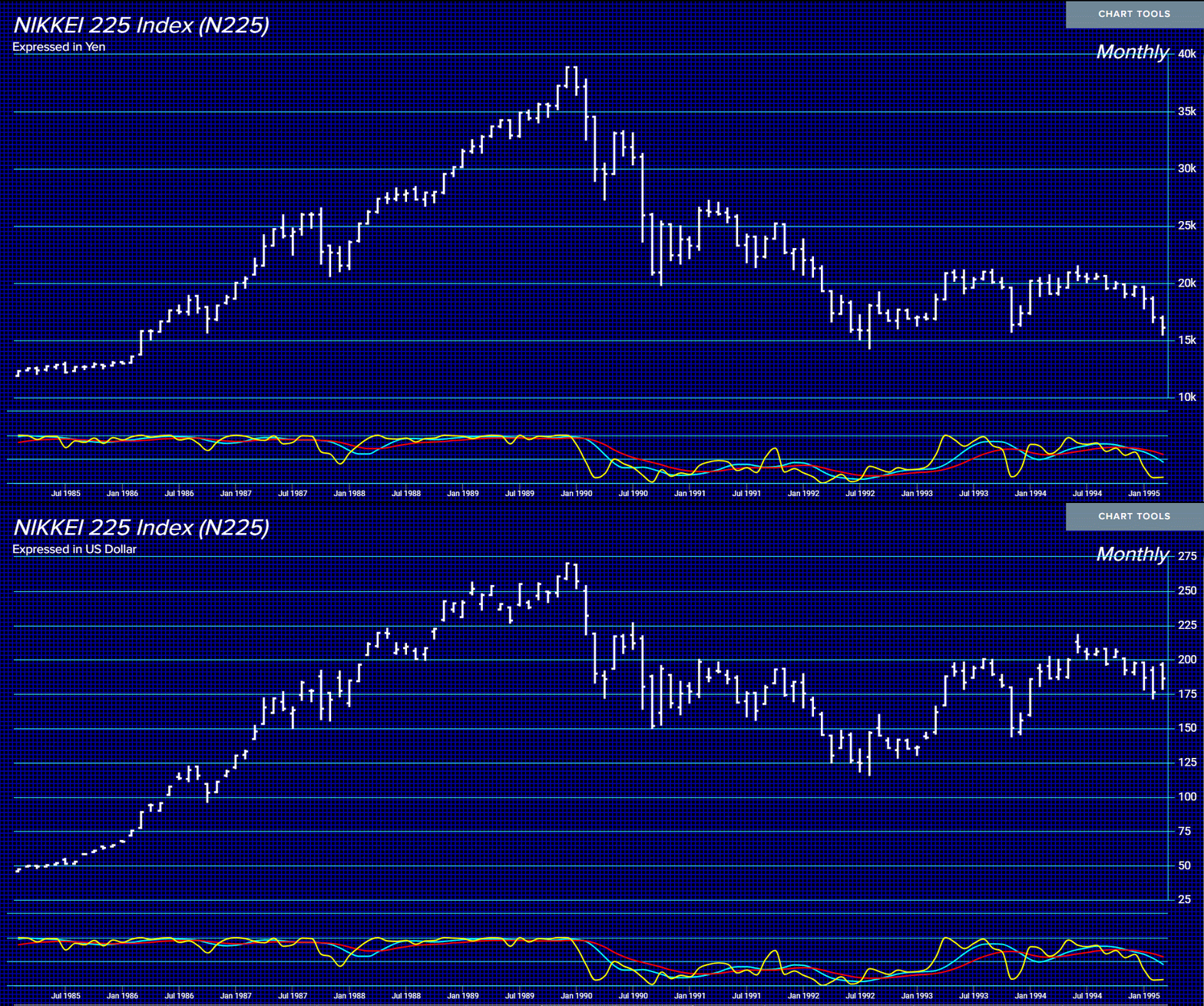
Not only does classical economics completely fail to keep up with the times, still entrenched in theories from the fixed exchange rate period, where they NEVER considered currency, but everything is based entirely on domestic analysis, void of international capital flows. Here is a chart of the famous 1989 Crash in Japan. Everyone will act out of their own self-interest, and that is measured through the eyes of their domestic currency. Note that the high took place in yen and dollars simultaneously.

Galbraith Great Crash
Hoover Loose Cannon

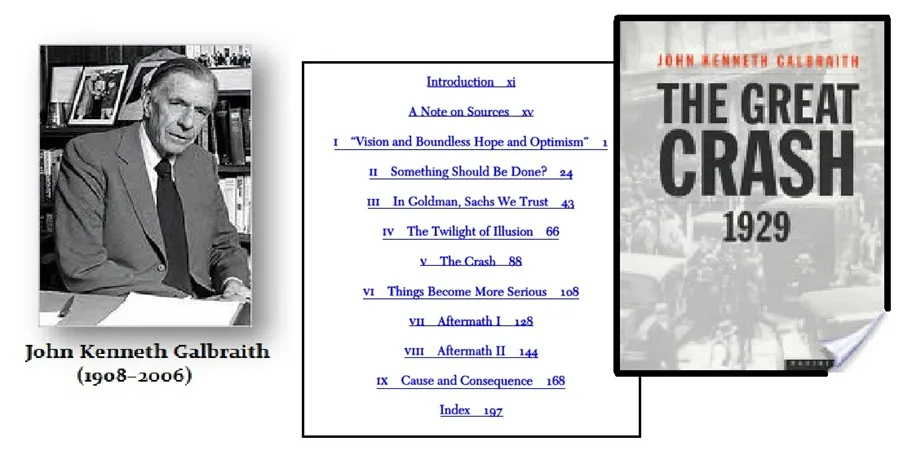
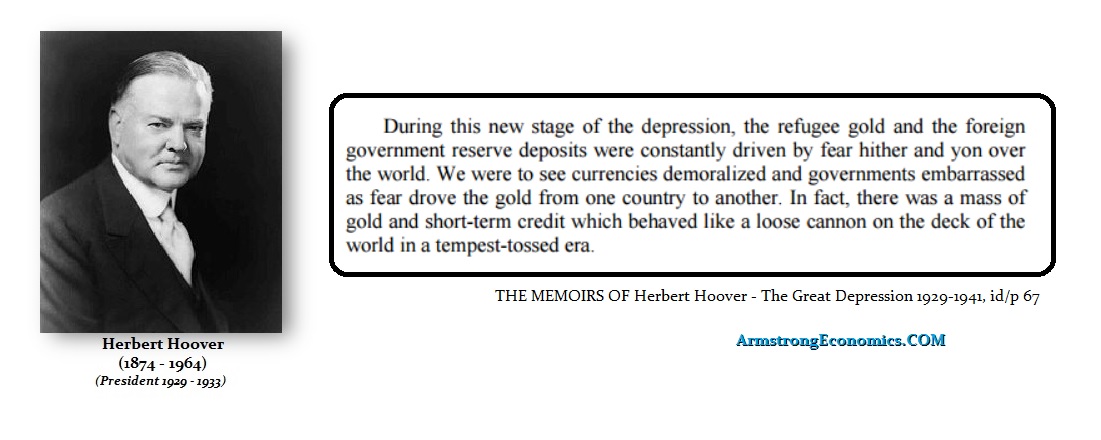
I quickly realized that what I was being taught in school was all lies and propaganda. I had to read Galbraith in school and came across Hoover’s Memoirs. It quickly surfaced that Galbraith was just a socialist who portrayed corporations as evil and the government as walking on water. He omitted everything about the Sovereign defaults of Europe, South America, and Asia. The LEFT rewrote history to support Marx. Nothing has changed. Formal education is a detriment. The Shah of Iran paid for the education of Iranians, sent them to the best universities in the US and UK, and they returned with a Marxist agenda mixed with Islam and staged the Revolution in 1979. It was that same LEFTIST hatred I saw in school that has led to the death of hundreds of millions and counting.

LongBranchNJ DepressionScrip

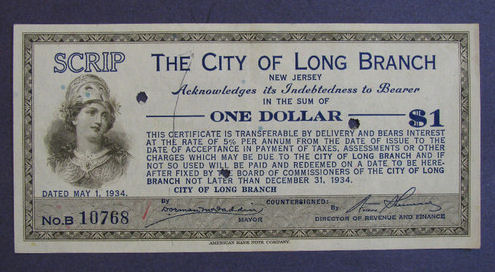
A real bull market is something rising in a broad basket of currencies. Then and only then do you see how markets truly respond. This 80% crash is nonsense. To achieve that, which is a repeat of 1929, so many things would have to be different. The US had a balanced budget in 1929. There was a cash shortage because the Fed feared inflation. Over 200 cities issued their own money due to the cash shortage, Milton Friedman pointed out.

1900 20 40

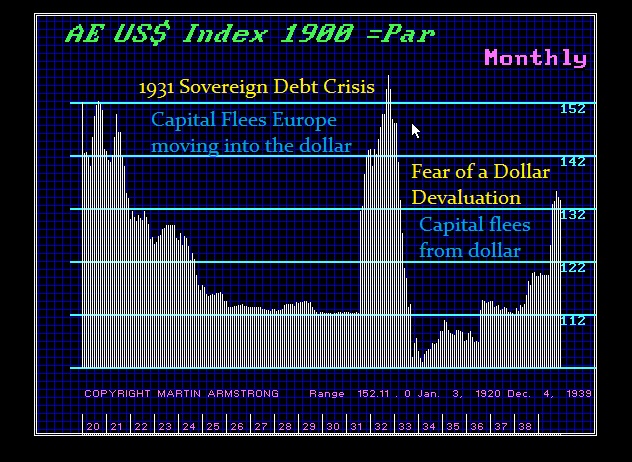
The market went down because the dollar rose to record highs and other countries defaulted on their debt. The Fed was terrified that the dollar would be next on the list of currencies to default, and it tried to keep the supply tight, causing deflation.

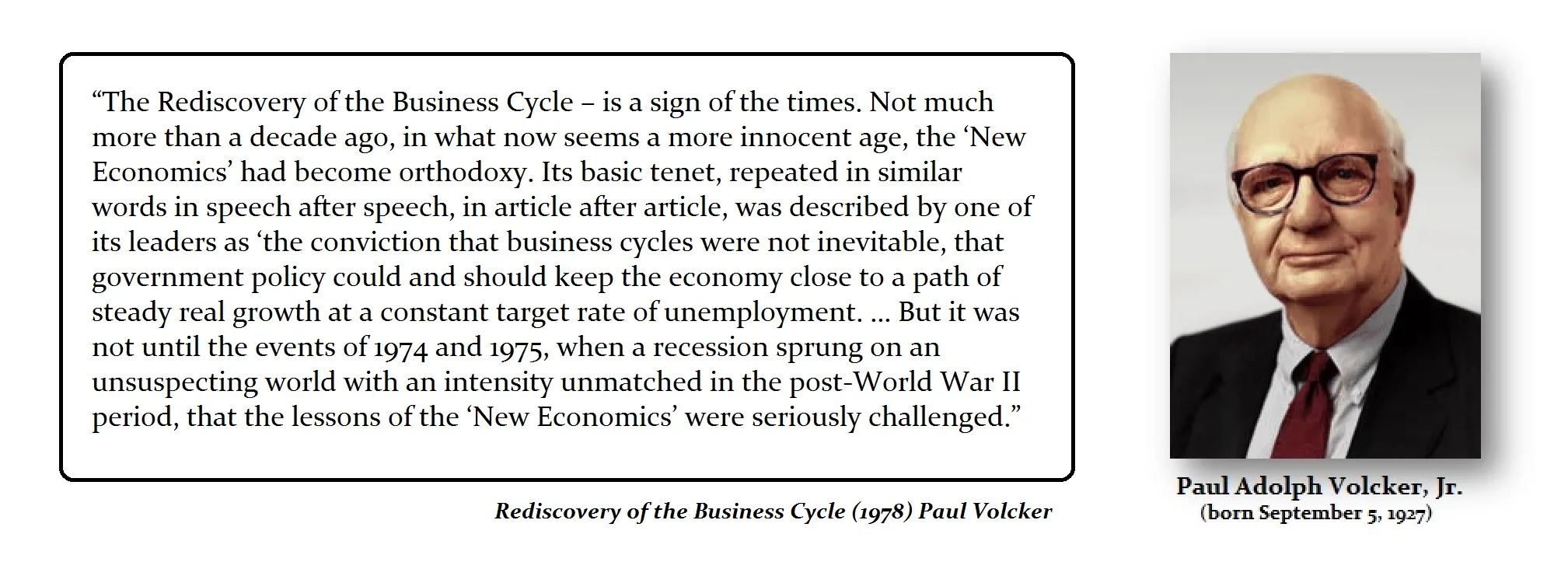
Volcker Rediscovery

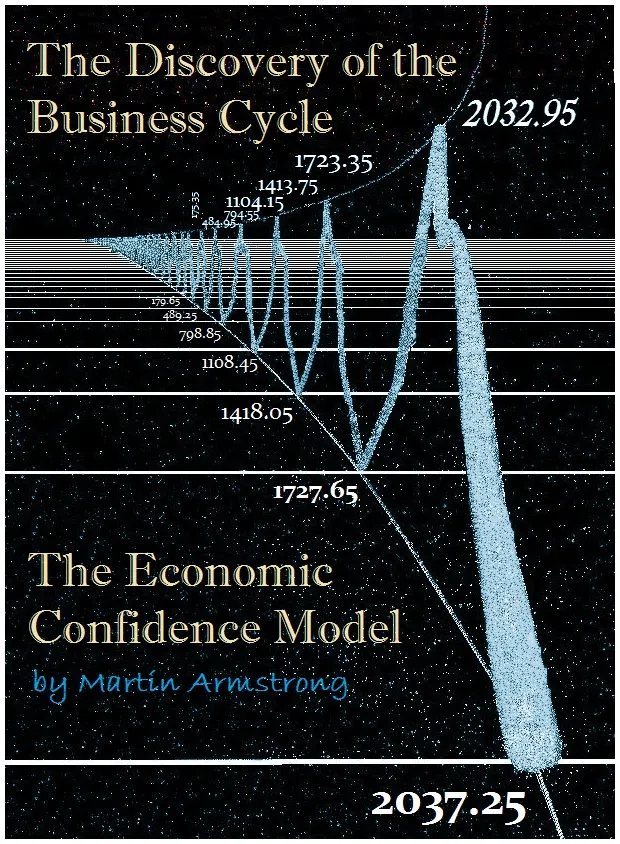
I had a discussion about the business cycle with Paul Volcker back in 1999. He, too, saw Keynesian Economics fail during the 1970s. He also agreed with my Economic Confidence Model and said he believed that the business cycle was about 8 years.

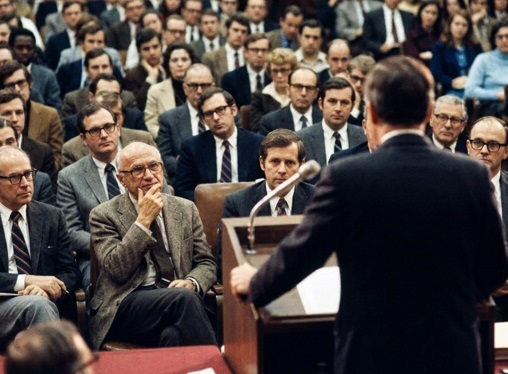
Milton Friedman in audience

It was Milton Friedman who came to listen to me speak, I believe it was a COMPUTRAC conference in Chicago. I was speaking about currency and capital flows, and when I was done, Milton came up, shook my hand, said that was the best speech he had ever heard, and that I was doing what he had just dreamed about. To say I was shocked is putting that mildly. I saw myself as just a trader.

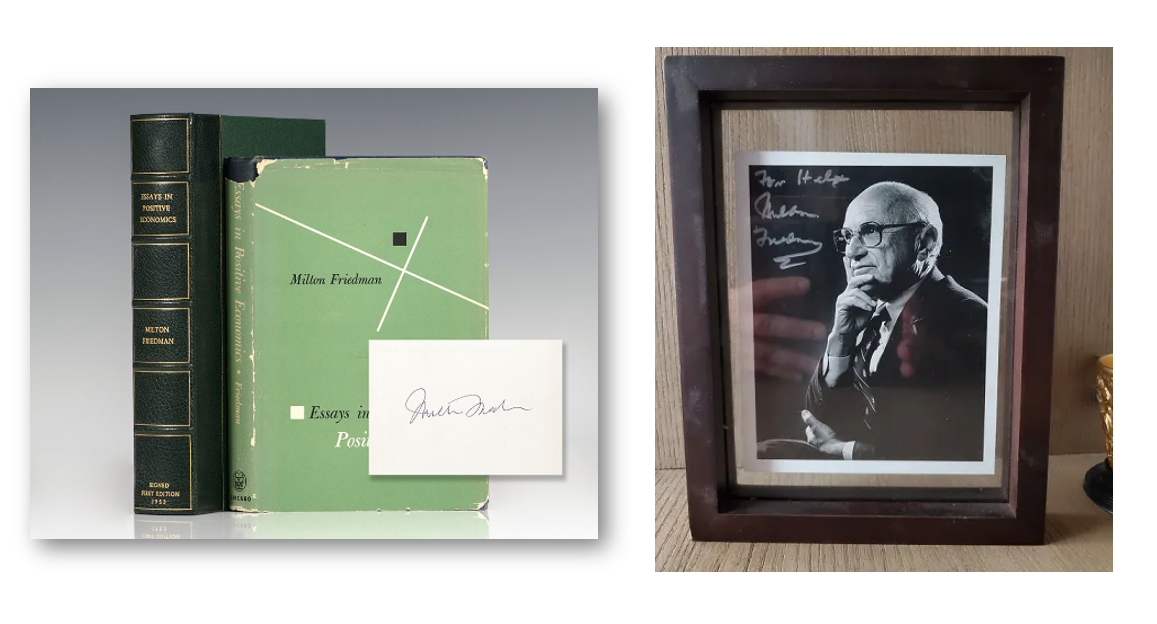
Milton Friedman 1953 Book

What Milton meant was that I was doing what he had just dreamed about, as he had seen in his mind a floating exchange in 1953, almost 20 years before it materialized. In 1953, Milton Friedman published a seminal essay titled “The Case for Flexible Exchange Rates,” where he strongly advocated for a system of floating exchange rates. At the time, the global monetary system was dominated by the Bretton Woods framework of fixed exchange rates. Milton argued that such a “pegged but adjustable” system was inherently unstable. He proposed flexible exchange rates as a superior solution, mainly because they could automatically adjust to economic shocks, helping to maintain both internal (e.g., full employment) and external (e.g., balance of trade) balances for a country.

Milton’s case for flexible rates was so influential that it presaged nearly all the major arguments that later scholars would make in favor of floating exchange rates. It was Milton who encouraged me and said what I was doing was important not just for trading, but for economics and the political world.

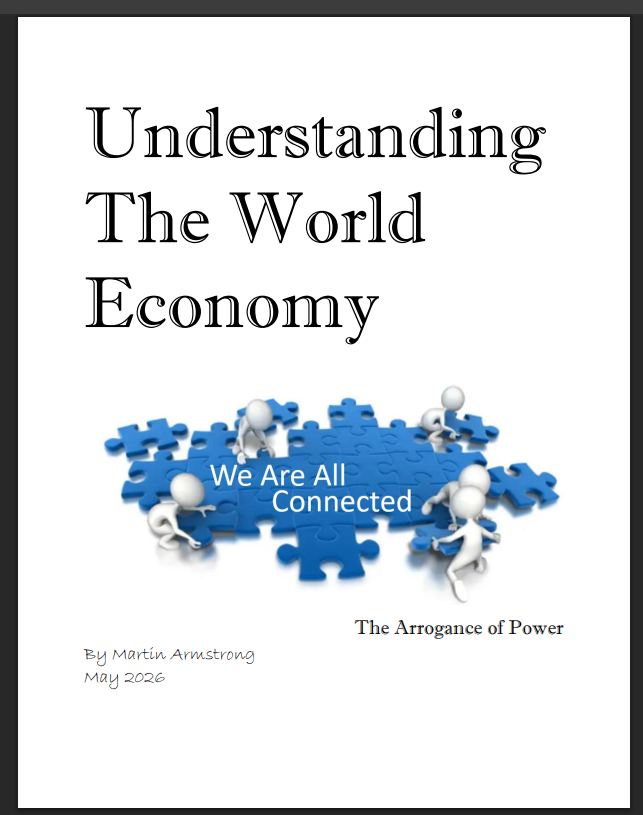
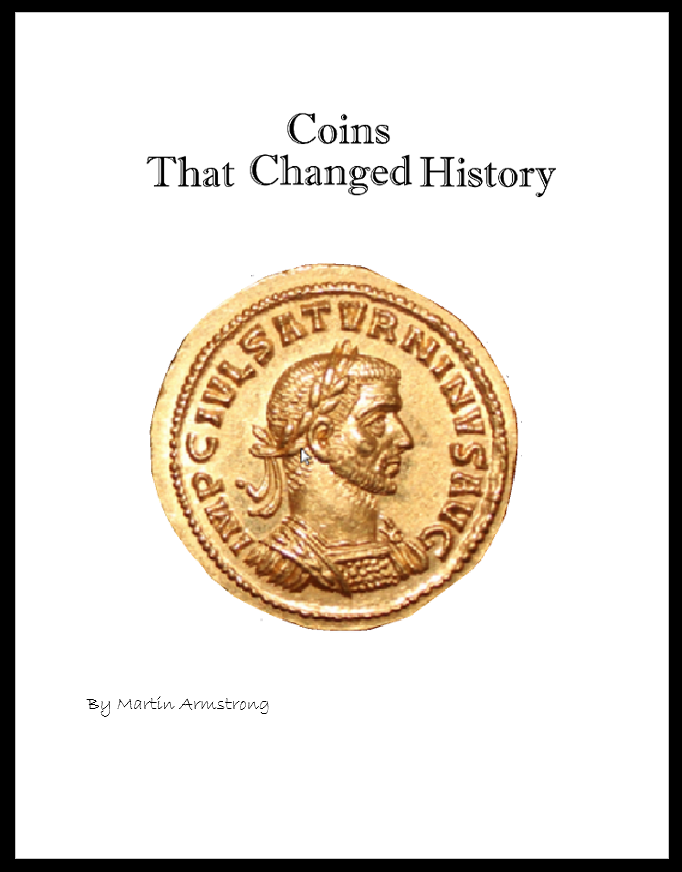
I am trying to finish these four books as my final gift. That with the next couple of movies (1), documentary (1), Hollywood film, I can say mission accomplished. I have always believed we are sent here for a purpose, and if we do not stare that destiny square in the eyes, then what is the purpose of being here?

NEXT_Generation_Understanding_World_Economy
Coins_That_Changed_History 2026
Geometry of Time
ECM Cover Blue

Why Some Economies Are Growing While Others Collapse in Real-Time


Posted originally on May 10, 2026 by Martin Armstrong |  

costoflivingcrisis

There is a pattern within the cost of living series based on a series of factors that directly contribute to the overall economic health of a population. What we are witnessing globally is not random. The same patterns continue to emerge regardless of the country, language, or political party in power. Nations that are expanding their middle class, attracting capital, building infrastructure, and maintaining affordable energy are experiencing economic growth in real time. Nations obsessed with debt expansion, climate extremism, endless war spending, uncontrolled migration, and taxation are watching their standard of living collapse before the public’s eyes.

The difference between success and decline is becoming visible on the streets. In the collapsing economies, people cannot afford homes, birth rates are imploding, young adults remain dependent on their parents well into their 30s, and governments continually invent new taxes to keep the system alive. In the rising economies, factories are being built, wages are climbing, infrastructure is expanding, and foreign capital is flowing inward.

This is ultimately a capital flow story. Capital always migrates to wherever it is treated best. Governments never seem to understand this because politicians assume wealth is trapped permanently inside their borders. It is not. Once governments begin punishing productivity while rewarding bureaucracy, capital quietly leaves.

Europe is the clearest example of economic self-destruction. Germany, once the industrial engine of Europe, has struggled with stagnant growth for years. Even the IMF now projects only modest recovery despite aggressive fiscal spending. The problem is structural. Germany built its industrial dominance on affordable energy, engineering, exports, and manufacturing. Then Europe declared war on fossil fuels while simultaneously sanctioning its largest source of cheap energy from Russia. You cannot run an industrial economy on ideology.

The same pattern is visible throughout Britain, Canada, and parts of Western Europe. Housing costs exploded while real wages failed to keep pace. Governments expanded bureaucracy while productivity slowed. Immigration surged far beyond infrastructure capacity, increasing pressure on housing, healthcare, transportation, and social services. The middle class was squeezed from every direction at once.

Japan demonstrates another side of the crisis. It is the demographic collapse model. An aging population, combined with decades of debt accumulation, has created an economy where the government survives largely through perpetual intervention. The Bank of Japan has distorted markets for decades simply trying to prevent the sovereign debt structure from imploding. Meanwhile, birth rates continue to collapse because younger generations no longer see financial security as achievable.

South Korea faces similar demographic pressures, but it also reveals another modern vulnerability: dependence on global supply chains and imported energy. Seoul recently introduced another major emergency budget package to offset rising oil prices and geopolitical instability tied to the Middle East conflict. Modern economies that lack domestic energy independence become extremely vulnerable during geopolitical crises.

economicexpansion

Then we look at the nations that are rising.

India continues expanding because it still possesses a young workforce, rising industrialization, and enormous internal demand. Manufacturing is steadily relocating away from Europe and China toward regions with lower costs and growing labor forces. India is benefiting directly from that shift. Global forecasts continue placing India among the fastest-growing major economies in the world.

Vietnam has become one of the clearest examples of capital migration. Multinational corporations moved production there to escape rising geopolitical tensions and higher costs elsewhere. Vietnam combined infrastructure spending, export manufacturing, and relatively stable economic policy to become one of Asia’s fastest-growing economies. Reuters recently reported that Vietnam aims for growth rates near 10% through 2030 while pouring roughly $200 billion into infrastructure projects.

Singapore succeeded because it understood something most Western governments forgot decades ago: stability attracts money. Low corruption, efficient infrastructure, strong property rights, and a pro-business environment consistently attract international capital. The government did not wage ideological war against productivity. It created conditions where business could thrive.

Mexico also benefited from global realignment. As corporations attempt to reduce dependence on China, manufacturing is increasingly moving closer to the United States through nearshoring. Mexico has enormous long-term potential because geography matters. Yet even there, sovereign debt risks and fiscal instability remain threats if spending spirals out of control.

What ties all the successful economies together is surprisingly simple. They still reward production over speculation. They invest in infrastructure instead of endless bureaucracy. They maintain access to affordable energy. They attract capital instead of demonizing it. Most importantly, they still possess some degree of optimism about the future.

Collapsing economies share the opposite characteristics. Rising taxes, shrinking birth rates, exploding debt, unaffordable housing, ideological regulation, and declining productivity create a death spiral. Governments then attempt to solve these problems by borrowing even more money, which only accelerates inflation and capital flight.

The sovereign debt crisis remains the core issue behind everything. The OECD recently warned that sovereign borrowing continues hitting record levels globally while interest expenditures remain near historic highs. Governments are increasingly trapped in a cycle where they must borrow simply to service prior debt obligations. Once that occurs, policy becomes entirely focused on maintaining confidence in government debt markets.

This is why we are seeing the divide between rising and collapsing nations widen so dramatically. Productive capital is abandoning regions where governments have become hostile toward growth itself. The world economy is fragmenting into two camps: nations still building for the future, and nations desperately trying to preserve systems that are mathematically unsustainable.

The average person feels this long before economists admit it. They feel it at the grocery store, in housing costs, in declining opportunities, and in the inability to build wealth. That is why people increasingly describe economic decline as something they experience “in real time.” The collapse is no longer hidden inside statistics. It has become part of daily life.

Interesting – During “Victory Day” Presser, Russian Federation President Putin Outlines Warning Call with President Trump to Exit Kiev


Posted originally on CTH on May 9, 2026 | Sundance |

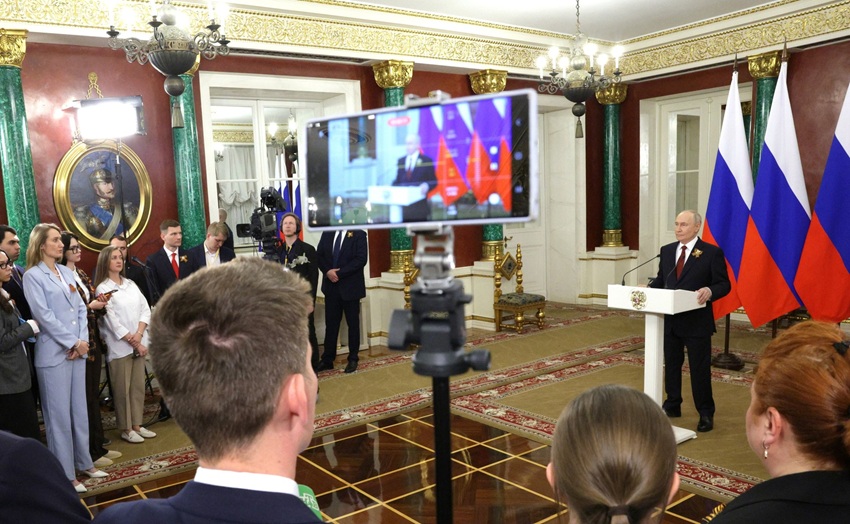
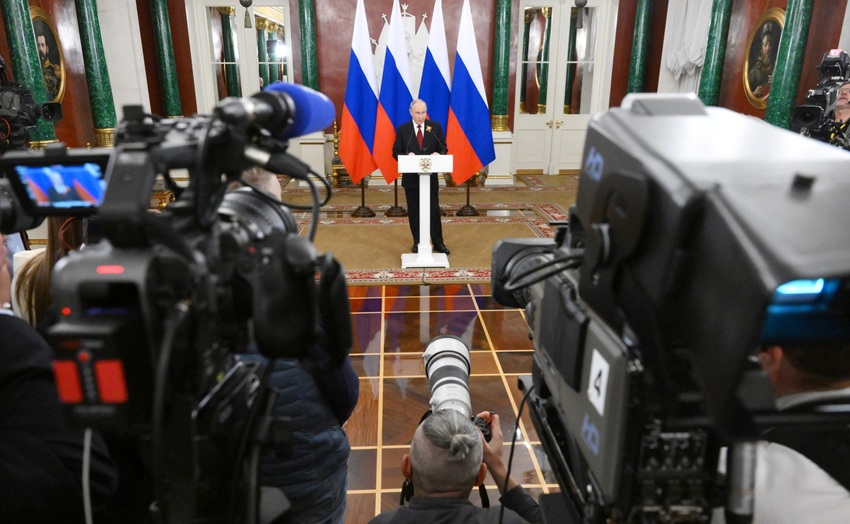
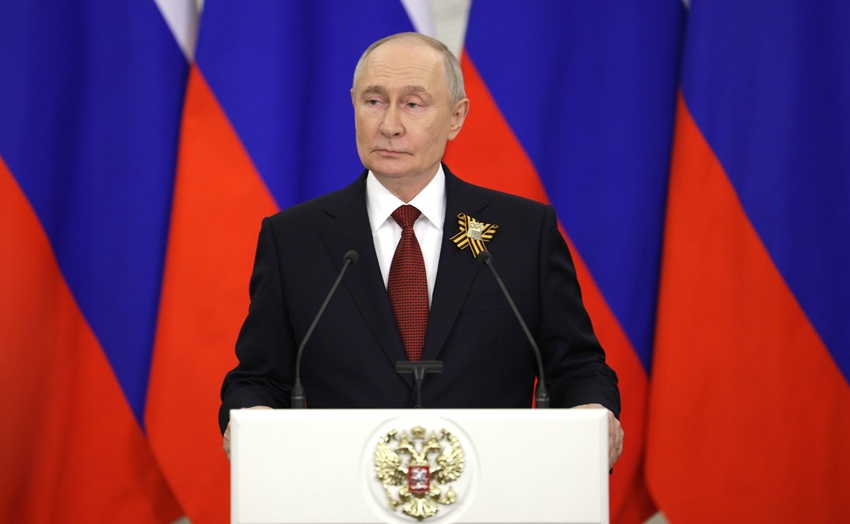
Reports are beginning to surface about Russian President Vladimir Putin saying the end to the special military operation in Ukraine is close.  I am embedding the full press conference video below as only part of his remarks has been translated and transcribed.

President Putin is asked for his overall impressions of the Victory Day events, and the context of the ceasefire against the backdrop of a request by U.S. President Donald Trump.  As with most things Russian, the nuance is often between the lines.

[RU Transcript] – “President of Russia Vladimir Putin: Good evening. Happy holiday once again, happy Victory Day.

Question: Let me start with today and the way you view it, if I may. Today is a great and momentous day. Earlier, US President Donald Trump came up with an initiative to declare a three-day ceasefire. You supported it, so did Zelensky. However, on the eve of May 9, there were still a number of grave and provocative statements coming from Kiev.

How would you assess today and the way events unfolded? Even the military parade was held in a somewhat reduced format due to security concerns. Could you share your overall assessment of the day? Were there any provocations?

Vladimir Putin: As for provocations, as you can see, I am here, and so far, the Defence Ministry has not reported anything of that nature to me, so I cannot comment on it.

Regarding the parade. You know that this year – which is not an anniversary year but nevertheless it is Victory Day – we decided that the celebrations would go ahead in any case but without a display of military hardware, and not for security concerns but primarily because the Armed Forces should focus on the decisive defeat of the enemy within the framework of the special military operation.”

“As for the provocative statements, all of those decisions had been made much earlier than all those provocative statements were issued, as you said.

As for the statements, we have responded to them, as you know. The Defence Ministry issued a certain initial statement – it is well known – that in case an attempt were made to disrupt our celebration events, we will respond with massive missile strikes on Kiev. Was there anything unclear about it? This is what was intended to be a response.

We did not limit ourselves to it. It was followed by a Foreign Ministry’s note, which is an official document, not just a declaration. But we did not stop there. We started working with our major partners and friends, primarily with our friends from the People’s Republic of China, India and some other nations, including with the US administration. What did this work involve? We simply presented our friends, colleagues, and partners with a picture of what the situation could develop into. We have no desire to worsen or damage relations with anyone. Such a situation could arise given that all the command and decision-making centres in Kiev are located in close proximity to the diplomatic missions of a number of countries – several dozen, in fact. That is precisely the issue. When we began this dialogue with the US administration, we drew their attention to this matter, outlined the potential consequences, and asked them to do everything necessary to ensure the security of their country’s diplomatic mission.

As a result of all these discussions, US President Donald Trump proposed an additional two-day ceasefire and a prisoner exchange during that period.

We immediately agreed to this proposal, particularly because, in my view, it was fully justified, motivated by respect for our shared victory over Nazism, and clearly humanitarian in nature.

By the way, a few days earlier, on May 5, we had also submitted a proposal for a prisoner exchange to the Ukrainian side and provided a list of 500 Ukrainian servicemen held in Russia. The initial response was that they needed to review the proposal more carefully – perhaps not all 500, but maybe 200 – and after that they effectively disappeared from contact and later stated directly that they were not prepared for such an exchange. They did not want it.

Therefore, when the proposal from US President Donald Trump was put forward, we, of course, immediately supported it. We hope that, in this case, the Ukrainian side will ultimately respond positively to the proposal of the US President. Unfortunately, so far, we have not received any response.”

Transcript to be continued.

First, Ukraine was/is apparently worried that returning prisoners may not be in alliance with Ukraine’s war effort.  Second, it appears the diplomatic warning provided by President Putin to President Trump was the impetus for Trump suggesting an extended ceasefire.  Third, from the way Putin is describing U.S. and Trump contact, it is reasonable to infer the lines of communication are very open.

[You can use the closed captioning option to review the full remarks if you want to get ahead of the transcript release.]