Posted originally on May 7, 2026 by Martin Armstrong |
Foreclosure filings across the United States have now climbed to their highest level in six years, with ATTOM reporting a 26% year-over-year increase as more homeowners fall behind on mortgage payments. Florida and Texas are leading the nation as rising property taxes, exploding insurance premiums, elevated interest rates, and mounting consumer debt place enormous strain on household finances.
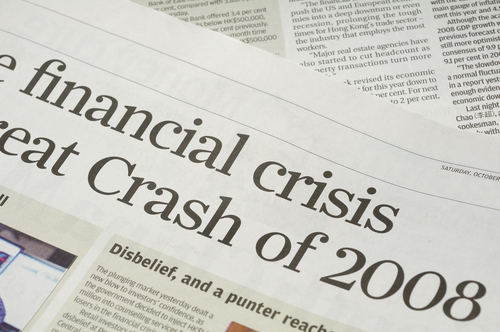
Naturally, many people immediately compare this situation to 2008, but I have said repeatedly that this is not the same type of housing crisis that unfolded during the Great Recession. The pressures today are real, but the structure underneath the market is fundamentally different.
Back in 2008, the problem centered on reckless leverage and toxic lending practices. Banks issued enormous quantities of adjustable-rate mortgages, no-income verification loans, interest-only products, and outright fraudulent mortgage structures to borrowers who never realistically had the capacity to repay long-term. Wall Street then packaged those loans into complex securities spread throughout the global financial system. Housing became the center of a massive debt pyramid built on artificial liquidity and speculation.
When interest rates reset higher and home prices stopped rising, the system collapsed violently because leverage existed everywhere simultaneously.
Entire neighborhoods became ghost towns. Foreclosure signs covered suburban streets. Construction halted. Banks failed. Millions lost their homes because borrowers had little equity, and many mortgages were structurally unsustainable from the beginning.
Today’s situation is different in several critical ways. Most homeowners locked in historically low fixed mortgage rates during the post-2020 period. Unlike 2008, the majority are not suddenly facing adjustable-rate payment shocks. Lending standards overall have also remained tighter than during the subprime era, with higher credit requirements and more documentation attached to mortgage approvals.
The problem now is affordability pressure rather than pure credit collapse. Americans are being squeezed by rising ownership costs surrounding the mortgage itself. Property taxes have surged in many states after pandemic-era valuation increases. Insurance premiums, especially in Florida, Texas, California, and coastal regions, have exploded as insurers absorb storm losses and increasingly abandon high-risk markets. Utility costs, HOA fees, maintenance expenses, and consumer debt burdens are all rising simultaneously.
In practical terms, homeowners may have low mortgage rates but still find total monthly ownership costs becoming unsustainable. Florida is one of the clearest examples. Many homeowners there now pay insurance premiums rivaling secondary mortgage payments annually. Some insurers left the market entirely, forcing homeowners into far more expensive state-backed coverage systems. At the same time, migration booms during the pandemic pushed housing prices sharply higher, leaving many recent buyers financially stretched near cyclical peaks.
This creates stress, but it is not identical to the systemic mortgage fraud structure underlying 2008. I have also said repeatedly that demographics matter enormously in housing. Unlike 2008, the United States still faces a structural housing shortage in many regions because construction slowed dramatically for years following the financial crisis. Millennials are now entering prime family formation years while inventory remains relatively constrained in many areas nationally. That underlying supply imbalance provides a degree of support that simply did not exist during the housing bubble era when overbuilding was rampant.
Many younger Americans simply cannot qualify for homes at current price levels and financing costs. Existing homeowners are reluctant to move because they would lose ultra-low mortgage rates if forced to refinance into higher-rate environments. Builders face higher financing costs and slowing buyer demand simultaneously.
The market is becoming frozen rather than collapsing outright. The bigger issue is broader economic pressure spreading underneath the surface. Credit card balances remain elevated, savings buffers have deteriorated for many households, delinquency rates are rising in portions of consumer credit markets, and the federal government itself faces an exploding debt burden as interest expenses surge higher.
That creates an environment where foreclosure activity can rise meaningfully even without a full-scale 2008-style implosion.
What we are seeing now is a slow deterioration in financial conditions rather than the sudden credit seizure that defined 2008. That distinction is extremely important because it means the stress may unfold over a longer period while still steadily eroding household stability and consumer confidence.
The housing market is weakening, but this cycle is being driven more by affordability exhaustion and economic pressure than by the toxic leverage structure that detonated during the Great Recession.
Posted originally on May 7, 2026 by Martin Armstrong |
The political class keeps insisting the British economy is stabilizing, but ordinary people are experiencing something completely different in real-time. A growing number of polls now show Britain becoming one of the most economically pessimistic countries in the developed world as households struggle under rising living costs, weak growth, higher taxes, energy inflation, and collapsing purchasing power.
Gallup recently found that only 19% of Britons believe economic conditions are improving, placing the United Kingdom among the gloomiest populations globally. Another survey found that 71% of UK adults expect the economy to worsen over the next year, while millions of households are already skipping meals because they simply cannot keep pace with rising costs. Those are depression-era behavioral patterns beginning to emerge inside a modern Western economy.
This is exactly what happens when governments destroy the middle class gradually through inflation and declining purchasing power.
Britain is now being squeezed from every direction simultaneously. Energy prices remain structurally elevated despite falling from peak crisis levels. Food inflation has permanently reset household budgets higher. Mortgage costs surged after interest rates climbed rapidly from the artificial zero-rate era. Rent costs continue rising aggressively. Council taxes, utility bills, insurance premiums, transportation costs, and debt payments are all eating away at disposable income.
The media still points to headline GDP numbers while ignoring the lived reality underneath the surface. Ordinary people do not judge the economy through government press releases. They judge it through grocery bills, electricity statements, housing costs, and whether their wages still cover basic living expenses at the end of the month.
Britain’s retail sector recently recorded its worst collapse in sales in more than 40 years. Consumer confidence remains near recessionary levels. Business investment has weakened sharply because companies no longer trust the long-term outlook. The country never fully recovered from the combined damage of lockdowns, energy shocks, inflation, and rising debt burdens.
The ECM projected Europe would enter a depressionary phase into 2028 because confidence in government and financial stability would steadily erode. Britain is now moving directly into that cycle. People feel the deterioration before official statistics fully reflect it because households experience inflation and declining living standards immediately.
The Bank of England cannot solve this problem through monetary policy. Lowering rates risks reigniting inflation while higher rates continue crushing affordability. Governments, meanwhile, keep expanding debt, military spending, migration costs, climate initiatives, and public obligations while growth underneath the surface weakens steadily.
The younger generation faces perhaps the bleakest outlook of all. Homeownership has become increasingly unattainable in large parts of the country. Real wages stagnated for years. Student debt burdens remain elevated. Many younger Britons now spend enormous portions of their income simply on rent, utilities, transportation, and food without building any meaningful long-term wealth.
That destroys confidence in the future itself. What people are feeling now is not merely a temporary slowdown. It is the long erosion of living standards after years of monetary manipulation, debt expansion, deindustrialization, and political mismanagement. Governments inflated asset prices while the real economy weakened steadily underneath.
Brits are feeling the collapse in real time because the pressure has finally reached household level. Once the middle class begins losing confidence broadly, political instability always follows shortly afterward.
Posted originally on May 7, 2026 by Martin Armstrong |
When former German Foreign Minister Joschka Fischer says openly, “I have my doubts about NATO’s survival,” people should understand the significance of that statement. This is not coming from some fringe anti-war activist or outsider. Fischer was one of the central architects of modern German foreign policy and one of the strongest advocates for NATO intervention during the Kosovo War. For someone like him to now question the survival of the alliance tells you how dramatically the geopolitical landscape has shifted.
What is unfolding now is precisely what I have warned about for years. NATO was always held together by a common enemy and by the financial and military dominance of the United States. Once confidence in American leadership begins to fracture, the alliance itself starts to weaken. Fischer admitted exactly that when he stated, “We simply cannot rely on the U.S. anymore in the future,” adding that the trust underpinning the trans-Atlantic alliance “is gone.”
That statement alone would have been unthinkable a decade ago. Europe built its entire postwar security structure around the assumption that the United States would always act as guarantor. Now European leaders are openly discussing creating a “European NATO,” expanding nuclear deterrence independently of Washington, and rebuilding military conscription. Fischer himself has called for mandatory military service and even advocated integrating British and French nuclear weapons into a European defense structure.
This is not happening because Europe suddenly became strong. It is happening because Europe realizes it has become vulnerable. The irony here is extraordinary. Fischer came from Germany’s Green movement, a political faction historically opposed to militarization and NATO expansion. Yet today he is demanding rearmament, nuclear deterrence, and a continental military structure because the geopolitical reality has changed completely. Even he now says suspending German conscription was a mistake.
What people fail to understand is that NATO was never designed to last forever. It was a Cold War structure created to contain the Soviet Union. After the Soviet collapse, NATO expanded anyway, continually moving eastward despite repeated warnings from Russia. I have written many times that once the Soviet Union fell, NATO lost its original purpose and transformed into a political instrument used to justify intervention and maintain American influence in Europe.
Fischer himself was deeply involved in that transition. He famously supported the NATO intervention in Kosovo in 1999, marking the first German combat deployment since World War II. At the time, NATO justified expansion and intervention under the banner of humanitarianism. But what began as a defensive alliance gradually evolved into an offensive geopolitical structure.
The United States is increasingly focused on Asia and domestic instability. Europe is facing economic stagnation, migration crises, energy shortages, and military insecurity simultaneously. Germany is now openly rearming. Poland is rapidly expanding its military. France is pushing strategic autonomy. Britain remains tied to Washington but is under severe economic pressure itself.
Fischer is effectively admitting that Europe no longer trusts the United States to act consistently over the long term. He specifically warned that even if another American president replaces Trump, “Who can guarantee that another Trump won’t come along four or eight years after that?” That is an extraordinary statement because it reveals the real issue, confidence has broken down.
Once trust collapses inside an alliance, every member begins planning independently. That is precisely why Europe is now discussing its own nuclear umbrella and independent military command structures. Those are not reforms inside NATO. Those are preparations for a post-NATO world. May 7, 2026 by Martin Armstrong |
Posted originally on CTH on May 6, 2026 | Sundance |
Susan Kokinda of Promethean Action PAC does a great job with this video presentation of how Canada is the tip of the spear in how the EU and Commonwealth are trying to undermine President Trump. In the background, this is where it becomes important for President Trump and President Putin to organize a strategic alliance.
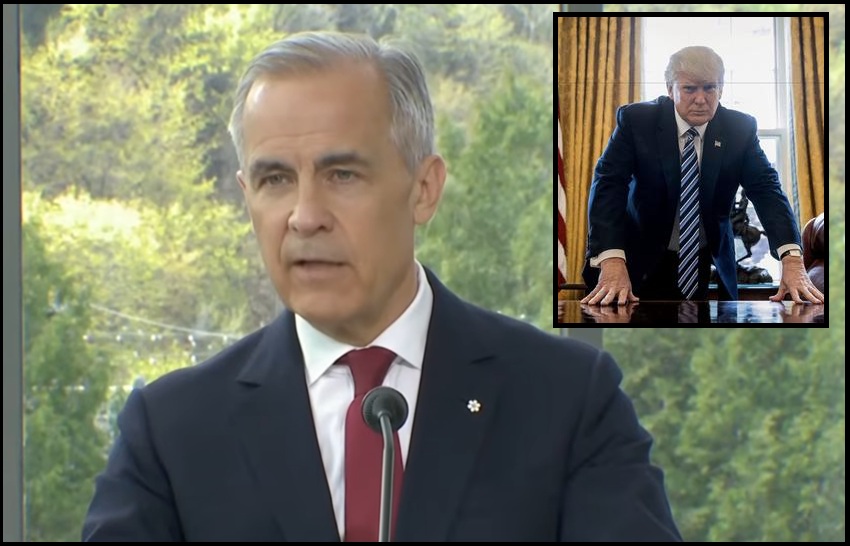
“As attention focused on President Trump’s Iran breakthrough, Canadian Prime Minister Mark Carney met European and Commonwealth leaders in Armenia and said the rules-based international order is over, arguing it will be rebuilt out of Europe around Canada, the EU, the UK, and Australia. The episode frames this as a rival power center consolidating against Trump’s America, then highlights Carney’s appointment of Louise Arbour as Canada’s Governor General, emphasizing the office’s powers and Arbour’s role as a UN tribunal prosecutor and advocate for creating the International Criminal Court, alongside references to George Soros’s Open Society support for the ICC and Jack Smith’s work there.
The script then covers a Trump administration press conference on beef, citing declining cattle numbers, ranch losses, and consolidation among four meatpackers controlling 85% of processing, and links this to decades of cartelization and foreign influence in food and commodities.”
I have created this site to help people have fun in the kitchen. I write about enjoying life both in and out of my kitchen. Life is short! Make the most of it and enjoy!
This is a library of News Events not reported by the Main Stream Media documenting & connecting the dots on How the Obama Marxist Liberal agenda is destroying America