Posted originally on the CTH on October 7, 2026 | Sundance |
President Trump is holding a midterm MAGA rally in San Antonio, Texas today. The anticipated start time for President Trump’s remarks is 7:00pm ET with livestream links below.
Posted originally on the CTH on October 7, 2026 | Sundance
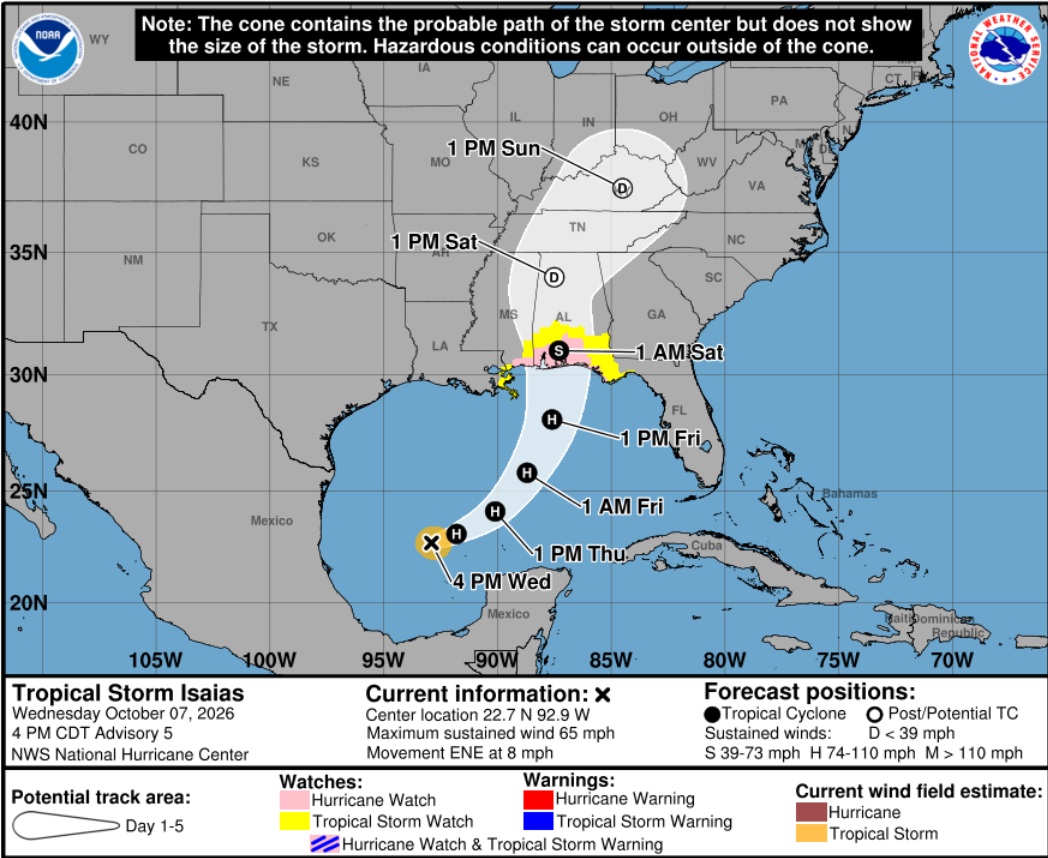
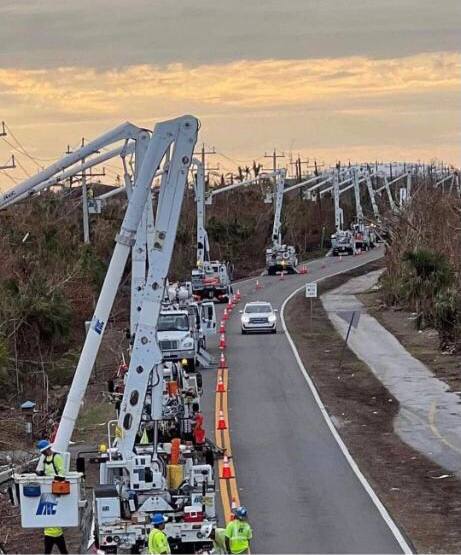
Tropical Storm Isaias is forecast to track northeastward and quickly ramp up to a hurricane while over the central Gulf in the next several hours. Landfall along the central Gulf Coast is expected Friday night or Saturday morning as a strong Category 2 storm. Residents in the FL panhandle, MS, LA and AL should pay attention to local forecasts.
A hurricane watch is in effect from Bay St. Louis, Mississippi, to Indian Pass, Florida. A storm surge watch is in effect from the mouth of the Mississippi River in Louisiana to Yankeetown, Florida. {Nat Hurricane Center} Those in the forecast areas are strongly advised to pay close attention to local officials and heed all evacuation orders.
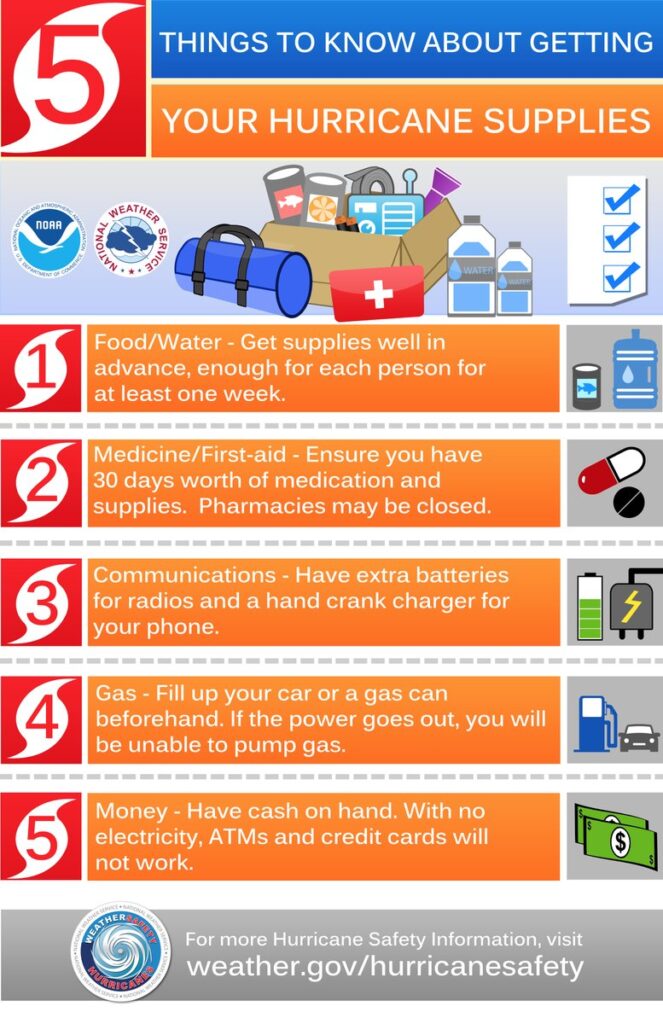
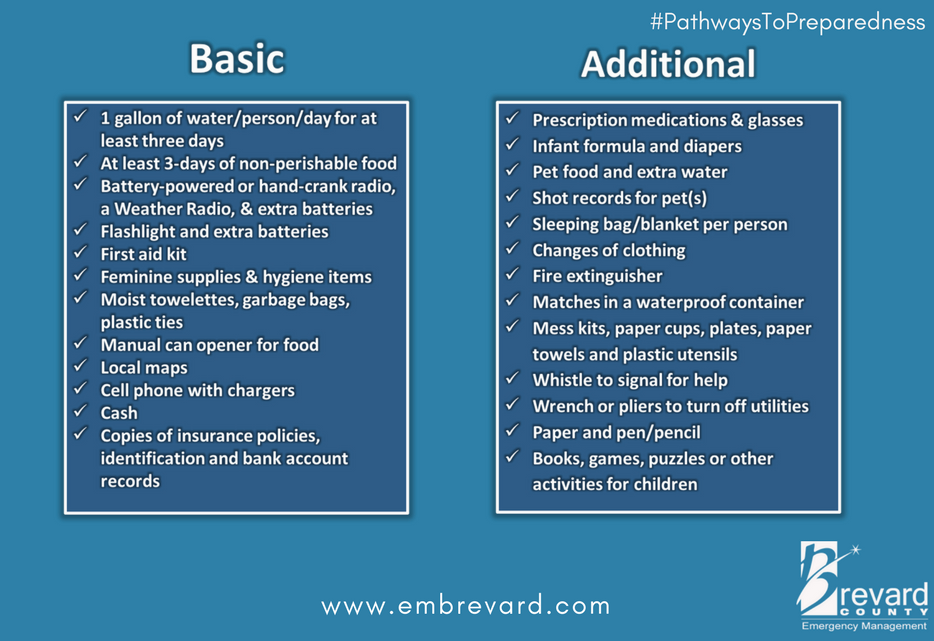
Check your hurricane supplies of shelf-stable food, water, medicine and don’t forget pets. Prepare for the worst and hope for the best. Everything is replaceable, except you and your family. We have a lot of Treepers in the path of this storm. If you need assistance, use the comments section of any ‘Isaias Update thread’ to reach out, or use the email address in the upper right of the site.
Right now, you are in control. Have a solid plan, work that plan – stay busy, and don’t get caught up in the hysteria. Try to avoid national media hype. Stay updated via your local news stations. Friday morning looks like the key day impact zones will be identified. Reach out to your neighbors; touch-base and check to see if they are okay or need anything. Community restoration begins before the storm arrives. Look out for each-other.
Remember the inland lessons in Tennessee and Western North Carolina from Hurricane Helene. Regarding any evacuation plan, please pay attention to your local officials who will be coordinating with state Dept. of Transportation. As the path and impact zone of the storm becomes more predictable your local officials will alert to best route(s) for evacuation.
For those in the cone of uncertainty; remember, planning and proactive measures taken now can significantly reduce stress in the days ahead. Plan when to make the best decision on any evacuation (if needed) consider Friday morning the decision timeframe. As a general rule: take cover from wind – but evacuate away from water.
DAY ONE (Wednesday)
Determine Your Risk
Make a Written Plan
Develop and Evacuation Plan
Inventory hurricane/storm supplies.
Withdraw cash based on plan/need.
Get gas and storm supplies
DAY TWO (Thursday)
Get Storm Update
Assemble and Purchase Hurricane Supplies
Contact Insurance Company – Updates
Secure Important Papers.
Update/upload your phone data.
Strengthen and Secure Your Home
Discuss Evacuation Decision with your Family.
Fill freezer with 3/4 full water jugs.
DAY THREE (Friday)
Get Storm Update
Re-Evaluate your Supplies based on storm update
Finish last minute preparation
Plan for a minimum of THREE DAYS without power
Assist Your Neighbors
If Needed – Evacuate Your Family
.
Communication is important. Update your friends and family contact list. Stay in touch with family and friends, let them know your plans. Select a single point of contact for communication from you that all others can then contact for updates if needed.
Today/tomorrow are good days to organize your important papers, insurance forms, personal papers and place them in one ‘ready-to-go’ location.
Evaluate your personal hurricane and storm supplies; update and replace anything you might have used. Assess, modify and/or update any possible evacuation plans based on your location, and/or any changes to your family status. Fill car with gasoline. Review prescriptions, refill if needed.
Check your shutters and window coverings; test your generator; re-organize and familiarize yourself with all of your supplies and hardware. Check batteries in portable tools; locate tools you might need; walk your property to consider what you may need to do based on the storms path. All decisions are yours. You are in control.
Consider travel plans based on roads and traffic density. Being proactive now helps to keep any future stress level low. You are in control. If you have pets, additional plans may be needed.
One possible proactive measure is to make a hotel reservation further inland that you would consider evacuating to. Follow updates of the storms’ progress; make reservations tonight or tomorrow if determined; you can always cancel if not needed. It is better to have a secondary evacuation place established in advance. Being proactive reduces stress. Even if you wait until much later to cancel, it is better to pay a cancellation fee (usually one night charge) than to not have a plan on where to go. Trust me, it’s worth it. Protect your family. Make the booking decision in the next 36 hrs.
Most of you know I personally have a great deal of experience with Hurricanes and the aftermath therein. So, here’s a whole bunch of information from my personal experience with Ian. Consider it an information buffet, take what is pertinent to your situation, disregard what is not.
The ‘context’ of Ian was shared previously {Go Deep}. What follows below are things to consider if you are prepping for a hurricane impact and/or deciding whether to stay in your home or evacuate. Standard hurricane preparations should always be followed. Protect your family, secure your property and belongings, and prepare for the aftermath.
What you do before the hurricane hits is going to determine where you are in the recovery phase.
Additionally, and this should be emphasized and discussed within your family, if you cannot be self-sufficient in the aftermath – for any reason, then you should evacuate.
Self-sufficiency in this context requires being able to cope for up to several weeks:
(1) potentially without power; (2) potentially without potable running water (3) potentially without internet service; (4) potentially without communication outside the region; and (5) with limited municipal and private sector assistance. If you decide you cannot deal with these outcomes, you should evacuate.
Additionally, as a family or individual, you should also honestly evaluate:
(1) your physical abilities; (2) your emotional and psychological ability to withstand extreme pressures; and (3) your comfort in losing daily routines, familiar schedules and often overlooked things you might take for granted.
Post hurricane recovery is fraught with stress, frustration and unforeseeable challenges.
I saw a video presented by a structural engineer who was sharing his experience with Hurricane Ian. I am going to use his video for a few references because even with professional credentials, some of the common mistakes people make are highlighted in his experience. Keep in mind his video is taken about 30 miles inland from where the majority impact area (coastal region) is located.
The video below was shot from the soft side (western side) of the storm, and if we were to scale the difference between his experience and a person who was located in/around Fort Myers Beach, Sanibel, Pine Island or Cape Coral, he would be around a “5” on a ten-point impact scale.
Meaning the severity of conditions 30 miles southeast of him was twice as severe as his inland experience.
Key Points – At the 21: 35 moment (prompted), notice how his #2 vehicle is parked outside. Also, at the 22:00 minute moment, notice what he is describing and showing with his garage door and how his #1 vehicle (a pickup truck) is positioned inside the garage. WATCH:
.
♦ This is exactly what I was talking about in hurricane preparation when discussing the garage door. If that videographer was located 30 miles southeast, and/or his house was positioned facing West, instead of North, his garage door would have failed. If you lose the garage door, YOU COULD LOSE YOUR ROOF.
You can always tell those people who have been through direct hurricane impacts by how they parked their cars. I have never included this in the hurricane advice before so it’s worth a mention. If you lose your Florida garage door you will more than likely lose your roof. That’s just the reality of having a massive opening in your structure to 150 mph winds that will lift the trusses.
If you have two vehicles, put one vehicle inside the garage with the front bumper against the door to help stop the flex (do this carefully). Put the other vehicle outside blocking the garage door facing down the driveway or facing parallel to the garage. The goal is to use the aero dynamics of the car to push the wind away from the door and provide protection.
Purchase a cheap car cover to protect the outside vehicle and/or use old blankets (cable ties, bungee cords) to stop the outside vehicle from getting sandblasted and destroyed. Place double folded corrugated cardboard in front of the radiator to protect it from storm debris.
Additionally, if you live in a flood zone, or if you are concerned about storm surge, the day before impact take your #1 car to the nearest airport or hotel with a parking garage and park in the upper levels. Take an uber back home if you don’t have a friend or partner to help you. This way you know you will have one workable vehicle, just in case.
♦ Another lesson from Ian, if you drive an electric vehicle and sustain saltwater intrusion (of any level) your car is not safe. Saltwater makes the vehicle batteries extremely dangerous, and they could spark or catch fire. Multiple homes survived Hurricane Ian only to have the electric car catch fire in the garage and burn the house to the ground. Hurricane rain is saltwater rain. The fire department was begging people to put their ev’s outside and not to plug them in. Dozens of ev’s also erupted in flames while driving down the streets after the storm.
Back to the video above…
♦ Notice at 24:30 of the video this professional structural engineer is standing and physically supporting his glass patio doors, with his wife, trying to keep them from breaking in due to wind and pressure changes. DO NOT DO THIS ! That is beyond dangerous. Any small item of debris (even a small twig or branch) could hit that window and shatter it, turning flying glass into instant flying blades.
Put 3/4-inch plywood or steel bolted hurricane shutters over all your windows and doors. Period. This is not an option. My steel bolted hurricane shutters were hit with debris so hard – whatever it was physically dented the steel. Every window and door need to be covered and protected, especially glass patio doors (even if tempered). Do not think you can stand there and protect glass doors. It’s beyond dangerous.
♦ Hardening your home is a matter of careful thought and physical work. However, every opening into your structure must be protected, leaving yourself with one small exit opportunity just in case. Hopefully you have a bolted door with no glass windows you can use as an emergency exit. If not, select a small window and leave only enough room uncovered for you to get out in case of emergency or structural collapse.
Beyond the ordinary supplies like drinking water, batteries, flashlights, battery or hand-crank radio, generators, gasoline, etc. Evaluate the scale of what you have against the likelihood of weeks without power or water. A few pro tips below:
♦ Put three 30-gallon trash cans in the shower and fill them with water before the storm. This will give you 90 gallons of water for cooking and personal hygiene. You will also need water to manually flush your toilets. Bottled water is great for drinking, hydrating and toothbrushing, but you will need much more potable water if the municipal supply is compromised or broken.
♦ A standard 6,500-to-8,500-watt generator will run for approximately 8 hours on five gallons of gasoline. Do not run it all the time. Turn it on, chill the fridge, make coffee, use the microwave or charge stuff, then turn it off. Do this in 4-hour shifts and the fridge will be ok and your gasoline will last longer. Gasoline is a scarce and rare commodity in the aftermath of a hurricane. Gas stations don’t work without power. Check the oil in the generator every few days. Also, have a can of quick start or butane available in case the generator starts acting up.
♦ Extension cords. If you are purchasing them buy at least one 100 to 150′ extension cord with a triple ponytail. This way you can use one cord into a central location to charge up your electronic devices. Establish a central recharging station for phones, pads, laptops, and rechargeable stuff.
♦ Purchase a box of “contractor garbage bags” and just keep them in the garage. These are large, thick, industrial trash bags that fit 40-gallon drums. They can be used for trash, or even cut open for tarps in the aftermath of a storm. These thick mil contractor bags have multiple uses following a hurricane.
♦ Do all of your laundry before the hurricane hits. You will likely not have the ability again for a few weeks.
♦ Cook a week’s worth of meals in advance of the hurricane. Store in fridge so you can microwave for a meal. Eating a constant diet of sandwiches gets old after the first week. Dinty Moore canned beef stew and or Chef-boy-ardee raviolis can make a nice break…. anything, except another sandwich.
♦ Have bleach for use in disinfecting stuff before and after a hurricane. Also have antibiotics and antiseptics for use. Hygiene and not getting simple infections after a hurricane is critical and often forgotten. Again, this is where the extra potable water becomes important. Simple cuts and scrapes become big deals when clean potable water is not regularly available. Keep your scrapes and abrasions clean and use antiseptic creams immediately.
♦ Do not forget sunscreen and things to relieve muscle aches and pains. Hurricane recovery involves physical effort. You will be sore and/or exposed to the elements. Remember, it’s all about self-sufficiency because the normal services are not available. A well-equipped first aid kit is a must have.
♦ Buy a small camping stove. Nothing big or expensive, just something you can cook on outside in case of emergency. It will be a luxury when you are 2+ weeks without power and all the stores and restaurants are closed for miles.
♦ Those small flashlights that you can strap around your head that take a few AAA batteries? Yup, GOLD. Those types of handsfree flashlights are lifesavers inside and outside when you need to see your way around. Nighttime is especially dark without electricity in the entire town. Doing stuff like filling a generator with gasoline in the middle of the night is much easier with one of those head strap flashlights. Strongly advise getting a few, they’re inexpensive too.
♦ Cash. You will need it. Without power anything you may need to purchase will require cash, especially gasoline. Additionally, anyone you hire to help or support your immediate efforts will need to be paid. Cash is critical. How much, depends on your individual situation, but your cash burn rate will likely go into the thousands in the first few days. Also keep in mind, you may or may not be able to work and without internet access even getting funds into place could be challenging.
♦ Hardware. A box of self-tapping sheet metal screws (short and long) is important, along with a box or two of various wood screws or Tyvex screws. A battery drill or screw gun is another necessity. Check all of this stuff during hurricane prep.
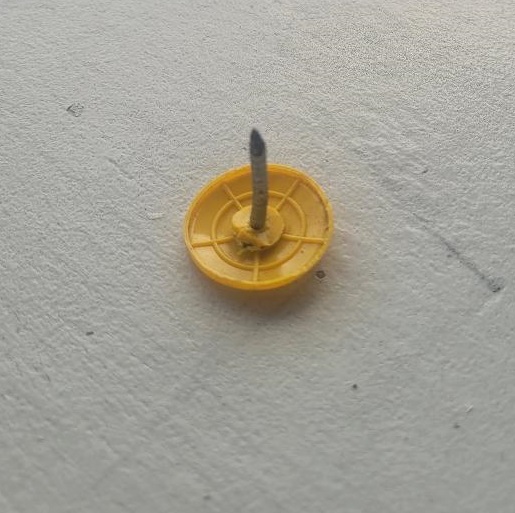
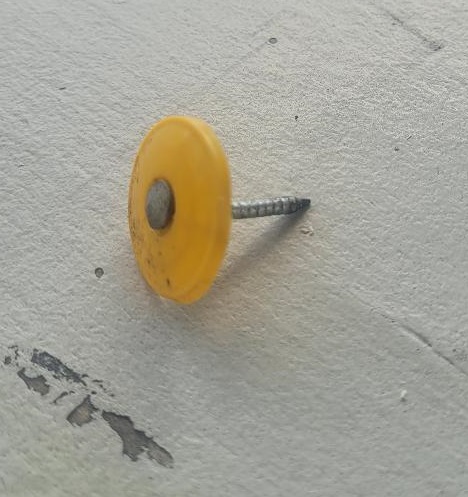
♦ ADD. I forget my #1 personal nemesis in the aftermath (pictured below):
Roofing nails. The pesky roofing nails. Thousands of em’, all over. Those buggers are everywhere, and they will go through a flip-flop, sneaker sole or car tire perfectly. Most of them are black (not yellow) like the ones above. Some of them have squared-off flat tops to help them stand up just perfect to find your tires.
I happen to believe roofing nails are actually tire magnets with some sort of automatic triggering system to jump in front of your car at the worst possible moments. On the positive side, I think my neighborhood is safe because my tires pick up every one of em’. LOL and Grrrr…
Posted originally on the CTH on October 7, 2026 | Sundance |
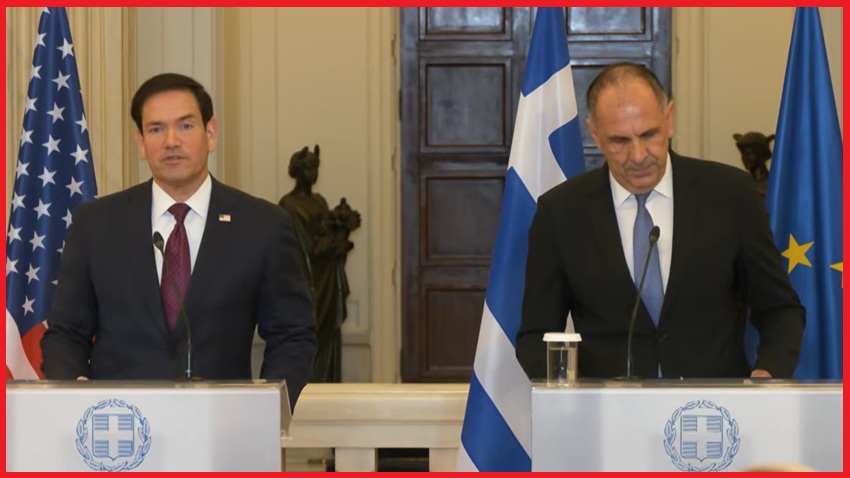
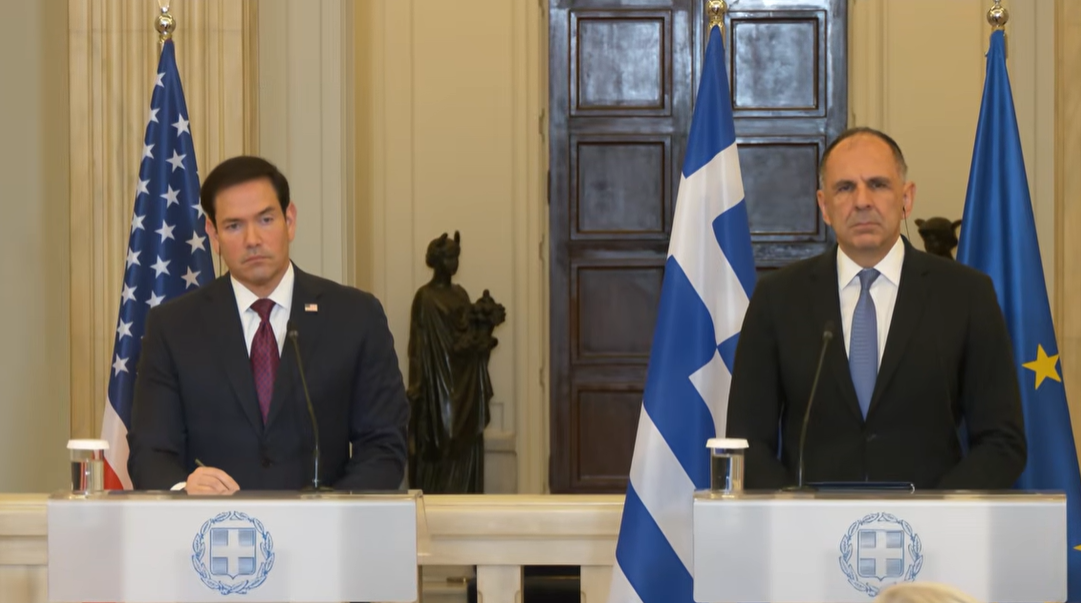
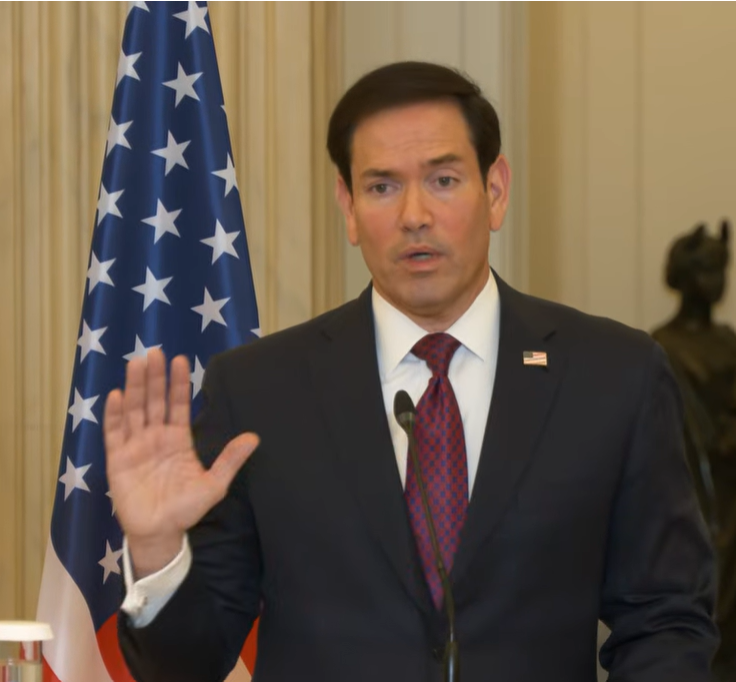
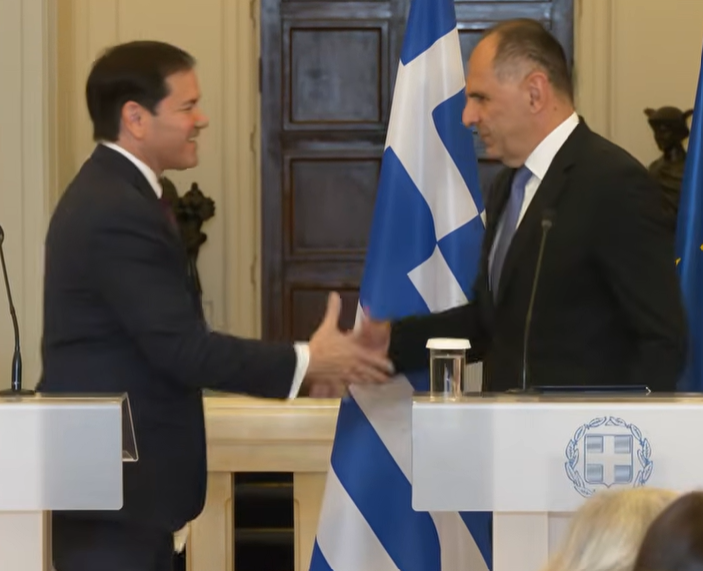
Secretary of State Marco Rubio held a press conference with Giorgos Gerapetritis, the Greek Foreign Minister earlier today. Rubio is on a three-nation strategic alliance tour of Iceland, Greece and Portugal.
The video and transcript of the press remarks and questions are below.
[Transcript] – SECRETARY RUBIO: Thank you. Thank you for your welcome. It’s actually great to be here to have our sixth Strategic Dialogue, which is ongoing, and we’ve begun downstairs a few minutes ago. It’s an event where our two countries commit to continue to work together on a range of issues.
We are two countries that are bound by a common heritage and by proud histories. The United States and Greece share a long history of friendship and partnership and alliance. In fact, the importance of this historical alliance is highlighted by the instability in the world today that we see as a result of conflicts in Hormuz with Iran, or the conflicts in the Red Sea with – in Yemen, or the conflicts in Ukraine and Russia. As you see a world that faces these destabilizing events, you recognize how important this alliance with Greece is to the United States.
It’s both historic – historical in its foundation, but it is also critical. It is a source of stability in an unstable world. And I’m thankful – we’re thankful – that Greece remains a great ally and that we share a common understanding – this is really important – not just a great ally – we share a common understanding of the threats that face our countries, the face – the threat – that face our societies. And we share a common understanding about the means to address them.
One thing we agree on, for example, is that the nations of Europe need to take on a greater share of the burden in defending their continent, and Greece is doing just that. They’re on track to meet the commitments that have been made to spend 5 percent of their GDP on defense this year, with over 3.5 of that – of their GDP – percent of GDP being spent on core defense. They’re also joining the National Guard’s Bureau of State Partnership Program, and they’ll be paired, ironically enough, with the Florida National Guard, which will bring our military collaboration even closer.
Greece is also very close strategic partner on border security in the fight against mass migration, against fighting – they’re a great ally as well on fighting transnational criminal organizations, on counterterrorism. Due to its geography in the Mediterranean at the crossroads of many of these transit routes, Greece is particularly exposed to the threats posed by mass migration, by human trafficking, by different forms of terror.
Now, as part of our efforts to combat these common threats to our nations, we’re proud to announce a new Memorandum of Understanding establishing a joint security program to strengthen the counterterrorism information sharing between our respective law enforcement agencies. What we do not wish to see under any circumstances is that the birthplace of the West is threatened by bad decisions, by inactions, by failure to address challenges. And so, this program is going to create stronger, more proactive law enforcement cooperation that could readily stop these threats.
All of these initiatives and more show that Greece is a true and strong and model NATO Ally, a country that understands the importance of burden sharing and is willing to work with partners to address critical threats to all member-states. Beyond the scope of military operations – because that is not the only part of our relationship that is important – Greece is an important partner in securing the Alliance’s economic future as well. It plays a vital role in global commerce in a variety of ways and in a variety of industries.
For example, we share a mutual intent to deepen our collaboration on emerging technology, and we intend to expand U.S. LNG imports and building new gas and electricity interconnectors that strengthen regional energy security and our respective bilateral energy infrastructure.
And finally, we’re working together to combat antiquities trafficking into the United States, which finances criminal organizations and harms the U.S. art market. This is an important issue for both of our countries, as we in the U.S. value the artifacts of our Western ancestors just as much as the modern Greeks do. The State Department, along with our partners in the – in Homeland Security, the FBI, the CBP are cooperating with Greek law enforcement to safeguard cultural property across the Mediterranean to protect our shared cultural heritage from illicit trafficking networks.
So, today’s Strategic Dialogue, I hope, reflects the strong relationship between our two countries and the breadth of the issues that we’re working together to address. And I’m grateful for the opportunity to spend time with you and with your colleagues, and I look forward to working with all of you in the future to secure our nations and protect our core interests. Thank you.
MODERATOR: (Via interpreter) (Inaudible) Secretary of State. I will now take a couple of questions. Please state your name, the media outlet you represent, and to whom you’re directing your question. (Inaudible) Nikos Meletis (inaudible).
QUESTION: (Via interpreter) My question is for Secretary Rubio. Mr. Secretary, (inaudible) of Europe (inaudible) and the differentiation of energy sources that it is a strategic choice of a U.S. administration. I wanted to ask to what extent can Greece rely on the support of the U.S. on major projects, initiatives it undertakes in this direction? It’s not only the Vertical Corridor. It’s also the ExxonMobil operations, the (inaudible) relations out of Crete, big interconnection (inaudible) interconnection projects of Greece and Egypt, and the other major projects (inaudible) developed a connection between Greece, Cyprus, and Israel. Thank you.
SECRETARY RUBIO: Well, I can tell you we’re very committed – I guess the other people in the room don’t know what you asked. Oh, yeah, they do because they’re hearing it on the little radio thing, okay. I was about to tell you what he asked me, but you know. So, look, very committed to this. In addition to the security cooperation, I would argue that energy security is tied to national security. And if you don’t believe it, just see what’s happening now world with what Iran is trying to do and failing to do, but trying to do.
So, I think what we have learned is – I think we’ve always known this, but I think recent events reminds us of how it is important to have diverse corridors for energy supply. We can never be in a situation where, if energy is cut off or energy flows are cut off from one part of the world, the whole world is threatened and the ability of nation-states to act in their best interest is compromised by the leverage that one country or a rogue regime could have over them.
So, we’re very committed to all of these corridors and to all of these efforts, and Greece is a great partner to do it with. Obviously, some of the issues you’ve highlighted, some of the things you asked about are tied up and it’s a very delicate situation involving other countries – I won’t say who, but other countries that are involved in some of the things that are complicating that. And I would just say that issues of that nature that are that delicate and are that critical are probably best addressed through private diplomacy outside the realm of press conferences.
So let me just leave you with this. We are very committed to the success of these projects, and we’re very committed to the partnership we have with Greece on energy security, because it’s in Greece’s national interest but it’s also on ours and, I think, is furthering the cause of global security. And on those issues that you raised, I acknowledge they involve some very sensitive and delicate topics, and we intend to address them in proper forum so they can be addressed.
I know – we like to be transparent, but there are things in global affairs that are best not debated at press conferences but handled at the table of dialogue. And by the way, I want to commend your foreign minister for always being someone who’s been out there working very hard to seek dialogue and stability in the world. He’s committed a lot to it personally, and it’s something we appreciate and acknowledge.
MODERATOR: Thank you. (Inaudible) next question. Yes, I believe in the center, Ms. Gazis.
QUESTION: Thank you very much. Olivia Gazis with CBS News. Two questions for you, Mr. Secretary.
SECRETARY RUBIO: See, they always cheat. My American people – your guy asked one question, and they always ask two – they get one, but they get two. Go ahead.
QUESTION: There’s a lot of news around —
SECRETARY RUBIO: They’re always cheating. We gotta do a rule here. Go ahead.
FOREIGN MINISTER GERAPETRITIS: Maximalists.
QUESTION: I know you are both well versed in fielding press inquiries. (Laughter.)
SECRETARY RUBIO: Well, sometimes it’s three – it’s not even two, it’s three. So, she’s being reasonable. Go ahead.
QUESTION: Thank you very much. Mr. Secretary, yesterday the Vice President said that Iran needed to do something meaningful to its nuclear enrichment capacity. Is that to say that the U.S. is now open to an enrichment capacity above zero in Iran?
SECRETARY RUBIO: I don’t think it means that —
QUESTION: This is my second question, if you don’t mind.
SECRETARY RUBIO: Okay.
QUESTION: If I may, amid increasing congressional scrutiny of Ambassador Guilfoyle’s tenure here, I’m wondering, Mr. Secretary, if you’ve personally reviewed some of those allegations and are confident that all is in compliance with State Department ethics. If you’d like to answer, then I can pose the question to the minister.
SECRETARY RUBIO: Pose what question to the minister?
QUESTION: I’ll just do the third question to the minister, that is – so the only question to the minister.
SECRETARY RUBIO: Oh, she’s got three questions – I told you. Well, I’m —
FOREIGN MINISTER GERAPETRITIS: (Inaudible.) (Laughter.)
SECRETARY RUBIO: Yeah, look, on the second question, this is not the forum where we’re going to address that, as simple as that. Suffice it to say our embassy here is doing a great job. Our ambassador has been a strong ambassador here. The questions you’re asking me, we’re not addressing those at press conferences in Greece with the foreign minister and in another country.
That said, on your first question, look, it’s very – I don’t understand what the confusion is about the nuclear program. Iran cannot have a nuclear weapon, simple, period, and end of story. I’m not going to go into the details about what would be acceptable or not. I can tell you this, that they’re not going to ever have a nuclear program. And anything they agree to that would be acceptable to the United States has to be something that ensures that Iran will never have a nuclear weapon. That is what our position is; that is the reason why this began.
And it’s important to understand – and I’ve raised this multiple times; I’ll raise it again – what Iran was trying to do was build up a conventional capability so massive that they would become untouchable. In essence, they would come to the world in a year or two and say: You can’t attack us; we’re going to build a nuclear weapon and there’s nothing you can do about it, because we have so many missiles and so many drones that if you try to do anything about our nuclear program, we will wipe out every country in the Middle East; we will drive the U.S. forces out of the region; we can do whatever we want.
That is what they were trying to achieve. The President of the United States, Donald J. Trump, was never going to allow that to happen. He just wasn’t. He addressed something that had been ignored for far too long. And so, he destroyed their drone program, their drone manufacturing capability. He destroyed their missile capability. He severely eroded both of those capabilities in terms of current launchers. He destroyed their navy; he destroyed their air force. They are far less powerful militarily today than they were, and that line of immunity they were trying to hide behind has been erased. They will never have a nuclear weapon, period, not as long as President Trump is in office. And that, to us, is the bright line.
Now, how you achieve that and go forth, I think we’ve got multiple opportunities in the past to reach agreement on those things, and they have failed to do so. Now they’re facing crippling sanctions. Their economy is in total and complete freefall. I’m happy that for the first time, even the media in the U.S. is beginning to cover what a bad situation Iran faces. The Straits of Hormuz are open. There’s always as much oil flowing out now as there was before this conflict began, so they’ve lost complete control of the straits. And their economy – and it’s not – not only are they in freefall now – the Iranian economy is about to reach a place that few countries in the world have been in terms of how bad it’s going to get.
And it’s all the fault – all the fault – of the radical Shia clerics that make the decisions in that country. They are the ones that will put the poor people of Iran in the situation that they’re in, because every dollar and every penny that that regime gets, they don’t spend it on roads or bridges or helping improve the lives of the Iranian people. They spend that money on Hizballah and Hamas and militias that fire rockets out of Iraq – and the Houthis. That’s who they spend their money on. They should have spent their money on their people, and instead they spend their money on terrorism and on weapons. So, hopefully that’ll change. But – yeah, they’ll never have a nuclear weapon.
MODERATOR: Thank you very much. We’ll now —
QUESTION: To the foreign minister, if I may. To the foreign minister —
MODERATOR: Excuse me. No, I believe you had your fair share. We need to proceed with the next questioner.
FOREIGN MINISTER GERAPETRITIS: That’s okay, if they want.
MODERATOR: Unless my minister —
QUESTION: Thank you. Thank you very much, Mr. Foreign Minister, for taking the question. As President Trump weighs the potential of renewed strikes on Iran, is consideration being given in Greece to support those strikes from Souda Bay, especially in light of the events at Fairford that demonstrated increased Iranian threats to U.S. assets in Europe? Thank you.
FOREIGN MINISTER GERAPETRITIS: (Via interpreter) (Inaudible) that Greece – Greece is the stance of the principle on (inaudible) those who defend themselves versus the aggressor. In this sense, the Greek state (inaudible) Souda Bay, but became a security provider who provided security to (inaudible) direct threatened to Bulgaria (inaudible) the countries of the Gulf. Now, Greece believe this advances (inaudible) position is in a position to provide security, to be an exporter of security, and be a pillar of stability.
As I was already mentioned, Greece is already a major player in the Red Sea operation under the (inaudible) of the European Union, the speediest operation for the safe navigation of vessels passed through the Red Sea. If it is necessary to participate in additional operations and a framework of greater cooperation that will be (inaudible) passage from the Gulf, it is obvious that Greece will once again be at the forefront.
MODERATOR: (Via interpreter) Next question.
QUESTION: (Via interpreter) Good morning. Vassilis Nedos, Kathimerini newspaper. My question is to the minister of foreign affairs. You’ve already mentioned the operations in which Greece participates in the Red Sea. There are many open and clear requests from the U.S. side for participation in other U.S. initiatives in the Middle East – Hormuz, Red Sea – in the greater regions (inaudible) as well as Greece in terms of participating in such missions. And I wanted to ask you whether you discussed the (inaudible) Greece’s relationship and how this is affecting (inaudible).
FOREIGN MINISTER GERAPETRITIS: (In Greek.)
MODERATOR: And one last question, please. I would like to stress the “one” because we are a bit behind schedule.
SECRETARY RUBIO: Good luck. (Laughter.)
MODERATOR: Please.
QUESTION: Thank you, John Hudson with the Washington Post. Mr. Secretary, will the State Department continue telling foreign governments not to facilitate Maria Carina Machado’s return to Venezuela? And a bigger societal question —
SECRETARY RUBIO: What? What are – I can’t – what are you saying? You’re talking like an auctioneer. Slow down.
QUESTION: (Laughter.) I’m just trying to make sure I get everything in.
SECRETARY RUBIO: He’s trying – he’s talking fast because he’s trying to get another question in.
QUESTION: You —
SECRETARY RUBIO: What was your first question?
QUESTION: That is correct. (Laughter.) Will the State Department continue telling foreign governments not to —
SECRETARY RUBIO: Who told you we said that?
QUESTION: That’s widely reported at this point.
SECRETARY RUBIO: It is? By who? Who widely reported that?
QUESTION:Wall Street Journal has —
SECRETARY RUBIO: Oh. So, if it’s in the newspaper, it’s true? Because I can show you a lot of articles that are in the newspaper that are not true. So, this is – I always love these stories. You guys get somebody to tell you something, then you report it so now it’s an established fact, and then you ask me about it as if somehow I’m responding to something that’s been factually proven. I don’t know what you’re talking about. Honestly, I don’t know. Just because you guys report something doesn’t mean it’s true. You know this, right? I’m sure you know this. Okay. So, the premise of your question is not true.
We’ve never asked anyone not to let anybody else in anywhere in the world. I’ve told – I’ve said this repeatedly about – so I don’t – I know how to answer a question that’s based on something that is false.
QUESTION: Well, how about a bigger societal question —
SECRETARY RUBIO: Oh, okay.
QUESTION: — on artificial intelligence? Where do you stand on the government’s role?
SECRETARY RUBIO: It’s called super intelligence.
QUESTION: I figured you might challenge that —
SECRETARY RUBIO: Okay, all right.
QUESTION: — that language. Where do you stand on the government’s role in preventing Frontier Labs from threatening the future of the human race? And Mr. Minister, where does Greece and the European Union stand on regulating American AI companies?
SECRETARY RUBIO: Well, we have – just on super – it doesn’t matter where I stand on it. It’s not about where I stand – where does the U.S. Government – the U.S. Government has set up a process, as you know. Jay Clayton is running that task force, and it’s going to establish how the U.S. is going to interact with attempts to regulate, attempts to mitigate against the potential downsides of super intelligence, but also the ability to benefit from the good things that it’s going to do.
So, we’ve got a task force set up that he’s chairing, and it has a good group of people involved in it. And there’s where you’re going to find the – and look, this is a new issue. I mean, it’s not a new issue, but it’s an issue that’s rapidly evolved in terms of the consciousness of people and nation-states having to address it. And we’ve stood up a process to do that, as far as the U.S. response is concerned. And we’ll work very closely with our allies around the world as well.
So, I would just refer you to that process and that task force as it begins its work. You saw what the President did last week when they had a gathering of all the leaders in that field. They had a joint declaration that sort of laid out some very broad outlines as to how we’re going to approach this. And the goal is this, as best I could describe it in the most simplistic terms. Super intelligence is going to happen – or what people call AI – is going to happen, okay? It’s happening already. Here’s the question: How do we take the positives of it and harness it in a way that serves the interests of our country? And how do we mitigate or prevent the dangers of it?
And to begin, you have to understand what are the potential benefits and what are the potential downsides. And then what role can government play in terms of a regulatory structure to influence those two things? Highlighting and making sure the positives are enjoyed by our country, mitigating against the dangers, that’s what this process is designed to do, and they’re working very quickly, and they have to work very quickly because that technology is evolving extremely fast.
FOREIGN MINISTER GERAPETRITIS: (In Greek.)
MODERATOR: Thank you very much. This concludes the joint press statements and the press avail.
QUESTION: Thank you.
MODERATOR: I will kindly ask that you remain seated for a few minutes.
FOREIGN MINISTER GERAPETRITIS: (In Greek.) Thank you so much.
Posted originally on the CTH on October 7, 2026 | Sundance |
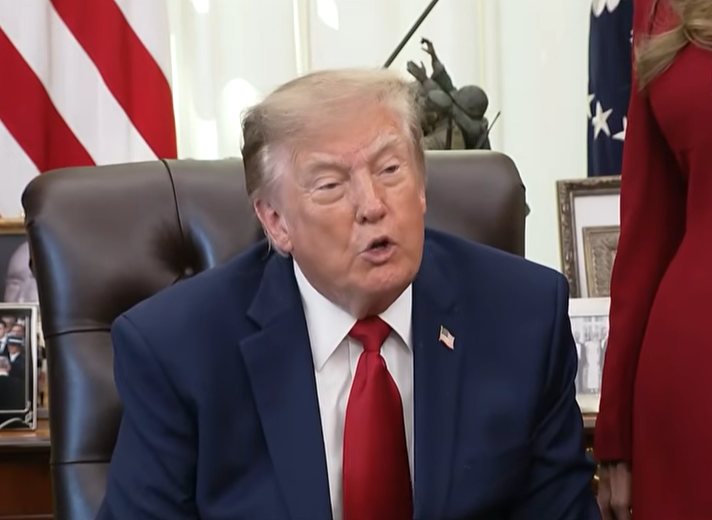
During an oval office press availability today, President Trump is asked directly about Joe Biden, former AG Merrick Garland and former Special Prosecutor Jack Smith targeting himself and his family. WATCH:
Posted originally on the CTH on October 7, 2026 | Sundance |
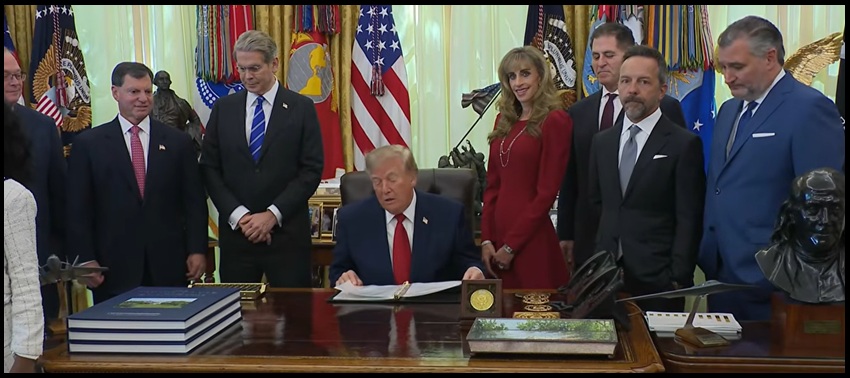
Following announcements to update on the status of “Trump Accounts” for American youth, President Trump took questions from the media.
Media questions begin at 22:38 of the video below. The question topics included: AG Garland & DOJ weaponization, Russia plague a bioweapon? Trump Accounts & capitalism Mr. & Mrs. Dell & Trump Accounts (Dells respond), regret endorsing Ken Paxton? Conflict of interest (?) Could France protests happen here? Go to football game if hurricane? Nobel Peace Prize, Mar-a-Lago as Prez retreat? Dems impeach you for what? Spoken with Pres. Putin? Election integrity, Mortgage rates (Sec. Bessent responds) Trump Accounts & midterm Money givebacks & midterm Russia sharing information? (Plague) Mike Rogers & trade with Canada.
Posted originally on the CTH on October 7, 2026 | Sundance |
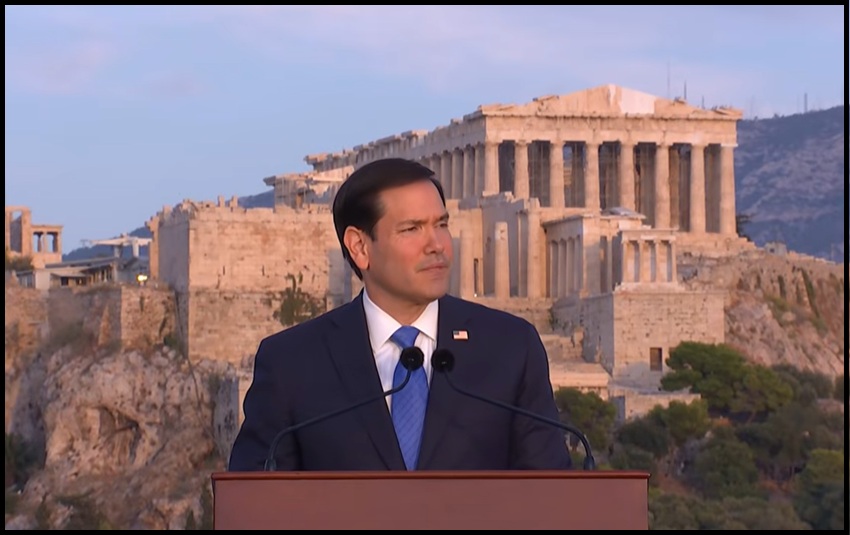
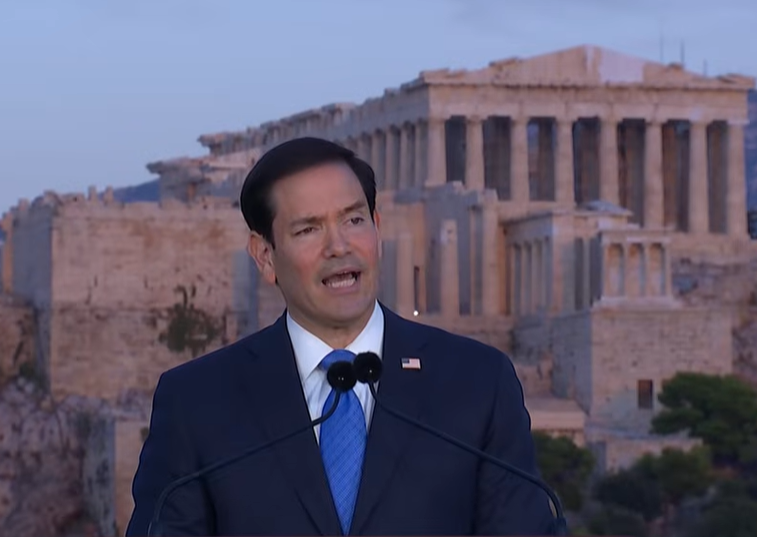
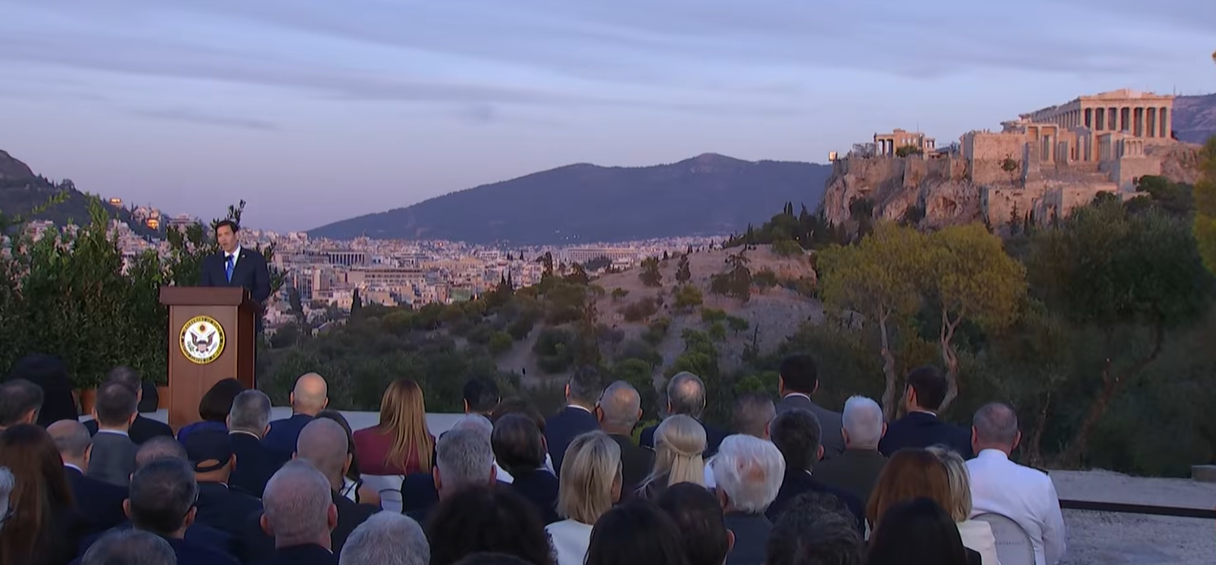
U.S. Secretary of State Marco Rubio used the background of the Acropolis in Athens, Greece, to highlight how western civilized history created the cornerstone of western democratic ideals….. Then government became complacent.
As nations of the western world struggle with retention of civil order, Rubio notes the fundamental ideas and ethical laws that originated from Greece still exist today, and we can choose to reestablish the essential code of ideals and honor.
…”Over time, we in the West came to feel ashamed of the very things that made us exceptional. We felt embarrassed that our achievements set us apart from the rest of the world. Our prosperity somehow became a source of guilt. We no longer believed we deserved and had earned our greatness.
The word “nationalism” became a dirty word. And so we tore down our monuments; we condemned our own history. And in too many places, we taught our children to be ashamed of the countries they would inherit. In the process, we opened our borders and outsourced our industry, and allowed our militaries to wither and to decay.
And with every passing year, we seemed to outsource more of our sovereignty, transferring our decisions to global bureaucracies far beyond the reach of our control.”…WATCH:
[Transcript] – SECRETARY RUBIO: “There are great ruins all across the world. In many cases, they are places where history seems to have exhausted itself: remnants of distant cultures that have long passed beyond living memory.
But the Acropolis is different.
For thousands of years, the civilization that built what stands behind me has captivated the imagination of the Western world. Generations of our statesmen, artists, and philosophers have looked to it – they’ve looked to it with wonder and they’ve looked to it with awe.
Now time has a tendency to dull the senses: great victories and catastrophic defeats, they seem to shrink to becoming like a footnote in a textbook, another fact for our schoolchildren to memorize and forget. But the Greeks of antiquity, they seem to have an almost mystical hold on our memory. They call us back to them, again and again.
480 years before Christ, the armies of Xerxes arrived in this city and they put its sanctuaries to the torch. Most Athenians had by then evacuated by ship to a nearby island. But there was a handful of them that refused to leave their home. So instead, they barricaded themselves in the rocky fortress of the Acropolis to fight an extraordinary last stand, heaving massive stones down the cliffs onto the Persian invaders and holding the greatest empire of the age at bay for days. They were eventually overwhelmed. The Persians plundered the temples, burned the shrines, and razed the Acropolis to the ground but when the Athenians returned, they gathered the broken remains of the old Acropolis and buried them in the hill where it had stood. And decades later, under Pericles, they raised the Parthenon.
For 25 centuries since, the Parthenon has stood. Empires have risen and fallen beneath its shadow. And the progeny of the men who built it – the sons of Athens and Rome – have carried their civilization with them to the ends of the Earth.”
“Two and a half centuries after the founding of the American republic halfway across the world from where I stand now – I stand here today as the Secretary of State of that republic, and a great-grandson of settlers who arrived in the new world from Spain – I stand here to testify to a debt that no lapse of time, no distance of space can ever extinguish.
The history of America, the history of my country, is covered with the fingerprints of antiquity. Greece is literally carved into the architecture of our government: in the towering columns, in the domes and the monuments across our capital city. The city where our Constitution was born – Philadelphia – is itself a Greek name.
The men who founded my country were fascinated by the heritage we inherited from yours. They were exceptionally well-read in history – they were vividly aware of their unique place in it – but no other age of the past held their attention or their imagination quite like that of antiquity. Many, many people are surprised to learn that the most commonly cited author in the Federalist Papers was not an Enlightenment philosopher or political theorist. No, the most commonly cited author in the Federalist Papers was Plutarch, the Greek biographer of Greece and Rome’s great men.
Now, much has been written and said about the influence of ancient Greece on the ideas of the American Founders – and, for that matter, on all of the Western philosophers and statesmen that preceded them. Most of us are familiar with the basic history. Athens gave us democracy. Plato and Aristotle gave us Western philosophy. Our ideas of law, of virtue, of citizenship, and republican government were shaped in the Greek city-states. Even much of our political vocabulary – words like democracy, tyranny, the word “politics” itself – found its origins here.
Now, all of that is true. But the things we owe to this place – as Americans, and as Westerners – are actually far far deeper. These institutions and ideas – these institutions and ideas were the outward expression of more fundamental qualities we see in the ancient Greeks – qualities that can’t be reduced to any particular political system or theory.
Here, in Athens, we found the first full realization of all the essential traits that would come to define the West: fierce individuality and relentless ambition; daring exploration and invention; a yearning for discovery, for adventure, risk and glory. An insatiable curiosity about the world and the principles by which it operates, a hunger to know the mysteries of nature and grasp the secrets of the cosmos. An impatience with the notion of impossibility, chafing at all boundaries and limits, straining to peer into the depths of the unknown.
These were not just the formulas or precepts of a particular school of philosophy. They were the characteristic of a people – expressed in their traditions, their stories, their imagination; in the qualities they demanded of their citizens; in the things they lived and fought and died for.
To know them is to know ourselves.
What blossomed here in this place was the Western desire to uncover all that ignorance, darkness, and distance had kept hidden from the mind of man. The Greeks did not just shape history; the Greeks gave us history itself. Much about – much of what we know about many ancient civilizations comes almost entirely from the records of Greek explorers and historians, explorers and historians who didn’t just chronicle the histories of their own people, but ventured outwards to observe and record the sagas of foreign peoples and cultures all across the world.
Where others looked inward, the Greeks were the first to direct their focus outward, to chase the thrill and glory of seeing all that was strange and new. It was this trait – it was this trait that would push the West to create and build things that others could not, marking us out from so many other cultures and civilizations where stability and subsistence were the highest ends of life.
But it is not just the ambition to explore the unknown that we inherit from the Greeks; it is the conviction that the unknown canbe known. The confidence that the world can be charted and measured and mapped and understood – and that there is a rational order to the cosmos, governed by certain fundamental laws, laws that men can observe and the mind can come to understand.
This was the foundation of the Western mind: our math, our science, our medicine. Our philosophy, ethics, and religion. It paved the way for the gospel of Jesus Christ to find fertile soil in Europe and flourish into the empire of Christendom. It was the foundation of the riches of Christian theology – of Augustine and Aquinas and the whole tradition of natural law.
It gave birth to a civilization marked not just by a common culture, it was marked by a common anthropology – a common view of man and his place in the universe. Its descendants would share not just the idea of a natural order, but a distinctive understanding of virtue; of destiny and fate; of truth, goodness, and beauty; of a code that dictates how men ought to live; of objective standards and ideals to strive towards.
For the Greeks of antiquity, the pursuit of excellence was the very principle of man’s existence. They organized all of civic life around contest, ambition, competition: in philosophy and poetry, in sculpture and drama, in athletics and art, in war and statecraft. The classical Greek city was an arena for great men to test and prove themselves, to hone their potential through perpetual struggle – to be the best, the strongest, the most beautiful, straining to inch ever closer to perfection.
Now I know that to modern ears, what I just described, this way of life, may sound odd; it may even sound cruel. The ideal of many ideologies in our time has, frankly, become a world of perfect safety, devoid of risk or failure, with neither the glory of victory nor the shame of defeat. Too often these days, we build downwards. We design our standards to ensure no one will lose; we preoccupy ourselves more with the comfort of the worst than the potential of the best. We hold the most exceptional things among us hostage to the average, the ordinary, the mediocre.
The men who made the Parthenon, they built upwards. They held that the highest and most noble aspiration in life was to surpass all others, to strive to be the best in all things. The ancient Greek city-states were filled. They were filled with intense passion and rivalry and faction and conflict. But from that constant struggle for distinction – from that came the great flowering of art and philosophy and political and intellectual energy that would transform a collective of Mediterranean cities into the birthplace of the greatest civilization in the world.
The thumos, as the ancient Greeks called it – the fire of passion, strength, courage, pride – is the heart of great civilization. And without it? Without it, nations lose their will to fight, the will to strive, the will to survive.
Today, too much of the West has forgotten this quality. Over time, we in the West came to feel ashamed of the very things that made us exceptional. We felt embarrassed that our achievements set us apart from the rest of the world. Our prosperity somehow became a source of guilt. We no longer believed we deserved and had earned our greatness.
The word “nationalism” became a dirty word. And so we tore down our monuments; we condemned our own history. And in too many places, we taught our children to be ashamed of the countries they would inherit. In the process, we opened our borders and outsourced our industry, and allowed our militaries to wither and to decay.
And with every passing year, we seemed to outsource more of our sovereignty, transferring our decisions to global bureaucracies far beyond the reach of our control.
But others were all too happy to fill the vacuum that we left – the vacuum left behind by our weakness. And as the West’s confidence faltered, its adversaries and its rivals only grew more assertive, building up their own wealth and their own power in our stead.
And now, today, we find ourselves at a crossroads. Because the next decade and the decisions we make will write the story of the next century. The course we take will determine whether the West maintains its place at the head of the world or resigns itself to a future of atrophy and servitude and decline. We will either choose to act now or lose the choice to act at all.
Under President Trump, the United States has made its choice. We choose the unapologetic pursuit of national power: to take back control of our critical supply chains, to reindustrialize our economy, to rebuild our defense, to fight for dominance of the technologies and industries of the future.
We choose to reach for new frontiers: in advanced manufacturing and super intelligence; in drones, weapons, and warfare; in chips, minerals, cyber, and every other domain of human possibility. To unleash our energy, to rebuild our factories, to return our astronauts to the moon and launch a new age of exploration in space.
Now for all their lofty ideals, the ancient Greeks were not naive. They understood that nations have interests. They understood that statecraft requires prudence and diplomacy, but they also understood that it requires the ability to wield force when prudence and diplomacy fail. They understood that power requires not only having the means to defend yourself, it requires the credibility that you are willing to use it.
This is the classical understanding of politics and of statecraft that the Trump Administration hopes to reclaim – reclaim not just for our country, but for the whole of our civilization.
We believe that Europe can awaken from its long slumber and rekindle the fire that was lit here millennia ago.
There are already signs.
Across this continent, we are witnessing what we hope will be the beginnings of a generational shift: skyrocketing defense spending, a flurry of new partnerships and programs, expanded manufacturing and production, following on the historic defense commitments made last year in The Hague.
Greece has been at the center of this shift. The people of this nation have proved themselves once again to be an indispensable friend to Europe and to the United States alike, on everything from energy to migration to defense, where Greece has been a model ally.
And it’s our sincerest hope that all of Europe will follow your example.
Though passions may, at times, have strained the bonds of affection between the United States and Europe, it must not be allowed to break them. Together, we must strengthen an alliance capable of confronting threats of our age.
And we can. Because we do not believe the transatlantic friendship should be zero sum. Quite the opposite: our vision is of an alliance whose strength is greater than the sum of its parts. It is a vision we saw in action just last month, in an unprecedented new agreement between the United States, Denmark, and Greenland – an agreement that will reshape the Arctic and bolster the security of all of NATO. All three partners in that deal emerged victorious. All of Europe – and NATO and the United States emerged safer, stronger, and more secure because of it.
We want to win together. We must win together.
Now it’s has become fashionable today to believe that enlightened foreign policy means prioritizing the global community over one’s own people. And I think here, too, we have much to learn from the men of ancient Greece because they knew that there was nothing selfish or wrong about loyalty to your nation, nor anything selfish or wrong about fighting to defend its interests above all else.
They believed – fiercely – in the ideal of the great man: the exceptional individual who obtains immortality through his own deeds. But they believed that glory and fame, those things were won through striving, sacrificing and achieving greatly for something larger than yourself. The recurring hero of the ancient Greek world was the man who was willing to pay any cost for a cause worthy of his loyalty.
We see this in Socrates, who refused to abandon the inquiry into truth even at the cost of his own life. We see it in the legendary stand of 300 Spartans – surrounded and hopelessly outnumbered by the vast armies of Persia – who refused the chance to save themselves, choosing to fight to the last man rather than abandon their post or abandon their duty. And we see it in the epic myth of Achilles, who is offered the choice to return home and live a long and peaceful life – but chooses instead to remain at Troy and perish in pursuit of eternal glory.
These – these are the qualities that would shape the Western moral imagination. From the Christian martyr who refused to betray his faith to the patriot who gave his life for his country; from Saint Thomas More to the Battle of the Alamo, running through the immortal closing words of the Declaration of Independence of the United States which says, “We mutually pledge to each other our Lives, our Fortunes and our sacred Honor.”
It is from the Greeks that the West inherited its sense of duty – an unbreakable loyalty to one’s code, one’s cause, one’s country. Our heroes, the heroes of the West are those who choose to remain faithful to their duty precisely when it is most difficult and painful to do so: the man who is bound by his word, the soldier who will not abandon his post, the captain, the proverbial captain, who goes down with his ship.
This is wholly different from what we see, even now, for example from fanatics like the radical mullahs of Iran, whose cult of death hails child suicide bombers as national heroes, and portrays martyrdom as an end to itself.
Our heroes – our heroes may be willing to die for their cause; but our heroes do not worship death. It is precisely because we value life that we come to recognize the heroism in those who would sooner sacrifice it than to betray their principles. Now, we take the West’s conception of these things – heroism, honor, duty – we take these things for granted. We assume that these somehow are universal to all people in all times and in all places. They are not. They are the product of a distinct character, a distinct character which arose here and shaped the whole story of the civilization that came after it. A civilization that we must fight to defend today with the same passion as our forefathers did.
The men who built the Parthenon were succeeded by the architects of European Christendom, who raised the cathedrals of Milan, Cologne, and Florence. The quest to perfect the human form that moved the ancient Greek sculptors found a new expression in Michelangelo. The Greek philosophers’ search for the structure of the universe was inherited by Copernicus, and then Galileo, then Kepler, and in Newton.
The hunger for new knowledge, that’s what gave birth to Magellan’s first expedition around the world, to Columbus’ discovery of the Americas, and ultimately to Apollo 11’s journey to the moon. And the qualities that led Alexander to conquer the entire known world reappeared in Caesar, then Charlemagne, and Cortes.
And in America, that same tradition rediscovered itself anew. An open and wild land became the site of a great revival of Western imagination and ambition. The Greek aspiration for new horizons became the American frontier spirit. The civilization of Athens and Rome transformed an infant seaboard republic into a continental empire.
The greatest Americans of every generation have carried the unmistakable features of their forefathers – born in Athens, formed by Rome, baptized in Christendom, hardened in the furnace of medieval Europe, endowed with the English genius for liberty, and then carried across the Atlantic to be reborn on the shores of a new world.
Together, we must now rediscover that spirit. We are at an inflection point – an inflection point not only in the history of my nation, but an inflection point in the whole of our civilization.
The threats we face today are every bit as real as they were on the dramatic stage of antiquity.
National interests did not vanish in the face of international institutions. War did not disappear simply because we preferred peace. Other states continued to arm, to seek influence, to compete for territory, and technology, and resources, and markets, and energy, and power.
And now, there is war again. There is new competition between great powers again. There is vulnerability, aggression, terrorism, a whole universe of new threats and attacks again.
And so we must rebuild our institutions and our alliances to face these threats together – understanding that the purpose of these things is not to abolish the sovereignty of the nations that constitute them; it is to defend them. And that nations need not abandon their distinct identities in order to recognize their common interests.
We have built a model of that with our partners here in Greece. In our defense partnerships, in energy and technology, in our shared ambition to secure Europe’s borders from the threats of mass migration.
Our friendship dates back to the earliest years of my nation. When Greece rose in 1821 to recover its independence after centuries of Ottoman rule, Americans recognized something familiar in that struggle. Three years later, the great American statesman Daniel Webster, he delivered a famous address to Congress, helping bring the cause of the Greek Revolution before the representatives of the young American republic.
And he began by calling their attention to everything around them. This is what he said in his speech; he said: “This free form of government, this popular assembly… this practice of free debate, and public discussion, the contest of mind with mind… even the edifice in which we assemble, these proportioned columns, this ornamented architecture, all remind us that Greece has existed, and that we, like the rest of mankind, are greatly her debtors.”
Those words are as true today as they were when he said them. And all of us – not just Americans, but Europeans and our friends across the West – must relearn the lessons our forefathers took from this place and from its history.
The history of Greece – the history of Greece does not just offer us a glimpse – it does not offer a glimpse of our institutions in their earliest forms. The history of Greece shows us an image of ourselves.
It shows us that ours is the inheritance of great heroes, and that we should be proud – that we should be intensely proud – of where we come from. We should marvel at what our forefathers carved out of this countryside. The story of our civilization is the greatest story ever known to man. And it began here, with the first men and women of the West. From them – from them – we can rediscover the virtues, the courage, and the strength to confront the dangers that we face in our time.
I have created this site to help people have fun in the kitchen. I write about enjoying life both in and out of my kitchen. Life is short! Make the most of it and enjoy!
This is a library of News Events not reported by the Main Stream Media documenting & connecting the dots on How the Obama Marxist Liberal agenda is destroying America