Episode 5779: No Kings Protests And The Lead Up To Midterms


Natalie Winters: No Kings as a ‘Trial Run’: Inside the Midterm Plan to Stockpile Food and Shut Down Daily Life


Natalie Winters: USAID Grants Funded Activist Training in Hungary and Poland On How To “Topple a dictator”


Episode 5777: The Bush Elite Are Trying To Steal Texas


Supreme Court Rejects Election Verification Request as 20,000 California Voters Face Scrutiny


Posted Nov 4, 2026 by Martin Armstrong |
61% of US immigrants eligible to vote in 2020 live in just 5 states | Pew  Research Center

The United States Supreme Court has rejected the Department of Justice’s emergency request to separate approximately 20,000 California mail-in ballots while officials investigate whether the voters are American citizens. The ruling came on November 2, just one day before the midterm elections. The justices offered no explanation and recorded no public dissent. The DOJ argued that once the ballots were processed and mixed with legitimate votes, there would be no practical way to identify and retrieve them. The question is straightforward: how can the public have confidence in election results when concerns about voter eligibility cannot be resolved before ballots are counted?

The Justice Department identified nearly 21,000 individuals it suspected might be ineligible to vote, relying on government records and commercial databases. Federal officials asked California to temporarily remove any ballots associated with those individuals until their citizenship could be verified.

The Ninth Circuit Court of Appeals rejected the DOJ’s request in a 2-1 decision. The majority warned that separating ballots during an election already underway could interfere with the counting process and potentially disenfranchise lawful voters. Judge Patrick Bumatay dissented, describing the proposed segregation as a reasonable and limited precaution. The Supreme Court subsequently declined to intervene. Importantly, the justices did not issue a detailed ruling declaring that citizenship verification is unnecessary or that noncitizens possess the right to vote in federal elections. The dispute concerned whether the federal government had established sufficient grounds for extraordinary judicial intervention at the last moment.

This controversy exposes a much larger weakness in American election administration. California automatically mails ballots to registered voters, and once a ballot has been separated from its identifying envelope, the secrecy of the vote prevents election officials from tracing it back to an individual. That protection is essential to preventing intimidation and preserving ballot privacy. But it also means that eligibility questions must be resolved before ballots enter the anonymous counting process. Trying to investigate questionable registrations after voting has already begun creates an entirely avoidable conflict between election security and the rights of legitimate voters.

There is absolutely no reason that citizenship verification and ballot privacy should be incompatible. Federal elections are restricted to eligible American citizens, and election administrators have a responsibility to maintain accurate registration records. Those safeguards should be established well before Election Day, with sufficient time for voters to correct administrative errors. The government should not be waiting until the final hours of an election to determine whether thousands of individuals belong on the voter rolls. Nor should legitimate voters risk losing their ballots because government databases contain inaccurate information.

Americans have become increasingly distrustful of political institutions, and elections cannot function properly when large portions of the population believe that the rules are inconsistent or poorly enforced. Allegations of widespread noncitizen voting have not been substantiated by the available evidence, but that does not eliminate the obligation to investigate credible individual cases. Likewise, concerns about administrative errors should not be dismissed merely because they arise during a politically contentious election.

The Supreme Court’s refusal to intervene leaves unresolved the underlying question of how federal and state authorities should cooperate when they disagree over voter eligibility. That uncertainty is itself damaging because election officials and voters need clear, predictable procedures rather than emergency litigation immediately before ballots are counted.

Election integrity should never be a partisan issue. A secure election requires accurate voter rolls, reliable citizenship verification, protection against illegal voting, and equally strong safeguards against excluding lawful voters. The California dispute demonstrates what happens when those responsibilities are not resolved before an election even begins.

The real failure is allowing questions about eligibility to remain unresolved until ballots have already entered the system. Without transparent procedures that can withstand scrutiny from both political parties, every disputed election becomes another battle over institutional credibility. That is a dangerous position for any republic.

Categories:Corruption

Britain Wants Parents to Report Their Children


Posted Nov 4, 2026 by Martin Armstrong |

Meet 'Amelia': the AI-generated British schoolgirl who is a far-right  social media star | Far right | The Guardian

Britain’s intelligence chief is now encouraging parents to contact authorities if they suspect their children are becoming radicalized online. MI5 Director General Sir Ken McCallum warned that the country faces growing threats from terrorism, sabotage, cyberattacks, and political extremism. His advice to concerned parents included contacting teachers, healthcare professionals, or the police through the Act Early program. Britain has reached the point where its intelligence establishment is asking families to become another line of surveillance.

McCallum declared, “We all have a stake in our national security. And because we all have a stake, we have some adapting to do.” He warned that extremists are recruiting teenagers online. The state should not become the first resort whenever a teenager says something controversial. A parent who turns a child over to the authorities merely for holding unpopular opinions has placed political obedience above family loyalty.

Meanwhile, the authorities seem incapable of containing the growing hostility surrounding political demonstrations. Radical left-wing activists have joined pro-Palestinian protests alongside Islamic migrant demonstrators, and some of these events have descended into intimidation, confrontations, and arrests. On October 7, the anniversary of the Hamas attacks against Israel, eleven people were arrested following demonstrations and counter-protests in London. Five were arrested on suspicion of inciting racial hatred outside the Board of Deputies of British Jews. Others faced allegations involving public-order offenses and assault. Peaceful protest is a legitimate right, but threatening people, targeting religious communities, or assaulting opponents is criminal conduct. No political cause provides immunity from the law.

What is particularly disturbing is the double standard surrounding political extremism. When violence is associated with the far right, politicians immediately demand investigations, new restrictions, and greater surveillance. Yet radical “activists” on the left attempt to justify intimidation as a necessary response to political injustice. The same conduct cannot be condemned in one movement and excused in another. If a protester attacks someone, threatens a Jewish family, or attempts to terrorize an opponent, the political slogan on the placard is irrelevant. The law must apply equally.

The alliance between sections of the radical left and Islamist political activists is also worth examining. Their ideological objectives are often fundamentally different. Many left-wing activists campaign for secularism, gender equality, and progressive social policies, while Islamist political movements may advocate religious authority over public life. Their cooperation often rests on shared opposition to Western governments, but the majority of these Western-born teens and young adults do not understand what they are promoting.

Britain’s government is telling citizens to prepare for threats against their homes, infrastructure, and communities while its intelligence agencies warn about radicalization among teenagers. Yet the responsibility for maintaining public order rests with the authorities. Families should not be expected to compensate for failures in policing, education, or political leadership. Nor should parents be encouraged to treat their own children as potential enemies of the state because they have encountered offensive ideas online. There must be a clear distinction between a credible threat of violence and lawful political expression, however unpleasant that expression may be.

A society cannot function when political opponents are treated as enemies and families are encouraged to surrender their responsibilities to the government. The violent elements of the radical left deserve condemnation just as violent extremists on the right do. Those who threaten Jewish communities, Muslims, immigrants, or political opponents should face the same legal consequences. Parents must also understand that their first responsibility is to guide and protect their children, not to police their thoughts on behalf of the state.

Britain needs to restore respect for the law, the family, and individual liberty. It cannot accomplish that by tolerating political intimidation from favored movements while encouraging citizens to regard one another with suspicion. The government should prosecute actual violence, protect peaceful expression, and stop pretending that every social problem can be resolved by expanding the authority of the state. A country that cannot distinguish between a dangerous criminal and a teenager with offensive opinions is heading toward a far more troubling future than its intelligence chief seems willing to acknowledge.

Categories:BRITAIN

Americans Are Running Out of Money While Washington Celebrates Economic Growth


Posted Nov 4, 2026 by Martin Armstrong |

Confidence wide

The American personal savings rate has collapsed to 3.8%, the lowest level in four years. According to the Federal Reserve Bank of St. Louis, the savings rate declined from 4.5% in July to 4.0% in August and 3.8% in September. The government will tell you that consumer spending remains strong and that the economy continues to expand. What they fail to explain is that Americans are increasingly spending their income simply to survive, leaving less money to save for emergencies, retirement, or future investments. The consumer is being squeezed from every direction, yet Washington continues celebrating economic growth as though rising nominal spending automatically means rising prosperity.

The Bureau of Economic Analysis reported that personal income increased by $54.5 billion in September, while disposable personal income rose by $52.7 billion. Consumer spending, however, increased by $113.1 billion. Americans increased their spending by more than twice the increase in their disposable income. The personal savings rate fell accordingly, and real disposable income actually declined by 0.3% for the month. Real consumer spending was essentially unchanged. This is the economic reality hidden beneath the headlines. Americans are spending more dollars without purchasing significantly more goods and services. That is hardly a sign of improving living standards.

The September Personal Consumption Expenditures Price Index increased 3.6% from a year earlier, while core inflation rose 3.1%. These are annual increases being added to an already elevated price level. Meanwhile, nominal disposable income increased only 0.2% in September against a 0.5% monthly increase in consumer prices. The result was another decline in real purchasing power. Americans cannot save money that has already been consumed by rising expenses. It is astonishing that economists continue expressing surprise when consumer confidence deteriorates while the cost of maintaining an ordinary household keeps rising.

The government points to consumer spending as evidence of economic strength, but spending is not necessarily prosperity. People must purchase food regardless of whether prices rise. They must pay their mortgages, rent, insurance premiums, and electricity bills. If the cost of these necessities increases by 20% or 30%, the government records higher consumer expenditures even though households may be purchasing the same quantity of goods and services. A family paying $1,500 for what previously cost $1,200 has not become wealthier. It has lost $300 that could otherwise have been saved, invested, or spent elsewhere.

There are also two very different American economies developing. Those who accumulated financial assets and real estate before the pandemic have generally benefited from rising asset valuations. Someone who purchased a home years ago and refinanced at 3% is in an entirely different position from a younger family attempting to purchase that same property today. Home prices have increased substantially, and financing costs remain elevated compared with the pandemic years. The younger household must devote far more income to housing, leaving less available for savings and investment. Those with family wealth can receive assistance with down payments or inherit assets, while those dependent entirely upon wages are falling further behind. The divide increasingly reflects access to existing capital rather than income alone.

The consequences extend well beyond individual households. Savings provide the capital necessary for future investment. When consumers have sufficient disposable income, they can accumulate reserves, purchase financial assets, start businesses, and finance productive economic activity. When their incomes are consumed by everyday expenses, their ability to accumulate capital deteriorates. A low personal savings rate does not automatically mean the economy is entering a recession, and this national measure is not the same as the percentage of households with emergency savings. Nevertheless, a sustained decline in saving alongside falling real income is a warning that the consumer has less financial flexibility to absorb additional shocks.

CONFIDENCE UNCERTAINTY

The Federal Reserve cannot resolve this problem by simply lowering interest rates. Cheap credit does not restore the purchasing power already lost to inflation. Lower rates may reduce certain borrowing costs, but they can also encourage additional debt accumulation and stimulate asset prices. This is particularly important in housing, where monetary policy helped produce an enormous distortion between those who already owned property and those attempting to enter the market. The public has been conditioned to believe that every economic problem can be solved through another interest-rate adjustment. That mentality ignores the underlying imbalance between income, expenses, and the cost of living.

There is another troubling consequence that receives little attention. Americans who cannot save during their working years will become increasingly dependent upon government programs in retirement. Social Security was never intended to replace personal savings entirely, yet millions of households are struggling to accumulate sufficient financial reserves. The government is already confronting enormous unfunded obligations and rising debt-service costs. An aging population with inadequate personal savings will place additional pressure upon a fiscal system that is already dependent upon continuous borrowing. This is not a sustainable long-term economic model.

Consumer confidence deteriorates when people no longer believe their financial circumstances will improve. The decline in savings is consistent with that broader anxiety. People may still be employed and spending money, but they recognize that their ability to build wealth is diminishing. They see retirement becoming more expensive, homeownership moving further out of reach, and emergency expenses becoming increasingly difficult to absorb. The government’s economic statistics may show growth, but those figures do not necessarily capture the financial insecurity experienced by households whose wages are failing to keep pace with essential expenses.

The personal savings rate is now telling us something that Washington would prefer to ignore. Americans are spending a growing share of their disposable income while their real purchasing power remains under pressure. A consumer-driven economy cannot indefinitely depend upon households reducing savings and accumulating debt to maintain consumption. Eventually, people must cut spending, increase income, or borrow even more. None of those adjustments can be postponed forever.

The politicians will continue pointing to GDP, employment, and nominal consumer expenditures as proof that everything is fine. But an economy cannot be judged solely by how much money changes hands. The real measure of prosperity is whether people can maintain their standard of living, accumulate capital, and improve their financial circumstances over time. With the personal savings rate down to 3.8%, Americans are being left with an increasingly narrow margin for error. Washington may celebrate the spending, but the consumer is paying the price.

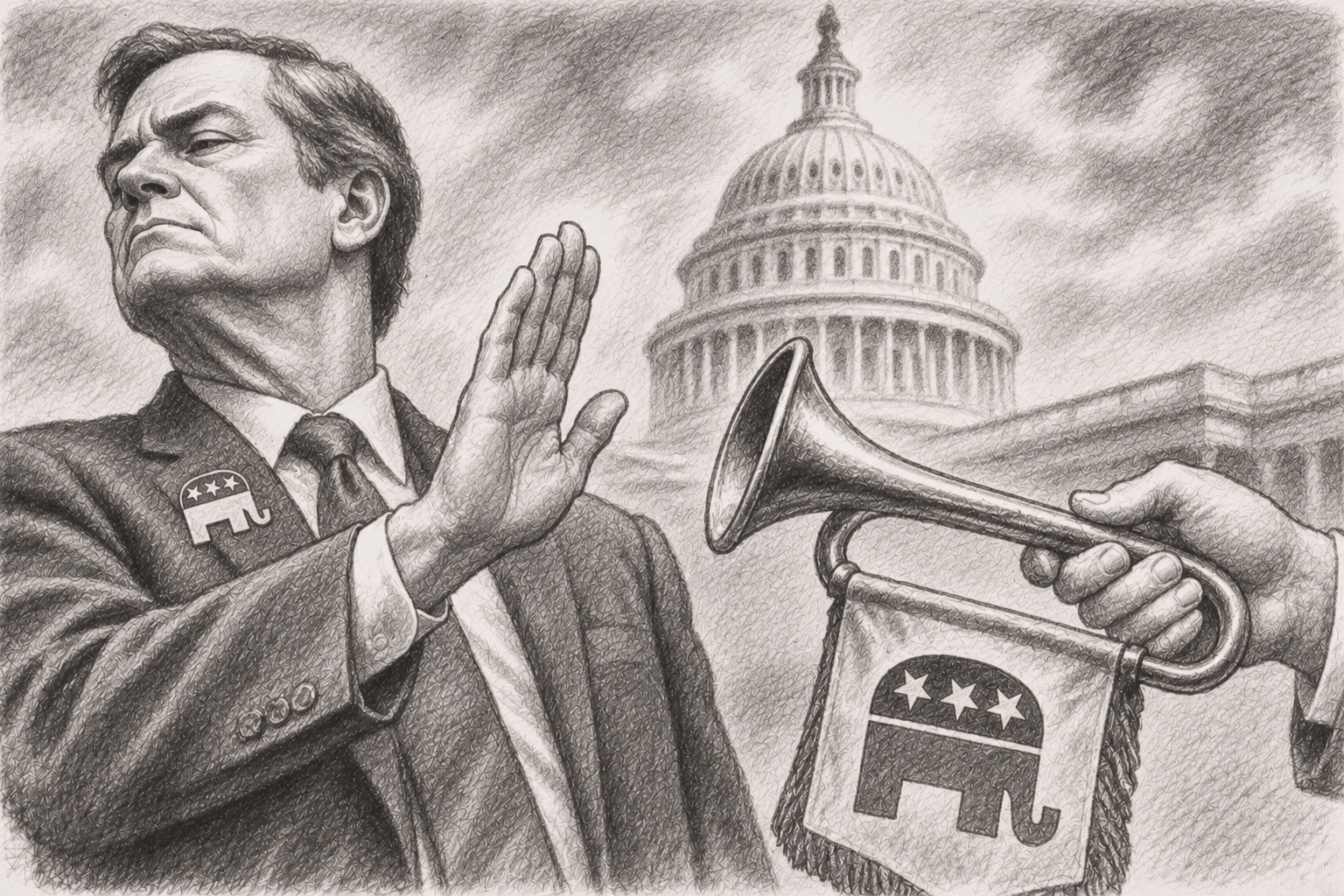
Republicans Didn’t Blow Their Own Horn


Posted Nov 3, 2026 by Martin Armstrong |

Reluctant Republican and Brass Bugle

QUESTION: Marty, you said that the media target Trump on Iran to avoid any other issues. The Republicans let the media set the agenda. Could you explain that?

EG

ANSWER: The beggest issue is the sharp decline in crime. I can tell you that in DC, you did not dare to walk at night. After Trump sent in the National Guard, you can even take you child for a walk. If you look at pharmaceuticals, this is where you have prices declining dramatically for people. The economy has been robust while the rest of the world has been declining. Trump meeting with Xi and Putin, some media even called it the treason summit. Trump took steps to try to stop World War III and the Pentagon was even warning Europe to stop the Russian propaganda.

Video Player

00:00

00:29

The media has focused on Iran and then Putin painting Trump as being subservient to Putin. The propaganda of Hillary is outrageous. She FALSIFIED the dossier on Trump and the Democrats were even fined over that. She cost the country untold millions on investigations that proved she fabricated the whole Russia story. But the Media is on her side and the demonize Putin, which will justify the US going to war with Russia. You demonize the opponent and that justifies the hatred and willingness to go to war.

I do not understand that the Republicans had a good track record on everything except Iran and they let the media define the elections. It’s a legal trick to discredit someone. You ask the question, “So when is the last time you beat your wife?” The person now must defend themselves over a simple fabricated allegation. You ask your wife, “Did I ever beat you?” She responds of course not. The prosecutor then says of course she would say that, she is terrified of being beaten again. The media then reports he beat his wife, when it was just made up.

The Republicans let the media determine this election. I am obviously against the Iran War. I feel Netanyahu has exploited the United States for his personal Neocon warmongering. He will NEVER accept peace with Iran and he did not give a second thought to Trump or the American people no less the Israeli people.

2032 political changes Future

This is just the way the cycle functions. We MUST go through this to get to 2032, which is the light at the end of the tunnel – the promise land. We get to redesign the future. Do not let others do that. This is we the people – not the Neocons.

Market Talk – November 3, 2026


Posted Nov 3, 2026 by Martin Armstrong |

Market Talk 2017

ASIA:

The major Asian stock markets had a mixed day today:

• NIKKEI 225 closed

• Shanghai decreased 29.933 points or -0.82% to 3,608.098

• Hang Seng increased 132.65 points or 0.57% to 23,525.97

• ASX 200 increased 30.30 points or 0.34% to 8,886.80

• SENSEX increased 1,225.07 points or 1.62% to 76,917.85

• Nifty50 increased 370.05 points or 1.58% to 23,810.85

The major Asian currency markets had a mixed day today:

• AUDUSD decreased 0.00287 or -0.41% to 0.69703

• NZDUSD decreased 0.00012 or -0.02% to 0.56138

• USDJPY increased 0.567 or 0.36% to 158.511

• USDCNY increased 0.02244 or 0.34% to 6.67003

The above data was collected around 12:16 EST.

Precious Metals:

•  Gold decreased 17.81 USD/t oz. or -0.45% to 3,929.22

•  Silver decreased 0.938 USD/t. oz. or -1.85% to 49.714

The above data was collected around 12:18 EST.

.

EUROPE/EMEA:

The major Europe stock markets had a negative day today:

•  CAC 40 decreased 27.38 points or -0.34% to 8,020.31

•  FTSE 100 decreased 122.90 points or -1.14% to 10,638.43

•  DAX 30 decreased 116.47 points or -0.45% to 25,864.62

The major Europe currency markets had a green day today:

• EURUSD increased 0.00101 or 0.09% to 1.11971

• GBPUSD increased 0.00128 or 0.10% to 1.34192

• USDCHF increased 0.00166 or 0.20% to 0.82049

The above data was collected around 12:42 EST.

AMERICAS:

US Markets:

  • DJIA declined by 197.26 points (0.38%) to 51,786.72
  • S&P 500 advanced by 27.52 points (0.36%) to 7,568.92
  • NASDAQ advanced by 207.65 points (0.83%) to 25,372.009
  • Russell 2000 advanced by 6.6 points (0.24%) to 2,812.48

Canada:

  • TSX Composite declined by 268.81 points (0.75%) to 35,532.28
  • TSX 60 declined by 21.97 points (1.03%) to 2,113.56

Brazil:

  • Bovespa declined by 2,352.44 points (1.4%) to 165,569.36

ENERGY:

The oil markets had a mixed day today:

•  Crude Oil decreased 0.611 USD/BBL or -0.63% to 95.849

•  Brent decreased 1.477 USD/BBL or -1.41% to 103.293

•  Natural gas increased 0.0275 USD/MMBtu or 0.96% to 2.8835

•  Gasoline increased 0.0381 USD/GAL 1.31% to 2.9382

•  Heating oil increased 0.1051 USD/GAL or 2.38% to 4.5267

The above data was collected around 12:43 EST.

•  Top commodity gainers: Orange Juice (2.32%), Heating Oil (2.38%), Gasoline (1.31%) and Natural Gas (0.96%)

•  Top commodity losers: Coffee (-2.70%), Sugar (-3.69%), Palladium (-3.67%) and Methanol (-3.28%)

The above data was collected around 12:52 EST.

BONDS:

Japan 2.7720% (-0.05bp), US 2’s 4.62% (+0.017%), US 10’s 4.9570% (+4.8bps); US 30’s 5.33 (+0.038%), Bunds 3.3330% (+4.22bp), France 4.9380% (+3.57bp), Italy 4.4670% (+5.48bp), Turkey 35.95% (+9.5bp), Greece 4.2410% (+1.01bp), Portugal 3.7770% (+3.29bp); Spain 3.9300% (-0.88bp) and UK Gilts 5.2476% (+5.13bp)

The above data was collected around 12:56 EST.

BEN BERGQUAM: The Numbers In Ohio Aren’t Great So Far. We’ve Seen 1.7 Million Early Votes, With Roughly A 15-Point Swing From 2024