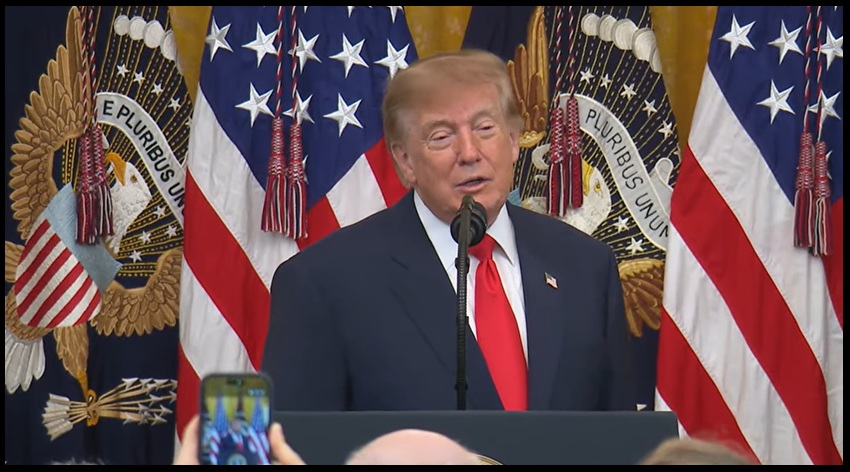
LIVE: President Trump Hosts Small Business Summit at the White House…


osted originally on Rumble on Bright Bart News Network on:

May 4, 2026

Casing the Joint: Trump Assassination Suspect Seen Doing Surveillance Before Attempt


Posted originally on Rumble on Bright Bart News Network on: May 4, 2026

The War on Crypto Was Always About Control


Posted originally on May 5, 2026 by Martin Armstrong |  

Cryptocurrency bitcoin basket

The U.S. Treasury has now frozen $344 million in cryptocurrency tied to Iran, according to Treasury Secretary Scott Bessent, who announced sanctions targeting multiple digital wallets allegedly connected to Tehran. Most people will view this story narrowly through the lens of sanctions on Iran or Middle East politics. The larger issue is far more important. Governments are proving in real time that cryptocurrency is not outside the system and never truly was once governments decide to intervene aggressively enough.

Crypto enthusiasts promote the fantasy that digital assets exist beyond government reach. Blockchain transactions themselves are permanently recorded publicly. The moment governments force centralized exchanges, stablecoin issuers, banks, custodians, payment processors, and infrastructure providers into compliance, they gain enormous leverage over the ecosystem.

According to Reuters and other reports, the Treasury Department sanctioned multiple wallets allegedly tied to Iran, effectively freezing the assets connected to them. The broader campaign, now branded “Economic Fury,” is specifically targeting Tehran’s ability to move money internationally through both traditional banking systems and digital assets.

The key detail people are missing is that these actions demonstrate governments can increasingly identify, blacklist, freeze, and isolate digital wallets whenever geopolitical conditions justify intervention. Stablecoin issuer Tether reportedly cooperated directly with authorities by freezing addresses linked to the sanctioned funds.

Once governments can freeze wallets at the protocol or issuer level, governments effectively gain a form of programmable financial enforcement. Today the justification is Iran. Tomorrow it could be sanctions violations, tax enforcement, political extremism, climate compliance, misinformation enforcement, or virtually anything governments define as threatening.

I have repeatedly warned that governments will never tolerate parallel monetary systems indefinitely once sovereign debt crises intensify. As confidence collapses in government finances globally, states become increasingly aggressive toward anything perceived as undermining capital controls, taxation systems, or financial surveillance.

This is why Europe is simultaneously discussing CBDCs, wealth taxes, digital IDs, beneficial ownership registries, and expanded financial reporting requirements. Governments want visibility into every transaction. They want to know where money moves, who controls it, and how quickly they can stop it.

The Iran case is particularly important because Tehran increasingly turned toward crypto precisely to bypass sanctions and restrictions imposed on traditional banking access. Reuters reported earlier this year that Iranian crypto activity surged dramatically, with estimates ranging between $8 billion and $10 billion in annual transactions. Blockchain intelligence firms reportedly estimate that roughly half of those flows may be connected directly or indirectly to the IRGC.

Iran is not unique here. Russia, Venezuela, North Korea, and numerous sanctioned entities worldwide have explored crypto networks as alternatives to the Western banking system. Governments understand this perfectly well, which is why they are moving aggressively now to integrate blockchain surveillance into broader financial enforcement systems.

Ironically, blockchain itself may become one of the greatest surveillance tools governments have ever possessed. Cash transactions disappear physically. Gold moves privately. Offshore banking once created opacity. Blockchain creates permanent transaction trails. Once authorities identify wallet ownership, entire financial histories become visible forever. Governments no longer need to guess where money moved because the ledger itself preserves the record permanently.

The world is fragmenting into competing financial blocs as sovereign debt pressures intensify globally. The United States increasingly weaponizes dollar access, sanctions systems, and payment infrastructure against geopolitical rivals. In response, countries seek alternatives to traditional banking channels.

The ECM has warned for years that sovereign debt crises eventually lead governments toward tighter financial control mechanisms. The more unstable the system becomes, the less tolerance governments have for unrestricted capital movement. Digital currencies were always destined to collide directly with state power because money itself ultimately represents political authority.

The freezing of $344 million tied to Iran is not just another sanctions story. It is a glimpse into the future of financial control. Governments are building the ability to monitor, freeze, isolate, and potentially program digital money flows globally. Most people still believe crypto exists outside the reach of the state. That illusion is disappearing very quickly.

Europe’s Inflation Spiral Is Fueling the Depression Into 2028


Posted originally on May 5, 2026 by Martin Armstrong |  

inflation

Eurozone inflation is accelerating again at the worst possible moment for Europe. Consumer prices rose 3% in April compared to 2.6% the previous month, driven primarily by surging energy costs tied to the Iran conflict and fears surrounding the Strait of Hormuz. Energy inflation alone jumped 10.9% year-over-year. At the same time, economic growth across the eurozone has nearly stalled.

Europe now faces rising prices alongside weakening economic activity, and that combination becomes extraordinarily difficult for central banks to manage. The European Central Bank is trapped. If it raises rates aggressively, it risks crushing already fragile economies. If it eases policy too quickly, inflation accelerates further as higher energy costs spread through the system.

The real issue is that Europe constructed an economic framework completely dependent on stability. Cheap Russian energy, low interest rates, globalization, and endless debt expansion became the foundation supporting the European model. Once those pillars started cracking, the weaknesses underneath became impossible to hide.

Germany is already paying the price. Its industrial sector has been steadily weakening under high electricity prices and declining export competitiveness. Major manufacturers have reduced operations or shifted investment outside Europe because production costs no longer make economic sense. Heavy industry cannot survive indefinitely when energy becomes a luxury good.

France is stagnating economically while debt continues climbing. Britain’s retail sector just recorded its worst collapse in over 40 years. Across southern Europe, younger generations remain trapped between weak job markets and rising living costs. The political class continues promising climate transitions, military expansion, social spending, and migration support simultaneously while economic growth disappears underneath them.

Oil markets reacted immediately to the Middle East conflict because roughly 20% of global oil flows through the Strait of Hormuz. Even temporary disruptions create ripple effects throughout Europe’s economy. Transportation costs rise first, followed by food, manufacturing, chemicals, agriculture, shipping, and consumer goods. Inflation then spreads outward into virtually every category of daily life.

The ECB cannot solve a geopolitical energy crisis with monetary policy. That is what policymakers still fail to understand. Europe spent years shutting nuclear plants, discouraging domestic production, restricting fossil fuel investment, and relying on unstable foreign supply chains. The continent deliberately reduced its own resilience. Once war entered the equation, the vulnerabilities became obvious.

Consumers are now being squeezed from every direction. Mortgage costs remain elevated compared to the zero-rate era. Utility bills continue rising. Food inflation remains persistent. Business investment is slowing as uncertainty spreads. Retail sales are collapsing because households are being forced to prioritize essentials over discretionary spending.

This is precisely why the ECM projected Europe entering a depressionary phase into 2028.

A depression is not always a dramatic overnight crash. Sometimes it unfolds as a long erosion of living standards, industrial capacity, and public confidence. Europe is entering that process now. Governments borrow more while growth weakens. Private investment retreats. Capital leaves the region searching for safety and opportunity elsewhere. Political fragmentation intensifies because the middle class becomes increasingly squeezed.

The inflation spike tied to the Iran war is exposing how fragile Europe had already become underneath the surface. The continent entered this geopolitical crisis economically weakened, overregulated, energy dependent, and burdened by unsustainable sovereign debt. The ECM warned this period would become the turning point. Europe is now moving directly into that cycle.

n

Canada Is Running Toward Europe as the West Fractures


Posted originally on May 5, 2026 by Martin Armstrong |  

2025_04_26_23_05_29_This_is_a_tragedy_Mark_Carney_warns_the_80_year_period_of_US_economic_leaders

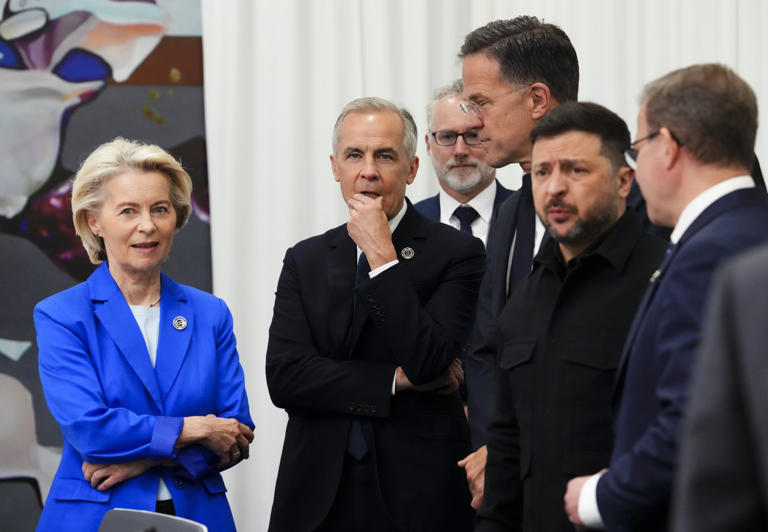
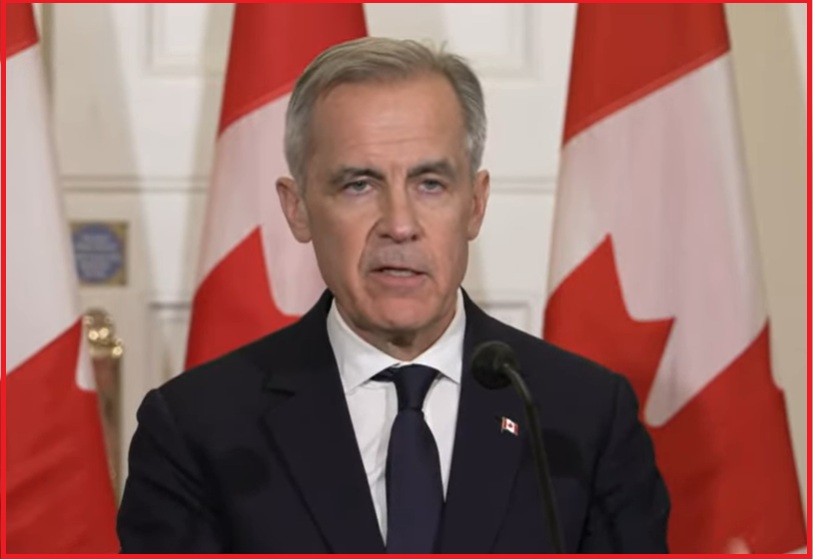
Mark Carney’s decision to make Canada the first non-European nation ever invited into the European Political Community summit tells you everything about where Ottawa is heading politically. Canada is desperately trying to reposition itself away from the United States because Carney fundamentally views the Trump administration as a threat to the entire postwar global order that people like him spent decades building.

The summit in Armenia was never simply about diplomacy. It was about constructing a new bloc of so-called “middle powers” aligned against the growing nationalist shift coming out of Washington. Carney has been openly pushing this idea for months, arguing that countries like Canada and Europe must deepen cooperation because the “old order” is breaking apart. That is globalist language for saying the United States is no longer willing to carry the system financially or militarily the way it once did.

What Carney and the European leadership fail to understand is that Europe itself is collapsing economically underneath the surface. The European Political Community was launched by Emmanuel Macron after the Ukraine war began because Brussels realized confidence in the European Union was weakening badly. The EPC was effectively designed as a parallel geopolitical structure tying together EU states, NATO partners, former Soviet republics, and pro-European governments under one umbrella.

Now Canada wants in. That alone tells you how desperate Ottawa has become to diversify away from the United States economically and politically. Reuters reported that Carney specifically sees Europe as part of a new alliance structure after the deterioration in relations with Washington under Trump.

2025_04_29_08_13_32_Canada_s_Carney_sends_a_message_to_Trump_as_he_chooses_Europe_for_first_foreign_

Canada’s economy is tied overwhelmingly to the United States geographically, financially, culturally, and structurally. Roughly three-quarters of Canadian exports still flow into the American market. Canada cannot simply replace the U.S. economy with Europe. That is fantasy politics.

Europe itself is entering a depressionary phase into 2028 according to our ECM models. Germany’s industrial base is weakening, France is drowning in debt, southern Europe never recovered from the euro crisis properly, and Britain remains economically unstable despite Brexit. The euro itself failed because Europe created a monetary union without consolidating sovereign debt. Northern Europe protected its banking system while southern Europe absorbed austerity and economic collapse.

Carney’s summit appearance also reflects a broader ideological alignment between Canada’s political establishment and Brussels. Both support centralized governance, climate policies, digital regulation, ESG frameworks, expanded financial oversight, and increasingly aggressive speech regulation. Europe and Canada now resemble each other politically far more than either resembles the United States under Trump.

That is why Carney fits naturally into these European summits. He spent years inside the central banking system, running both the Bank of Canada and the Bank of England. He was one of the loudest advocates globally for climate finance structures, ESG investing, and coordinated global financial governance. Europe views him as one of their own intellectually.

Carney Mark WEF

Meanwhile, the geopolitical timing could not be worse. The summit agenda reportedly focused heavily on Trump’s planned troop reductions in Germany, the Iran war, Russia, energy instability, and Europe’s broader security concerns. Europe is becoming increasingly militarized because leaders understand NATO’s future is uncertain if Washington continues shifting inward politically.

The irony is extraordinary because Canada spent decades benefiting enormously from proximity to the United States while underinvesting militarily itself. Now Ottawa fears becoming too dependent on Washington while simultaneously attaching itself to a Europe facing its own sovereign debt and demographic crisis.

Carney is essentially betting Canada’s future on closer integration with declining globalist structures just as voters across the Western world increasingly revolt against them politically.

The fragmentation of the West is accelerating. Europe fears abandonment by Washington. Canada fears economic dependency on the United States. Germany fears industrial collapse. France fears social unrest. Britain fears irrelevance. The alliances that dominated the postwar era are beginning to crack under debt, migration, energy instability, war pressures, and collapsing public confidence. The EPC summit itself is really a symptom of that fracture.

Supreme Court Clears Way for Louisiana Immediate Redistricting – Justice KBJ Goes Bananas


Posted originally on CTH on May 5, 2026 | Sundance

The Supreme Court ruled Monday its prior ruling on race-based congressional districts takes immediate effect. The order {SEE HERE} speeds up the normal 32-day timeline and puts the State of Louisiana on notice their current districts are not constitutional.

Effectively the Louisiana Governor and legislature have delayed the election to address the districts.  However, Justice Ketanji Brown Jackson was not happy with the immediacy ruling and wrote a dissent that was so ridiculous none of the other minority justices would sign on to it. Jackson said the majority “unshackles itself” from “constraints.” The court should follow the default rule, she insisted.

As noted by PoliticoJustice Samuel Alito responded to Jackson’s accusation of political bias in a concurring opinion supported by Justices Clarence Thomas and Niel Gorsuch. Alito wrote that by suggesting that “running out the clock” by following the court’s default procedures may indicate bias “on behalf of those who may find it politically advantageous to have the election occur under the unconstitutional map.

Louisiana Gov. Jeff Landry has delayed the primary so state Republicans could get to work on a new map.

President Trump Delivers Remarks at American Small Business Summit


Posted originally on CTH on May 4, 2026 | Sundance

Earlier today President Trump delivered remarks from the White House at the American Small Business Summit.  WATCH:

.

DOJ and Dept of Agriculture Announce Antitrust Investigations on Meat Price Fixing and Protein Price Controls


Posted originally on CTH on May 4, 2026 | Sundance 

Earlier today, Acting Attorney General Todd Blanche, Secretary of Agriculture Brooke Rollins, and Director of Trade and Manufacturing Peter Navarro held a press conference on antitrust investigations and meatpacking operations.

AAG Todd Blanche noted the DOJ is seeking information from whistleblowers inside the meat industry as they investigate price controls and price fixing from multinational agriculture conglomerates.

WASHINGTON – The Justice Department confirmed its active investigation of potential antitrust violations in U.S. cattle and beef markets, reviewing more than 3 million documents and interviewing industry participants as federal officials scrutinize whether highly concentrated meatpacking power has contributed to high beef prices.

The four largest beef processors control more than 85% of the U.S. processing market — half of which are Brazilian-owned — Trump administration officials noted at a Monday news conference, where acting Attorney General Todd Blanche urged whistleblowers to capitalize on turning in bad actors who are contributing to jacking up meat prices on Americans.

“If the information you provide helps us secure a criminal penalty in excess of $1 million, you can be entitled to recover and receive 15-30% of the money that we recover,” Blanche said, describing the DOJ fraud whistleblower rewards program. He urged ranchers, purchasers, processors and others to report possible price-fixing, bid-rigging, market allocation or procurement fraud.

Agriculture Secretary Brooke Rollins tied the probe to broader concerns about food security and shrinking domestic cattle supplies, saying the U.S. had about 86.2 million head of cattle and calves as of Jan. 1 — “the lowest since the 1950s.” (read more)

Democrat and global leftists spent decade shouting about cows and cattle as a major source of global warming via flatulence.  Being anti-cows, anti-milk, anti-beef, and anti-ranching became a major focus of the global ‘Build Back Better’ net-zero emission agenda.

Cattle ranching and dairy farming were viewed as easy targets for investment controls, while Bill Gates and the climate groups promoted nut milks, soy milks, milk alternatives, bugs, crickets and fake meat.  This activity is part of the current consequences.

P

Secret Service Gives Initial Briefing of Shooting at White House Complex – Juvenile Bystander Shot


Posted originally on CTH on May 4, 2026 | Sundance 

A man was identified carrying a firearm inside the outer perimeter of the White House.  The Secret Service engaged the person carrying the gun, who then fled on foot, turning and shooting back at Secret Service agents.  The U.S. Secret Service returned fire hitting the gunman.  A juvenile bystander was shot by one of the bullets, most likely fired by the suspect.  Both the juvenile bystander and the gunman are receiving medical treatment.

Just before the gunman was identified, the motorcade of Vice President JD Vance drove through this immediate area.  The shooting did not involve the Vice President’s security detail and an investigation is ongoing.  The Secret Service gives a preliminary media briefing below.

.

Against the background of three assassination attempts, and with multiple Democrat activists, promoted social media influencers and leftist politicians increasingly calling for confrontation and violence against President Trump and his administration, the Secret Service is maintaining an elevated position of alert.

Volkswagen Likely to Allow Chinese Automaker to Build in Shuttered Volkswagen Auto Plants


Posted originally on CTH on May 4, 2026 | Sundance

How do you sum up the economic forecast for Europe? This story highlights one of the craziest stories in a long time. This is so blindingly suicidal, it cannot be stupidity. This is intentional.

BACKGROUND – You might remember last year due to climate/carbon emission regulations inside Europe EU automakers had to pay fines to the EU Commission if they did not meet electric vehicle targets. In order to avoid the penalties many EU automakers began purchasing ‘carbon credit’ offsets from Chinese EV automakers.

European car makers were paying China for carbon credits, and Chinese car companies began using the payments to lower prices. Europe was, essentially, paying China to undercut their own auto market. The result was European car makers, specifically those in Germany, losing market share to lower price EVs from China.  German industry began shrinking.

If that wasn’t crazy enough, what comes next is beyond laughable. As a result of lost sales and diminished volumes, Volkswagen had shut down auto plants. Now, Volkswagen is announcing that Chinese automakers, their China “partners,” will take over the underutilized facilities and start building Chinese cars in Germany.

GERMANY – Volkswagen Group is facing increased pressure from its board to further cut costs despite already announcing radical measures, such as axing around 50,000 jobs in Germany by 2030 and reducing production capacity by up to 3 million units per year to 9 million, which would make it very difficult to avoid plant closures or sales. Overall, Europe’s largest automaker aims to reduce costs by 20% by the end of 2028.

In an attempt to mitigate the effect of these measures, the automaker appears ready to do what not too long ago would have seemed unthinkable, namely selling China-developed cars in Europe and even sharing its underutilized plants in the region with its Chinese partners.

That’s what CEO Oliver Blume told investors and analysts on April 30 after presenting the company’s first-quarter 2026 results, which saw the automaker’s profit drop 14% to $2.92 billion amid higher U.S. tariffs and intense competition from Chinese carmakers.

In order to deal with excess capacity in Europe and rising competition from Chinese brands in Europe in the coming years, Blume said VW Group is considering selling China-built cars in Europe. It’s the first time that Volkswagen has acknowledged it is contemplating such a move. (read more)

♦ SUMMARY: Volkswagen went to China to sell cars.  Volkswagen opened EV auto plants in China bringing in German industrial technology and equipment. China learned from Volkswagen and started their own EV auto companies to compete.  Volkswagen EV sales in China started dropping dramatically, and the Chinese EV brands took over.

Due to internal climate regulations in Europe, Volkswagen in the EU then begins giving money to China that subsidizes their competition.  China exports their EVs to Europe.  Volkswagen EV auto plants start closing.  China now takes control of the Volkswagen EV auto plants to build Chinese EVs in Germany.

With operations now inside the house, the Chinese government extract European wealth and pump subsidies into their EV operations in Germany, flooding the European market with cheap EVs that will undercut the German auto manufacturing sector.

You cannot make steel with windmills and solar panel energy.  Germany has destroyed much of their coal and nuclear power plants.  German energy prices have skyrocketed.  German steel is expensive. German cars are expensive as a result.  Where do you think the inexpensive steel for the ultra-cheap Chinese EVs will come from?

Now, replace [Germany] with [Canada].