Posted originally on Apr 24, 2026 by Martin Armstrong |
There was a time when your photo album sat in a drawer, private, personal, and disconnected from the outside world. Privacy no longer exists in the modern world as personal data will become the key tool of control, and now Google is taking the next step by turning your memories into fuel for artificial intelligence.
According to a recent report, Google has rolled out a major update to its Photos platform that allows its AI system, Gemini, to scan your entire photo library to build what it calls “Personal Intelligence.” What this means in plain English is that your images are no longer just stored, they are analyzed and integrated into a broader behavioral profile. Google openly admits the system can use actual images of you and your loved ones to generate AI content, eliminating the need for users to manually upload reference photos.
This is not a minor tweak to a photo app, but a structural shift in how data is harvested and understood, because every image you have ever taken now becomes part of a living model that attempts to understand who you are, who you associate with, where you go, and how you live your life. What was once private into something continuously processed and categorized.
The justification is framed as efficiency, where users no longer need to search or describe anything since the system already understands the context, and Google presents this as innovation by claiming the AI will automatically fill in the blanks by learning from your data, yet what is being constructed is an algorithmic identity that merges your private life with machine interpretation.
The system analyzes faces, objects, and even text within images, grouping individuals, identifying locations, and extracting written information from receipts, documents, and signs, which means your photos are no longer static files but are converted into structured intelligence that becomes searchable, categorized, and increasingly predictive.
Once this data is created, it does not remain isolated, because Google has confirmed that when Photos is connected to other services like Gemini, information from your images can be shared across platforms to fulfill requests, which is how ecosystems evolve from separate tools into unified systems that construct a comprehensive profile of the individual.
The industry will argue that participation is optional, and while users technically have the ability to opt in or out. In reality, companies deliberately make it difficult, if not impossible, for users to fully opt out of tracking.
AI is evolving from general tools into deeply personal systems, integrating email, calendars, search history, and now personal photos into a single framework that reflects an increasingly detailed digital version of the individual, marking a transition from utility to behavioral modeling.
Governments have already demonstrated a willingness to expand surveillance through financial monitoring, communication tracking, and regulatory oversight, and the infrastructure being built by Big Tech provides a foundation that can be leveraged for broader control, especially when financial data, behavioral patterns, and visual intelligence are combined into a single ecosystem.
OPT-OUT: Go to myaccount.google.com and begin by turning off every tracking and personalization setting available, because leaving even one active continues to feed the system. Do not permit any form of “personalization,” as that is simply the mechanism used to justify data collection across services. Google is not limited to your photos, it tracks your location through Maps and embedded photo metadata, it records your browsing history, and it logs every video viewed and every search made, all of which are combined into a single behavioral profile. It is not enough to disable these settings going forward, since the historical data remains intact, so you must also go back and delete all prior activity to reduce what has already been collected.
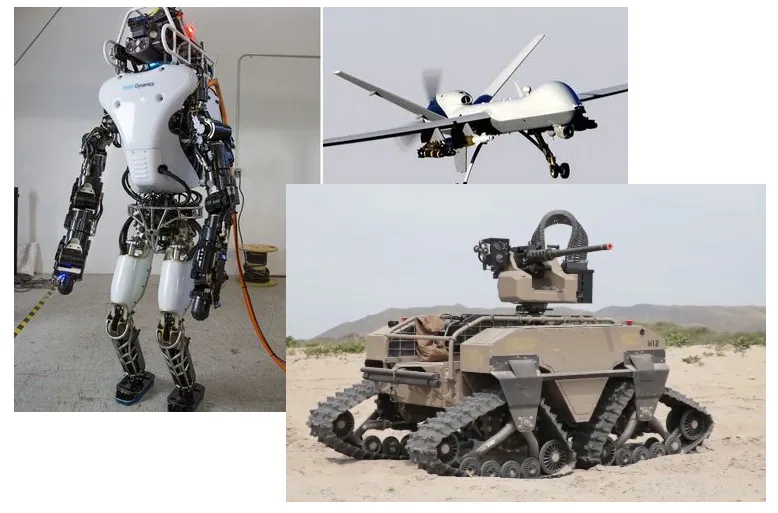
This is a restructuring of warfare, where autonomous systems are being positioned to operate across air, land, and sea, replacing traditional deployments with machine-driven execution at scale. CIA director David Petraeus said it was “the largest single commitment to autonomous warfare in history.” As the Guardian noted, $54 billion is an astounding figure that amounts to half of the UK’s entire defense budget.
What stands out immediately is the pace, because this is not a gradual transition. Autonomous drones, remote systems, and AI-assisted targeting are already being deployed in active theaters, and the cost structure of warfare is changing as a result, since low-cost, scalable systems reduce the financial barrier to engagement. This is a new arena with untold potential for destruction of civilizations.
This is why the government and private sector are harvesting surveillance data. The same systems designed for data processing, automation, and consumer use are now being adapted for surveillance, targeting, and operational control, creating a convergence that centralizes both capability and influence.
Government is simulating battlefield outcomes in real time, which reduces reliance on human judgment and shifts authority toward machine-generated conclusions. A top general with experience will be second-tier to an advanced AI system capable of computing millions of scenarios in real-time.
There is no fully established doctrine governing the deployment of autonomous systems at scale, particularly for coordinated drone operations, and current models remain vulnerable to failure and manipulation. Again, deploying such systems without fully understanding their limitations introduces risks that extend far beyond conventional warfare.
This $54 billion request is absolutely absurd, considering the Pentagon already has a $1 trillion budget. But the Pentagon has never had a real budget—the agency has failed EVERY audit, and when a whistleblower was close to exposing fraud, a rogue terrorist defied the laws of physics by flying a plane into the building where the files were held. The Pentagon will spend that money whether the funding is approved or not, but the real question remains: how will advanced artificial intelligence change the future of warfare?
Posted originally on Apr 24, 2026 by Martin Armstrong |
I have said many times that interest rates do not lead inflation but react to it, and what we are seeing in Turkey right now is a central bank attempting to hold the line as external pressures rise, because the Central Bank of the Republic of Turkey has kept its benchmark rate at 37% while warning that inflation risks are increasing again, largely due to geopolitical tensions and rising energy costs tied to the Iran conflict.
This decision is not a sign of stability, but rather a reflection of constraint, because inflation in Turkey remains elevated above 30%, and the central bank itself is acknowledging that price pressures could accelerate again, particularly as energy imports become more expensive and global uncertainty feeds into domestic costs.
What many overlook is that Turkey’s economy is deeply integrated with the West, both financially and structurally, which means it is highly dependent on foreign capital inflows, dollar-based trade, and access to international financing. That connection ultimately limits its policy flexibility, despite political rhetoric about independence.
Turkey relies heavily on imported energy, and when global oil prices rise, those costs immediately feed into inflation, forcing policymakers to maintain higher interest rates to defend the currency and prevent capital flight, even though those same high rates put pressure on domestic growth and credit conditions.
This creates the classic dilemma that I have described for decades, where a country does not fully control its own economic direction because it must constantly respond to shifts in global capital flows, and when confidence declines due to war, inflation, or instability, capital moves quickly, leaving policymakers with limited options.
The Iran war has added a new layer of pressure, because disruptions to energy markets and rising geopolitical risk reduce investor confidence, and when that happens, countries like Turkey must offer higher returns to attract or retain capital, which explains why rates remain elevated despite the strain on the economy.
At the same time, maintaining high rates for an extended period slows economic activity, increases borrowing costs, and creates internal stress within the financial system, which leads to a growing conflict between political objectives and economic realities that cannot be resolved easily.
This is where Turkey’s position becomes particularly fragile: it is trying to balance its role between East and West, maintaining access to Western capital markets while pursuing an independent foreign policy. But when financial pressure rises, the reality is that capital flows dictate outcomes regardless of political intent.
Posted originally on CTH on April 23, 2026 | Sundance
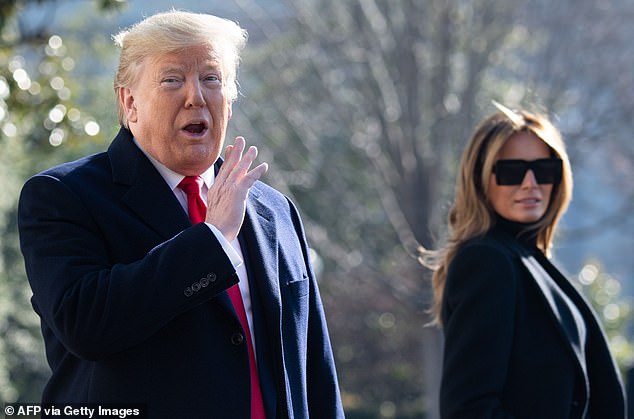
Following direct remarks from both Commerce Secretary Howard Lutnick and U.S. Trade Representative Jamieson Greer, a triggered Canadian Prime Minister Mark Carney says the U.S. will not be permitted to dictate terms of the USMCA renegotiation, now scheduled for formal talks with Mexico only beginning May 25th.
According to the Canadian leadership they do not need the United States in order to maintain their economy. The unfortunate people of Canada are very close to finding out exactly what that level of arrogance delivers.
USTR Jamieson Greer was just in Mexico meeting with Mexican President Claudia Sheinbaum and the Mexican trade delegation. “Mexico’s economy minister Marcelo Ebrard said on Monday that formal negotiations to review the U.S.-Mexico-Canada trade pact, known as the USMCA, are due to begin the week of May 25.”
“Tomorrow and this afternoon we will hear the U.S. side’s views. Once that is done, we will move on to the next phase, which is formal negotiations. We expect formal negotiations to begin the week of May 25,” Ebrard said following a meeting with U.S. Trade Representative Jamieson Greer.” {source}
Meanwhile Canadian Prime Minister Mark Carney continues talking to his domestic audience about fighting Donald Trump and refusing to accept any terms that do not meet his current pontifications: “It’s not a case that the United States dictates the terms. We have a negotiation, we can come to a mutually successful outcome – it will take some time,” he continued.
In Washington, Trade Representative Jamieson Greer said unless Canada engaged in talks about broadening the so-called rules of origin that allow goods to enter the United States tariff-free, Washington might have to impose other border controls. {source}
It is worth remembering, the recent Supreme Court decision that overturned the IEEPA tariffs also reinforced the unilateral power of the U.S. President to regulate any/all trade with any foreign country including a full block of trade if designated. Canada is positioned to be the first nation to discover the expressed power of the U.S. President as affirmed by the United States Supreme Court.
One of the reasons why Canadians are oblivious to the potential collapse of their economy is because U.S. media reports are blocked from Canadian social media sites. One of the infringements within the USMCA is the Canadian Law Bill [C-18, the Online News Act] that blocks information to Canadian citizens that is not supported by the Canadian government.
The people of Canada are stuck inside an Orwellian government constructed echo-chamber unable to hear opposing viewpoints. They simply have no idea what is heading in their direction. Which is incredibly ironic considering how much Mark Carney rails against Russian President Vladimir Putin, yet Canada has more restrictions on information than Russia. Think about it. The need for control is a reaction to fear.
This information control dynamic helps to explain why Canadians, in the aggregate, simply do not realize the nature of the trade conflict that has been created by their own government. Perhaps a full 30-day blockade would help their eyes to open; perhaps not. However, something needs to happen in order for the Canadian people to have time to prepare for the economic collapse soon to fall upon them.
Those differences include a completely different import/export profile with each country, different sectors of goods, difference in the wage rates within each country and a structural difference in the way each country is establishing their own, independent free trade agreements with other third-party countries. These baselines form the reason to tell congress of the dissolution, and on July 1st inform both Canada and Mexico about it.
In the interim, the points of conflict are currently being negotiated with Mexico toward resolution. Hence Jamieson Greer in Mexico meeting with officials on Monday and Tuesday.
It is not just Commerce Secretary Howard Lutnick and U.S. Trade Representative Jamieson Greer who are publicly warning the Canadian government about what lies at the end of this self-destructive path they have chosen, Deputy USTR Rick Switzer recently also sounded the alarm. WATCH (prompted):
The Canadians have been talking to U.S. media looking for sympathetic ‘Orange man bad’ coverage. However, within the contacts between Canadian government officials and U.S. corporate allies, the sentiment from team Trump is very clear:
“The key thing that has struck me, and I think it has struck all Canadians, is so many of these guys in the Trump administration, frankly, they just hate Canada,” said Brian Clow, former Prime Minister Justin Trudeau’s deputy chief of staff who led Canada-U.S. affairs. {source}
It’s not hatred, it’s annoyance.
Years of compounding parasitic annoyances and sanctimonious, ‘holier-than-thou’ pontifications from the arrogant and uppity Canadian government.
The only time Canada has been honest with themselves and with President Trump was when Justin Trudeau was exiting office and admitted Canada cannot function without all of the one-way benefits it receives from the USA {GO DEEP}.
When President Trump was asked about Prime Minister Mark Carney creating a new trade agreement with China, President Trump responded that he didn’t care – it was irrelevant to him. Yet, simultaneously inside the USMCA President Trump has the power to veto any trade agreement between Mexico or Canada and a non-member nation.
So, why didn’t President Trump care? Easy, because in President Trump’s mind there’s not going to be a USMCA; so, he really doesn’t care if Canada runs to violate it. In real terms, Canada doing bilateral deals with other countries, especially deals potentially detrimental to the USA, only strengthens his position on dissolving the USMCA.
If Canada violates the terms and spirit of the USMCA, it makes dispatch of the unliked trade agreement even easier. Canada is helping President Trump remove the congressional justification they could use to block him. If Canada is violating the USMCA (CUSMA), Congress is kneecapped from interference.
Provoking Canada into a trade position, that puts them at a disadvantage trying to stop the dissolution of the CUSMA, stops Congress from opposing the fracture, and then opens the door to a bilateral trade agreement, is creating a self-fulfilling prophecy that is entirely controlled by President Donald Trump.
Both Canada and Europe are independently, out of necessity, taking action that takes apart the trade and economic system they created. At the core of the old trade system both Canada and Europe were exploiting the USA, exfiltrating wealth and skimming the independent entrepreneurial innovation that originates from within the U.S. economic system.
That necessary exploitation happened because the USA is innovative (freedom-based capitalism), while the CA/EU system is built on government control mechanisms. The CA/EU energy policy is just one impactful example of their pontificating inability to be insightful when it comes to consequences. The EU and Canada are now stuck looking for markets that will do the dirty jobs, provide them with core components, while simultaneously looking for markets for their finished products.
On the other side of the approach is President Trump, working to expand U.S. industrial dirty job capacity, create our own core components, then create finished goods entirely on our own. A complete revitalization of the U.S. industrial and manufacturing base. Our U.S. GDP is currently expected to grow north of 5%. This is not happening by accident.
♦ SUMMARY: Some people have construed the bilateral trade preference of President Trump to be the elimination of globalism in favor of nationalism in trade agreements. While the outcome of Trump’s approach indeed aligns with that theme, it is not specifically the objective of President Trump to eliminate global trade, but rather to focus on specific interests in trade that benefit the unique nature of each party involved.
Canada can embrace China, and Europe can embrace India; in the bigger picture it really doesn’t matter. These relationships only create dependencies which are the natural outcome of globalism. From President Trump’s position, what really matters is what happens within our borders and how the United States economy is positioned. This is President Trump’s singular focus.
Do you remember President Trump leaving the 2025 G7 meeting in Canada early? The final day invitation list brought Australia, Mexico, Ukraine, South Korea, South Africa, India, the United Nations and the World Bank into the G7. President Donald Trump smartly exited the G7 assembly a day early, he departed before that crowd of interests arrived. The world leaders came because the process to keep USA wealth inside the USA is against their interests. That’s why they came, and that’s why President Trump left.
Globalism, in its economic construct, is a series of dependencies. However, the opposite is also true. If nations are not dependent, they are sovereign – able to exist without the need for support from other nations and systems. If nations are sovereign, then globalism is no longer needed.
If each nation of the world is operating according to its individual best interests, the position of Donald Trump, then what happens to the governing elite who set up the system of interdependencies?
I have created this site to help people have fun in the kitchen. I write about enjoying life both in and out of my kitchen. Life is short! Make the most of it and enjoy!
This is a library of News Events not reported by the Main Stream Media documenting & connecting the dots on How the Obama Marxist Liberal agenda is destroying America