Posted Originally on Oct 5, 2026 by Martin Armstrong
Economists keep pointing to consumer spending as proof that the American economy remains strong. Americans spent 0.9% more in August, and naturally this is being celebrated as the resilient American consumer. But real disposable income did not increase AT ALL, while the personal savings rate fell to just 4.1%. Americans are spending more while their inflation-adjusted income is going nowhere and savings are being depleted to maintain their standard of living.
The cost-of-living crisis is showing up in the numbers. Consumer spending can rise during inflation simply because everything costs more. If your grocery bill rises from $150 to $200, you increased consumer spending by 33%, but you did not become wealthier or eat 33% more food. You simply handed over more dollars for the same necessities.
Personal consumption expenditures increased by $190.8 billion in August while personal income increased only $66.6 billion. Real consumer spending rose 0.6%, but real disposable income was flat. You can maintain that imbalance temporarily by reducing savings or borrowing, but you cannot maintain it forever.
This is what Washington never understands about inflation. They tell people inflation has fallen because the RATE of increase is lower than it was at the peak. That does not mean prices went back down. Consumer prices are roughly 30% higher than at the end of 2019. Something that cost $100 then costs roughly $130 today. Lower inflation merely means prices are rising more slowly from an already elevated level.
This is why consumer confidence can collapse while spending remains strong. The Conference Board’s Consumer Confidence Index plunged to 81.9 in September, its lowest reading since 2014. The University of Michigan’s sentiment index fell to 48.1 and is now 15% below January. People are continuing to spend because they must continue living, but they are increasingly worried about what comes next.
The University of Michigan reports that consumers’ expectations for inflation over the next year climbed to 4.6% in September, up from 3.4% in February. Consumers’ assessments of both their current and expected personal finances also deteriorated. The paycheck may still be coming in, but it simply does not stretch as far as it once did. Americans feel the conditions of the economy daily.
Even if inflation fell to 2% tomorrow, today’s elevated price level would remain. Prices would simply continue increasing from that higher base. This is how inflation quietly destroys the middle class. Savings decline, debt rises, homeownership becomes harder, young people delay families, and retirees discover that their savings purchase far less than expected.
The American consumer has kept this economy moving, but there is a limit to how long households can spend faster than their real incomes grow. You cannot raid savings forever, increase credit-card balances forever, or finance your standard of living indefinitely.
Strong consumer spending therefore does not necessarily mean the consumer is strong. Sometimes it means the consumer is paying substantially more simply to remain in the same place. Americans are still spending, but real disposable income has stalled, savings are falling, confidence has collapsed, and prices remain roughly 30% above where they stood before the pandemic-era inflation surge. Washington can call that resilience if it wants, but ordinary people know the difference between spending more because they are becoming wealthier and spending more because life itself has become more expensive.
Posted Originally on Oct 5, 2026 by Martin Armstrong |
The September jobs report should put an end to the fantasy that the American economy can absorb rising prices indefinitely without eventually hitting employment. The economy added only 29,000 jobs when economists expected roughly 84,000, while unemployment increased to 4.2%. Worse still, July was revised from a gain of 21,000 jobs to a LOSS of 10,000, and August was revised down from 162,000 to 133,000. Those revisions erased another 60,000 jobs from what we were previously told was a stronger labor market.
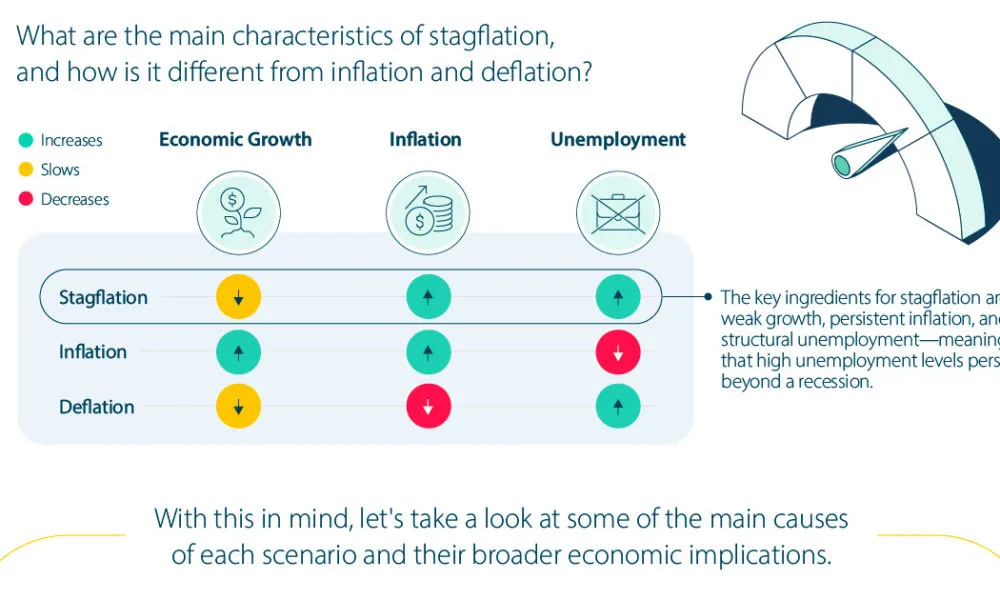
This is the stagflationary squeeze I have been talking about. Prices remain elevated while economic growth and employment begin to weaken. Average hourly earnings increased only 0.1% in September and 3.0% over the past year. Consumer inflation has been running above that pace, meaning workers can receive a nominal raise while still losing purchasing power. You can have a job, earn more dollars, and still become poorer in real terms.
The labor market is not collapsing, and that distinction matters. Initial unemployment claims remain low and the unemployment rate has stayed between 4.1% and 4.3% since March. But the direction underneath the headline is deteriorating. There are now 7.1 million unemployed Americans, 1.9 million have been unemployed for at least 27 weeks, and 4.5 million are working part-time for economic reasons because they cannot find full-time work or their hours have been reduced.
This is precisely the environment that traps the Federal Reserve. Raise rates to fight inflation and you place additional pressure on employment, housing, business investment, and debt service. Lower rates to support employment and you risk feeding inflation that is increasingly being driven by energy, tariffs, supply constraints, government deficits, and geopolitical disruptions that interest rates cannot solve. The Fed cannot print oil, manufacture raw materials, or clear a manufacturing backlog.
The average American gets crushed from both sides. Confidence is already falling because people see their cost of living rising while they become less certain about their employment. A household can survive expensive groceries when wages are rising and jobs are plentiful. It becomes an entirely different economic environment when groceries remain expensive, wage growth falls behind prices, and employers stop hiring.
That is why September’s 29,000 jobs matter. It is not evidence of some sudden depression, but it is another warning that the economy is losing momentum while the cost-of-living problem has not disappeared. Stagflation does not require 1970s-style double-digit inflation and unemployment before people feel the pain. The squeeze begins when prices remain stubbornly high while employment opportunities, real wages, and confidence begin moving in the wrong direction at the same time.
I have created this site to help people have fun in the kitchen. I write about enjoying life both in and out of my kitchen. Life is short! Make the most of it and enjoy!
This is a library of News Events not reported by the Main Stream Media documenting & connecting the dots on How the Obama Marxist Liberal agenda is destroying America