Episode 5203: Counter-Intelligence Tracking President Trump; Iranians Demand Change


Posted originally on Rumble on Bannon War Room on: March 10, 2026

SHEILA MATTHEWS: Our Evidence At AbleChild Shows That The Government Is Covering Up For The Behavioral Health And Drug Companies! They Have The Health Records Of These Shooters And Claim They Can’t Release Them Because Of HIPAA


Posted originally on Rumble on Bannon War Room on: March 10, 2026

MIKE HOWELL: The RINO Class Is Trying To Lock Markwayne Mullin In And Ruin His Ability To Increase Deportations By Sending Out A Public Letter Where They Put Words In Tom Homan’s Mouth


Posted originally on Rumble on Bannon War Room on: March 10, 2026

JEFF RYER: I’m Proud Of Our Grassroots Here In Virginia For Standing Up The Way They Have. If There’s A Way To Win This Redistricting Battle; We’re Going To Win It


Posted originally on Rumble on Bannon War Room on: March 10, 2026

BANNON: We Can’t Have Two Different Ojectives. Israel Is Not An Equal Partner; They’re A Protectorate. Let Me Be Blunt. They Don’t Get Their Own Objectives


Posted originally on Rumble on Bannon War Room on: March 10, 2026

ERIC BOLLING: Trump Needs To Hear This! If He Negotiated A Deal With Iran And Venezuela Where They Owned The Reserves But Americans Pulled The Oil Out Of The Ground And Had First Dibs At A Market Price, It Would Change Everything


Posted originally on Rumble on Bannon War Room on: March 10, 2026

TRITA PARSI: There Was A Segment Of The Iranian People That Seemed To Welcome This Conflict Because They Were Just So Sick And Tired Of This Theocracy


Posted originally on Rumble on Bannon War Room on: March 10, 2026

John Solomon Reports That President Trump Was Targeted By Four FBI Code-Named Counterintelligence Probes!


Posted originally on Rumble on Bannon War Room on: March 10, 2026

Canada’s Housing Crisis Shows the Consequences of the Easy Money Era


Posted Posted originally on CTH on Mar 11, 2026 by Martin Armstrong |  

DALL%C2%B7E 2024 12 18 13.30.20 A dynamic and visually engaging image representing Canadas housing market surge designed for a 16_9 aspect ratio. The image features a vibrant Canad 1140x651

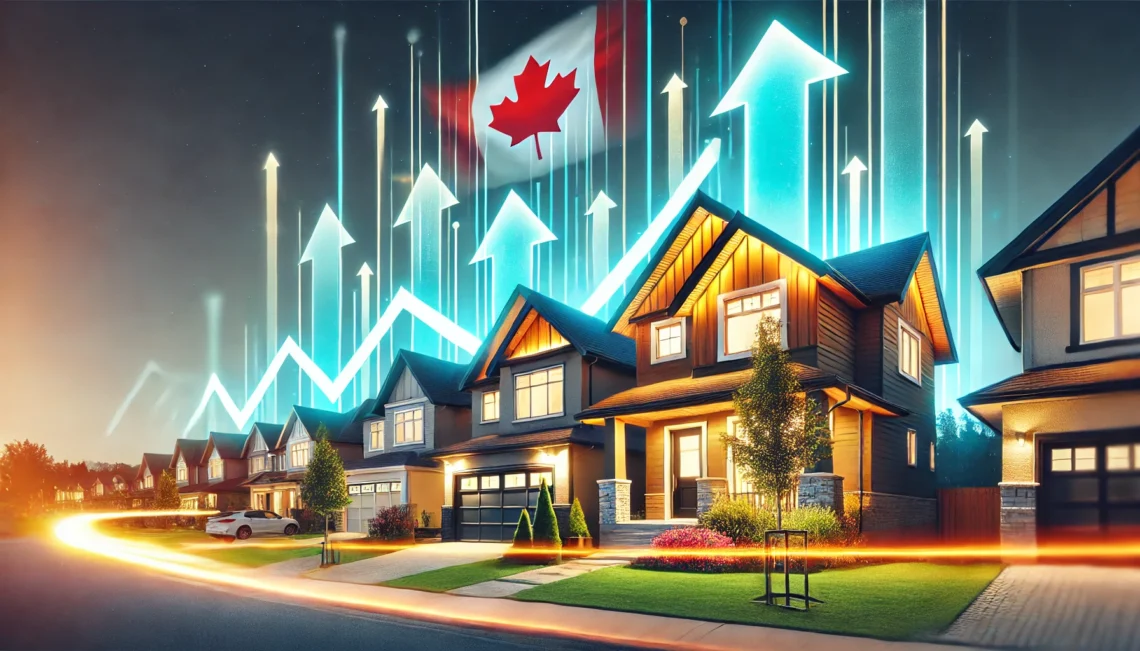
Canada’s housing market has become one of the most expensive in the developed world, and the affordability crisis continues to worsen despite rising interest rates. Mortgage payments as a share of household income are now near record levels, leaving many first-time buyers completely priced out of the market while existing homeowners face significantly higher borrowing costs as loans reset.

For more than a decade, ultra-low interest rates fueled an enormous expansion in mortgage credit. Cheap money encouraged speculative investment in real estate while governments simultaneously restricted new housing supply through zoning, regulatory hurdles, and lengthy permitting processes. Prices rose far faster than wages, creating the illusion of prosperity as homeowners watched property values climb year after year.

The structural problem is that when housing becomes the primary engine of economic growth, the entire system becomes dependent on constantly rising property prices. Once interest rates increase or credit conditions tighten, the pressure begins to build across the entire market. Canada is now experiencing that transition as higher borrowing costs collide with historically elevated housing prices.

Recent data show that housing affordability remains near the worst levels ever recorded in Canada. In many major cities such as Toronto and Vancouver, mortgage payments on a typical home now consume well over half of the median household income. Younger generations increasingly find themselves locked out of home ownership entirely, while investors who purchased multiple properties during the boom are facing rising financing costs.

Real estate cycles have always been driven by credit expansion and confidence. When interest rates were artificially suppressed, housing markets could expand indefinitely. But once borrowing costs normalize, the imbalances created during the easy money era begin to surface. Canada’s housing market now stands as one of the clearest examples of how prolonged monetary stimulus can inflate asset prices far beyond what the underlying economy can sustainably support.

QAProductImage scaled

I will be speaking live in Vancouver at the end of the month at the 2026 World Outlook Conference. Naturally, issues surrounding the Canadian economy, such as housing, will be at the focal point.

The End of the Anonymous Internet


Posted Mar Posted originally on CTH on 11, 2026 by Martin Armstrong |  

Senate Passes Historic Kids Online Safety Act

Congress is once again advancing legislation under the banner of protecting children online, and whenever government begins framing policy in moral language, it usually means something far more intrusive is being constructed beneath the surface. The latest push on the Kids Online Safety Act centers on mandatory age-verification systems that would require online platforms to verify users’ age before allowing access to content.

If companies are required to confirm a user’s age, they must collect identifying information. That means uploading government IDs, facial scans, biometric verification, or some form of identity credential simply to access websites or social media platforms. The open internet that once allowed individuals to communicate anonymously has suddenly become an identification checkpoint.

Privacy organizations and digital rights advocates have already warned that these requirements pressure websites to collect enormous amounts of sensitive personal information just to allow ordinary speech online. Once these databases exist, they become irresistible targets for hackers, governments, and corporate data collection. The same institutions that routinely suffer massive data breaches now want citizens to upload even more sensitive identification simply to read information or participate in discussions.

AI's Role in Challenging Online Anonymity | daily.dev

Even regulators themselves are quietly acknowledging the contradiction. Officials have admitted that these verification systems require collecting personal data in ways that could conflict with existing privacy protections for children. Yet the legislation continues moving forward because the political incentives are obvious. No politician wants to be seen opposing a bill marketed as protecting children.

This is exactly how surveillance infrastructure has historically developed. It never begins with governments announcing they want to monitor citizens. Instead, it begins with policies designed to address social problems. Once the identification systems are built, the infrastructure remains permanent. What starts as age verification inevitably becomes identity verification for broader purposes.

The implications for speech are enormous. Anonymous communication has been part of political culture for centuries. The Federalist Papers themselves were written under pseudonyms. The internet extended that tradition globally by allowing individuals to exchange ideas without fear of retaliation from governments, employers, or political movements. Age-verification mandates fundamentally change that structure by requiring users to link identity credentials to online participation.

Governments have repeatedly demonstrated they cannot secure large databases. Massive data breaches occur every year across both public agencies and private corporations. Expanding identity verification requirements only increases the amount of sensitive information circulating across already-vulnerable systems.

Once platforms are required to verify identity or age, that framework can easily be expanded to regulate speech, political content, financial activity, or access to information. The infrastructure becomes permanent even if the original justification fades away. The internet began as an open communications network where individuals could exchange information freely across borders. Requiring identification to access information transforms that environment into a monitored space where participation depends on presenting credentials.