Episode 5266: Where We Stand In An Offramp To The War; Cutting An America First Deal


Posted originally on Rumble on Bannon War Room on: April 2, 2026

MIKE DAVIS: This New York Times Story is Pretty Damning For ActBlue. It Cites Internal Memos Between ActBlue And Covington & Burling Warning Of Potential Criminal Misconduct Tied To How Foreign Donations Were Handled


Posted originally on Rumble on Bannon War Room on: April 2, 2026

MARY HOLLAND: It’s Incredibly Dangerous When A State Says To A Professional, Particularly A Doctor, “You Can’t Have This Speech With Your Patient Or Your Client.”


Posted originally on Rumble on Bannon War Room on: April 2, 2026

STEVE CORTES: The Fiscal Reality Matters. Even If You Support Intervention, We’re $39 Trillion In Debt And Borrowing To fund This War. A $200 Billion War Is Not Abstract


Posted originally on Rumble on Bannon War Room on: April 2, 2026

ELIZABETH MITCHELL: The President Is Keeping All Options On The Table And Not Backing Himself Into A Corner. Anything He Shares Publicly Is Heard By Iran As Well. So While There Are Reports Of Escalation, You Have To Take It With A Grain Of Salt


Posted originally on Rumble on Bannon War Room on: April 2, 2026

CURT MILLS: I Have No Doubt That President Trump Remains Very Much The Same Man Who Was Skeptical Of The Iraq War And Skeptical Of Escalation In This Conflict


Posted originally on Rumble on Bannon War Room on: April 2, 2026

ERIC BOLLING: Oil Didn’t Move Much During The President’s Speech Until The “Send Them Back To The Stone Ages” Line. That’s When It Spiked From $99 To ~$108, And By Morning Hit $111–112 A Barrel


Posted originally on Rumble on Bannon War Room on: April 2, 2026

BRANDON WEICHERT: I’m Not Convinced That This Thing Is An Off-Ramp Yet And I Very Badly Want To Be Wrong


Posted originally on Rumble on Bannon War Room on: April 2, 2026

China Expands Digital Yuan


Posted originally on Apr 3, 2026 by Martin Armstrong |  

China Yuan Currency

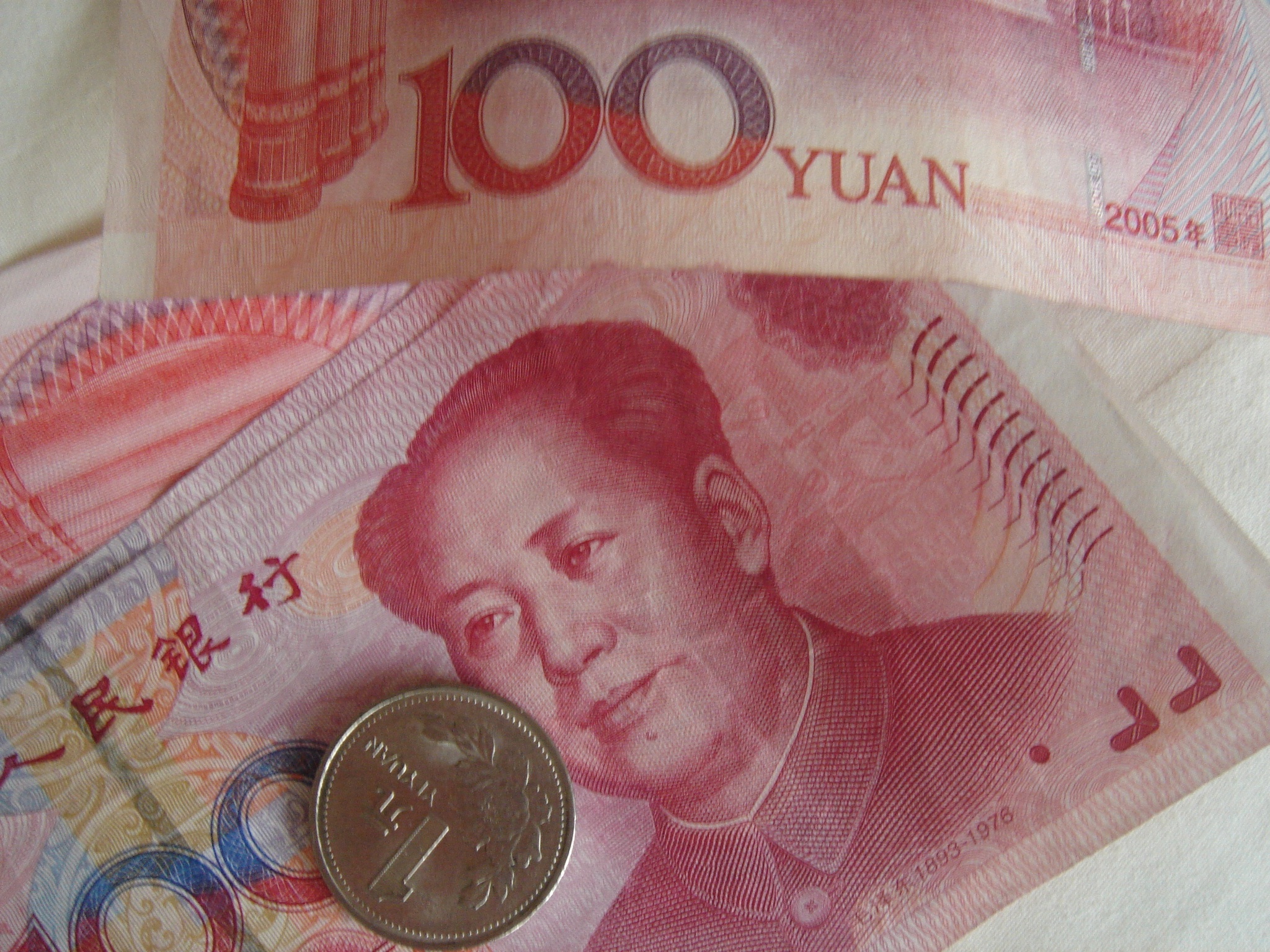
China has just taken another decisive step toward the future of money, and once again, the West is pretending this is simply about “payment efficiency.” The People’s Bank of China has now expanded its digital yuan program by adding 12 additional banks, bringing the total number of participating institutions to 22.

China launched the digital yuan back in 2019, and despite already having dominant digital payment systems like Alipay and WeChat Pay, they continue to push forward aggressively. The reason is simple. Those systems are private. The digital yuan is not. This is a direct liability of the central bank, meaning every transaction can be monitored, tracked, and ultimately controlled.

This latest expansion dramatically increases the infrastructure behind the system. These new banks will handle wallet creation, payments, and settlement, effectively embedding the digital yuan deeper into everyday economic life. This is how adoption is forced. Not by demand, but by integration.

What is equally important is what China is doing at the same time. They are cracking down on cryptocurrencies and banning stablecoins, eliminating any competing alternative that would allow citizens to transact outside the state-controlled system.

And this is where people need to understand what a central bank digital currency truly represents. I have warned repeatedly that CBDCs are not about innovation. They are about surveillance and control. Governments have long wanted the ability to monitor every transaction, track every movement of capital, and ultimately dictate how money can be spent. A digital currency allows them to do exactly that. You can impose spending limits, restrict purchases, freeze accounts instantly, and even enforce policy at the individual level.

China is simply the first to implement it at scale. The digital yuan has already processed trillions in transactions, and its expansion into cross-border systems shows the real objective. They are building an alternative financial architecture that bypasses the dollar system entirely.

You can see this clearly in projects like mBridge, where digital currencies are being used for international settlements outside of SWIFT. The goal is not just domestic control, but global influence. The more countries adopt this infrastructure, the less dependent they become on the existing Western financial system. At the same time, China is even moving toward making digital yuan holdings interest-bearing, further incentivizing adoption and transforming it into a full banking alternative. This is no longer just a payment tool. It is becoming the foundation of a parallel financial system.

Governments do not introduce these systems when confidence is high. They introduce them when confidence is collapsing and they need to regain control over capital flows. We are entering that phase now. The sovereign debt crisis is not going away. Governments are desperate to maintain control over capital as fiscal conditions deteriorate. A CBDC gives them the tool they have always wanted. Total visibility and total authority over money itself.

Democrats Losing Confidence in Their Own Party


Posted originally on Apr 3, 2026 by Martin Armstrong |  

Democratic Split

The latest polling data coming out on the Democratic Party is not just bad. It is historically weak, and what is even more telling is that the erosion is coming from within their own base. This is not the opposition attacking them. This is their own voters losing confidence, and that is always the beginning of a political fracture.

Recent polling shows the Democratic Party sitting at a net favorability of roughly -20, with more than 55% of Americans viewing the party unfavorably. At the same time, even among Democrats themselves, enthusiasm has collapsed compared to prior cycles. An AP-NORC poll found that support within the party has not recovered since the 2024 election loss, and even loyal voters are far less confident than they were historically.

The press will try to spin this as temporary dissatisfaction or “mid-cycle frustration,” but they fail to understand how cycles work. When you see declining confidence not just from independents but from the core base itself, that signals internal division. The coalition begins to fracture because it was never truly unified in the first place. It was held together by opposition, not by shared vision.

The Democratic Party has become a coalition of competing interests that cannot coexist long-term. You have the progressive faction pushing aggressively left, while a large portion of the traditional base remains far more moderate. Even internal surveys acknowledge that the average Democratic voter is far less extreme than the activist wing that dominates policy and media narratives.

You can already see the cracks forming. Infighting is becoming more aggressive, particularly in key races, where Democrats are now attacking one another before even facing the opposition. This is exactly what happens before a political realignment. The party turns inward, and the fragmentation accelerates.

The Republican Party has consolidated into a more unified base, while the Democrats have expanded into a broader coalition that is inherently unstable. The more ideologically diverse the coalition becomes, the harder it is to maintain cohesion as confidence declines.

This is the early stage of a political restructuring and the death of the Democratic Party. When a party loses the confidence of its own base, it begins to splinter. Factions emerge, new movements form, and eventually the old structure can no longer hold.

I have stated before that the Democratic Party, as it currently exists, is unlikely to survive intact into the next major political cycle.