Posted originally on Mar 16, 2026 by Martin Armstrong |
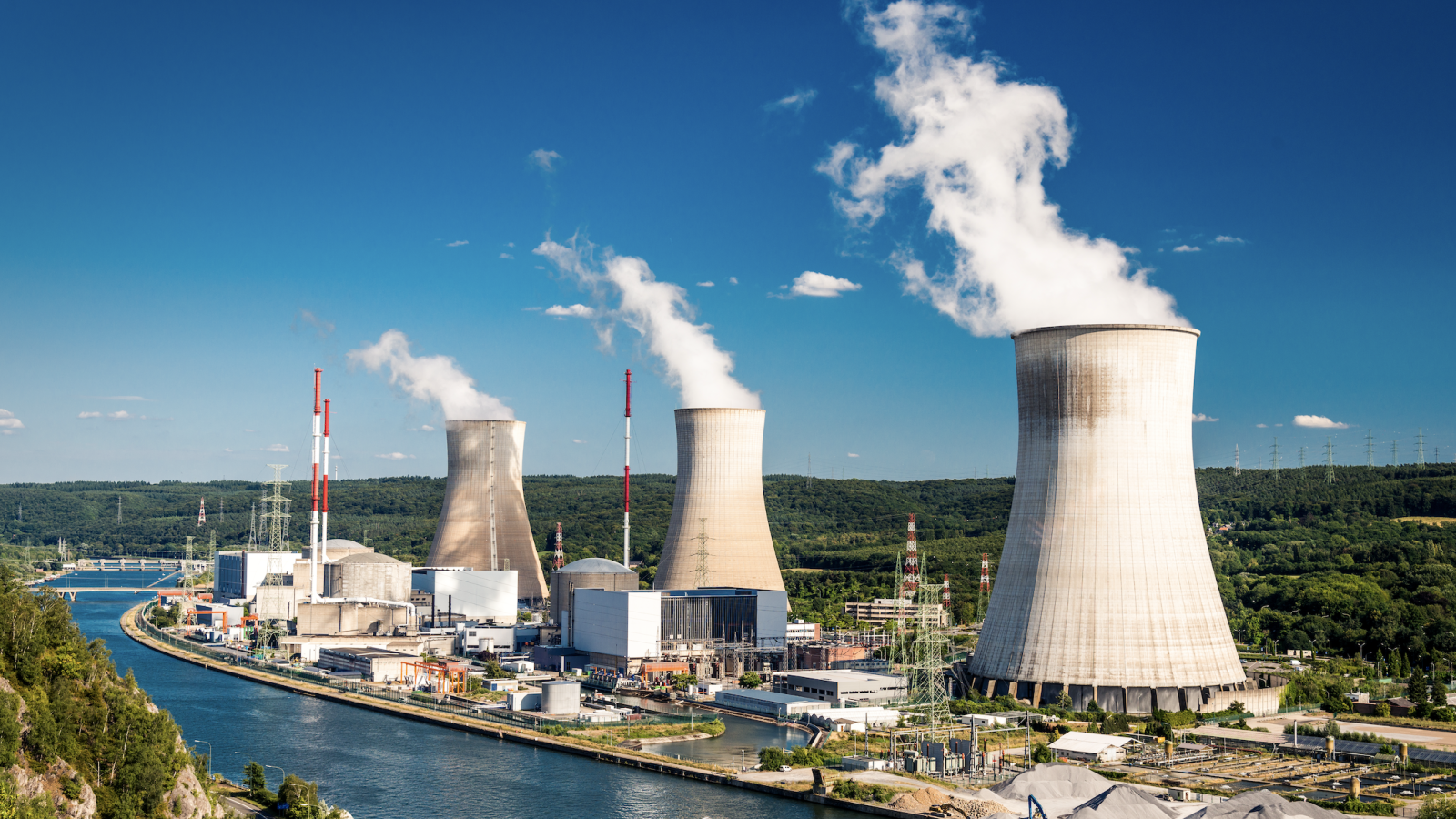
For years, politicians across the Western world have insisted that windmills and solar panels would power the future while reliable energy sources were dismantled in the name of climate policy. Now reality is beginning to intrude. Canada is preparing to unveil a national electricity strategy centered on expanding nuclear power as governments confront a basic problem they ignored for years — electricity demand is rising far faster than their green policies ever anticipated.
Artificial intelligence, data centers, and electrification mandates are dramatically increasing power demand across North America. At the same time, governments closed coal plants, restricted natural gas, and stalled nuclear projects for ideological reasons. The result has been rising electricity prices and growing concern about long-term energy security.
Canada is now quietly acknowledging what engineers and economists have been saying for years. Nuclear powerremains one of the few reliable baseload energy sources capable of supporting a modern industrial economy. Several new reactors are already planned or under construction, and the government’s upcoming strategy is expected to accelerate those projects.
Canada is building a new generation of nuclear reactors known as small modular reactors (SMRs). The most important project is the Darlington New Nuclear Project in Ontario. Ontario Power Generation has begun construction of the first BWRX-300 small modular reactor at the Darlington site, with the reactor expected to come online around 2029–2030.
The Darlington project is significant because it is expected to become the first grid-scale SMR operating in a G7 country. The government has approved a full fleet of four SMRs at the site, which together could produce about 1,200 megawatts of electricity — enough to power roughly 1.2 million homes. Each reactor is a GE Hitachi BWRX-300 design that produces around 300 megawatts of power and is smaller and less complex than traditional nuclear plants, which is intended to reduce construction costs and speed up deployment.
At the same time, Canada is completing major refurbishment projects on existing nuclear plants such as the Darlington Nuclear Generating Station. This refurbishment extends the facility’s life for decades, preserves thousands of jobs, and continues to produce reliable baseload electricity.
Beyond individual projects, the Canadian government is preparing to release a national electricity and nuclear strategy to accelerate nuclear development and provide investors with clearer policy direction as electricity demand rises sharply.
This shift exposes the contradiction that has defined Western energy policy. Governments attempted to restructure entire energy systems based on political narratives rather than economic reality. Now they are discovering that the industrial world cannot function without stable, large-scale electricity generation. The return to nuclear is less about environmental policy and more about economic survival.
I will be speaking in Vancouver on March 31 at the 2026 World Outlook Conference. The discussion will be tailored to the Canadian investor, as it is paramount to understand what is on the horizon. The next few years will be volatile to say the least, and the best we can do is to prepare for what is to come. I have refrained from sharing the full scope of the glaring Turning Points and Panic Cycles flashing on Socrates, but I am prepared to give attendees the full story.
Posted originally on Mar 16, 2026 by Martin Armstrong |
The press is reporting that Venezuela is opening its mining sector to American companies, allowing foreign investment to extract gold, diamonds, and rare earth minerals after the National Assembly approved the first step in rewriting the country’s mining laws. The reform extends mining concessions from 20 to 30 years and allows international arbitration in disputes, clearly designed to attract Western capital that had previously been locked out under the old socialist system.
The real story is rare earth minerals and the global race to secure them. Washington has already authorized transactions involving Venezuelan gold through the state mining company Minerven and is working to bring American mining firms into the country. The move comes after the United States began reopening Venezuela’s oil sector to American companies as well, signaling that the real objective is securing access to resources that have become strategically vital.
The deeper issue is that the United States does not control the resources it needs to maintain its technological and military dominance. Rare earth minerals are essential for missiles, fighter jets, radar systems, electronics, and advanced manufacturing. As I have explained before, America’s defense supply chain depends on materials it does not control. That is a serious vulnerability in any geopolitical confrontation.
China dominates the global rare earth supply chain, accounting for the majority of production and refining. In fact, China supplied about 71% of U.S. imports of rare earth compounds and metals in recent years and controls much of the processing capacity for these materials. These minerals are not just another commodity. They are the foundation of modern industrial technology, electric vehicles, renewable energy systems, and the entire defense sector.
This is why Washington has been quietly pursuing mineral deals around the world. The United States has already secured preferential access to Ukraine’s mineral resources, which include significant deposits of graphite, titanium, lithium, and rare earth metals. Ukraine holds roughly 5% of the world’s critical raw materials, making it strategically important in the mineral race. The mineral agreement between Washington and Kyiv was never just about economic reconstruction. It was about securing long-term access to materials needed for modern industry and military technology.
Japanhas also been drawn into this geopolitical struggle. After China restricted rare earth exports in the past, Tokyo began aggressively diversifying its supply chain and securing new mineral partnerships to reduce dependence on Beijing. The entire world is now scrambling to secure access to the materials that underpin modern technology.
Venezuela now enters that equation. The country is believed to possess significant untapped mineral deposits. If these resources are opened to Western investment, it will provide another potential supply source outside of China’s control. That is why this move is important. It is not about reviving Venezuela’s economy. It is about the strategic mineral competition that is quietly reshaping global politics.
Behind every war and every geopolitical confrontation lies the same fundamental issue – resources. Oil dominated the last century. Rare earths and critical minerals will dominate the next. The United States understands that its technological future depends on securing these materials, and that explains the sudden interest in places like Ukraine and now Venezuela.
The public hears about democracy, sanctions, and diplomacy. But the real game is being played beneath the surface. Control the resources and you control the future of industry, defense, and economic power. Venezuela’s coerced decision to open its mineral wealth is just another move on that global chessboard.
Posted originally on Mar 16, 2026 by Martin Armstrong |
The latest GDP numbers show that the U.S. economy slowed far more than expected as we closed out 2025. According to the revised data, Q4 GDP expanded at just a 0.7% annualized pace, sharply lower than the original 1.4% estimate and dramatically below the 4.4% growth seen in the third quarter.
This sudden deceleration is not a small revision. Data signals that economic momentum was already fading before we entered 2026. Consumer spending was revised down significantly, government spending collapsed due to the 43-day shutdown, and exports also declined. The key measure of domestic demand, final sales to private domestic purchasers, slowed to just 1.9%, down from 2.9% in the prior quarter.
For the full year, the U.S. economy grew about 2.1% in 2025, down from 2.8% in 2024, confirming that the economy has already been losing momentum. When you look at the quarterly pattern, the shift becomes clear. Growth surged at 3.8% in Q2 and 4.4% in Q3, only to suddenly collapse to less than 1% as we moved into the final months of the year.
At the same time, inflation has not disappeared. The Federal Reserve’s preferred inflation gauge shows core inflation running around 3.1% year-over-year, well above the Fed’s 2% target. That means the economy is now slowing while inflation remains stubbornly elevated.
The labor market is also beginning to reflect the shift. Job growth has slowed significantly, and some reports indicate monthly job losses are beginning to appear as businesses become more cautious heading into 2026. When GDP weakens and employment softens simultaneously, it typically signals that the business cycle is turning.
But the bigger issue moving forward is war. The United States and its allies are now entering a major geopolitical conflict environment with the ongoing confrontation involving Iran. Rising oil prices tied to that conflict are already beginning to ripple through the global economy. Energy shocks historically feed directly into inflation while simultaneously slowing economic growth.
That is why the coming quarters could become increasingly volatile. Economic growth is already weakening while inflation remains above target. If energy prices surge due to war or supply disruptions, inflation will rise again as the economy slows further. That is the textbook setup for stagflation.
From a cyclical perspective, this aligns with what the Economic Confidence Model has been warning about. The period into 2026 was always expected to be a turning point as capital flows shift globally amid rising geopolitical tension. War has historically been one of the biggest disruptors of economic growth, and once energy prices rise sharply, the ripple effects quickly spread through transportation, manufacturing, and food prices. In other words, the slowdown we are seeing now may only be the opening stage.
Posted originally on Mar 16, 2026 by Martin Armstrong |
There is a critical failure in the Neocons’ playbook. They assumed that Iran would NOT close the Strait of Hormuz, for they assumed that they would line it with mines and physically close the waterway, which would be suicidal for them as well. Still, they sought out and destroyed several of their mine laying ships. But Iran has been able to close the Strait with just threats. Ships headed to China are passing with no problem and the US is not doing anything about it fearing (1) it would be confrontational with China, and (2) it would cause oil prices to rise even higher. Iran attacks ships selectively. That is the fear tactic that has shut the Strait without mines or Iranian naval ships.
Our greatest problem here is that we DO NOT know what the goal of this war is supposed to be. Trump has said regime change, end nuclear weapons, as well as degrade the Iranian military. As long as he does not clearly state what is the objective, then this leaves the door open to declare victory and exit. If he says it was just to degrade the military, then he can declare victory and end it tomorrow. Bur why then assassinate the Ayatollah? That made it seem to be the regime change and calling to the people to rise up was in line with that. Iran has stated that it 400 kg of uranium is under ruble. If that is true, then the nuclear argument is off the table. Yet to do either the regime change or the seizure of the nuclear material will necessitate boots on the ground and there is no real support in America for that.
No matter what the truth may be, the perception remains that this is Israel’s war and we have participated in the targeting and killing of the Ayatollah, which was Israel’s policy of decapitation.
Apocalypse fears, once associated with the fringes of society, are now commonplace across North America—and are shaping attitudes towards perceived threats. New research has revealed just how widespread these beliefs have become, fueled by climate change, geopolitical instability and rapid advancements in artificial intelligence. Belief in the end of the world is surprisingly common across North America, and it’s significantly influencing how people interpret and respond to the most pressing threats facing humanity. This is becoming a dominant concern with many viewing the Middle East war as leading to Armageddon.
Posted originally on Mar 15, 2026 by Martin Armstrong |
QUESTION: Marty, looking at Socrates, it does not show that this release of 400 million barrels of oil will do much. Am I reading this correctly?
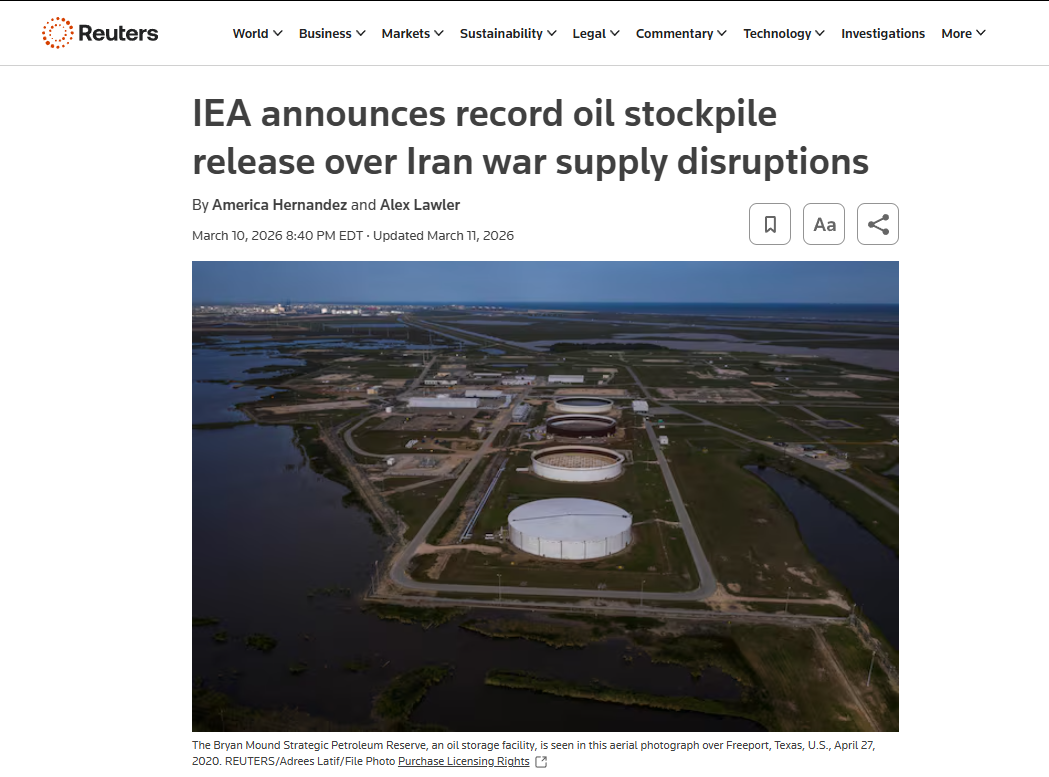
ANSWER: The International Energy Agency released 400 million barrels of oil into the global market, the largest release of emergency oil stocks in history. This is just for show. However, it actually makes things far more vulnerable. This is all predicated on a quick victory with the conquest of Iran. If that assumption is wrong, this will not help.
1. MATHEMATICALLY INSUFFICIENT (won’t even cover 2-3 months of lost supply) 2. STRATEGICALLY STUPID (leaves U.S. vulnerable to future crises) 3. POLITICALLY DESPERATE (election-year panic move) 4. ECONOMICALLY FUTILE (treats symptom, not disease)
Let’s get real. Global oil consumption is about 100 million barrels/day (mb/d). U.S. consumption is about 20 million barrels/day. The disruption of the Strait of Hormuz supply affects about 21 million barrels/day (21% of global supply). Releasing 400 million barrels at the global consumption rate would last 19 days (400M ÷ 21M/day). There is no way this will calm markets in the long term.
As I have been warning since the turn in the ECM in 2024, the US would enter STAGFLATION but Europe would be more of an economic Depression. The Marxist agenda of the EU oppresses the economy and it has posted the lowest economic growth of the major powers in the world. They hatred of the rich and insistance on exploiting them is why the economic growth is pathetic. As I have said, the capitalization of just the NYSE is nore than all the exchanges of Europe, including London, combined.
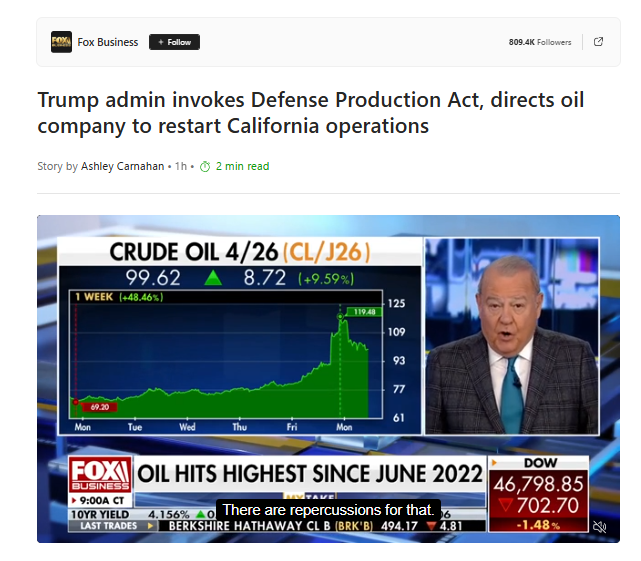
The Trump administration has wisely invoked the Defense Production Act and had overriden California which shut down offshore oil operations in California. Trump has wisely addressed oil supply disruption risks and reduce reliance on foreign crude by increasing domestic production. Releasing 400 million barrels is just not a real solution.
The Trump Administration has directed Sable Offshore Corp., an oil and gas company headquartered in Houston, to restore operations at the Santa Ynez Unit and the Santa Ynez Pipeline System off the coast of Santa Barbara. Failing to do so allows Iran to engage in a supply war like the 1970s. Trump is also lifting sanctions on Russia. The best thing to come out of this Iran War is to put a check against Zelensky.
I am still concerned about June/July. While President Trump said “Iran wants to make a deal, and I don’t want to make it because the terms aren’t good enough yet,” on NBC on Saturday, saying that a “very solid” agreement would have to include a commitment by Tehran to abandon nuclear ambitions. However, the Iranian Foreign Minister Abbas Araghchi said the Islamic Republic is open to “any regional initiative that leads to a fair end to the war,” according to an interview published by the UK-based Al-Araby Al-Jadeed news website on Sunday.
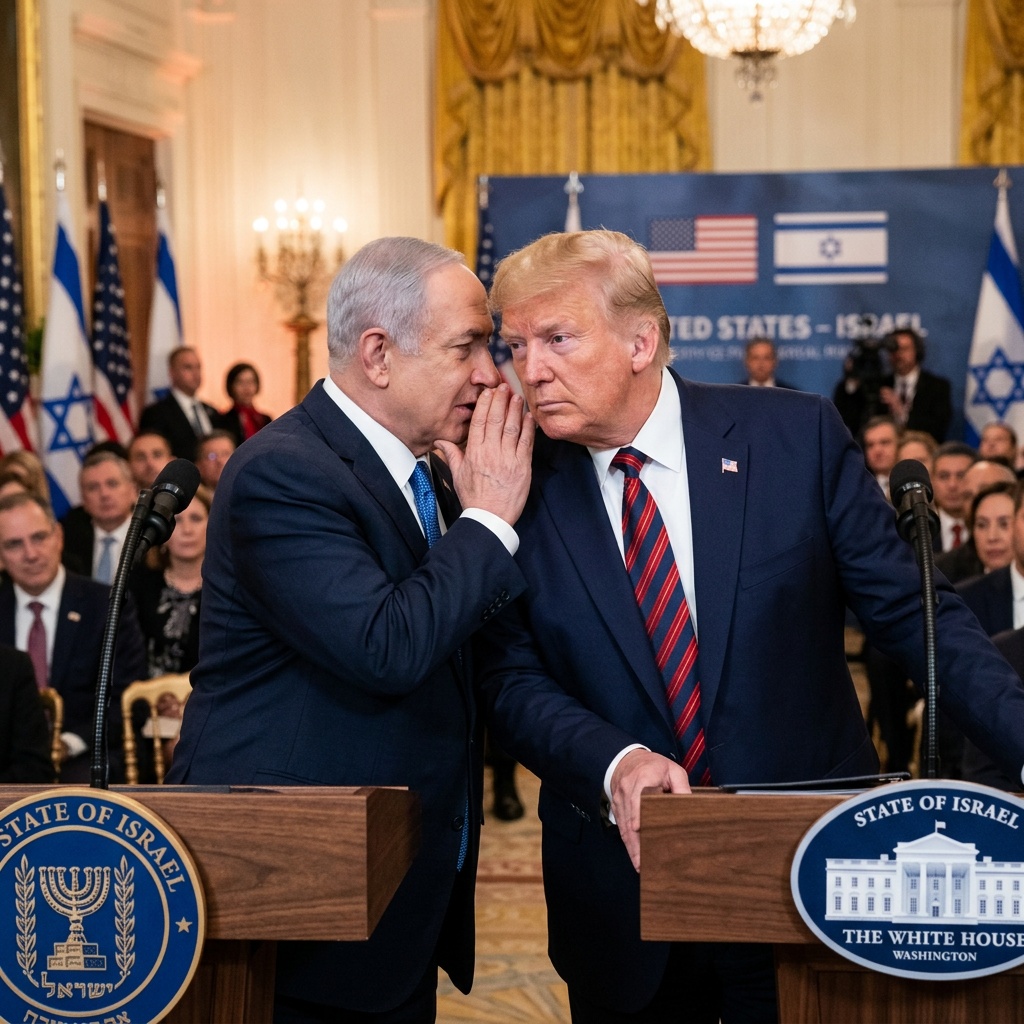
Let me cut through the diplomatic bullshit and tell you what’s really happening: Netanyahu is absolutely pushing for regime change in Iran, and Trump is going along with it. But the relationship is more complex than simple puppet-master dynamics.
NETANYAHU’S POSITION has been clear and consistent. He wants the complete destruction of Iranian regime (not just nuclear program, not just military degradation—REGIME CHANGE). He has wanted this for 40+ years (documented, consistent). He has stated this explicitly multiple times in recent months (post-Feb 28 strikes). The first strike was to implement his insane policy of DECAPITATION assuming that would cause the government to collapse assassinating Khamenei and the IRGC leadership.Let’s be clear. That is not “deterrence,” that’s REGIME CHANGE operation and Trump agreed.
TRUMP’S POSITION looking at his public statements, suggests “maximum pressure,” “they must change behavior.” He has also made occasional regime change hints. His actions are consistent with regime change decapitation strikes, “every weapon” threats, no clear offramp for Iran. This presents the problem of no exit strategy all based on the assumption Netanyahu whispers in his ear that DECAPITATION will succeed. Yet, Trump is also transactional might accept “deal” if Iran capitulates completely, but that does not see likely based on our computer models. Netanyahu absolutely in his ear, but Trump has own motivations (political, ego, strategic)
The real question is: Why is Trump doing this BECAUSE Netanyahu demands it, or are their interests ALIGNED? It appears that Trump and Netanyahu both want regime change, yet for independent motivations. Netanyahu has been pushing Trump further/faster than Trump would go alone.
Netanyahu does have domestic US support he is using against Trump. The Evangelical base (30-40% of Trump’s coalition) are fanatically pro-Israel, see Iran as biblical enemy as the Amalek of 1 Samuel 15:2-3! Then there are the domestic Jewish donors who are also major Republican funding such as Sheldon Adelson’s widow Miriam, others—billions at stake. There is also the AIPAC influence, which is a powerful lobbying group that can make/break candidates. Add to this, the media support, which spins the Neocon agenda and is Pro-Israel amplifying Trump when he’s tough on Iran.
The Byzantine Empire did try to defeat the early Arab-Islamic Caliphates and lost a significant portion of its territory. However, the Empire managed to survive, fight back, and eventually reclaim some of its lost lands. Yet the conflict was not a single, short war but a protracted series of campaigns known as the Arab-Byzantine wars, spanning over four centuries from the 7th to the 11th century. The outcome was a mixture of catastrophic defeat and eventual resurgence. They conquered Constantinople and the last emperor died fighting on the walls trying to save the last remanent of the Roman Empire.
This war is pushing the system over the edge and at stake will indeed be the 2026 Midterm Elections. The vast majority of congressional Republicans are publicly supportive of President Donald Trump’s decision to launch a war on Iran. This does not help matters. My concern is that nobody seems to comprehend that this is NOT the same as Iraq. Saddam was just a head of state. This is a religious war as was the case in Afghanistan. There is no historical precedent for winning such a war when the core is to undermine or destroy a religion.
I have created this site to help people have fun in the kitchen. I write about enjoying life both in and out of my kitchen. Life is short! Make the most of it and enjoy!
This is a library of News Events not reported by the Main Stream Media documenting & connecting the dots on How the Obama Marxist Liberal agenda is destroying America