Posted originally on Sep 28, 2026 by Martin Armstrong |
There was a time when you paid more for a German automobile because “Made in Germany” actually meant something. Mercedes-Benz, BMW, Audi, Porsche, and Volkswagen built an international reputation around engineering, quality, and precision. People willingly paid the premium because Germany was supposed to build the machine better than everyone else. That reputation became one of the foundations of Germany’s entire export economy.
Now Volkswagen Group is recalling 2.86 million Volkswagen and Audi vehicles because a screw in the steering system can corrode and potentially fail, causing a loss of steering. The recall covers Volkswagen Tiguan, Touran, Golf, Golf Variant, and Caddy models produced over an eleven-year period, along with Audi Q3s built between 2017 and 2024. Germany’s KBA says there have been no known injuries or property damage, and Volkswagen says the replacement takes about an hour. Fine. Recalls happen to every manufacturer. But this could hardly come at a worse time because the larger German automobile industry is already fighting for its life.
“Made in Germany” simply does not carry the economic weight it once did. German manufacturers are asking consumers to continue paying a premium while Chinese manufacturers have rapidly closed the gap in quality and, in areas such as batteries, software, electronics, charging, and manufacturing efficiency, have become formidable competitors. Brand loyalty only survives as long as consumers believe they are receiving something superior for the additional money.
The Germans are admitting the problem themselves. Mercedes-Benz said this week that manufacturing automobiles in Germany is NOT internationally competitive, particularly because of labor costs. Mercedes production chief Michael Schiebe warned employees that unless costs come down, the company could eventually close one German assembly plant and one powertrain plant. Volkswagen has already embarked on the largest restructuring in its 89-year history as it battles overcapacity and Chinese competition. It lost its position as China’s best-selling automobile brand to BYD in 2024 and fell behind Geely the following year. Volkswagen is now cutting tens of thousands of jobs and reducing production capacity.
Then there is Porsche, once the crown jewel of Volkswagen. Volkswagen has taken a €6 billion write-down on its Porsche stake after another €2.7 billion impairment the previous year. Porsche has been battered in China and made costly mistakes during the transition to electric vehicles. Its profitability has fallen so dramatically that Volkswagen’s budget Skoda operation has overtaken it on margins. What is the fundamental change? China unexpectedly learned how to manufacture.
For decades, Western companies treated China as a source of cheap labor. They moved manufacturing there, transferred technology, constructed supply chains, trained workers, and taught Chinese companies how Western industry operated. Politicians assured everyone this was globalization and that Europe would simply move toward higher-value industries.
Well, China moved up the value chain too. The European Central Bank now openly admits that China’s industrial rise is pushing European companies out of global markets, particularly in machinery and transportation equipment. Germany is the most exposed of the major European economies because its export profile most closely resembles China’s. The Chinese are no longer merely producing inexpensive toys, textiles, and household goods. They are competing directly in the industries Germany once believed belonged to it.
Automobiles are the perfect example. Chinese brands accounted for about 9% of EU automobile sales during the first half of 2026, according to industry data cited by Reuters, and AlixPartners estimates they could reach 16% of the broader European market by 2030. Meanwhile, foreign manufacturers’ share of China’s own automobile market has collapsed from 64% in 2020 to roughly 32% this year. China first displaced the foreign manufacturers at home. Now it is coming after them abroad.
This is how economic power shifts. It does not happen because somebody holds a press conference announcing that Germany is no longer competitive. Consumers simply stop buying the product.
The European response, naturally, has been tariffs and protectionism. Rather than asking why Chinese manufacturers can increasingly offer competitive vehicles at lower prices, Brussels wants to construct walls around the European market. But tariffs do not make German factories more efficient. They do not lower Germany’s energy or labor costs. They do not produce better batteries, faster software development, or cheaper automobiles. They merely force European consumers to pay more while giving domestic manufacturers additional time before reality arrives.
Germany inflicted much of this upon itself. It abandoned cheap Russian energy without constructing a competitive replacement, pursued an expensive energy transition, buried industry beneath regulation, and simultaneously demanded that its automobile manufacturers spend enormous sums transforming their product lines. Reuters estimates that the post-2022 energy shock added roughly €1,000 to the cost of manufacturing a vehicle in Germany. You cannot continuously raise the cost of production and then act surprised when someone else produces the same product for less.
This is the part politicians never understand. Consumers are not charities. Someone shopping for a vehicle does not care about preserving the German industrial model. They look at price, quality, technology, reliability, range, features, and financing. If a Chinese manufacturer can provide more technology for €10,000 less, telling that customer about Germany’s glorious manufacturing tradition will not close the sale.
Germany once earned its premium through engineering. The danger now is believing the badge itself entitles manufacturers to that premium forever. The Volkswagen recall is therefore symbolic of a much larger problem. Again, there are no reported injuries and every major manufacturer issues recalls. But Germany can no longer afford repeated blows to the perception that its products justify their higher prices while Chinese competitors are advancing at breathtaking speed. Reputation takes generations to build and remarkably little time to lose once consumers discover alternatives.
Germany’s automobile industry was not simply another business. It was a pillar of the country’s postwar economic model, supporting manufacturers, suppliers, engineers, skilled workers, exporters, and entire communities. If that industry continues losing competitiveness, the damage will spread far beyond Volkswagen dealerships. China did not destroy German manufacturing. Germany helped destroy its own competitive advantage while China spent decades building one.
The words “Made in Germany” once allowed a manufacturer to charge more because the customer assumed German engineering meant something exceptional. That reputation still has value, but it is no longer enough by itself. The Chinese are forcing the Germans to compete again on price, technology, efficiency, and quality rather than living off a reputation built by previous generations. If Germany cannot do that, no tariff from Brussels and no amount of nostalgia will save its automobile industry.
Something is happening in Germany that the politicians pushing Europe toward militarization should pay very close attention to. More than 45,000 students walked out of their classrooms across over 100 cities to protest the country’s new military-service system and the possibility that compulsory service will follow. These are the young people Berlin expects to put in uniform, and they are making something perfectly clear: you can increase the military budget with the stroke of a pen, but finding people willing to fight is an entirely different matter.
Germany suspended compulsory military service in 2011. Now the government is rebuilding the machinery needed to bring it back. All 18-year-old men are required to answer a questionnaire concerning their willingness and fitness to serve, medical examinations are being introduced, and if voluntary recruitment fails to produce enough soldiers, the Bundestag can move toward compulsory service. Chancellor Friedrich Merz wants Germany to possess what he has called the strongest conventional army in Europe, expanding the Bundeswehr from roughly 183,000 active personnel to 260,000 by 2035 with another 200,000 reservists.
But there is one rather important problem. The government needs the young. Politicians sitting safely in Berlin and Brussels can talk endlessly about preparedness, deterrence, defense spending, and security architecture. They can promise NATO another percentage point of GDP and borrow another hundred billion euros for weapons. None of those politicians will be the 18-year-old ordered to put on a uniform. That burden falls upon a generation that grew up being told Europe had moved beyond the wars that destroyed the continent twice in the last century.
Students have already organized repeated nationwide demonstrations against conscription. The youth are increasingly considering conscientious objection, and the new military-service system itself acknowledges the recruitment problem because Germany would not need questionnaires, mandatory examinations, and a mechanism for restoring compulsory service if enough young Germans were voluntarily rushing to join the Bundeswehr.
This is where the entire European rearmament program runs directly into demographics and public opinion. Governments can manufacture weapons. They cannot manufacture an unlimited supply of 18-year-olds. Germany is an aging society already struggling with labor shortages and an enormous demographic burden. The same young worker Berlin needs to support the pension system, pay taxes, staff German industry, and keep the economy functioning is now also expected to become the manpower reserve for Europe’s military buildup.
Older voters can support greater military preparedness without ever facing conscription themselves. Politicians can announce that Russia represents a generational security threat while surrounded by security details and government cars. The teens receiving a military questionnaire see the issue somewhat differently because suddenly the war commitment has their names and addresses attached to it.
Europe is moving toward rearmament while many of the people who would actually have to serve are increasingly asking why they should be compelled to participate. That does not settle the security debate; supporters of the government’s policy argue that Russia’s invasion of Ukraine demonstrated why Germany needs a much larger military and that deterrence requires credible manpower as well as weapons. But governments cannot simply assume that younger generations will automatically accept compulsory service because political leaders declare it necessary.
The young Germans marching through the streets understand that distinction perfectly well. Their government wants hundreds of thousands more soldiers while the voluntary system is already struggling to produce them. It does not take a sophisticated computer model to understand where that pressure leads if recruitment targets continue to be missed.
Europe’s politicians can approve all the defense budgets they want, but they cannot legislate enthusiasm for war. They cannot lecture an entire generation into surrendering years of its life, and they certainly cannot assume that young people will quietly accept being drafted because bureaucrats have decided Europe needs a larger army. The students filling Germany’s streets are delivering a message that Berlin would be foolish to ignore: before governments start planning their next armies and their next wars, perhaps they should ask the generation expected to fight them whether they intend to go.
Posted originally on Sep 28, 2026 by Martin Armstrong |
For years, Washington proclaimed that sanctions would shut down Iranian oil exports. They never did. Iran adapted because markets ALWAYS adapt. Tehran assembled a shadow fleet, tankers switched off transponders, cargoes changed identities, oil moved ship to ship, and payments bypassed Western banking channels while China continued buying the crude. Even during Trump’s maximum-pressure campaign in 2019 and 2020, Iranian oil continued passing through the Strait of Hormuz. Washington could sanction the paperwork, banks, insurance companies, and ships, but somebody still wanted the oil. The blockade has changed everything because you cannot hide geography.
Reuters reports that Iran went roughly seven weeks without meaningful crude exports passing through Hormuz. Iranian crude and condensate loadings collapsed from roughly 2 MILLION barrels per day in March to 740,000 in July and merely 220,000 to 255,000 barrels per day in August. This is the fundamental difference between sanctions and a blockade. Sanctions tell someone they cannot conduct a transaction, so markets find another currency, bank, company, flag, or jurisdiction. A blockade says the tanker cannot leave. You can rename the vessel twelve times and create twenty shell corporations, but eventually that ship still has to sail through the water.
Iran’s shadow fleet solved the sanctions problem because sanctions are fundamentally bureaucratic. It cannot solve Hormuz because geography is physical. Vortexa identified 27 sanctioned tankers sitting off Sri Lanka in ballast because they could not return to Iran to reload. Meanwhile, Iranian crude has been accumulating on the other side. Iran has the oil. China wants the oil. Yet the transaction cannot be completed because the physical connection between buyer and seller has been severed.
China had been Iran’s escape valve. When Europe stopped purchasing Iranian crude and Western financial institutions refused to process transactions, Chinese refiners simply bought discounted Iranian barrels. Iran received foreign currency, China received cheap energy, and Washington discovered that it could make the trade inconvenient without eliminating it. Now even that system is breaking down. Iranian crude stored afloat fell from around 135 million barrels to 107 million barrels during August as accessible inventories were drained while oil accumulated behind the blockade.
This is far more serious than another round of sanctions. Sanctions are economic warfare through banking regulations. A blockade is economic warfare enforced by military power. Iran depends upon oil revenue for foreign currency, and that lifeline is being severed while its domestic economy is already collapsing. GDP contracted 10.1% in the first quarter, while the oil and gas sector plunged more than 26%. Remove the dollars and yuan coming into the country while production is falling and Tehran faces declining reserves, additional pressure on the rial, and still more inflation.
Iran is attempting to redirect commerce over LAND, but the economics are absurd. Before the war, more than 80% of Iran’s roughly 180 million tonnes of annual two-way trade moved by sea from its southern coast. The Financial Times reports that trade is increasingly being pushed toward Turkey and neighboring countries, with Iranian imports through the Gürbulak crossing reportedly surging 250%. But you cannot replace a supertanker with trucks. Thousands of trucks mean bottlenecks, customs delays, fuel expenses, labor costs, and a fraction of the capacity available through maritime trade.
The blockade could also damage Iran long after the immediate crisis passes. Oil cannot be pumped indefinitely when storage tanks and tankers are full. Production eventually has to be reduced, and shutting aging fields creates additional costs and technical problems when production is restarted. Iran therefore risks losing not merely today’s oil sale but future productive capacity.
Washington has discovered the limitation of sanctions: they require other people to cooperate. China did not care that Washington wanted Iranian oil removed from the market. Traders made fortunes circumventing restrictions, and every new sanction produced another method of avoiding the previous one. A blockade does not require the buyer to cooperate, which is precisely why it works. But that is also what makes it infinitely more dangerous.
China loses access to discounted crude, Iranian production declines, global supply tightens, tankers are rerouted, insurance premiums rise, and commerce is forced onto inefficient routes. The blockade may be economically effective, but effectiveness and strategic wisdom are not necessarily the same thing. Once warships physically determine who may participate in international commerce, we have moved beyond conventional sanctions and into the militarization of trade itself.
Iran survived sanctions because markets found another path around Washington. The blockade is working because that path has now been physically blocked. That is a far more powerful weapon, but it also represents another escalation from financial warfare toward actual war. Markets can circumvent politicians, banks, regulations, and sanctions. They cannot circumvent geography.
Posted originally on Sep 28, 2026 by Martin Armstrong |
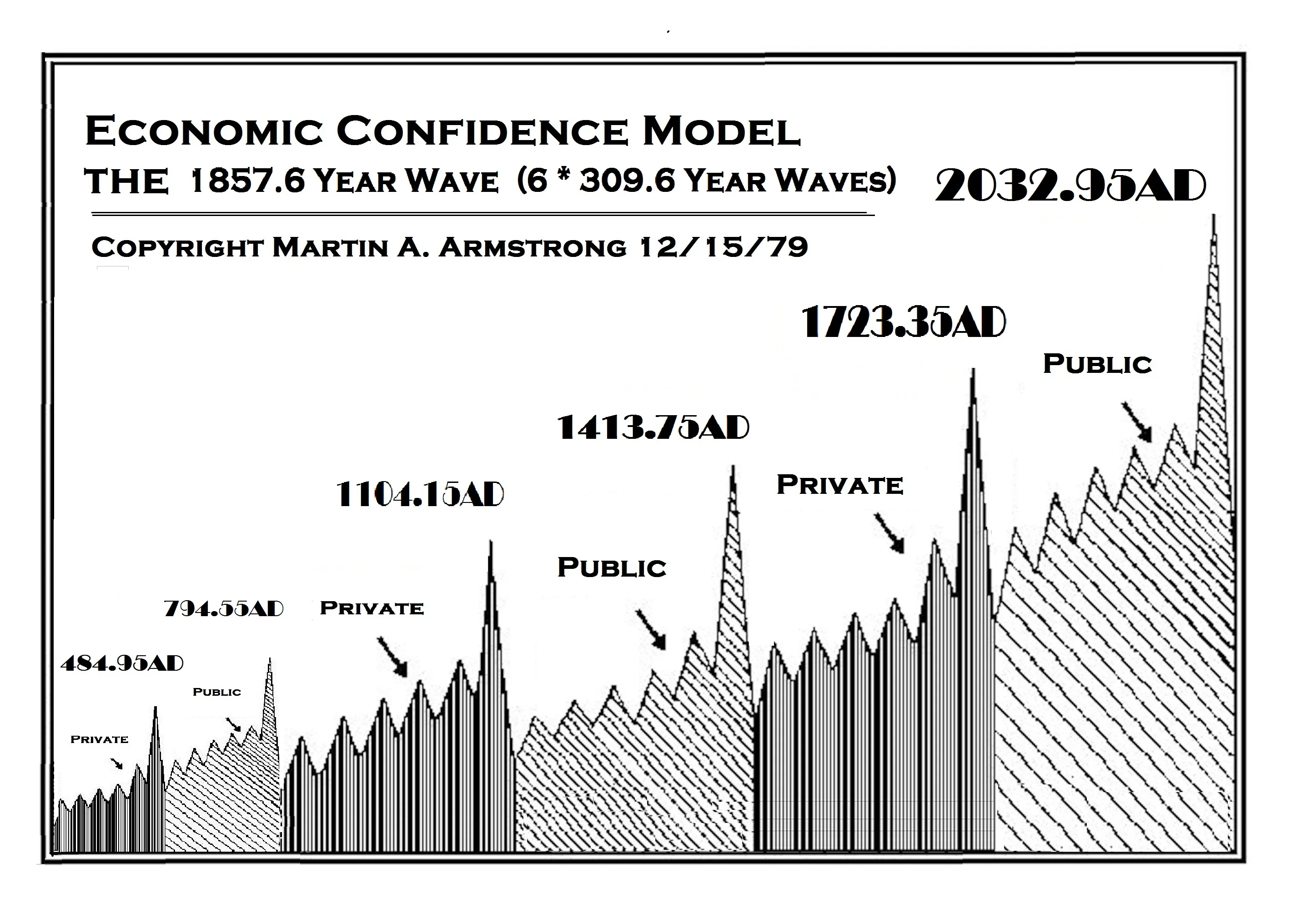
QUESTION: I believe you once said that 2032 would be the half-cycle of 4300 years from the Persian conquest of the city of Ur, which prompted Abraham to migrate to Canaan, and that 8600 years ago was the time of Noah and the great flood. Do I remember that correctly?
Ellis
ANSWER: As far as the cycles are concerned, around 6500BC corresponds to th full cycle of 8600 years back from 2032. The story of the Great Flood exists in many cultures in the West as well as in Asia. The Hindu tradition features the story of Manu, who is warned by a fish (often an avatar of Vishnu) to build a boat and survive a great deluge, similar to other flood narratives. I would suspect that it was not simply rain for 40 days and nights.
For such a major event some have argued perhaps there was a meteor that his the earth. They do know that it has been hypothesized that an impact event created the Burckle Crater in the Indian Ocean. However, its proposed date is disputed with some claiming it was round 2800BC. It would logically assumed that a meteor impacting in the ocean would cause a massive tidal wave that could be a sudden flood type scenario.
A specific archaeological claim from the 1920s, by Sir Leonard Woolley who excavated a thick layer of river silt at the ancient city of Ur in Mesopotamia, which he dated to around 6500 years ago (roughly 4500 BC), and famously declared it evidence of Noah’s flood . What we do know is that the Egyptian inscription on the Merneptah Stele (c. 1207 BC) contains the earliest known reference to “Israel.” It mentions Israel as a people already living in Canaan, which some argue supports an earlier Exodus. This Egyptian victory monument provides the crucial textual anchor. Pharaoh Merneptah boasts: “Israel is laid waste, its seed is no more.” This single line tells us there was a group called “Israel” that already existed in Canaan. That takes us back about 3200 years.
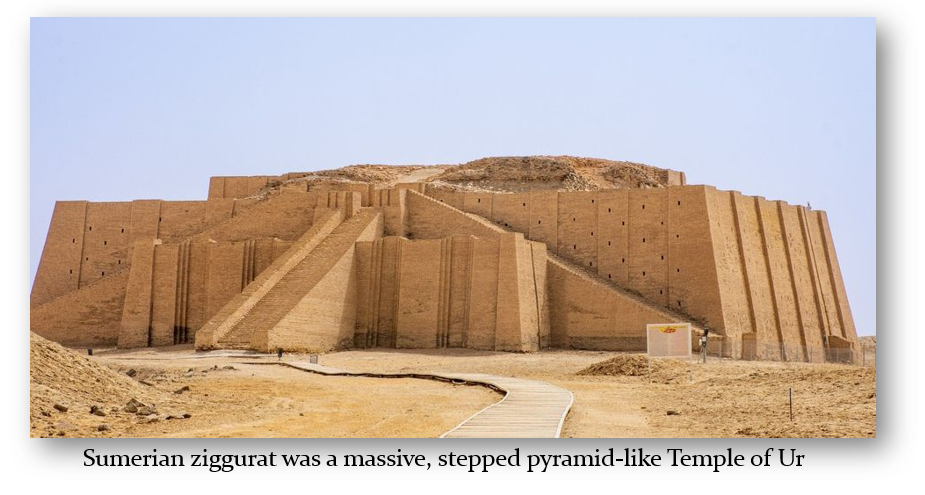
Mesopotamia is called the “Cradle of Civilization” because it is one of the earliest places on Earth where humans transitioned from nomadic hunter-gatherer lifestyles to settled, complex urban societies. Located between the Tigris and Euphrates rivers (in modern-day Iraq, Syria, and Turkey), it saw the emergence of many “firsts” that laid the foundation for later civilizations. It gave rise to some of the world’s earliest known cities, including Uruk, Ur, and Eridu. By around 4000–3500 BC, Uruk had grown into a massive urban center with thousands of inhabitants, monumental architecture, and specialized labor—features that define a civilization. It is the City of Ur from which Abraham migrated and became the father of the Jews and Arabs.
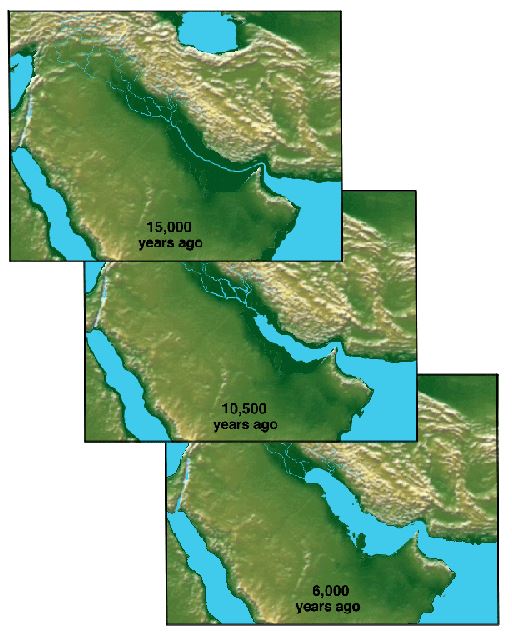
The Persian Gulf did not form in a single earthquake, but through a slow geological process driven by plate tectonics and sea-level changes. From a cyclical perspective, the last glacial maximum occurred around 18,000 years ago. Global sea level is believed to have been about 130 meters lower than it is today. Over the next 12,000 years, most of the ice melted off Canada and Scandinavia, causing sea level to rise and flooding the rims of all the dry lands. Some attributed this to the legendary Noah’s Flood. However, this may have been loosely connected, but that is far from certain.
Geologists agree that the Persian Gulf was formed by the collision of the Arabian and Eurasian tectonic plates, a process that has been ongoing for millions of years. For roughly 40 million years, the Arabian Plate has slowly rotated and moved northward, colliding with the Eurasian Plate. This collision crumpled the edge of the Eurasian Plate, creating the Zagros Mountains in Iran.
As the Arabian Plate pushed into the Eurasian Plate, the crust in the region was depressed and warped, creating a shallow, flooded basin. This basin is the Persian Gulf. The Gulf is essentially a tectonic depression, not a rift valley formed by a single earthquake.
Sea-level rise after the last Ice Age drove the basin’s final flooding. About 11,000 to 14,000 years ago, melting ice sheets caused global sea levels to rise significantly. This allowed water from the Indian Ocean and the Gulf of Oman to flow over the low-lying land and fill the basin, creating the modern Persian Gulf.
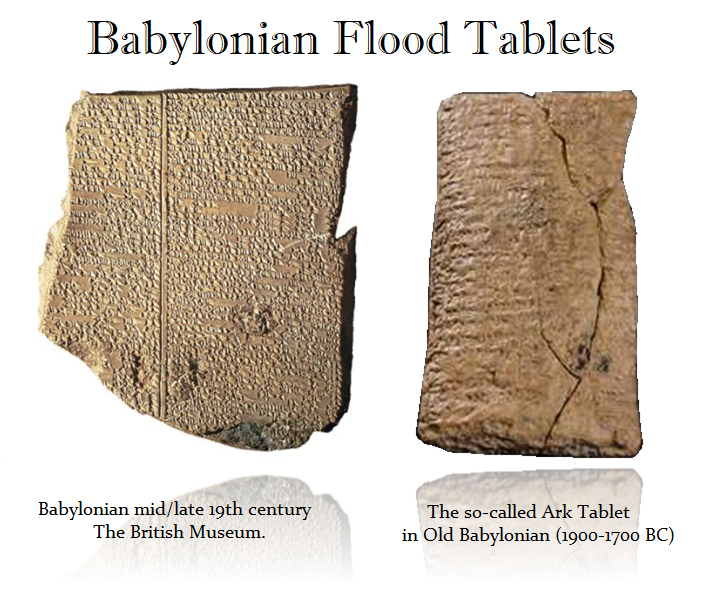
While the Persian Gulf’s formation is a geological fact, the idea that it is linked to Noah’s Flood comes from a scientific hypothesis that some researchers have proposed, not a proven connection. Some researchers have argued that the source of ancient flood stories. An ancient Babylonian map depicts Babylonia as being surrounded and submerged by the waters of the Persian Gulf, which some scholars have connected to the flood stories. Additionally, a geological study found evidence of a massive storm or flood in the Persian Gulf around 6,800 years ago, and some suggest it might correspond to the story of Noah, though this remains a hypothesis.
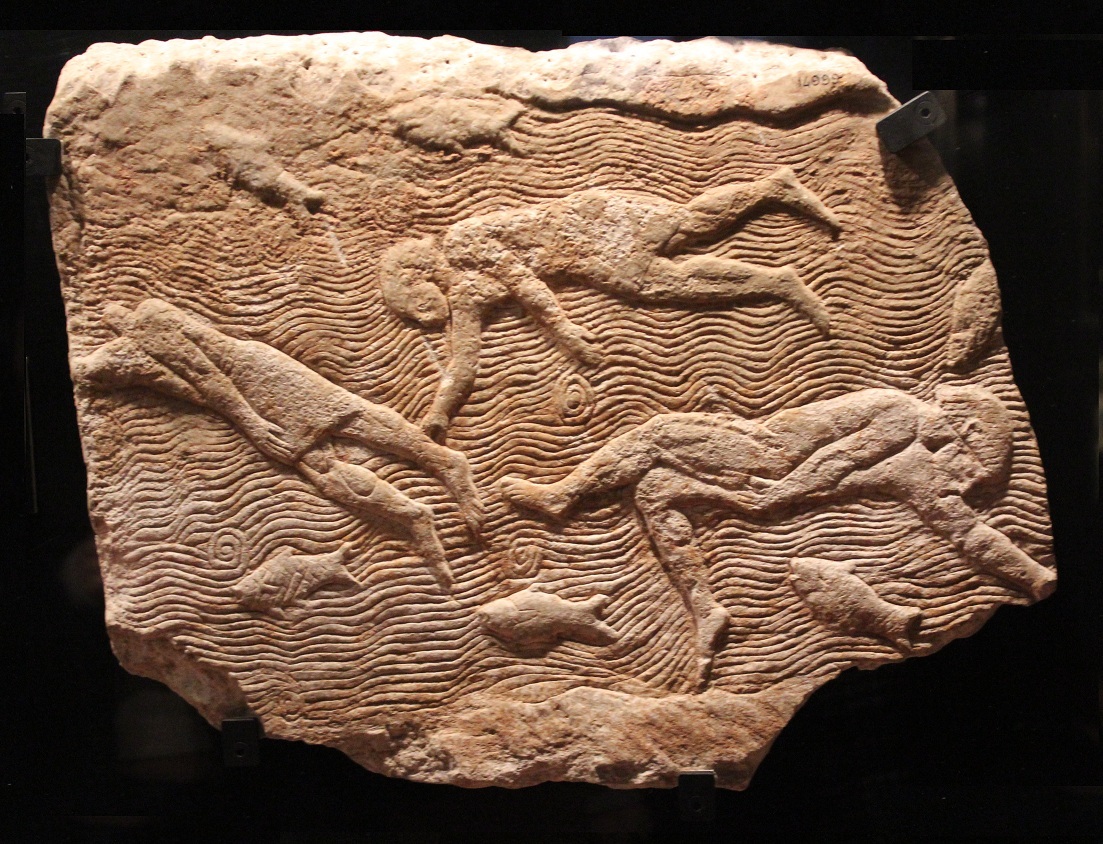
Other scholars argue that the biblical Flood was a regional event in Mesopotamia (the land between the Tigris and Euphrates rivers), not a global flood. The Persian Gulf basin, which once connected the Tigris and Euphrates rivers before sea levels rose, is one proposed location for the “Eden” described in Genesis. There are even surviving depictions of the Great Flood with bodies and fish.
In ancient Mesopotamian stories, the city of Dilmun was the blessed, pure land where the flood survivor was taken to live forever. In the Sumerian flood story, the hero (known as Ziusudra) is granted eternal life by the gods and settled in a distant, sacred place. The text explicitly names this location as it is the Garden of Eden.
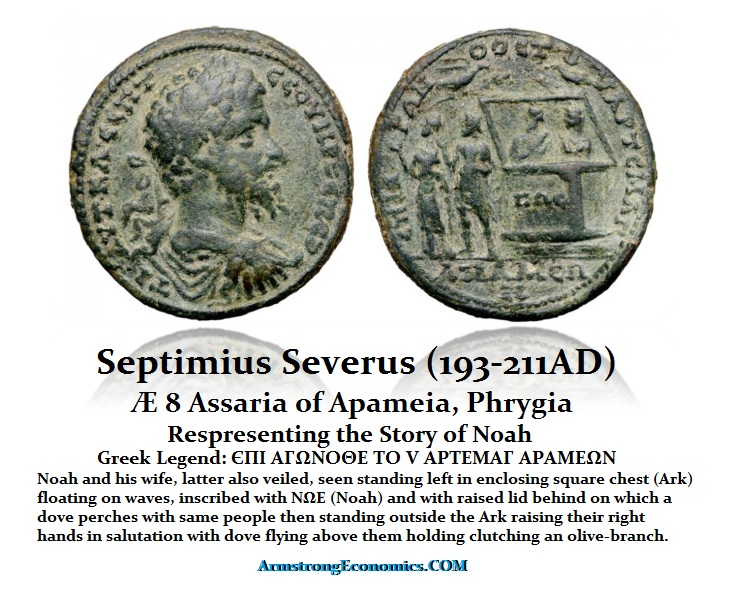
This story of Noah even appears on a Roman coin struck by Septimius Severus (193-211AD) long before Christianity became really a growing religion in Rome. The story is illustrated and even the name Noah appears on the Roman coin. This tends to verify that the story was well known outside of the Bible. The location there is called Noah’s National Park.
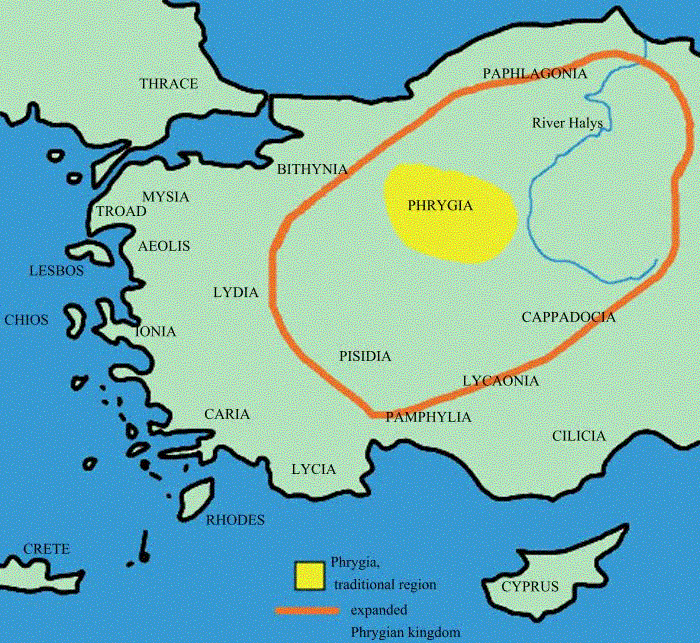
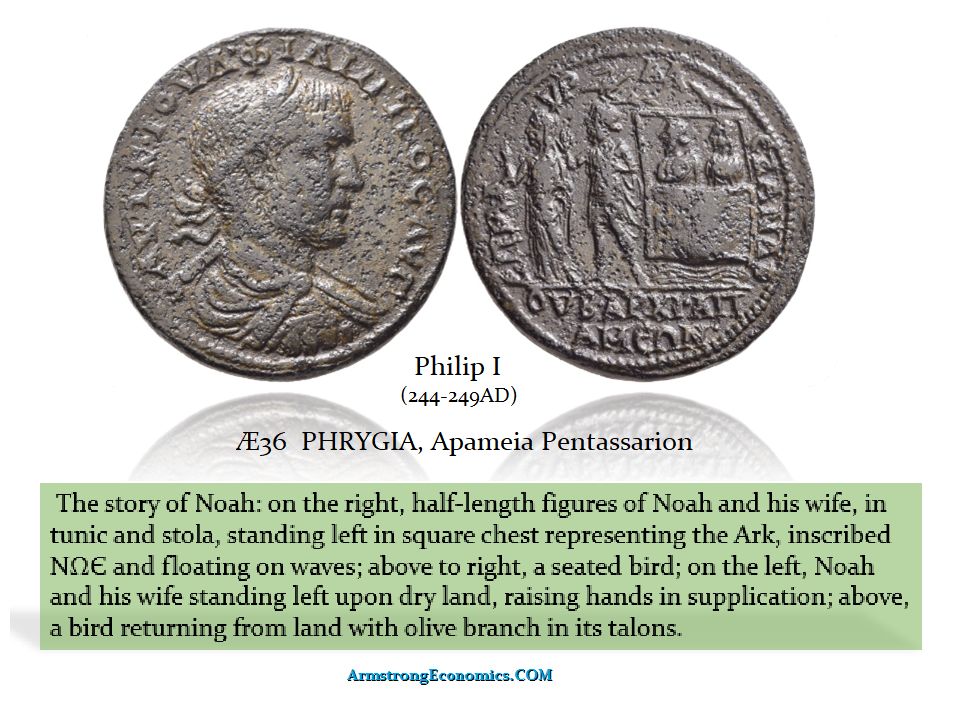
Here is a later Roman Emperor, Philip I (244-249AD), with another coin issued om Phrygia from the area where the story of Noah’s arc landed. The story has also been recorded in that region of Turkey on ancient Roman Coins. This has long raised independent evidence for the “story” of Noah external from the Bible, which the academics seem to go out of their way to discredit as history. The depiction of Noah on Roman coins struck in Phrygia come from the very area where Noah’s Ark was supposed to have rested. This demonstrates that this story comes from the very place where Noah’s Ark came to rest.
Alexander the Great cut the Gordian Knot at Gordium, which was the ancient capital of Phrygia, located in what is now central Turkey. The prophecy held that whoever loosened the knot would rule Asia, which Alexander went on to do. Historically, this was an important area.
The Persian Gulf is about 35 miles wide (56 km) at its narrowest, in the Strait of Hormuz. The Gulf is very shallow, with a maximum depth of 90 meters (295 feet) and an average depth of 50 meters (164 feet). The Persian Gulf was fertile dry land before the flood, which obviously contains very old cultures which may be older than anything known on dry land today. We do know that the Gulf has receded from where it once stood in ancient times following the flooding.
Garden of Eden
The legend of Dilmun (Telmun) is fascinating. It comes from Sumerian writings. This was an ancient Semitic-speaking city that is mentioned from the 3rd millennium BC onwards. Based on the records that have survived, Dilmun was located in the Persian Gulf. It was on a trade route between Mesopotamia and the Indus Valley Civilization. Dilmun was a major trading center which controlled the Persian Gulf trading routes. Dilmun was mentioned by the Mesopotamians as a trade partner and the major source of copper.
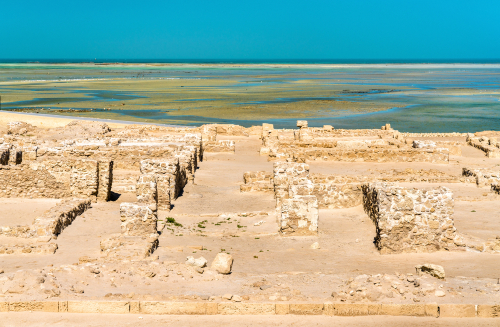
Ancient ruins at Bahrain Fort. A UNESCO World Heritage Site in the Middle East
There are two official letters from Dilmun dated about 1370 BC that were recovered from Nippur, during the Kassite dynasty of Babylon. There was some administrative relationship between Dilmun and Babylon at that time. There is also an early inscription that mentions Dilmun and speaks of the tribute that they brought to Ur-Nanshe, the first king of the first dynasty of Lagash, which was an ancient city located northwest of the junction of the Euphrates and Tigris rivers. Lagash (modern Al-Hiba) was one of the oldest cities of the Ancient Near East. The surviving inscriptions say:
“The ships of Dilmun from foreign lands, brought him (Ur-Nanshe) wood as a tribute.”
Kassite dynasty conquered and controlled Babylon between 1531 BC and until c. 1155 BC. After their collapse, the only mention of Dilmun comes from Assyrian inscriptions dated around 1150 BC which proclaimed the Assyrian king to be king of Dilmun as well.
Dilmun was a civilization that was quite an old civilization, yet because it appears to have been submerged in the Persian Gulf, it is much less famous than the four cradles of the civilization of the Old World, i.e. Mesopotamia, Ancient Egypt, the Indus Valley Civilization, and the Yellow River Civilization.
In literature, Dilmun occupies an important place in the mythology of Mesopotamia since it is in the second half of the Epic of Gilgamesh. Additionally, Dilmun is also mentioned in the myth of Enki and Ninhursag / Ninhursaja. In this story, Dilmun is presented as a sort of earthly paradise – the Garden of Eden where survivors of the Great Flood started over.
Archaeology has confirmed that Dilmun was a real, thriving civilization centered on modern-day Bahrain and parts of the eastern Arabian coast. It was a prosperous Bronze Age trading hub, famous for its sweet-water springs, date palms, and its role as a commercial entrepôt between Mesopotamia and the Indus Valley.
The Mesopotamians idealized Dilmun in their mythology as a pure, holy land—a virtual Garden of Eden where sickness and death did not exist. This literary image was likely inspired by the real island’s abundant fresh water and lush vegetation, which would have seemed miraculous to travelers from arid Mesopotamia.
I have created this site to help people have fun in the kitchen. I write about enjoying life both in and out of my kitchen. Life is short! Make the most of it and enjoy!
This is a library of News Events not reported by the Main Stream Media documenting & connecting the dots on How the Obama Marxist Liberal agenda is destroying America