Posted originally on Oct 23, 2025 by Martin Armstrong |
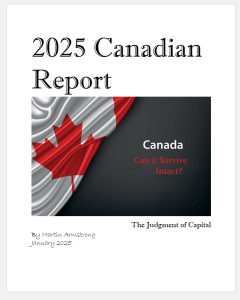
Inflation in Canada rose to 2.4% this September, as reported by Statistics Canada. Excluding gas, the rate sits at 2.6%. Volatile prices among all essentials, from groceries to shelter, are ramping up the cost-of-living crisis for all Canadians.
Grocery prices have been on the rise since the pandemic and cannot be attributed to tariffs. The Consumer Price Index (CPI) shows grocery inflation is approximately 4% year-over-year, compared to an overall inflation rate of 2.4 percent. The 2025 Canada’s Food Price Report estimated that a family of four would spend C$16,833 on food throughout 2025, an increase of C$802, but prices have surpassed expectations.
Grocery prices surpassed overall CPI during COVID when inflation averaged 2.8%. That was merely the beginning of rising food prices, which rose to 3.5% YoY by 2021. Global energy price shocks due to the Russian-Ukrainian war, coupled with agricultural volatility, caused prices to reach all-time highs in 2022 when food inflation reached 9.8%. With no relief in sight, grocery prices peaked in early 2023 above 10%, marking a four-decade high. Prices stabilized to an extent this year but continue to outpace the overall rate of inflation.
Shelter is the other main component of the cost-of-living crisis in Canada. Over the last five years, the shelter component of CPI advanced from around 150 to about 188 index points, or a cumulative increase of roughly 25% since the pandemic. The Bank of Canada reduced rates to near zero early in the pandemic, which caused a surge in home purchases. National shelter CPI climbed 2% annually, but home prices soared 20% from mid-2020 to the end of 2021 as the cost of borrowing and inventory was low. Rent freezes among provinces caused the shelter component of inflation to remain muted through 2021.
The central bank pivoted from QE in 2022 and led to an unprecedented rise in mortgage costs. Shelter inflation soared above 6%, a level not seen since the early ‘80s. Real estate prices waned later in the year but CPI shelter costs rose due to rising mortgages. Shelter inflation peaked to 7% YoY in mid-2023, driving the majority of the broader CPI, while rentals averaged around 9%. Mortgage interest costs spiked by over 28% YoY, according to StatCan data.
Shelter relief was brief in 2024 for owners, but rentals soared above 9% into August. The average nationwide rental price hit C$2,200 by the end of the year, or 30% higher than pre-pandemic levels. The central bank maintained the 5% policy rate and interest costs plateaued. Now in 2025, shelter inflation still remains well above overall inflation. CPI shelter hit 188 in August, 2.6% up YoY, while rent decreased from 9% to 5%. Policy cuts at the BoC led to an average mortgage rate at around 4.6%. Still, shelter costs continue to rise faster than every CPI component aside from food in recent years.
Rentals are one-third higher than pre-pandemic levels and vary widely based on province. Grocery prices have not meaningfully waned since the pandemic, but these costs have become the new norm. Governments cannot prince away inflation through rate policy. Fiscal deficits and currency debasement must be addressed. If government spending continues, debt levels rise, and the central bank becomes effectively stuck. Central banks have limited control over inflation since fiscal and monetary policy have become polar magnets.
Posted originally on Oct 23, 2025 by Martin Armstrong |
Corporations with assets exceeding $100 million are seeing a surge in closures and bankruptcies. Trends in Large Corporate Bankruptcy and Financial Distress—Midyear 2025 Update found that filings began to increase in early 2023 and have continued to rise into 2025. Over the past year, 117 mega corporations filed for bankruptcy. This is unusually high and 44% above the 2005-2024 average of 81 bankruptcies per year.
Mega bankruptcies or corporations with assets exceeding $1 billion are also on the rise, with 32 filings in the past month, up from 24 the year prior. The 2005-2024 average was 23 per year. In the first half of 2025 alone there were 17 mega bankruptcies on record, marking the highest figure on record since the pandemic of 2020.
Manufacturing has been hit hard. This is not the result of tariffs or a lack of migrant workers. The catalyst reported by 67% of manufacturing mega bankruptcies is the regulatory, legal, and political landscape. Additionally, 61% of all mega bankruptcies noted reduced demand due to high inflation, which forced them to file for financial insolvency. The service industry was hit the hardest by inflation as consumers do not have the disposable income.
Every report calls inflation an external factor but it has been exacerbated by fiscal deficits and central banks tinkering with rates in an attempt to control demand when that has never been the issue. Corporations of this size do not go into bankruptcy without a lengthy process. Years of mismanagement, trade barriers, ESG mandates, ever-changing policies, and taxation have chipped away at these industries.
Liability management transactions (LMTs) hit a record of 45 completed transactions last year and 27 in the first half of 2025. Dealing have become more complex as they attempt to delay the inevitable. Mega corporations relied on bailouts in the past, but the government has too many mouths to feed.
The fact that mega bankruptcies are rising shows that even large, previously “too big to fail” firms are no longer immune from collapse. That suggests a weakening foundation that threatens the broader financial system.
I have created this site to help people have fun in the kitchen. I write about enjoying life both in and out of my kitchen. Life is short! Make the most of it and enjoy!
This is a library of News Events not reported by the Main Stream Media documenting & connecting the dots on How the Obama Marxist Liberal agenda is destroying America