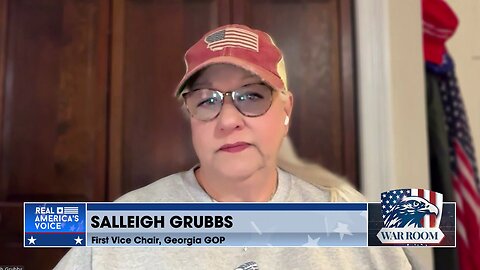
Salleigh Grubbs: I’m Asking Right Now For Harmeet Dhillon To Do Whatever Is Necessary To Get The Ballots


Posted originally on Rumble on Bannon War Room on: November 1, 2025

FULL EPIC BANNON RANT: What Did They Say To The People Who Said No We’re Gonna Get To The Bottom Of This Stolen Election? THEY TRIED TO THROW THEM IN PRISON.


Posted originally on Rumble on Bannon War Room on: November 1, 2025

Bannon: They Stole The 2020 Election, And Biden Was An Illegitimate Regime


Posted originally on Rumble on Bannon War Room on: November 1, 2025

Ed Martin On Phyllis Schlafly: As Phyllis Used To Say “When You Know What You Believe In, You Just Got To Stand For It”


Posted originally on Rumble on Bannon War Room on: November 1, 2025

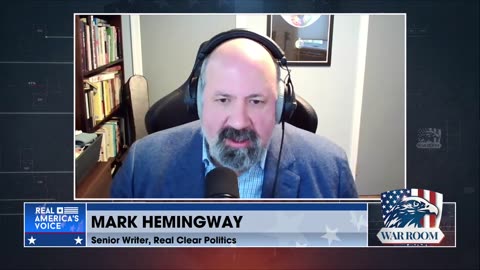
Mark Hemingway: National Review’s Unfortunate Attack On Phyllis Schlafly Gets Conservative History All Wrong


Posted originally on Rumble on Bannon War Room on: November 1, 2025

This Is How World War III Starts


Posted originally on Nov 2, 2025 by Martin Armstrong |  

Thomas Jefferson the Ancient Coin Collector


Posted originally on Nov 2, 2025 by Martin Armstrong |  

Denarii Hoard

QUESTION: Marty, is it true that Thomas Jefferson had a large Roman and Greek collection of coins? Also, will you have any ancient coins for gifts this season?

HS

ANSWER: Yes, Jefferson had an extensive collection of ancient coins. In April 1805, Jefferson received from Nicolai Henrick Weinwich of Copenhagen “a box containing 150. pieces of Roman coin in bronze of different sizes from the reign of Augustus to that of Theodosius.” Two weeks later he forwarded them to the American Philosophical Society, where they might be “of more extensive use. I believe he too like to examine hoards. For Jefferson, these coins were not just curiosities; they were historical documents. He studied them to understand the chronology, iconography, and history of the ancient world he so admired as I have done. History is revealed from the coinage. Jefferson even wrote about using coins as a teaching tool for history.

Jefferson owned a large collection of ancient Greek and Roman coins. His catalog of the collection still exists. Then there was what became known as the “Jefferson Coin” that was a famous Roman denarius of the emperor Antoninus Pius. It was discovered in archaeological excavations at Monticello.

Another little know fact is that in 1801, after his election as President, Jefferson sold his extensive library of 6,487 books to the Library of Congress to replace the books burned by the British in 1814. While the coin collection was not part of this sale, his actions demonstrate his view of collections as a public resource for knowledge.

John Adams also collected ancient Roman coins, but not as extensively as Jefferson. James Madison and Benjamin Franklin are also known to have collected some ancient Roman coins. By far, Jefferson had the largest collection.


Hoard for Christmas

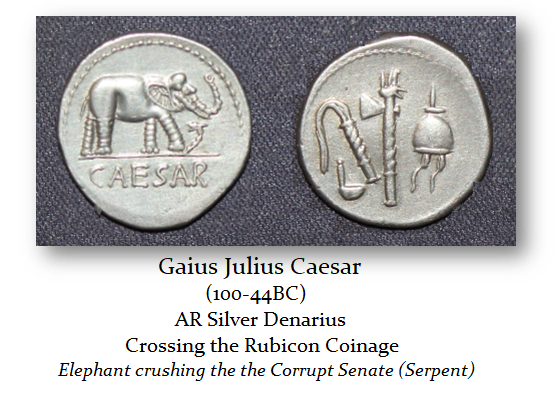
1 Caesar Rubicon Coinage

Yes I will put a selection of ancient coins together. I had hoped to get a small group of the Rubicon denarii of Julius Caesar. Where they used to go for $600, now they are around $1200. So, I did not get that group.

Categories:Ancient Economies

The Truman Cover-Up of Hiroshima & Nagasaki


Posted Nov originally on 1, 2025 by Martin Armstrong |  

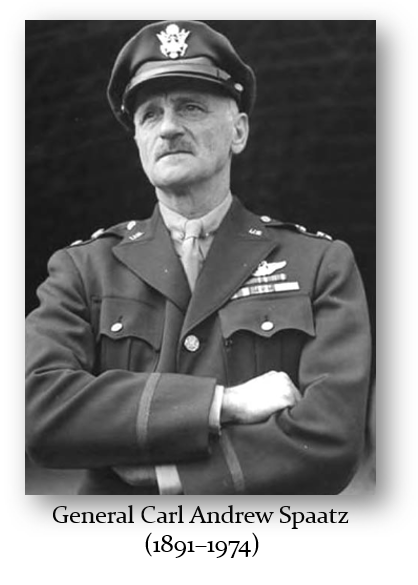
Spaatz General Carl Andrew

QUESTION: You said you did your own research on the two atomic bombs dropped on Japan and you saw gaps. Would you reveal what those gaps were for those of us who are curious?

EG

ANSWER: What I discovered was that there were no specific orders from Truman. The initial authorization was given in late July 1945 while Truman was at the Potsdam Conference. There was no presidential order to drop two specific, individual attacks. Truman granted the military authority to use atomic bombs as they became available, and at their discretion. They were to target military and industrial war facilities. The timing and specific targets were left to the military, primarily to General Carl Spaatz (1891-1974), the commander of the U.S. Army Strategic Air Forces at that time, not Truman.

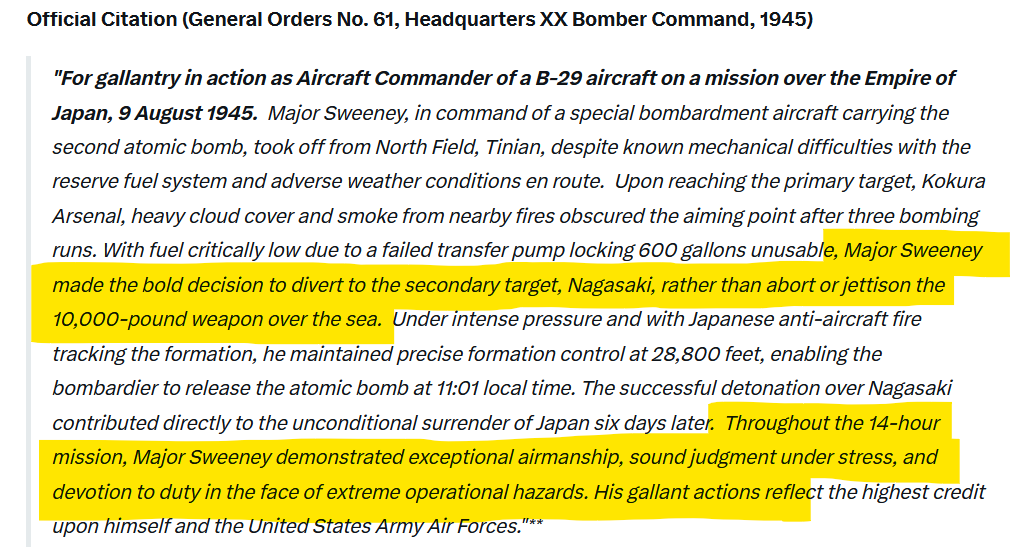
After the bombing of Hiroshima on August 6th, 1945, there was no high-level meeting or order from Truman to stop the process. The machinery for the second mission was already in motion. The plutonium core for the “Fat Man” bomb was flown from Kirtland Air Force Base in New Mexico on August 7th, and the B-29 Bockscar, piloted by Major Charles Sweeney, took off from Tinian Island in the early morning hours of August 9th (local time) and dropped the bomb on Nagasaki at 11:02 AM.

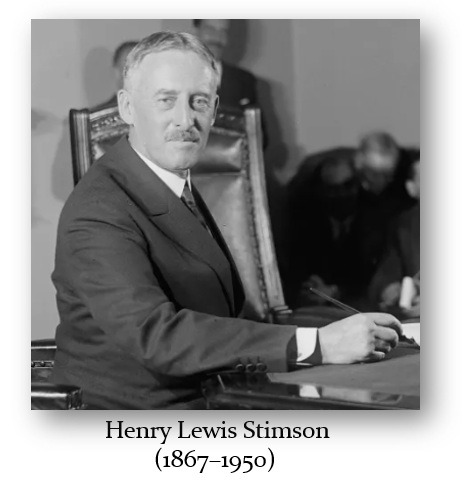
Stimson Henry Lewis

 In the days following Hiroshima, there were discussions among Truman’s cabinet members, notably Secretary of War Henry L. Stimson (1867-1950), who expressed growing unease about the destruction. Stimson was particularly keen on giving Japan a clearer chance to surrender and was worried about the U.S. being perceived as overly destructive. Even physicist Joseph Rotblat, left the Manhattan Project in 1944 on grounds of conscience.

Some historians, often called “traditionalists,” tend to argue that the bombs were necessary in order to save American lives and prevent an invasion of Japan. Other experts, usually called “revisionists,” claim that the bombs were unnecessary and were dropped for other reasons, such as to intimidate the Soviet Union. Many historians have taken positions between these two poles.

The “gap” I came to see was that there never was an order from Truman for a second attack. However, Truman, in his own diary and letters, expressed the horrific nature of the weapon but also a determination to end the war quickly. The prevailing belief was that the Japanese government, despite the first bomb, was not yet ready to surrender unconditionally. But that may have been with hindsight, given that 70,000–80,000 of civilians died in Hiroshima. That seemed to be an excuse to gloss over the civilian deaths some even believed was a war crime. In Nagasaki 40,000 died instantly and another 30,000 civilians from radiation poisonings.

The mission to bomb Nagasaki was never expressly authorized by Truman and it was never a primary target! Kokura was the target, but the city was obscured by smoke and haze from a conventional bombing raid on a nearby city the previous day. They made three bombing runs over the city but could not visually sight the target as per their strict orders. At best, Nagasaki was a secondary target. Sweeney, the pilot, pressed on with the mission’s core objective despite a cascade of failures that would have justified an abort. He was solely responsible for the decision to use or abandon the only other operational atomic bomb in the American arsenal at the time dropping it in the ocean. There has always been this question did Truman issue a subsequent erased stand-down order countermanding the discretion of the military.

Truman did a radio address and it seemed to be covering his ass. He said:

“The world will note that the first atomic bomb was dropped on Hiroshima, a military base. That was because we wished in this first attack to avoid, insofar as possible, the killing of civilians.”

This statement was propaganda at at best highly misleading. Hiroshima was a city with a significant civilian population, though it did contain military headquarters. To me, Truman lied to the world. Shortly after the bombing of Nagasaki, he famously ordered a halt to further atomic attacks without his express permission. I believe this confirmed the discretionary gap that military made the decision not Truman. In a memo to his cabinet, he wrote, “The thought of wiping out another 100,000 people was too horrible. He didn’t like the idea of killing, as he said, ‘all those kids.’” This is one of the clearest indications that the human cost weighed on him but he covered his ass.

In a response to a critique from religious leaders, in a letter to Federal Council of Churches (1946), Truman wrote:

“I was greatly disturbed over the unwarranted attack by the Japanese on Pearl Harbor… I was disturbed over the loss of life but not any more than I was over the loss of life in the attacks on the Normandy beaches… The atomic bomb ended the war and thereby saved the loss of millions of lives… It was a terrible decision. But I made it. And I made it to save 250,000 boys from the United States.“

Here, he acknowledges the loss of life but immediately contextualizes it within the broader, and bloodier, framework of total war. If we look at his private journals and later life, he occasionally expressed more somber reflections. For example, in a 1958 diary entry, he referred to the atom bomb as “the worst thing ever discovered,” and pondered the need to control it for the sake of peace. However, he never retreated from his core position that using it in 1945 was the correct decision for no politicians will EVER admit a mistake of in this case he gave discretion that should NEVER have been granted.

Nagasaki_flight_crew R

Does Glory Superesede Honor?


Posted originally on Nov 1, 2025 by Martin Armstrong |  

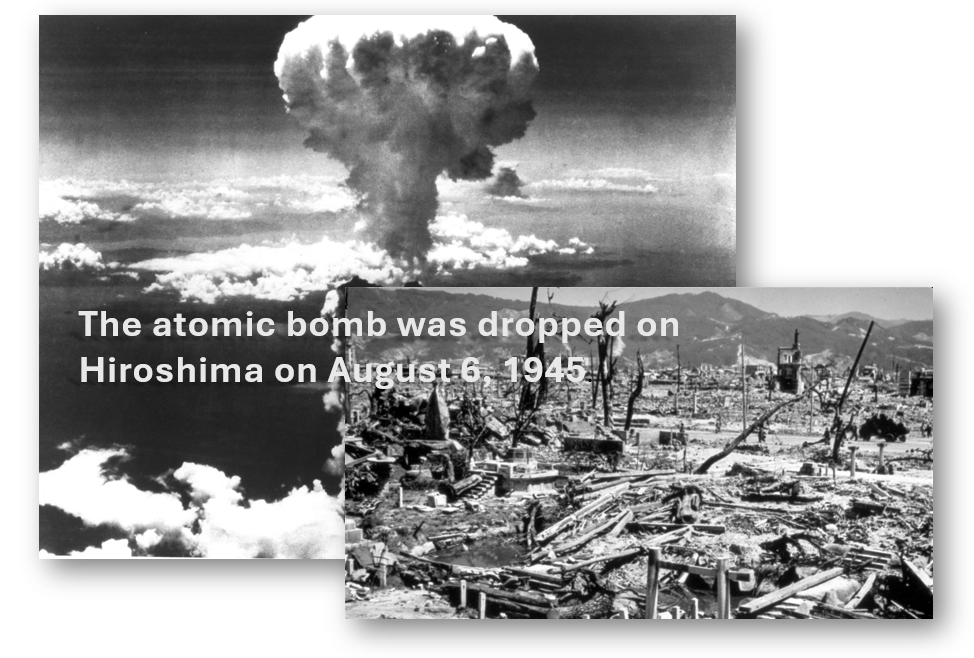
Hiroshima on August 6 1945

COMMENT: Marty! Great that you wrote about radiation, and then peace talks! Thanks!!!!!!!

I knew Milt well, the man who was in charge of decoding communications which had been sent directly from the President and relaying them to military personnel on foreign soil in WWII. When in his 80s, Milt told me that when Truman saw the actual horrific and terrifyingly gruesome effects of not-so-Little Boy, he ordered an immediate cancellation of the plan to bomb Nagasaki. Milt sent that communication directly to the pilot of the plane carrying that second bomb. But that pilot wanted the Purple Heart, so he dropped it anyway.

The USA military didn’t want to look bad to the world, so they pretended that the order FROM THE PRESIDENT never happened. Instead of court-martialing the pilot, Milt said they gave him the Purple Heart.

“Honor” is the only driving legitimacy of the military. Right.

Milt was a 100% dedicated patriot, serving in a key position in decoding and in communications in two wars. When he suddenly realized he had just breached his vow of silence on the subject, he was aghast and said no more to me on the subject.

nps.gov/articles/trumanatomicbomb.htm

The temperature near the blast site reached 5,400 degrees Fahrenheit.  The sky seemed to explode.  Birds ignited in midair; asphalt boiled. People over two miles away burst into crumbling cinders.  Others with raw skin hanging in flaps around their hips leaped shrieking into waterways to escape the heat. Men without feet stumbled about on the charred stumps of their ankles. Women without jaws screamed incoherently for help.  Bodies described as “boiled octopuses” littered the destroyed streets.  Children, tongues swollen with thirst, pushed floating corpses aside to soothe their scalded throats with bloody river water.

The entire world should be informed of the very real life-extermination possibilities and excruciating effects of even one rogue event, along with its effects on the entire planet. Most people just don’t get it.

THANKS FOR DOING ALL YOU CAN, as many of us are doing, too.

You’re not alone. I and many others are with you…

R

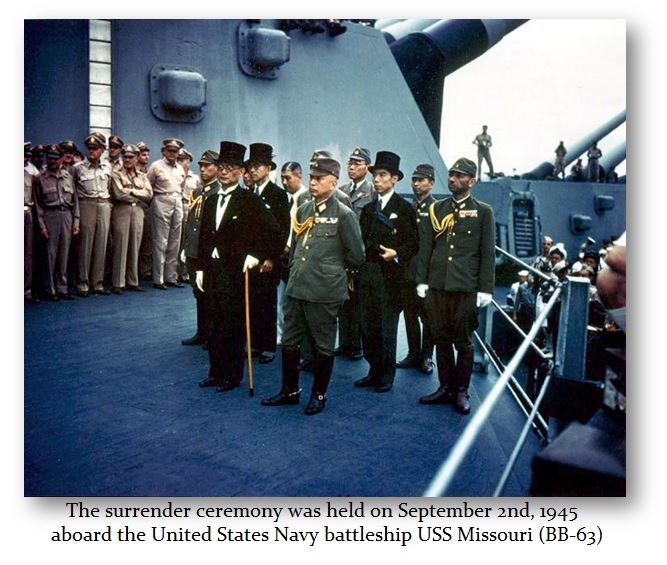
Japan Surrender

ANSWER: Thank you. There was always a question why did they drop two bombs. This actually fills in some gaps that I noticed in my own research. The atomic bomb was dropped on Nagasaki on August 9, 1945. This was three days after the Hiroshima bombing. Japan did not surrender after Hiroshima primarily because the Japanese Supreme War Council was deadlocked and the full, shocking implications of the bomb were not yet fully understood or accepted. The military leadership, in particular, was resistant. This is why to this day the Japanese are skeptical of their military. The decision to surrender required a unanimous vote by the “Big Six” – the Supreme War Council. This group was split into two factions as always. You had those who wanted peace and their neocons who wanted to continue until the last Japanese fell.

The second bombing of Nagasaki did compel the unanimous vote in the Supreme War Counsel. Was that necessary or not has long been debated. Japan announced it would surrendered on August 15, 1945. That was when Emperor Hirohito announced the surrender in a radio broadcast to the Japanese people. The formal signing of the surrender documents took place on September 2, 1945, aboard the USS Missouri in Tokyo Bay, which officially ended World War II.

President Trump Asks Senate Republicans to End Filibuster and Extend CR to Reopen Government


Posted originally on CTH on November 1, 2025 | Sundance

I see President Trump’s point on this quite clearly.

The Big Beautiful Bill (BBB), essentially the 2026 budget and spending package, was passed along party lines because Democrats would not support the cuts to their spending programs which purchased votes.  The Democrat opposition to the fiscal spending Continuing Resolution (CR) is essentially just another way to filibuster the BBB that preceded it.

If the Republican Senate would end the filibuster to pass the BBB, then why would the Republican Senate permit the spending filibuster to block the CR which is the spending vehicle to deploy the BBB?

DONALD J TRUMP – “Remember, Republicans, regardless of the Schumer Shutdown, the Democrats will terminate the Filibuster the first chance they get. They will Pack the Supreme Court, pick up two States, and add at least 8 Electoral Votes. Their two objectors are gone!!! Don’t be WEAK AND STUPID. FIGHT, FIGHT, FIGHT! WIN, WIN, WIN! We will immediately END the Extortionist Shutdown, get ALL of our agenda passed, and make life so good for Americans that these DERANGED DEMOCRAT politicians will never again have the chance to DESTROY AMERICA! Republicans, you will rue the day that you didn’t TERMINATE THE FILIBUSTER!!! BE TOUGH, BE SMART, AND WIN!!! This is much bigger than the Shutdown, this is the survival of our Country!”