Secretary Wilbur Ross Discusses Tech and Structural Confrontation with Beijing -WeChat and TikTok…


When Commerce Secretary Wilbur Ross appears… PAY ATTENTION.  In this interview Secretary Ross outlines an announcement today [LINK HERE] about the U.S. will block Chinese owned WeChat, and additional security measures against TikTok.

COMMERCE – […] While the threats posed by WeChat and TikTok are not identical, they are similar. Each collects vast swaths of data from users, including network activity, location data, and browsing and search histories. Each is an active participant in China’s civil-military fusion and is subject to mandatory cooperation with the intelligence services of the CCP. This combination results in the use of WeChat and TikTok creating unacceptable risks to our national security. (more)

Additionally, Secretary Ross discusses sector-specific relief for the airline industry and U.S. farmers. On the farmer side we should all remember any confrontation with Beijing could lead to China pulling back from purchase agreements. China cannot feed itself and is dependent on imported food products, so the scale of any pull-back is not known.

DETAILS – In response to President Trump’s Executive Orders signed August 6, 2020, the Department of Commerce (Commerce) today announced prohibitions on transactions relating to mobile applications (apps) WeChat and TikTok to safeguard the national security of the United States.


The Chinese Communist Party (CCP) has demonstrated the means and motives to use these apps to threaten the national security, foreign policy, and the economy of the U.S. Today’s announced prohibitions, when combined, protect users in the U.S. by eliminating access to these applications and significantly reducing their functionality.

“Today’s actions prove once again that President Trump will do everything in his power to guarantee our national security and protect Americans from the threats of the Chinese Communist Party,” said U.S. Department of Commerce Secretary Wilbur Ross. “At the President’s direction, we have taken significant action to combat China’s malicious collection of American citizens’ personal data, while promoting our national values, democratic rules-based norms, and aggressive enforcement of U.S. laws and regulations.”

While the threats posed by WeChat and TikTok are not identical, they are similar. Each collects vast swaths of data from users, including network activity, location data, and browsing and search histories. Each is an active participant in China’s civil-military fusion and is subject to mandatory cooperation with the intelligence services of the CCP.  This combination results in the use of WeChat and TikTok creating unacceptable risks to our national security.

As of September 20, 2020, the following transactions are prohibited:

  1. Any provision of service to distribute or maintain the WeChat or TikTok mobile applications, constituent code, or application updates through an online mobile application store in the U.S.;
  2. Any provision of services through the WeChat mobile application for the purpose of transferring funds or processing payments within the U.S.

As of September 20, 2020, for WeChat and as of November 12, 2020, for TikTokthe following transactions are prohibited:

  1. Any provision of internet hosting services enabling the functioning or optimization of the mobile application in the U.S.;
  2. Any provision of content delivery network services enabling the functioning or optimization of the mobile application in the U.S.;
  3. Any provision directly contracted or arranged internet transit or peering services enabling the function or optimization of the mobile application within the U.S.;
  4. Any utilization of the mobile application’s constituent code, functions, or services in the functioning of software or services developed and/or accessible within the U.S.

Any other prohibitive transaction relating to WeChat or TikTok may be identified at a future date. Should the U.S. Government determine that WeChat’s or TikTok’s illicit behavior is being replicated by another app somehow outside the scope of these executive orders, the President has the authority to consider whether additional orders may be appropriate to address such activities. The President has provided until November 12 for the national security concerns posed by TikTok to be resolved. If they are, the prohibitions in this order may be lifted.

The notices for these actions will be posted on the Federal Register at approximately 8:45AM EDT on Friday, September 18, 2020.

Background:

On August 6, 2020, President Trump signed Executive Orders (E.O.) 13942, Addressing the Threat Posed by TikTok, and E.O. 13943, Addressing the Threat Posed by WeChat. In the E.O.s, the President determined that the apps capture vast swaths of information from U.S. users, leaving the data vulnerable to CCP access for nefarious purposes.

Commerce, at the Direction of the President, was required to identify transactions within 45 days to protect national security and the private data of millions of people across the country. Today’s announced prohibitions fulfill the President’s direction and mitigate national security risks. (link)

Trump Administration Announces “Withhold Release Orders” Targeting China’s Use of Forced Labor in Xinjiang Region…


Those who have followed the Trump administration’s decoupling strategy will note the potential conflict from within this approach is a ‘nothing to lose’ proposition from Donald Trump’s perspective.

The Trump administration announced today the Department of Homeland Security, via U.S. Customs and Border Patrol, are about to start blocking the import of products from five specific entities in western China’s Xinjiang region.  The objective is to block products that come from forced Uighur labor in Xinjiang, China.

The authority comes from U.S. “Withhold Release Orders” (WRO’s) that allows U.S. Customs and Border Protection to detain shipments based on suspicion of forced-labor involvement under long-standing U.S. laws to combat human trafficking, child labor and other human rights abuses.  Ken Cuccinelli explains to Lou Dobbs.

.

At first blush this might seem detrimental to the objectives of the U.S-China Phase-One trade deal. However, if you have followed the decoupling process closely; including the warnings given by Trump to U.S. multinationals; you will note there is no specific downside to this confrontation.

Wall Street, the U.S. Chamber of Commerce and the multinationals represented by K-Street lobbyists in DC will obviously go bananas; however, at this point in the 2020 election -and I swear this is incredibly astute and strategic timing- there’s no political value in attacking President Trump over a policy against forced labor.

Think about it…. Are the democrats or their allies on Wall Street really going to start demanding that President Trump’s global trade policy include accepting forced labor, slavery and child exploitation?  A democrat campaign message to “make slavery great again”? Of course not…. ergo, strategic brilliance. A brilliance that actually circles directly back to the longer-term goal of decoupling from Beijing.

wASHINGTON – DHS said Xinjiang entities whose products will be blocked from entering the United States include all products made with labor from the Lop County No. 4 Vocational Skills Education and Training Center; hair products from the Lop County Hair Product Industrial Park; apparel produced by Yili Zhouwan Garment Manufacturing and Baodung LYSZD Trade and Business Co.; cotton produced and processed by Xinjiang Junggar Cotton and Linen Co. Ltd; and computer parts made by Hefei Bitland Information Technology Co. Ltd.

President Donald Trump’s administration is ratcheting up pressure on China over its treatment of Uighur Muslims in Xinjiang, where the United Nations cites credible reports that about 1 million Muslims held in camps have been put to work.

China denies mistreatment of the Uighurs and says the camps are vocational training centers needed to fight extremism.


Drastic Food Shortages in China


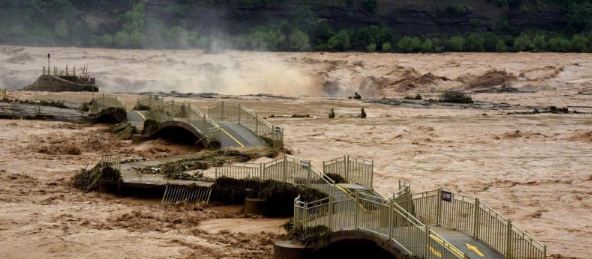
Chinese Chairman Xi Jinping has come out officially acknowledging the food crisis in China by asking people not to waste food. China’s rice farmers are fighting insects and weeds the traditional way by bringing in hungry ducks. Meanwhile, China is facing serious shortages of both grains and pork. Months of flooding have wiped out the crops while insect infestations attack the rice fields. Then there is simultaneously the rapidly spreading African swine fever (ASF) which is now even starting to make its way into Europe. On top of all of this has been the orchestrated Wuhan coronavirus (COVID-19) which may have been deliberately leaked from the lab there by people who planned this take over of the world with a New Green World Order.

As I have mentioned before, these people have succeeded in subjugating Europe. They need to overthrow Trump to subjugate the USA. They are seeking to force Western investors from hedge funds to pension funds to sell all Chinese investments to force them to comply with their demands. Trump could not date talk about this prior to the election, for the media is in the pocket of these people and would call him a conspiracy nut not worthy of the office. Investigating all the people behind this convenient plan must be done carefully. I believe that the media MUST be ordered to be unbiased and present both sides or they lose their license as propaganda.

Faith, Character, Destiny, and Redemption: Jimmy Lai’s Continuing Fight For Hong Kong’s Freedom


Re-Posted from Uncommon knowledge interview with Jimmy Lai Sunday, September 6, 2020

Recorded on September 4, 2020

This is our third conversation with Hong Kong entrepreneur and freedom fighter, Jimmy Lai in less than a year. During that time, Lai has been arrested twice, his family and his employees and colleagues have been harassed and in some cases forced to leave Hong Kong, and Lai himself has been incarcerated. Currently free on bond and facing a trial and an uncertain future, Mr. Lai gets philosophical in this conversation. He describes how his faith has given him strength and comfort and that he is willing to make whatever sacrifice required in order to maintain democracy in Hong Kong. We discuss the political situation in Hong Kong, the precarious position of Hong Kong Executive Carrie Lam, and how the United States and the world can apply pressure to the Chinese, and what’s at stake if Hong Kong becomes just another Chinese city.

China v US Confrontation


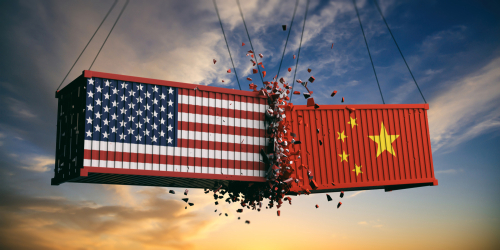
China on Friday ordered the United States to shut its consulate in Chengdu in response to the American closure of China’s equivalent branch in Houston. The US had ordered China to close its consulate in Houston which was indeed a political provocation which was the view by Beijing. US Secretary of State Mike Pompeo said the decision was taken because China was “stealing” intellectual property. another escalation in the dispute between the world’s two largest economies. The closure of the US consulate in Chengdu was a measured response.

There was no end in sight to this conflict that has moved from trade and technology to freedom of the press, religion, and human rights not to mention a race for a coronavirus vaccine which is nonsense since the most vulnerable are the elderly and even the flu shot has less of an effect upon the elderly.

Clearly, the relationship between the US and China is worsening. Nevertheless, we have not yet reached the point of no return. That would be suggested by two things:

  1. The closure of embassies in each country
  2. military confrontation, whether intentional or accidental.

The intellectual property theft by China is alleged to have been over the coronavirus vaccine development. Two Chinese nationals, who allegedly spied on US research companies and got help from state agents for other thefts, have been charged.

Much of this confrontation is political given the US elections pending in November. However, Trump is very old school and his views of trade are rather antiquated no different than the major political establishment. They see only the loss of jobs domestically and not the benefits to the consumer to obtain a better price. Trump is moving against the pharmaceutical industry where the same drugs are much cheaper in Canada and many are even available over the counter outside the USA for a fraction of the costs domestically. This is the entire problem with blocking international trade. The ultimate cost is always paid by the consumer.