South Korean President Urges People to Conserve Shower Water and Reduce Car Usage


Posted originally on Mar 25, 2026 by Martin Armstrong |  
shower

South Korean President Lee Jae Myung has now called for a nationwide energy-saving campaign, urging citizens to take shorter showers, reduce car usage, and adopt a list of government-defined conservation practices, while public institutions have been instructed to cut back on vehicle use and businesses with high energy consumption are being pressured to scale down operations, and Lee himself made clear the urgency by stating that the government must “mobilize all available resources” and act immediately rather than hesitate, which reveals how quickly policy shifts once a crisis narrative is established.

The justification is rooted in supply disruption tied to geopolitical tensions, particularly the near halt of tanker traffic through the Strait of Hormuz, which South Korea depends on for roughly 70% of its crude imports, and despite holding approximately 190 million barrels in reserves, officials have acknowledged that those reserves may not last even two months under current demand conditions, which exposes just how fragile the system has become after years of policy decisions that prioritized ideology over stable supply.

If this were simply about energy, then the solution would be focused on restoring supply and stabilizing markets, yet instead the burden is immediately shifted onto the people, which is always the telltale sign that governments are no longer managing the economy but are instead attempting to manage behavior, and this is where the climate narrative becomes relevant because it provides the perfect justification for telling people how to live under the guise of necessity.

I have said many times that climate change policies are part of a broader trend where governments seek oversight and influence over individual behavior. As we saw in the US with the Inflation Reduction Act, governments will request billions if not trillions all in the name of saving the planet. Once you begin dictating how long someone can shower, when they can drive, or how much energy they are allowed to consume, you are looking at tyrannical control measures.

The pattern is identical to what we saw during COVID, where the initial response was framed as temporary and necessary, followed by escalating guidance that quickly turned into mandates when compliance did not meet expectations, and South Korea is already signaling this trajectory by describing current measures as voluntary while leaving the door open for stricter enforcement, which is always how these policies evolve.

When governments lose the ability to influence outcomes through traditional economic tools, they turn toward direct intervention in society, and energy becomes one of the most effective levers since it underpins transportation, housing, and basic daily function. This is not about the normalization of control, because once the authority to regulate behavior is established under one crisis, it can be expanded and applied under another, and history shows that governments rarely relinquish powers once they have been obtained.

What we are witnessing is not simply an energy-saving campaign, but part of a larger structural change in how governments interact with their populations, and that shift is being driven not by necessity alone, but by the opportunity that crises provide to expand control.

Rumors are beginning to circulate that the government’s next control tactic will be energy lockdowns. I would not put anything past government.
Orban: Ukraine is Our Enemy


Posted originally on Feb 10, 2026 by Martin Armstrong |  

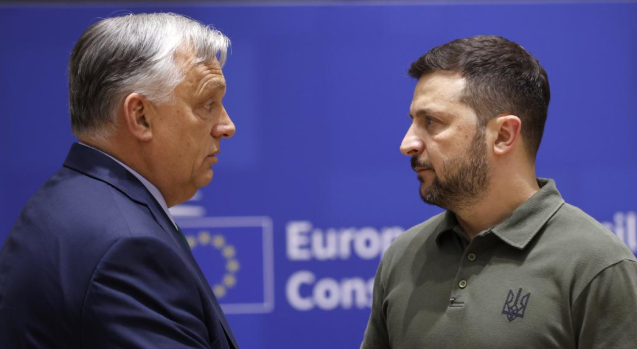
Zelensky vs Orban

Hungary’s Viktor Orban declared that anyone attempting to dismantle his nation’s energy supply is an “enemy.” “Anyone who says this is an enemy of Hungary, so Ukraine is our enemy,” he said. Furthermore, Orban believes it is not in his nation’s best interest to permit Ukraine to join the European Union. “Hungarians should not want military or economic cooperation with Ukrainians, because they are dragging us into war.”

Orban’s comments are not some sudden outburst of nationalist rhetoric. It is the inevitable consequence of Europe’s self-inflicted energy war and the refusal of Brussels to confront economic reality. Hungary, like Slovakia, was built on the assumption of stable, inexpensive Russian oil and gas. Entire industrial systems, pricing structures, transportation networks, and household energy models were engineered around that reality for decades.

When Brussels decided it could simply erase Russian energy from the European economy by decree, it condemned countries like Hungary and Slovakia to economic stress that Western Europe is insulated from. Germany can pretend to moralize while subsidizing collapse; smaller states do not have that luxury.

Ukraine’s push to terminate Russian energy transit through its territory was celebrated politically, but economically, it was devastating for Central Europe. Slovakia lost critical transit revenues overnight, while Hungary was forced into higher-cost alternatives. Ukraine’s actions, combined with EU sanctions, have directly threatened Hungary’s economic stability.

The European Union created this conflict by pretending that energy is merely a moral issue rather than the foundation of modern civilization. You cannot shut down reliable supply chains and replace them with slogans, windmills, and press conferences. Energy shortages translate directly into inflation, declining real wages, collapsing manufacturing, and rising civil unrest. That is precisely what we are witnessing across Europe.

EU Officially Votes to Ban Russian Gas


Posted originally on Jan 27, 2026 by Martin Armstrong |  

Crude Oil Production

The EU has now given its final approval to a legally binding ban on Russian gas imports, pretending this is some grand moral victory. Reuters is reporting that the EU will stop importing Russian LNG by the end of 2026 and ban pipeline gas by September 30, 2027, with some flexibility to extend under certain conditions.

The press constantly frames this as “standing up to Russia,” but in reality, this has been nothing more than a shift from one supplier to another while pretending it is independence. Russia was once supplying over 40% of EU gas. By 2025, they managed to reduce it to around 13%. Yet some countries are still buying Russian energy because you cannot run an industrial economy on ideology. Of course, Hungary and Slovakia opposed this, and Bulgaria abstained. Hungary says it plans to challenge this legally. Centralized power strips individual member states of all autonomy, and all nations must abide by Brussels even if it will lead to financial ruin or war.

The EU’s entire problem is that it is run by politicians who do not understand economics, capital flows, or even basic history. They have no comprehension that the energy cost is the cost of production. When you deliberately raise the cost of energy, you raise the cost of EVERYTHING. That is not “Putin’s inflation.” That is EU inflation, caused by EU policy.

I warned that sanctions would trigger disruptions and excuses for supply cuts, and that Europe would be the one paying the price. The EU is heading into a depression because of its own deliberate policy decisions. Net Zero, sanctions, eliminating nuclear energy, attacking farmers, destroying industry, regulating everything to death, and now pretending you can just ban the energy inputs that built modern Europe.

Europe is banning Russian gas not because it makes economic sense, but because the EU has turned policy into religion and demands ideological conformity.

Germany’s Merz Admits to “Serious Strategic Mistake”


Posted originally on Jan 21, 2026 by Martin Armstrong |  

Phasing out nuclear energy was a “serious strategic mistake,” admits German Chancellor Friedrich Merz. “It was a serious strategic mistake to exit nuclear energy,” Merz said. “If you were going to do it, you should have at least kept the last remaining nuclear power plants in Germany on the grid three years ago, so that we would have had the same electricity generation capacity.”

Repeatedly, I warned that Germany was committing economic suicide by adhering to the climate change anti-fossil fuel agenda and blindly agreeing to cut off Russian imports. “We’re now making the most expensive energy transition in the entire world. I don’t know of a second country that makes it as difficult and as expensive for itself as Germany does. We set ourselves a goal that we now have to correct, but we simply don’t have enough energy generation capacity,” Merz continued.

Granted, most of the Christian Democratic Union was in favor of nuclear power. Merkel, Merz’s political rival, set Germany’s energy crisis in motion through abhorrent policies. Between the COVID lockdowns, then the Climate Change and NET ZERO regulations, on top of that, the Russian sanctions to cut off energy purchases, the most crucial economy within Europe has been sabotaged by the politicians who are mindless and lack any understanding of how the world economy functions, not to mention their own.

On March 11, 2011, when an earthquake-triggered tsunami damaged the nuclear power plant in Fukushima, Japan, Chancellor Merkel and her cabinet held that nuclear power in Germany had to come to an end. It was a historic event and a historic decision (see Der Spiegel). The new green deal of Merkel quickly became bogged down in the details of German reality and the impracticability of the whole idea. The so-called Energiewende, the shift away from nuclear in favor of renewables, was a major project that was up there with Germany’s reunification.

Germany was then heavily relying on coal, but government is aiming to phase it out by 2038, with some politicians believing it can be done by 2030. Germany officially closed its last nuclear power plant in April 2023, naturally, reliance on fossil fuels increased.

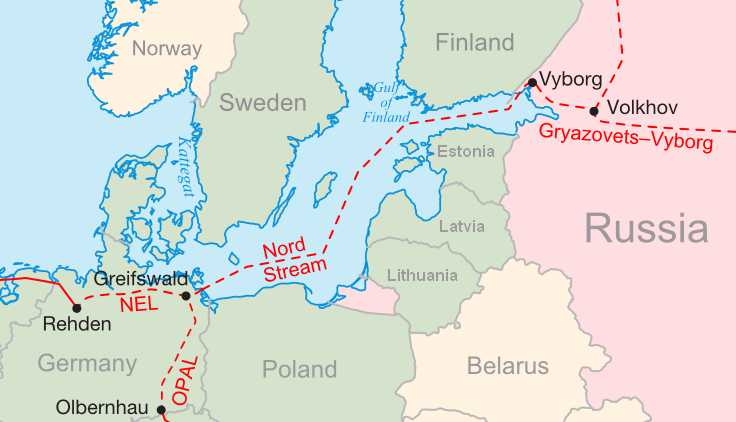
Nordstream
NordStream

Recall that in February 2022, former US President Joe Biden and then German Chancellor Olaf Scholz held a joint press conference where they subtly threatened Nord Stream 2, the continent’s main supplier of Russian oil. “If Russia invades, that means tanks and troops crossing the border of Ukraine again, then there will be, there will be no longer a Nord Stream 2,” Biden stated during the joint press conference with Scholz. “I promise you, we will be able to do it.” The neocons hailed the destruction a victory but the true victim was Germany. Biden admitted that there would be a “temporary” energy price increase due to Russian sanctions at the time. “Defending freedom will have costs for us as well, and here at home. We need to be honest about that,” Biden stated to deflect the blame. CNN even reported the decision as an economically masochistic act, “The West showed Tuesday it was ready to target Russia’s huge energy industry — even at the risk of hurting itself — after Moscow ordered troops into parts of eastern Ukraine.”

Trump called Ukraine the wall between Russia and Europe and stated that America had become the “sucker country” by shelling out millions to Ukraine when they received far less in return. He warned Europe that their reliance on Russian imported energy would spell disaster and went as far as declaring that Germany was “totally controlled by Russia.” Instead of looking for energy alternatives, Germany went through with the Nord Stream 2 Pipeline and wasted billions as sanctions were implemented before the pipeline was fully functional.

Germany now relies on expensive renewables through wind and solar for over 60% of energy demand. Oil drives 36% of demand currently, and while renewables are rapidly expanding, it remains to be seen whether Germany can run on 80% renewables by 2030. Merz is not advocating reopening the plants as “nuclear” fears have a chokehold on voters, but he is considering small modular reactors, which simply are not sufficient to meet demand. Bad policies can quickly cripple an economy.