Germany Warns of the Shadow War


Posted originally on Oct 7, 2026 by Martin Armstrong |
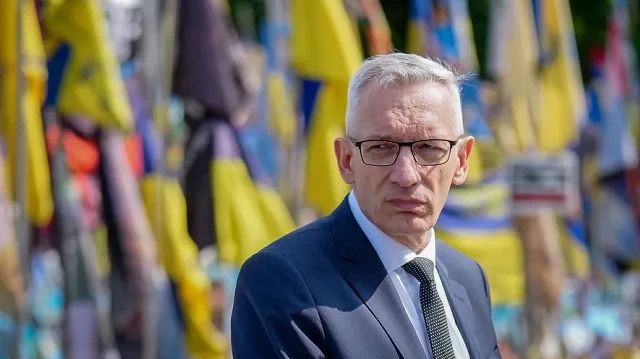
Ambassador Martin Jaeger appointed Germany's top intelligence official

Germany’s own intelligence service is now warning that the confrontation with Russia is entering a far more dangerous phase. Martin Jäger, head of Germany’s BND foreign intelligence service, told parliament on October 5 that Germany risks becoming embroiled in a violent conflict with Russia. He described what is taking place across Europe as a Russian “shadow war” that has entered a “new, more dangerous dimension.”

October 5, on that very date, Germany’s intelligence chief is warning that the confrontation with Russia is moving beyond Ukraine. Germany points to drones, cyberattacks, sabotage, espionage and attacks against infrastructure throughout Europe. German authorities have accused Russia of involvement in an attempted drone attack against a Ukrainian transport aircraft at Leipzig airport. Moscow denies conducting such a campaign and insists it has no intention of attacking NATO.

Jäger declared that “Russia is our most dangerous adversary.” He said the danger of attacks against German targets remains “real and imminent” and accused Moscow of testing Germany to see how far it can push. Perhaps most alarming was his warning about what comes next: “Russia could engage in low-intensity military activities, particularly in the Baltic states.” Germany is openly talking about a conflict that could creep across NATO’s borders without beginning with some formal declaration of war.

What concerns me most is that Jäger openly discussed the possibility of Russia conducting limited operations against the Baltic states to test NATO. Not necessarily thousands of tanks rolling across a border, but something deliberately ambiguous enough to determine whether NATO actually has the political courage to respond. What constitutes an attack today? A drone entering NATO airspace? A commercial vessel destroyed in the Baltic? The lines that once separated war from peace have become dangerously blurred.

Germany’s military is issuing much the same warning. Major General Christian Freuding, who oversees Germany’s support for Ukraine, has warned against assuming Europe has years before a confrontation with Russia. He said the question of when Russia might be capable of attacking NATO is becoming almost irrelevant because Moscow already possesses forces and weapons that could be used against the alliance today. “Russia already has the capabilities to attack NATO territory now,” Freuding warned. That does not mean Germany believes Putin is preparing to invade tomorrow, but this constant rhetoric matters. German intelligence warns of a shadow war, its generals say Russia can attack NATO now, and Berlin is simultaneously rearming at a pace not seen in generations. The danger is that Europe is no longer preparing for some theoretical war in 2029. Its own military leadership is telling the public that the confrontation could come much sooner.

Europe helped create this situation by pretending it could wage an unlimited proxy war against a nuclear power while keeping everything neatly contained inside Ukraine. Germany supplies weapons to Kyiv and has become one of Ukraine’s largest supporters. Poland is rapidly militarizing. Finland and Sweden have joined NATO. Lithuania sits beside Kaliningrad and is moving to remove its prohibition on nuclear weapons. Russia responds by strengthening its own defenses, and Europe then points to that response as evidence that Moscow is preparing to attack.

The Baltic is becoming perhaps the most dangerous pressure point. Russia has already warned that any attempt to attack or isolate Kaliningrad could produce a response involving nuclear weapons. Jäger is now warning NATO not to simply wait for 2029, the timeframe often discussed for when Russia could become capable of a larger confrontation with the alliance. Something smaller could happen first.

The War Cycle does not mean someone declares World War III on a particular day. It marks periods when geopolitical pressure intensifies and governments become increasingly aggressive. Europe says it is preparing for war to prevent war. Russia says precisely the same thing. Eventually, with this many weapons, drones, troops and intelligence operations rubbing against one another, all it takes is one mistake to set off something nobody can control. Germany’s intelligence chief is effectively admitting we are getting dangerously close to that point.

Europe Simply Needs War


Posted Originally on Oct 7, 2026 by Martin Armstrong |

Merz does not care about the fate of Germany or its people. Here we are on precisely the week of October 5th and Merz is saying that Russia staged some armed attack on Leipzig airport. He is publicly stating that Germany is effectively at war with Russia. The EU is crumbling and the AfD has beaten Merz to a pulp, so its now time to go out with a bang and declare war has already begun.

Here is Merz declaring that Brussels is indeed very concerned about the rise of of what they call far-right parties that are anti-EU with the common thread being their migrant policies. The nature of that concern has also now shifted significantly. The current anxiety in EU institutions is not just about the imminent “exit” threat, but also I hear they fear a growing strategic objective by these parties to weaken and obstruct the EU from the inside.

They are concerned that instead of a demand for an immediate exit that they can regi such elections as they did in Hungary and Romania, they are now also looking at the draft strategy document of the AfD lawmakers which are moving away from demanding an immediate German exit from the EU and eurozone, proposing instead, to prioritize reforming the EU into a “union of sovereign nations” and advocate for a referendum on membership only if those reforms fail.

This shift is partly pragmatic. The AfD is currently isolated in the European Parliament, and more moderate right-wing parties, like Marine Le Pen’s National Rally, have openly criticized the AfD’s “anti-European” stance. Dropping the exit demand makes the AfD a more palatable ally for these larger far-right groups.

This strategic change creates a more difficult problem for the EU than a simple exit campaign that they can fight with rigged elections. Here, a referendum requires a party to convince a majority to take a radical step. In contrast, internal disruption only requires enough power to block, dilute, and redirect policy from within the system. The EU’s existing tools, which were designed to reassure citizens about the benefits of membership, are ill-suited to counter this kind of internal gridlock. This is why they rigged both the Romanian and Hungarian elections.

Parties like the AfD and Hungary’s Fidesz can exploit unanimity rules to veto EU-wide decisions. For example, Hungary has blocked crucial sanctions and loans for Ukraine, and the far-right Patriots for Europe group has worked to dilute the Green Deal and the Migration Pact. This dysfunction then becomes campaign material for these parties, who position themselves as defenders of national interests against a “paralyzed” Brussels. This was why the Hungarian government has repeatedly accused Ukraine of interfering in its elections to remove Orban. Sources in Washington reveal that Ukraine is also interfering in US elections funding the opposition of anyone in Congress who is against sending money to Ukraine. Israel has been doing the same.

The European Commission is aware of the broader threat posed by anti-Brussels movement. Its response has focused on security and rule of law, rather than direct political confrontation. Through Europol and the EU Knowledge Hub, the Commission is coordinating cross-border efforts to combat anti-EU protests and sharing information on proscribed groups.

The Commission has proposed reforms to its next long-term budget that would make EU funding conditional on member states respecting the rule of law. This is designed to impose financial costs on governments allowing the people to vote for organizations like the Afd. This is a very anti-democratic position but this is what governments do to retain power.

In short, Brussels’ concern is focused on a more subtle and persistent threat of a coordinated effort by these anti-EU parties to hollow out the EU’s ability to function from within its own institutions.

This is why the EU faces a rising threat that will dissolve the centralized government returning sovereignty to individual member states, or start World War III with Russia not just as a distraction, but to forge a unity bond with the classic rally around the flag.

The World Economic Forum (WEF) was trying to create the one-world government some call globalization, where the pandemic some believed would create the unity to create this globalization. However, the manufactured pandemic actually accelerated pre-existing trends toward deglobalization, nationalism, and the “balkanization” of technology. WEF discussions acknowledged that globalization was “already under attack before COVID” and that the pandemic posed new questions about nationalism that were exactly opposite of the expected unity. The WEF’s stated concern was that a retreat from globalization and that multilateralism damaged their efforts to create their communistic form of government where you own nothing and you’ll be happy.

Here war is being used to create the UNITY with the Rally around the flag in an effort to defeat the agenda of AfD and others and in the process solidify the EU as a permanent European federal government.

Categories:European UnionWar