
Posted originally on Jan 13, 2026 by Martin Armstrong |
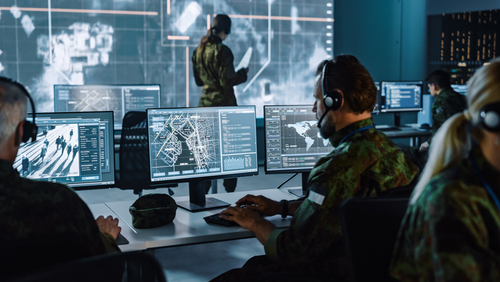
Russia is slinking back into its old Soviet Union methods of spying on citizens. Beginning on January 1, 2026, internet providers in Russia are now required to store all text, audio, and video messages for three years. The Center for Countering Disinformation has access to every Russian’s digital footprint.
Per usual, authorities claim the measure is to protect against fraud. The true motive is control, instant punishment, and the notion that citizens will begin to self-censor their private correspondence to avoid criticizing the Kremlin.
The Roskomnadzor (the federal communications regulator) has the authority to disconnect the Russian internet segment (Runet) from external sources at whim. Regulators may block or permanently ban individual websites or services if they believe they are a threat to national security. Telecom operators must issue commands and control network traffic in accordance with the Roskomnadzor. The Russian internet will be completely isolated from the global network.
Fines and penalties have been inconsequential despite increasing severity. As of September 1, 2025, Russians face a 5,000 ruble fine for “intentionally searching extremist materials.” This was significant as it was the first time Russia punished citizens for viewing prohibited online content.
Over one million websites have been analyzed for pretrial blocking by Roskomnadzor and the Prosecutor General’s Office. Over 150 media organizations are currently blocked in Russia. The government has repeatedly shut down the internet on a regional basis throughout the Ukraine war, with authorities claiming the blackouts are needed to support drone warfare.
Social media channels such as Twitter/X, Reddit, META/Facebook, LinkedIn, SnapChat, and Discord are inaccessible. YouTube and TikTok may be used on a limited basis. Russians are forbidden to view BBC News, Deutsche Welle, Le Monde, Der Spiegel, and other news outlets. VPNs are illegal, although widely used, and Russia ranked #1 in the top internet outages in 2025.
Russians all know that Big Brother is monitoring them online and tapping their phones. People in former communist nations do not trust the government. They’ve been taught throughout the generations to keep a guard up. Unlike those in the West, the Russians and Chinese understand that the mainstream media is merely a propaganda tool. The information displayed on your TV screen or the front page of the newspaper has been pre-approved by the government; otherwise, it would not be permitted to air. I can proudly say that this website is one of them, and we are permitted to operate in both Russia and China.
The Kremlin and every other government authority has unlimited access to text messages and online searches. You can delete your texts and clear your search history, but government can still see your complete digital footprint. Governments sued internet and phone providers years ago to ensure they had full backdoor access to every outlet. Social media outlets were compromised, and those who failed to comply like TikTok were either banned or sold out. Digital privacy is not a protected right. Modern civilization depends on the internet for communication and information, making it a prime target for government surveillance. We will see governments continually restrict internet access in the years ahead as each nation aims to create a digital firewall to protect its citizens from sharing information, or worse, collaborating against the regimes controlling them.
 Centinel2012