
Posted originally on Jun 2, 2026 by Martin Armstrong |
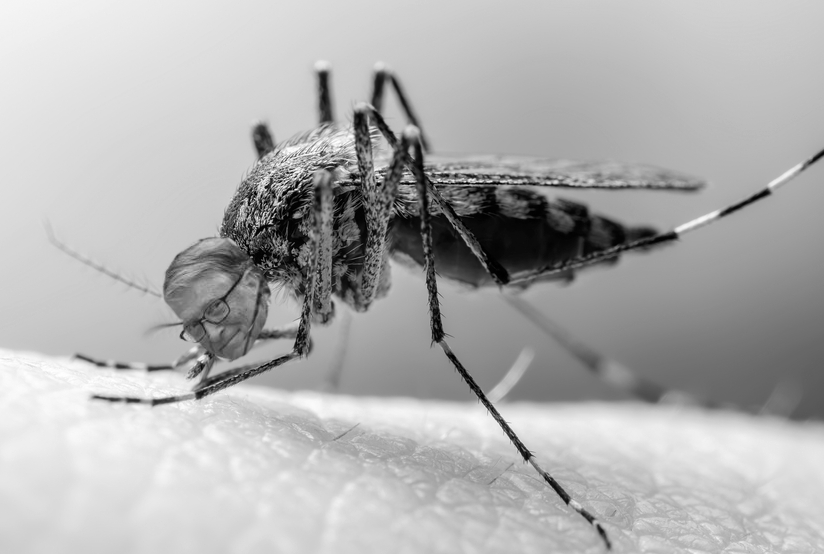
Nobody elected Google to manage the ecosystem. Yet here we are.
Alphabet, Google’s parent company, has quietly spent the better part of a decade developing what it calls the “Debug” project. The latest proposal seeks approval to release tens of millions of laboratory-bred mosquitoes across California and Florida. We are told not to worry because these are the “good” mosquitoes. We are assured they are male mosquitoes and therefore do not bite. We are told they carry a naturally occurring bacteria known as Wolbachia that will interfere with reproduction and reduce mosquito populations.
For generations, governments and corporations have repeatedly assured the public that interventions into nature would be harmless. DDT was once considered a miracle. Countless pesticides were approved before later being restricted. Entire rivers were polluted in the name of progress. Every generation is told that the experts have everything under control until something goes wrong.
What makes this case particularly remarkable is who is behind it. This is not a public health agency. This is not a university research department. This is one of the largest technology companies on earth. The same corporate structure that dominates online advertising, search results, artificial intelligence, data collection, mapping, cloud computing, and digital communications now wants to engineer mosquito populations on a massive scale.
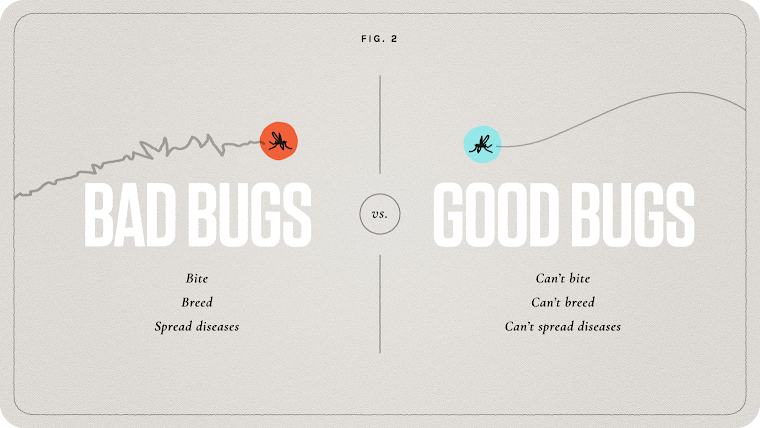
The project itself is run by Verily, Alphabet’s life sciences division. Debug combines software engineers, robotics specialists, AI systems, automation experts, and mosquito biologists. They have spent years building automated mosquito factories capable of producing millions of insects per week. Computer vision systems sort male from female mosquitoes while robotic systems manage breeding and deployment. This is industrial-scale biological engineering that will now become a social experiment.
The problem according to Google: “Mosquitoes kill more people than every other animal combined. One species, Aedes aegypti, carries diseases such as dengue, Zika, yellow fever, and chikungunya which make hundreds of millions of people sick every year. And these diseases are spreading faster than ever.”
Their stated objective is to reduce mosquito populations without widespread pesticide use. Studies involving Wolbachia have shown reductions in mosquito populations and lower transmission of certain diseases. Singapore reported reductions in dengue risk exceeding 70% in areas where Wolbachia programs were implemented. The CDC has acknowledged that Wolbachia-based mosquito suppression can reduce target mosquito populations and notes that these mosquitoes are not genetically modified.
Why should the public automatically trust any institution that asks for permission to alter the natural environment on this scale?
This is not the first time modified mosquitos have been released on the population. Bill Gates has been involved in mosquito projects for years, long before Google entered the arena. Through the Bill & Melinda Gates Foundation, he has funded research into both genetically modified mosquitoes and Wolbachia-based mosquito programs designed to suppress malaria, dengue, Zika, and other mosquito-borne diseases. Gates has openly championed the release of engineered mosquitoes, arguing that technology can be used to alter insect populations and reduce disease transmission. The Foundation supported projects involving biotechnology firm Oxitec, which developed genetically modified mosquitoes carrying self-limiting genes intended to collapse wild mosquito populations over time. Gates has also heavily promoted the World Mosquito Program, which breeds millions of Wolbachia-infected mosquitoes and releases them into communities throughout Latin America, Africa, and Asia.
Whether one agrees with these programs or not, what is remarkable is the philosophy behind them. A handful of billionaires, technology companies, and global foundations increasingly view nature itself as something that can be engineered, modified, and optimized. Gates has praised facilities producing more than 30 million mosquitoes per week and has argued that mass releases are necessary to combat future disease outbreaks. Google is now pursuing its own large-scale mosquito deployment through Verily’s Debug project. The public is being asked to trust that these interventions will work exactly as intended, yet history is littered with examples of experts assuring everyone that there was nothing to worry about until unforeseen consequences emerged years later. The issue is no longer simply mosquitoes. It is the growing belief among technocrats that every aspect of the natural world can be redesigned from the top down by unelected institutions operating far beyond public scrutiny.
We are living through a period where public trust has collapsed. Governments concealed information during COVID and unleashed a deadly cocktail of mRNA vaccines on the global population. Pharmaceutical companies received legal protections that ordinary businesses could only dream about. Regulators routinely move through revolving doors into the industries they supposedly oversee. The public has been repeatedly told to trust experts who later turn out to be wrong.
Now the same population is expected to calmly accept the release of tens of millions of engineered insects because another collection of experts says everything is safe.
What could possibly go wrong?

