Posted originally on CTH on March 11, 2026 | Sundance
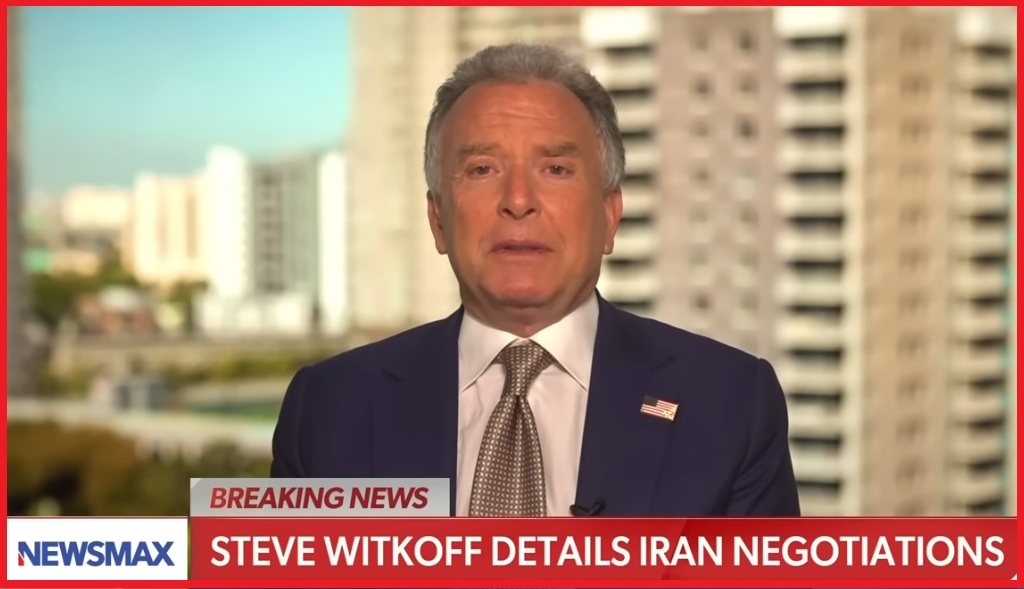
President Trump’s U.S. Special Envoy, Steve Witkoff, recently sat down with Greta Van Susteren to outline the point of diplomatic discussions with Iran’s Foreign Minister Abbas Araghchi when things broke down.
The Witkoff explanation is interesting as he outlines Iran’s unwillingness to even consider a cease to their ballistic missile program as part of the expanded security talks. According to Envoy Witkoff, Foreign Minister Araghchi was intransigent on several key points of concern; even becoming loud and aggressive as he was pushed to explain why seeking ballistic missiles would be needed.
It’s an interesting background perspective that gives context to the decision that President Trump ultimately reached. WATCH:
Posted originally on CTH on March 11, 2026 | Sundance |
Despite the Trump administration pushing maximum transparency, there is a lot of noise and wrong information surrounding the U.S. military operation ‘Epic Fury’ against Iran. Much of the false or incorrect information is coming from consultants to sell their opinions to corporate media.
Whenever the fog of war surrounds military activity that takes place against national security information, it is best practice to listen to the leadership who control and command the actual activity being reported on. CENTCOM Commander Bradley Cooper provides updates on strategic missions. The information is shared via CENTCOM’s X Account. WATCH:
Posted originally on CTH on March 10, 2026 | Sundance
Secretary of War Pete Hegseth and Chairman of the Joint Chiefs Dan Caine hold a press briefing from the Pentagon with updates on Operation Epic Fury. “The First Ten Days” recapped.
General Dan Caine noted CENTCOM Commander Brad Cooper will continue delivering intermediate updates. Caine also outlined how targeting of the Iranian missile systems continues as a priority along with the systematic destruction of the Iranian navy assets. Both aspects of the operation continue having maximum success and impact.
General Caine also noted how the third objective of dismantling Iran’s infrastructure systems to mechanize war are intensifying. “We are moving deeper into Iran’s industrial base,” General Caine noted. Missile attack launches from inside Iran have dropped 90%, and one-way drone launches have dropped more than 80%. 50 Iranian vessels have been destroyed by U.S. targeting.
As Iran’s treat capacity to target vessels continues to be degraded, the Strait of Hormuz begins to open.
US West Texas Intermediate Crude Oil Futures with April 2026 Expiry, traded at $89.89 per barrel, down by 5.2%. This oil benchmark touched an intraday low of 84.45 and recorded an overall decline of 29.3% from $119.43 per barrel level that was touched on March 9th. Yesterday, US WTI plunged nearly 18%.
Brent Crude Oil Price: Brent crude has nosedived by nearly 26.2% and touched an intraday low of $88.10 per barrel. This is compared to $119.50 per barrel mark it hit on March 9. Yesterday, the price dropped nearly 9%. {SOURCE}
Posted originally on CTH on March 8, 2026 | Sundance
Almost all of the corporate news programs today are carbon copies of the same tired talking points, driving home the reality that mainstream U.S. media are concentric circles of the same news feed. Essentially, media reports reporting on media reports, of other organized media reports.
No one seems to be asking any of the core operational and policy questions that can cut to the heart of the matter. ie., “you are doing XXX, what is the intent of this action/policy move, and can you describe in actionable terms what benefit the American people can expect as a result of the anticipated outcome”? Instead, the questions are all hindsight and reactionary. Frankly, the repetition is mind-numbing.
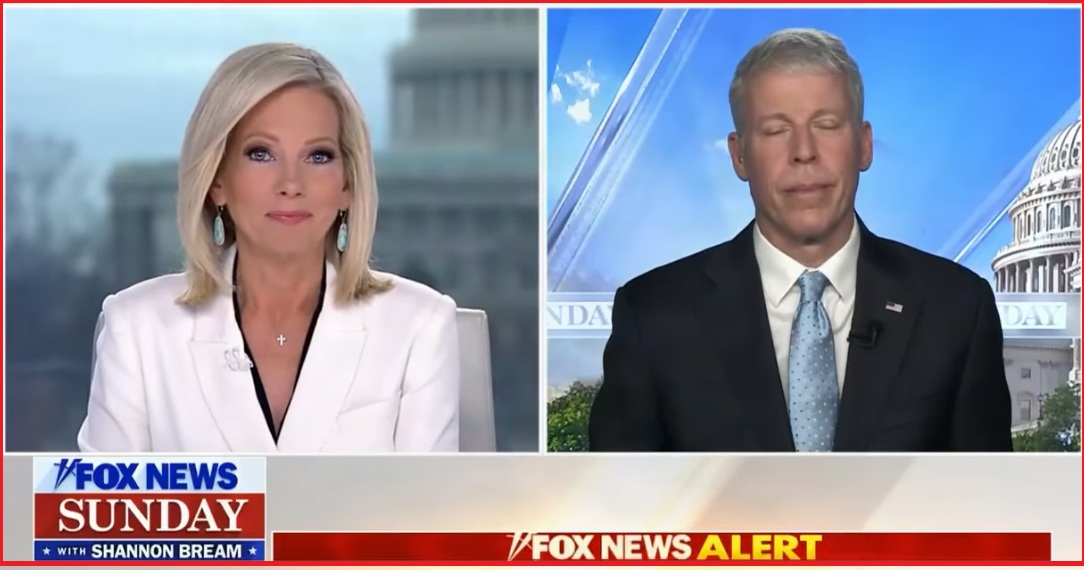
In this Fox interview, Secretary of Energy Chris Wright answers some of the same questions from the CBS interview, sans the arrogant and condescending tone during the questioning. WATCH:
Posted originally on CTH on March 8, 2026 | Sundance
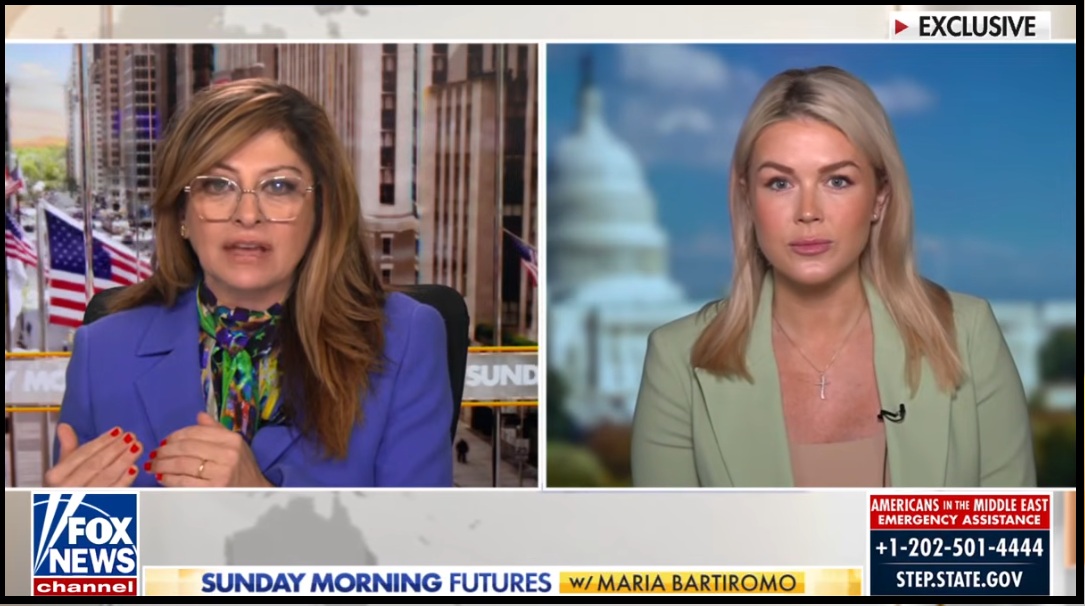
Mrs Bartiromo begins her broadcast talking about the impacts to the price of oil and gas from the U.S. military conflict with Iran. White House Press Secretary Karoline Leavitt then appears on the broadcast to answer questions about what President Trump is doing to offset the energy price increase.
Leavitt notes the Iranian military is no longer combat effective and further degradation efforts are ongoing. Both Mrs. Leavitt and Energy Secretary Chris Wright believe the movement of ships through the strait of Hormuz is likely to restart very soon. WATCH:
Posted originally on CTH on March 8, 2026 | Sundance
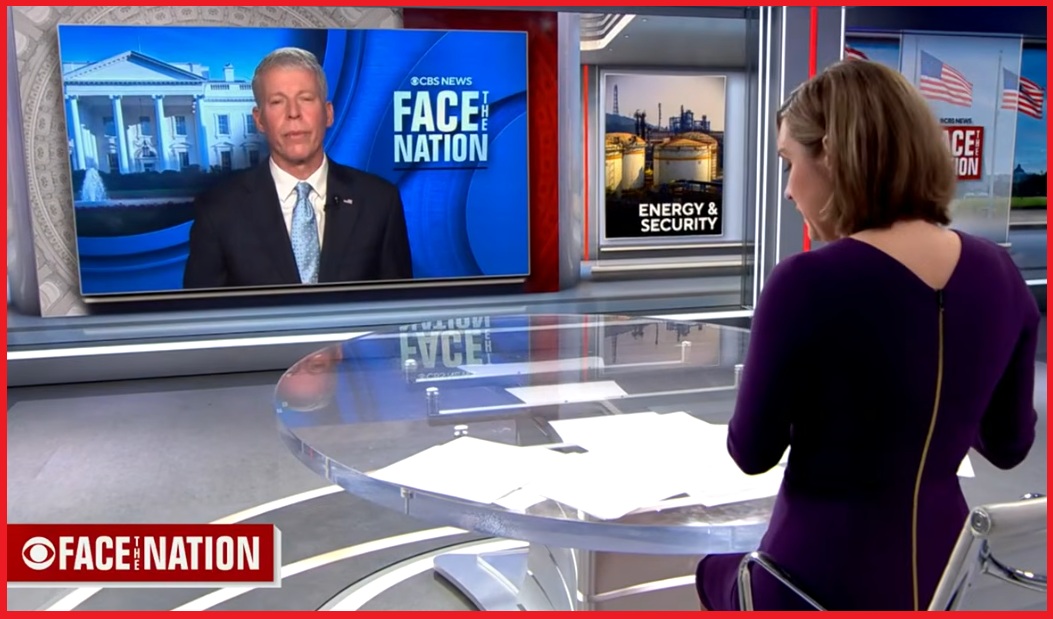
Energy Secretary Chris Wright appears on Face the Nation to push back against the narrative engineering of CBS’s Margaret Brennan. The video and transcript are below.
[Transcript] – MARGARET BRENNAN: We turn now to Energy Secretary Chris Wright, who joins us this morning from Denver. Good morning to you.
SECRETARY OF ENERGY CHRIS WRIGHT: Thanks for having me Margaret.
MARGARET BRENNAN: So 50,000 U.S. troops deployed, six Americans that we know of so far killed in action, civilians stranded. We look at our polling, Mr. Secretary, and we see that this is an unpopular war among the majority of Americans. More than half of them, 56% disapprove. When you speak to energy executives about the scope and duration of American involvement, what do you tell them? How long?
SEC. WRIGHT: I tell them that for 47 years, Iran is warg- waged war against the United States, and they’ve- throughout that 47 years, they’ve tried to undermine the energy development and energy infrastructure of all their neighbors, as they’re doing right now, and it’s time to put it to an end. So yes, we have a, we have a temporary period of elevated energy prices, but it will not be long. In the worst case, this is weeks, this is not months, and it leads to a much better place. It leads to an Iran that’s defanged, that can’t threaten its neighbors, can’t threaten American soldiers and can’t continue to drive up energy prices by making a mess of the Middle East. They can move to commerce, not conflict.
MARGARET BRENNAN: Well, but you have the moment we are in right now, and as you know, gasoline prices up 14% in the past week. According to AAA, reports the national average is $3.45. We’ve seen oil prices spike. How high do you think oil and gas are going to go?
SEC. WRIGHT: They shouldn’t go much higher than they are here because the world is very well supplied with oil. There’s no energy shortage at all in the Western Hemisphere.
MARGARET BRENNAN: Right.
SEC. WRIGHT: The United States is a net exporter of oil, a large net exporter of natural gas. But refineries in Asia and Europe are seeing an interruption from the normal crude flows. But there is massive energy stores around the world. What you’re seeing is emotional reactions and fear that this is a long term war. This is not a long term war–
MARGARET BRENNAN: –But–
SEC. WRIGHT: –It’s a temporary movement.
MARGARET BRENNAN: Sorry, go ahead, temporary movement.
SEC. WRIGHT: No, I’m saying look, we’ve seen previous administration have done everything they could. They begged, bartered and bribed the Iranian government to stop its nefarious activity, stop its murderous behavior, and it simply hasn’t worked, and now, they’re, they’re expanding missile and drone program that are rapidly growing to protect their desire to build a nuclear weapon. We’re going to cross the threshold where we can’t put them back in the box. Now is the time to end their risk to America and the world.
MARGARET BRENNAN: But as you know, when I ask you about energy prices, this is not a supply problem. You said there’s plenty of supply. The head of the International Energy Agency said, lot of oil, logistics are the problem. It’s dislocation. It’s a serious problem. So what he’s referring to there is being able to actually move it around. I know you said there’s, there’s one vessel that’s gone through the Strait of Hormuz. 20 million barrels per day typically go through it. When do you get back to that level?
SEC. WRIGHT: Oh, I think it will be relatively soon. Of course, I don’t know exactly. All of our military assets right now are focused on ending Iran’s ability to kill their neighbors, threaten American soldiers and threaten ship traffic in the Strait of Hormuz, but that’s going swimmingly well. Their missile launches are down 90%, the drone launches are down over 80% I think in the relatively near term, you’re going to see their capacity so low that we’ll see more normal ship traffic return to the Strait of Hormuz.
MARGARET BRENNAN: So you don’t think Navy escorts of vessels are necessary?
SEC WRIGHT: They might be. They might be. The U.S. is here to do everything we can to keep world oil markets supplied. Yes, if they have some residual–
MARGARET BRENNAN: –When will you make that decision?
SEC. WRIGHT: We’re, we’re in engagement right now with people that want to get tankers moving out of the Gulf. And so, yes, there could be there- early tankers probably will involve some direct protection by the U.S. military, but most important is to defang their ability to threaten these ships.
MARGARET BRENNAN: So the president had said he was open to tapping the American stockpile of oil, the Strategic Petroleum Reserve, but I saw you on other networks this morning, kind of throwing cold water on the idea. You referred to it as depleted. Are you saying America doesn’t have adequate stockpiles?
SEC. WRIGHT: No. America still has over 400 million barrels of oil in our strategic petroleum reserve, and, of course, robust production. We’re, we’re, more than happy to use that if it’s needed. But as you said earlier, it’s a logistics issue. Where do they need oil? They need oil at refineries in Europe and in Asia. And that’s why we took a very pragmatic step. There’s over 100 million barrels of floating Russian crude waiting in line to deliver to China. That’s going to be sold, it’s going to be refined, but that could be one or two months from now. So in a pragmatic way, with no change in U.S. policy towards Russia, we told the Indians, bring that into your refineries. You know, if you, if you’re feeling a shortage of crude, prices are being bid up, draw down that Russian crude stocks that are sitting right offshore.
MARGARET BRENNAN: Yeah. So on that point, the U.S. has temporarily suspended some sanctions to make that Russian oil, you say was already going to be sold anyway, make it available. But doesn’t Russia still financially benefit from that? Why isn’t the U.S. seizing those Russian tankers if they are our adversary?
SEC. WRIGHT: Because right now, because right now, we’re worried about Iran and fixing a 47-year problem there, and we’re worried about American consumers. We want to stop the rise in–
MARGARET BRENNAN: –Russia was helping Iran–
SEC. WRIGHT: –gasoline and diesel prices. Well, there’s been rumors of that. We don’t know if that’s true or not. Certainly, they’ve gotten a strong message from us. But this is oil already on the ocean–
MARGARET BRENNAN: –These Iranian drones have Russian parts in them. The Russians have been buying Iranian drones. That is very well documented, and CBS has confirmed and reported that there was sharing of intelligence. Russia providing intel to target Americans. So how is Russia not part of this?
SEC. WRIGHT: Look, Russia, Russia is expert at causing trouble around the world, so I’m not saying they’re not. I’m saying I don’t- if they’re helping Iran, it’s not working very well, but we’re not helping Russia by just accelerating the sale of their oil to stop the rise of energy prices and keep European and Asian refineries in oil. We’re just doing pragmatic things to get through a short period that will bring in an era of even lower energy prices because a major energy producing region of the world, the Middle East, will no longer have a strong, powerful Iran that can threaten their neighbors, that can threaten the United States of America and was not far away from a nuclear bomb. That’s an–
MARGARET BRENNAN: –How much–
SEC. WRIGHT: –unacceptable scenario. That’s the risk to energy prices was not doing anything.
MARGARET BRENNAN: So when the Qataris say you could see $150 barrel in oil, that’s something America could stomach? President Trump wouldn’t say, I’m done with this war because I can’t stand the political pressure and the American people saying I don’t like what I’m paying at the pump?
SEC. WRIGHT: No, the president’s going to continue to stay focused on ending a 47-year conflict, stay focused on growing the global energy supply. This is actually part of that effort. It does involve a temporary impediment to energy production, but on the other side, it will allow much more energy production and much lower energy prices. But this is not a long term conflict. Most presidents have just thought, they’ll kick the can down the road. The risk is simply too great to kick that increasingly dangerous can down the road.
MARGARET BRENNAN: Yeah.
SEC. WRIGHT: President Trump’s bold leadership is enough’s enough. We’re going to put it to an end.
MARGARET BRENNAN: I want to ask you about Venezuela. The U.S. deposed Maduro. He’s sitting in a prison. Just this past week, though, we had the interior secretary visiting Venezuela and sitting across from Maduro’s Chief thug, Diosdado Cabello. This is someone who has a $25 million bounty on his head. He ran the prisons, he ran the militias. He was treated as a counterpart to an American official. Is this the same playbook the Trump administration is going to run in Iran, that you will deal with the same regime you’ve been telling me is terrible to deal with for 47 years?
SEC. WRIGHT: We don’t know what the regime will be in place at the, at the end of this conflict, but we do know that regime will not have a massive weapons arsenal, that that regime will no longer be a massive threat to Americans and to the Middle East and to global oil supplies. President Trump is using bold leadership. We can’t change the world at a blink of an eye, but we can steer it in massively positive directions, and yes, Venezuela is a great example of that. Crime in the nearby Trinidad and Tobago has plummeted already from our actions in Venezuela, and President Trump’s insistence that he’s going to work with that our neighbors to reduce drug trafficking in the Western Hemisphere. Leadership takes- involves risks, but if you want to drive improvement, you’ve got to be confident, you’ve got to have the right agenda, and you’ve got to have the courage to do it. This president does.
MARGARET BRENNAN: Energy Secretary Wright, thank you for your time this morning. Face the Nation will be back in a minute. Stay with us.
Posted originally on CTH on March 8, 2026 | Sundance |
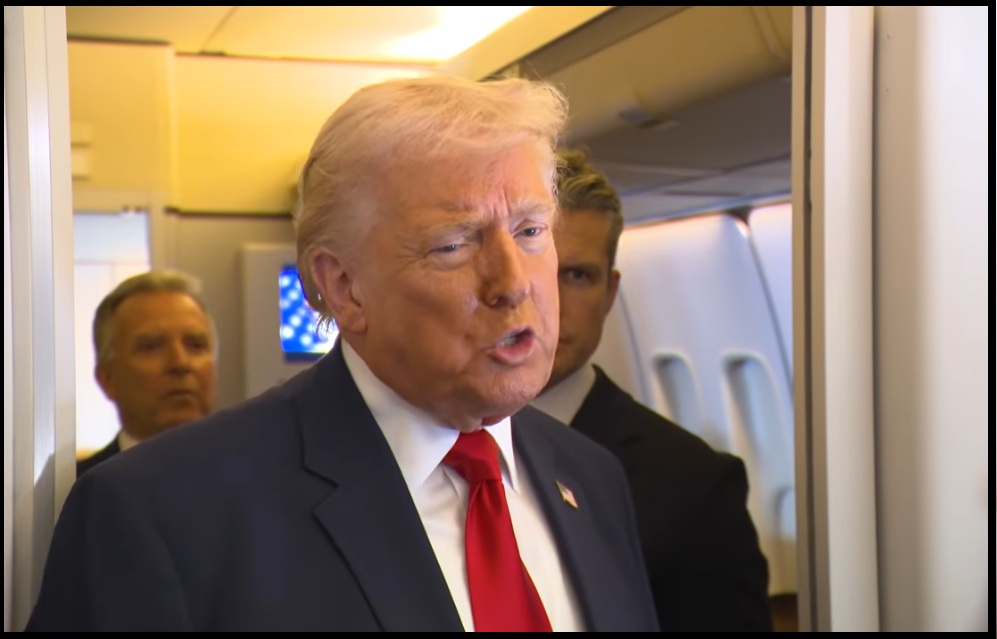
President Trump gives an impromptu press conference aboard Airforce One returning to Florida following the solemn ceremony at Dover Airforce Base. Emissary Steve Witkoff and Defense Secretary Pete Hegseth also delivered some comments on questions from the media.
President Trump answered questions about rising U.S. gas prices saying, this is a confrontation that should have taken place before. For 47 years various presidents have navigated the risk and threats presented by Iran, but President Trump is choosing to end the threat once and for all.
Keeping security issues close to the chest, President Trump refused to directly answer any questions about ongoing operations, targeting or matters of military strategy. At 7:45 of the video Steve Witkoff and Pete Hegseth also answered questions. WATCH:
At 10:35 President Trump was asked his opinion on what Russia would say if confronted about support for Iran, and President Trump showcased how well he knows the Russian approach by saying if we confronted them, Russia would just say the U.S. supports Ukraine against Russia, right? President Trump is correct; Russian President Putin is the master at pointing out hypocrisy in foreign intervention.
At 13:15 President Trump is asked about Kurdish support, and Trump notes the U.S. appreciates the offer but does not want the Kurdish forces to get involved because it only complicates the issues. The Kurds are our allies, and President Trump has had conversations with Kurdish leadership; however, within that friendship Trump notes it would be dangerous for the Kurds to get involved.
Posted originally on CTH on March 7, 2026 | Sundance
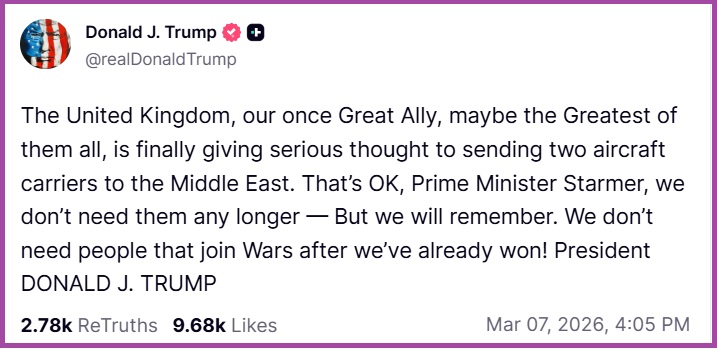
In a Truth Social post today, President Trump notes the lack of strategic support from the United Kingdom of Great Britain, and the disappointing response from Prime Minister Keir Starmer.
Posted originally on CTH on March 7, 2026 | Sundance
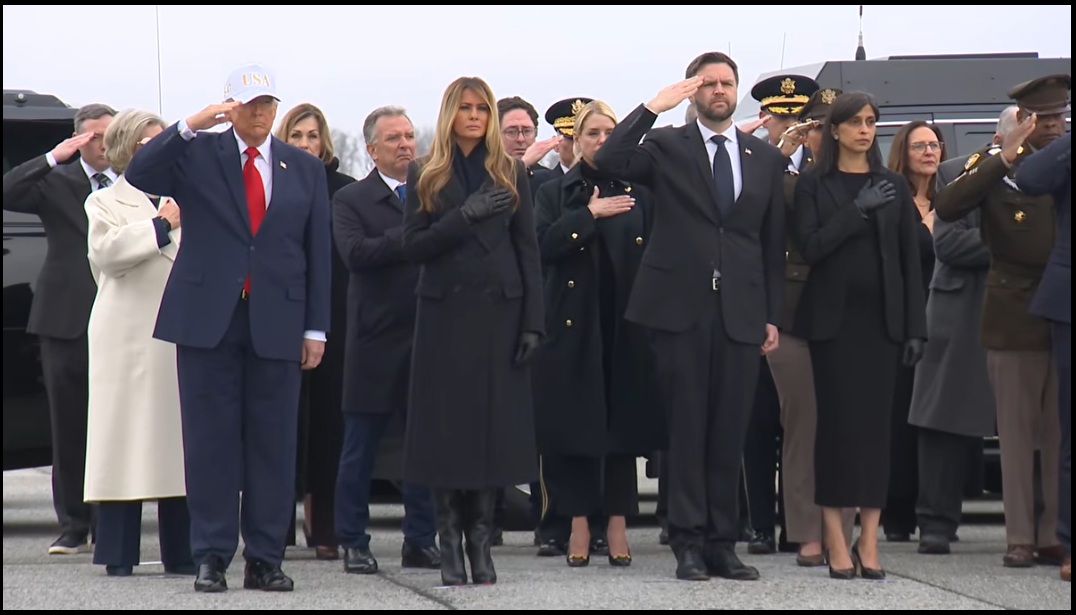
President Trump, First Lady Melania Trump, Vice President Vance and other dignitaries participate in a dignified transfer ceremony at Dover AFB for the arrival of six servicemembers killed in Operation Epic Fury. The solemn and silent ceremony is presented below:
O Keeper of the dawn and dusk, hold them beneath Your steadfast wing.
Let the dust of distant roads not dim the light within their eyes.
When the night leans heavy on their shoulders, be the quiet fire in their hearts.
When the wind carries the scent of danger, be the shield they cannot see.
Guide their steps through shadowed valleys, let courage rise like rivers in their veins.
Bring them home to open arms and gentle laughter, and for those who cannot return, wrap them in the eternal peace that no battle can disturb.
Posted originally on CTH on March 7, 2026 | Sundance
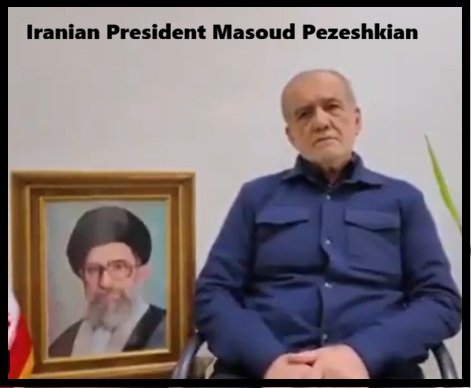
Overnight last night, Iranian President Masoud Pezeshkian issued a statement apologizing for attacks against neighboring countries and claiming that some attacks were carried out independently by regional commanders without directive due to loss of communication.
President Pezeshkian further stating the Temporary Leadership Council in Iran had ordered a halt to attacks on other countries unless their territory is used to attack Iran.
Within hours the remaining elements of the Islamic Revolutionary Guard Corps (IRGC) rebuked the statement by President Pezeshkian saying the IRGC would continue attacking any/all gulf states as needed. This was followed by the Iranian clergy saying their president was “weak, unprofessional and totally unacceptable.”
Obviously the political, military and religious elements within Iran are not on the same page. However, at around 6:00am this morning, President Trump reacted to the original statement by Iran President Masoud Pezeshkian:
PRESIDENT TRUMP – “Iran, which is being beat to HELL, has apologized and surrendered to its Middle East neighbors, and promised that it will not shoot at them anymore. This promise was only made because of the relentless U.S. and Israeli attack. They were looking to take over and rule the Middle East. It is the first time that Iran has ever lost, in thousands of years, to surrounding Middle Eastern Countries. They have said, “Thank you President Trump.” I have said, “You’re welcome!”
Iran is no longer the “Bully of the Middle East,” they are, instead, “THE LOSER OF THE MIDDLE EAST,” and will be for many decades until they surrender or, more likely, completely collapse! Today Iran will be hit very hard!
Under serious consideration for complete destruction and certain death, because of Iran’s bad behavior, are areas and groups of people that were not considered for targeting up until this moment in time. Thank you for your attention to this matter! ” ~ President DONALD J. TRUMP
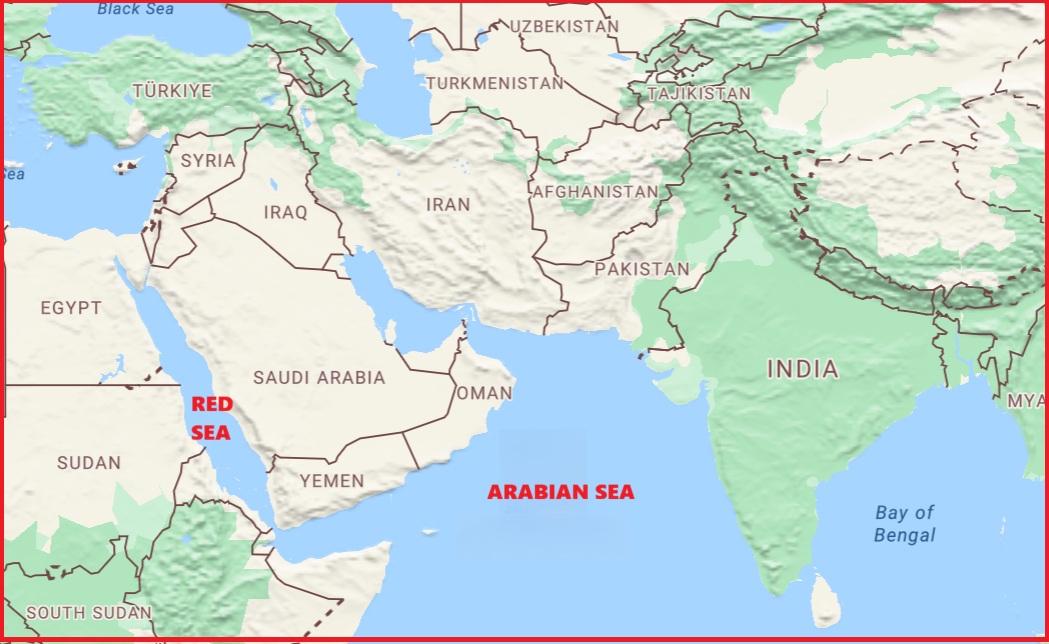
Two carrier strike groups are currently on station in the region as the ongoing conflict with Iran continues. The USS Ford (CVN-78) just passed through the Suez Canal and has assumed position in the Red Sea. The USS Abraham Lincoln (CVN-72) is operating in the Arabian Sea, according to the latest USNI News Fleet and Marine Tracker.
The USS Ford departing their position in defense of Israel, would seem to indicate the threat analysis has been greatly diminished. Moving the Ford group and the Abraham Lincoln group into proximity seems to indicate they are positioning to support the maritime transit and guardian program through the straits of Oman.
These maritime moves are taking place as the U.S. and Israel shift their attack profiles toward new Iranian targets.
I have created this site to help people have fun in the kitchen. I write about enjoying life both in and out of my kitchen. Life is short! Make the most of it and enjoy!
This is a library of News Events not reported by the Main Stream Media documenting & connecting the dots on How the Obama Marxist Liberal agenda is destroying America