
Posted originally on Apr 15, 2026 by Martin Armstrong |
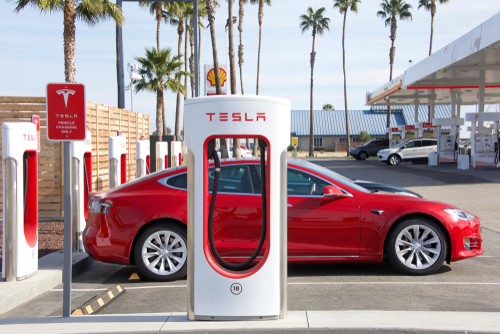
Reports indicate that a wave of used EVs is beginning to hit the market as leases expire, forcing automakers to rethink how they handle pricing and inventory. What was once sold as the inevitable future is now a dud cause with minimal demand. When those vehicles return to the secondary market, they must compete on price, performance, and practicality, not ideology. That is where the cracks begin to show.
This ties directly into what I have warned about with government attempts to force economic outcomes through policy. The Biden administration pushed aggressively toward electrification under the banner of climate policy and Net Zero, but this was never purely about the environment. It was about directing capital, restructuring industry, and attempting to control long-term consumption patterns. The problem is that markets do not respond to mandates the way politicians expect.
Nearly 4,000 US car dealers warned the Biden Administration that consumer demand would not keep pace with supply. You cannot force consumers into a product they are not ready to adopt, especially in an environment where the cost of living is already rising.
Electric vehicles still account for only about 7–8% of total US vehicle sales, yet federal policy aimed to push that figure toward 50% or more by 2032 through emissions rules that effectively function as mandates. At the same time, EVs remain significantly more expensive, with average transaction prices roughly $8,000 higher than comparable gas vehicles.
Government attempted to accelerate this transition through incentives and mandates. The Inflation Reduction Act introduced tax credits of up to $7,500 per vehicle, effectively subsidizing purchases to stimulate demand. Meanwhile, federal policy called for the entire government fleet to transition to zero-emission vehicles by 2035, impacting hundreds of thousands of vehicles.
You can already see the early signs of that correction in the used EV market. As more vehicles come off lease, prices are under pressure because supply is increasing faster than demand. Automakers are now adjusting strategies, trying to manage resale values and prevent a collapse in pricing. This is the same pattern we have seen in other sectors. When supply is artificially expanded through policy, it eventually overwhelms real demand.
The used car market in general is far beneath the levels witnessed in 2022. EVs are far more difficult to offload. Industry estimates show that more than 300,000 electric vehicles will come off lease in 2026 alone, with projections rising toward 500,000 or more as we move into 2027. This is a surge of supply that the market must absorb whether demand is ready or not.
New EV sales have already dropped 28% year-over-year in early 2026, while used EV sales have risen 12%, reaching nearly 93,500 units in a single quarter. Pricing confirms that shift. Used EV prices have fallen dramatically, in some cases dropping as much as 40% over the past year, and are now within roughly $1,300 of comparable gasoline vehicles. That is a market adjusting to oversupply. When prices fall that quickly, it reflects a mismatch between production and real demand.
Cost, convenience, infrastructure, and reliability all matter more than political objectives. The government will always fail when it attempts to artificially stimulate demand.

